Story Behind The Song Two Highways
“I don’t know how much of this you can share, but I’ll tell you,” joked Larry Cordle about the story behind one of his earliest compositions.
“Two Highways” dates back to the late 1970s—a pivotal period in the life of this renowned songwriter. It was recorded first by his childhood friend and musical mentor Ricky Skaggs (1984, Country Boy), later by Alison Krauss and Union Station (1989, Two Highways), and again as a duet between Cordle and Krauss (2014, All-Star Duets). There’s also a never-released version recorded by Cordle himself.
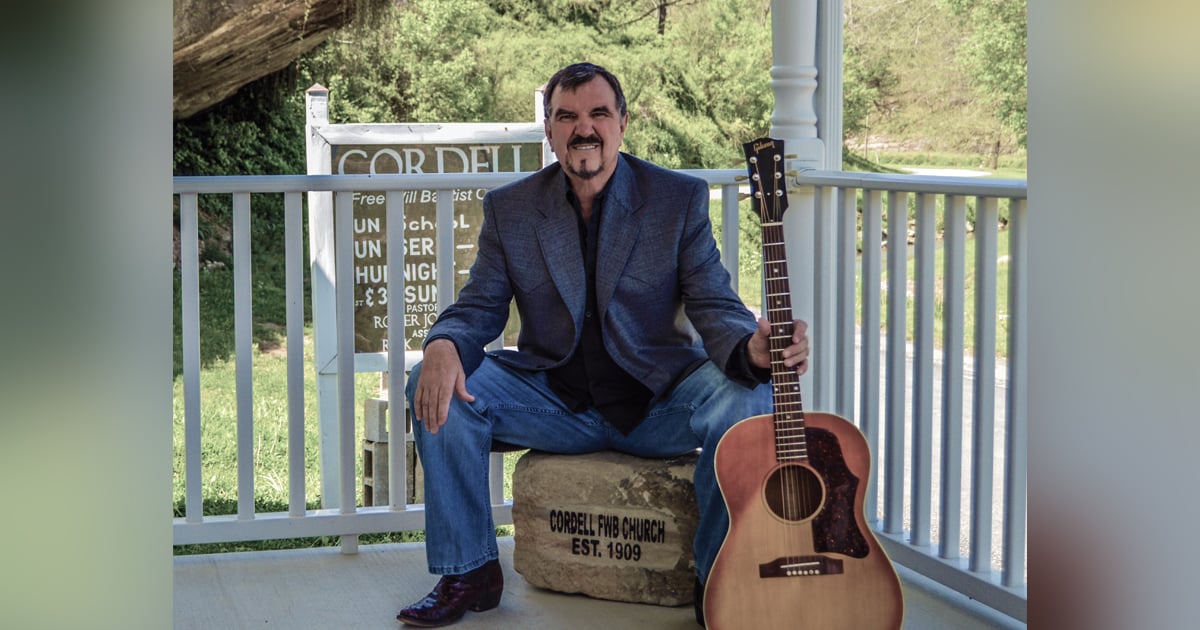
Known far and wide as “Cord,” Larry Cordle has earned his renown song by song throughout the years. The 2021 Nashville Songwriters Hall of Fame nominee is a past CMA “Song of the Year” winner (“Murder On Music Row,” cowritten with Larry Shell), a repeat IBMA “Song of the Year” winner (“Murder On Music Row;” “Lonesome Standard Time,” cowritten with Jim Rushing; and “If I’d Have Wrote That Song,” co-written with Larry Shell and Jim Silvers), a repeat SPBGMA “Songwriter of the Year” winner, and a member of the Kentucky Music Hall of Fame.
But back when he wrote “Two Highways,” Cordle was just a country boy from east Kentucky struggling with exactly what he wrote about: a choice between two very different paths. “It was a strange time of life,” recalled Cordle. “I wanted to be in the music business, but I didn’t think I had the tools for it. And I had that part of me that knew I needed to make money.”
Writing from a Lonely Place
A year or so before “Two Highways,” Cordle penned the song that would first put him on the map as a Nashville songwriter, “Highway 40 Blues.” It would later become a number one hit for Skaggs, but in those days, it was sitting on the shelf. “Nothing was happening with my songs,” he said. “I was still living in Paintsville, Kentucky, trying to be a CPA, but I loved to hang out with a good buddy of mine who lived down in Lexington, Henry Baker. I was at his house when I wrote ‘Two Highways.’ I don’t say a lot about Henry, and I don’t know why, because even before Ricky, he was the first guy that really wanted to see me do something. He gave me the money to cut the first sides I ever cut.”
Being at Henry’s place was always a nice escape for Cordle, who was feeling “stuck” both at work and at home. “My marriage was going downhill,” he explained, “and I was trying to keep the music career alive, which felt far-fetched at the time. I was literally straddling two worlds—one I wanted to be in but couldn’t see how I could manage—and another, safer one that I couldn’t imagine living in for the next 40 years.”
Waking up at Henry’s with a well-earned headache, Cordle needed to head home. Instead, he grabbed his D-35 Martin and began playing. “I was feeling sorry for myself,” he said, “but within a few minutes of playing, I’d strung a melody together. I found that flat-six chord that’s in the song, and that felt unique to me, so I scrambled around for a pad and a pencil. Before long, I understood, ‘Hey, there’s a song in this, and it’s about me,’ and I realized, ‘Gee, I’m going to try to see this thing through.’”
Lyrics and Structure
Cordle’s song portrays beautifully the uncertainty of someone facing a crucial crossroads (Two highways lay before me / Which one would I choose?). Clearly afraid to trust his own decisions, the singer is considering following his dream and letting the chips fall (Nashville’s lights how beautiful you shine).
The chorus continues the what-ifs of the situation (In the mornin’ would I wake to find / Down the wrong road I had gone?) and answers them frankly (Only time will tell if I have made a loser’s choice).
An indisputable master craftsman today, Cordle admits that when he wrote “Two Highways,” he didn’t know anything about song structure. “Knowing what I know now, I might have tried to make it more structurally sound,” he said of the song, which is written in a verse/chorus/verse/verse/chorus pattern. “I was just trying to get it down. Come to think of it, I wrote a few songs circa 1976-78 that, when I read them back, it occurred to me that I had the ability to make them make sense, though I really didn’t understand how. I guess I had the rough God-given gift and developed the polish after I got here.”
Incidentally, Cordle moved “here” to Nashville in 1985 when Skaggs brought him on as a staff writer for his Amanda-Lin Music, which partnered with Welk Music. The move was a leap of faith for Cordle and wife Wanda, who he had married two years prior.
Cordle’s initial lack of musical knowledge notwithstanding, “Two Highways” came together lyrically and has been striking the hearts of listeners for many years. Melodically, too, there’s a melancholy that comes across, no matter the tempo the song takes.
A Good Song Proves Its Worth
In 1988, Cordle was working on a demo session at Welk’s studio in Nashville, and Krauss was part of the session. “Alison said to me, nonchalantly,” he remembers, “‘I hope you’re not mad at me, but I recorded one of your songs today … you may not like what I did to it.’ I answered, ‘Well, what could you possibly do to it?’ and she said, ‘I took ‘Two Highways’ and made it a real bluegrass thing.’
“It was written as a ballad, and that’s how Ricky recorded it. I’d only ever imagined it as a ballad, but when I heard Alison’s record, I thought it was so cool that she figured that out and did that. That song went to number one for her on—I believe this is right—the very first Bluegrass Unlimited chart, where it stayed for six or eight months! I mean, you couldn’t go anywhere without hearing that song—and we didn’t have Sirius radio at the time. That was an important thing for me, because I wasn’t in the bluegrass world at all at the time.”
“Two Highways” has been good to bluegrass and country fans. It’s been good to Cordle, too, who still thrills to hear it performed well. Just last year, Skaggs played it on the Opry, accompanied by Trisha Yearwood (who in 1991 cut Cordle’s “Lonesome Dove,” cowritten with Carl Jackson.)
“Ricky called me about The Opry, and I thought, ‘Are you kidding me?’ I go out to the car and turn it on—I don’t have a radio inside—and Trisha sings the first line or two of her entrance in it, and she fouls it up. So, she says on the radio, ‘Stop. Wait. I know Larry Cordle’s out there listening somewhere, and I am going to get this right.’ I fell over laughing in the car, and I saw her somewhere later and told her how I appreciated that. That was quite a moment for me.”