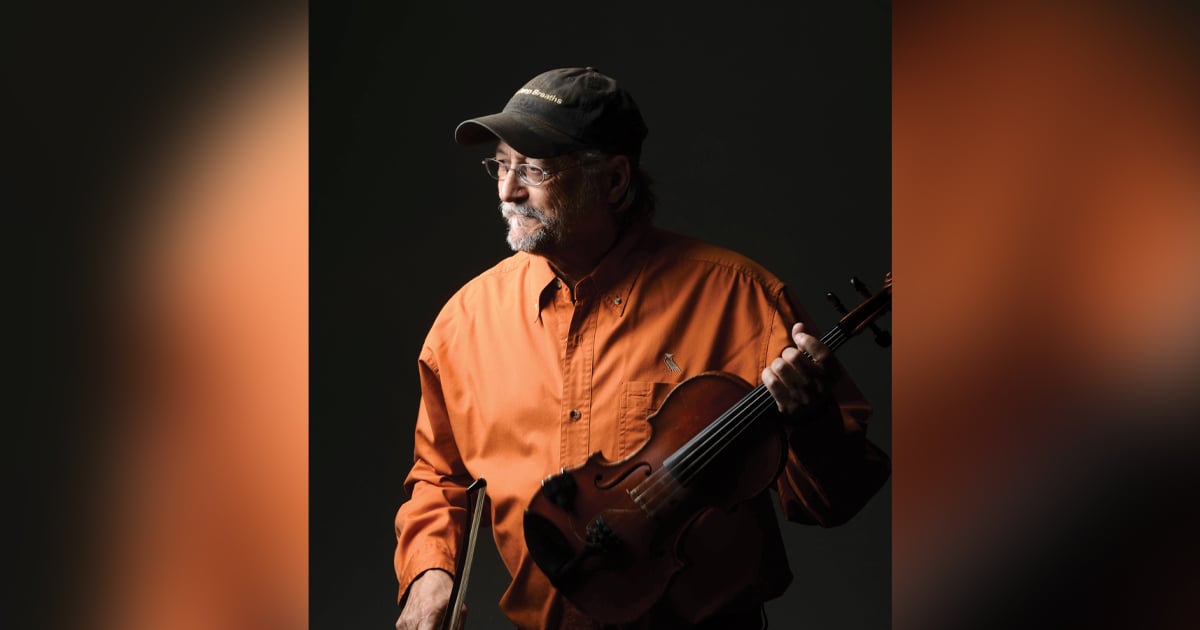
Phil Salazar
And His Fabulous Fiddle Shop
Many of the artists that we interview in Bluegrass Unlimited grew up in musical families. The majority of them are raised in southeastern regions of the United States where bluegrass and country music was played in their homes from the time they were born. California native Phil Salazar also grew up in a musical family, but the music was a little different.
The year that Phil was born, in 1955, his father started a symphony orchestra in Ventura, California. He said, “From the time I was born I was on stage in a basket, then crawling on the stage, then helping put sheet music on music stands.” His two older brothers played the violin. His older sister played the cello. Later, one of his brothers moved over to the string bass and the other brother took up the viola. Phil said, “When I was five, a violin was stuck under my chin and they said, ‘You are going to be a violinist.’ I hated it. I wore glasses and carried a violin case to school, back then it wasn’t cool to play the violin. I kept getting teased and beat up.”
Later, to help solve the problem of his son not enjoying the violin, Phil’s father found him a new teacher. During the first lesson, the teacher asked Phil what he wanted to learn. Phil said, “Fancy Gypsy fiddling,” not knowing anything about Gypsy fiddling. His teacher bought a Mel Bay fiddle tune book and started teaching Phil how to play tunes in the standard old-time fiddle repertoire—songs like “Soldier’s Joy,” “Durang’s Hornpipe,” “Chicken Reel,” and “Mississippi Sawyer.”
When Phil was about thirteen-years-old he listened to a Frank Zappa album that featured Don “Sugarcane” Harris playing blues on an electric violin. He also became interested in the Hot Tuna and Jefferson Airplane recordings that included the blues violin playing of Papa John Creach. This led him to an interest in blues violin playing. He said, “That was my first big influence outside of the classical music. I wanted to be a blues guitar or fiddle player.”
When Phil was seventeen, he and a friend hitchhiked to Colorado. When they got to Silverton they started playing at the train station for the tourist arriving from Durango on the narrow gage train. Phil played the fiddle and his friend was on the guitar. While they were playing, a guy walked up to them with a banjo and asked if they had heard bluegrass music. They had not. Phil said, “The guy took us over to his house and played the Will The Circle Be Unbroken album. When I heard Vassar Clements I said ‘Oh, yeah, that is what I want to do. I want to be like Vassar.” When he returned to California he told his friends, “Let’s play bluegrass!”
Phil and friends started playing outside a restaurant on the beach—called Charlie’s—for tips. One day a waitress came out and told them that the owner said that if they would play inside for an hour, he would give you lunch. Phil’s group ended up playing at Charlie’s for about seven months. That first job expanded to other bars in the area.
One of the people that started performing with Phil, in 1984, is banjo player Bill Knopf. Bill is well-known in the bluegrass banjo world, having been featured in Banjo Newsletter as early as 1980. Bill still performs with Phil in his band Phil Salazar & the Kin Folk. Regarding first meeting Bill, Phil said, “That first bar we played at, Charlie’s, was next to the parking lot of the Holiday Inn. We were playing there one night and this guy came in and said, ‘Hey, Elly May Clampett is singing at the Holiday Inn.’ We ran over there during the break and there was Elly May Clampett—Donna Douglas—singing in her costume. There was a guy sitting there with her playing banjo and guitar. I walked up to him and said, ‘Hey, you’re pretty good.’ That is how I met Bill Knopf. I met him in 1979 and he played on my first album in 1984.”
The same year he met Bill Knopf—1979—Phil was playing a show in San Diego and a fiddler came up and mentioned he took lessons from Richard Greene. Phil remembers, “I said, ‘Richard Greene! I know that name from Sea Train, Maria Muldaur and David Grisman.’ So, I got Richard’s phone number and I called him up. I thought, ‘I’m going to take lessons from Richard Greene, one of my heroes!’ I go in there to my first lesson thinking…blues, rock, country, bluegrass, jazz…and he gave me straight classical violin lessons. Five hours a day of technique practice!”
Staring to Teach
By the late 1970s Phil had spent time playing in bands at Knott’s Berry Farm, Disneyland and, later, Disney World in Florida. Additionally, his father had Phil and his friends come in to perform some bluegrass and fiddle tunes with his orchestra. After hearing Phil play, a female violin player, Charl Ann Gastineau—who was third chair in his father’s orchestra—approached Phil and asked about learning to play the fiddle. Phil said, “I told her, ‘I’m not a teacher, I’m an artist.’ But, in 1982 when I left Disney World in Florida and came back to California, I called her and told her that I was teaching. So, she was my first student. She was so good. I told her, ‘Let’s learn some twin fiddling.’ We learned ‘Sally Goodin’ and put it on an album. Then she ended up quitting my dad’s symphony and joining my band full-time as a twin fiddler.”
At that point, Phil started teaching more students at his home. He said, “By the mid-1980’s I got married and my wife said, ‘I can’t stand all of these students sitting around the house. Why don’t you go and get a job at the music store?’ So, I started teaching at the music store. When that store closed, I rented a place and started my dual store. I called it ‘Phil Salazar’s Fabulous Fiddle Shop’ when I was talking to fiddlers and when I was talking with violinists it was ‘Phil Salazar’s Violin Shop.’ So, I had two names for the shop.”
In addition to teaching lessons, Phil partnered with a friend who was a good salesman. Phil taught the lessons and his friend worked the retail side of the store selling strings, rosin, bows, and fiddles. About five years later, Phil used the settlement from a car crash he was involved in to buy gear and add a recording studio to the store. When the pandemic closed the store, Phil took the majority of his students online and taught others face-to-face outdoors at his home. So, after running the retail store and teaching lessons out of that store space for 18 years, Phil is now closing that shop and is focusing on teaching lessons online.
Phil said, “At the height of the fiddle shop, I was teaching about 60 students a week. As things started to shift online, I got down to about 30 students per week. Now, I teach 15 to 22 per week.” Phil teaches “any instrument with a string on it, with one criteria…the strings have to be on the outside of the box. If the strings are on the inside of the box, like a piano, I have no idea what to do. I can teach violin, viola, cello, bass, guitar, mandolin, beginning banjo, and I have had a Dobro student.”
Teaching Method
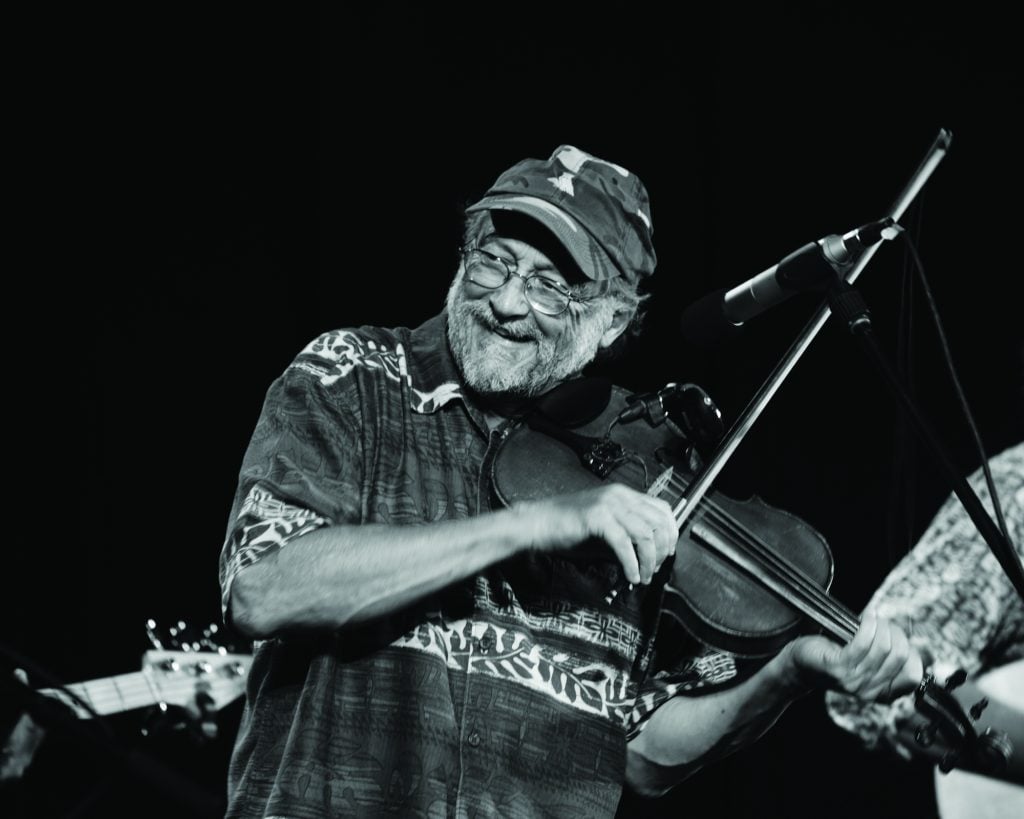
When asked about his teaching method for violin, Phil said, “There is the Suzuki violin method and the joke is that I teach the Harley-Davidson method.” Jokes aside, Phil said, “There are two sides to teaching to me. There is my side, where I have to make an income, and the other side is that you have to have people love playing music. So, the most important thing to me is that they love what they are doing. If they love what they are doing, they are going to play the instrument. So, I never make someone play a song that they don’t like. The basic rule is ‘have fun’ and that is it.”
Phil continued, “I always ask my students, ‘What is the hardest thing about playing music?’ They say, ‘practicing.’ I say, ‘No, that is not the hardest.’ They’ll say, ‘The bow?’ I say, ‘No, that is hard, but not the hardest.’ I say, ‘The hardest thing to do is to do it for ten years.’ That is the most difficult. If you play for ten years, then you will probably play the rest of your life. If one hundred students started today, a year from now there would only be ninety left…in two years, eighty…after ten years, there will probably only be two, three, or four still playing.”
Phil recalls that the most famous student that he has taught is Gabe Witcher, of the Punch Brothers. He said, “I taught him for seven or eight years. He started when he was real young. He was so good that one day I was thinking, ‘What am I going to teach this kid?’ So, I said, ‘OK, let’s play ‘Turkey in the Straw’ in all twelve keys. He said, ‘OK,’ and had no problem with it. So, we started going through the entire fiddle repertoire in all twelve keys. It is a great exercise.”
When asked about teaching beginning students, Phil said, “I went to one of these Suzuki seminars on how to teach beginners and they have basic verbal phrases that you play as you say words like “miss-is-si-ppi-hot—dog (Phil plays the fiddle along with the phrasing of the words). These phrases help teach various rhythms. So, I came up with some of my own phrases that I use to get beginners started. Then I teach them simple fiddle tunes from that.”
Phil also teaches some of the exercises that he learned when he was studying with Richard Greene. He said, “Richard Greene gave me a book and it has a little piece in it, just three lines long. Then for the next five pages there are 260 different ways to bow that piece. If you want to play violin concertos, that is what you have to learn. What he did was give me the top thirty bowings out of that exercise. He said, ‘These are the best ones to learn.’ I’ve whittled those down to fifteen—the top fifteen bluegrass bowings that I use. I teach that and call it ‘good bowing technique.’ There is another bowing technique that I have written out that I call ‘the cool bluegrass bowing that everybody likes.’ That is the name of the exercise. Every time a student comes to me with a tape and says, ‘listen to this fiddler right here, I want to sound like that guy.’ It is always the same bowing. So, I have an exercise where I teach different fiddle tunes with that certain bowing.”
Phil continued, “There was another big thick book that Richard gave me. I found out that the whole book could be boiled down to four measures. I nicknamed them ‘spacings.’ They are four-note phrases that use different finger spacings—the spaces between the fingers. For instance, the first one is a whole-step, a whole-step, and then a half-step. Spacing two is a whole-step, a half-step, and then a whole-step. The third one is a half-step, and whole-step and a whole-step…that kind of thing. I added more and came up with about nine different spacings that I use. But, I tell people that if they learn spacing one, two, and three, they could play every fiddle tune and bluegrass song ever written. When students are having trouble with a particular passage, I’ll say, ‘Well, that is spacing number one.’ Then they can play it. It is a great tool that I whittled out of a classical violin book.”
In addition to teaching his students private lessons, Phil also encourages them to jam with other musicians. To help facilitate that, he started teaching jam workshops to fifteen to twenty people at a time. Eighteen years ago, he also started hosting a jam session two times per month that continued up until the start of the pandemic. He said, “We would play fiddle tunes, bluegrass tunes, Western swing, and some Gypsy swing.”
Phil Salazar & the Kin Folk
p.p1 {margin: 0.0px 0.0px 0.0px 0.0px; font: 8.0px Merriweather; color: #000f0f}
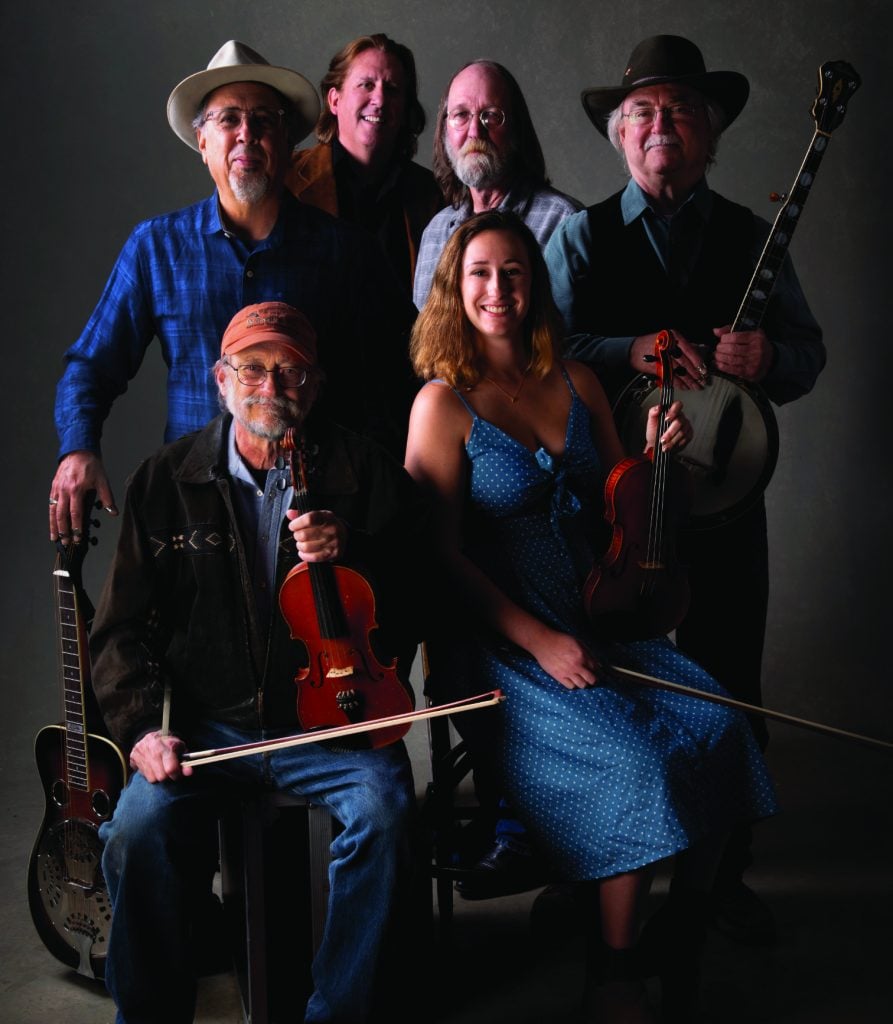
Phil Salazar & the Kin Folk: seated—Phil Salazar and Elizabeth Rizor.
Back row (left to right): Bill Flores, Tom Corbett, Rick Borella, and Bill Knopf
In addition to Phil and Bill Knopf, his current band also includes Rick Borella on electric bass (since 1984), Bill Flores on Dobro, guitar, and accordion (since the mid-1990s), and Tom Corbett on mandolin and guitar (since 2000). Additionally, Charl Ann Gastineau performed with Phil from 1982 through 2018 and she was replaced by another one of Phil’s orchestra-to-fiddle students, Elizabeth Rizor. Phil said, “She is studying to get her doctorate in neuroscience. So, when I introduce her I say, “When she steps on stage the average IQ of the band triples.”
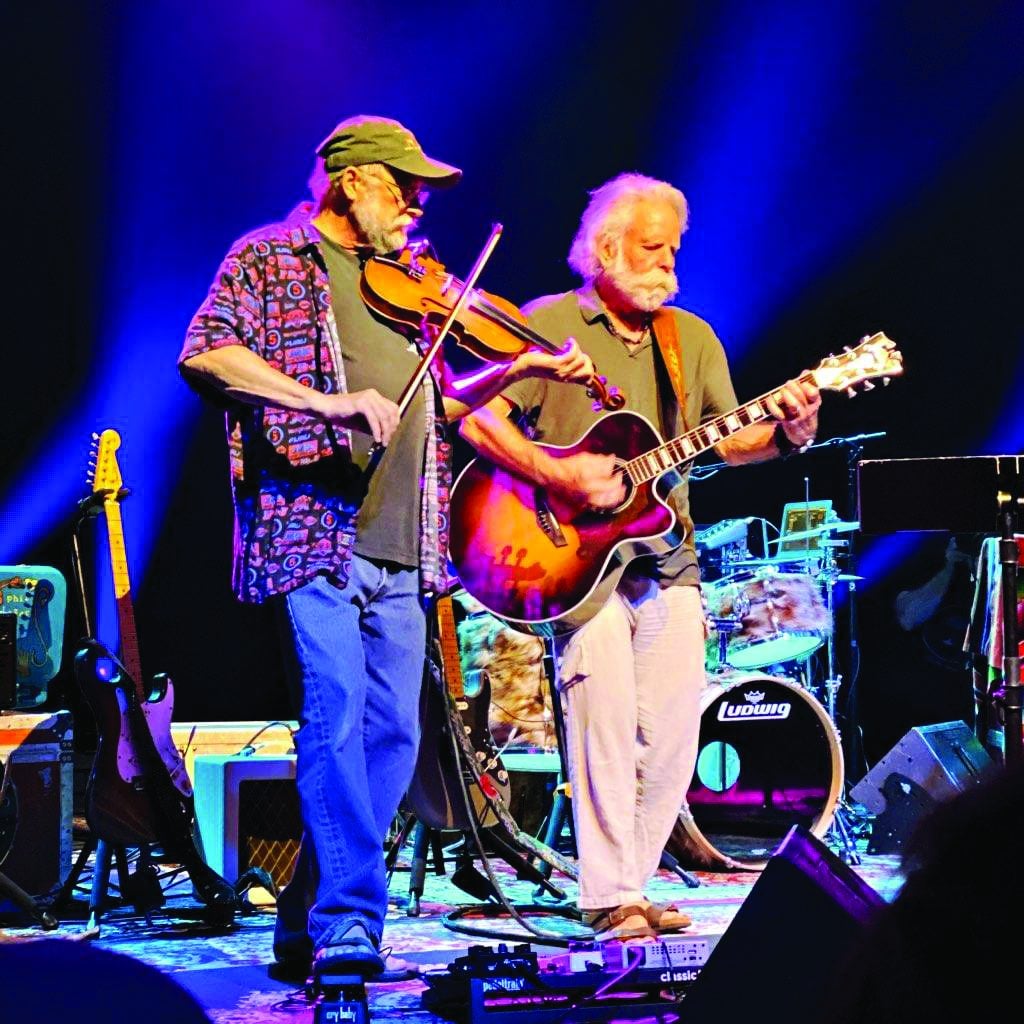
In addition to performing with his own band, Phil has performed with a variety of other artists from various genres over the years, including: rock (Bob Weir, Kenny Loggins, Jimmy Buffett), blues (Nick Gravenites, Pete Sears, Steve Miller), bluegrass (John McEuen, Nick Forster, Peter Wernick), country (Kix Brooks, Zac Brown, Gary Mule Deer), folk (Kate Wolf, Jay Ungar), Cajun (Mark Savoy, Steve Riley), Irish (Kevin Burke), and jazz (Bruce Forman, Shelly Burg). He performed and recorded with McEuen for about five years.
Phil has been playing the fiddle for sixty-one years and teaching for nearly forty of those years. He said, “Here in the twenty-first century, I can teach you anywhere in the world from right inside your computer. Online.”
In order to check out what he offers in terms of online lessons, go to philsalazarlessons.com.