Notes & Queries – May 2026
In 1976, the Japanese division of Sony Music released two monumental 10-album collections that proved to be bonanzas for collectors of classic bluegrass and country music. These collections, titled Bluegrass Jamboree and New Greatest Hits, were groundbreaking in their scope, quality, and cultural significance. On the occasion of the 50th anniversary of their release, it’s worth reflecting on the unique role Japan played in preserving and promoting this quintessentially American genre.
A Landmark Release in Bluegrass History
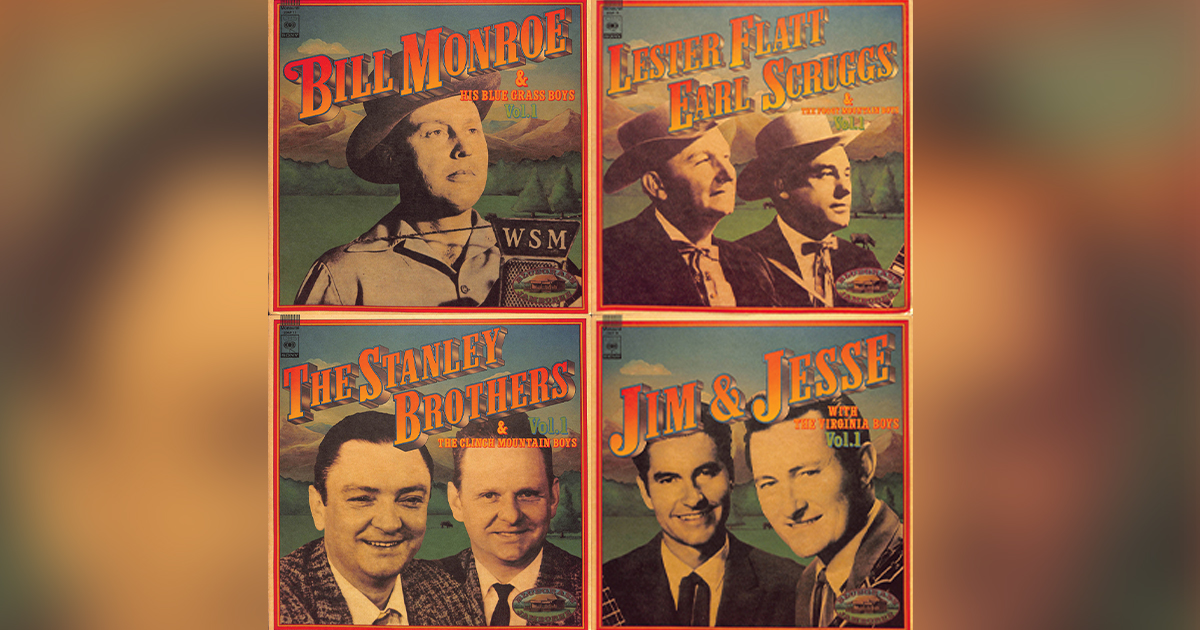
The Bluegrass Jamboree collection was a treasure trove for bluegrass enthusiasts, featuring two albums each by legendary artists Bill Monroe and the Blue Grass Boys, the Stanley Brothers and the Clinch Mountain Boys, Jim and Jesse and the Virginia Boys, and four albums by Lester Flatt and Earl Scruggs and the Foggy Mountain Boys. These albums were released at a time when releases of classic bluegrass music were scarce in both Japan and the United States, filling a void for fans who had long sought access to these recordings. The meticulous curation of the albums ensured that they were not only comprehensive but also historically significant.
For instance, the Stanley Brothers’ two albums in the collection compiled all 22 songs they recorded for Columbia Records between 1949 and 1952. This marked the first time these songs were issued together in one collection, and they were presented in chronological order, offering listeners a unique opportunity to trace the evolution of the duo’s sound. Notably, the collection included two rare tracks: “Hey! Hey! Hey!” which had only appeared on a 78-rpm disc, and “Let’s Part the Best of Friends,” which had never been released anywhere before. The latter track, recorded in 1952, made its worldwide debut in Japan, thrilling bluegrass aficionados and Stanley Brothers fans alike.
Similarly, the Bill Monroe albums in the collection featured most of his entire Columbia Records output from 1945 to 1949. The first volume was particularly significant, as it featured 10 songs that had never appeared on an album before. The Flatt & Scruggs albums included their early Columbia recordings from the 1950s, as well as reissues of iconic albums like Foggy Mountain Jamboree and Foggy Mountain Banjo. The former was a collection of songs originally released as 45 RPM singles in the 1950s, while the latter showcased Earl Scruggs’ unparalleled mastery of the banjo.
A Japanese Love Affair with Bluegrass
The release of these albums coincided with a folk music boom in Japan during the early 1970s, which saw bluegrass music gaining significant traction. According to Masatoshi Homma, a mandolin player and contributor to Japan’s first bluegrass magazine, June Apple, this period marked an explosive growth in the genre’s popularity. Bluegrass festivals began to emerge, university-based bluegrass bands proliferated, and live music clubs dedicated to the genre opened in major cities like Tokyo and Osaka. The arrival of American bluegrass artists for live performances further deepened Japan’s connection to the music.
The Bluegrass Jamboree albums were uniquely packaged to appeal to Japanese audiences. The artwork, designed by Masaru Kawahara and illustrated by Makoto Tokumaru, was strikingly different from anything seen in the United States. The albums also featured liner notes written by Japanese bluegrass enthusiasts, such as Takeshi (Takayasu) Shimada, Masatoshi Homma, and Tomoyuki Uno, who drew from limited resources like Bob Artis’s Bluegrass and Stephen Price’s Old as the Hills (both of which had only recently been published). While some of the notes contained minor inaccuracies, they were a testament to the passion and dedication of the Japanese bluegrass community.
The three albums of interest in the New Greatest Hits series featured material by Bill Monroe, Flatt & Scruggs, and the Carter Family. The Monroe disc, when coupled with the two LPs in the Bluegrass Jamboree series, grouped together all of his 1945-1949 tracks for Columbia. The Flatt & Scruggs release was touted as a collection of “familiar favorites that any fan has likely heard at least once.” The Carter Family package was culled from sessions that the group recorded for the ARC label (later acquired by Columbia/Sony/CBS) in May of 1936.
Bridging Cultures Through Music
The Bluegrass Jamboree and New Greatest Hits collections were manufactured and sold primarily in Japan, with all text written in Japanese. However, a few copies made their way to the United States, thanks to individuals like Walt Saunders, long-time contributor to Bluegrass Unlimited magazine. Saunders, who had pen pals in Japan, facilitated the import of these albums for American collectors (myself included). For those fortunate enough to acquire them, the albums were a revelation, offering pristine pressings made from high-quality vinyl and featuring original session masters for superior sound quality. This attention to detail extended to the album artwork and liner notes, which provided valuable context and insights into the music.
The collections also highlighted the interconnectedness of bluegrass and country music. While the New Greatest Hits series consisted mainly of country acts such as Johnny Cash, Charlie Rich, Tammy Wynette, and Marty Robbins, it also contained more great material by Flatt & Scruggs, Bill Monroe, and even the Carter Family.
A Legacy of Preservation and Innovation
The Japanese albums were not just a celebration of bluegrass music; they were a vital act of preservation. At a time when many classic recordings were out of print in the United States, these collections ensured that the music of pioneers like the Stanley Brothers, Bill Monroe, and Flatt & Scruggs remained accessible to fans. The albums also introduced rare and previously unreleased tracks, adding to the historical record of bluegrass music.
The Enduring Impact
Fifty years later, the Bluegrass Jamboree and New Greatest Hits collections remain a testament to the global appeal of bluegrass music and the dedication of the Japanese bluegrass community. They not only preserved the legacy of American bluegrass pioneers but also played a crucial role in fostering a vibrant bluegrass scene in Japan. The folk music boom of the 1970s may have been the catalyst, but it was the passion and commitment of individuals like Masatoshi Homma, Takeshi Shimada, and others that ensured bluegrass would thrive in Japan.
Over Jordan
James Delbert “Jim” Buchanan (January 1, 1941 – March 5, 2026) enjoyed life as a professional musician for over 70 years. He straddled the fence between country and bluegrass, often serving long stretches with heavy hitters such as Mel Tillis and George Jones. His bluegrass credentials were no less worthy and covered a diverse lineup that included, most notably, Jim & Jesse, the Greenbriar Boys, and David Grisman.

Buchanan was born and raised in Drexel, North Carolina. From an early age, music was a cornerstone of his existence, a passion ignited by his father, Clato “Buck” Buchanan, a talented fiddler who nurtured Jim’s musical talents. His mother taught him basic guitar chords, and his father introduced him to the fiddle. Outside of home, Benny Martin was his fiddling idol. A self-taught prodigy, Jim began performing alongside his father in the Southeast.
By the age of 10 or 11, Jim had mastered playing the fiddle by ear. His talent developed quickly, and he joined Joe Franklin and the Mimosa Boys, a popular country group from Drexel. The group performed at schools, American Legion dances, and Farm Federation picnics, gaining local acclaim. In 1951, they won an Arthur Smith talent contest, earning an MGM recording contract and releasing the hit record “I’m a Hillbilly Boy.” By the late 1950s, Franklin’s group morphed into the Hi-Liters. Among the group’s highlights was a chance to perform on the Ed Sullivan Show.
After leaving the Hi-Liters, Buchanan hooked up with banjoist Bobby Thompson in a group called the Starliters. They did club work in and around Columbia, South Carolina. From there, in January 1961, it was off to Charlotte, North Carolina, where Arthur “Guitar Boogie” Smith had a regular television program on WBT-TV.
In the summer of 1961, Buchanan, just barely 20 years old, signed on with Jim & Jesse for a nearly three-year stint. It was a move that would define much of his career. Touring with the band, Jim became one of the most innovative and technically precise fiddlers in bluegrass. His dual role as a soloist and accompanist complemented Jim and Jesse’s vocal and instrumental performances, adding depth and dynamism to their sound. In a 1986 Bluegrass Unlimited article by Scott Hambly, banjoist Allen Shelton, then a member of the band as well, said of Buchanan’s work: “In two years, he really got it rollin’, and really perked everybody up. He was fresh and came up with new material. He improved threefold.” He recorded 32 songs and tunes with the Virginia Boys, including the seminal albums Bluegrass Special and Bluegrass Classics, and in 1963, performed at the Newport Folk Festival, a highlight of his time with the band. Buchanan attributed (perhaps somewhat lightheartedly) the success of those albums to the fact that they contained “A North Carolina banjo player and a North Carolina fiddle player and a North Carolina bass player and a North Carolina guitar player.”
After leaving the Virginia Boys in 1964, Jim continued to make his mark in the music industry. He returned to Arthur Smith and WBT-TV. His career took him further afield, and he eventually joined Mel Tillis and the Statesiders in 1971. Tillis affectionately referred to Jim as his “Piedmont fiddler,” recognizing the unique bluegrass touch that Jim brought to his music. Buchanan logged well over a dozen years in the Statesiders.
Throughout his career, Jim collaborated with some of the biggest names in music, including Jerry Reed, Ronnie Milsap, Marty Robbins, Ringo Starr, and Dolly Parton. He also appeared in movies like Tick, Tick, Tick, and The California Girl and contributed to Mountain Dew commercials. His fiddle work graced numerous bluegrass recordings, including those by Reno & Harrell, The McPeak Brothers, Del McCoury & The Dixie Pals, Mac Wiseman, the Osborne Brothers, David Grisman, and many others. His versatility as a musician allowed him to explore various genres, from bluegrass to country to jazz, and his contributions to the music world were nothing short of remarkable.
Despite his success in the music industry, Jim faced a personal crossroads in 1978. At the age of 37, he was torn between his love for music and his calling to serve God. As a newly ordained Baptist minister, he struggled with the decision to either pursue a traditional ministry or continue his career in Nashville, where he could minister to entertainers offstage while performing onstage. In the end, Jim found a way to balance his two passions. He continued to perform and record music while also serving as a minister. His faith and musical talent allowed him to connect with people on a profound level, offering solace and inspiration to those in need.
Throughout the 1990s and early 2000s, Buchanan logged time with country singer George Jones. One of his signature tunes at the time was “Black Mountain Rag.” Concurrent with his work with Jones, Buchanan began to develop his own solo material. In 1991, he issued a cassette called A Little Bit of Lovin’. It featured stellar sidemen such as Tony Rice, Bela Fleck, Jimmy Gaudreau, and Mark Schatz. (The project was re-released in 1993 as To Live and Love Together. A few years later, yet another rebranding titled it as The Jim Buchanan System at Work – Volume 2.) In 1997, he issued The Jim Buchanan System: The System at Work Volume 1. This instrumental album presented a nod to basic bluegrass along with a few excursions into jazz and semi-classical music. Featuring well-played versions of traditional tunes like “Texas Quickstep” and “Sally Goodin’,” as well as original compositions like “Bb Hornpipe” and “Fiddle in ‘A’ Breakdown,” the album showcased Jim’s versatility and mastery of the fiddle.
Jim Buchanan’s life was a testament to the power of passion, talent, and faith. From his humble beginnings in Drexel, North Carolina, to his decades-long career as a musician and minister, he seamlessly blended his love for music with his spiritual calling. His journey through country, bluegrass, and beyond showcased his versatility and innovation, while his dedication to connecting with others through both his art and ministry reflected his deep commitment to uplifting those around him. Jim’s story serves as an inspiring reminder of the beauty in pursuing one’s gifts and sharing them with the world.
Robert Marcus Dowdy (October 27, 1956 – March 16, 2026) dedicated his life to preserving and celebrating the high-energy, hard-driving style of traditional bluegrass. His journey in music was one of passion, perseverance, and an unwavering commitment to the genre he loved.
Born and raised in the Blue Ridge Mountains of Virginia, Robert was immersed in the rich musical heritage of the region from an early age; it was around the age of 14 that he first took up the banjo. Growing up in what his brother Victor described as “the middle of the bluegrass belt,” Robert was surrounded by the sounds of old-time music and bluegrass legends like Reno and Smiley and Ralph Stanley. These early influences shaped his musical identity and ignited a lifelong love for the genre.
Robert’s musical career began in earnest in the late 1970s when he performed in a local Virginia band called New Grass Revue. Next came the Bluegrass Playboys, and then in 1979, Robert teamed up with younger brother Victor to form The Bluegrass Brothers. With Robert on banjo and Victor on bass, the band quickly gained a reputation for their electrifying performances and authentic sound. The addition of Victor’s sons, Steve and Donald, and close friend Jack Leonard rounded out the group, creating a family-centered band that embodied the spirit of bluegrass.
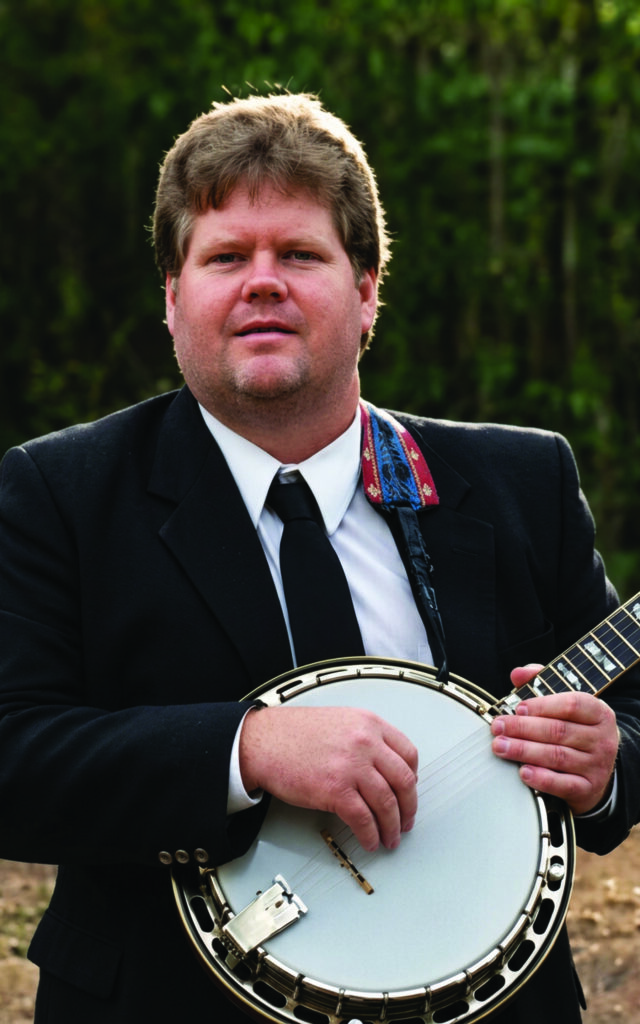
For over several decades, Robert’s banjo playing was the heartbeat of The Bluegrass Brothers. His style was rooted in the traditional Scruggs approach, but he added his own flair with occasional chromatic touches, creating a sound that was both timeless and fresh. His banjo breaks were a highlight of the band’s performances, and his ability to balance technical precision with raw emotion made him a standout musician.
Robert’s vocal talents were equally remarkable. Whether singing lead on classics like “She’s No Angel” or harmonizing with his bandmates, his voice carried the high-lonesome sound. His performances were filled with authenticity and emotion.
The Bluegrass Brothers gained a degree of notoriety in 2001 when they recorded a campaign song for Virginia gubernatorial candidate Mark Warner (“The Ballad of Mark Warner”). The group released several albums over the years, including One More Try, Live From the Hills of Virginia, Memories of the Blue Ridge, and The Church of Yesterday. These recordings showcased the band’s ability to blend original compositions with bluegrass standards and country classics; all delivered with their signature energy and passion. Robert’s banjo and vocals were central to the band’s sound, and his contributions helped solidify their place in the bluegrass community.
In addition to his musical achievements, Robert was a mentor and inspiration to many. He played a key role in nurturing the talents of his nephew Steve Dowdy, who joined the band and continued the family’s musical legacy. Robert’s warmth, humor, and genuine love for bluegrass endeared him to fans and fellow musicians alike.
In 2004, Robert made the difficult decision to retire from life on the road to spend more time with his family. As circumstances permitted, he returned and left several more times. Through it all, he was a gifted musician and storyteller who was a cherished member of the bluegrass family. His banjo may now be silent, but his music and spirit will forever resonate in the hearts of those who knew and loved him.
Eugene Talmadge Lewis (December 31, 1934 – March 13, 2026) was a beloved member of the renowned bluegrass-gospel group The Lewis Family. Playing both mandolin and fiddle, and providing tenor harmonies, he logged 25 years with the family before striking out for a half-century profession in the auto and bus sales/service industry. He was known for his musical talent, entrepreneurial spirit, and warm personality.
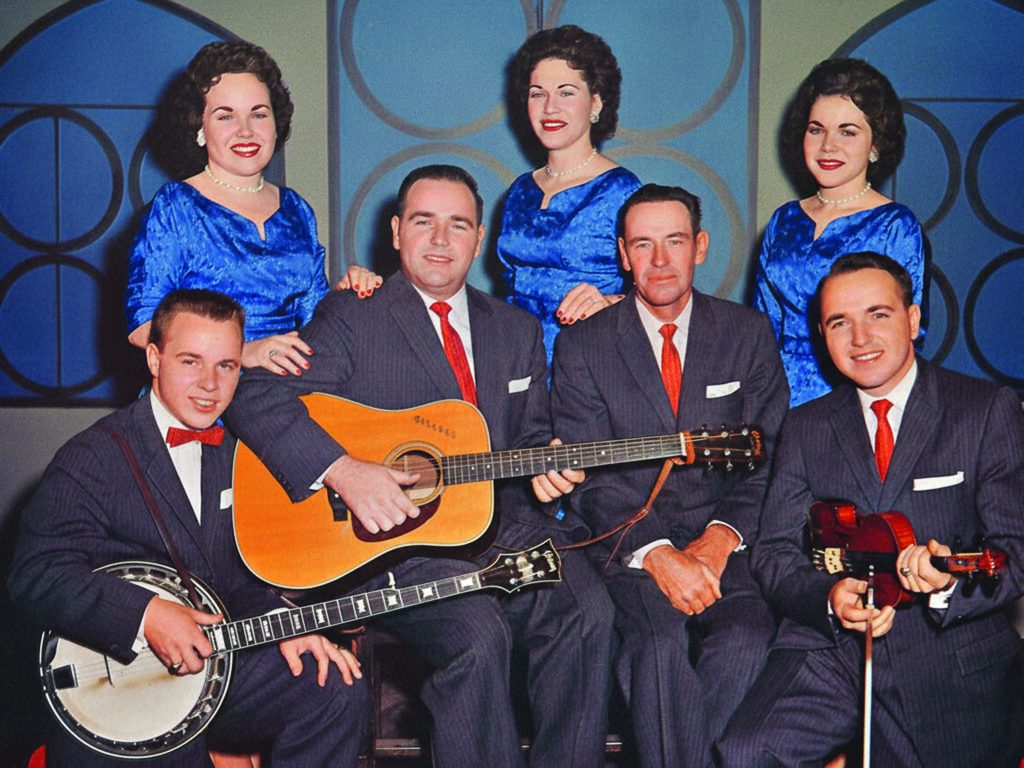
Born on December 31, 1934, Talmadge was the middle son of Roy “Pop” Lewis and Pauline “Mom” Lewis. Raised in Lincolnton, Georgia, he grew up in a family deeply rooted in music and faith. The Lewis Family, often referred to as “The First Family of Bluegrass Gospel Music,” began to evolve in the late 1940s when Talmadge and brothers Esley, Wallace, and (sometimes) Little Roy formed a group known as The Lewis Brothers; they played at local ice cream socials, square dances, and church gatherings. By 1951, the boys were joined by their sisters and father.
In addition to his musical duties, Talmadge was considered to be the group’s mechanic, often taking charge of the automotive repairs, maintenance, and driving chores.
The Lewis Family’s popularity soared in the 1950s and 1960s, with the group performing at churches, schools, and gospel concerts across the South. They shared the stage with legendary acts such as The Goodman Family, The Florida Boys, The Blackwoods, and The Statesmen Quartet. In 1954, the family began their long-running television show on WJBF-TV in Augusta, Georgia, which became a staple in many homes for years.
This same period witnessed numerous recordings by the Lewis Family, starting on the regional Sullivan label and then graduating to Starday and later Canaan. Talmadge appeared on over 250 songs and tunes that were issued on at least 20 different albums.
In 1972, Talmadge made the difficult decision to leave The Lewis Family to pursue a new path. His passion for buses and automobiles, which had developed during his years of driving the family bus on tour, led him to establish Talmadge Lewis Motors Inc. in 1967. Initially operating out of his home, Talmadge bought, renovated, and sold vehicles, eventually expanding his business to include leasing. By 1971, he had a fleet of 10 buses and formed Lewis Bus Lines, a charter bus service based in Augusta, Georgia.
Lewis Bus Lines quickly became a thriving enterprise, providing transportation for a diverse clientele, including bluegrass performers, church groups, rock stars, and tour groups. Talmadge’s dedication to quality and customer service earned him a reputation as a reliable and innovative businessman. His buses were known for their customized interiors, featuring amenities such as color TVs, stereos, microwave ovens, and beds.
Despite his departure from The Lewis Family, Talmadge remained connected to his roots. In 1979, he reunited with the group to celebrate the 25th anniversary of their television show. It was a special moment for the family and their fans, as Talmadge performed with his siblings for the first time since leaving the band. Annual reunions followed in the 1990s and early 2000s with performances at the Lewis Family Bluegrass Festival and Homecoming.
Talmadge’s entrepreneurial spirit continued to drive him throughout his life. He expanded Lewis Bus Lines to include group tours, offering comprehensive packages that included transportation, accommodations, and tickets to attractions. His vision and hard work transformed the company into a multifaceted business, providing new and used bus sales, parts, and service.
Beyond his professional achievements, Talmadge was a devoted family man and a pillar of his community. He was known for his kindness, humor, and unwavering dedication to his loved ones. His legacy lives on through his wife Cornelia, three sons, Joey, Stan, and Mike, and the countless lives he touched through his music and business.
Randall Cross “Randy” Stewart (June 10, 1948 – February 21, 2026) was among an elite group of excellent banjo players who hailed from the York County area of Central Pennsylvania. He counted among his peers such notables as Chis Warner, Tom Adams, and Bill Runkle. He performed in a number of groups over the years, left a number of recorded examples of his work, and aided others on their bluegrass journeys as an instructor of banjo, guitar, and mandolin playing for over 40 years.
Randy’s musical journey began in the early 1970s, and his first known recording was with The Carroll County Ramblers on their album Down to the Nitty Gritty in 1973, where he shared banjo duties with Chris Warner. In 1974, Randy joined Yonder City, a band formed by Dick Staber, and played alongside talented musicians such as Jon Glik, Alice Gerrard, and Chip Nasemore. A highlight from this period was the opportunity to back Bill Clifton at the Bluegrass Club of New York’s concert series, showcasing his versatility by playing bass.
In 1979, Randy joined Bob Paisley and the Southern Grass, a collaboration that would define much of his career. As a traditional banjo picker, Randy contributed his exceptional skills to the band, playing alongside bluegrass legends like Dan Paisley, Don Eldreth, and Jerry Lundy. His work with the Southern Grass included several notable recordings, such as Home Before Daybreak (1981), An Old Love Affair (1982), I Still Love You Yet (1985), and Live in Holland (1991). Randy also played on Footprints in the Snow, a live album featuring the band as a backup for several selections by country legend Rose Maddox.
Randy’s talents extended beyond performance; he co-wrote the tune “5 in G Minor” with Chris Warner, which was recorded on Warner’s album All Original in 1987. His contributions to bluegrass music were not limited to the stage or studio. Since 1974, Randy taught banjo, mandolin, and guitar at Campbell’s Music Service in York, Pennsylvania, where he inspired countless students and shared his love for music. He worked alongside Chris Warner, the shop’s resident set-up and repair expert, fostering a community of bluegrass enthusiasts. Warner noted that “Randy was one of my best friends and a very good banjo player and musician. He was very funny and intelligent. I’m glad to have had him as a friend.”
Longtime friend Carroll Swam recalled meeting Randy “around 1970 or 71. We went on a road trip down to Nashville with Larry Smith, a very good banjo player from York County. Larry had been teaching Randy, and Larry was going to audition with Bill Monroe‘s band. Randy was a good travel companion. Quiet but good-humored and interesting. The trip was quite an adventure, which included a lot of snow and some very interesting music. The trip included a visit to the old Ryman auditorium to hear the Opry and visit backstage. Randy was an outstanding teacher and worked for Campbell’s Music for many years.”
Randy’s career also included international performances, such as playing mandolin with Bob Paisley and the Southern Grass during their European tour in 1983. His dedication to traditional bluegrass music and his ability to connect with audiences made him a cherished figure in the genre.