Notes & Queries – February 2022
Queries:
Q – “Who is Carl E. Hoffman, who wrote ‘Ice Covered Birches,’ recorded by Cliff Waldron and the Po’ Ramblin’ Boys? It’s a great song, IMO, and rather unusual. It is more complex than most traditional bluegrass songs. The 3/4 time, the powerfully descriptive imagery, the unusual subject matter (there aren’t many Alaskan bluegrass songs!) and the choice of words and rhyming structure . . . I think it is very well crafted.” Penny Parsons, via email.
A: Carl Hoffman is a New Jersey native who has called Alaska home since 1973. A 2007 article in Bluegrass Unlimited tagged him as the “Father of Alaskan Bluegrass.” It was while doing construction work in The Last Frontier that Carl composed “Ice Covered Birches.” In a 2010 post to The Mudcat Café, Carl wrote:
“I am the author of the song, ICE-COVERED BIRCHES. I wrote the song back in 1971, several years before full-blown construction started on the TRANS-ALASKAN OIL PIPELINE. The song is about a construction worker, who was leaving his cabin (home) near Fairbanks, Alaska, to travel north to perform (preliminary) work on the PIPELINE’S routing ‘alignment,’ through the rugged Brooks (Mountain) Range. This early work was extremely dangerous; many did not return from this isolated wilderness. The worker’s morning departure from his Fairbanks cabin, followed a snow and ice storm, which had coated the birch trees, ‘bowing’ them almost to the ground. The ice-covered, ‘bowed’ birch trees, became a metaphor for the saddened heart of the girl, upon the departure of her ‘darlin’,’ leaving for this dangerous wilderness work. This is the context of the song’s inception.”
Cliff Waldron, then a rising star on the bluegrass horizon, had the first commercial release of the song. It appeared on his 1971 album on Rebel Records called Traveling Light. Cliff related recently that “Carl Hoffman booked a show in New Jersey with me and his band. Before the show he invited our band to dinner at his house. Before dinner he wanted me to hear this song he had just written. I and the band members all liked it. During the show, Carl and his band did it. I told him I would like to record it. He gave me the words and a tape. He told me he spent a lot of time in Alaska, that’s where he got the idea for this song. It was very easy to learn. Mike and Dave Aldridge and myself got some good harmony. It was one of those songs that just moved along and was easy to sing. It was one of my most requested songs.”
Hoffman, who alternated between guitar and banjo, began his life in bluegrass in 1962 when he formed the Pine Hill Ramblers. The group played in the New Jersey area for most of the next decade. He took time out from the Ramblers (ca. 1964-1966) to play banjo with Jimmy Moore and the Blue Mountain Boys. Carl recalled one double bill that included the Blue Mountain Boys and the Stanley Brothers. Traveling to the winter time show in Manville, New Jersey, was not kind to the Stanley Brothers’ instruments and Ralph Stanley had to warm his banjo by exposing it to the venue’s pizza oven!
The Pine Hill Ramblers recorded “Ice Covered Birches” for the Revonah label in 1972. Reviewing the group’s Further Up the River album for Muleskinner News, Bill Vernon noted that Carl has “blossomed into a superior song writer; seven of his original songs are included here; some have already been recorded by major artists.” BU’s own Walt Saunders predicted that Carl “could easily develop into one of the more significant bluegrass songwriters of this decade.”
Since those heady days of the early 1970s, “Ice Covered Birches” has been released and re-released a number of times. It was the title track of a 1981 album by White Mountain Bluegrass. In the 1990s, Rebel Records included it in its 4-CD boxed set 35 Years of the Best in Bluegrass Music as well as the (still available) retrospective Best Of collection by Cliff Waldron. The Virginia/North Carolina bluegrass-band-without-a-banjo Alternate Roots released a fine version on the group’s Tales of Love and Sorrow CD. Bringing the song into the twenty-first century (nearly fifty years after it was first introduced), The Po’ Ramblin’ Boys offer the most recent recording of “Ice Covered Birches” on their 2019 CD on Rounder Records: Toil, Tears and Trouble.
…and All That Jazz
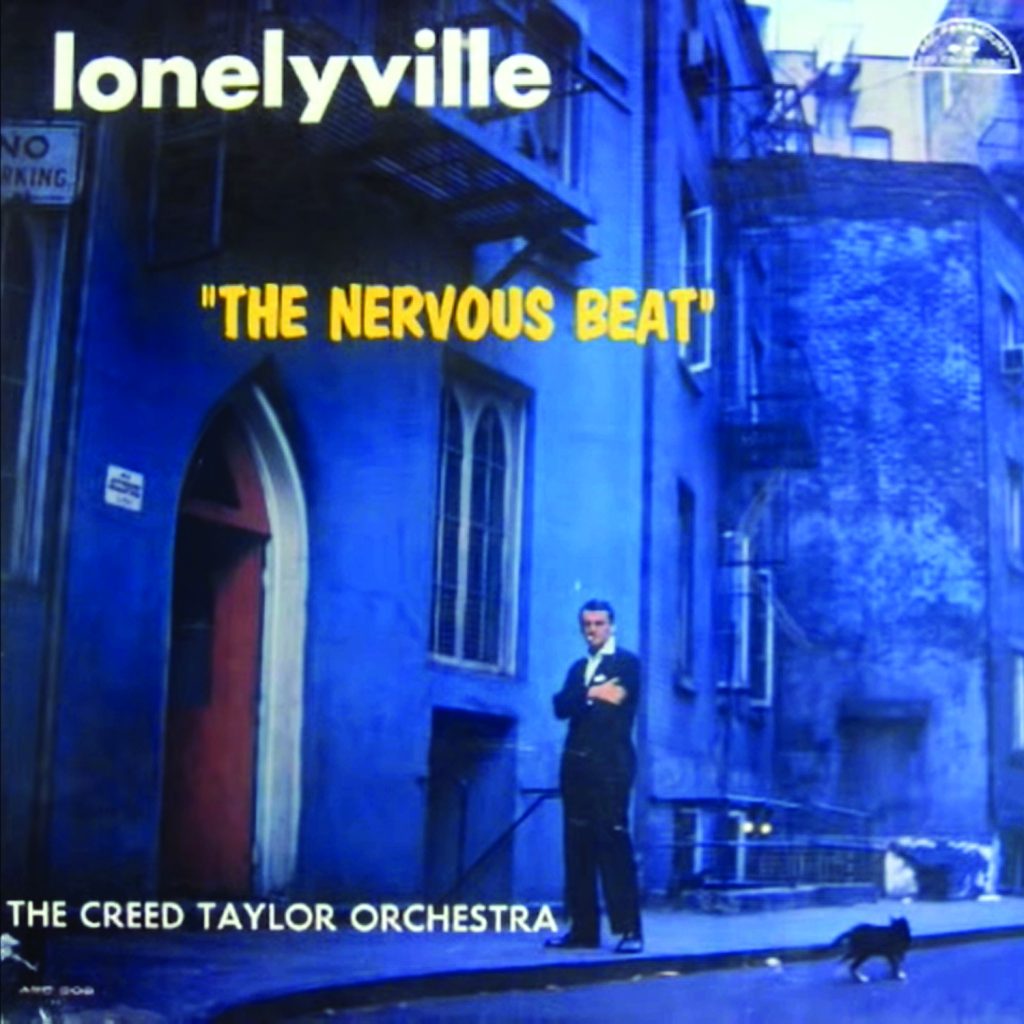
Well before bluegrass players such as Tony Rice began explorations into the world of jazz, at least one musician took an opposite approach by coming from the jazz world to tap into a bluegrass standard. In 1959, five years after the birth of the Newport Jazz Festival, a band leader by the name of Creed Taylor gave a solid jazz treatment to the Stanley Brothers’ “The Lonesome River.” The Creed Taylor Orchestra included it on the album Lonelyville: The Nervous Beat.
The album’s notes describe it as “restless, driving music that is descriptive of the younger generation’s personality. This personality speaks in the jazz tongue. The Nervous Beat is a dramatic approach to jazz-oriented rock-and-roll music.” Interesting that someone would think of “The Lonesome River” in these terms. However, it was pegged as one of several tunes having a “slower tempo.”
Taylor, who was born in 1929, was not exactly a fan of bluegrass, but he was well-acquainted with the genre. As a youth, his family divided time between Bedford, Virginia, and the tiny hamlet of White Gate. In 2008, he told JazzWax contributor Marc Myers that “the music I heard growing up was blue grass and Country music. I’d hear it all the time when we were living in White Gate. Our homestead was two mountains away from where the Carter Family lived. I used to go up to the local high school and listen to Bill Monroe, the Carter Family and all of those guys. There were fantastic fiddle players there—hoedown sort of stuff . . . So I heard this music all the time, both live and on the family radio.”
While admitting that bluegrass and country music “drove me nuts,” Taylor softened his position and “a few years ago I started listening to Country music again. My maturity has given me a new perspective on this genre.”
Billboard magazine characterized Lonelyville as “almost a hybrid of rock and roll and jazz. Many of the tunes feature an eight-to-the-bar beat and others a stroll rhythm, both of which should meet with teen-age favor. Yet the blowing ensemble and individual, has a distinct good free jazz quality. Solid for dancing.” Probably not the kind of dancing Carter Stanley envisioned when he wrote the song a decade earlier. (A YouTube search with the phrases “Lonesome River” and “Creed Taylor” pulls up a track that listeners can sample.)
Over Jordan
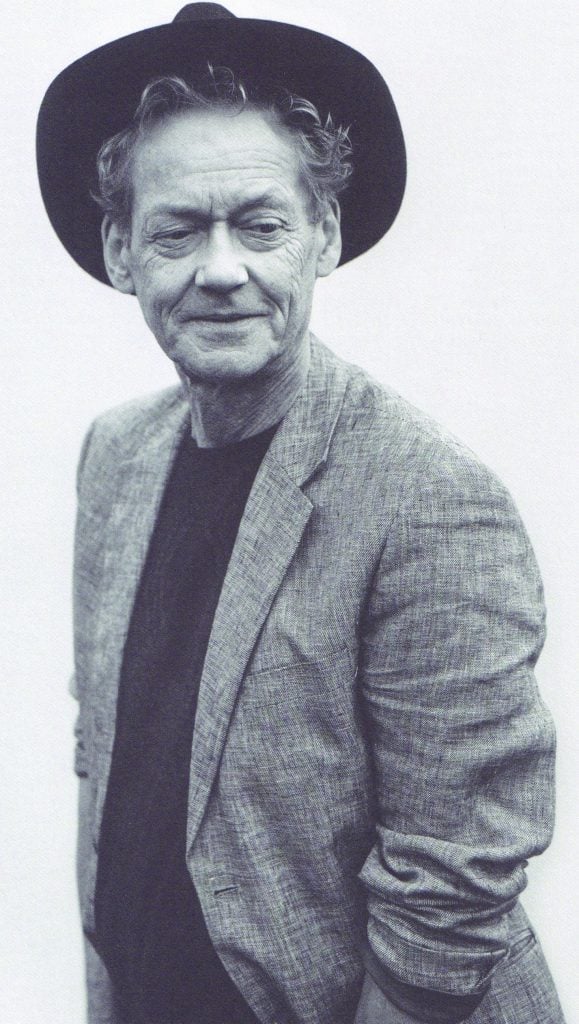
Johannes Bodiungius (January 10, 1948 – November 26, 2021) (Submitted by Rienk Janssen) A good friend of mine for many years, recently passed away. He was not only interested in bluegrass music, but also in blues and folk, being a talented singer-songwriter, and an accomplished guitar and bass player. In 1977, with some friends, he started his own Hotgrass, playing mostly around the group’s home town of Enschede in The Netherlands. Starting in the later 1980s, he was a member of the Dutch/German bluegrass band Groundspeed. After that, he was part of another famous Dutch band called 4 Wheel Drive.
In the early 1990s Johannes helped me organize tours for American bluegrass bands where, among other things, he often served as the bands’ driver. With the Good Ol’ Persons he played the bass during one of their tours, and can be heard on the 1995 Sugar Hill CD Good n’ Live – 20th Anniversary Collection.
During the 1990s, Johannes devoted his attention to his solo career and in 1997 released his first CD They Never Thought I’d Do It.
All of his adult life, Johannes suffered Crohn’s Disease, but it did not keep him from being active in the Dutch music scene. The last few years his kidneys started failing, eventually leading to him passing away. As he played a part in organizing tours for US bluegrass bands, and also performed music with them, I am sure they remember him and would like to know that he is no longer among us.
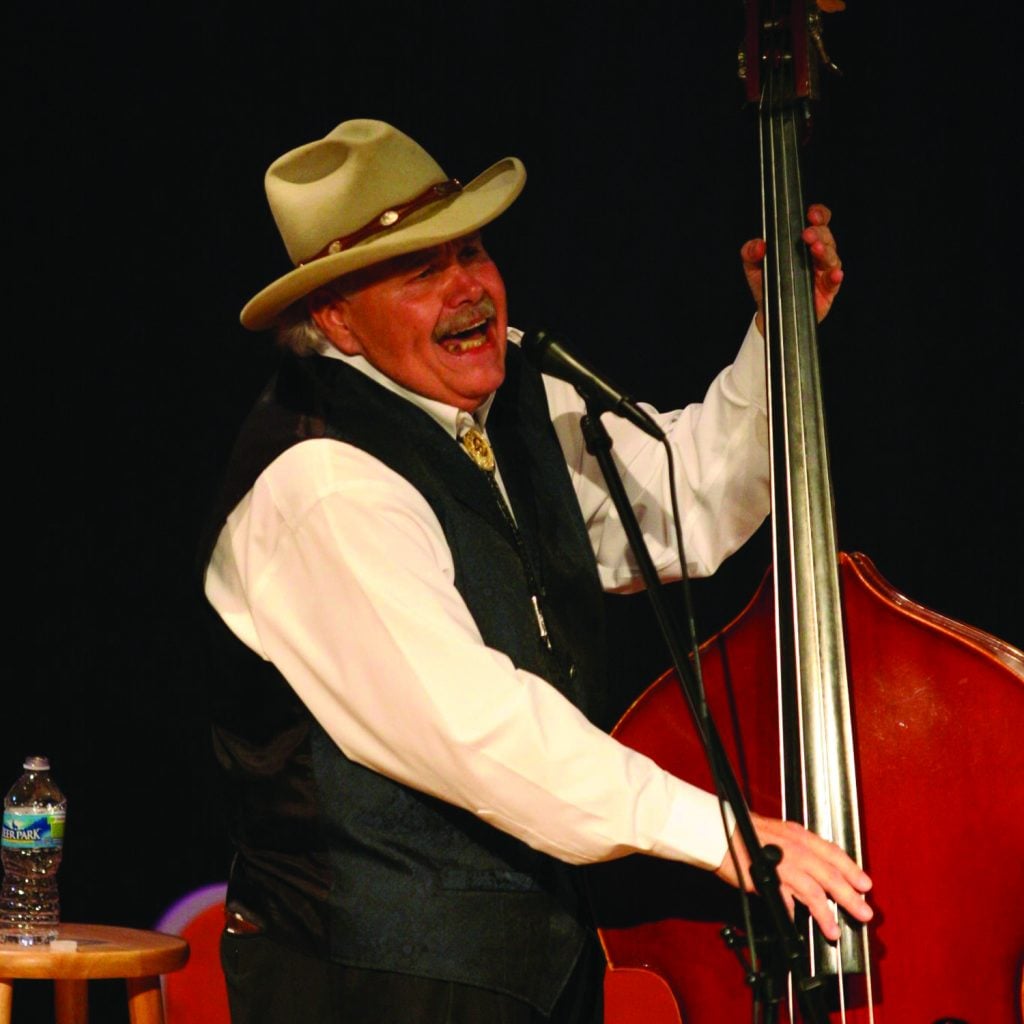
Jervis Jackson “Pete” Corum (November 4, 1948 – December 1, 2021) was a bass-playing native of Leaksville, North Carolina, who toured with a number of legendary performers including Lester Flatt and Bill Monroe. He got his start in music at age 13 by performing in his family’s band, The Sacred Singers. In the early 1970s, Pete played with a local North Carolina group called Pinetuckett and was also an early (1972) member of the Bluegrass Alliance when members there included Lonnie Peerce, Garland Shuping, Ronnie Privette, and Jack Lawrence. He also logged time with several North Carolina pickers who were known as the Roustabouts and stayed with them until the middle 1970s when he departed to work with Lester Flatt.
While touring with Flatt’s Nashville Grass, Pete appeared two of the group’s albums: Fantastic Pickin’ and Pickin’ Time. He had the honor of serving as a pallbearer for legendary Foggy Mountain Boys/Nashville Grass fiddler Paul Warren, who passed away in 1978. After Flatt’s own passing the following year, Pete remained on board with Curly Seckler at the helm. The band’s 1980 album Take a Little Time gave Pete a chance to shine on the solo “You Gotta Let All the Girls Know You’re a Cowboy.”
Pete released the first of two solo projects in 1980. Titled The House of the Rising Sun, the album featured backing by many of his bandmates from the Nashville Grass. Bluegrass Unlimited reviewer Frank Godbey characterized Pete as having a “a powerful, high pitch voice and [that] Lester Flatt usually featured him to advantage singing ‘Little Georgia Rose,’ which is included on the album.” Godbey also noted that Pete had logged time with James Monroe’s Midnight Ramblers.
In 1981, Pete turned his attention to acting and journeyed to New York where he was cast in a musical production called Cotton Patch Gospel. Using bluegrass for musical accompaniment, one account related that the “story retells the life of Jesus as if in modern day, rural Georgia.” The show ran for 193 performances at Lamb Theatre in New York and then went on the road for shows in select cities. One of his castmates was fellow North Carolinian Jim Lauderdale. Pete participated in the show when it went on road for appearances in select cities in 1984 and 1985.
Throughout the 1980s, 1990s, and into the 2000s, Pete worked with or fronted several of his own bands including Pete Corum and the Red River Band (ca. 1983), Pete Corum and the Rising Sun (ca. 1997), Missouri-based Cedar Hill (ca. 2006/2007), Jeff Whittington and the Brand New Opry Band (ca. 2011-2016), and New Southern Ground (2017). He also appeared in the bluegrass/gospel musical Smoke on the Mountain when it played in Greensboro, North Carolina (1995 and 1999).
Longtime friend Tom Isenhour remembered fondly that “Pete Corum lived the life of a true trooper in bluegrass music . . . Pete would deliver his best wherever or whomever he played with.”
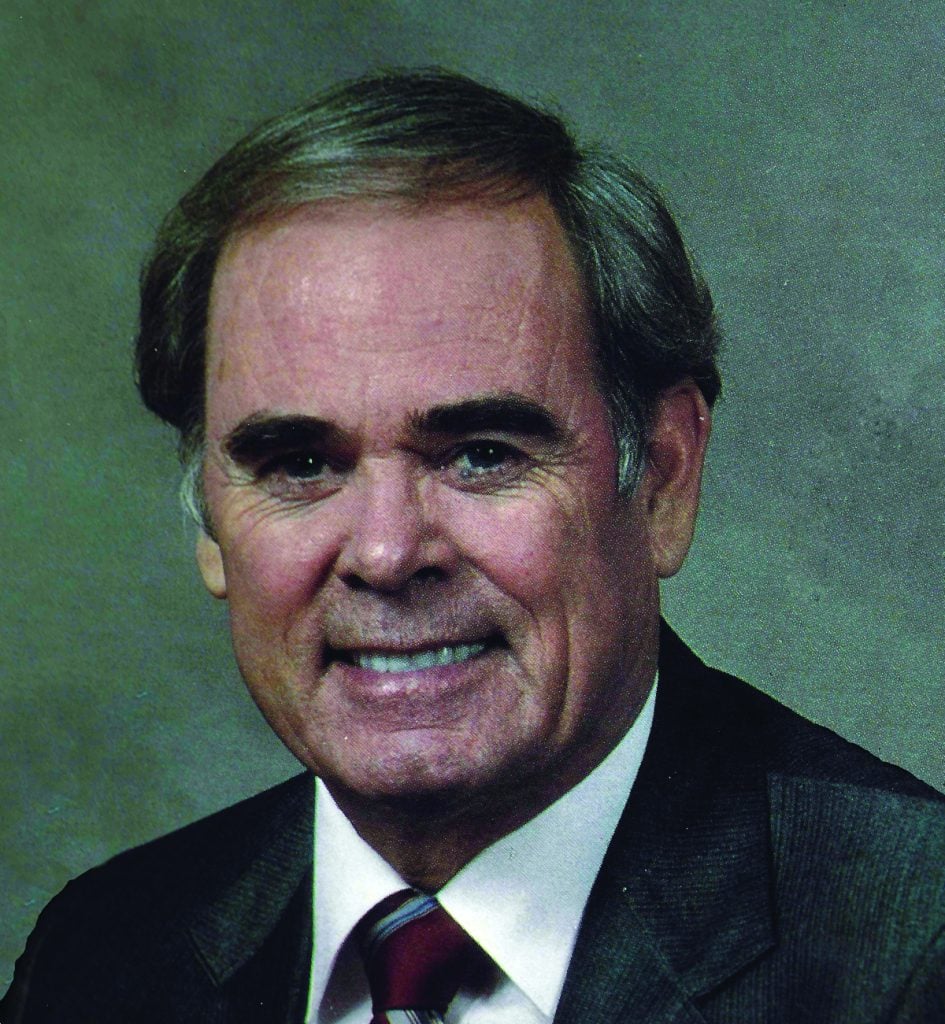
James Madison Easter (April 24, 1932 – November 29, 2021) was the last surviving member of the Easter Brothers bluegrass gospel group from Mount Airy, North Carolina. The group formed in 1956 with older brothers Russell and Edd; James joined them three years later. Prior to their conversion to Christianity, the boys honed their talents on secular music and James and Russell plied their trade in bars where they sang songs of the Monroe Brothers and the Louvin Brothers.
James’s story is very much that of the Easter Brothers. As a member of the group, he played guitar, provided tenor harmonies, and also handled some of the booking duties. In the late 1950s, the Easter Brothers made the acquaintance of Don Reno and Red Smiley as well as the duo’s manager, Carlton Haney. The association led to the pairing of the Easters and Reno & Smiley on numerous show dates throughout Virginia and North Carolina. Haney also brokered a deal to land the group’s first recordings to be released on the King label.
Throughout the 1960s and ‘70s, the Easter Brothers balanced day jobs with music. A string of recordings released on their own Green Valley label, on Carlton Haney’s Commandment imprint, and a heralded 1968 album on the County label did much to enhance the band’s standing. In 1979, the decision was made to enter the music world on a full-time basis. They expanded their performance territory to included much of the east coast and portions of the mid-west. A series of albums of the Rebel label captured the Easter Brothers’s solid bluegrass sound and introduced one of their most enduring songs, “They’re Holding Up the Ladder.” Also recorded was a tribute to their old mentors, Reno & Smiley.
Appearances on contemporary Christian television programs and record releases on mainstream Christian labels (which, at times, included electric instruments) further expanded the Easter Brothers’ fan base. James was responsible for what was probably the group’s most popular song, “Thank You, Lord, For Your Blessings On Me.” The song was written following a series of unfortunate events in James’s life and recounted the positive impact he experienced since “You gave me Your love, Lord.”
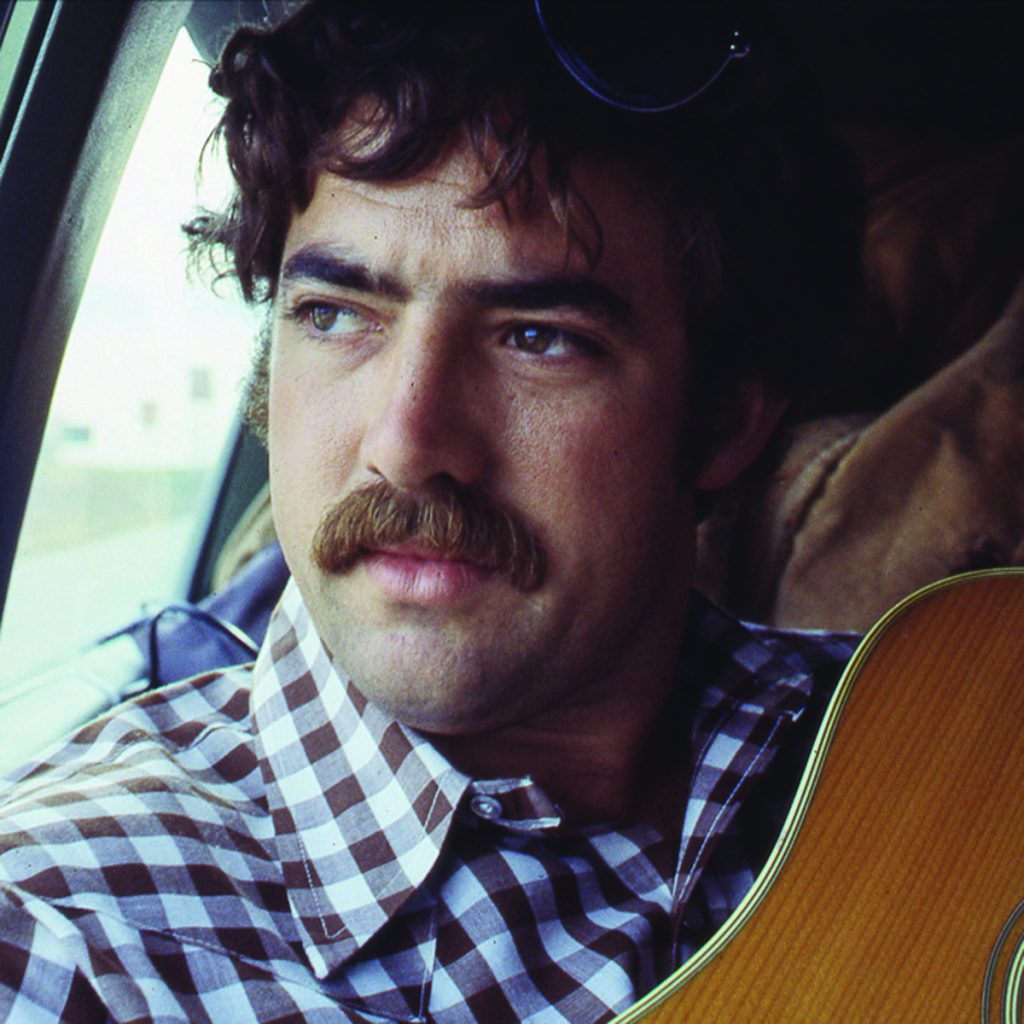
William Oneal “Bill” Holden (July 25, 1950 – November 15, 2021) enjoyed work as a banjo player in three high-profile bands during the 1970s: James Monroe and the Midnight Ramblers, the Country Gentlemen, and Bill Monroe and the Blue Grass Boys. In addition to Earl Scruggs, he counted banjo players Alan Munde, Eddie Shelton, and Walter Hensley as influences on his playing.
A native of Fort Worth, Texas, Bill arrived on the bluegrass scene in the early part of 1974 with James Monroe. Others in the band included fiddler Johnny Dacus and bass player Doug Hall. As the driver of the band’s Winnebago camper while en route to Milwaukee, Wisconsin, a shortcut-gone-wrong in Gary, Indiana, earned Bill the nickname of the Ole Path Finder!
At year’s end, Bill signed on with the Country Gentlemen, where he replaced the recently departed James Bailey. He logged a year and a half with the group and appeared on the album Joe’s Last Train. It was while work with the Gentlemen that Bill was named Most Promising Banjo Player by the readers of Muleskinner News. Bill’s age (25) and the lack of a CDL license, prevented him from driving the Country Gentlemen’s bus. He did, however, ride shotgun and oftentimes played his banjo to keep bus driver/bass player Bill Yates awake. On numerous occasions, the pair used the bus’s CB radio to broadcast “Foggy Mountain Breakdown” to passing truckers.
In September 1976, Bill was hired by Bill Monroe. Unlike other musicians, such as Bill Keith (who was introduced by Monroe as Brad Keith), Bill Holden was one of only a few Blue Grass Boys who was able to retain their given first name.
Bill had been with Monroe for less than a month when he found himself in the studio helping to record the album Bill Monroe Sings Bluegrass, Body and Soul. In January 1977, Monroe and the Blue Grass Boys toured Japan for ten days. After a brief hiatus that started in mid-March, Bill Holden returned in time for recording sessions in July 1977; the songs and tunes were released on an album entitled Bluegrass Memories. Monroe liked the chime that Holden added to “My Christmas Memories” and insisted the subsequent banjo players repeat the technique. The album also contained an original instrumental that Bill Holden put together called “Pinewood Valley.”
Disillusioned with the low pay afforded to most bluegrass musicians, Bill’s stint with Monroe proved to be his last steady music-related work. He did some occasional fill-in dates when Peter Rowan toured in Texas and even appeared on Rowan’s 2002 CD called Reggaebilly. By his own estimation, Bill didn’t do any serious banjo playing after 1985. A large part of his post-music career was spent as a long-haul trucker. He had relocated to Knoxville, Tennessee, shortly before his passing.
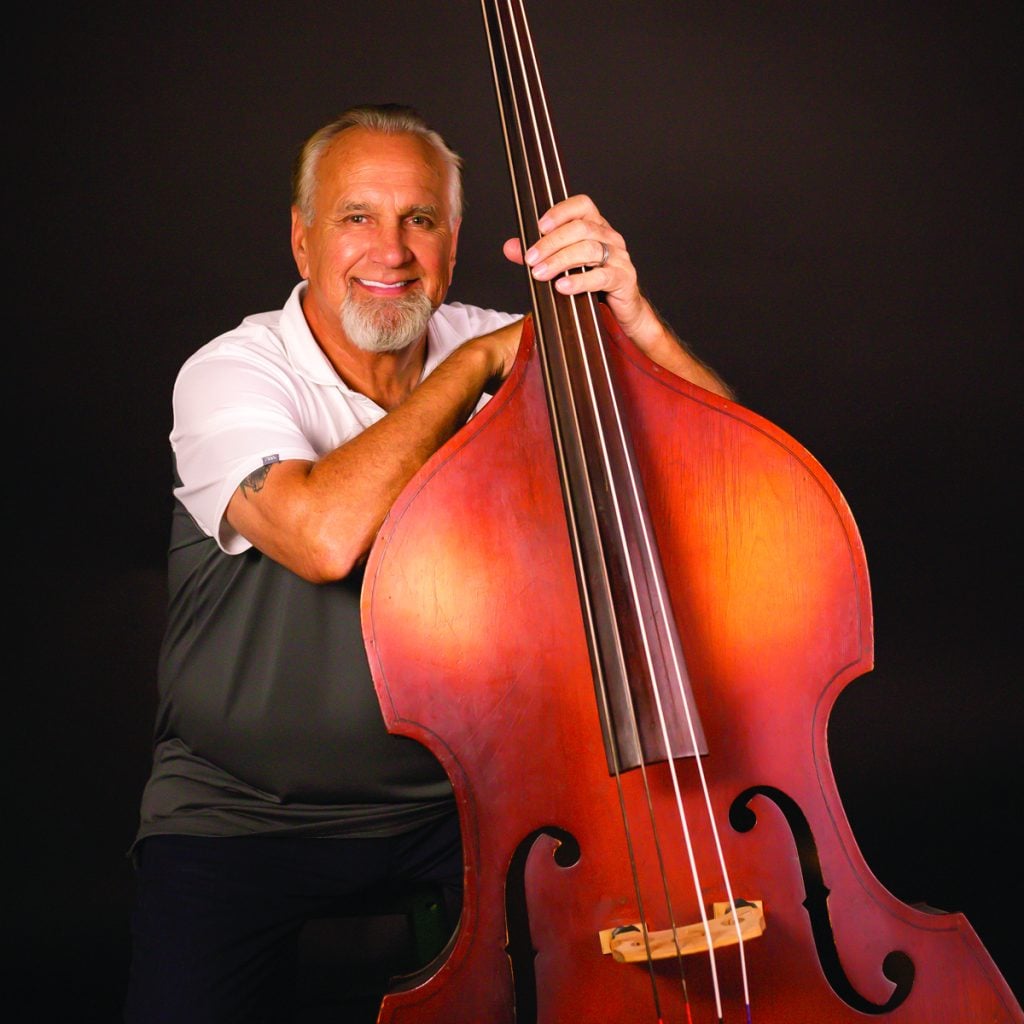
Barry Kratzer (October 12, 1954 – December 4, 2021) (Submitted by Paul Harris) Luthier and multi-instrumentalist Barry Kratzer succumbed to a heart attack recently. Born in Allentown, Pennsylvania, he joined the army after high school and served through the Iraq war. After retiring, he moved to Savannah and began doing instrument repair work for Randy Wood. Later he teamed with fellow luthier Mark Gresham to produce guitars and mandolins but soon dissolved that partnership to concentrate on his own “Bulldog” mandolins.
“Bulldog” mandolins quickly evolved to “Kratzer” mandolins then recently “Kratzer” guitars, basses and dobros. Over the years Barry played with many groups but dedicated his last twelve years as bassist and vocalist for Southern Tied. He is survived by his wife, Sabine, and daughters, Amanda and Allison. He will be deeply missed by the bluegrass community.
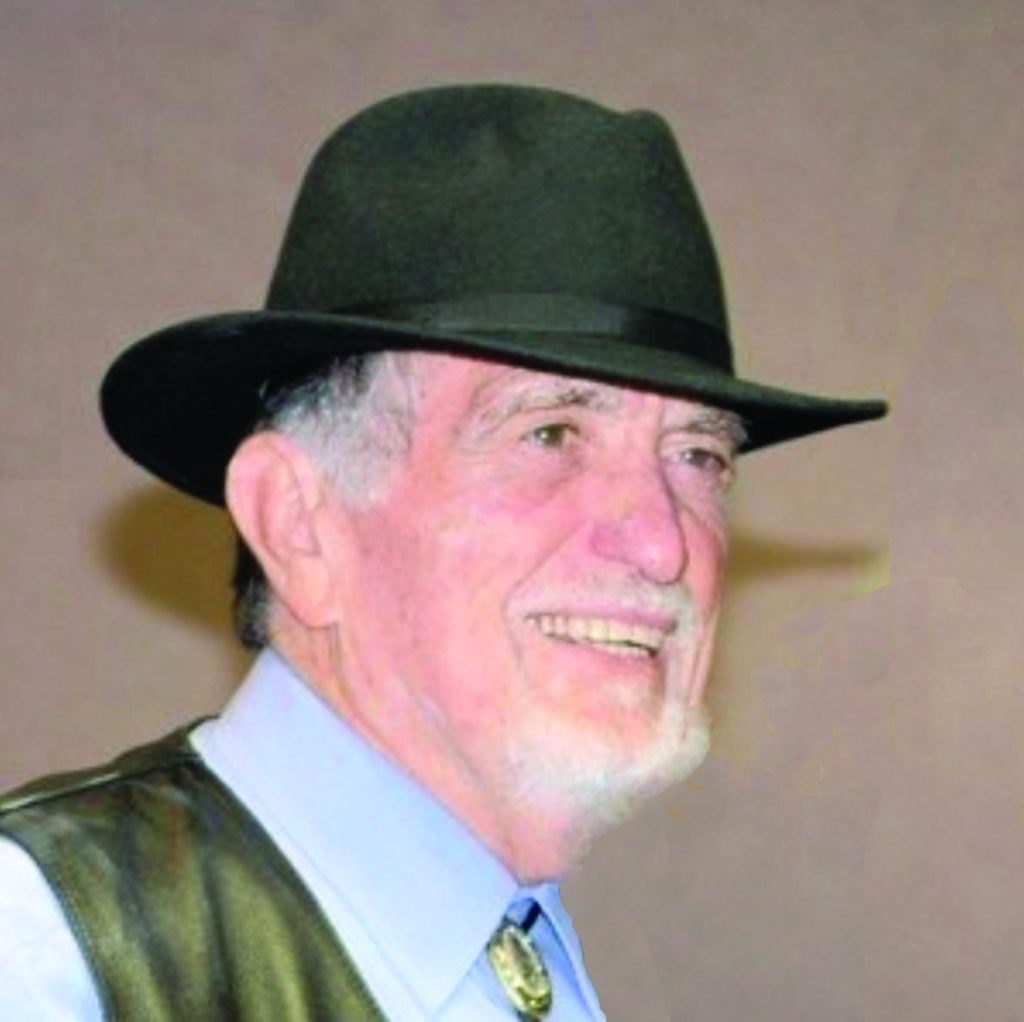
Harvey Calvin “Cal” Newman (November 27, 1932 – November 13, 2021) was a native of Chesterfield County, Virginia, and was a life-long fiddle player. In August 1969, Cal told the Petersburg, Virginia, newspaper The Progress-Index, “I really don’t know how I got started playing the fiddle. My dad and my brother both fiddled, and I guess it just came natural . . . Ever since I can remember, I’ve heard the fiddle being played, and I guess the tunes just got worked into my subconscious.”
As a teen, he listened to the Old Dominion Barn Dance from Richmond, Virginia, and later served as a back-up musician on the program. In 1953, he started competing in the National Country Music Championship that was held in Warrenton, Virginia. He took first place honors there in 1959 (taking the title from Scotty Stoneman), 1966, and 1969. He also competed in competitions in Crewe, Virginia, that were sponsored by the Virginia Folk Music Association. His group, the Virginia Playboys of Alexandria, Virginia, was voted best folk music band. In 1962, Newman took first place in the association’s fiddle competition.
Newman is reported to have toured with the Osborne Brothers during part of the 1950s. But, throughout most of his adult life, music was an avocation. From 1956 to 1966, he worked for McGuire Television in Richmond as a repairman and then logged twenty-five years with AT&T (1966 – 1991).
Throughout the 1960s and ‘70s, Cal performed at Hunters Lodge, a popular venue for bluegrass and country music in Fairfax, Virginia. He also performed on Richmond’s WWBT-TV with a group known as the Domoinionaires. Behind the scenes, Cal served on the board of directors of the Virginia Folk Music Association and in 1979 was inducted into the Virginia Country Music Hall of Fame.
The 1990s found Cal performing at the Old Dominion Opry in Williamsburg, Virginia from 1991 to 1997. His most recent work, from 2015 to 2018, was as a member of the “new” Old Dominion Barn Dance.
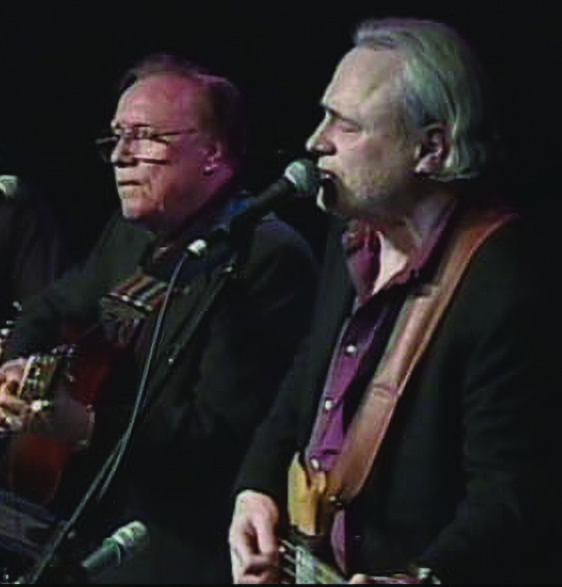
Gary Eugene Scruggs (May 18, 1949 – December 1, 2021) was the oldest son of Earl and Louise Scruggs. The Scruggs family was well-known for its contributions to bluegrass and country music. Earl, of course, was credited with revolutionizing the role of the banjo in American country music while Louise charted a course as a pioneering woman in the then-male-dominated Nashville-based country music industry. Gary’s own contributions were many and included life in the spotlight as a member of the Earl Scruggs Revue, as a producer and road musician with Waylon Jennings, and as a songwriter with over 500 published songs to his credit.
Coming from a music-centric household, Gary’s entree to the world of music seemed all but assured. From grade school through high school, he played trumpet in school bands. His first stringed instrument was the guitar, on which his father got him started with his first few chords. At age 17, he made his first trip to the recording studio on a session with Flatt & Scruggs. Throughout 1967 and 1968, Gary appeared on eleven different sessions with the band as a rhythm guitarist and harmony vocalist. A September 17, 1968, session included one of his first attempts at composition, “Frieda Florentine.” As a whole, the material was released on three different albums and represented a more contemporary side of the group: Changin’ Times, The Story of Bonnie and Clyde, and Nashville Airplane.
Following the dissolution of the Flatt & Scruggs duo, Earl and sons Gary and Randy assembled The Earl Scruggs Revue. The act, described as progressive country rock, featured Gary as guitarist and lead singer. The group enjoyed a brisk trade, especially on college campuses, during the 1970s. The early days of the Revue saw the release of two albums by Gary and Randy, who were billed as The Scruggs Brothers. All the Way Home was a mixture of 1960s folk and traditional songs while The Scruggs Brothers highlighted original songs by Gary and Randy mixed with contemporary fare.
In 1980, Gary and Randy exited from the Revue to explore opportunities together, including a new studio, Scruggs Sound. Gary also used the time to further develop his songwriting. Although the majority of his work was for mainstream country artists, his name appears in the credits of a number of influential bluegrass projects as well.
Among Gary’s bluegrass songwriting and co-writing credits are “True Love Will Never Die” from Del McCoury’s A Deeper Shade of Blue, “Lazarus” from Blue Highway’s Marbletown, “Falling” from Valerie Smith’s That’s What Love Can Do, “Can’t Have One Without the Other” from Wildfire’s Rattle of the Chains, and “Daddy Played the Banjo” from the Live DVD by Edie Brickell, Steve Martin, and the Steep Canyon Rangers.
As a performer, Gary added his talents to the Nitty Gritty Dirt Band’s Will the Circle Be Unbroken albums and CDs, The Story Teller and the Banjo Man by Earl Scruggs and Tom T. Hall, Earl Scruggs and Friends, The Three Pickers (with Earl Scruggs, Doc Watson, and Ricky Skaggs), and one track (“With Body and Soul”) from 1983’s Bill Monroe and Friends album.