Notes & Queries – August
Queries
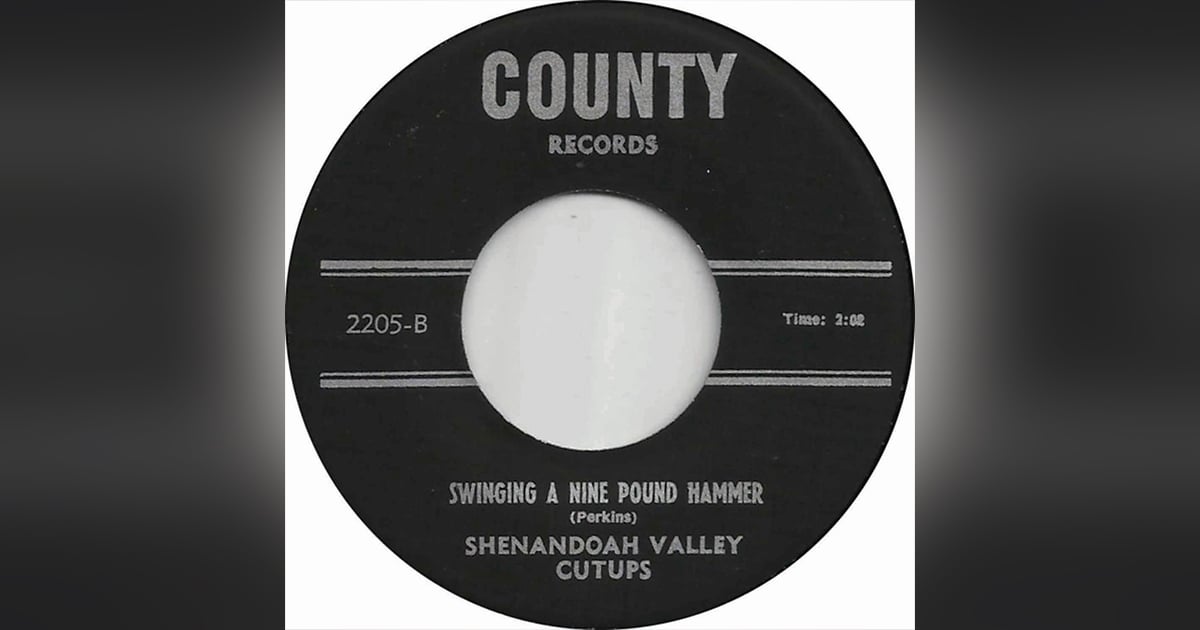
Q: I’ve always liked the song “Swinging A Nine Pound Hammer,” which I first heard from the singing of Mac Martin (from a 1970 album). I later heard live versions by Ralph Stanley (his first issue of the song was from 1983 on the Live At Old Home Place LP). I’ve long wondered where this song came from. Yesterday I discovered that one of the handful of 45 RPM records issued by County Records in NYC featured this song, as performed by the Shenandoah Valley Cutups (who I assume to be Tater Tate, Hershel Sizemore, Billy Edwards, and John Palmer). I am guessing that this County record is from 1970 or so. The County record label attributes “Swinging A Nine Pound Hammer” to “Perkins.” The first Stanley issue of the song attributes it to “E. Macgregor.” I have no idea who Perkins is; Macgregor seems to be a fictitious name associated with Zap Publishing. Mac Martin’s Just Like Old Times back cover says it is “a contemporary song learned from a lesser-known bluegrass band.” So now I am wondering if Martin learned the song from the Shenandoah Valley Cutups. — Todd Gracyk, Petaluma, California
A: This was discussed in the February and May 2017 editions of “Notes & Queries.” Jerry Steinberg suggested that David Perkins (“that’s just a guess,” he wrote) was the author of the song. Since then, it has come to light that the song was originally published as “Swinging a Hammer” and the author was listed as David Lee Perkins. It was registered with BMI as being published by Live Wire Music Publishers.
Perkins (October 16, 1933 – June 3, 2006) was a North Carolina native who worked out of the Greensboro area in the middle 1960s. He was active as a songwriter, a music publisher, and a record label owner. As a songwriter, he had 133 songs to his credit and his publishing catalog contained 123 songs. Perkins’ label, Tornado Records, was active from 1964 until 1967 and issued approximately sixty-five 45 rpm singles and at least one long play album. Among the artists featured on the label were Joe Stone, Bobby Atkins, Glenn Thompson, and Allen Mills. An item from the April 1968 edition of Bluegrass Unlimited told that Perkins, “along with some of my associates, have about completed plans and arrangements to begin operations of a 1000-watt radio station in this locality [Gibsonville, North Carolina], on which we intend to feature only old-time bluegrass, bluegrass and bluegrass gospel music in our programming!”
It appears that the first release of the song was by the Shenandoah Cut-Ups on their County single; it was first advertised in the July 1971 County Sales newsletter. It’s possible that Red Smiley recorded the song earlier, but it was not released until 1974 when it appeared on the Japanese Seven Seas label. More recently, the song appeared on IIIrd Tyme Out’s 2006 release Live at the Mac and fiddler Adam Burrows, currently touring with Larry Efaw’s Bluegrass Mountaineers, included it on his 2019 CD It’s Called Bluegrass.
From the Mailbox
In answer to Jody Stecher’s inquiry in the June issue in “N & Q” about Stoney Cooper’s “non-fiddle playing,”we heard from Tom Laing of Waterford, Michigan, who wrote: I can recall my experiences as a youngster of nine or ten years old in the middle 1940s.
My father, who founded the department of Sociology at Kent State University in the mid-1930s, took me to a Sunday concert at Kent State’s auditorium around 1944 or 1945. This was my first live concert of country and bluegrass music and triggered my interest in that genre. It was an appearance from W.W.V.A. Wheeling’s Jamboree artists and in addition to Wilma Lee & Stoney Cooper included Doc Williams and the Border Riders and Joe Barker and the Chuckwagon Gang.
My father, in his high school and college days in West Virginia, was classically trained and performed reasonably well on violin. I can recall that at this concert and subsequent concerts he never failed to critique the fiddler we saw as to bow technique, tone, etc.
With regard to Stoney, who I saw a number of times actively playing fiddle, my father’s comments simply indicated that it was “easy to see he wasn’t classically trained.”
However, we should probably note that both Wilma Lee & Stoney were college graduates, which I suspect was very rare for artists during the 1940s and 1950s.
“Rock Salt and Nails”
Canadian reader Dick Richards was prompted to reach out after reading one of Murphy Henry’s recent “General Store” columns. He wrote: “I appreciate you highlighting Ian Tyson’s iconic Canadian classic, ‘Summer Wages,’ easily my favorite Canadian song, ever. As you note, J. D. is confined to vocals on that cut. This sent me to my disc of Rounder 0044 and to my astonishment, the credits for the whole disc list him as banjo and baritone vocals, no guitar on any cut.
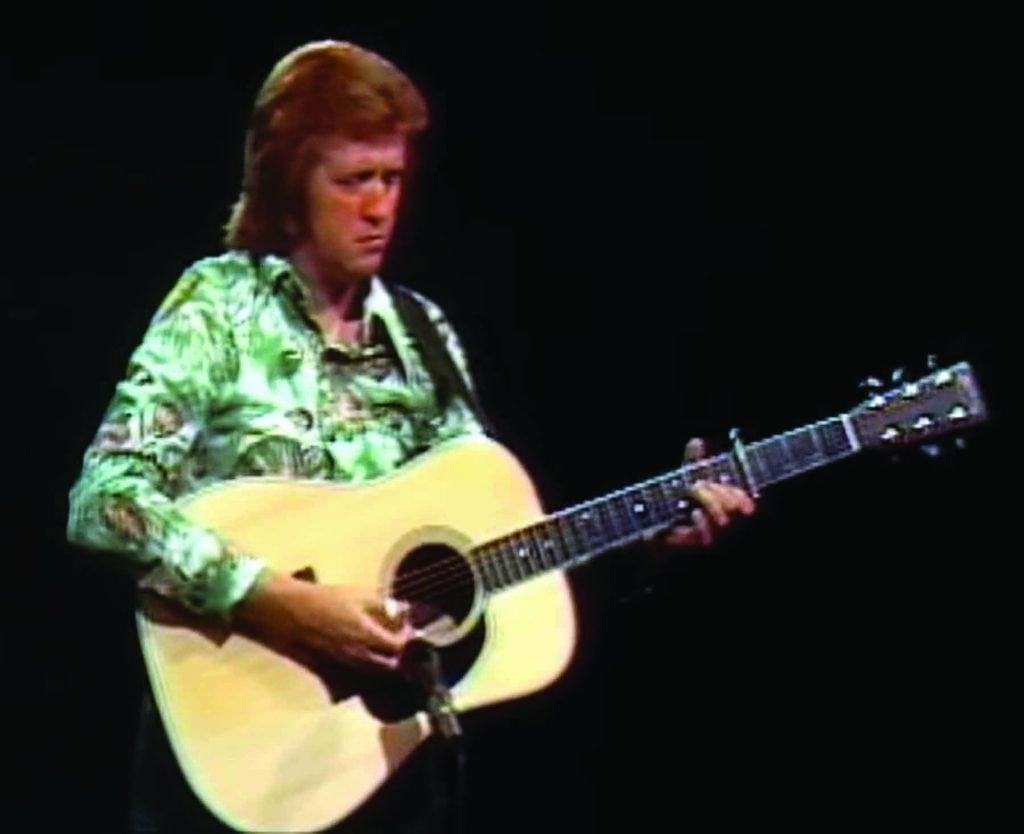
“But the opening licks for ‘Rock Salt and Nails,’ has long intrigued me and I spent considerable time trying to discover who played them. At a New South concert, I asked Glen Lawson about it and he said probably J. D. However, J. D. said he couldn’t remember the actual recording. The KET (Kentucky Educational Television) video of the New South up on YouTube (ca. 1977), clearly shows J. D. playing those licks capoed up to the 4th fret with finger picks. Tony plays a second guitar. From that I concluded it was J. D. on guitar on the disc.
“In reminiscences of his passing, I posted the story a few times to show what a great guitarist J. D. was. Now according to the Rounder notes, I am wrong, it had to be Tony, no other guitarist is credited. I am wondering if you can shed any light on this, or have any thoughts.”
For an authoritative answer, we reached out to Tim Stafford, guitarist for Blue Highway and co-author of the book Still Inside: The Tony Rice Story. He told us, “It was definitely J. D. on guitar kicking off the song and playing tasteful backup in the C position while Tony played rhythm in D position. The KET video was done around the same time as the recording and kicks off with J. D.’s guitar intro to ‘Rock Salt and Nails’.”
Over Jordan
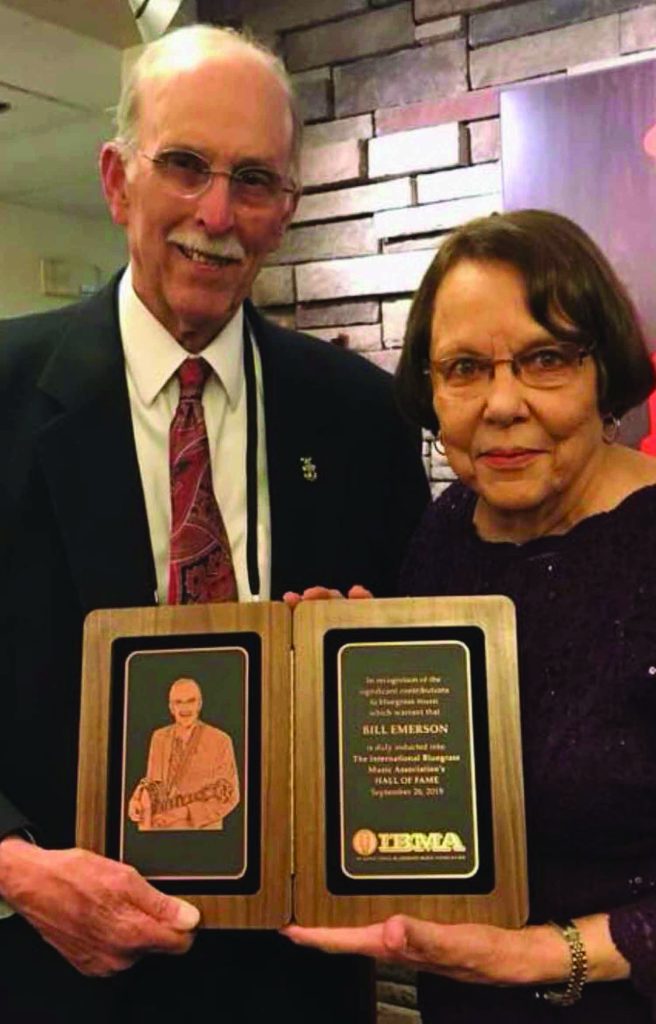
Lola Grey Ashley Emerson (March 27, 1936 – May 19, 2022) was the wife and ardent supporter of banjo player Bill Emerson. A native of Washington County, Virginia, she relocated to Northern Virginia shortly after graduating from high school (ca. 1954). There, she embarked on a seventeen-year career with the U.S. Army Security Agency. It was during this time that she met Bill Emerson; the couple married on July 28, 1963.
Lola was an early member of the Bluegrass Unlimited staff. She came on board in December 1967 and shared duties for securing advertising for the magazine. Eventually she assumed sole responsibility for magazine advertising. From March 1970 until January 1971, Lola functioned as a general staff person at the magazine. As time drew near for the birth of Bill and Lola’s youngest son, Billy, in April 1971, she departed from both the U.S. Army Security Agency and Bluegrass Unlimited to become a full-time mother and homemaker.
The Emersons enjoyed a family that included three sons, six grandchildren, and two great grandchildren.
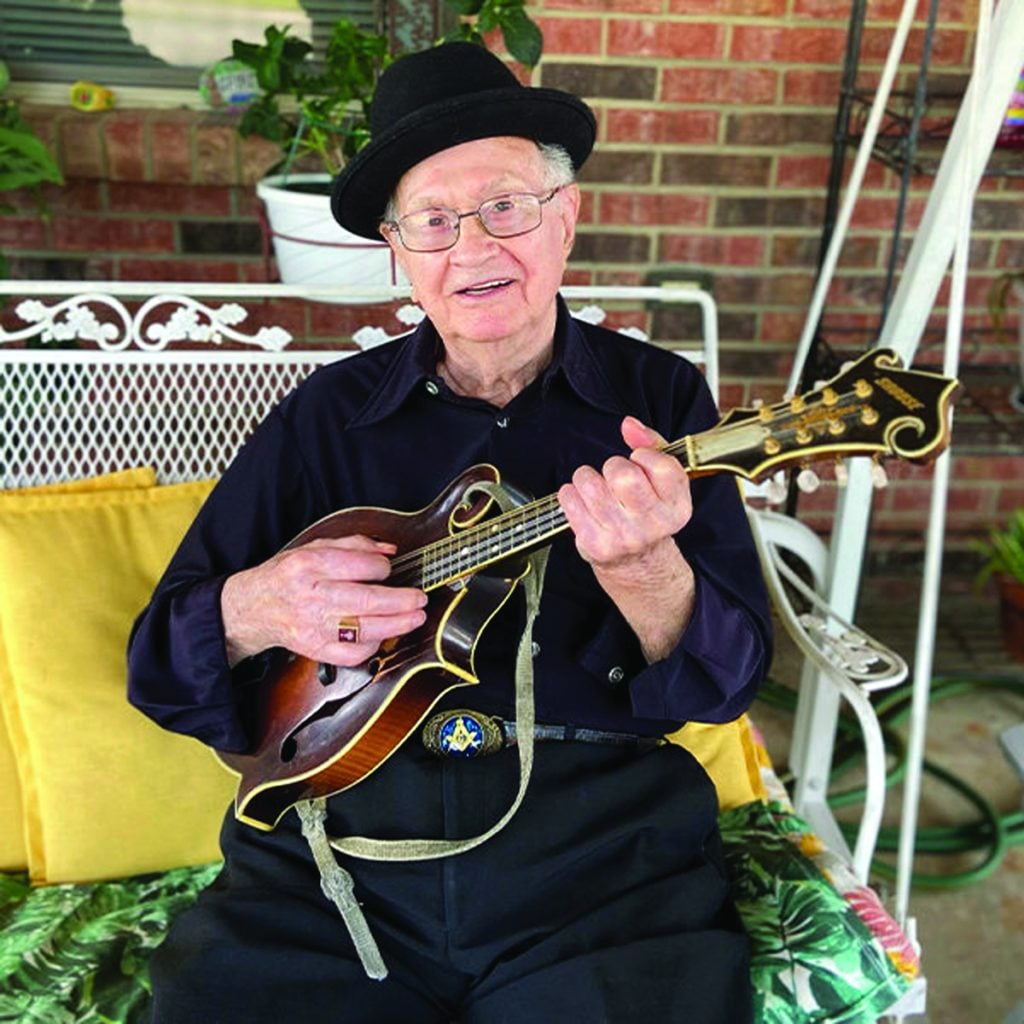
Lee Nolan Faulkner (June 18, 1932 – May 25, 2022) was a Kentucky-born mandolin player who spent much of his adult life in Detroit and surrounding areas. Bluegrass Unlimited contributor Frank Godbey wrote that Faulkner’s music was “highly personal mandolin playing with a decided and deliberate bluesy sound to it.” His style was definitely rooted in tradition. By his own admission, “I was interested in the playing of Bill Monroe and Pee Wee Lambert and tried to play like them. They were the only mandolin players that I could hear on the radio and records.”
Nolan started his musical journey on guitar, as a youth on his family’s farm in Kentucky. A few years later, when Nolan was around age fourteen, his brother ordered a $16.00 mandolin through the mail. This started him on the instrument that would be the central focus of his musical talents for the rest of his life.
Throughout most of 1950, Nolan performed (on guitar) with the Powell County Boys. The group appeared regularly on the Kentucky Mountain Barn Dance in Lexington, Kentucky. They shared the stage with two of bluegrass music’s earliest luminaries, Flatt & Scruggs and the Stanley Brothers. Still on guitar, Nolan did some of his first radio work in the early part of 1951 with a group headed by Dallas Riddell; they broadcast over WVLK in Versailles, Kentucky.
Following a move to Michigan in the 1950s, Nolan had numerous opportunities for playing music. Throughout the early and middle 1960s, he performed with Red Ellis and the Huron Valley Boys. In the middle and late 1960s, he fronted his own group the Big Sandy Boys. During the early and middle 1970s, he played with a group of ex-Kentuckians who were known as the Miller Brothers. Nolan recorded several albums with the Millers. And, in the middle and late 1970s, he worked in partnership with Robert White to co-lead the Candy Mountain Boys.
By now, Nolan was known for what Frank Godbey described as “the emotion and feeling [he] put into each performance” which resulted in “consistently intense” excursions on the mandolin. It was during this same period that Nolan became an in-demand mandolin player for session work. Some of the more high-profile artists he recorded with were old-time banjo picker Wade Mainer and ace fiddler Joe Meadows. He also recorded a solo project called Legendary Kentucky Mandolin.
As the victim of a robbery in Detroit in 1979, Nolan’s body carried four bullets for the rest of his life. The fact that he survived what should have been a fatal attack resulted in his acquiring the nickname “Miracle Man.” Following many months of rehabilitation, he was able to return to picking and singing.
Eventually, Nolan returned to his native Kentucky to be near his daughter. While still maintaining his musical talents well into his middle and late 80s, he lamented the fact that there was no one to play with.
Foy Davis “Dave” Osborne (May 6, 1947 – June 8, 2022) was a fixture of the North Carolina bluegrass music scene for half a century. He was known to many as the proprietor of Greensboro’s Music Barn, a store that catered to bluegrass pickers with a full line of quality, name brand instruments. He also offered lessons to several generations of aspiring players. In addition to his own talents on banjo, the Music Barn also offered music instruction by bluegrass legend Bobby Hicks, Craig Smith, and others.
Dave was a self-taught musician who learned the basics on a banjo that belonged to his grandfather. In 1976, he told Ed Davis of the Greensboro Daily News that “back when I was coming up . . . you had to pick up bits and pieces here and there if you could find somebody who could already play, and you had to learn the best way you could.”
Osborne later took a number of non-bluegrass detours that included a hitch in the army during the Vietnam conflict; he served as part of a troupe that entertained servicemen who were stationed in Southeast Asia. Upon his return to the States, he wound up in California and rubbed elbows with Hollywood celebrities including John Wayne and Lucille Ball. Dave is reported to have had a small part in the John Wayne film The Green Berets and did a skit on the Merv Griffin Show with Carol Burnett sidekick Vicki Lawrence. Musically, he performed with Hawaiian bandleader Don Ho and country crooner Faron Young.
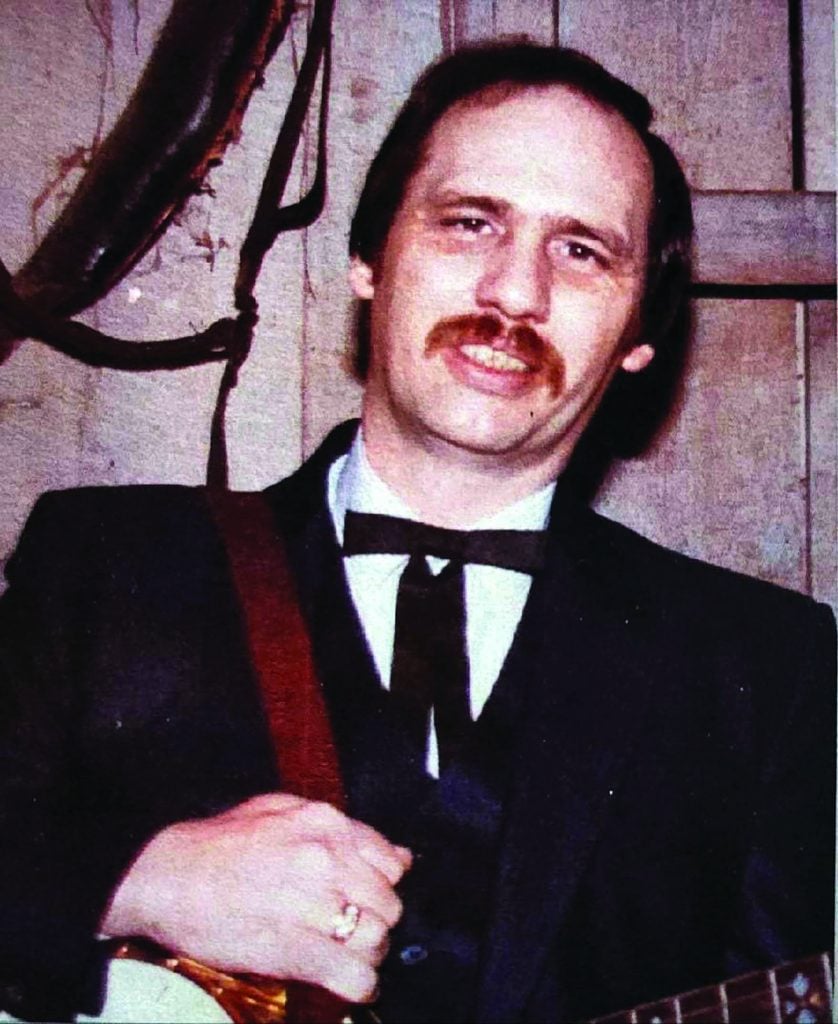
Returning to North Carolina in 1972, Dave fueled his obsession for bluegrass by performing in a group called the Pickwick Pickers; they maintained a steady following among University of North Carolina students. His longest-running venture was launched in 1972 when he opened the Music Barn. The store’s first location was literally a barn that was situated on family property. The store moved into Greensboro in January 1976 and in 2022 celebrated its fiftieth anniversary.
For Osborne, the Music Barn was more than just a place to merchandise instruments and related items. Speaking again with Ed Davis, he said “I wish people could just see and feel the rapport at the jam sessions between the musicians —between the kids just learning and progressing up the ladder and the older ones who’ll stop and take the time to show them and help them learn.”
While the store provided space for local jam sessions, Osborne saw a need for a venue where professional touring acts could perform. In May 1978, he opened Fiddlers Cove nightclub in downtown Greensboro and hosted shows by the Country Gentlemen, the Osborne Brothers, Ralph Stanley, Don Reno, the Bluegrass Cardinals, J. D. Crowe, Buck White & the Down Home Folk with Ricky Skaggs, Spectrum, Country Gazette, Doyle Lawson & Quicksilver, and others.
In the midst of his entrepreneurial endeavors, Dave always carved out time for making music. In 1976, he played fiddle and banjo in a band headed by Sarge Fuller called Southern Comfort. By January 1981, he had joined A. L. Wood and the Smokey Ridge Boys. The band leader noted that “Dave has a lot of ‘moxie’ about music and how things work . . . plus he adds a lot to the group with the fiddle.”
At the same time, Dave also found time to front a band of his own, Southern Blend. The group recorded an album of Flatt & Scruggs favorites that was released on the Rich-R-Tone label. In commenting on Osborne’s work with Southern Blend, columnist Bill Vernon tagged him as “the ideal all-purpose professional . . . [he has] developed a relationship with the banjo in a certain tone, quality and taste that few ever accomplish.” Talent, no doubt, played a big part in Vernon’s assessment but so, too, did his tools of the trade. For years, Dave’s prize possession was an early 1930s Gibson original flathead Granada banjo with an original 5-string neck. It was one of only seventeen that were made. The banjo bore the Factory Order Number of 9584-1; significantly, number 9584-2 belonged to Sonny Osborne while 9584-3 belonged to Earl Scruggs.
Despite Dave’s deep-dive into bluegrass, he was woefully under-recorded. His only solo album was released in the early 1980s; Banjo Harvest appeared on the Old Homestead label with backing by Bobby Hicks, Rick Allred, and Kennth Berrier.
During the middle 1980s and into the early 1990s, Dave was a staff musician at the Renfro Valley Barn Dance in Kentucky. Although still living in Greensboro, he and fellow musician Grady Hockett drove three hundred and fifty miles each weekend to the Kentucky music attraction. Some of Dave’s last band work was with the Cornbread Revival.
A stroke in 2011 affected Dave’s ability to conduct “business as usual.” For the next ten years, his nephew, Tommy Handy, faithfully drove him to and from the Music Barn every day and helped run the business. Tommy noted that Dave “never married, never had any children. He sunk his entire life into this.” As word of his passing spread, an outpouring of sympathies and memories from friends and well-wishers made it clear that Dave was universally loved and admired by all who knew him. Longtime friend Penny Parsons summed it up best by noting simply that “he changed people’s lives for the better.”
James Dean Price (June 21, 1964 – May 23, 2022) was a talented West Virginia fiddler who was best known for his work with Ralph Stanley, which spanned 1995 to 2003. Although born in Cleveland, Ohio, both his parents were natives of Boone County, West Virginia, and much of James’ formative years were spent in the Mountaineer State.
James came by his love of the fiddle honestly. He told Spin magazine in 2001 that “It’s like any good bloodline of dogs or whatever . . . It just sort of passes down.” In this case, it passed down from his mother’s brother, old-time fiddler Elzie Davis. James cited him as “my inspiration and hero since my childhood.”
James started out on the fiddle at age ten. He logged some of his first work as a musician in the mid-1980s when he toured briefly with Kevin Williamson & Redwing. He played fiddle and guitar with the group. James eventually counted himself proficient on fiddle, guitar, mandolin, bass, and banjo.
However, it wasn’t until the early 1990s that James got his first long-term dose of touring when he signed on with the Goins Brothers. He stayed with the group for several years and appeared two of the last recordings that they made together: 1993’s Still Goin’ Strong and 1995’s We’ll Carry On. It was while working with the Goins Brothers that James released his first solo CD, The Old Mountaineer.
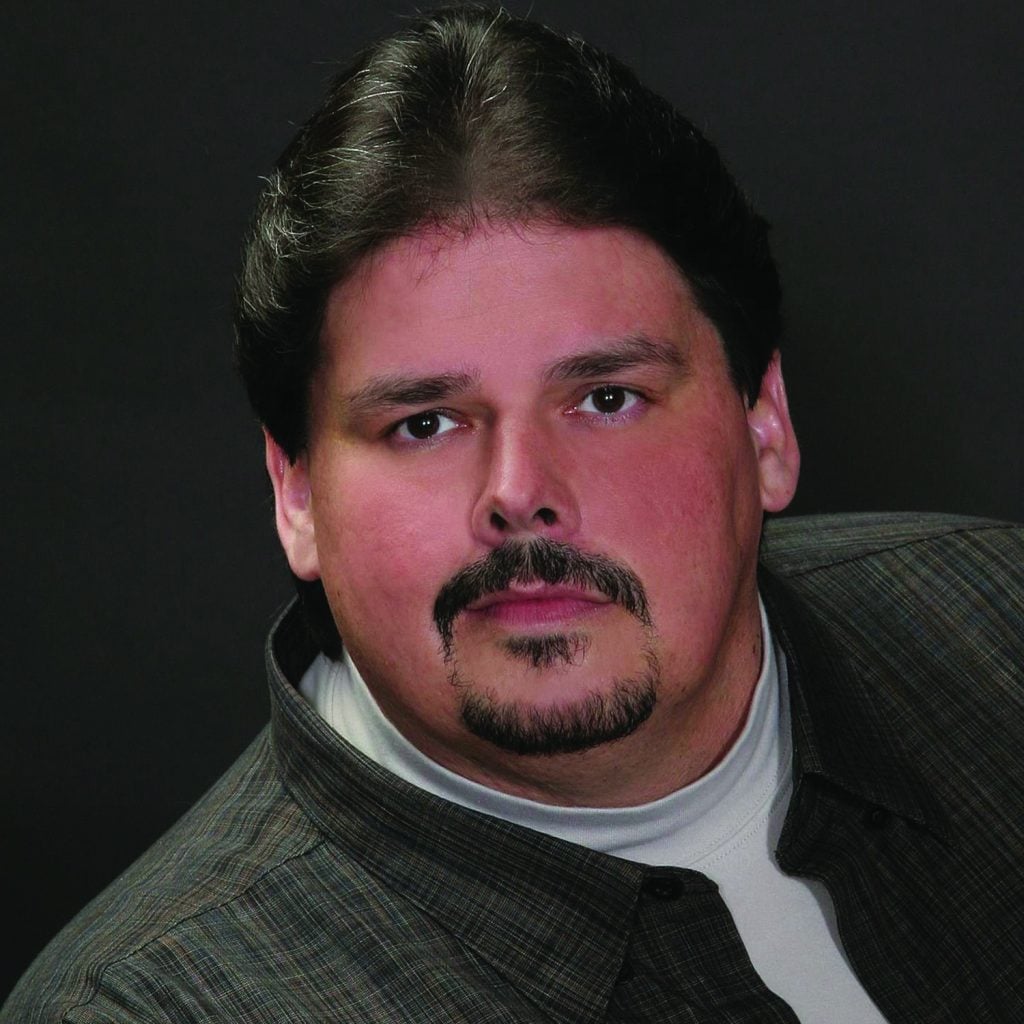
As happened on many occasions, sidemen in the Goins Brothers group spring boarded from there to Ralph Stanley’s Clinch Mountain Boys. Such was the case with James’ move in 1995. Just twenty-six at the time, James joined the band as other youthful pickers such as Ralph Stanley II, John Rigsby, James Alan Shelton, and Steve Sparkman signed on to reinvigorate the Stanley band. The elder Stanley was quite pleased with this edition of the band.
While working with Stanley, James appeared on a number of Ralph’s recordings including Short Life of Trouble: Songs of Grayson and Whitter, My All and All, While the Ages Roll On, Clinch Mountain Sweethearts, and Live at McCabe’s Guitar Shop. James also appeared on the two Stanley/Jim Lauderdale collaborations I Feel Like Singing Today and Lost in the Lonesome Pines. As a showman, James added a healthy dose of comedy both on stage and off. One of his favorite witticisms involved the family garden. He noted that come harvest time, “We eat what can, and what we can’t, we can!”
During this same period, the Clinch Mountain Boys were very active in releasing their own solo projects. Everybody helped out on each others’ projects. James released two solo outings: Southern Flavor and Fiddlin’ the Old-Time Way. He reciprocated by appearing on solo projects by Ralph Stanley II, Steve Sparkman, and James Alan Shelton.
James departed the Stanley band in 2003. This left him open for touring with Grand Ole Opry star Little Jimmy Dickens as well as country singer Johnny Paycheck. He also organized two groups of his own: James Price and Kentucky Reign (a bluegrass outfit) and James Price and Native Country (a country band).
Only weeks before his passing, James spoke of some health issues and a desire to “get in shape.” But what excited him most was a book he planned to work on that chronicled his years on the road with Ralph Stanley. Sadly, it’s a story now never to be told.