Jesse McReynolds’ Grandson Takes Us Into The Heart of Bluegrass Music’s First Generation
In the fall of 2022, I explored the region of Southwest Virginia that has produced some of the most famous musicians to ever appear in the long lineage of American roots music. The 1,435-mile-long highway known as Route 23 makes its way from Jacksonville, Florida, to Mackinaw City, Michigan. About halfway in-between those two destinations are the section of the road that runs from Kingsport, Tennessee, to the Ohio River border of Eastern Kentucky. In the middle of that stretch is the section of Rt. 23 that meanders through Southwest Virginia, showcasing the beauty of the mountains and the rolling hills, from the Powell River Valley to the Clinch Mountain region.
I was there to experience the impressive Blue Highway Fest bluegrass festival that was happening in Big Stone Gap, Virginia, that weekend, and I was staying just north of there in Wise, Virginia. It was the proverbial sunny autumn day, so I decided to explore the small towns to the east of Rt. 23, seeking out pawn shops in hopes of finding a deal on a used acoustic guitar, and to experience a mountaintop view or two. One of the first small towns I came across was Coeburn.
For those who know their bluegrass history, of course, any mention of Clinch Mountain and Coeburn in the same sentence will make one think of the Stanley Brothers, as that is where Ralph and Carter Stanley grew up. The Carter Family also lived in that same area, including due south where the Carter Fold still exists in nearby Maces Springs.
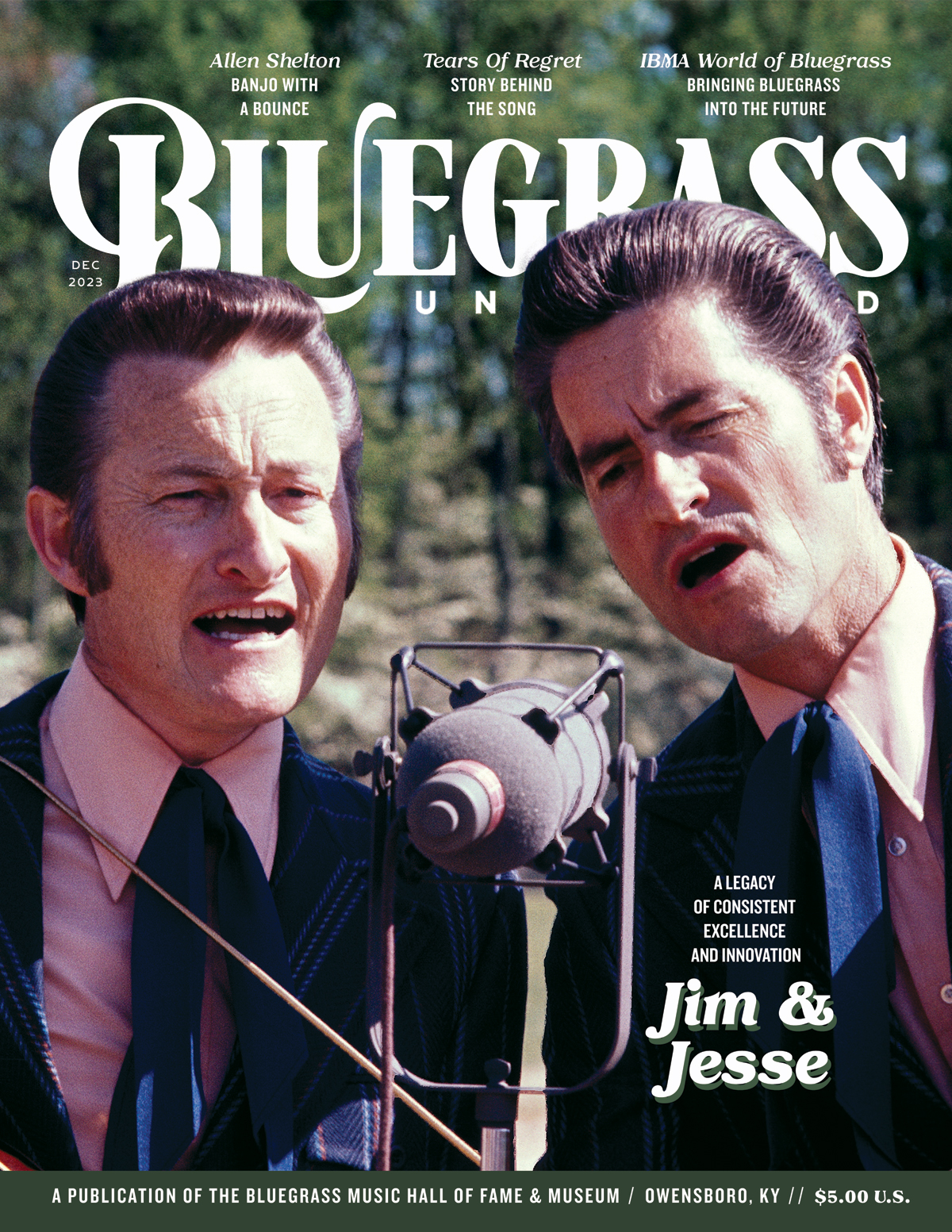
Just a few miles from Coeburn, however, is the even smaller town of Carfax, Virginia, and that is where Jim and Jesse McReynolds grew up, and where they learned how to play their now-famous first generation bluegrass music.
Just 50 miles from Carfax is the border city of Bristol, which strides the Virginia and Tennessee lines. There in 1927, Jim and Jesse’s grandfather Charles McReynolds became one of the musicians that Ralph Peer chose to record during the infamous Bristol Sessions. With that historic musical family tradition in the books decades earlier, the brother team of Jim and Jesse McReynolds began to make their own mark in the bluegrass music world by the 1940s.
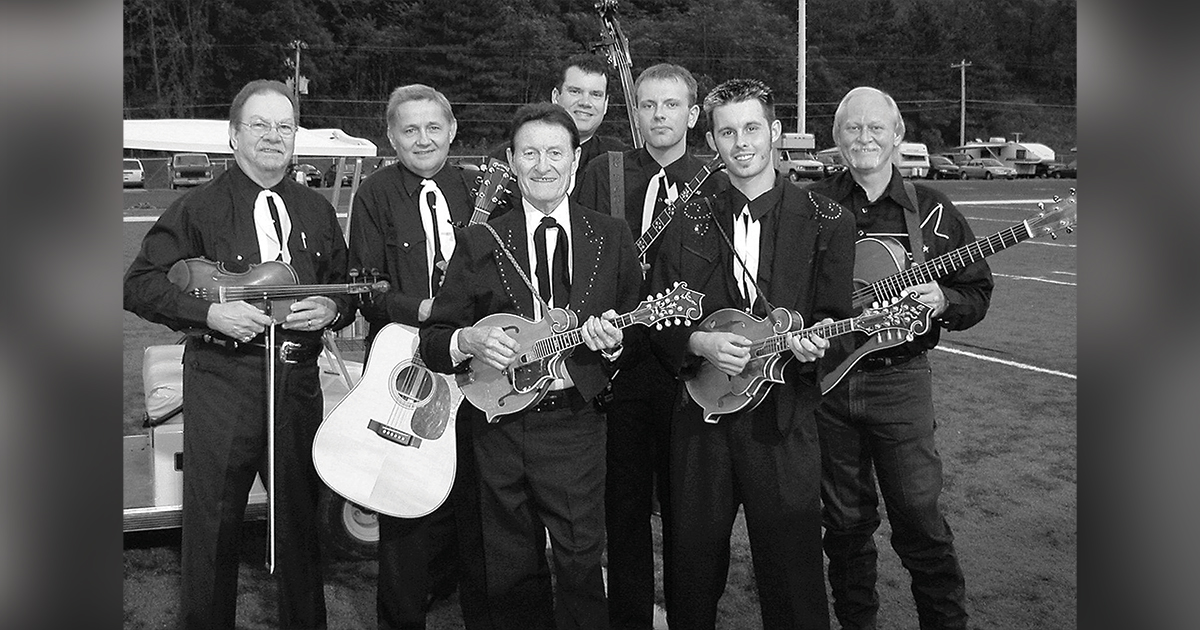
Life on the road was not easy for Jim and Jesse and their band The Virginia Boys. The key to their early success was a combination of both their concerts as well as their live performances on the radio. When I interviewed Jesse McReynolds about 15 years ago, he told me that they once did a live radio show on a station in Charleston, West Virginia, that was broadcast from 5:45 to 6 a.m. every morning. Back in those days, though it was a rough time to be doing a live broadcast, it was a timeslot that was geared towards the coal miners of the Mountain State who were up in those pre-dawn hours to eat breakfast and prepare for their day underground.
As time went on, Jim and Jesse’s popularity grew, thanks in large part to their appearances on the Grand Ole Opry. Eventually, when better money began to come in, the McReynolds brothers bought a large parcel of land outside of Nashville where many of their family members would live, and that included Jesse’s grandson Luke McKnight.
McKnight has experienced many sides of the music business, from performing with his grandfather and great uncle to driving tour buses for some of the biggest names in the country music business. He has also recorded and released his own bluegrass albums.
McKnight’s fascination with all things music began when he was a little kid, while watching Jim and Jesse prepare for yet another tour. “We saw my grandfather all of the time as they mostly worked on the weekends,” said McKnight. “All of us lived on the same farm. We all lived next door to each other. It was great. Jim and Jesse bought that farm, I believe, in 1965 or so out in Gallatin, Tennessee. Jim built the house up on the hill, ands Jesse remodeled the house that was already on the property. After my mother grew up, she built the house that was next to Jesse’s house, and Jesse’s son Keith, my uncle, who played in their band; he built a house on the other side of the farm. Unfortunately, Keith died in 2000 of multiple sclerosis.”
Despite the family being together often on the farm, McKnight says that Jim and Jesse rarely played music on their days off. “We never played music at our family get-togethers, really,” said McKnight. “I don’t remember a lot of music being played during those times. We just hung out like a normal family. My first instrument, however, was a mandolin and I got it from my grandfather on my 8th birthday. And, on the very first day I got it, he showed me three chords, G, C, and D, and then he showed me his cross-picking roll. All on the very first day. He said, ‘Do this until you can do it as fast as you can, and then come back and I’ll show you some more.’ So, that is what I did. I took those three chords and played them with that ‘down-up-up’ cross-picking roll for hours and hours, days and weeks. It was a hard thing to learn, man. It sounds easy, as in just pick it ‘down-up-up,’ but it takes a lot to do it.”
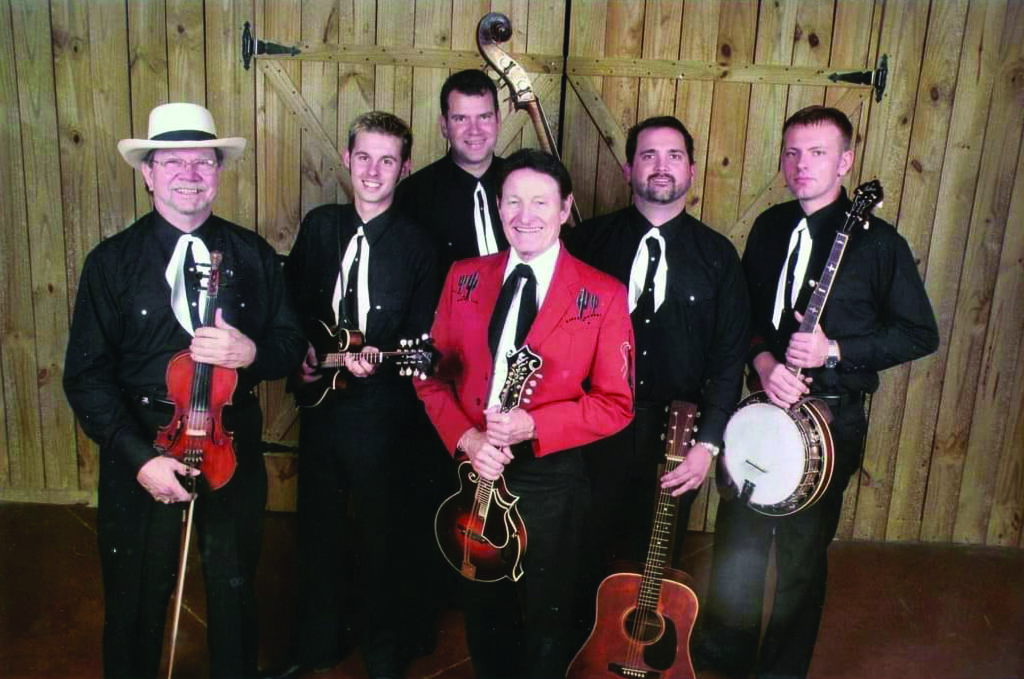
As most of us know, it can be hard to get an eight year old to want to learn how to play an instrument from scratch and to practice. But, McKnight was always around musicians, and he wanted to be one as well. “I was around music my whole life, while growing up at the Grand Ole Opry and from being around musicians in general,” said McKnight. “When their tour bus was about to leave, before they went out on the road, the bus would be parked in-between our houses and the band would be standing out there. Every time they were about to get on the bus, my sister and I would go down there and hang out with the guys. We were little kids and they would play football with us. They were always really good to us. Allen Shelton played the banjo with them when I was growing up and I remember him very well. Allen was always the nicest man to us kids, and we were always intrigued with him smoking his pipe. Allen was the only person we knew that smoked a pipe.”
As McKnight got older and his skills on the mandolin, bass and guitar increased, he began to play gigs as a professional musician. “I actually played onstage every once in a while on a song here and there when I was growing up,” said McKnight. “Then, years later, I started playing part time with Jim and Jesse and the Virginia Boys in 1995. I didn’t know whether I was ready or not to play in the band at that time, but they knew. I wasn’t begging to be in the band or anything. We were in Clay City, Kentucky, and I was with them. I think we were going to a family reunion up in Virginia after their show. I asked them if I could play a song onstage and they said yes, so I played ‘Dream Of Me’ with them, singing it and playing the mandolin. After that, when I could get out of school, I started going out on the road with them more and more. I’ve always loved being out on the road, ever since I was a little kid. I just love buses and music. In 1997, when I was about to turn 16, I started to homeschool and that is when I went out full time with the band.”
Even though McKnight was kin, when he joined Jim and Jesse and the Virginia boys, his grandfather had a rule or two to discuss with him. “They were always really strict about no females allowed on the bus and no alcohol,” said McKnight. “Those were the two big rules. It was a pretty tight ship. And, by the time I was 19 years old, I was driving the bus.”
Unfortunately, great uncle Jim McReynolds began having health problems as the new century began and he died of cancer in December of 2002, just 12 days after his wife Arreta passed away from a heart attack. Jesse was also diagnosed with cancer in 2002, but he survived and lived another 21 years, leaving this world in June of 2023.
“They had just bought a new bus, a 1991 Prevost, and had a new interior built in it, and great uncle Jim started having voice problems, and we thought it was allergies,” said McKnight. “The doctors thought that it might be due to the glue or dust on the new bus, so we put air purifiers in there, doing everything we could to clean up the air. But, nothing ever really worked. He kept getting worse and worse. Then, one day, up in Owensboro, Kentucky, his airway got blocked and he had to leave the show early. When we got back home, that is when he went to the doctor again and they found the tumor on his thyroid. By that time, the cancer had spread quite a bit. But, even though he would miss a show here and there after the diagnosis, he never left the road. He went out with us about three weeks before he died.”
Not only did McKnight lose his great uncle Jim, on another level, he watched his grandfather deal with losing a brother. “It was really difficult, because it is hard to lose a sibling,” said McKnight. “He was sad, but he was also determined to keep going. Never, at any point, did my grandfather ever consider not playing except when the COVID pandemic hit, as that is when he finally stopped touring.
As life continued for McKnight, his love of buses led him to work for country music star Eric Church for five years as well as legends like the band Alabama. As a result, he spent tens of thousands of miles behind the wheel of a tour bus, driving from coast to coast at times. McKnight has also spent a lot of time as a firefighter.
McKnight’s life changed drastically, however, during the period of the COVID pandemic. Even though he was only in his late 30s at the time, he found out in early 2020 that he needed hip replacement surgery because of a genetic bone disease.
On the positive side of things, during that same time period, McKnight reunited with Megan Darby, a friend whom he had met on the bluegrass festival circuit years earlier. Both were single after previous marriages, and love bloomed almost instantly. At the time, Darby was the Director of the Glenville State University bluegrass program in West Virginia. After finding each other again, she asked McKnight to speak to her students. And, while communicating with each other, McKnight let it be known that he was about to sell his daughter’s six-foot tall dollhouse and Darby decided to buy it. That meant McKnight had a reason to travel to the Mountain State, and their romance blossomed.
In September of 2021, Darby and McKnight hosted their wedding in Uncle Pen’s Cabin during the annual Uncle Pen Festival at Bill Monroe’s Bean Blossom Park. The couple now happily lives in West Virginia.
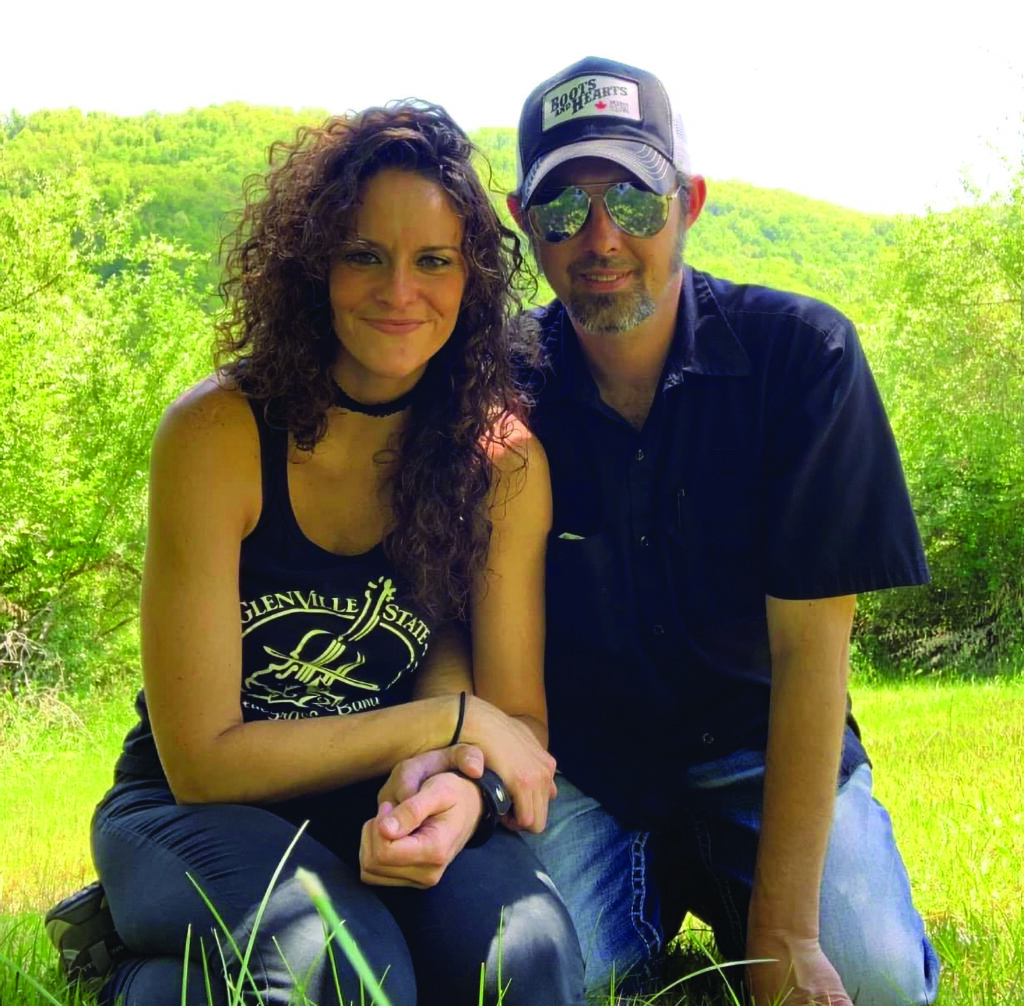
Once together as husband and wife, the newlyweds started a foundation called Archiving Appalachia, which concentrates on keeping the early country, bluegrass and old-time music traditions alive and shared with local and regional public school students. Here is how the story of Luke and Megan McKnight unfolded.
“My hip started hurting in the December before COVID hit and I was out on the road, still driving a tour bus, although I didn’t think much about it,” said McKnight. “But, the pain kept getting worse and worse, and after six weeks, I was to the point where I had to use crutches to put fuel in the bus. I couldn’t walk anymore on my own. I went to the doctor because I thought I had pulled something really bad. I had no idea that I had a genetic hip disease. I had an MRI scan done and I went back for the results and the doctor said, ‘You have osteonecrosis, and there is nothing that will fix this except for a hip replacement.’ That was in February of 2020, and soon after, all of the elective surgeries went away in the hospitals due to COVID.”
Not only did McKnight have to wait several long and painful months before he could get the hip replacement done as the pandemic played out, he also lost his job as a tour bus driver when the music industry shut down. “I couldn’t drive, I couldn’t walk, and I was stuck at home, and it was really bad,” said McKnight. “But, that is also the same time that Megan and I got together. Megan had texted me through the years to ask me to be involved with the bluegrass program up there in West Virginia. Jim and Jesse even played shows up at Glenville State, including one concert performed with the school’s percussion ensemble. In fact, we actually brought the percussion ensemble with us to Nashville one time so we could play with them at the Ryman Auditorium. At one point, the class that she was teaching had an assignment to interview a professional musician about life during COVID and how it was affecting their careers, and that was when we really started talking together. We were having regular conversations, yet I didn’t know she was single at the time. But, from then on, we have talked every day since then.”
A few weeks later, McKnight posted an ad on Facebook about the big dollhouse that he and his daughter wanted to sell. At the same time, he was looking for a reason to come to West Virginia to visit Megan in person.
“Megan called me and said, ‘I want that dollhouse, but I don’t know how to get it here,’” said McKnight. “I said, ‘Well, I’ve got a trailer, so I’ll bring it to you.’ So, I did. It rained on the way up, so I had to wrap this six-foot tall, three-story American Girl dollhouse in tarps and duct tape to make sure it didn’t get wet during the seven-hour drive up there. (laughs) I came up to visit her about every two weeks after that.”
The next thing they knew, Luke and Megan McKnight were husband and wife with Luke happily moving to the Mountain State, a place he had always been prophetically drawn to. Megan is now a college professor at West Virginia University in Parkersburg and Luke brought his firefighting skills to town as a volunteer firefighter in Gilmer County, West Virginia. And, as always, bluegrass music is a big part of their life.
Now, the couple’s Archive Appalachia foundation continues to work with schools and to host bluegrass youth camps at events such as the SamJam Bluegrass Festival and other festivals held around the country. One historic part of the Archiving Appalachian youth camp experience is the use of one of Del McCoury’s old touring buses that the IBMA Hall of Famer donated to the cause.
“Between Megan and I, we have a massive collection of musical items, from instruments to now having two of Del McCoury’s old tour buses,” said McKnight. “We have Del’s old 4104 bus that, at one time, had a wood stove in the back of it. They would light it up while at a show when it was cold. It’s not in there anymore, but there are a lot of stories about it. Megan was thrilled to get that bus from Del. And, a couple of years ago, we also bought the green 1979 Eagle bus that he toured in during the 1990s. That is a good old bus that still runs. We took it to Bean Blossom when we got married so we had a place to stay while we were there. So, we have all of these musical items and we want to use them for the purpose of education for the kids that are now coming up. Our goal is to both preserve the music and to educate the youth. Megan will also have a book coming out soon, and we have a lot of ideas that we want to bring to the foundation in the near future.”
Megan McKnight’s illustrated children’s book entitled “Growing Up At 203,” will be published soon. The book will be about a mother and two daughters and their experiences while living in the Appalachian region with its surrounding mountain scenery, traditions, music, dance and more, Meanwhile, the couple is also mentoring the LCBLUE high school bluegrass band that is based in next door Lewis County, West Virginia.
To help or donate to the Archiving Appalachia foundation, either financially or possibly by offering up a bluegrass-related collection of some sort, search for ‘Miss Megan & Luke McKnight; Archiving Appalachia INC.,’ on Facebook or go to tinyurl.com/ArchivingAppalachia.
Luke McKnight’s latest recording is his Best Dressed Beggar In Town album. Released on the Turnberry Records label and available on the usual streaming services, McKnight considers it “the best record that I’ve ever recorded, and I’m very proud of it.”
As for the recent passing of both his grandfather Jesse McReynolds and fellow IBMA Hall of Famer Bobby Osborne, McKnight agrees with many others that the death of these two legends marks the end of the first generation of bluegrass artists on the planet Earth. “Those guys were hardcore, man,” said McKnight. “That generation was as tough as nails, every one of them. They were creative and they came up with good music that was second to none, and that is going to be the bar forever. The bar has been set. Their professionalism and their attitude of living and breathing being a bluegrass artist meant that they looked the part, all of the time. Jim McReynolds’ hair looked good even if he was on a tractor on the farm. They always looked the part in the way they talked and the way they walked. They were just professionals in every way. I see some of that now in some of the newer artists, but not of the caliber of those guys. I have always said that you should be able to tell who the artist is when they walk through a crowd.”
According to McKnight, Jesse McReynolds worked on his mandolin playing almost until the end. “My grandfather could pull some stuff out of a mandolin that would amaze people even when he was late in life,” said McKnight. “He practiced a lot, though. He practiced every day. He would play the mandolin when he was home and come up with some wild stuff and then he’d come onto the bus that weekend and show us what he had been working on. We’d all kind of sit there and wonder, ‘How in the world did he come up with that?’ It was really devastating to lose him. He was my hero, ever since I was a little kid, and I spent most of my life being around him, trying to pick up on everything he did. But, at the same time, he is not hurting anymore. At the end, he wasn’t able to play as much as he wanted to, and I know that made him sad. It bothered him. But, he played music until he absolutely couldn’t do it anymore, and I guess that is what we all hope for. We won’t be able to hear him play anymore, yet Jim and Jesse’s music will always be there.”