Haskel McCormick
The Teenager Who Filled In for Earl
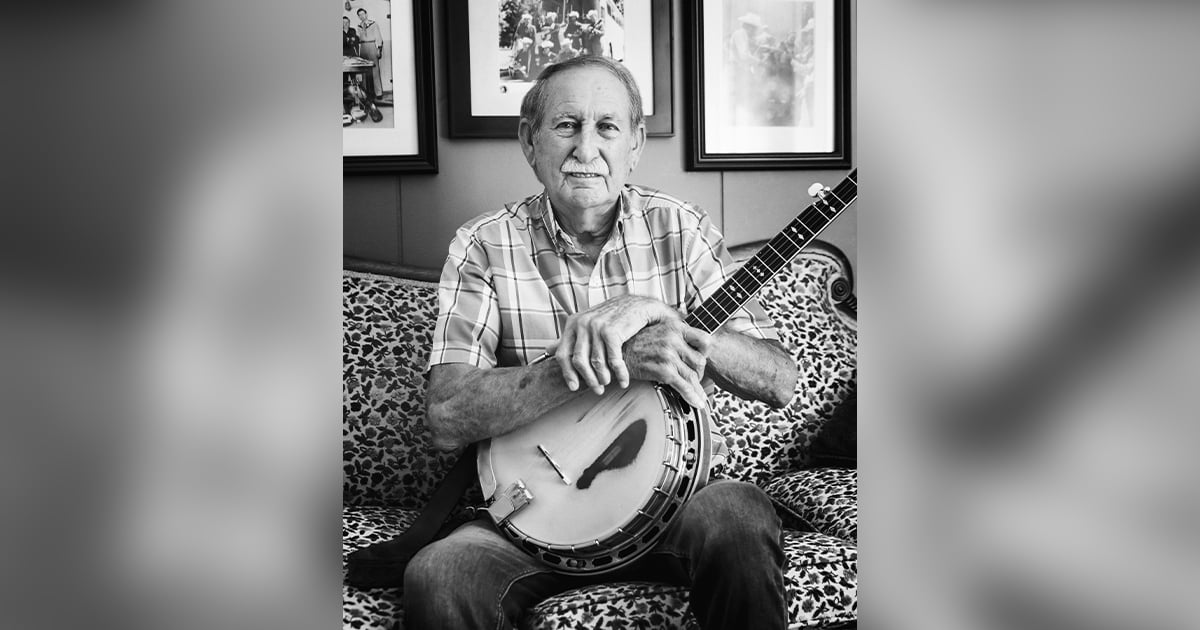
Imagine that you are a high school kid who has learned how to play the banjo. It is the mid-1950s and Lester Flatt, Earl Scruggs and the Foggy Mountain Boys are one of the hottest, tightest bluegrass bands in the country. You learned how to play the banjo because you love the way Earl does it. In 1955, Earl is in an auto accident and can’t make show dates for a while and you get the call to fill in with the band in Earl’s place. This sounds like the kind of thing that a young banjo enthusiast might be daydreaming about during algebra class. But for Haskel McCormick, this was a dream that he actually lived.
Best known in the bluegrass world as the banjo player for Lester Flatt and the Nashville Grass between 1970 and 1974, Haskel had a professional career playing with his brothers (the McCormick Brothers) from the time he was twelve. After leaving Lester, he played for a year with Marty Robbins and then he decided to leave the life of a touring musician. Although Haskel still plays and teaches the banjo, he has not played professionally in a touring band since leaving Marty Robbins in the mid-1970s.
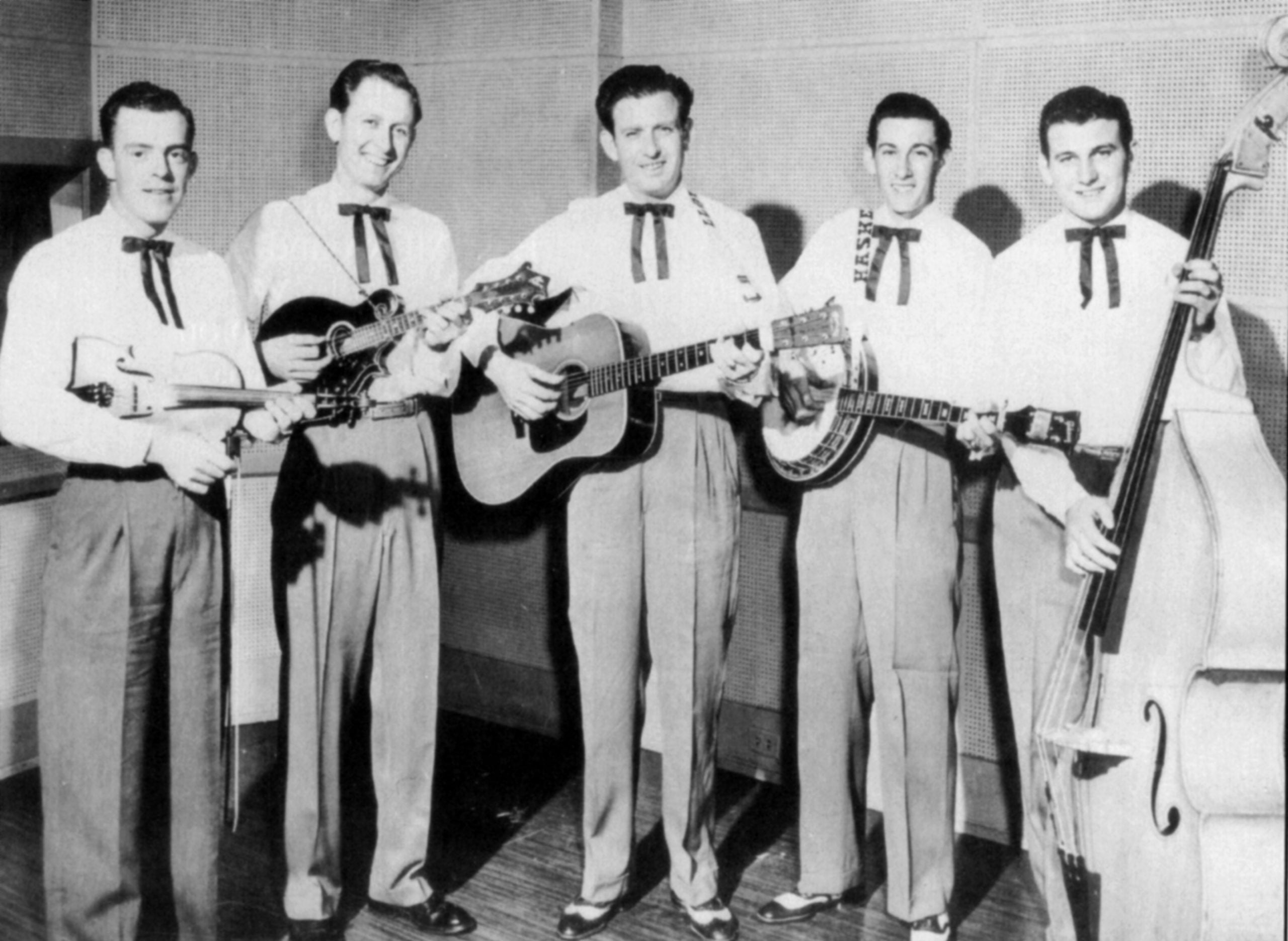
Haskel grew up in a musical family. His father and his uncle both played old-time banjo and his father played some fiddle. His older brothers, Lloyd and Kelly, played guitar and mandolin. His sister played piano and sang in church. Haskel said, “My brothers made a record there in Bowling Green. The first one they made was in about ‘52 or ‘53, somewhere in there. They performed some here and there. They played a lot of schoolhouses, pie suppers, and cake walks and things like that. That is how they got started. Later on, they got to meet people down at the Opry and played down there.”
Haskel grew up near the town of West Moreland, TN—about 50 miles north of Nashville near the Kentucky boarder. He was born in 1937 into a family that would eventually have six kids. His sister Louise was the oldest child and is now 98-years-old. Lloyd (1924-2005) was the oldest brother and Kelly was the next in line (1928-2005). Haskel was the fourth child, followed by his brothers William (1939-2013) and Gerald (born 1943).
When asked if he started by learning the old-time style of banjo that his father played, Haskel said, “No, it is a good style, but I never was really interested in banjo until I heard Earl in Bill Monroe’s band. We had an old battery radio and if we kept the battery charged and stuck a metal clothes hanger out the window, we could pick up the Opry. Monroe played a 15-minute show on Saturday night. I would listen in to that and when I first heard Earl pickin’…I don’t know…I can’t really explain it. Something took a hold of me and I said, ‘I’ve got to do this…I’ve got to learn it.’”
Haskel started learning how to play the banjo when he was about nine or ten years old. Learning how to play Scruggs style banjo was not easy in the mid-to-late 1940s. Haskel said, “I had to dig it out. It was hard. Nobody had TV, nobody played that style. I would just listen to Earl on the radio and remember what he played and make it sound like he did. It was a hard way to go, but it was the only way that I had.”
With no way to record the Opry performances and no record player to use to listen to recordings, Haskel learned to play by listening to the radio show and working from memory. In the early days he had never even seen Earl play live. He learned completely by ear and from the memory of what he heard on the radio.
By the time he was 12, Haskel was playing on stage and on the radio with his brothers. Haskel said, “I had to stand on three or four of those old Coca-Cola cases to reach the microphone. Back then you just had to create things and do what you had to do to make it go.” In the beginning the band consisted of just the three oldest McCormick boys—Lloyd, Kelly, and Haskel. Haden Clark joined the trio on bass for a while, but then brother William joined the band playing bass.
A bit later—in the mid-1960s—brother Gerald joined on vocals and guitar. The other member of the band for many years—an honorary McCormick brother—was Dewel Bullington on fiddle. Additionally, Billy Clark—Haden Clark’s nephew—spent some time early-on with the band playing fiddle before passing away at a young age. Sometimes the McCormick Brother’s band would also include Charlie Nixon on Dobro. Later, when Haskel was playing banjo with Lester Flatt, Haskel helped Charlie Nixon get the Dobro spot in Lester’s band.
When the McCormick Brothers first started appearing on the radio with Haskel on banjo, evidently, Earl Scruggs was one of the people listening to the radio program. Haskel said, “I don’t know what year it was when he had his car accident [Editor’s note: Earl’s accident occurred on the 2nd of October, 1955], but he called me and I filled in for him three or four different times. They had a tour going around Alabama, Georgia, and several other states and they played on TV shows and on the Opry. Earl lived in Madison at that time and he wanted me to come by his house. He had a small recorder sitting on a coffee table. He wanted me to come by and pick with him and he taped it. Later on, I saw him at the Opry and I reminded him about him doing that and told him that I would really like to have a copy of that tape. He said, ‘I probably still have it, but I’ve got so much stuff it would be hard for me to ever find it.’ So, he never did find it for me, but I would have loved to have that.” Earl must have liked what he heard from the young teenage banjo picker because Haskel was hired to sit in for him on a number of shows during Earl’s convalescence.
It may seem unbelievable that a high school kid would be hired to fill in for someone as talented as Earl Scruggs, but by 1955 the 18-year-old Haskel had been playing professionally with his brothers on the radio and on stage since 1949. An interesting fact to also consider is that Sonny Osborne was playing with Bill Monroe when he was fourteen years old (summer of 1952), and JD Crowe was playing with Jimmy Martin when he was still sixteen (summer of 1954). All three of these talented banjo playing teens were born in the same year—1937. Maybe the stars were aligning in the sky that year in the shape of Gibson Mastertone banjo?
JD Crowe and Haskel McCormick actually met when they were both twelve years old. Haskel remembers that they first met at a DJ convention at the Andrew Jackson Hotel in Nashville, but he said that JD remembers first meeting Haskel at a show in Knoxville called the Mid-Day Merry-Go-Round. Haskel said, “Me and my brothers used to play that show and JD said that he thinks it was there that we first met. I told him, ‘Well, you might be right.’ It was all about the same time.”
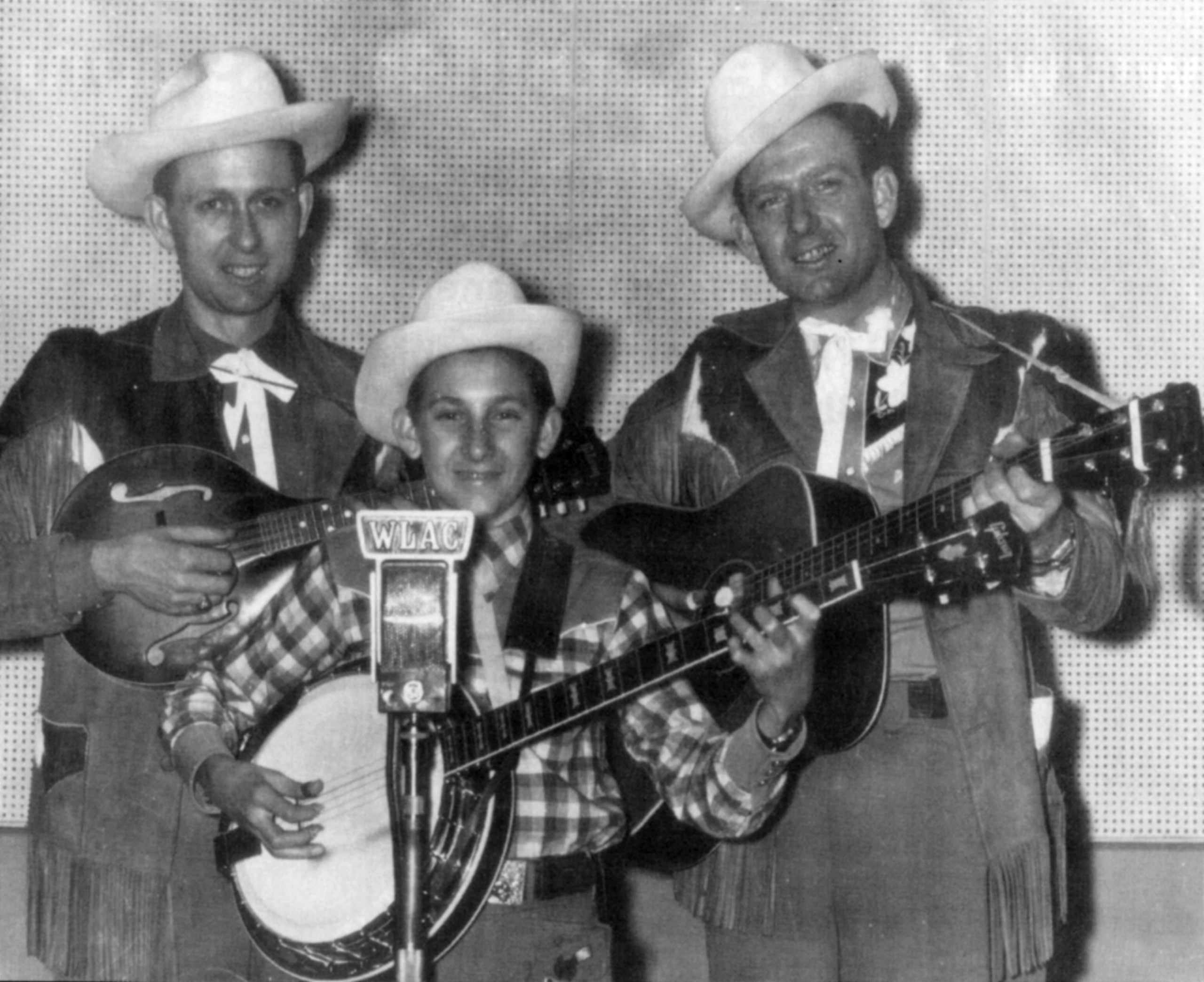
The McCormick Brothers made their first recording in 1954 and stayed together until the mid-1960s. They achieved success—touring and playing package shows with such well-known acts such as Cowboy Copas, Lonzo & Oscar, Johnny Cash, Marty Robbins, Jim Reeves, and Conway Twitty, and playing venues such as the Ozark Jubilee, the Tennessee Barn Dance, the Shady Acre Ranch, and on Porter Wagoner’s TV show—but never gave up their day jobs back home. Haskel said, “By the mid-1960s we had families and my two older brothers didn’t think that we were bringing in enough money to make a living. But, I always wanted to try it for a living to see what it was like. After Earl and Lester split in 1969 I was playing dances on Saturday nights with my oldest brother. I didn’t know that they had separated at the time. When I finally heard about it, I thought, ‘I’m going to go down to the Opry and talk to Lester and see if I have a chance to join his band.’ I walked in backstage after the show and stepped forward to shake his hand and ask him how he was doing. He said, ‘Fiiiiine,’—you know he talked kind of smooth, slow and low—I told him, ‘Listen Lester, this is why I’m here. I love bluegrass music. I love your band and I’m not here to get nobody’s job. But if you ever have an opening, I would sure appreciate the opportunity.’ Within a month I was working with him. He had hired Vic Jordan, which was a good guy and a friend of mine who played good. Vic stayed with Lester for about a month after he hired me and we was doin’ twin banjo stuff.”
During the years that Haskel was with Lester’s band, his bandmates included Lester Flatt, Paul Warren, Curly Seckler, Josh Graves, Roland White, Johnny Johnson, Charlie Nixon, Jake Tullock and Marty Stuart. Regarding his role in the band, Haskel said, “When Lester hired me, he didn’t pressure me to pick like Earl. He said, ‘Just be comfortable in what you do.’ So, that was easy for me. Of course, I never thought that anyone could play exactly like Earl—but JD Crowe is real close. When I was young, I followed Earl and tried to do the best I could to sound like him. But, after a while I got to thinking that this was his style and he’s already done it, so I need to change mine a little bit. So, I started writing instrumentals and doing a different type of pickin’ on it.” Although Haskel was working to develop his own style, he does recall that when Lester’s band would play songs that Earl had made famous, like “Foggy Mountain Breakdown,” “Earl’s Breakdown,” and “Foggy Mountain Special,” he did play it as close to the way Earl had played it as he could.
While he was working with his brothers, Haskel wrote several banjo instrumentals that he became known for such as “Banjo Twist,” “Mad Banjo,” and “McCormick’s String Picnic.” When he was working with Lester, he continued to write tunes, including “Nashville Grass Breakdown” and “Haskel Stomp.” Haskel stayed with Lester’s band until 1974.
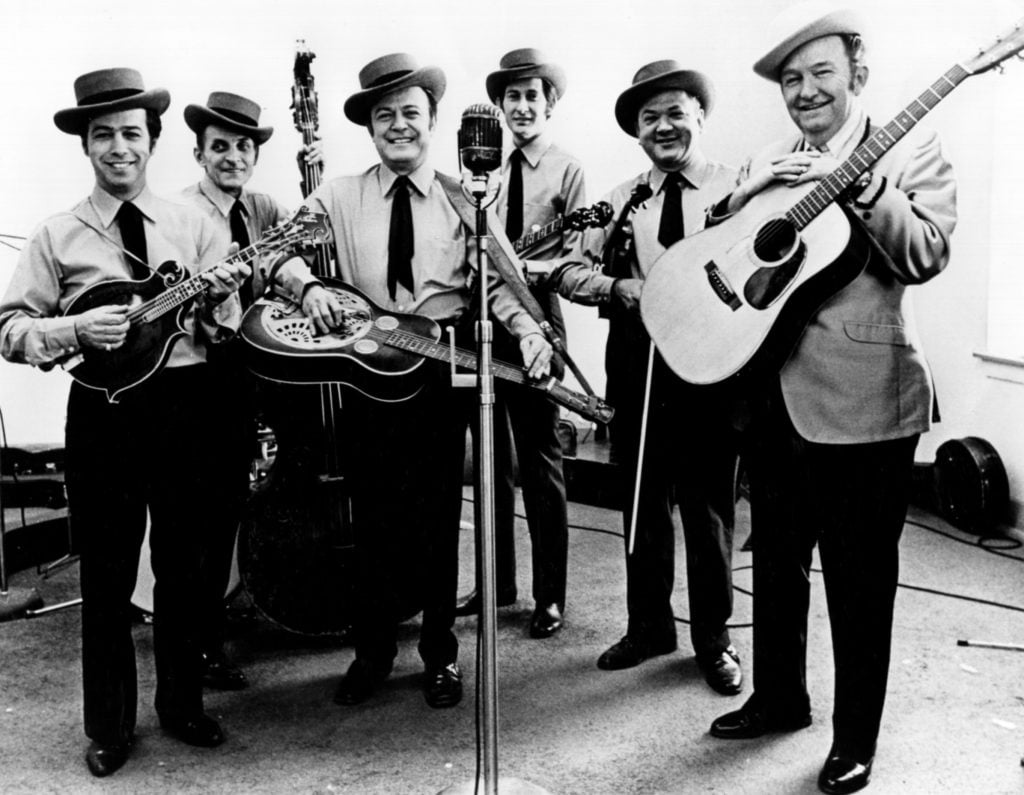
Haskel had to make the decision to leave Lester due to having to pay the bills with a growing family. Haskel said, “I really enjoyed pickin’ in Lester’s band. He was one of the best.” In 1974 Marty Robbins offered Haskel a job. Haskel said, “In ’74 Marty wrote a song called ‘Twentieth Century Drifter.’ He liked to race cars. He just loved racing and said he wasn’t there to win, he just liked driving around with them. He said, ‘I just want to pull up along-side Richard Petty and look him in the eye.’ Anyway, he wrote a song about it and he called me just after I had left Lester. I wasn’t expecting to get a call from anybody like him. He said, ‘I wrote a song and want to have a banjo and fiddle on it and I want you to play the banjo. He called me back in two or three weeks and had set up a recording session at the Red Barn in Mt. Juliet. We made the album and I stayed with him a year and he paid really good too. We made a verbal agreement to work a year, and he did what he said.”
When Haskel left Marty Robbins, he decided not to play professionally on the road again—although he got job offers from Bill Monroe, Jim & Jesse, and Jimmy Martin. Haskel said, “I got away from it. I was getting older and I had four children and was paying on a house bill. I couldn’t make it on what they were paying back then. I laid brick off and on for about forty years. I laid block and rock and anything you can lay. I enjoyed it, too. I enjoyed being out and doing that kind of work. I’ve always like to work. It is hard work and dirty work, but it is a livin’.”
Today Haskel lives roughly four miles from where he grew up and he still lives in a house that he built in 1962. After he finished with Marty Robbins he continued to play locally at jam sessions and parties and he also teaches banjo lessons. Although three of Haskel’s brothers—Lloyd, Kelly, and William—have now passed on, he still gets together and picks with his brother Gerald.
At 84 years of age, Haskel still teaches banjo lessons. One of his current students, Cutter Singleton, is a 14-year-old that plays banjo and Dobro and travels two and a half hours one-way to come to Haskel’s home for lessons. Haskel said, “He actually performed with Rhonda Vincent not long ago in Florida. He went on the bus with her. He’s a good boy and is really interested in it. I told him that he reminded me of me when I was that young. He wants it that bad.”
When beginning banjo students come to learn from him, Haskel starts them working with basic banjo rolls—forward, backward, and alternate roll. He said, “I’ll get them going with the rolls until they can do it right. Then I’ll pick out ‘Cripple Creek.’ It is simple to remember and practice. I don’t know music. I tell them that I can show them what I do and that they’ll just have to memorize it and work at it. Most of them are doing pretty good.”
After learning basic rolls and an arrangement of “Cripple Creek,” Haskel will start to teach other songs like “I’ll Fly Away.” He shows them how he plays it and then allows them to record him on their cell phone. He said, “At first, I just pick out the simplest songs that don’t have a lot of notes and have a lot of open strings. I have always tried to play as close to the melody of the song as I can and I try to use as many open strings as I can. I like to do it as simple as I can, but do it good…hopefully.”
Haskel advises his students to try to learn everything they can from any source. He tells them, “Anyway you can learn, do it. Try to grasp it anyway that you can. There are a lot of ways to learn if you want to. But, you really got to love it to learn it and you’ve got to work at it. If you are interested enough to work at it and devote some time to practicing and really want to do it, you can do it. I’m proof of that. I tell my students that it is 90 percent working at it and practicing and you’ve got to really love what you are doing.”
Several of Haskel’s students have gone on to achieve success in music. One of his banjo students, Gary Reece, has played with Bobby Osborne and Jim & Jesse. Gary started taking lessons from Haskel when he was ten years old. Haskel said, “His dad brought him over to the house and he took several lessons from me and he made a good banjo picker.”
At the age of twelve Haskel McCormick started living the bluegrass dream with his brothers by his side. Although he retired from life as a traveling musician by the age of 37, he packed in a lot of bluegrass performance with the some of the best players in the business in the twenty-five years he spent on the road. Although he has not been active on the national bluegrass scene for over 45 years, he said that he still keeps in touch with some of his old bluegrass friends such as JD Crowe, Marty Stuart, James Monroe, and Roland White. And, he is the only banjo player in the world that can say that he got to stand in Earl Scruggs’ shoes while he was still a teenager.