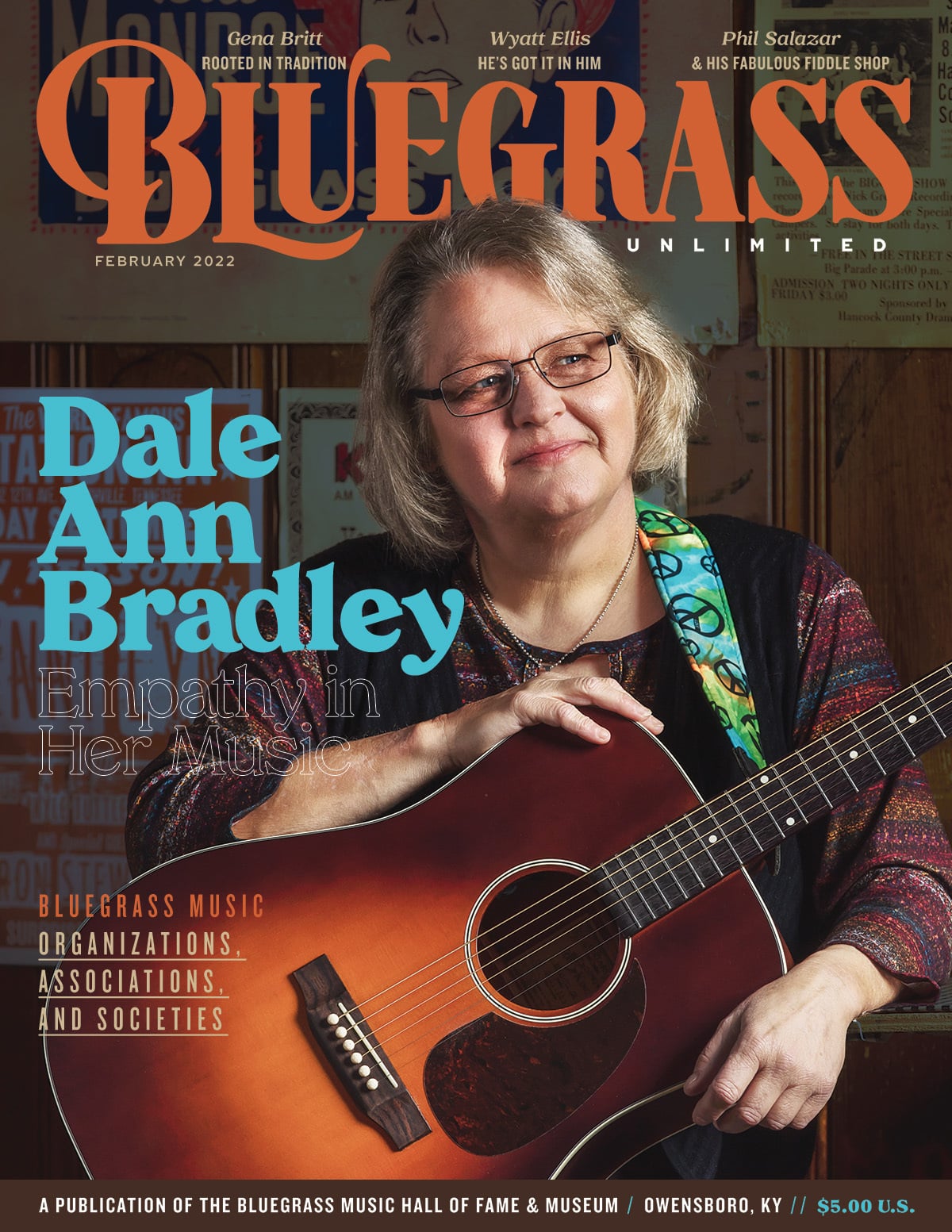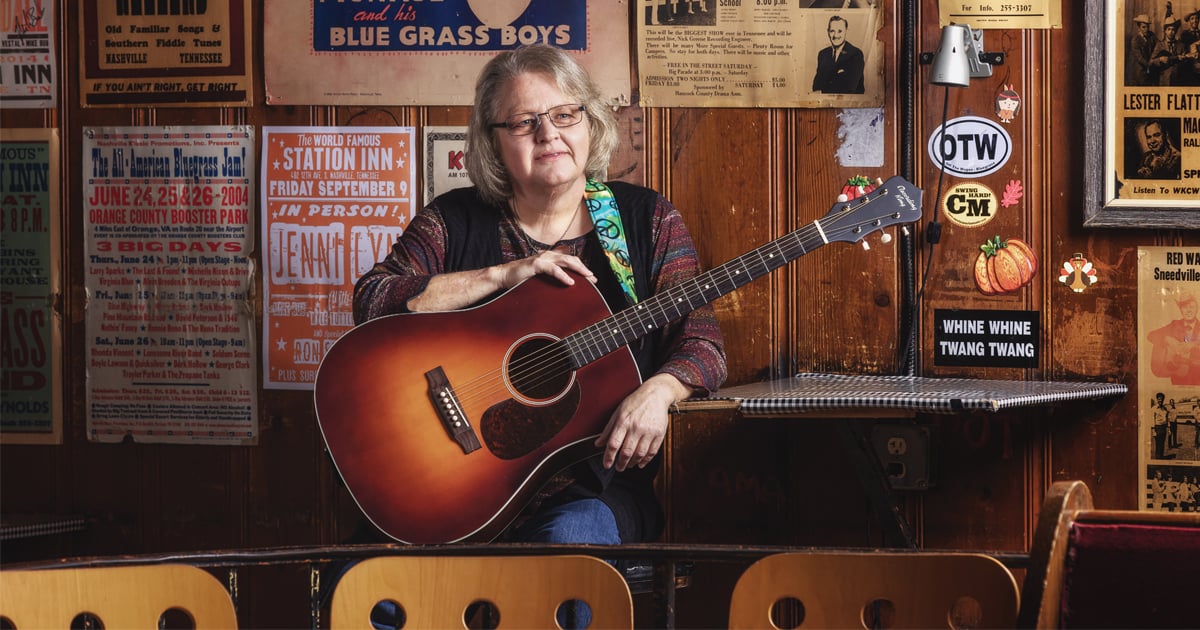
Dale Ann Bradley
Showers Empathy in Her Music
Esteemed bluegrass singer Dale Ann Bradley shares stories of hardship and hope on her latest project, Things She Couldn’t Get Over. Growing up in the isolated country of rural Eastern Kentucky, Bradley knows all too well the struggles of life.
“There wasn’t a lot of money at all. I’ve carried water, and I know what an outside toilet is very well, and I know how to keep the copperheads away. I’ve picked blackberries, and the callouses on my feet have been three inches thick in the summertime just going barefoot. High school education was pretty good to get. It wasn’t really expected out of girls or boys in a majority of families.”
That background was also the breeding ground for Bradley to develop her core values. “I also learned how to appreciate having things and the importance of caring about other people because that’s what we all just did. It was hard for everybody.”
Another layer of influence was her religious experience in the Primitive Baptist Church in Pineville where her coal-mining daddy preached. “Worldly stuff scared him,” she recalls. “I didn’t get to do anything much at all. It was very hard.”
Within the confines of her restricted world, though, Bradley turned to music, developing her vocal skills in the church’s a cappella congregation. “It was just like the Ralph Stanley singing. They were lamenting. They would cry and shout like they were getting actually renewed and leaving their troubles and hurts there when they would sing. You could hear it in every word because some of them would ring it out and make four or five notes out of them. There’s never been a sound I’ve ever heard like it. It raised my scalp up! It was the truest of emotion, crying out to your Creator. I might not have put that together at that age, but I knew it was touching me somehow in a spiritual way.”
The backdrop of her youth honed Bradley’s coveted voice. “When you’ve lived something and it’s really affected you, good or bad, you want to put it in your singing whether it’s something you’re happy about or you’ve been sad about or you’ve been brought out from. If you think of those times and you’re thankful to who helped you, be it a secular or gospel song, that will be translated because it’s a real feeling you’re sharing.”
That feeling has garnered praise for the 6-time IBMA “Female Vocalist of the Year” from peers like Tina Adair with whom she recorded a duet album. “Dale Ann’s voice is so pure, angelic and true to her roots of Appalachia,” Tina Adair says. “The thing about Dale Ann’s singing is that it is so distinguishable. As soon as you hear the first note, you KNOW it is Dale Ann Bradley singing, whether it be the lead vocal or the harmony vocal. To me, that is the true gift of a great singer.
“I remember when she and I recorded our duet album, Oh, Darlin’, we spent only a couple of days recording the whole album with really no rehearsal or preproduction work involved. Most of the album were one or two takes on each song. And we had a ball recording it!”
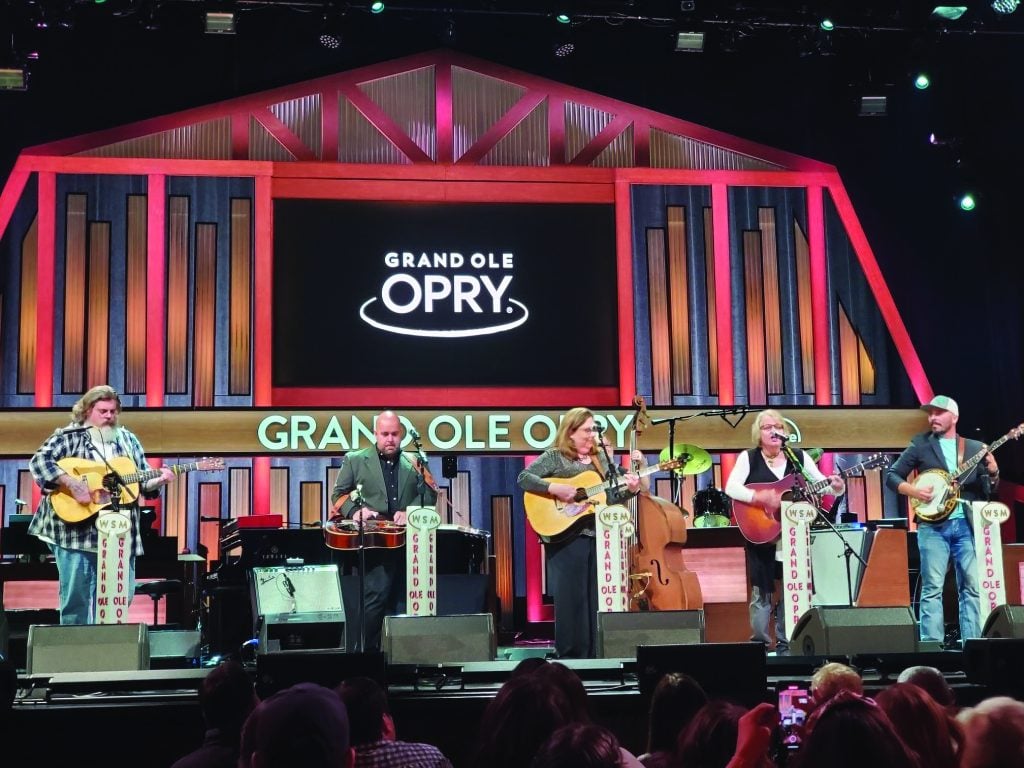
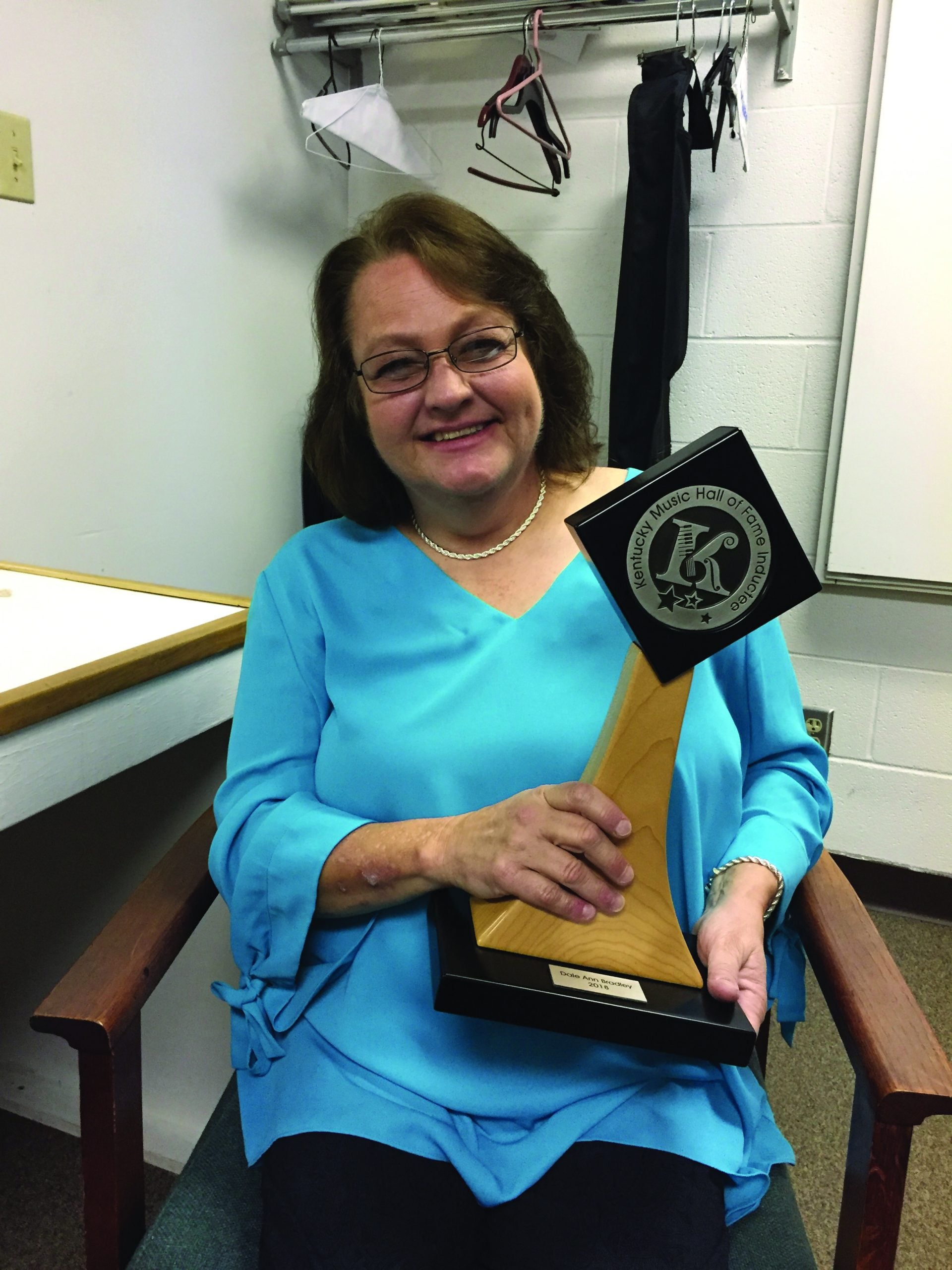
In 1997 Dale Ann recorded her first solo effort, East Kentucky Morning, that climbed to the Top 10 on the Bluegrass Unlimited album chart. She continued to build a strong fan following and add more awards to her mantle. On three occasions she received the IBMA’s “Collaborative Recording of the Year” (formerly “Recorded Event of the Year”) for Proud To Be a Daughter of Bluegrass (2009), Back to the Well (2006) and Follow Me Back to the Fold: A Tribute to Women in Bluegrass (2001). In 2021, Dale Ann tied for IBMA’s “Gospel Recording of the Year” with the song “After While.” A member of the Kentucky Music Hall of Fame, she received two Grammy nominations for “Best Bluegrass Album” for her solo album, Pocket Full of Gold and for her second recording with Sister Sadie, Sister Sadie II.
“When we got together at Station Inn [the first time], it was magic from the first downbeat buddy. It was just wow.” For the first time in IBMA history, an all-female band won the “Vocal Group of the Year” and “Entertainer of the Year.” In December of 2020, she announced her plans to leave the band to focus on her solo work. “I love those girls as much as I ever did. I needed to be where I am. I wish them all success. They are so talented and powerful. They’ll be able to go on and do everything that they want to do. I’ll be right there bringing them roses and clapping.”
Digging Deeper with New Music
Bradley began work on her new album in the midst of the pandemic that caused a shutdown in the music business. The extra time gave her the chance to reflect deeper in her songwriting as she observed disturbances in the world. “At my age—and I’m not ancient—I’ve never seen a time like this. I began to really think about humanity and how important things are that we get together to talk, discuss, even debate in a respectful way. If that doesn’t happen, nothing’s going to get resolved. It gave me a chance to really look at myself and look at the world today because we were getting a real clear view of it, and I think it woke a lot of people up from my generation and others before me had never seen or felt from people like we were doing this year.”
That, she says, made her more conscientious to record positive songs that were thought provoking and empathetic. “Try walking in someone else’s shoes if you can because you will understand the situation better. You’re more apt to be merciful, and that’s something we all need to be because we all sure need a lot of mercy.
One case in point is the song, “Living on the Edge.”
You knocked me down, you just can’t let it be
You think you’ve got thе right too
When you push me to the lеdge, it’s plain to see
You think nothing’s wrong with you
So go ahead and make your angry pledge
Cuz I’ve gotten used to living out here on the edge
“It came from seeing the world as it really is today. Everybody says you’ve got the responsibility to feel how you feel and that’s true too. You’re responsible for your own actions, but people can be pushed around too and that’s not right. It was an awareness song. It’s okay to be strong and speak your mind. Maybe if you’re speaking it a little too much you might need to back off a little bit,” she adds, chuckling.
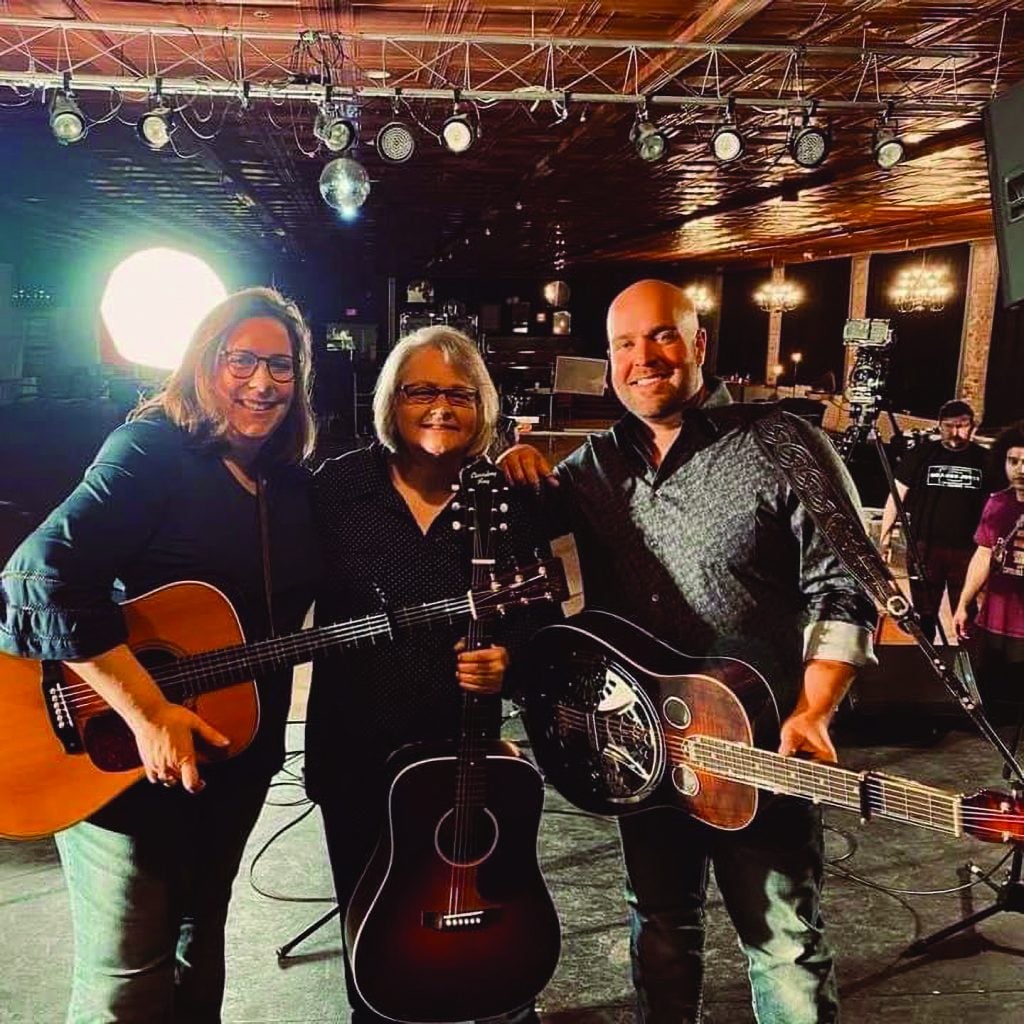
Bradley admits she has always struggled with being assertive and speaking her mind. “I have always been passive. As time goes on, you grow up and don’t want to be around things that kind are distressing to everybody. I don’t say that I speak my mind forcefully or quickly any more than I ever did, but I’ve got some beliefs that I feel are true, and I think that makes me make a decision where I might not have before. It might be a decision that I have the right to make, and there’s nothing wrong with that. The Bible speaks of the meek shall inherit the Earth. That’s great, but there’s nothing wrong with speaking your mind if it’s something you really don’t believe in or don’t want to do.”
Bradley made her thoughts heard in three songs that she had a hand in writing for the album. “The more personal ones like the ‘Things She Couldn’t Get Over’… you had to be there. I started ‘Living On The Edge’ and got stuck right in the middle of it, and I sent it to Aaron Bibelhauser. It’s one of those things. You’ll meet those people who know how to finish the puzzle. He seems to know what I’m trying to get across. That’s one thing I love about him. He seems to know exactly through my mumbling and bumbling what I’m wanting to say,” she says, laughing.
For the title cut, Bradley was inspired by a high school student she knew who struggled with a severe mental health illness. “There was no way this girl could stay in class. They were trying to help her get through. She would say, ‘See ya’ll and walk out the door.’ She’d walk in the halls and peep in other people’s doors. It was a terrible OCD problem that really got worse as she got older.”
Years later, Bradley bumped into the girl again and saw the toll her condition had taken on her. “She was really trying. But she couldn’t get over the illness. She had a great family. She was just very mentally ill, and that was the thing she couldn’t get over.”
Bradley says the song goes beyond mental and physical health issues to any huge hurdles someone needs to cross over. “I want it to show that you can get over things, and it’s not easy. You’re validated for the fact that you were hurt. If you can’t get over things, it’s sad.”
Bradley wrote that song along with another album cut, “Lost More Than I Knew,” with Bibelhauser, who she jokingly calls “my little Gordon Lightfoot.” Bradley first began writing lyrics and the guitar chords that went with them during her school days, but she never had a chance to record them. That changed in 1980 when she started working with the music business savvy professionals at Renfro Valley. “I tried to get as much knowledge and wisdom out of their experiences with country music. So many country artists had been a part of Renfro Valley, and so many of them came out of there and went to Nashville. I was sure to hang on every word.
“We had the opportunity to try them out on stage too or record them. I really got to listen to how an audience would react to a song, and then I could listen to it with a band formation on tape. That really started helping me write and just listening to their old stories.”
Since then, she has continued to write songs that she sees as meaningful and positive. “I’ve never been one that could sit down and say I’m going to take Wednesday and write. My mind just goes everywhere. A song will find me. A lyric or a melody will come to my head, usually when I’m driving or riding. You know when it pops in your head, that that’s the one you’ll hopefully get to finish. It used to be that melodies came to me long before lyrics did. Now, it’s vice versa. It’s the lyrics that come, and the melodies are a little tougher.”
For this album Bradley put her spin on country singer John Anderson’s “Yellow Creek,” featuring Ronnie Bowman singing baritone. “He’s just as smooth, like a hug.” She also brought in fiddling sensation Michael Cleveland, who started with her band right out of high school. “I can’t say how proud I am of the man that he has become. I knew he was going to wow the world with him playing.” Ashby Frank, who wrote the first single, “Falling Down,” did the mandolin work.
This project also was the first time her latest band configuration joined her in the studio. She said, “All of them are so special. We have been very close for years. They’re all so creative. They come up with these things that you’ve not heard in other songs. Matt Ledbetter is growing as a player so much, and he’s such a good young man. He’s like his daddy [Phil Ledbetter]. We saw things musically right on the money. He has all kinds of cool ideas because he’s listened to all kinds of music. Ethan Burkhardt’s bass lines are so different in places and really cool. He adds a flair to it. Mike Sumner has always been the banjo player for me. He too really excels in this style of writing and melody. You’ve got all those harmony vocals sang and produced by Kim Fox. She’s really good at it and a great singer and writer.”
Guitarist Jim Hurst added his unique style to the recording. “I really look forward to all that pretty guitar stuff. I think a lot of my songs have really lent themselves to the guitar, and I’ve done the best I could. But when you can get Jim Hurst, you let him do what he wants to,” she adds, laughing. He’s such a singer’s guitar player. He really is meticulous in what he does. He wants it really good. He listens to phrasing and what to play behind. All of his guitar playing is about the vocal.”
“I approach my guitar efforts around the style of the artist/project, the song(s), and blending in as much as I can until I am asked to do more,” Jim Hurst said. “I typically try to be part of the overall fabric of the music and step up/step out when the situation allows and/or when the artist/producer requests something extra or different and what is in my style. Dale Ann is the star of the show on the recordings and shows I have worked with her, and while I have my style that is a big reason folks ask for me, I am there to support her. Basically, I play what I think fits and adjust if need be. She doesn’t need my help per se, just my musical support.”
Bradley rounded out her album with “In the End.” Initially, her plans were to bring in her longtime friend Steve Gulley to add harmony vocals. Before he could make it to Nashville, his wife Debbie called with the heart-breaking news that Gulley had cancer. “My mother died of the same thing. I knew what he was up against and the time frame.”
With a heavy heart, Bradley went into the studio to put down a scratch track. “I sang it through one time, and I poured everything I was feeling into singing it, and I had to walk off from it. I said, ‘We can put it on there. That’s the best I can do.’ Something happened to me that day. It had to be supernatural and spiritual in a reverent way to our Creator.
“He was a muse for me, and I was so close to him, growing up in the same area seven miles apart; him on the Tennessee side and me on the Kentucky side. In all the years [playing] at Renfro Valley we had grown and learned so many things about life together. We were confidants.”
Once the final note on Things She Couldn’t Get Over is played, Bradley hopes listeners will be more empathetic. “I hope we’ll think about our situation, and we think about our decisions in a loving way. If you can help somebody, help them. Smile. Buy them a cup of coffee. It’s the little things that can make such a big difference. Next week we could all be in the same situation. There’s none of us perfect. No not one. Our righteousness is as filthy rags. None of us have anything to brag about except to help each other.
“I hope people have strength and aren’t defined by their circumstances or anybody else’s opinion. I hope people are strong and can bind together. Maybe something on the album helps that happen.”