Charlie Nixon
Reprinted from Bluegrass Unlimited Magazine
December 1977, Volume 12, Number 6
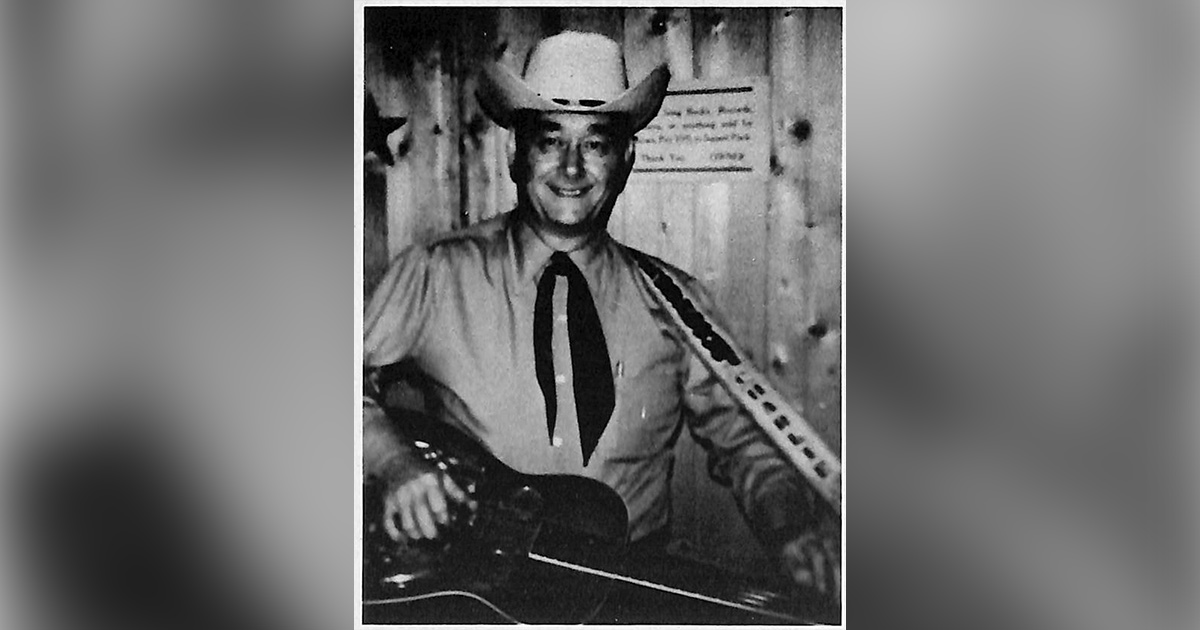
The dream of many aspiring bluegrass Dobro pickers is to play for Lester Flatt and the Nashville Grass. Since 1972, this position has been capably filled by Charlie Nixon.
Originally from Springfield, Tennessee, 25 miles north of Nashville, Charlie was fascinated by the sound of the Dobro even as a child. The first artist he remembers catching his attention was Brother Oswald, whom Charlie heard on the Opry and saw in several movies with Roy Acuff. However, at this time, Charlie’s primary interest was in Hawaiian music. His first instrument was a standard guitar with a raised nut for Hawaiian type playing. Around 1949, he purchased a non-pedal electric steel, which he played until he took up the Dobro around 1955. Charlie still plays the electric steel occasionally for his own enjoyment. With it, he made just one recording in the ’50s with the McCormick Brothers.
Charlie’s ambition has always leaned toward being a professional musician: “I feel my original goal was to play professionally. Back in the ’50s, getting a break was a little more difficult. Now, youngsters have more exposure, it seems. I’m sure the potential looked and seemed doubtful. Maybe it was because I was not pushy. I probably did not take advantage of every opportunity that came along.
“Back then, my first love in music was Hawaiian; however, my brother Howard and I had a country show known as the Nixon Brothers. We played on several radio stations, and finally got our own show on a 50,000 watt station, WLAC in Nashville. The Korean conflict caused our break-up. I was drafted, but Howard continued for a short time. He is now sound engineer at our church; his work is mostly centered around gospel music. Howard is my only brother. We have always been closer than most brothers. He bought me my first guitar, and was instrumental in my trying to learn to play music. Had it not been for his determination, I’d perhaps dropped out long ago. Howard encouraged me to stay in music. He is a good singer and excellent MC.”
In 1958, Charlie joined the McCormick Brothers. With them, he made his first instrumental recording, “Dobro Twist”, on Hickory Records. A second instrumental, “May in Mexico”, was recorded afterward for the late Paul Cohen. As a studio musician, he worked on approximately fifteen albums and an equivalent number of singles with various artists. In addition, his Dobro picking was heard on commercials for syndicated shows, and the Opry’s Pet Milk theme.
Later, as a member of the Boys from Shiloh, Charlie toured with most of the well-known Opry acts and made frequent appearances on the WWVA (Wheeling, West Virginia) Jamboree. Eventually, his original profession—C.K.D. in designing—demanded more and more of his time, until he was forced to quit music. However, the pressures of being vice-president of the company stirred up the desire to resume his picking. For many years, Charlie had been a friend of Lester Flatt’s, and when Lester’s personal manager, Lance LeRoy, offered him a position with the Nashville Grass in 1972, Charlie gladly accepted.
When Charlie took up the Dobro in 1955, it was Josh Graves who offered encouragement and helped him to get a bluegrass sound. Josh and Charlie had lived near each other ever since Josh first went to Nashville, so, naturally, they became close friends. Filling the position held for so many years by the originator of this style of picking was surely not easy.
“Buck set a pattern for Flatt. However, I cannot be a ‘Josh’ or anyone but Charlie. Our theories are similar. Too, Lester expects a certain familiar Dobro sound. I admire all Dobroists; from Josh to Oswald, to everyone who plays a Dobro.”
The “Heaven’s Bluegrass Band” album by Lester and the Nashville Grass includes an instrumental which Charlie wrote, entitled “Love Me, Lorena”. Originally, the song was named “Lovely Lorena” after Charlie’s wife, Lorene; however, the title was printed on the album as “Love Me, Lorena”. Regarding his original tunes, Charlie says:
“I write very little. Occasionally, I’ll write a tune that sounds different to me. I’ll play it a few times and if I don’t like it, chances are, no one will ever hear it. I am sure that I do not devote enough time trying to write.”
Material for Nashville Grass recordings is selected entirely by Lester and the recording company. Arrangements are worked out at rehearsals and approved by Lester before recording, and new material is not performed on stage until it has been recorded. The only rehearsing done by the Nashville Grass is for such occasions as recordings, special TV shows, etc.
Although the Nashville Grass’ days on the road have been decreasing somewhat over the years, they still work approximately 175 shows a year. Among the group’s most requested numbers are “Father’s Table Grace”, “Foggy Mountain Breakdown”, “Martha White Theme”, “Salty Dog Blues”, and some of the other Flatt & Scruggs standards. Charlie’s most requested instrumentals include “I’ll Be All Smiles Tonight”, “Maggie Blues”, and several other old Dobro standards. Although he has received many requests for an instrumental album, Charlie doesn’t feel that now is the right time. If he should undertake such a project, he would prefer to use original material.
Many a Dobro picker has envied the tone of Charlie’s old spruce top Dobro. Charlie bought his square neck guitar around 1960 from its original owner in Gary, Indiana. Its serial number is 104. Though it originally came with a stamped cone, Charlie now uses a heavy spun cone. The string gauges he uses are: .015, .018, .022, .038, .046 and .056 in Sho-Bud or Ernie Ball brands.
But it takes more than wood and metal to produce music, and it is the smooth touch that Charlie Nixon has that really brings out the full tone of that old spruce top.