
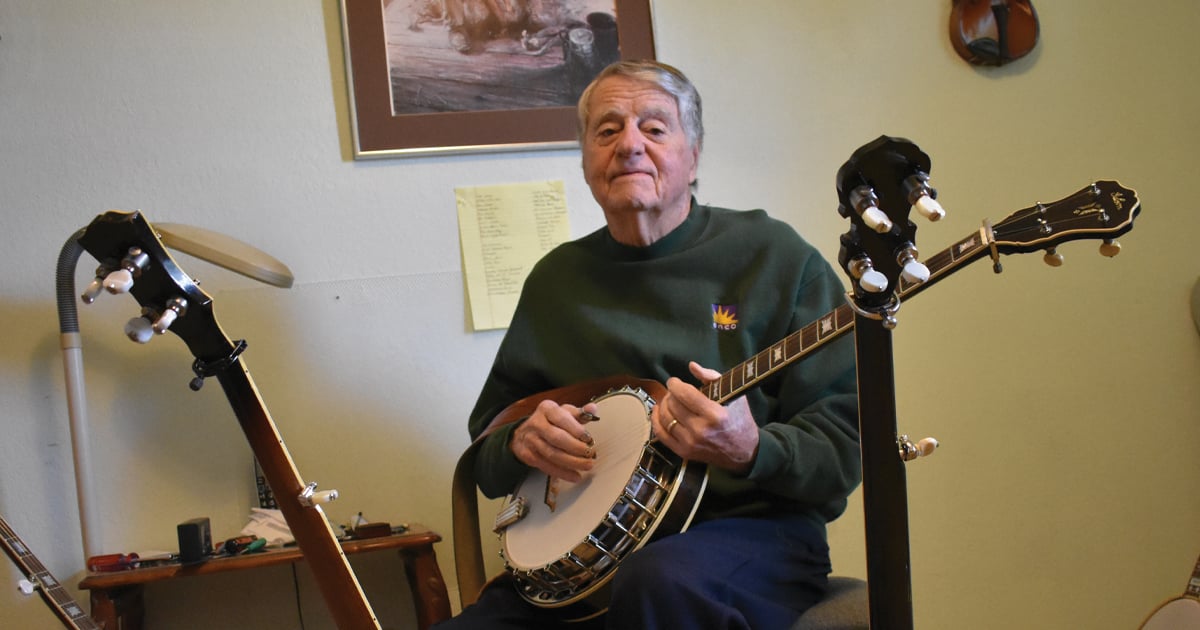
Don Bryant
A Short— But Brilliant— Bluegrass Career
Don Bryant’s experience playing bluegrass in the mid-1950s would be the envy of any professional bluegrass musician. In the span of just a few short years, Don performed with Benny and Vallie Cain, Bill Harrell, Mac Wiseman, and then for nearly three months he subbed for Earl Scruggs with Lester Flatt and the Foggy Mountain Boys. Not bad for a young man from the Washington, D.C. suburb of Arlington, Virginia and barely out of high school.
With an early start of that magnitude, Don could have easily gone on to experience a stellar career in bluegrass, but after a two-year Army enlistment (1956-1958) he decided to instead become a D. C. Metropolitan police officer— eventually rising to the rank of Captain. Had he continued in bluegrass, I have no doubt that his name would be as familiar to bluegrass music fans as any of our other early bluegrass heroes. Now retired from the police force and splitting his time between Colorado Springs, Colorado and Pebble Beach, California Don still plays his banjo every day and enjoys the music just as much as when he first started.
Discovering the Banjo
Although Don grew up in an urban area of the country, his father was a Kentucky native and both of his parents enjoyed old-time and country music and had a good collection of recordings. Don remembers especially liking the music of the Blue Sky Boys and the Bailes Brothers when he was young. As a teenager he started playing the guitar and was influenced by Hank Snow and Merle Travis. Through a local radio station, and local DJ Don Ownes, Bryant also discovered Mac Wiseman. He said, “I loved the acoustic guitar sound and Mac Wiseman’s voice.”
In May of 1952, Bryant had the opportunity to see a Mac Wiseman live show in Mt. Airy, Maryland. He remembers that Mac was performing with Jimmy Williams on mandolin, John Haskins on fiddle and Ed Amos on banjo. Amos was brother to country singer Betty Amos and, tragically, was killed in an automobile crash in 1956 when he was only 23 years old. Regarding being able to see Amos play the banjo live, Bryant said, “I was blown away. I was drawn to the sound of the banjo and it has never left me. It changed my life. I have no doubt Ed Amos would have gone on to be recognized as one of the best banjo pickers anywhere.”
Immediately after the experience of seeing Mac Wiseman and his band perform, Bryant borrowed a friend’s banjo. A local banjo player, Smitty Irvin—who was from Shelby, North Carolina and second cousin to Earl Scruggs—started showing him how to play. Bryant said, “I got to know Smitty and I also saw Roy Clark play and I hung out with him a little. I knew Smitty better and he was very generous. I think Smitty was under-rated. He had great stage presence and a terrific personality. I can’t say enough about him.” Don also started listening to bands like Flatt & Scruggs and the Lonesome Pine Fiddlers.
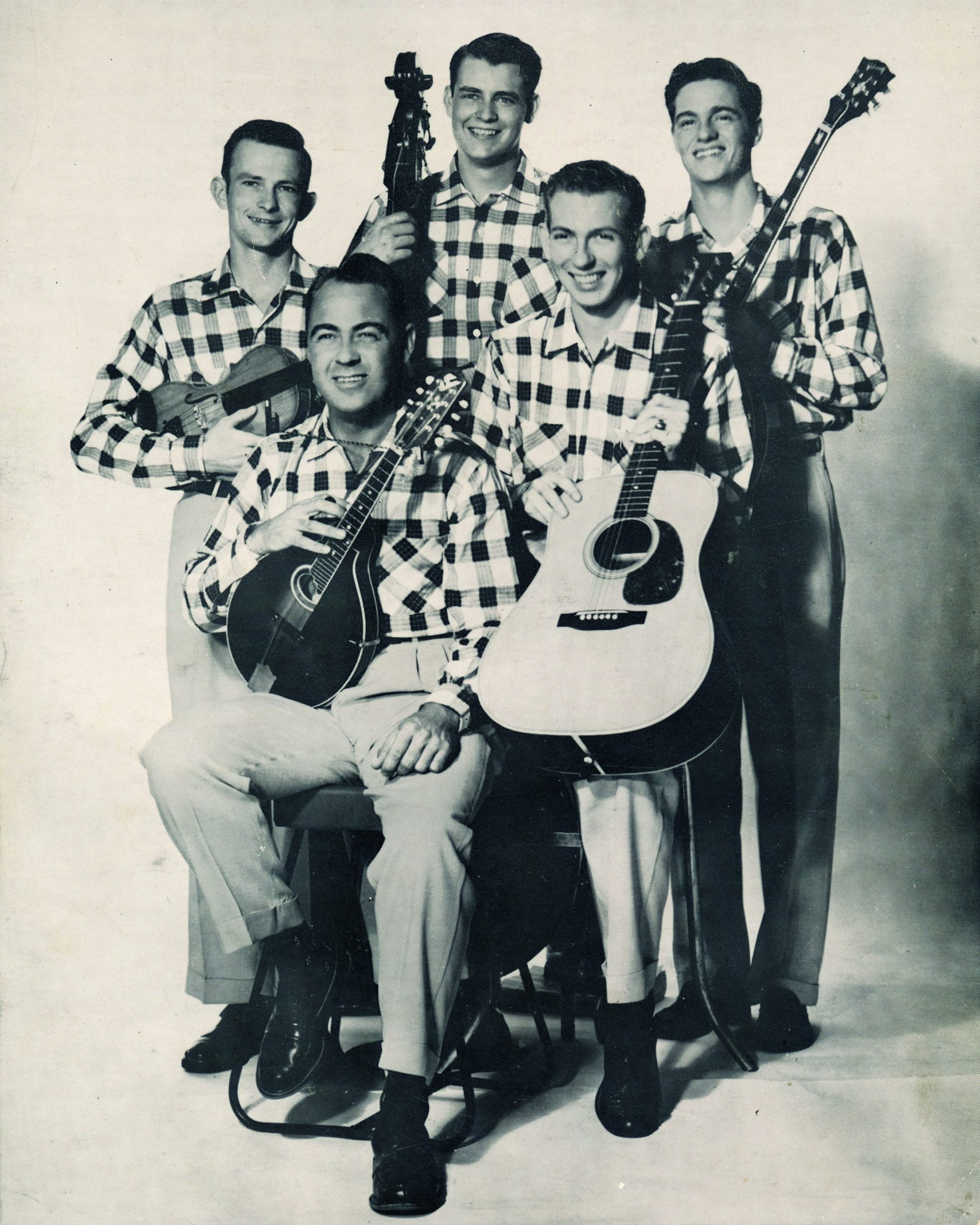
Learning to play the banjo came fairly easy to Bryant. He said, “I picked up the forward and backward rolls quickly and I didn’t have trouble with the technique. I never struggled learning the banjo.” Within a year of learning how to play, Bryant started performing with local artists Benny and Vallie Cain while he was still in high school. In addition to the music, Benny Cain also introduced Bryant to vintage instruments. He said, “Benny was an ATF agent and traveled a bit in the late 40’s and early 50’s. Wherever he traveled, he would go to pawn shops and pick up instruments. I remember that he had two Lloyd Loar mandolins.”
In 1953—the year he graduated from Washington and Lee High School (the same alma mater as one of the Bluegrass Unlimited founders, and long-time General Manager, Pete Kuykendall)—Bryant met Bill Harrell and they formed a band which included Smiley Hobbs (mandolin and tenor vocal), Roy Self (bass), and Carl Nelson (fiddle). Bryant said, “We were just a teenage band and weren’t old enough to play in the clubs, but we did have a weekly radio show on WARL. We were just having fun. We weren’t doing it for money.”
Another early influence on Bryant’s banjo playing was Don Stover. Bryant said, “Don Stover had been playing with the Lilly Brothers and moved to Washington, D.C. in about 1953. I was still in the learning stage and Don showed me more than any other banjo player.”
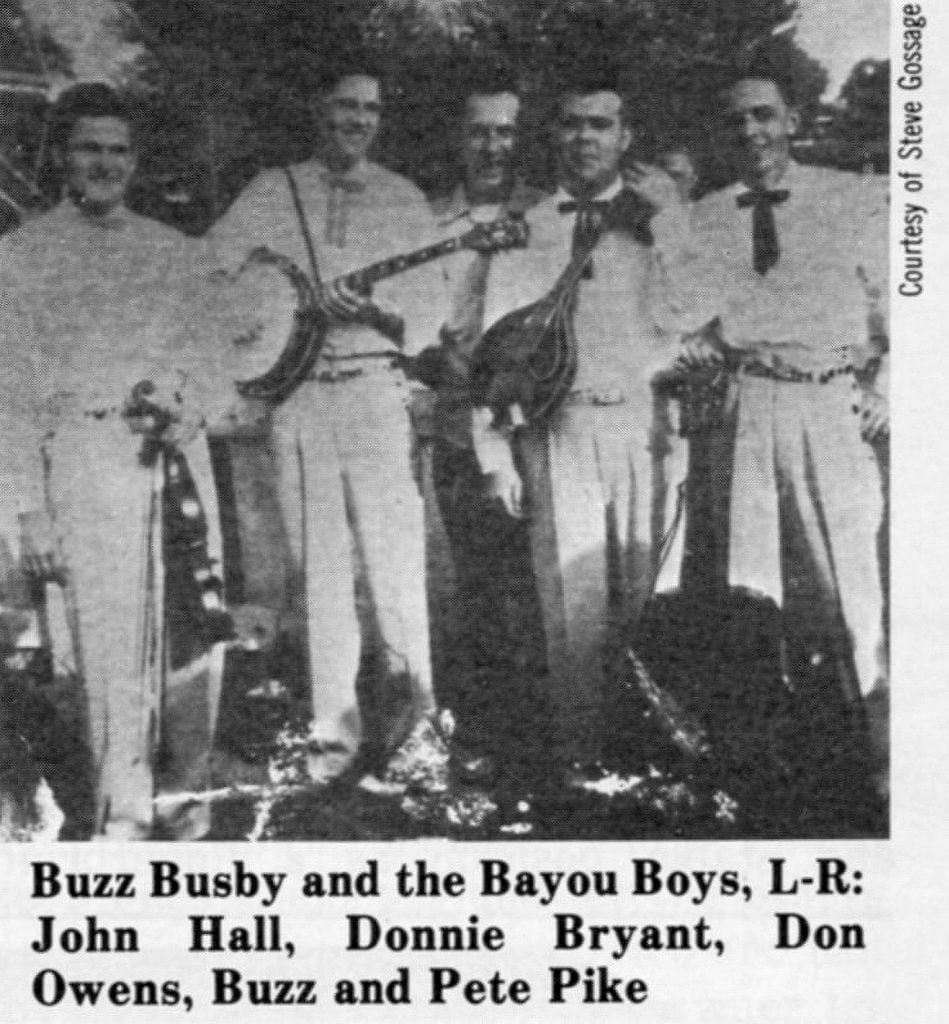
Early in 1954, Bryant joined Buzz Busby’s band—Buzz Busby and the Bayou Boys—for a few months. Other band members at that time included John Hall (fiddle), Pete Pike (guitar) and Lee Cole (bass). When Bryant left Busby, Don Stover took his place playing banjo in Busby’s band. The band performed once a week at the Pine Tavern on Massachusetts Avenue in Washington, D.C. and had a weekly radio show on WGAY in Silver Spring, Maryland.
In August of 1954, at the National Country Music Championships held in Warrenton, Virginia and sponsored by Connie B. Gay, Buzz Busby’s band took home a number of prizes, including that of “Best Band.” Their performance at that competition led to the band being hired for a television show called the Hayloft Hoedown on WRC-TV in Washington, D.C. Coincidently, that same year Patsy Cline won the best female vocalist award at the contest, which helped launch her career.
Mac Wiseman
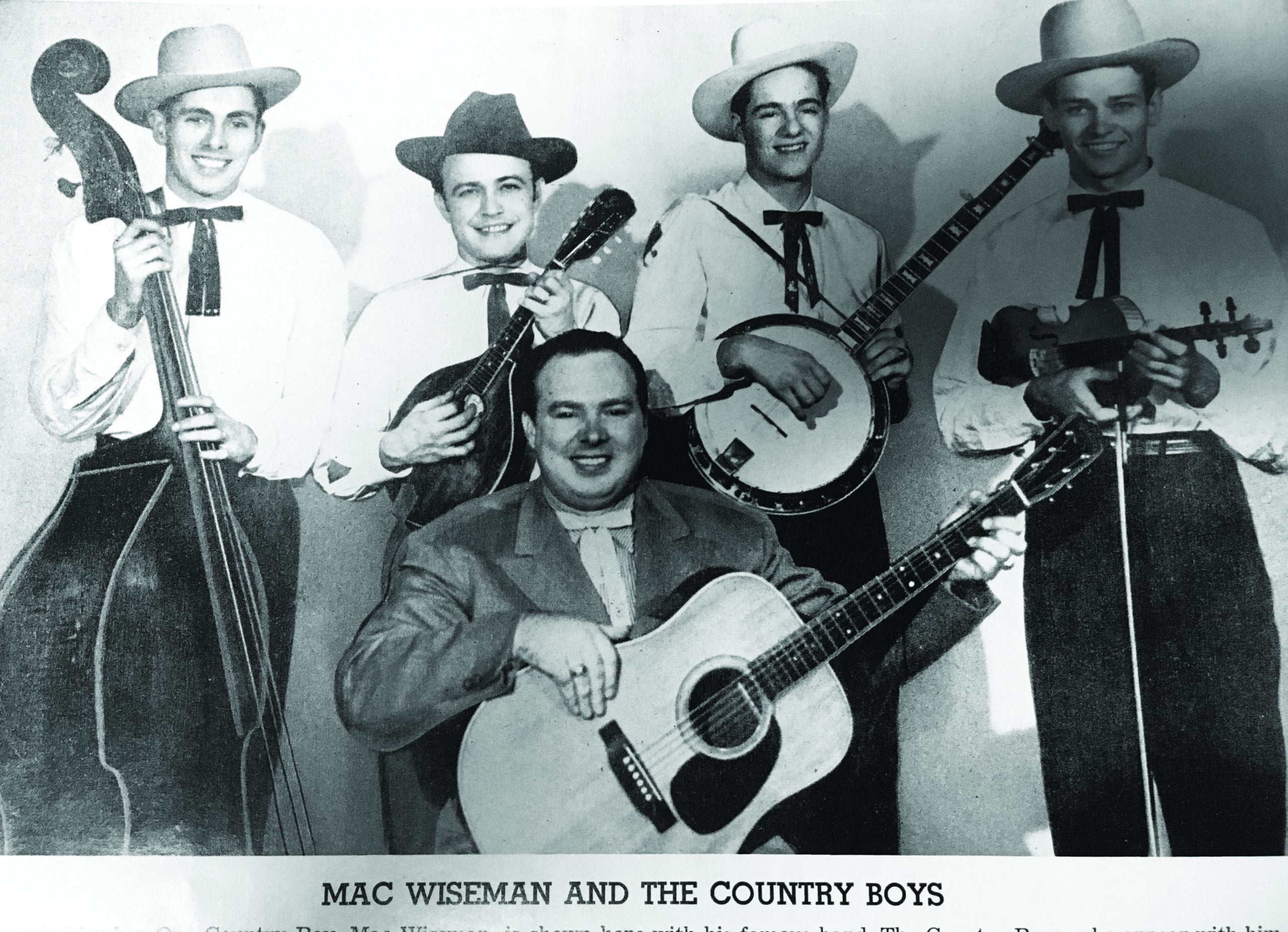
Although Don Bryant was in the band at the contest in Warrenton, he did not stay with the band to perform on the television show because he left the band to join Mac Wiseman. Bryant remembers, “In 1953, Roy Clark won the banjo contest at Warrenton and I placed second. The next year, I won and Roy Clark placed second. Right after that contest, Mac Wiseman auditioned me for his band (The Country Boys) in the parking lot. Don Owens had introduced me to Mac and he hired me on the spot.”
When Wiseman hired Bryant to be a member of his band, Don remembered Wiseman’s advice to him in an interview with Bluegrass Today. Don is quoted as saying, “He (Wiseman) said, ‘I’m paying you to make me sound better. Keep it simple and forget the hot licks, and I’ll do my best to sell you when your turn comes to be featured.’ That was fine with me because I didn’t know any hot licks. So, simple was all I knew. Mac was a crooner, and you did not want to get in the way of his voice or his style.”
With Wiseman, Bryant experienced life on the road for the first time. In addition to playing in clubs and theaters, Wiseman also played package shows with country artists (such as Johnny Cash, Hawkshaw Hawkins, Marty Robbins, Cowboy Copas, and Slim Whitman) and bluegrass bands (such as Flatt & Scruggs, Bill Monroe, and the Osborne Brothers). It was during this time period that Bryant discovered that he was not crazy about life on the road as a traveling musician. He said, “I soon realized that I did not like traveling around in crowded cars and driving most of the night. It turned me off from having a professional career playing music.”
Because he did not like to travel, Bryant left Mac Wiseman’s band and came back several times over a two-year period. During one of his tours with the band, they were performing at an auditorium in Philadelphia and Mac brought in Josh “Buck” Graves to play the Dobro. Bryant said, “I wasn’t happy about that because I felt like the banjo and the Dobro would clash. Buck was very gracious, and we worked it out. We figured out how to take turns playing the back up and fills and ended up being able to use both the banjo and Dobro in the band with great success. At that time, I think Mac was the first person to carry both the banjo and Dobro in a band.”
In the Josh Graves memoir Bluegrass Bluesman, Mac Wiseman remembers hiring Josh, “To my knowledge, and Josh and I discussed this, I was the first to use the Dobro in a bluegrass band, before he joined Flatt and Scruggs. He’d had a long record with Wilma Lee and Stoney Cooper in Wheeling, West Virginia. I didn’t know where he was; I had to track him down. He was working dates with Charlie Bailey in Philadelphia when I hired him. He was going by “Buck” when he was with me. Burkett was his real name…I hired him mainly to play Dobro. I’ve always done a lot of ballads and sentimental songs, and I felt like a banjo was too harsh for that material. He’d fill in with mandolin on the up-tempo tunes.”
In the September, 2014 issue of Bluegrass Unlimited Magazine, Don Bryant wrote an article about his time on the road with Mac Wiseman and summed up what he liked about working with Mac, saying, “Mac in his never-let-up approach had a sort of killer instinct that I loved. For example, before hitting the stage, he would look at us and say something like, ‘Boys, let’s give ‘em both barrels.’ As the leader of the band and even when I worked with him after we disbanded, he was no-nonsense from a professional standpoint…Other than his firm handling of his band, he was otherwise a warm, affable, easygoing individual with a keen sense of humor.”
Lester Flatt and the Foggy Mountain Boys
About a year later, in May of 1955, Flatt and Scruggs hired Josh Graves to play the Dobro in their band. In early October of 1955, Earl Scruggs received a call from his brother Horace telling him that his mother, Lula, had suffered a stroke. Scruggs, his wife Louise, and sons Randy and Gary, set out to drive to North Carolina late that night to be with Earl’s mother. On the way, their car was hit by a drunk driver at about 3 a.m. Earl fractured his pelvis and dislocated both hips and thus could not perform, but the band had dates on the books. In order to fulfill their obligations, the band had to find a banjo player to fill in for Earl while he was recovering. Buck Graves recommended his old bandmate Don Bryant.
Bryant said, “I received a call from Lester. I was not out with Mac at the time, but I declined at first. I didn’t think that I could handle it. I left the house and when I returned home a couple of hours later my parents and Don Owens were in the kitchen. Lester had called Don Owens. Don encouraged me to take advantage of the opportunity.”
In October of 1955 Don Bryant went to work with Lester Flatt and the Foggy Mountain Boys and stayed with them through Christmas. Earl was feeling better and wanted to rejoin the band after the Christmas break, so Bryant went back with Mac Wiseman. Mac had hired him for a two-week tour in Florida. Although Earl did try to come back, he had a relapse and had to go back into the hospital and wasn’t able to continue. Since Bryant wasn’t available, Lester hired Curtis McPeake to fill in for Earl. Later, Earl tried to come back again and still was unable to keep up with the band’s full schedule, so Haskel McCormick was called to fill in. Altogether, Earl was out for seven or eight months.
In 1956, Bryant was drafted into the Army and served at Fort Jackson. In 1958, he returned to Washington, D.C. and began working as a Metropolitan policeman. Regarding this decision, Bryant points to job security. Plus, he said, “I was just a banjo player. I couldn’t sing. I had enough sense to know that just being a banjo player, and not much else, was not enough. I knew plenty of fine banjo players who could also sing.”
In just three years, Bryant had performed with Benny and Vallie Cain, Bill Harrell, Buzz Busby, Mac Wiseman, and Lester Flatt and the Foggy Mountain Boys. Then he was out of the business. It was short, but incredibly fruitful. Looking back many years later, Don said that he has had two regrets. The first was selling his pre-war Gibson banjos. He said, “I just figured that in years to come they would have banjos that would blow those out of the water. I should have hung on to them.”
Bryant’s other regret is that he may have had an opportunity to be one of Bill Monroe’s Blue Grass Boys, and he didn’t take it. He said, “When I was filling in for Earl, Lester and the band treated me well. When it came time for Earl to come back, Lester told me ‘Listen, I have not spoken to Bill Monroe for seven or eight years, but if you think you might want to go with Bill, I’ll go and talk to him.’ I’d already arranged to go back with Mac Wiseman, so I turned him down. I loved Bill Monroe’s music, but back then he wasn’t the icon he later became. I regret not taking the chance to be a Blue Grass Boy.” Don continued, “Later I was telling that story to Dana Cupp (Bill Monroe’s last banjo player) and he said, ‘Yea, but you were a Foggy Mountain Boy!’”
Although Don Bryant’s bluegrass music career took a back burner when he joined the police force, it did not fade away altogether. He continued to perform, from time-to-time, with Mac Wiseman. Don said, “Mac was playing at the Old Dominion Barn Dance in Richmond, Virginia and when he had a weekend job up north of Washington, D.C., he’d pick me up and I’d play the weekend.” One of the most memorable trips that Bryant took with Mac Wiseman was a package show in England in 1975 to perform at Wembley Auditorium, with Dolly Parton and George Jones also on the show bill—and traveling on the same plane.
In a July 1982 Washington Post newspaper article Mac Wiseman is quoted as saying that Don Bryant was “about the best banjo picker that ever was born, except when he’s thinking about the guitar.” Don said, “Mac was like a brother to me. I remember we would be rolling down the road at three in the morning. Mac did most of the driving. I’d ask him to sing a little bit of something and he would sing. I’d think ‘God, if only people could hear what I’m hearing right now.’ Lester was one heck of a smooth singer, but I think Mac’s voice was more powerful.”
Don Bryant’s Banjo Style
Like most bluegrass banjo players in the 1950s, Bryant learned how to play Scruggs style banjo. As mentioned previously, early-on he learned from Smitty Irvin and Don Stover. When he was performing with Lester Flatt, he also had the opportunity to pick with Earl Scruggs. Additionally, Don points to Rudy Lyle as a big influence. He especially liked Lyle’s fill-in licks and banjo back-up. He said, “I met Rudy years later and I told him how much I learned from him.”
Another influence on Don Bryant’s playing was Bill Keith. Shortly after Bill Keith quit playing with Bill Monroe, John Kaparakis, one of the early contributors to Bluegrass Unlimited Magazine, brought Bill Keith to Bryant’s home. Don said, “I spent four or five hours with Bill Keith and I ran a reel-to-reel recorder. He showed me the melodic stuff that he was doing on the banjo. If it wasn’t for the generosity of Don Stover and Bill Keith, I may not be playing as much these days.”
Bryant describes his banjo style as a combination of the Scruggs and the Keith melodic styles. He said, “When Keith first came out with his style, some people didn’t care for it. But, I think he contributed as much to five string playing as Earl. Without Keith’s style, you can’t play a lot of the fiddle tunes note-for-note and fiddle tunes are a major part of bluegrass. I’d rather hear Earl’s driving style and I’d rather hear Earl back up a fiddle. But I can’t say enough about both styles. Learning that stuff from Bill Keith added a whole new dimension to the music. It was cool to throw those licks into the Scruggs style.”
Regarding having had the opportunity to pick with Earl Scruggs, Don said, “They were living in trailers at the time, and I was hanging out with Buck Graves. Earl came out of his trailer and said, ‘Donnie, I don’t suppose you’d want to come over and play a couple of tunes would you?’ I couldn’t get to the car fast enough to get my banjo out. We played tunes back and forth, just the two of us on the banjo. But, I didn’t dare ask him any questions about what he was doing.” When Bryant was performing with Lester, Earl even offered to let Don use his banjo. But, Don decided to stick with his own banjo for those shows because he was comfortable with it.
Don Bryant Today
Today Don Bryant picks the banjo every day after his morning coffee. He said, “I spend a good part of my retired life playing banjo around the house to a door knob.” He loves to play old Carter Family tunes. He said, “I never have come up with any tunes on my own and I’ve never played nothing fancy. I like to play basic stuff and get it clean.”
In the July 1982 Washington Post article, it states, “He (Bryant) gets no end of invitations, but still plays almost exclusively for friends and for love of the music. On his backyard patio last Saturday night he casually ran through a repertoire that left one friend near tears, so clean and quick and piercing and delicate is his style. ‘Man, how can you play that kind of music and keep it to yourself?’ he was asked. ‘Well,’ Bryant said, ‘I really just learned it for myself.’”
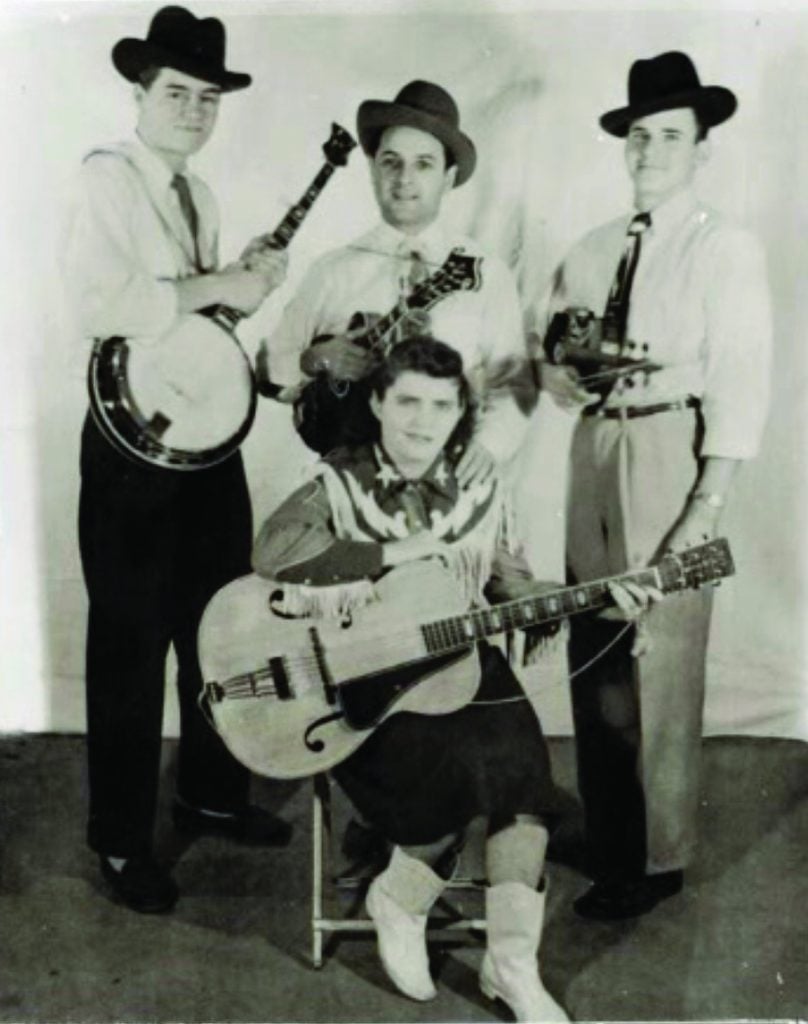
Although he has not played in a band for many years, Don has stayed in contact with the people he knew during his early days performing in Washington, D.C., especially the banjo players like Ben Eldridge, Eddie Adcock, and Bill Emerson. He said, “Don Stover, Smitty Irvin, Ben Eldridge, Eddie, Adcock and Bill Emerson…that was my banjo family. When they inducted Mac Wiseman into the Country Music Hall of Fame about eight years ago, I stayed at Eddie’s house. There was never any competition between us, it was always respectful. I take my hat off to those guys who did all of the traveling and endured the negative aspects of the job. It is a tough life.”
When asked about the bluegrass music that is being recorded and performed today, Bryant said, “I like the old stuff. I’m a traditionalist. I can’t say enough about High Fidelity, they are a throw-back—great talent. I met them (Jeremy Stephens and his wife, Corrina), at Mac Wiseman’s funeral and I invited them to stop by if they came out west. They came out and stayed at my home and played here at Colorado College. I got to know them very well. They are smooth and professional, and they have it all. I hope that they do well.”
In May of 2022 Don Bryant will celebrate seventy years of playing the 5-string banjo. Although his professional career was short-lived, he has never stopped playing for the shear enjoyment that the sound of a 5-string banjo can bring to anyone who puts on three finger picks and executes a forward roll. After seven decades, it was obvious from our conversation that Don still gets excited about the instrument and the music. All of us should be so lucky.
I have had the pleasure to play with his nephew Jim Iler for 40 years. Jim’s mother Miriam and Donnie were brother and sister. Their brother Bobby Bryant performed with Keith Whitley in Keith’s bluegrass band. Eddie Alcock told me everyone wanted to learn what Don did on Mac’s record, Davey Crockett. Donnie came to my Riverwalk Bluegrass Festival to hear us and see his good friend, J.D.Crowe. The banjo greats all spoke so highly of him. I have a tape of Donnie with his nephew Jim and Chris Black on bass. Just the three of them. Great stuff! Glad to read this on “Uncle Donnie”
Sorry typo, Eddie Adcock. We played a festival in Colorado when I was working with Little Roy and Lizzy. I knew Eddie knew him, but asked him if he did. His reply, he’s one of my closest friends and favorite banjo players. Is he here yet? I left him tickets at the gate. Loved reading this feature!