Notes & Queries – December 2023
Q: In the words of the great Larry Cordle song, “Black Diamond Strings,” he says, “Well Daddy showed me three chords, but Jimmy Steele taught me how to play, He showed me the G-run I’m still using today.” Who is/was Jimmy Steele? Ted O’Brien, Oswego, New York.
A: We reached out to Larry Cordle, who offered this vivid remembrance: “Jimmy Steele was a neighbor of ours when I was a kid and a relative on my mom’s side of the family. He was more like my dad’s age and was just close to our family. He just had a wonderful touch on the guitar and he showed me how to play a lot of tunes early on. He showed me the kickoff to ‘Mule Skinner Blues’ and I recall how to play a solo he had come up with on ‘Steel Guitar Rag’ and several other things . . . Anything I asked about really. His G run was to die for and had many variations. They were always just so solid. I still try to play them the way he showed me, though they are never as good as his.
“I always thought he could have been a professional player but if he ever had aspirations of doing that, I’m not aware of it. I will never forget how smooth he was and how patient he was trying to show me stuff early on. He was my Clayton Delaney for sure. He’s been gone now, many years. I still miss him and was happy I found a song that I could tip my hat to him in, by mentioning his name. Thanks for asking about him. . . God Bless.”
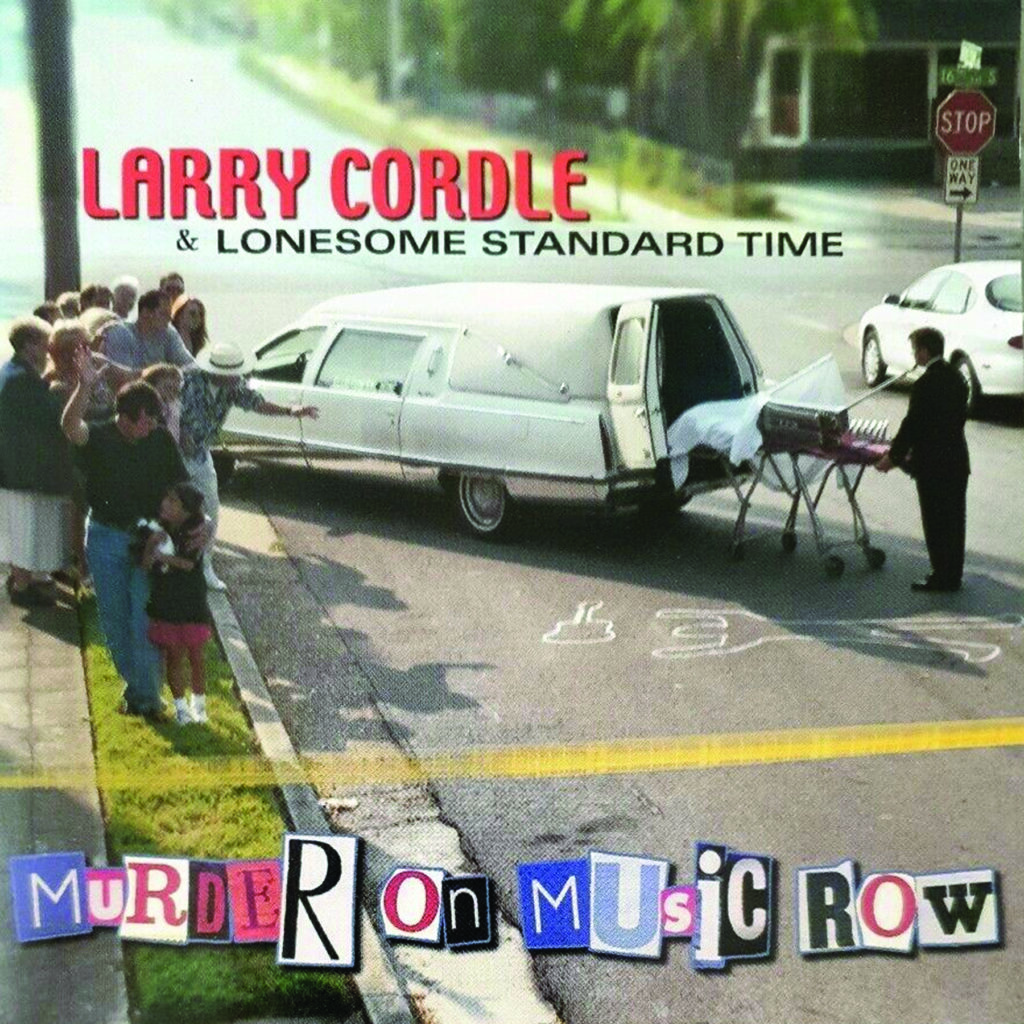
“Black Diamond Strings” appeared on Larry’s Murder on Music Row CD which first appeared on the Shell Point label in 1999 and was reissued on Ripcord in 2005.
More Early California Bluegrass Festivals
Jon Fox’s excellent article in the October issue of Bluegrass Unlimited – “Ground Zero for Southern California Bluegrass ‘Bluegrass Spectaculars’ at the Ice House” – illuminated the fact that there was actually a multi-day bluegrass event that preceded the generally acknowledged first weekend-long bluegrass festival, Labor Day Weekend 1965 in Fincastle, Virginia. Discussions about the article stimulated additional research that brought to light an even earlier three-day event . . . that almost was.
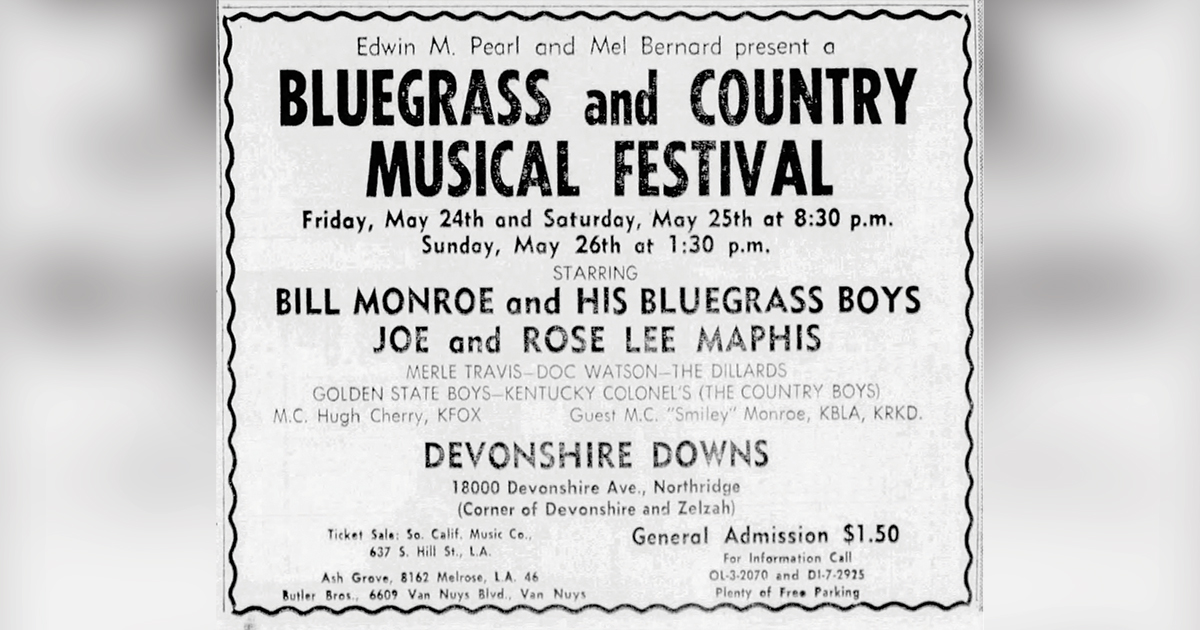
Throughout the month of May 1963, at least two California newspapers – The Van Nuys News and Valley Green Sheet and The Los Angeles Evening Citizen News – carried display advertisements for a “Bluegrass and Country Musical Festival” that was to be held May 24 – 26, 1963, at Devonshire Downs racetrack.
The event was being promoted by Edwin Pearl, owner of Hollywood’s The Ash Grove, and Mel Bernard (of whom nothing is known). The program boasted a stellar line-up that included Bill Monroe and the Bluegrass [sic] Boys, Joe and Rose Lee Maphis, Merle Travis, Doc Watson, the Dillards, the Golden State Boys, and the Kentucky Colonels. Masters of ceremony were to include Hugh Cherry and “Smiley” Monroe from KBLA/KRKD.
A May 15 newspaper article headlined that “Maphis’ to Appear at Festival.” Well-known in the area due to their extensive television work in the 1950s, the article reported that “Rose Lee and Joe Maphis, longtime Valley residents will be featured along with many other famous country music personalities in the first real Bluegrass Festival to be held in this area.”
A later article, from May 19, reported that “Edwin Pearl and Mel Bernard, co-producers of the show, promise ‘real old fashioned country music from the heartland of America,’ and a special treat – combined sets by Monroe on the mandolin and blind guitarist Doc Watson.”
Yet, it was a brief blurb in the May 18 Valley Times that announced “The Bluegrass and Country Music Festival, scheduled for next weekend at Devonshire Downs, has been cancelled.” Advertising, however (which had probably been paid for in advance), continued to run up to the day of the festival.
Over Jordan

Loyal Jones (January 5, 1928 – October 7, 2023) was an educator and author who championed all that was good in Appalachian culture. He did this through his work as an author (he wrote, or co-wrote, thirteen books and numerous articles), as an educator (where he defined his life’s work as “trying to help convince my students, but also people in other settings, that there’s nothing wrong with Appalachian culture”) as a speaker, and as an organizer of traditional music and humor festivals.
Jones was reared in modest circumstances in rural western North Carolina during the 1930s and ‘40s. Following graduation from high school in Hayesville, North Carolina, he served a hitch in the Navy and then enrolled in Berea College in Kentucky where he earned a bachelor’s degree in English. From there, it was off to the University of North Carolina where he received a master’s degree in English and a teaching certificate. After brief stints teaching in the United States Army and in public schools in Jefferson County, Kentucky, Jones signed on as Associate Executive Secretary for the Council of the Southern Mountains, an organization that, throughout the 1960s, was at the forefront in the War on Poverty in Appalachia. He later served as the organization’s Executive Director, from 1966 to 1970.
In 1970, Jones joined the staff of Berea College as the Director for Appalachian Studies. It was there that he oversaw the creation of the school’s Appalachian Center, a facility with the goal of offering information about the region to outsiders interested in Appalachia. In recognition of his role in founding and running the Center, it was later renamed in his honor.
Upon his retirement from Berea College in 1993, Jones busied himself as a writer, speaker, humorist, and storyteller. His areas of expertise included Appalachian humor, Appalachian religion, Appalachian culture and values, Southern religious humor, and Appalachian lore.
Jones’ books were divided between Appalachia, music, and humor. Ron Eller, a one-time director of the Appalachian Center at the University of Kentucky opined that “Loyal has been able to consistently take an optimistic, positive perspective, especially when it comes to the people of the region. I think that’s something most of us admire about Loyal.” Fans of old-time and bluegrass music appreciated his biographies of Kentucky balladeer Bradley Kincaid and folk icon Bascom Lamar Lunsford.
Jones’ Country Music Humorists and Comedians is, according to a press blurb, “an encyclopedia of country music performers who have used comedy as a central component of their presentation.” In addition to covering mainstream country acts, old-time and bluegrass humorists – including Dave Akeman (Stringbean), Tom Ashley, the Blue Sky Boys, Melvin Goins, Homer and Jethro, Bill Napier, and Red Knuckles and the Trailblazers – are featured as well. Another book, written in conjunction with songwriter/humorist Billy Edd Wheeler, asked the musical question “What’s the difference between a dead skunk on the road and a dead banjo picker?” The answer, “There are skid marks in front of the skunk.”
One longtime colleague familiar with Jones’ lifetime commitment to the region reasoned that if anyone deserved the title of Mr. Appalachia, it was Loyal Jones.
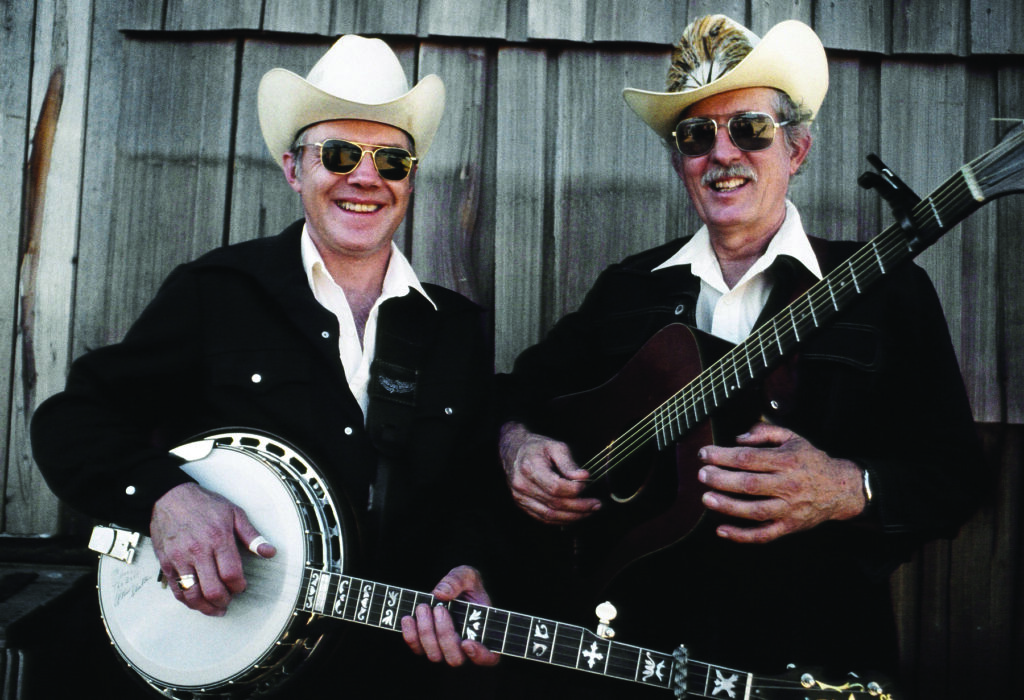
Harley Worthington (October 21, 1940 – September 21, 2023) was a traditional banjo player from Tennessee who shared his talents with a host of pickers in his adopted state of Washington. With his longtime guitarist partner Hank English, also a Tennessee native, he was among the first to bring authentic bluegrass to the Evergreen state. With a group called The Tennesseans, Harley and Hank were instrumental in launching the careers of several world class musicians, most notably fiddlers Mark O’Connor and Barbara Lamb.
Worthington began learning to play music around the age of seven. It was about the same age that he performed for the first time on local radio, WORK in Morristown, Tennessee. Growing up not far from the early country music mecca of Knoxville, Tennessee, he had the opportunity to hear many foundational players such as Flatt and Scruggs, Carl Story, the Brewster Brothers, the Osborne Brothers, and Jimmy Martin.
Throughout his teen years, Worthington played with a number of regional bands including the Lane Brothers, Charlie and Doyle; the Dixie Travelers, Tex Climer and the Blue Band Coffee Boys; and Charlie Bailey. As was a standard set-up for bluegrass bands of the day, Worthington and his various groups worked around a single microphone.
Worthington joined the Air Force in 1960 and was stationed in Washington state. He found a music making opportunity in a group called the Cotton-Pickin’ Sergeants. It was around the same time that he met Hank English, at an annual event called the Tarheel Picnic. It was a social event for a large contingent of North Carolinians who moved to the area for the promise of steady work in the timber industry.
During most of the 1960s, Harley and Hank worked with a number of pick-up bands. After a tour of duty in Vietnam, which ended in 1969, Harley teamed up with Hank to form The Tennesseans. Among their early band members were twelve-year-old Mark O’Connor and his younger sister Michelle on mandolin. Harley and Hank taught Mark the intricacies of performing bluegrass and he in turn opened the duo to Texas style fiddling. As O’Connor’s talents and stature grew, the two bandleaders set him free to pursue other, more lucrative opportunities. It was only a short time later that Barbara Lamb and her bass-playing boyfriend stepped in to fill the void.
Worthington and English continued with the Tennesseans until the middle 1980s, at which time they called it quits. Harley continued to make music with several area bands, the most notable of which was Barry Brower’s group, The Fossils.
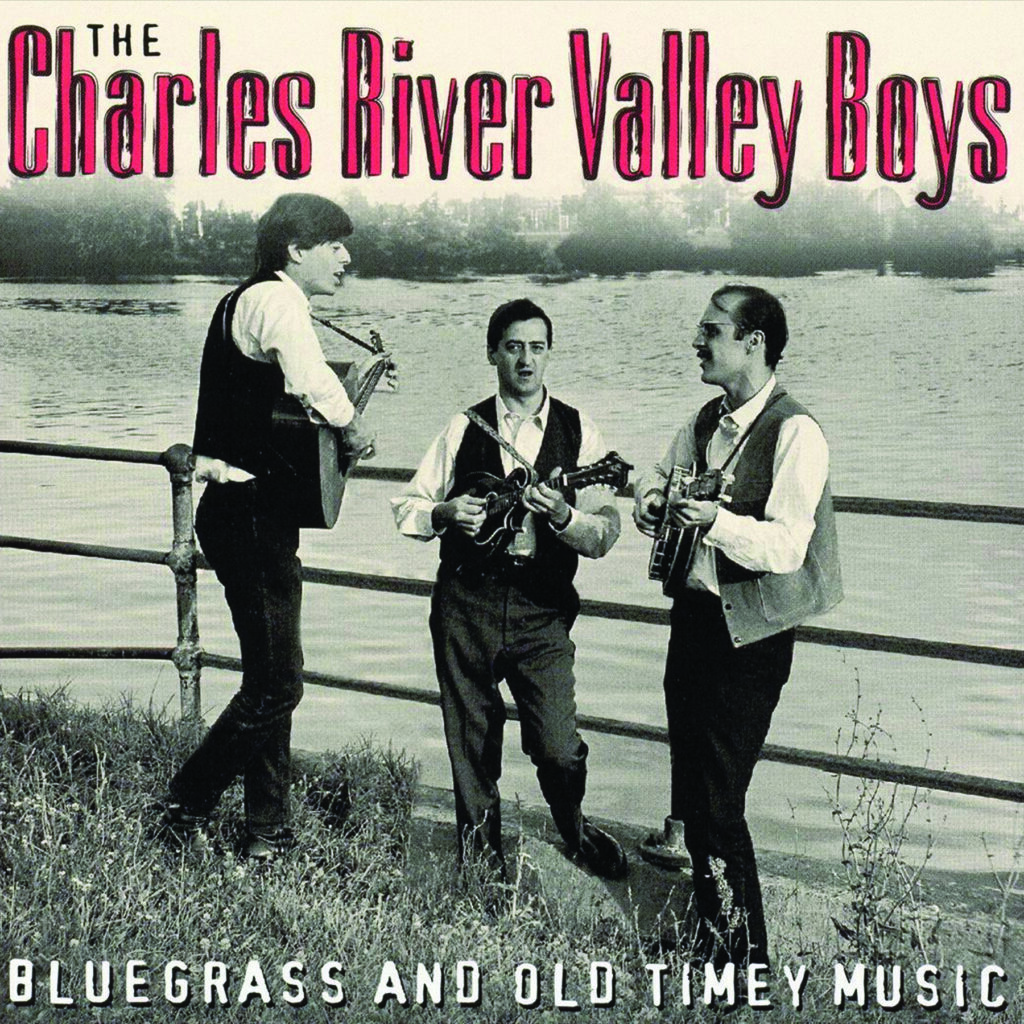
George Robert “Bob” Siggins (December 29, 1937 – September 22, 2023) was a multi-instrumentalist who was best-known for his banjo work with the New England-based Charles River Valley Boys. A native of Miami, Oklahoma, his high school years were witness to a growing fondness for honky tonk and country music, much of which he heard on local radio. Siggins started playing the banjo in 1957 while attending Harvard University. He began by using a Pete Seeger-inspired strum and frail. On one summer break from school, he mastered three-finger style picking. It was also while at Harvard, where he worked towards a degree in biochemistry, that he mastered the guitar and mandolin. He put his newfound talents to use as a charter member of the Charles River Valley Boys; one source pegged them “a group of folk singers.”
Following graduation from Harvard in June 1960, Siggins married Elizabeth Jackson “Betsy” Minot. Among the bridesmaids was folk singer Joan Baez. The couple spent a year in Italy, which they used as a base for travels throughout Europe.
In the fall of 1961, Siggins enrolled at Boston University as a graduate student in biology. He kept a hand in music by playing with the Charles River Valley Boys. Just prior to starting at Boston, the group recorded an album for release on the English Folklore label, Bringin’ in the Georgia Mail. They followed that up in 1962 with an album for US-based Prestige Records called Bluegrass and Old-Timey Music.
Siggins branched out in 1963 by playing with the Jim Kweskin Jug Band, an outfit that blended rural blues, Appalachian folk, Southern country, ragtime, and string band music. In 2010, The Austin Chronicle recalled their music as “free-spirited” and “radical and irreverent to purists.” On the group’s debut album for Vanguard, Unblushing Brassiness (released in 1963), Siggins played banjo, mandolin, and steel guitar.
In 1964, Siggins recorded once again with the Charles River Valley Boys. For the outing, the group teamed up with fiddler Tex Logan for a set called Blue Grass Get Together. Other luminaries in the band included guitarist John Cooke, mandolin picker Joe Val, and washtub thumper Fritz Richmond. The notes to the album reported that “Bob is still pursuing his studies in neuro-physiology at Boston University. He has received his Master’s degree and is working towards his doctorate.”
That same year also saw the release of Elektra’s Old Time Banjo Project. The album featured several songs each by a host of New York-based banjoists including John Cohen, Pete Siegel, Hank Schwartz, Bob Siggins, Winnie Winston, and Bill Vanaver. Sing Out! reviewer Jon Pankake singled out Cohen and Siggins as “the best singers among the banjoists presented here.” He praised the duo for providing “the album’s liveliest moments with ‘John Booker’ and ‘Old Jimmy Sutton,’ respectively.”
Siggins’ most well-known recording came in 1966 when Elektra released Beatle Country by the Charles River Valley Boys. Despite promo material that was disseminated to 2,500 college radio stations, the album fell way short of the 150,000 in sales experienced by the label’s then-recently-released The Baroque Beatles Book.
Although Siggins went on to enjoy a long and successful career in science, he always maintained an interest in music. He often viewed it as a counterweight to work and other stressors in his everyday life. Two of his latter-day bands were The Cheeky Monkey and Bonehead. He also appeared on albums by several friends including Eric Von Schmidt, Hazel Dickens, Geoff Muldaur, and Buffy Sainte-Marie.
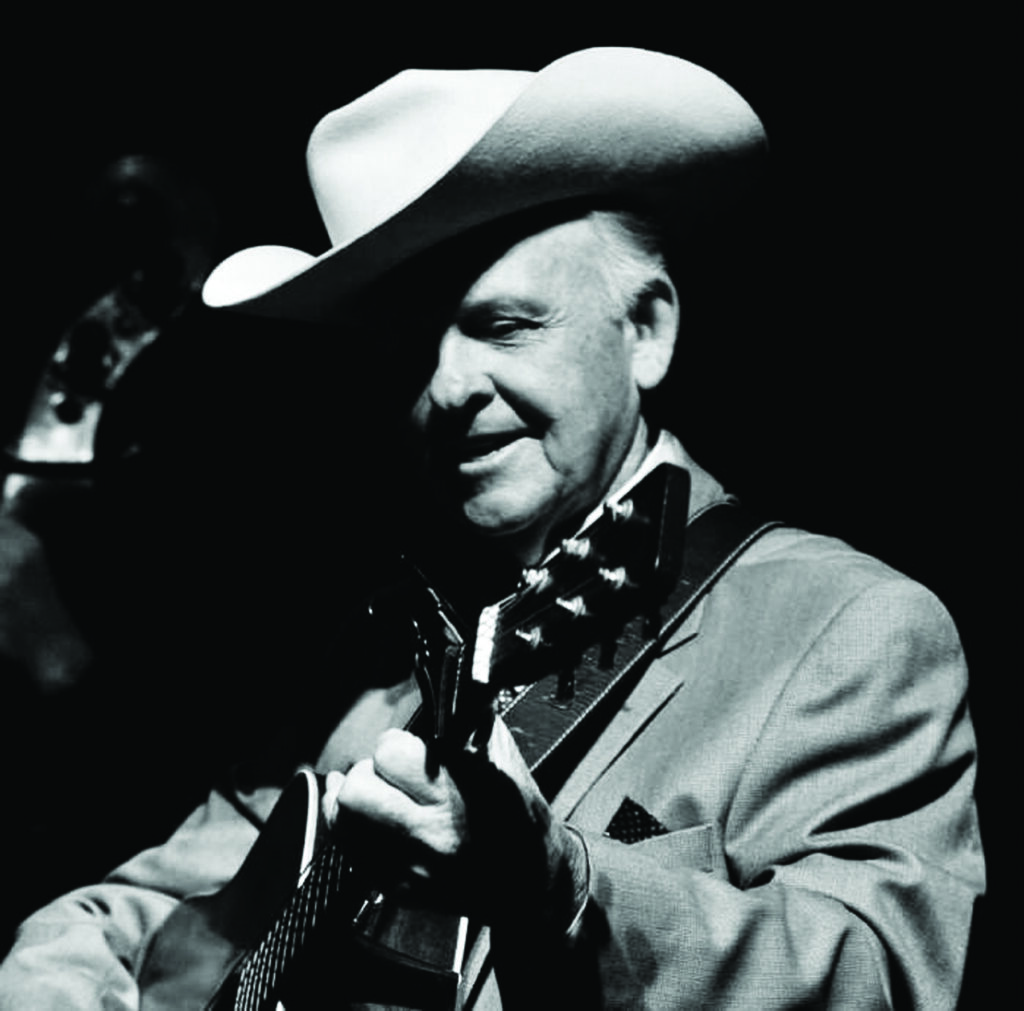
Willis Spears (September 13, 1940 – September 17, 2023) was a partner with Curly Seckler as a co-leader of Lester Flatt’s old band, the Nashville Grass. His tenure with the group ran from 1981 until 1994, at which time the band was retired. Seckler and Spears made occasional special appearances from 2005 until 2012.
Spears grew up in the farming community of Summertown, Tennessee, which was located about 75 miles southwest of Nashville. Among his earliest musical memories was hearing Lester Flatt singing with Bill Monroe on the Grand Ole Opry. Several years later, by age twelve, he mastered the basic guitar chords. After graduation from high school, Spears found employment with the Murray Ohio Manufacturing Company. One of his co-workers was a bluegrass picker and the two spent many hours together making music.
Spears served a two-year stretch in the Army from 1963 to 1965. Even there, he found time for picking, oftentimes performing for local community events.
Following his discharge, Spears returned to his old job with Murray Ohio, and to picking with his co-worker, Bruce Weathers. Eventually, they formed a group called the Cumberland Mountain Trio and performed every Saturday evening over radio station WKDN in Dixon, Tennessee. The group also released one long-play album.
In early 1981, after hearing Spears perform at an informal Nashville jam session, Curly Seckler invited him to sing lead for the Nashville Grass. Seckler told Bluegrass Unlimited in 1990 that “We did several numbers together and he sounded so much the way Lester did in the ‘50s.” At the same time, Spears noted that “Sometimes folks think I try to sound like the late Lester Flatt, but I’ve never tried to sing like anyone. It’s just the natural way I sound.”
Over the next five years, the group recorded three albums: China Grove, My Hometown (for Folkways in 1983), and What a Change One Day Can Make and Bluegrass Gospel (both of which appeared on the Rich-R-Tone label in 1986).
After he worked with the Nashville Grass for nearly six years as a hired member of the group, Spears was asked by Seckler to become a partner in the enterprise. This took effect on January 1, 1987. Going forward, they were billed as Curly Seckler-Willis Spears and the Nashville Grass. They made one final recording together, a cassette-only release for the Rebel label in 1989 called A Tribute to Lester Flatt.
In 1994, Seckler, who was 75, and Spears announced their retirement. They played their last official show together at the South Carolina State Bluegrass Festival in Myrtle Beach. From 2005 until 2012, the pair reunited for occasional special events, the last of which was Mule Day in Columbia, Tennessee, on March 31, 2012. They remained close friends and Spears often attended Seckler’s annual birthday gatherings.
Charles Wilburn “Buck” Trent (February 17, 1938 – October 9, 2023) was a high-profile banjo player who came to prominence in the early 1960s as a member of Porter Wagoner’s Wagonmasters. He rankled the ire of many bluegrass purists when, as part of Wagoner’s work on country shows, he electrified the instrument. He later worked as a duo with country entertainer Roy Clark and followed him to the set of Hee Haw. He later appeared as a fixture on Marty Stuart’s television program and most recently enjoyed popularity as an entertainer in Branson, Missouri. His catch phrase was “Oh yeah!”
A native of Spartanburg, South Carolina, he hailed from the same part of the country that gave rise to other influential banjo pickers such as Don Reno and Bobby Thompson. His career got underway in 1948 when, at age 10, he appeared on radio stations WORD and WSPA in Spartanburg. The mid-1950s found him in Asheville, North Carolina, where he appeared on WLOS-TV as part of Cousin Wilbur Westbrook’s outfit (which also included fiddler Chubby Anthony). He also logged time on California’s Town Hall Party before landing in Nashville in 1959. It was here gained employment with Opry star Bill Carlisle.
Although he was never officially hired as a full-time Blue Grass Boy, Trent is reported to have worked some dates with Bill Monroe in 1960 and 1961.
From 1962 until 1973, Trent worked as part of the Porter Wagoner Show. Throughout the middle and late 1960s, Wagoner had one of the top rated, and viewed, country music television programs in the nation. Other band members included, at various times, fiddler Mack Magaha, comedian Speck Rhodes, and female singers “Pretty Miss Norma Jean” and Dolly Parton. Trent, a multi-instrumentalist, appeared on numerous recordings by Wagoner and Parton, including some of her top-rated songs such as “Jolene,” “I Will Always Love You,” and “My Tennessee Mountain Home.”
In 1973, Trent joined the Roy Clark Show and also became a regular feature on Hee Haw. The Clark group, with Trent, won the CMA Instrumental Group of the Year award for 1975 and 1976. With the Oak Ridge Boys in 1976, Trent and Clark became some of the first American country music entertainers to tour the Soviet Union.
Trent began working out of Branson, Missouri, in 1981 and moved there permanently in 1990. While there, he was the first national performer to host a morning-time show.
In addition to recordings with Bill Carlisle, Porter Wagoner, Dolly Parton, and Roy Clark, he also released a series of solo albums including Sounds of Now & Beyond, Bionic Banjo, Oh Yeah!, Pair of Fives, Banjo Bandits, Buck Trent, and, most recently, Spartanburg Blues.