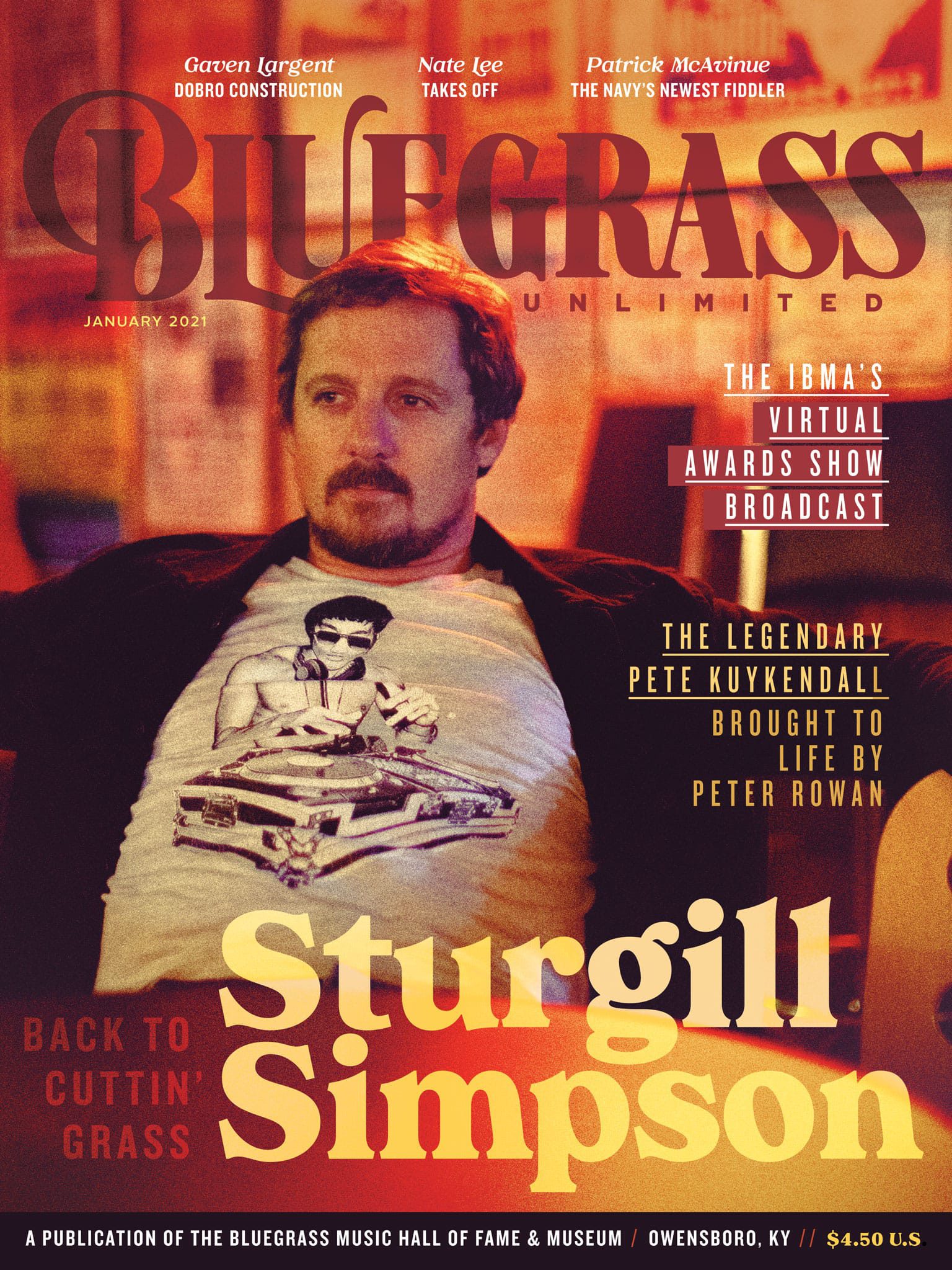
Gaven “Gravy” Largent
Modern Day Dobro Construction from a Traditional Perspective
Photos By Jake’s Visuals
In our world of bluegrass and acoustic music, the news travels quickly when a young master emerges on the scene. The sound of the Dobro1 in this artist’s hands puts the icing on the cake, or in this case the Gravy (self-penned moniker) on the proverbial musical biscuit. He is a gifted luthier, player, and person, with an effervescent personality and a contagious smile.
Born in April 1996, a proud Winchester, Virginia, native, Gaven (pronounced with a long “A”), grew up in a musical family, with classical influences from his parents. His mom, Melissa, is both a ballet dancer and instructor owning her own academy. Gaven’s dad, Jason, is a music teacher in the school system, the musical director at his church, and director of the choir.
Largent’s love of traditional bluegrass, mountain music, and instrument building goes back several generations to his Great Great Uncle Lester Racey who was a big bluegrass fan, with a large record collection. It is clear that Largent’s passion and expertise in building are reminiscent of days gone by, and he honors the traditions of a craftsman, in materials, tools, and techniques.
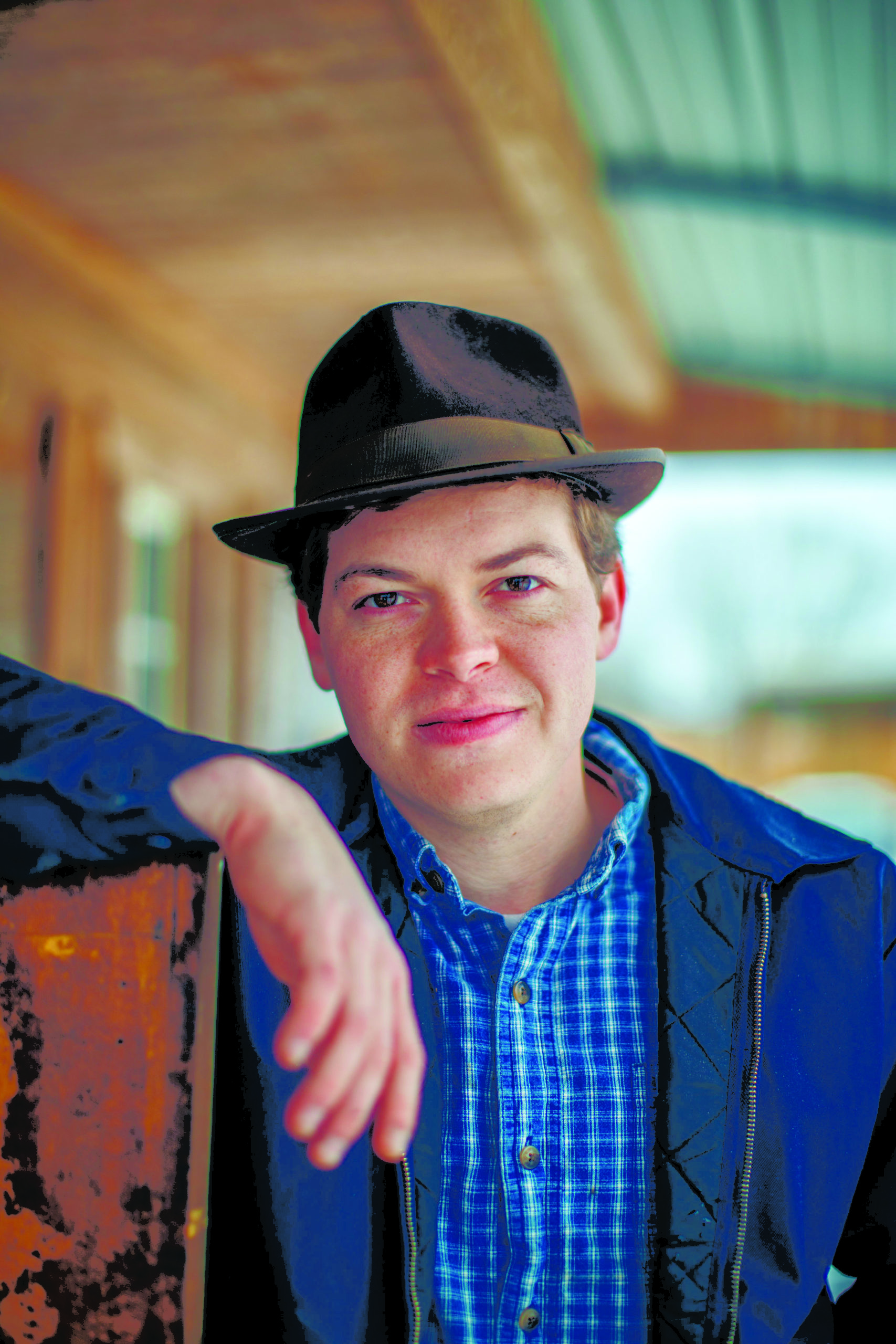
When Largent was age two, Uncle Lester built him a small-bodied guitar. Largent recalls, “This made me think anyone could build an instrument, so why not me. He was an absolute master, and the best in Virginia, building period-correct replicas of furniture. He had a big shop where I spent a lot of time with him when I was young. I am using a lot of Uncle Lester’s tools that I inherited. A lot of ancestors were wood workers, who inspire me to go back in time and live like they did.”
Largent learned to play the Dobro, banjo and guitar, first with his grandfather’s band and then several regional groups. At age 11, he placed first on Dobro, and at age 13 won best all-around performer at Galax competitions. As a teen, Largent played the Ryman Auditorium and Grand Ole’ Opry with Rhonda Vincent.
After graduating high school, he auditioned for Michael Cleveland’s band, Flamekeeper and toured with them for a year. Largent fondly recalls playing on the Millennium stage at the Kennedy Center. When Rob Ickes left Blue Highway, Largent got the full-time Dobro slot, which is his main and most comfortable instrument. It was with Blue Highway that Largent received a Grammy nomination for their album Original Traditional. After a three-year international tour playing Dobro with Blue Highway, Largent joined Dailey and Vincent on both Dobro and banjo, following Jessie Baker’s departure from the group. He toured internationally in Canada, Switzerland, and Japan, and performed at the Opry two-to-three times a week. Largent recalls, “On Circle TV, we did many episodes of the Dailey and Vincent Show, and had the opportunity to play and collaborate with many country stars. I performed at the K-Love awards at the Ryman with Steven Curtis Chapman.” Largent recently left Dailey and Vincent to pursue a multi-faceted career as a luthier, session player, guest player, song writer, and recording artist.
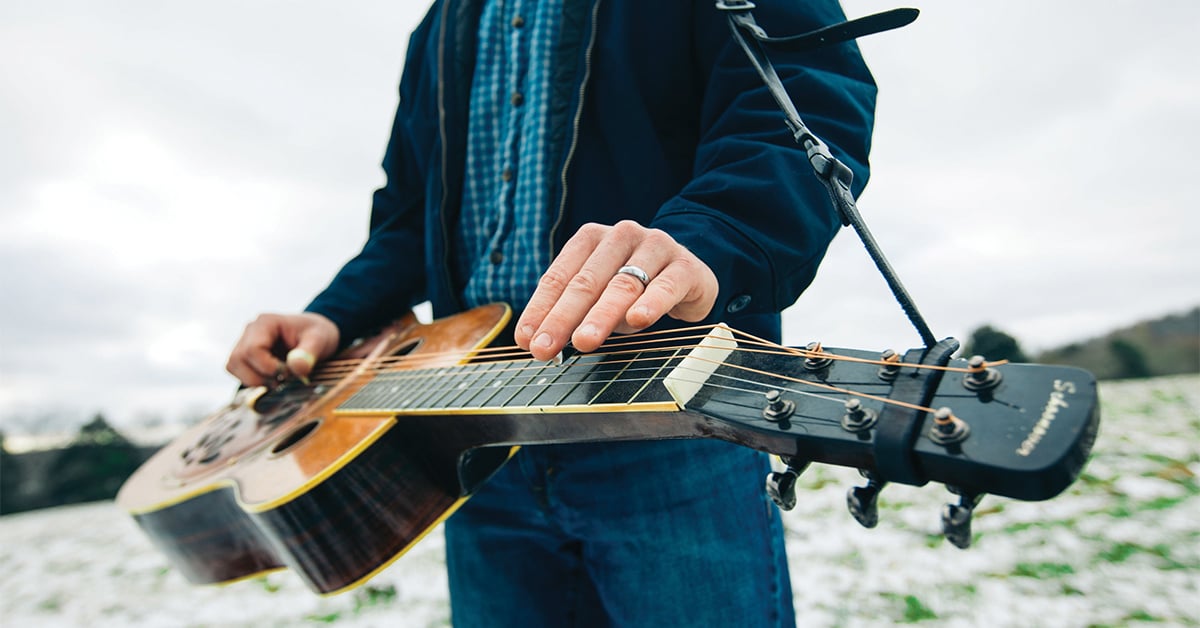
Largent‘s personal instrument is a Schoonover resonator guitar. With pride and excitement, Largent informs us, “It is so special, and an old friend. I played that guitar at ResoSummit in 2011. It was for sale and I bought it from Kent Schoonover’s son, Kyle. It’s back and sides are East Indian rosewood, the top is Western red cedar. It has a mahogany neck, with herringbone purfling. It helped me come into my own style and sound. Kent Schoonover is a mentor and friend.” Largent recalls, “I met Hobert Beavers, at Galax, and he had built about 25 instruments. He retired from building, and gave me advice and a lot of tools and materials to help me to start building. I’m in debt to him, as he was such a kind and supportive guy.”
Dobro Specification and Construction
The resonator guitar is a complicatedinstrument to build, and Largent provides detailed information about specifications and construction. “I am very open to experimentation and innovate as much as I can. The older Dobros were original, but newer techniques have improved the Dobro. The construction of the guitar is fluid. I haven’t settled on one design, as there are many things that work.” The discerning listener will notice that the sound Largent goes for in both construction and playing is wide open and modern.
Body style is usually 20 inches long, with the lower bout at 14 inches, upper bout at 10¾ inches, with the depth varying to allow for taper. Largent has built five resonator guitars to date. He has experimented with different body shapes and tone woods (some mahogany, some curly walnut) and made modifications and built new molds. Some have had flat back bracing, and some have had a triple laminate neck of maple and mahogany. Largent uses an open body without the “soundwell” a feature of the original Dobro design. “I believe, and have found, that when the top and back are married with a soundwell, (which takes up a lot of surface area), it makes the guitar stiff, rigid and heavy. It eliminates activation of the back when the guitar is vibrating.” Largent is open to using a variety of tone woods, but clearly has his preferences. “Curly maple makes a loud guitar, and mahogany makes a dark sweet sound. I think walnut is the most under- appreciated domestic wood available. Figured black walnut produces a dry, woody, punchy sound.”
Gaven adds, “I mainly use a red spruce top, but I have used Engelmann spruce as well. For bracing I use quarter-sawn spruce or mahogany, as this depends on the back, sides and top. Depending on whether the top is spruce or the same as body, (they each have a different stiffness), I try to compensate by changing brace material and size. Solid wood X-braced top is best in my opinion. I can get the top thinner, and it allows me to sand down more, due to its strength. I implemented and designed a pattern using small solid wood braces. I will use that bracing from now on. There are no sound posts with the X-braced design.”
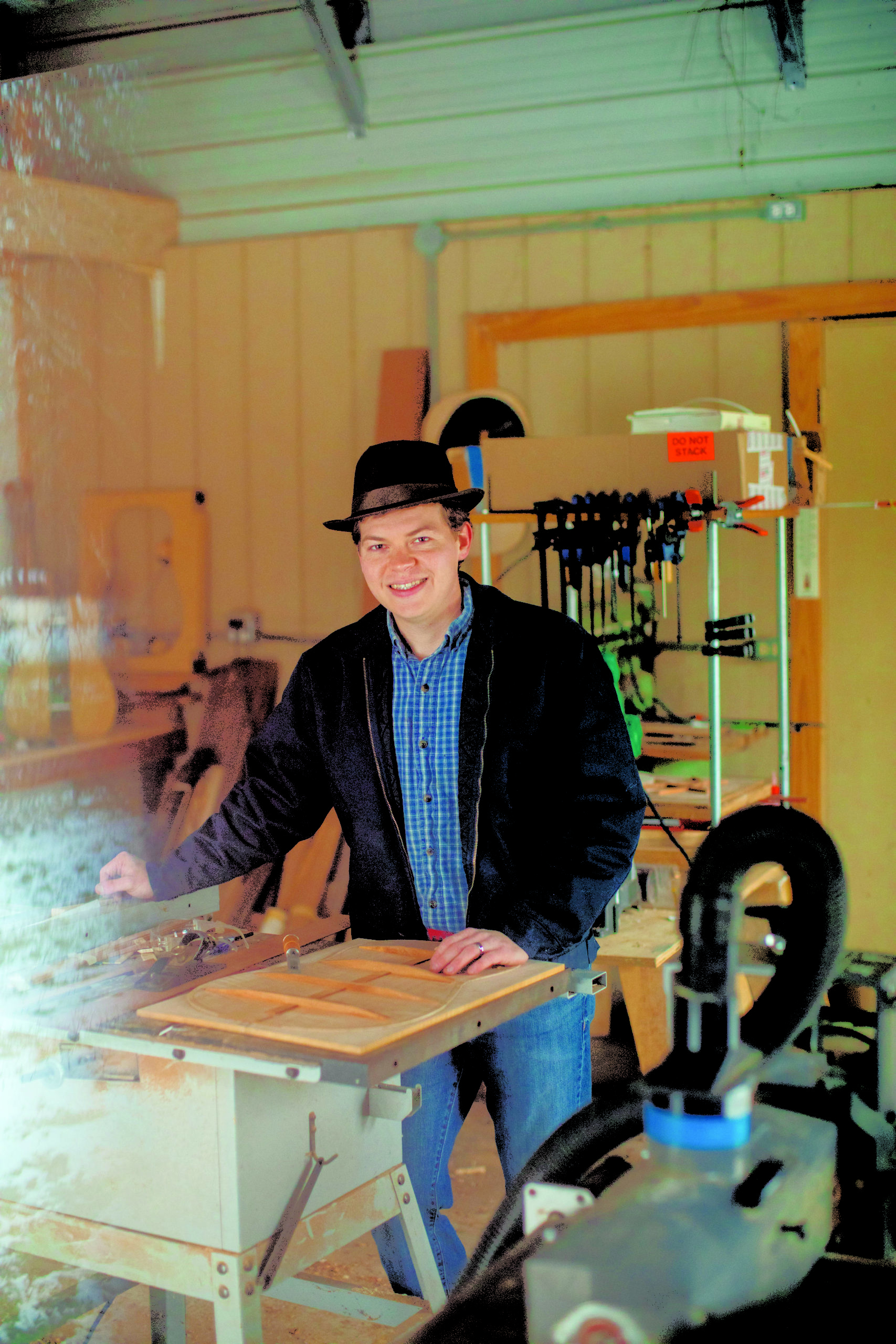
Largent’s personal preference is the Quarterman cone. For the cover plate, tailpiece and screens/rings, he uses a Czech builder, named Karel Zacal. These can be brass or chrome plated brass. He uses the standard #14 spider.”
Neck material is usually mahogany with the neck bolted to the body. Largent has plans to affix the neck using a dovetail neck joint. He uses an ebony fretboard with inlaid flush frets and 6-millimeter Paua abalone inlaid dots. The headstock overlay is usually ebony, with luthier script as an option. Moving away from the use of plastic, natural bindings of curly maple, or bloodwood may be used. He says, “I also like to use a triple laminate purfling to accent the edges of the binding.”
A backstrip is at luthier or customer option. “Sometimes a strip of curly or tiger maple can set off the beauty of the backstrip.” Largent has made his own wedges of ebony, or maple, and has recently started using a piece of custom inlay from his Uncle Racey’s cabinet shop. Tuners are based on customer preference, and Largent has used the Grover open back tuners with butterbean knobs, to achieve a classic appearance. A quality hardshell case is provided. Largent is working on improving his shop’s dedicated finish space. Typically, he uses a rubbed oil finish which is a nod to the early furniture makers, from whom he learned. “I’m open to other finishes in the future; nitrocellulose, varnish, French polish, etc.”
Setup
Critical to the sound and playability of the Dobro, is the setup. “Bobby Wright, a friend in North Carolina, is a dynamite Dobro setup guy, and he is knowledgeable, about construction. I pay attention to him in making the bridge inserts, which are ebony capped maple. I carefully burnish each string slot, to make sure the strings are all level with each other, and slots don’t pinch, to avoid rattling, buzzing or sizzling, of the strings. The tension screw that marries the cone and spider when the guitar is strung, is critical to setup. There is an optimum tension on the screw that you have to hand calibrate to find that magic spot that opens up the cone and lets it resonate to its maximum. The tailpiece has metal against metal contact point. Sometimes you have to place a thin leather strip or a shim between the tailpiece and the cover plate.”
Tools and Accesories
To enhance playability and appearance, the Largent Dobro is accompanied by the finest tools and accessories. The custom leather Bobby Poff strap suits him best because of its attention to detail. It provides comfort to the player, and stability for the guitar. “Bobby builds the strap to the player’s physical dimensions and preferences as to playing height. He’s incorporated swivels in design, to take pressure off the player’s arm.”
Largent endorses the Ron Tipton slide, “because the machining is top notch, there are no burrs, and they are perfectly beveled. The angle of the RT1slide is comfortable and the ends facilitate fast pull offs. They are chrome plated brass. This produces the best tone and sustain.”
For the capo, Largent lauds the Bradley stainless steel capo because, “You can operate it with one hand, it has adequate mass, and it’s durable and efficient in design to maintain sound integrity.” Largent’s strings of choice are D’Addario, because of their tone and longevity.
Largent’s Peers Speak
Largent’s peers, top-notch dobro players themselves, provide their thoughts about Largent’s Dobro skills. Gary Hultman, with Blue Highway, has known Gaven around 13 years now after they met at NashCamp in 2007. Hultman says, “I think that people can trust in the fact that Gaven is such a monster musician as well as an incredibly talented craftsman. He knows how the guitars should sound, and he can turn around and demonstrate that better than anyone. We kept in touch and would get together every year after that at ResoSummit. Each year I would learn as much from Gaven as I would from the staff. He has always stood out, I have always looked up to him, and I’m really thankful for his friendship. Gaven has always blown me away with what seems like endless technique and creativity. Every time I hear him play, live or recorded, he has a way of elevating whatever it is without distracting from the main idea/goal of the ensemble.”
Uncle Frank Poindexter, with A Deeper Shade of Blue, has known Largent for some time, and praises him with these words, ‘Gaven Largent rocks!!!’ This God-gifted guy not only plays killer Dobro but is also an amazing banjo picker. I heard the waves he was making from his very early childhood playing Dobro and getting all kinds of attention early on. He’s gifted from up above and I love hearing him play. He’s showing his woodworking talents now building reso-guitars which I haven’t seen yet but will have to check them out! I can’t say enough good things about this gentleman other than it’s my pleasure of knowing him and the musical talent he shares with us!”
Fred Travers, with The Seldom Scene, informs us, “I first met Gaven a few years ago at a Reso gathering called ResoSummit, Rob Ickes and his team put together this event in Nashville each year. I heard him play, and I immediately knew he was a super talented musician and a great resophonic guitar player. When I first heard that Rob Ickes was stepping away from Blue Highway, Gaven was one of the first people I thought of for that position, and that’s where he landed. Gaven is also a skilled craftsman and instrument builder. The resonator guitars he has made are fine, quality instruments that sound fantastic. Gaven has a unique combination of skills. As a powerhouse Resonator player, he understands the guitar inside and out. As a great craftsman and builder, he can use his knowledge and build a Resonator Guitar exactly how he imagines it to get the particular sound he is searching for. I know his guitars are going be in big demand, no question. Icing on the cake is, Gaven is a fine young man, with a super personality!”
In addition to building Dobros, Largent has a busy schedule playing at various venues with the East Nashville Bluegrass Band. He can often be found at the Station Inn, guesting with Johnny Meyer, Theo and Brenna, Jed Clark and David Grier. He has a recording project in process, containing a majority of original songs. He is busy as a session player, and recently did a Camping World online series with Ricky Skaggs and Steven Curtis Chapman. Largent guested on Dobro on Mountain Fever Records The Sharp Flatpickers projects, Cigars and Guitars, and Sundrops on the Water-Reflections.
Assuredly, the best is yet to come from this talented luthier and artist. Paying his respects to the Dopyera Brothers, RQ Jones, John Quarterman, Tim Scheerhorn, Bobby Wolfe, Paul Beard, Gibson Instruments (holding trademark for Dobro) and other Dobro makers, Largent resonator guitars should emerge as an instrument of choice for players who want a custom instrument, built on tradition and through fine craftsmanship, at an appropriate price point.