Unemployed Musicians Baseball League
Baseball, as America’s national pastime, has endured through many of the country’s toughest, most trying epochs. Civil war soldiers played the game, and prisoners of war during that time played every chance they got. Major League Baseball became a focal point for civil rights when Jackie Robinson broke the color barrier in the mid-1940’s, and Yankees and Mets stadiums became some of the first healing gathering places for New Yorkers after the attacks on September 11, 2001. When the COVID virus shut down work for New York musicians, it just made sense, then, that a group of them would turn to what Americans have escaped to for over a hundred and fifty years: baseball.
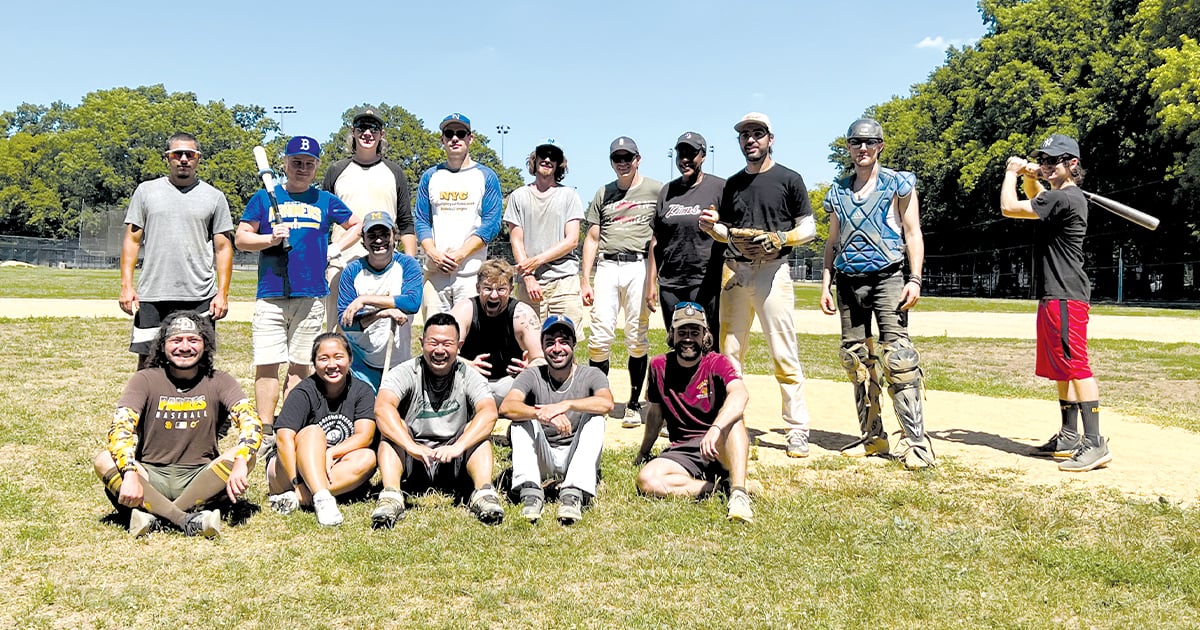
The New York City Unemployed Musicians’ Baseball League is made up of all-star musicians from horn players and drummers to pianists, guitarists and singers, all from different genres: jazz and classical to honky-tonk and bluegrass. The genesis of the idea started with a jazz drummer named Arthur Vint who decided to contact some musicians to play catch and see where things went. In early August 2020, he posted to social media an offer for players to join him for the ‘First Annual’ gathering to play some ball. Somewhat to everyone’s surprise, around twenty showed up, enough to field two opposing teams, and interest continued every Monday night at Brooklyn’s Prospect Park until fall evening soccer practice forced the games to Wednesdays at 11:00 AM. They have continued since.
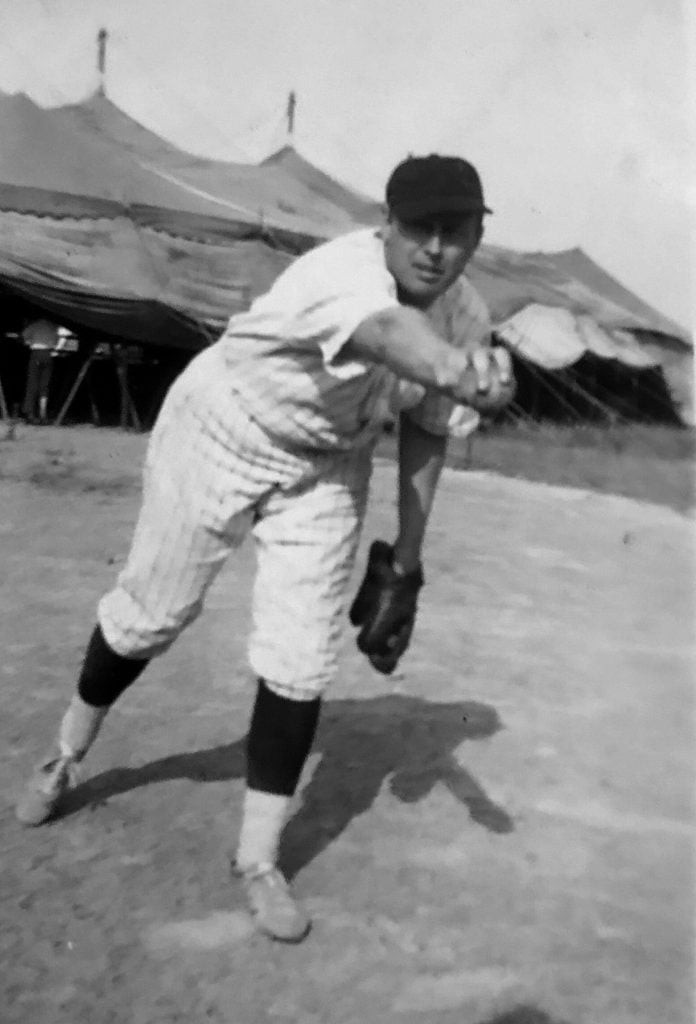
Music and baseball have had an affiliation historically. Bill Monroe had his own band (the Bluegrass All-Stars) play in the 1940’s against teams in towns in which the band played shows. Almost every town had a team of some kind, and, after the music was done, they would take to the field. Musicians whose names bluegrass fans may recognize (who were apparently pretty good ball players) are Chubby Wise, Don Reno, Cedric Rainwater and strong-armed pitcher Stringbean. Bill also had a Nashville-based team called the Bluegrass Ballclub. According to Monroe’s banjoist from that era, Rudy Lyle: “During this time, Bill had the baseball team, the Bluegrass All-Stars. They were made up of a group of guys that played good baseball. I mean good baseball. Some of them went on to the majors. Bill had a booking agent that would book these towns and book the local ball club against the Bluegrass All-Stars ball club plus the show. We would always open it up with the music and after that the game would start…Bill would manage [the team]; he didn’t miss anything going on and watched every little thing. He would work a lot with the catchers and pitchers to make sure they’d change up the pitches. We had a super ball club.” (From Doug Hutchens’ interview with Lyle, Bluegrass Unlimited Magazine, April 1985, Volume 19, Number 10.)
Many jazz greats also fielded teams, including Count Basie and Louis Armstrong, who had his “Secret Nine.” (There is even a wacky but apparently true story about Satchmo in South America wearing one of Yogi Berra’s catcher’s masks to protect his face from fans who wanted to touch his famous golden lips.) Duke Ellington loved to play catch with his band, and there is a great photo of him batting in front of his tour bus.
The folks who answered Vint’s call to fill out the New York Unemployed Musicians Baseball League may not be pro baseball players, but they are major league musicians. Some of the jazz and multi-genre players, just to name a few, are Curtis Brewer, Kyle Nassar, Jay Sawyer, Aidan Scrimgeour, and jazz dancer Stina Dillons. Bluegrass/acoustic music is represented by Jared Engel (recorded and/or performed with David Grisman, Tony Trischka, Abigail Washburn and many more), Dennis Lichtman (The Brain Cloud, Ghost Train Orchestra and more), Chris Apuzzo (Cole Quest and the City Pickers, HAM Rodeo), and 2013 IBMA Momentum Award winner Chris Luquette. Bluegrass fans will recognize Luquette as the guitar player in the Grammy nominated, two-time IBMA “Instrumental Group of the Year” Frank Solivan and Dirty Kitchen. The band’s recent tour to promote their newest release, Hold On, has taken Chris from the ball field back to the stage more often, but I first learned about the New York Musicians’ League from him. Here’s some of our conversation:
Tim: “What impact has the league had on the morale of New York musicians who are playing ball?”
Chris: “When all the work canceled, those were dark times. When we started playing ball it became something we could look forward to, and it was a great way for musicians from different genres (who otherwise might never have met) to hang out and ultimately play some music together. It’s funny that, now, even though we are musicians, conversations tend to end up being about baseball. I went to see some jazz musicians from the team play [music] one night, and the first thing they asked when they saw me was when I wanted to meet up and go to the batting cage. Overall, it’s really incredible how much joy the game has brought after being shut down for so long.”
Tim: “Has the team improved?”
Chris: “Yeah, when we first started we were mainly just trying to put the ball in play. We didn’t have a catcher, just a mesh backstop: a sort of suspended white strike zone. Scores would be like 25-20! Nobody could really field the ball all that great, lots of dropped balls and the ball going over fielders’ heads. But now we might have games 3-0 and that kind of thing. Players finally settled into positions, and we even started playing ‘small ball,’ bunting, taking pitches. The pitching has gotten a lot better. We have a piano player who is such a great pitcher that we have had to tell him, “We appreciate your ability: don’t hurt us.” During the ‘off-season,’ before spring of ’21, a lot of us were hitting in the batting cages, and some of the pitchers were working out together. So, yes, we’ve gotten a lot better.”
Tim: “Any injuries?”
Chris: “Just one so far. A sax player pulled a muscle fielding a ball. But we are careful: we do some stretching, and we are using batting helmets. We have catchers now, and they are wearing the full gear.”
Tim: “Have you played teams from other cities?”
Chris: “Yes, in August we played a team made up of artists and musicians from Philadelphia. It was our first inter-league game. Somebody in Philly saw an Instagram post, and we made it happen. We would like to do some more inter-league play. We even had contact from a team in Nashville. We’ll see where it goes.”
Tim: “Who won?”
Chris: “We won 8-6.”
Tim: “What do you think the future holds for the team?”
Chris: “Well, thank goodness music work has come back pretty strong, so now we call the team the Formerly Unemployed New York Musicians’ Baseball League. Sometimes the numbers will be a little low now, and we may only have enough to play four on four or something like that, but we still normally have enough to play nine on nine. The team is still made up of mostly musicians, but we do have some non-musicians, soft-ball players that want to play baseball, etc. When we first started, everybody almost collectively was saying, ‘Man, I haven’t done this in twenty years!’ But we have ended up playing some pretty good ball. It’s been a great thing to get us through the hard times. We’ve developed a great camaraderie, some true friendships, and some fun rivalries. We love playing and I really expect it to continue for years to come.”
The game of baseball itself continues to have entertainment value, but it has also always offered an emotional and even comedic aspect to American culture, from Thayer’s “Casey At the Bat” and Abbott and Costello’s iconic “Who’s On First” to the movie Field of Dreams. It will, no doubt, along with music, continue to lift us up during the rough times.
If you want to see some great musicians play some pretty good baseball, head on over (whether permitting) to Brooklyn’s Prospect Park on Wednesdays at 11:00 AM, and check out the New York Formerly Unemployed Musicians’ Baseball League. (If you ask for an autograph, be sure to qualify whether it’s as a musician or as a baseball player or both!)