Through the Years with Tom Sauber
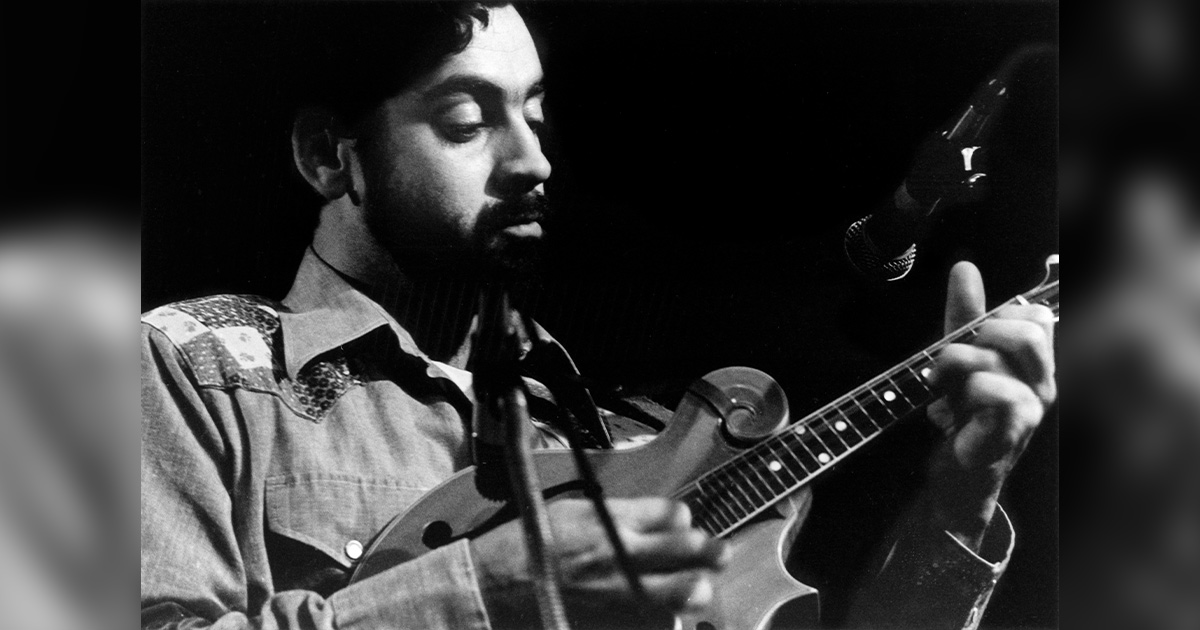
There aren’t many bluegrass or old-time fiddlers who can claim to have performed in a bear suit. More than once. As cool as that is, it represents but a second in the long and eventful career of the highly esteemed Southern California multi-instrumentalist Tom Sauber. Now in his seventh decade as a professional musician, has done a bit of everything. He’s recorded with such old-time musicians as Ed Lowe, Tom Carter, Earl Collins, Dirk Powell, Blanton Owen, and in a trio with Alice Gerrard and Brad Leftwich. He’s performed and recorded with bluegrassers including Herb Pedersen, Bill Bryson, and the bands Corn Bred and the Coyote Brothers.
Tom has also appeared in the movies The Long Riders, Bound for Glory, and Geronimo: An American Legend, and several episodes of the television program Dr. Quinn, Medicine Woman. He was even on The Gong Show with banjo player Eddie Lowe, and not in a bear suit, either. But fiddling in the bear suit was Tom’s portal into show business. That’s where the road began.
Tom Sauber was born in February 1948 in Alhambra, a mid-sized city in Los Angeles County, about ten miles east of downtown LA. His first instrument was the ukulele, which he picked up when he was ten or eleven. He was a good student throughout elementary and junior high school—until he discovered the banjo—and his grades went, as he says, “from way up to way down.”
That happened, and the door to Tom’s future opened, in 1963 when he was fifteen, thanks to three related events over the course of the summer. The first was seeing Pete Seeger in concert. One of Seeger’s messages was that audience members should learn an instrument and play music on their own, and young Tom took the message to heart. The second: he soon got his first banjo, a cheap Kay purchased on a family vacation back to the Midwest. He learned from Pete Seeger’s highly influential instructional book and could play his first tune by the time they got home to California.
The final piece of the puzzle came in the form of the New Lost City Ramblers. Tom saw the trio at a concert at Los Angeles City College and then at a week-long engagement at the Ash Grove, the city’s premier venue for traditional roots music of all kinds. It was the Ramblers that lit the fuse.
“Seeing the Ramblers was inspiring to the nth degree,” says Tom. “This was the version with Tracy Schwartz, Mike Seeger, and John Cohen. I had been playing banjo for a month or two, and to get to see John Cohen up close playing ‘The Cuckoo Bird’ that he’d learned from Clarence Ashley…I was just totally inspired by them and everything about them.”
Tom took up the fiddle around the time he graduated from high school—he already played guitar, banjo, and mandolin—and shortly after that, he started playing music with Bill Bryson, who played guitar and banjo. Bryson was not quite two years older than Sauber and was deeply involved in the hot bluegrass scene that centered around a pair of high schools in Pasadena. Bryson had already played in several local bands by the time he and Sauber began working as a duo.
“Bill and I hit it off quite well,” Sauber says. “We worked up a bunch of material and started playing around a bit. But then Bill got drafted and sent to Vietnam. When he got out of the service in 1969, we started playing more seriously. We played at the Venice Pavilion, and the House of the Rising Sun, a folk coffeehouse in Redondo Beach. We opened for Vern & Ray at the Ash Grove on one of their trips down here.”
While Bryson was in Vietnam, Sauber started attending California State College in Los Angeles as a history major and playing with Frank Sullivan and Dennis Riley in an old-time trio called the Patent Pending Stringband (not to be confused with the Washington, D.C., bluegrass band Patent Pending). Riley was replaced by Darryl Boom. From there, it was a short sideways step into playing bluegrass.
Darryl Boom had heard of a hot banjo picker out in the Valley, so one night in the early 1970s, they paid a visit to the Hickman brothers. A native of Columbus, Ohio, John Hickman had moved to California with his guitar-playing brother George in 1969. Before heading west from Ohio, John had played in two regionally renowned hard-core bluegrass bands, Sid Campbell and the Country Cut-ups and Earl Taylor and the Stoney Mountain Boys.
John Hickman was a superb banjo player with an extraordinary right hand, and he would exert a major influence on the development of the Los Angeles bluegrass scene. Sauber was stunned by what he heard that first night at the Hickmans’ house. “I couldn’t believe how good John was,” he says. “As someone who was pretty new to playing bluegrass, my hair just stood on end listening to him.”
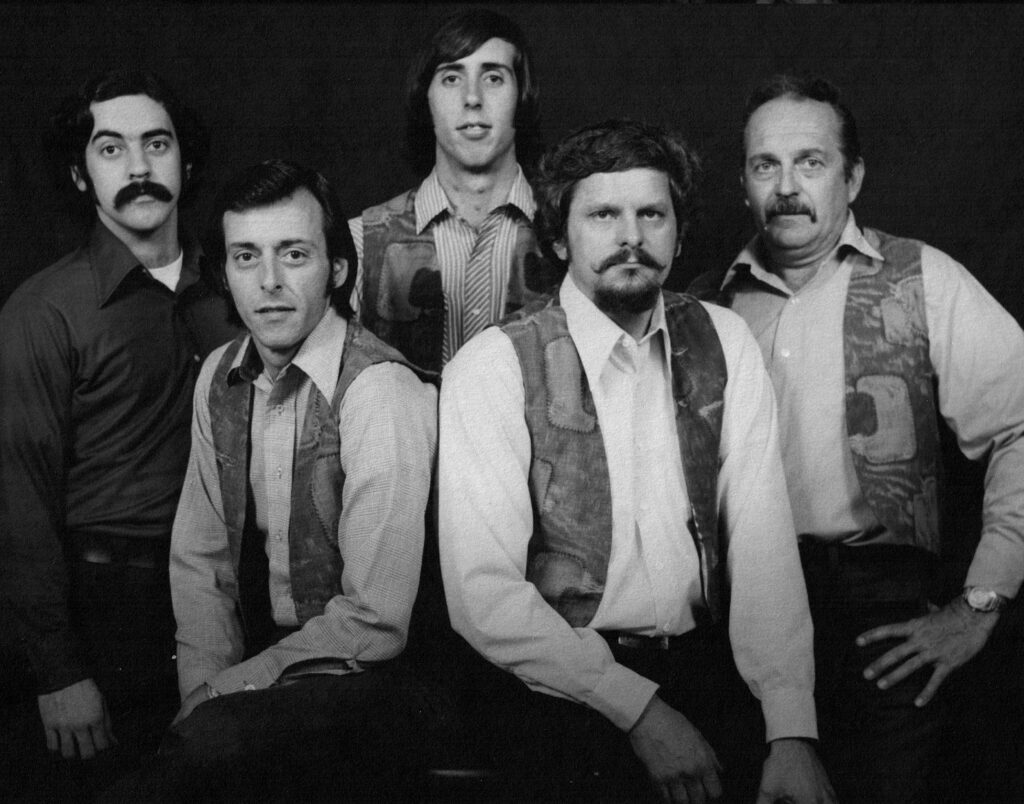
With Sauber on mandolin and lead vocals and Boom on tenor vocals and guitar (George graciously moved over to bass) the four enjoyed playing together and decided to form a band. They recruited fiddler Jody Cifra, who had been playing with Darryl in a group named Coal Country. They called the new band Corn Bred and soon landed a weekly gig at the Straw Hat, a pizza parlor in Manhattan Beach. The quintet played for one hundred dollars a night and free pizza and played there for almost two years.
Corn Bred played mostly local gigs and festivals but traveled to a festival in Washington and made a couple of trips to the annual fiddle contest in Weiser, Idaho. The band also appeared at the huge, star-studded Golden State Country Bluegrass Festival in San Rafael in 1974. Corn Bred recorded its only album, It’s Hot, in 1978. The album was released by Sierra Briar and pressed on ruby red vinyl, a rarity (perhaps the first?) in the bluegrass world.
It’s Hot includes a song by bluegrass legend Elton John, four songs by the Delmore Brothers, and a good sampling of John’s banjo brilliance on the cuts “Sweet Dixie,” “Ookpic,” “Dixie Lilly” and “Preparation G,” a Sauber original. In Darryl Boom’s droll liner notes, Tom is dubbed the “old-timey son of a gun,” and his and Darryl’s brother-duet style harmonies give the album a nice, warm old-time feel that complements the instrumental fireworks. The album holds up exceedingly well today. It’s an overlooked classic, an essential piece of mid-1970s California bluegrass. “Tom’s influence was a major part of our sound,” Boom remembers of Corn Bred, “and George’s and John’s musicianship made it easy for all of us. I loved playing in this group.”
But the band was not to last. John had already played some with fiddler Byron Berline, and the jump to Byron’s band was a move no one held against him. “It was inevitable,” says Tom, “that someone as good as John would hook up with somebody as good as Byron.” As Daryll sardonically observed in the liner notes, “John is so good, he makes you sick.”
After Corn Bred ended, Tom and Darryl went on to play with the Wild Hickory Nuts, which also included banjo master Craig Smith. He next played for several years in a duo with guitarist Barry Solomon in which Tom switched between fiddle, banjo, mandolin, and guitar. When Solomon moved away, Tom started playing with Walden Dahl—an exceptional singer who had worked with Lost Highway and the High Window Boys—in a duet that morphed into a band called the Coyote Brothers.
The Coyote Brothers played several years at clubs and festivals in a few different incarnations. Over the years, the band included Sauber, Dahl, Jon and Peggy Corzine, Gary Vanderlinde, Paul Shelasky, Craig Smith and John Plotnik. An iteration including Smith recorded “maybe ten songs,” according to Tom, but nothing from that session has seen the light of day.
In the midst of the Coyote Brothers run, Tom returned to the wonderful world of Disney for a few years, playing in a newly formed bluegrass band called the Pinewood Pickers. The band played on the streets of Frontierland and included at various times Bill Knopf, Jon and Peggy Corzine, Dennis Fetchet, Carol Yearwood, Kenny Blackwell, Tom Corbett, and others.
Even as he was playing bluegrass, Tom never stopped playing and learning about old-time music. Tom has always liked hanging out with and learning from the elderly musicians he met at fiddlers’ association meetings in southern California. His ease with these older fiddlers and banjo pickers made him a comfortable and compatible musical partner. In a musical world where “a band” need not be any more than a fiddle and banjo, Tom played both at a very high level, as well as guitar if needed.
Tom was now pursuing a Master’s Degree in folklore from UCLA, and his study of local fiddlers and banjo players and the music they played became more focused and systematic. He is perhaps best known in some parts for his lengthy and fruitful partnerships with banjo player Eddie Lowe from Mt. Airy, North Carolina, and fiddler Earl Collins, both of whom lived in the Los Angeles area in the 1970s.
Tom met Earl Collins in the late 1960s at the Topanga Canyon Banjo and Fiddle Contest. Collins grew up in Missouri and Oklahoma and moved to California in 1935. “He was just a whale of an old-time fiddler,” says Tom, and the two began playing together at various contests and music get-togethers. Tom produced and played guitar (and overdubbed banjo and mandolin) on Collins’ only commercial recording, That’s Earl released by Sierra Briar in 1975. The album was recorded in the last year of Collin’s life while he was dealing with various health issues, and Tom says it doesn’t truly capture Earl at his best: “As great as he sounds on that album, that recording was a very pale representation of Earl’s fiddling. He was a lot better than that.”
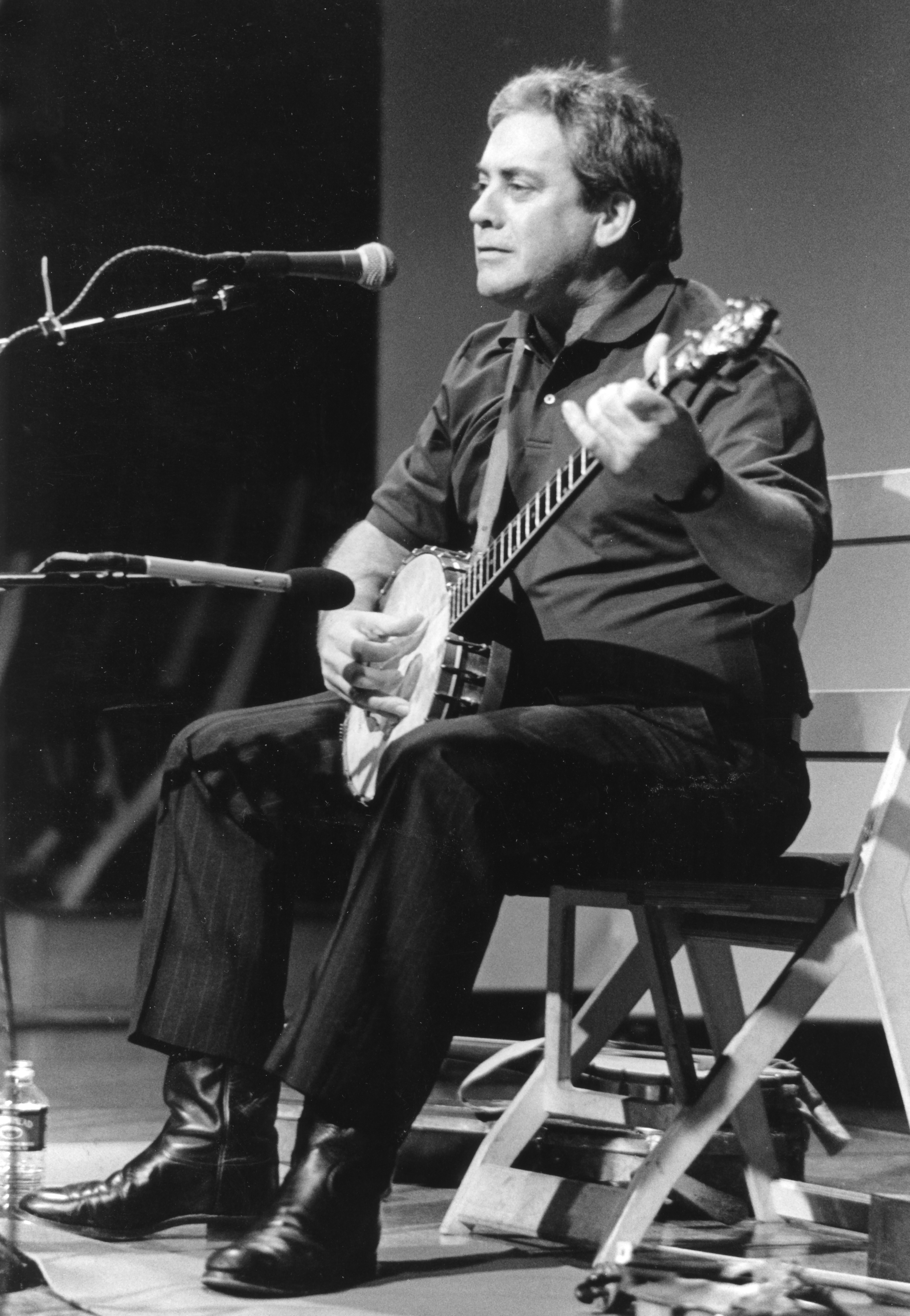
Ed Lowe was an outstanding old-time banjo player who played in the “Round Peak” style popularized by such pickers as Kyle Creed, Tommy Jarrell, and Fred Cockerham, who were all influenced by Ed’s uncle Charlie Lowe, who many say was the best of all time. Tom met Ed in 1972 at a fiddle and banjo contest at UCLA, and they quickly became friends and launched a musical relationship that lasted until Lowe’s death in 1996. They made one trip “back east,” playing in 1992 at the Tennessee Banjo Institute in Lebanon, Tennessee. Tom and Ed did some recording together, but nothing has ever been released. There is, however, a great video on YouTube of the two of them playing “Sugar Hill” at that TBI appearance.
Tom is a natural-born collaborator and the ultimate team player. Three such recordings from the last 30 (or so) years beautifully illustrate his ensemble sensibilities: One-Eyed Dog (1993, Yodel-Ay-Hee) with Dirk Powell and John Hermann; Thought I Heard It Blow (2001), an album of “fiddle tunes, blues, rags, [and] traditional & original songs” with harmonica master Mark Graham.
The third was Trade Your Headache for a Smile (2020, Tiki Parlour Recordings), a two-CD set that pairs a live performance from 1998 by Tom Carter (mandolin-cello), Blanton Owen (banjo, cello banjo), Leonard Coulson (banjo, vocals) and Tom Sauber (fiddle, vocals); and 2018 recordings by Tom Carter (banjo), Tom Sauber (fiddle, vocals) and Tom’s son Patrick Sauber (mandolin, mandola), a world-class musician in his own right who has played in John Reischman & the Jaybirds, Laurie Lewis & the Right Hands and the John Jorgensen Bluegrass Band.
Tom’s most fruitful old-time collaboration has been a trio with fiddler Brad Leftwich and guitarist Alice Gerrard, a member of the Bluegrass Music Hall of Fame. The three met up and began playing together at the Augusta Heritage Festival and the Clifftop old-time festival in West Virginia, and had so much fun, that they decided to keep it going after the festival. The trio recorded four albums, all released by Copper Creek: Been There Still (1998), Holly Ding (2000), Die in the Pig Pen Fighting (2001), and Carve That Possum (2005).
Known primarily for his endeavors in bluegrass and old-time music, Tom’s musical interests are much wider. He’s played Cajun music for years with older Cajun accordionists and has performed and recorded cowboy music with Skip Gorman, appearing on the album Dogie Music by Skip Gorman and the Waddie Pals. In the non-performing arena, Tom hosted a weekly Saturday morning radio show (1974-86) called “Ballads, Banjos and Bluegrass” on community public radio station KPFK in Los Angeles (Bill Bryson was his co-host for the first year or so.) He also put his knowledge of folklore and musicology to good use, contributing to the liner notes of the historical albums Great Big Yam Potatoes, a survey of Mississippi fiddle music, and Eck Robertson, Famous Cowboy Fiddler. And then there are his cinematic accomplishments.
Though Tom made his big-screen debut in the Woody Guthrie biopic Bound for Glory in 1976, his best moments on screen came in Walter Hill’s blood-splattered neo-western The Long Riders four years later. “David Lindley called me up,” Tom remembers, “and said he and Ry Cooder were doing the music for a movie about Frank and Jesse James. He invited me to be involved.
“So the three of us got together before the filming and recorded a bunch of theme and incidental music to be used in the film. Then a larger group including Bill Bryson on bass and jazz drummer Milt Holland came in and recorded the rest of the soundtrack.
“After they were done shooting the movie, they decided they wanted music for one of the scenes in the movie. Cooder and Lindley were both on tour, so they called in some musicians including Bill Bryson, Mitch Greenhill, and me for the filming.”
Tom is on-screen a handful of times, with several nice close-ups. In the best moment, he’s fiddling and singing “Jack of Diamonds.” The scene is set in a wild saloon/brothel, with Tom and company (including Bryson on banjo and Greenhill on guitar) playing music to the brawling and drinking denizens of this saloon.
Tom’s most recent collaborative effort was a band called Loafer’s Glory with Herb Pedersen, Bill Bryson, and Patrick Sauber. “I’ve known Herb for a long time,” says Tom, “and Bill and I go way back, almost to the beginning of my music career. Bill and I got together for breakfast once a week, and we got talking about putting a group together that could play both bluegrass and old-time music and do a mix of originals and more obscure traditional numbers.
“Herb seemed like a logical choice since he and Bill had played together a number of years in the Desert Rose Band. That would make for two great songwriters in the band. And I had always wanted to do something with Patrick, who can play guitar, banjo, and mandolin, and he’s good on all of them.”
The quartet recorded one self-titled album on Arhoolie, released in 2012. The album is exceptional, everything Tom and Bill could have hoped for over breakfast. The music sits smack on the imaginary “line” between bluegrass and old-time music. There is no line, of course, and this foursome drives that point home. Herb and Bill made up a flawless rhythm section, on guitar and bass, respectively, and the Saubers—Tom on fiddle and Patrick on banjo and mandolin—delivered powerful, crisp, perfectly played lead work. Patrick’s banjo playing throughout is quite impressive—indisputable proof that he is one of the very finest five-string players in the country.
The band had a superb vocal trio that’s reminiscent of the Osborne Brothers, featured on “May You Never Be Alone Like Me,” “I’ll Be Alright Tomorrow” and “The New Partner Waltz.” Other vocal highlights are “Sweet Heaven In My View” (a Bill/Patrick duet) and Bryson singing the lead on his own modern bluegrass classic “Ridin’ the L&N.”
Loafer’s Glory played a weekly gig at a Mexican restaurant in Burbank and played a few California festivals. The band was two-thirds through recording tracks for a second record when Bill got too ill to play. (He died in 2017). Tom says he and Herb and Patrick talk about finishing the record maybe once a year, but, so far, nothing has happened along those lines.
These days, Tom keeps his chops up by playing around the house, most often picking old-time music on the banjo. “When I’m just playing at home,” he says, “my favorite banjo is a very lightweight banjo made by an English builder named Dave Stacey, who lives just north of London. When I play out, or just need more volume, I reach for my Gibson TB-1, a tenor banjo with a five-string conversion neck made for me by Bob Givens—who also made my mandolin, a Givens & Cross F-5. I think the banjo is from around 1923, one of the earliest Mastertones.”
He hosts a weekly jam that includes Patrick, a long-time fiddle student of Tom’s, and “a rotating cast of banjo players.” He also continues to teach a few students. When asked how he’d like to be remembered, the answer came readily: “As a good teacher. Also, as somebody who had a real strong connection with the older generation of musicians I got to know and play with.”
Tom’s career has had myriad high points, but there have been several peak moments that stand above the rest. “One is seeing and then getting to play with Earl Collins,” Tom says. “I had a similar kind of experience with Ed Lowe. I met him at the Topanga Canyon contest and got to know him and play with him. We even played a couple of festivals.
“And then John Hickman. Playing with him was a totally mind-blowing experience. I’d played in a couple of funky little bluegrass bands, but hearing John, I thought, ‘Okay. This is one of the big boys.’ And there’s Craig Smith. I’ve been in a couple of bands with him. And, of course, Brad Leftwich and Alice Gerrard. I guess I’ve had a lot of those peak moments in my life.”