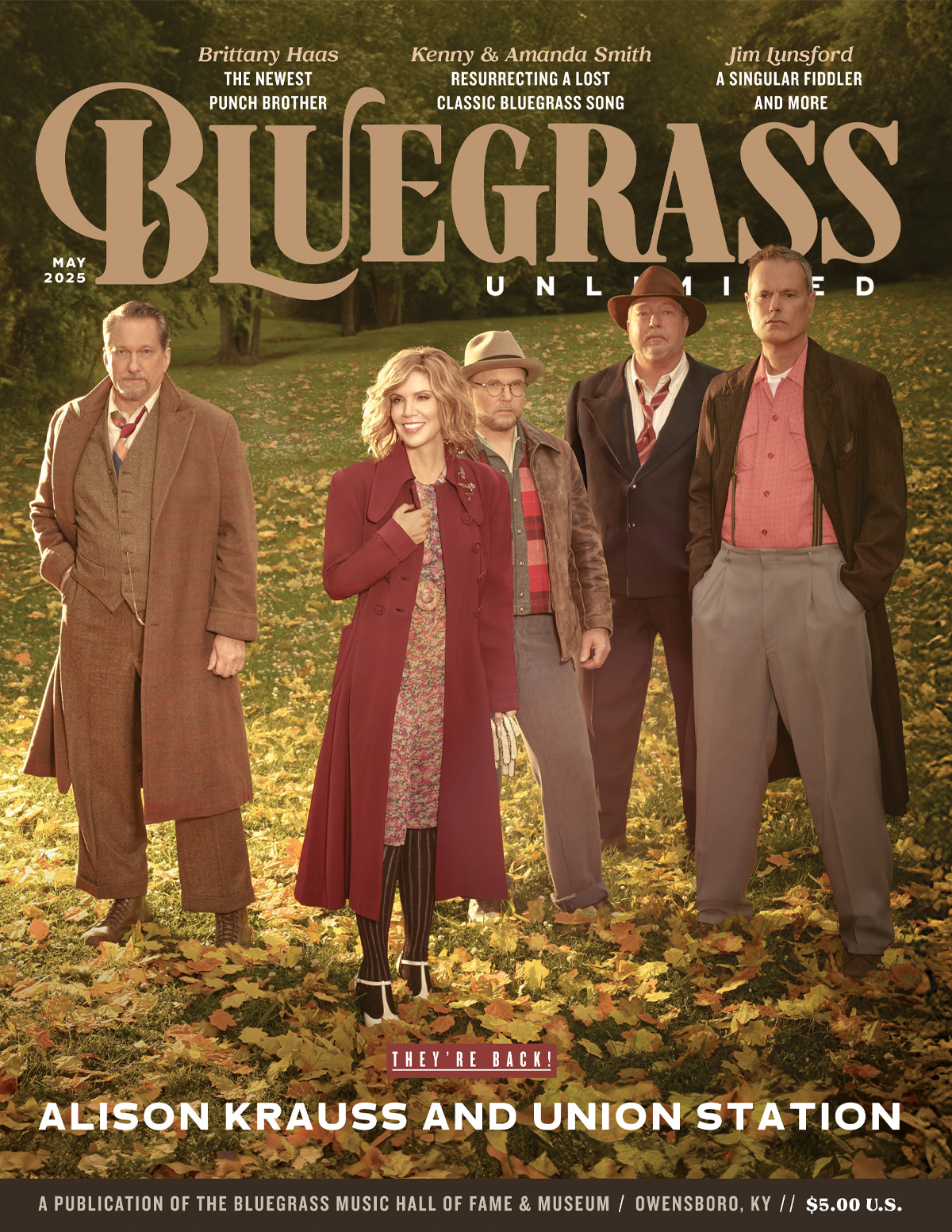

They’re Back!
Alison Krauss and Union Station
Photos by Randee St. Nicholas
When the members of Alison Krauss and Union Station (AKUS) took the stage March 19 at the Grand Ole Opry’s 100th anniversary celebration televised live on NBC, there was joy in the bluegrass nation and in the hearts of all music fans with ears around the world. Later in the show when Ms. Krauss and Brad Paisley sang the “Whiskey Lullaby” hit song penned by Whisperin’ Bill Anderson and Jon Randall, staff at the Ryman probably had to pass out hankies and boxes of Kleenex to the audience. Alison’s voice has the power to inspire or absolutely break a listener’s heart.
There have been a few changes during the 14 years since AKUS released an album as a band, but the signature sound is still there—Alison’s pure and uniquely exquisite lead vocals are soaring again on a Dobro wave in an ocean of perfectly arranged harmonies and bluegrass instrumentation that moves easily from lonesome and driving to dreamy and introspective.
In 1993 at age 21 Krauss was the youngest person to be inducted into the Grand Ole Opry. In 2019 she was awarded the National Medal of Arts, and in 2021 she was inducted into the Bluegrass Hall of Fame by the International Bluegrass Music Association. To date, Krauss has been nominated for 42 Grammy Awards and has taken home 27 trophies—fifth behind Beyonce, orchestra conductor Georg Solti, Quincy Jones, and Chick Corea. She signed with Rounder Records at age 14 and released her first solo album in 1987 at 16, Too Late to Cry. Two Highways, recorded with Union Station, followed in 1989.

Arcadia, released in March on the Down the Road label, is Alison’s 15th studio album, and she has also appeared on a number of movie soundtracks, including O Brother, Where Art Thou, and Cold Mountain. The platinum-selling Raising Sand (2007) was the first of two collaborations with Led Zeppelin frontman, Robert Plant. So far—Alison has won 14 IBMA awards, 9 CMA awards, 2 Dove Awards from the Gospel Music Association, 2 CMT Music Awards, 2 Academy of Country Music Awards, and 2 Canadian Country Music Awards. Country Music Television ranked Krauss 12th on their “40 Greatest Women of Country Music” list in 2002. To say Alison is a worldwide ambassador for bluegrass and roots music and a powerful role model and encourager for young musicians in the genre who have come along since the ‘80s, would be an understatement.
“We didn’t mean for this to take so long,” Krauss said in a recent interview for Bluegrass Unlimited. “We had much more intention to go in earlier, but everybody was so busy with their own projects, and with touring, it’s hard to lock in everyone’s schedule. I was always gathering songs and putting them away—I never stopped doing that,” she said. “I’ve had some of the songs for more than 10 years, and some 15. It was really about scheduling and finding the last couple of songs. I first reached out to the band in the beginning of 2021 about going in to record.”
Longtime Union Station vocalist and guitar/mandolin player Dan Tyminski left the group in July of 2023 to continue touring with his own successful band. Russell Moore, of IIIrd Tyme Out fame, was approached about joining Union Station soon after, on tenor lead and harmony vocals, guitar, and mandolin. Eight-time IBMA Fiddle player of the year (and everybody’s favorite studio fiddler) Stuart Duncan is joining AKUS on this tour, playing mandolin, guitar, and twin fiddle.
A fact not lost on Krauss herself is that Union Station is made up of some of the very best musicians from any genre of music, with Ron Block on banjo and guitar, Barry Bales on bass, Russell Moore on guitar and mandolin, fiddler and utility player Stuart Duncan, and another Bluegrass Hall of Famer, Jerry Douglas, on resonator guitar. “This is going to be a lot of fun,” Krauss said. “The guys have known Russell, but I haven’t known him very well. When you see people at the record table, you don’t get a lot of time to visit. He was always a little intimidating—not because he did anything other than be so great,” she laughed. “He’s kind of a reserved guy, and a hero to so many. He came into the recording studio, and that was almost a religious experience. It was incredible to watch him work and hear that voice coming through the speakers on the tracks. I almost can’t believe it, that he’s here with us,” she said. “I’m really happy for the opportunity to go and play with everybody.”
Down the Road is the new label created by Rounder Records founders Ken Irwin, Marian Leighton Levy, and Bill Nowlin. “To me, these people are home,” Krauss said about her decision to reunite with the founders. “They are the evangelists for bluegrass and folk music. It’s their calling. If not for them, where would bluegrass be? So many of my favorite bluegrass albums were released on Rounder. The first bluegrass recording of fiddle music we had at home was Richard Greene’s album. I want to be with people whose desire is to spread the message and who feel the same way about bluegrass that I do.”
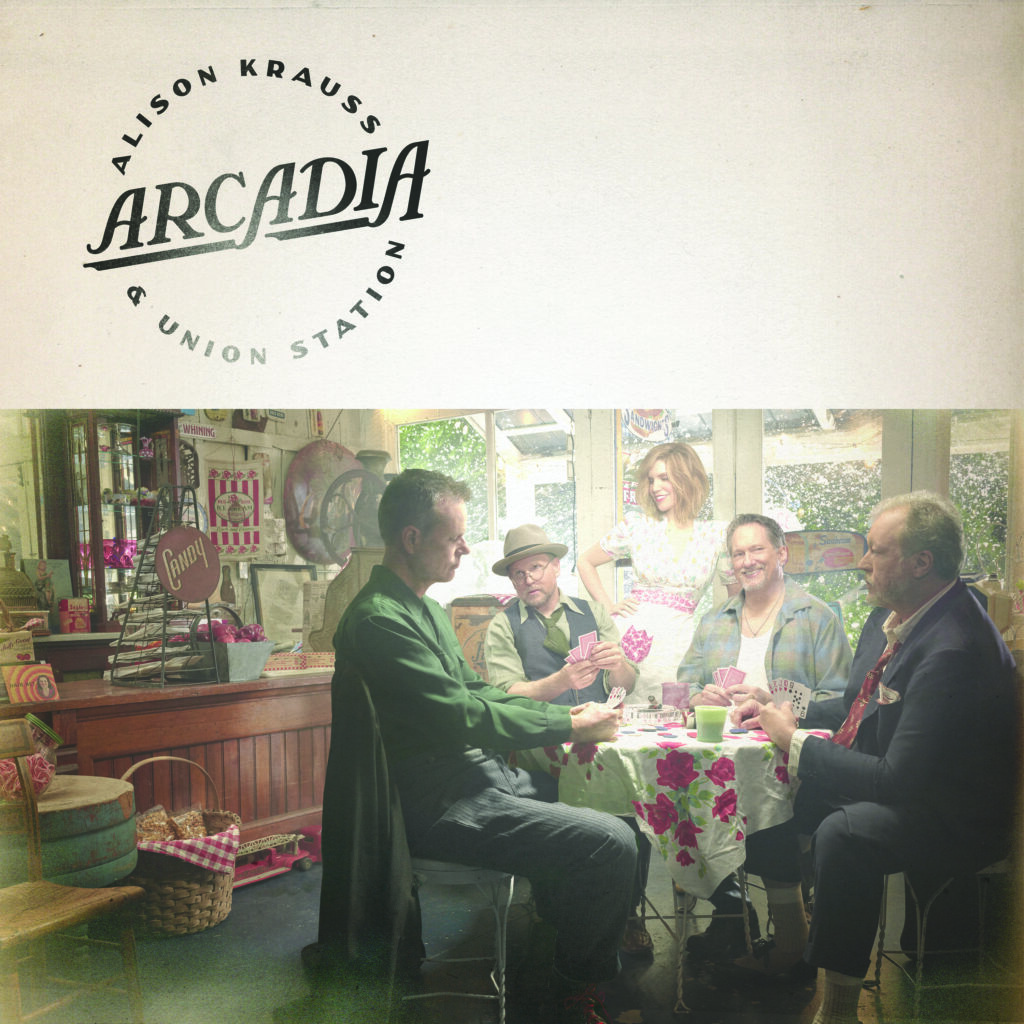
Something fans also enjoy at a live AKUS show is the band’s personal dynamic and her quirky, self-deprecating sense of humor. “I was never terribly slick,” she said. Was she shy as a kid? “More awkward.”
Awkward or not, Alison Krauss speaks with eloquence and enthusiasm when asked about her bluegrass influences and heroes. In addition to Larry Sparks, J. D. Crowe, Tony Rice, and Ricky Skaggs, she added “Ralph Stanley, Del (McCoury), and Rhonda (Vincent). I used to play Rhonda’s Sally Mountain Show records every morning when I was getting ready for school—Lavender Lullaby and the Sheltered in the Arms of God albums. I love the original Quicksilver, and of course when Russell Moore got in there,” she said. “And the Lost and Found, the Cox Family, and Southern Blend. I was crazy for Southern Blend. From the field of female bluegrass vocalists, she also listened to Suzanne and Evelyn Cox, Claire Lynch, and Lynn Morris.
“When I first met Adam Steffey, Tim Stafford, and Barry Bales, they played in Dusty Miller,” she continued. “I listened to their record all the time. And the Johnson Mountain Boys, Jim and Jesse, the Osborne Brothers…. The first festival I went to was Bean Blossom when I was 12. Jim and Jesse were there, the Osborne Brothers, Larry Sparks, Del McCoury—it was amazing. I’d watch Jim and Jesse, and you could never tell which one was singing which part. It was perfect, and it was nothing for Jim to sing those high parts. I couldn’t understand how it was so easy when he was singing. I also loved the Marshall Family and Harley Allen.”
Krauss got into bluegrass music through fiddle contests, and John Pennell, founder of Union Station, would make cassettes for her to listen to, from the original J.D. Crowe and The New South album, Boone Creek, The Whites, Joe Val, and the Bluegrass Album Band records. “When I first met John and we played together I was mostly playing fiddle contest tunes, and then I learned ‘Blue Kentucky Girl’ to sing, and some Hank Williams songs. He would give me the cassettes and say, ‘This is great. Listen to this.’ Then when I met Mike Harman, he did the same. He introduced me to Terry Baucom musically, and Doyle Lawson. Mike played me the Marshall Family and Stuart Duncan. It was like a whole other world. It was almost like John was Rounder Records and Mike Harman was Sugar Hill and Rebel.”
There are a number of bluegrass child prodigies who have gone on to have long, successful careers—folks like Sonny Osborne, Little Roy Lewis, Marty Stuart, Ricky Skaggs, Ronnie Reno, and in more recent years Chris Thile, Sierra Hull, and Wyatt Ellis. When asked if this is something you ever get past, Krauss replied, “I don’t know that anyone considered me a prodigy, just that I was young,” she said. “I know that I wanted to get older because I wanted to know if people would think the music was good, still. I felt like I couldn’t tell if people liked what I was doing because I was young. I wondered that.”
Krauss has a reputation for picking the most incredibly sad, heart-breaking songs to sing and record. “I’ve always loved those stories,” she said. “In bluegrass songs, there’s home and family, there’s God and the land, and then there’s dying. It’s the human condition. I suppose I love what a sad song represents, that something wonderful was there. It’s a survivor’s story. It’s encouraging that someone did survive it. It creates a longing, a beautiful feeling which is a close sibling to hope.”
In “Looks Like the End of the Road,” the opening track of Arcadia, written by Nashville singer-songwriter Jeremy Lister, the narrator looks around with regret about everything he’s lost over the years. He’s run out of luck and time.

“The Hangman” is a poem by Maurice Ogden with a new melody that sounds old from Viktor Krauss. “I was looking around for songs for Dan [Tyminski] 10 or 12 years ago, and there was a song I’ve always loved that Styx recorded called ‘Renegade,’” Alison said. “The song used to scare me when I was younger. It’s about a guy who is running from the law, and ‘the hangman is coming down from the gallows and it won’t be very long.’ Then he’s been found, and he’s going to be hung. One of my favorite tunes we’ve done is ‘Wild Bill Jones,’ so I’m always looking for another like that. I wished there had been a bluegrass song that captured the same type of message and poetry as ‘Renegade.’ I went online and typed the words ‘hangman poem,’ and when ‘The Hangman’ came up, I felt like I won the jackpot. I called my brother and said, ‘Will you write a tune for this poem in G?’”
Russell Moore sings lead on “Granite Mills,” a “true life” song, as Bill Monroe would say. The band learned the song from Timothy Eriksen, about a horrible fire at the Granite Mills textile mill in Fall River, Massachusetts in 1874. A fire started on the spinning mule room on the fourth floor and quickly spread down to the lower three floors. Many old-time ballads and songs record tragedies in history, usually in a very poetic manner. The story may be lost, but in a song, it will never go away. “One thing about bluegrass people who sing this music, they want to remember,” Krauss said. “You won’t find another style of music that wants to honor its fathers more than bluegrass.”
In “One Ray of Shine,” written by Sarah Siskind and Viktor Krauss, the singer finds herself isolated comfortably at home in her favorite place, with a hollow tree in the front yard. However, the “wind blows through the radio,” and “the silence tells the sun to give her one ray of shine,” bringing the narrator slowly out of the gray into the light. The song ends with harmonic, chiming notes lifted from Jerry’s Dobro.
“Richmond on the James,” an up-tempo lead bluegrass vocal from Alison Krauss, is a Civil War song that tells the story of a dying soldier talking to his companion on the battlefield near Richmond, Virginia, on the James River. “North Side Gal” is a rollicking rockabilly song by JD McPherson, with a similar feel to the Josh Graves classic, “Foggy Mountain Special.”
Any song that quotes J.R.R. Tolkien is bound to be interesting (“Not all who wander are lost”). “Forever” is a thought-provoking tune from Robert Lee Castleman about life, love, and heartbreak. The last line says, “Every song has an ending. Every ending has a song. I have to say I’ve paid dearly for love, but forever only lasts so long.”
Bob Lucas’s song, “Snow,” will chill the listener to the point of being so cold he can not feel the emptiness inside. On the other hand, the snow may be an answer to prayer to “warm a frozen heart” and “cool a weary brow.”

After the litany of sorrow, death, war, broken hearts, regret, and lessons learned the hard way, the last song, “There’s a Light Up Ahead” (Jeremy Lister) is downright hopeful, even optimistic. The singer realizes he can’t keep looking backward. There’s a light up ahead. The soaring, then descending line in Alison’s vocal on the third line is worth the price of the album.
This quote from cut #3, “The Wrong Way,” is a thread woven through the entire Arcadia album: “Someday when I run out of time and there’s no place left to go,” the story continues, “The wrong way was easier to find, but taught me everything I know.”
Krauss is proud of the new batch of songs on Arcadia and is still fond of singing the old songs. “I love them all,” she said. “All the songs have memories tied up with them, and I don’t get tired of them. It was nice putting a set together for this tour. There were these songs that we’d almost forgotten about. It’s sweet to hear them again, and you remember what was going on when you recorded them. I’m so grateful to have been with these guys [in Union Station] so long.”
Alison Krauss is young for an artist whose career has already spanned almost 40 years, due to the fact that she began so early. What advice does she have for other young bluegrass artists interested in maintaining long, healthy careers? “They say the best thing to keep your voice in shape is sleeping. They also say, ‘Don’t drink coffee,’ but I’m sure Ralph [Stanley] was chugging a pot of coffee a day—so everybody’s different. I get a little superstitious about it because I had some voice problems a few years ago. Some say you shouldn’t drink milk or orange juice, but I don’t know if it’s true. You just want to be your best, and you have to find out what works best for you.”
The Band
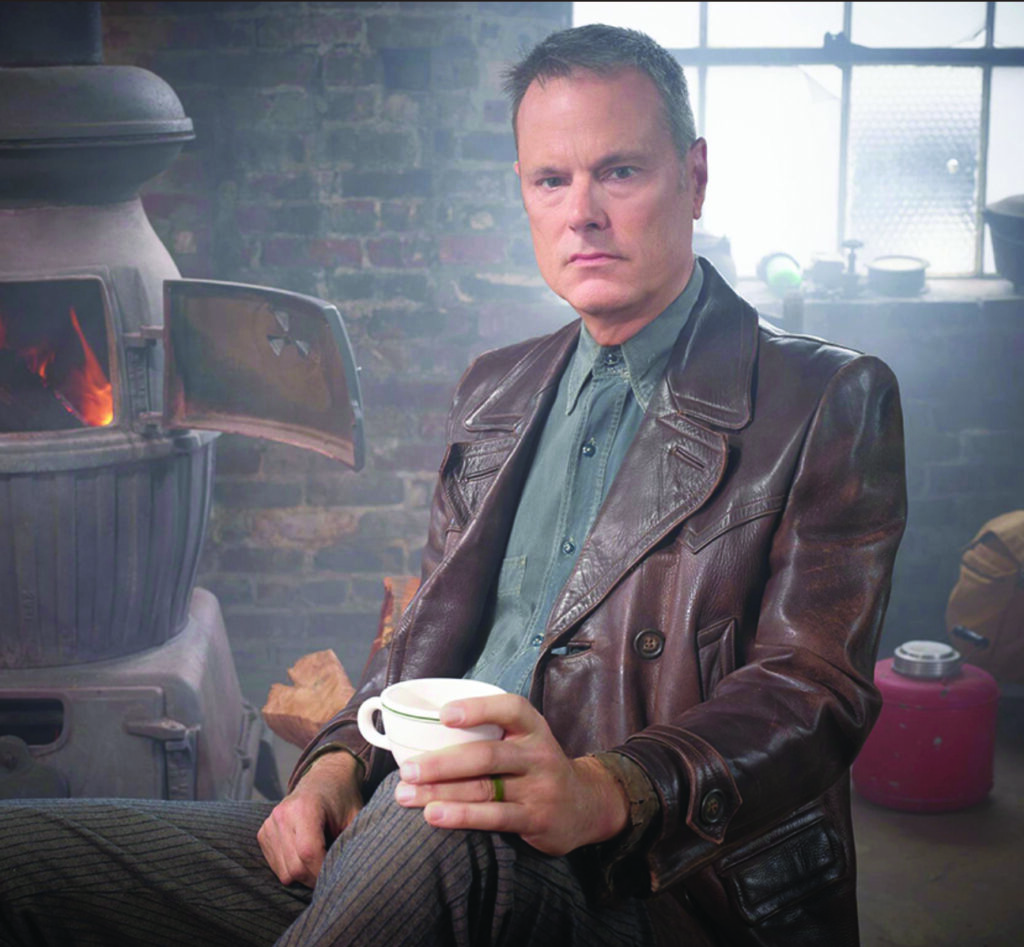
Barry Bales joined Union Station in 1989 (along with two other members of the band, Dusty Miller: Tim Stafford and Adam Steffey), and Ron Block joined in 1991. “I’m thrilled with how Arcadia turned out,” Ron said, “and I’m especially looking forward to hitting the road with AKUS. The potential in this version of the band with Russell Moore and with Stuart Duncan’s multi-instrumental support—well, it’s going to be interesting to see how it all develops through all our rehearsing and the shows.”
Bales agreed, adding, “I’m really looking forward to playing live for all the wonderful AKUS fans who have been so patiently waiting for us to be back on the road and in their town. “I’ve been a fan of Russell’s for many years,” Barry continued. “I remember being gobsmacked the first time I heard him with Southern Connection one Saturday morning on the Fire on the Mountain television show, on the old Nashville Network. I was in the audience for his second show as a new member of Doyle Lawson and Quicksilver. I was also honored to produce a record that he and IIIrd Tyme Out did for Cracker Barrel. So I’ve been listening to Russell for many, many years, and he’s one of the few singers that I can honestly say has not really lost anything in range or quality of voice as he’s gotten older. He’s as strong as ever, and it’s going to be a treat on many levels to hear him bringing his special talent to the AKUS vocals.”
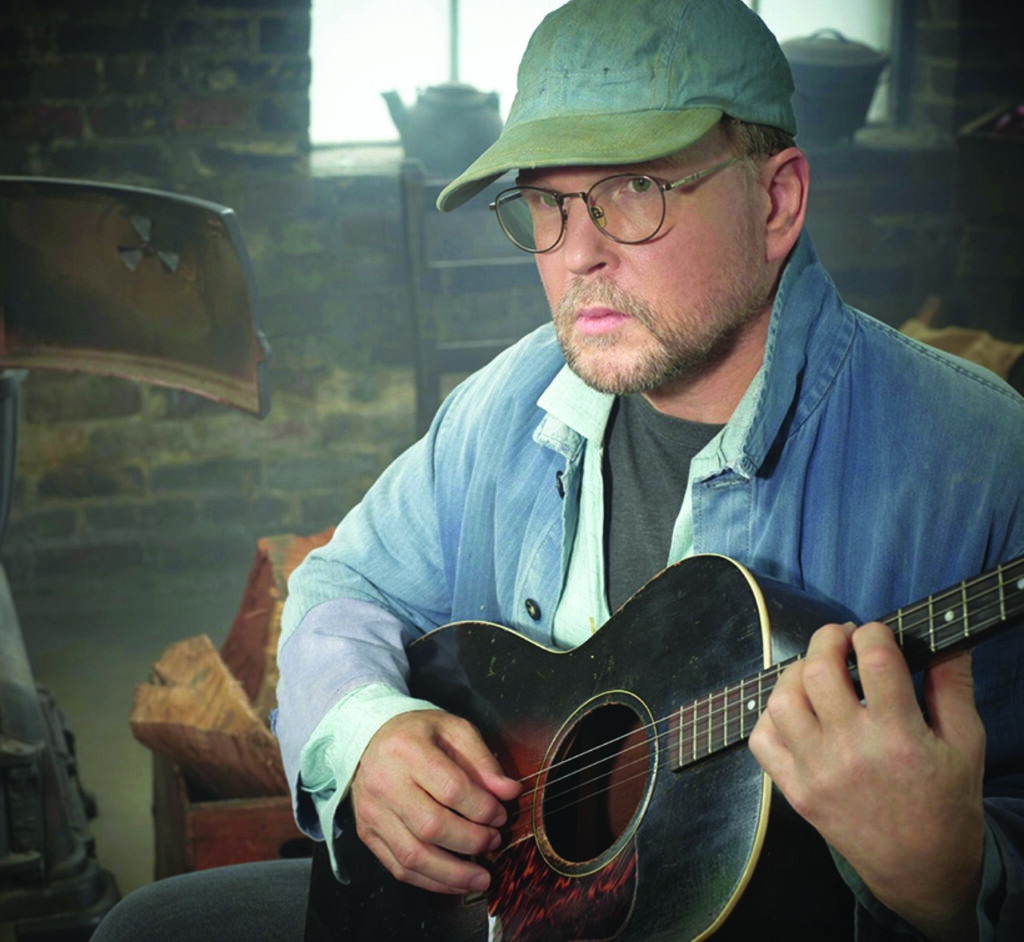
“I remember first seeing Russell in Doyle Lawson and Quicksilver at Grass Valley in the late 1980s, and I was blown away by his vocals,” Ron said. “He’s one of the greatest bluegrass singers of all time, and it’s a joy to have him in the band. Russell’s vocal performances on Arcadia are exceptional, whether he’s singing harmony or lead; he’s extremely quick at adapting to whatever is needed.” “Everyone in the band has been doing their own work for the past several years,” Block continued. “I play banjo with tenor banjoist Damien O’Kane in our Celtic/bluegrass instrumental band in the U.K. and Ireland, straight-ahead bluegrass banjo with the band Southern Legacy, and also have played electric and acoustic guitars with Sandra McCracken. I’ve had a massive amount of joy and fun in all that stretching, growing, and playing with new people. Everyone in the band has gained these individual experiences in the past few years, and it’s a beautiful thing to come back to home base and tour with AKUS, with all the past few years under our belts.”
The legendary Jerry Douglas has played with Alison Krauss and Union Station since 1998. “I’m looking forward to returning to the camaraderie we had as a traveling band and all the great musical moments we can create out of thin air,” Douglas said. “The funny thing about this recording, regrouping, and touring, is we (AKUS) never said we were done, breaking up, or anything to make anyone think we finished. We had been on the road doing 200 to 250 days a year since I had joined the band in 1998, and we were tired. No one ever said, ‘I quit.’ Time came and went as we all went in different directions with our musical lives. Alison toured with a different band in a more country setting and found success in her partnership with Robert Plant. Playing in different genres is where I went. Along with forming my own groups and touring them, I did tours with Lyle Lovett, Elvis Costello, opened for the John McLaughlin/Zakir Hussein band Shakti on their final tour, and I kept my Celtic connections intact through my yearly sojourn to The Transatlantic Sessions. I bring all that with me when I come back to this AKUS. Barry and Ron will be bringing their experiences as well.
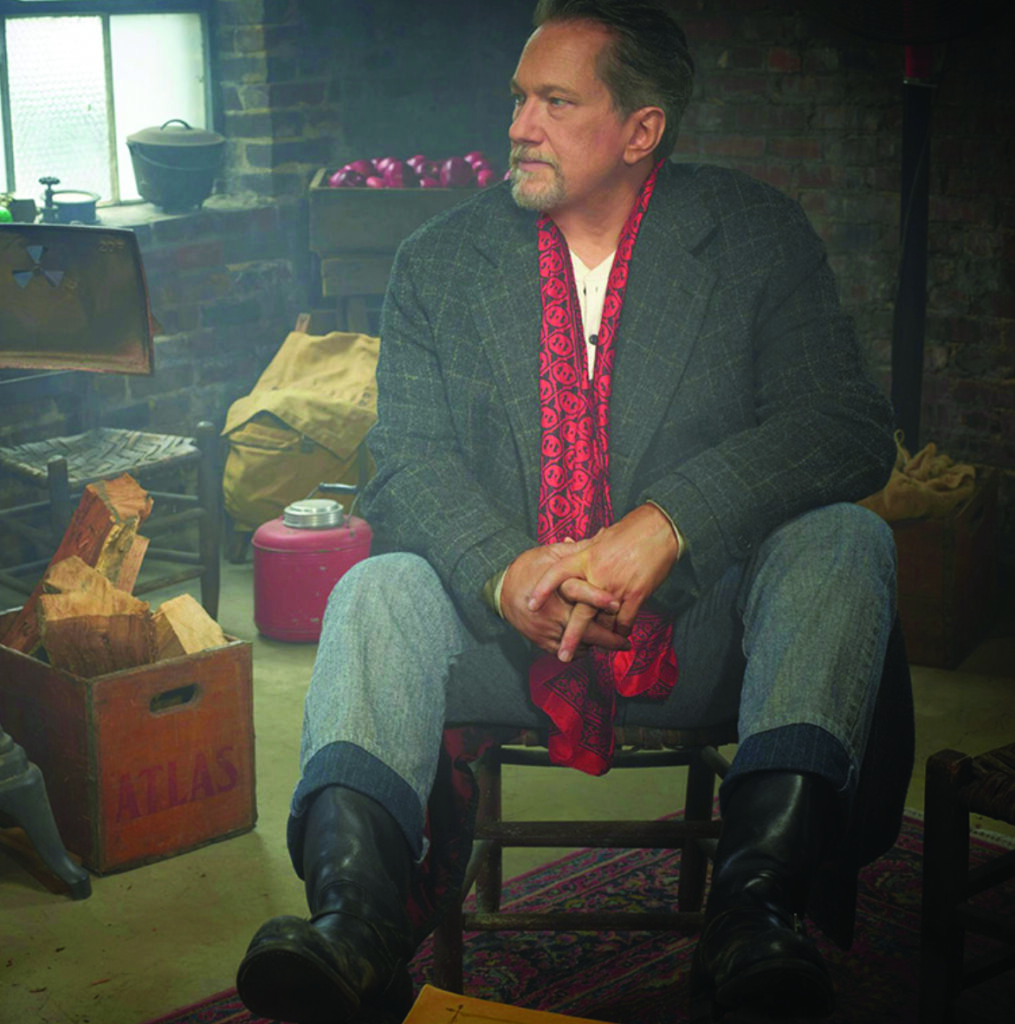
“The songs on Arcadia are totally AKUS fare,” Jerry said. “Moving from Alison soaring over us with that voice, to now, with Russell singing with his own brilliant set of pipes about something tragic or life’s upheavals, it’s familiar ground but reinvented through these amazing writers we lean on. These are all songs we have been recording during this long hiatus. Along the way, Alison’s brother, Viktor Krauss, marched little sister through some beautiful string arrangements, something we have dabbled in on albums before, but not to this extent. The addition of Stuart Duncan makes it possible to cover some of this. His expertise on so many instruments makes him ‘Everybody’s (Not So Secret) Secret Weapon.’Going back out to play with Alison and the band is as familiar as finding a favorite old coat you thought you had lost. We had a little rehearsal when Russell first came on. I expected the band to have a different feel, but after the first few lines, the band fell into that sonic blend that I’ve felt all these years. Since then, I haven’t looked back. I’m excited to play this music again. I’ve missed it. We all have.” “I love having Russell singing with us,” Jerry said. “The blend between his rich, reedy voice is seamless with Alison’s. When it was time to find a replacement for Dan, which no one ever wanted to do, we had a real challenge on our hands. But in the last 20 years, the singers of Dan’s class that have had the most effect on me have been very few. The one name and voice at the top was Russell Moore. Russell and I have a few things in common. We have been out here a long time, and we’re both road-tested. He was a mandolin player when we first met some 30-odd years ago, with Scott Vestal [in Southern Connection]. Russell and I have both been to the School of Doyle Lawson, which is a spin-off of the School of J. D. Crowe. Our ideas of timing and where to plant the downbeat are the same.”
“Alison is singing in top form, and she took such great pains with this record,” Jerry said, “She stayed with it 150 percent of the time. And it shows. The beautiful vocals and the arrangements with their twists and turns are perfect but accessible. The string sections she added are brilliant and create illumination to the lyrics. We’re all in a real good place, and I see these shows as something I wouldn’t want to miss.”
After so many years of fronting his own band, what’s it like for Russell Moore to step into Alison Krauss and Union Station? “It’s surreal, to say the least. At this point in my career, I never thought this type of opportunity would present itself. There have been several artists who have made up AKUS over the years, and every configuration has been awesome. I’m looking forward to helping make up this latest version.”
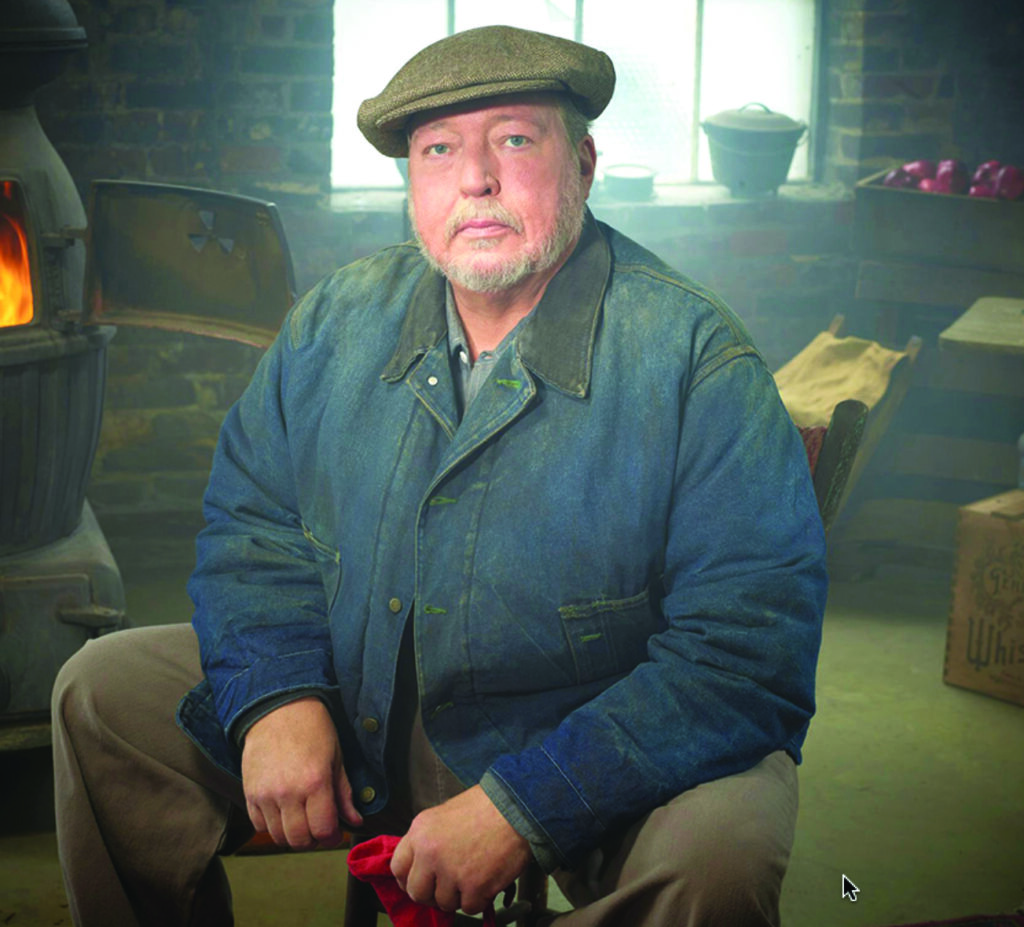
What does he find himself doing differently? “For one thing, I’ll be playing a little bit of mandolin as well as playing guitar,” Moore said. “Also, I’ll be singing more harmony vocals instead of all the lead vocals as I do with IIIrd Tyme Out. I’ll still be taking on lead vocal duties with AKUS, but not as much as I do now. The biggest difference is I’m not going to be wearing as many ‘hats’ as I do with IIIrd Tyme Out. I’ll be able to devote my entire attention to my role as part of the group.”
Russell said he had several reasons for accepting the offer to join Union Station. “One, I thought it would be a great opportunity for me to introduce myself to a wider audience and, hopefully, make new fans and, in doing so, bring them into IIIrd Tyme Out’s world. Another reason would have to be, as an artist, to expand your knowledge and get better. Sometimes you need to step out of your comfort zone. To be honest, this is a once-in-a-lifetime opportunity, and I couldn’t find a reason to not do this.”
It’s got to be surreal (that word again) to hear his voice on an AKUS record. “It’s so cool to hear my voice in this setting,” Russell said. “I absolutely love singing with IIIrd Tyme Out, and it’s no different with AKUS. I love that, too. First class singers and players on both sides of the fence, but different songs and different arrangements. It’s a singer’s dream world.”
Moore said he is, “Looking forward to spending time with everyone in AKUS and getting to know them better, making some great music, and sharing laughs, stories, and making memories. I’m also looking forward to visiting and seeing so many places and venues that I’ve never had the opportunity to perform at.”
“I’m excited and slightly terrified to be undertaking this adventure!” Stuart Duncan said. “Over the years, Alison has surprised me numerous times by asking me to play other things besides the fiddle. With AKUS, my primary instruments are mandolin and guitar, but I will bring my fiddle along in case Alison needs some strings! We have so far only done one song together [at the Opry 100 show], but it’s going to be amazing to hear Russell’s clear voice blending with hers on the whole set. I, too, will be adding some vocals, it’s been rumored,” Stuart added.

“Another exciting part of my world is that the fine folks at Gibson graciously agreed to do a custom refinishing of my 25-year-old F5 mandolin. They also made it happen quickly, so it would be ready for this tour. Actually, there is nothing terrifying,” he clarified, “just my own awareness of the incredible level of playing on such genre-bending recordings and the concentration it will require to honor that history.”
“Playing with these guys is my home,” Alison Krauss said. “I’m very happy to be back with all of them, and this is my focus,” she added. “It’s been so exciting to work with Russell in the studio and to get to be that close to that voice. Ron was there when Russell came in to sing ‘Granite Mills.’ His voice started coming through the speakers and Ron just covered his mouth, giggling, and saying, ‘Oh my gosh, Russell.’ He is unbelievable. It is so wild to hear his voice with us. Dan [Tyminski] and Russell [Moore] are the greatest tenor singers of our generation. It’s just amazing that we’ve had the opportunity to work with both of them.”
The 2025 Arcadia tour includes more than 75 dates across the United States and Canada, with special guest Willie Watson, formerly of Old Crow Medicine Show, supporting. Along with the music itself, Krauss is looking forward to seeing her fans and friends in the bluegrass community. “We’ve got a lot of people coming to shows that we haven’t seen in years. And it’s so nice to see all these young people playing [bluegrass] and keeping it going,” she said. “It’s been a long time coming, and I’m so grateful to go back out.”
“You know, sometimes it’s a really magical thing to get to do,” Alison said. “You can’t believe it. It’s very special.”