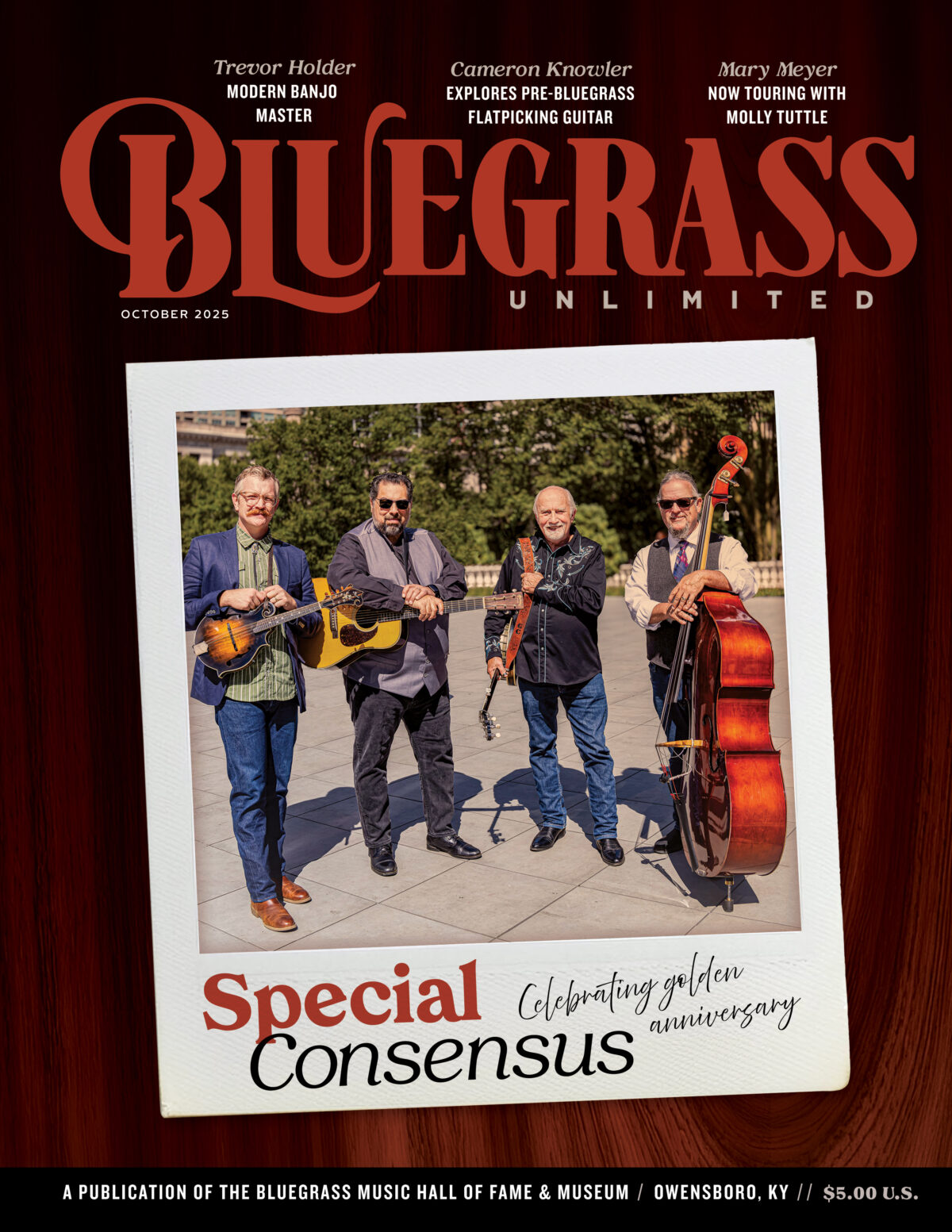
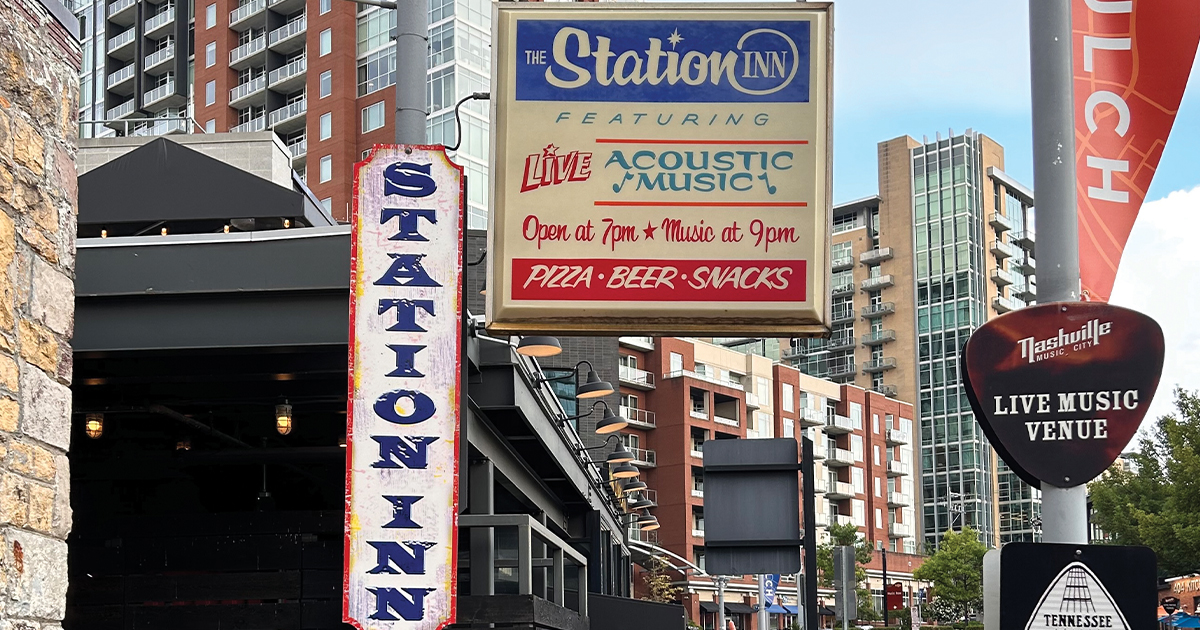
The World Famous Station Inn
Photos Courtesy of Alisa Murphy
People describing the Station Inn, Nashville’s iconic music venue, use such words as home and family. Some call it magic. An Ohio couple who retired to Nashville for the music and who regularly attend the Sunday jams and Monday shows called it their church. Greg Cahill of Special Consensus, looking at the posters on the wall, said, “It is a cathedral! It is a shrine!”
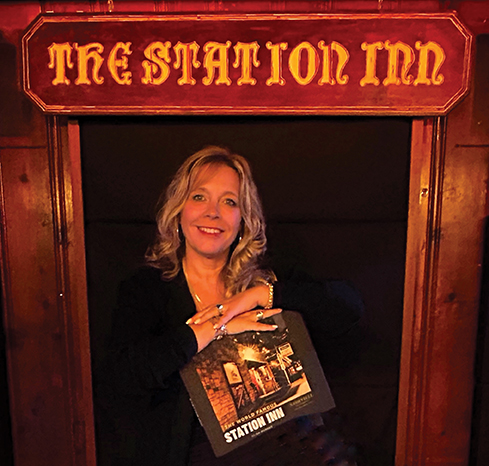
When Alisa Murphy took on the challenge, along with Station Inn owner Josh Ulbrich, of writing The World Famous Station Inn, a beautiful volume filled with stories and images to mark the 50th anniversary, she was deliberate in her research. She interviewed 120 musicians, getting to talk to everyone on what she called her “dream list”—artists from “across every era, every subgenre of bluegrass, whether newgrass or traditional, all different ages and all different histories with the Station Inn.”
Some of her sources go all the way back to the beginning—Steve Earle, Marty Stuart, Sharon White, and Vince Gill—but she also got the perspective of newer artists such as Lauren Mascitti and Casey Penn. Some have practically grown up there—fiddler Deanie Richardson and bass player Missy Raines, who said the place was special because she could be sitting with other people who had made the same sacrifices, that she made: To leave family, to leave home, to leave the familiar, and to take a chance on music.
But Alisa didn’t stop her research with the musicians, although they alone could fill a book. She dug through photos and files, some from the late J. T. Gray, who took over the venue in 1981, reimagined what it could be, and remained at the helm until his death in 2021.
Murphy says she went about much of her research like a method actor. “I wanted to immerse myself,” she says, “so I did things really intentionally, like sitting in on different nights so I could get the different perspectives. Then I would do dishes. I worked the door. I swept up popcorn. I cleaned tables. I bagged trash. I even tried taking a couple of guitar lessons so I could get an appreciation.” Although she jokes that the lessons ended when her instructor Richard Bennett told her she needed to cut her nails, the other primary research continued.
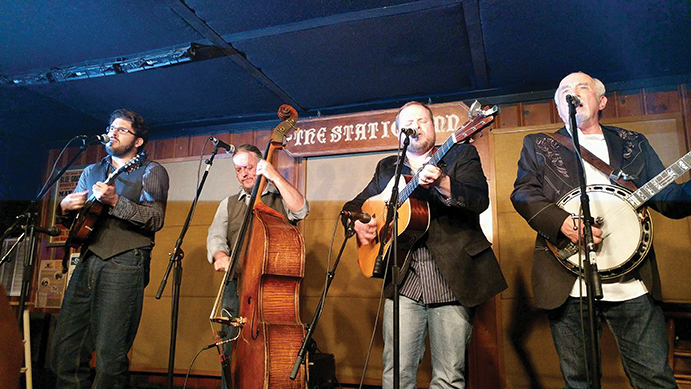
“In my several years working on this book,” Murphy says, “I would intentionally go from customer to customer and get their feedback. But along the way, I’d have people say, ‘What is this place? What is bluegrass music?’ It gave me the opportunity to educate them.”
The audience perspective proved important in writing about the special attraction of the spot. When she asked the people in the audience what brought them there, they opened up before they knew she was working on a book.
In one of her favorite encounters, she relates in the book, as she made her rounds before a show, she met a young woman from England in town on business. She was joined in Nashville by her brother, who lived in the States, playing tourists when she was not in meetings. She asked Murphy, “What is this place, and what is bluegrass music?” Murphy told her about the genre and the space, showing them the posters on the wall—which Missy Raines compares to “precious wallpaper in an old house”—and sharing the history. Telling them she hoped they would enjoy the show, Murphy promised to check back afterwards.
“At the end of the night, everybody was getting up, milling around to leave like they do. I looked and she had tears streaming down her face,” says Murphy. She asked what the young woman thought about the performance.
“Through the tears,” says Murphy, “she got this huge smile on her face and said, ‘My soul just got something that I didn’t even know it needed.’” Just as fascinating, she says, was watching regular audience members who sat up close, watching every move the musicians made.
The book explores what makes the Station Inn so successful, defying the odds in its location in The Gulch since 1978, despite being surrounded now by high-rise buildings in the high-rent district. In his first year or two, J. T. Gray hit on a formula that isn’t a formula. Year to year, Station Inn stays the same, but every night is different.
In addition to the Sunday afternoon gospel with Val Storey and the Sunday evening jams, Monday nights have taken on a character of their own. For fourteen years, The Time Jumpers, a band formed by the collaboration of musical friends, played every Monday night. At first, the audiences barely outnumbered the musicians on stage, but as their fame grew, they were forced to move to a larger venue.
Fortunately, other Nashville musicians came together to form the band New Monday, playing together since 2011. With Storey, Cary Jackson, and Larry Cordle at its core, the band’s configuration has changed over time. They now play with David Mansfield, III on fiddle, Mike Bub on bass, Larry Atamanuik on drums, with Blaine Johnson on keys and Wayne Dahl on the pedal steel. The setlists range from originals by the band to country and bluegrass favorites, always ending with a gospel number.
Bub, consistently nominated for the International Bluegrass Music Association’s bass player of the year, has a long history of playing on the Station Inn stage. Furthermore, he is acknowledged as having the largest repository of stories about the venue in particular and the bluegrass world in particular. He provided a wealth of information for the book, along with Roland White’s widow, Diane Bouska. The pair helped Murphy sift through the piles of photos, making identifications and filling in details.
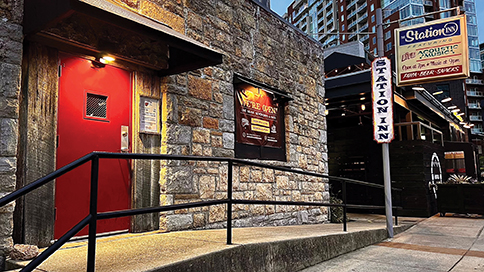
At Gray’s passing, many fans of the venue worried that Station Inn might change or, worse, disappear altogether. Josh Ulbrich, a long-time friend of Gray, was able to step in and take over the business. Not one to seek the spotlight, he says his motivation was to maintain what was essential to the character of the place.
“If you do anything to change it,” he said, “you might as well call it something else. It’s not the Station Inn anymore.” He admits some aspects of the business needed to be improved, but he said, “the model itself was JT’s soul and heart. He made something work that previous owners hadn’t. It was his passion; It was his life. He didn’t have anything outside of that he cared about it so much, so to change anything would’ve been wrong.”
One unique aspect of the business is evident in the sign over the bar: “No wine. No liquor. Never ever.” Ulbrich admitted, “That’s a tough one because implementing liquor sales would increase profits tenfold, but it also changes everything about the model itself. It’s a family establishment, and as long as I have it, it’s gonna be that way.”
Murphy concurs, noting, “He definitely had the opportunity to say, ‘We’re going to serve liquor. We’re going to cater to bachelorette parties. I’m going to make money.’ But he didn’t, and he’s kept the spirit and the core tenets to this place.”
While some cosmetic changes have taken place throughout the years—including the addition of a larger stage moved from the original corner spot, other features have stayed the same. Murphy said that when she began the book, she wondered how she could devote an entire chapter to the tiny kitchen, but that worry proved unfounded. The menu, though limited, remains consistent: you can order a “thing” of popcorn or “Marcia Campbell-style pizza” in honor of the Grand Ole Opry square dancer who is a regular at the Station Inn.
Ulbrich also acknowledged the contribution of Lin Barber, the longest-serving bartender at Station Inn, for more than forty years. Calling her “a staple of the place,” he says, “She was instrumental in keeping the business going when JT was out on the road driving buses to make the thing pay for itself.” She is often joined by Jon Martin, who started as a regular patron, then started volunteering to take out the trash until he became a part of the institution as well. On any given night, though, one is just as likely to find some of the featured musicians behind the bar helping out during intermissions.
In the book, Murphy acknowledges the many others who played roles behind the scenes—such as Kurt Storey and the late Ann Soyars—or the characters who made a home at Station Inn, such as mandolinist Roland White, whom Murphy called “an ambassador in the best and highest sense in that he would bring people up on stage and let them grow and give them opportunity and mentor them and encourage them.” She added, “He always talked to people about how great this place is.”
The rehearsal room, consistently described by musicians as “cramped,” remains another unchanged space at Station Inn. “It’s those little things that make it feel like home,” says Murphy. “Some people said, ‘You could make a fancy green room, and then you’d get those stars coming in [before they played]—Emmylou Harris and Vince Gill. Shouldn’t you have like a nice green room for them?’ But everybody wants it just the way that it is. They want it to feel like they can interact in there.”
Plenty of the Station Inn magic happens in that small space, including the intergenerational encounters for which the venue is known. In one of Murphy’s favorite stories in the book, on one quiet winter night in the rehearsal room, Don Wayne Reno handed his father Don Reno’s famous banjo, Nellie, originally belonging to Earl Scruggs, to Kelsey Crews, a player who frequents Station Inn. When Crews asked if he could play the historic banjo, he said yes, then told him of its history as they played together.
Murphy also learned the first part of a story in one of her earlier interviews with the musician and songwriter Shawn Camp, who recounted an early interaction when he shared the rehearsal room with Billy Strings. The two were fooling around back there with their instruments, when they decided they should co-write sometime—not an unusual occurrence between artists playing the venue.
According to Camp’s account, Billy said, “Here, let me give you my number. Call me when you want to get together.” He gave Camp his number and said, as a joke, “Just don’t call me at four in the morning.” They both said, “That’s a song.”
Murphy added, “Then a couple months ago, I was driving down the road with Bluegrass Junction on the radio, and on comes the song from Billy Strings ‘Don’t Be Calling Me (at 4 AM).’”
Station Inn has always been about more than just a location. It’s about history, it’s about people, and most of all, it’s about music. The legends of bluegrass have played there. Countless stories abound, many evidenced by posters on the wall, of musical icons who have performed. There are stories of Bill Monroe and Ralph Stanley having an unofficial competition on the stage one night, when Monroe challenged Stanley and his band, playing “Rawhide.” Murphy was also able to talk to Wyatt Rice about his own experiences and those of his late brother, Tony Rice.
Each interview proved a little different, says Murphy. “Sam Bush,” she said, “was such a delight. He laughed through his entire interview, which was just a joy. Mark O’Connor was very different in that he wanted to meet me [in the Station Inn], really wanted to be back in this space. He was so intellectual and thoughtful about how each phase of his life and career began here.”
When interviewing Peter Rowan, she asked how long it had been since he had played the venue, and learning that he would be back in the area in a few months, she invited him to visit. He did, and got up on the stage, his playing reminiscent of the Crucial Country shows he used to play there.
When Murphy reached out to Steve Earle, admitting it was a cold call, she says he not only agreed to the interview, but told her, “My feelings would have been hurt if you hadn’t asked.” They spoke for four hours, Earle sharing priceless stories, including his weekly Station Inn “dates” with the late Keith Whitley.
If what happens on stage at Station Inn is remarkable, the crowds filling the chairs around the tables are equally so. On any given night, amid the regulars, one can find tourists, without any familiarity with bluegrass, who came in on the recommendation of an Uber driver. Almost every night, when performers ask, “Who’s here at the Station Inn for the first time?” hands go up. One can meet visitors from all over the world almost any night.
Sunday nights offer an opportunity unique to Station Inn. “There’s no shortage of picking circles around bluegrass. They’re everywhere,” Murphy points out, but she calls the Sunday night jam “unabashedly, the best representation of a picking circle. The difference here is that people outside of bluegrass are exposed to it. If you’re at a festival or a gathering of banjo players or whatever, you know that’s going to happen. Bluegrass people expect it, but when it happens here on Sunday nights, people coming in off the street, tourists, people from other countries are experiencing that for the first time.” The jams also offer a chance for pickers at all levels of proficiency to play together.
Tuesday through Saturday, the lineup varies, but the quality doesn’t. And Station Inn shows are famous for having guest appearances, whether planned in advance or not. Likewise, for many Nashville musicians, Station Inn is a home away from home, a place to come and relax, hear good music, and learn. The artist in the audience one night, Murphy noted, might be playing the Opry the next night.
While J. T. Gray may have hit on a formula for success, it is not one to be replicated. Don’t expect to see Station Inn 2 at the Nashville airport. “It really is its own thing,” says Murphy. “I always like to say it reveres the past, and revels in the present, and reimagines the future. “
If you want to know more, as they say, read the book—and then head on down to the Gulch for an authentic taste of Nashville.
Those interested in reading Alisa Murphy’s new book about the Station Inn can purchase copies at the Station Inn’s website: https://stationinn.com/shop/