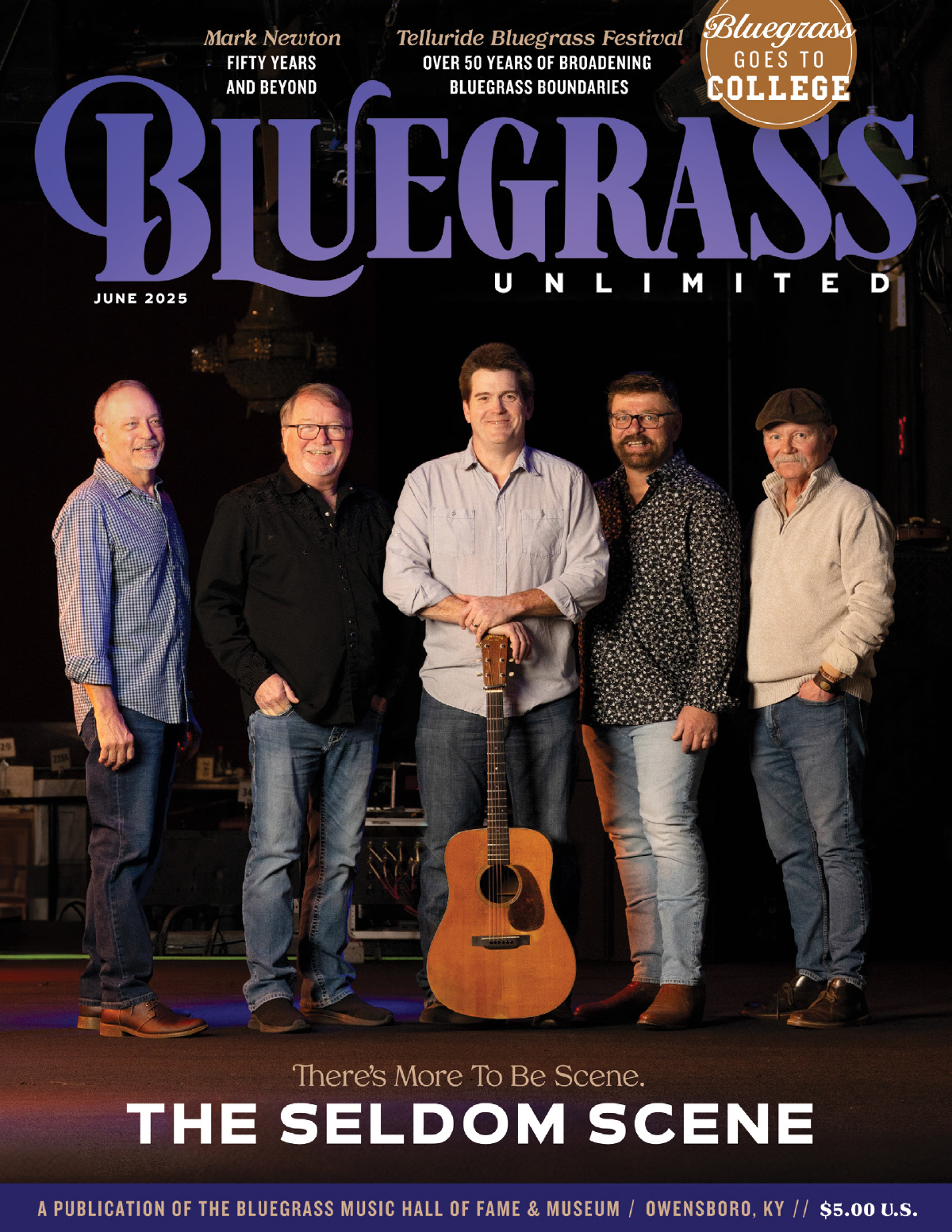
The Seldom Scene
There’s More to be Scene
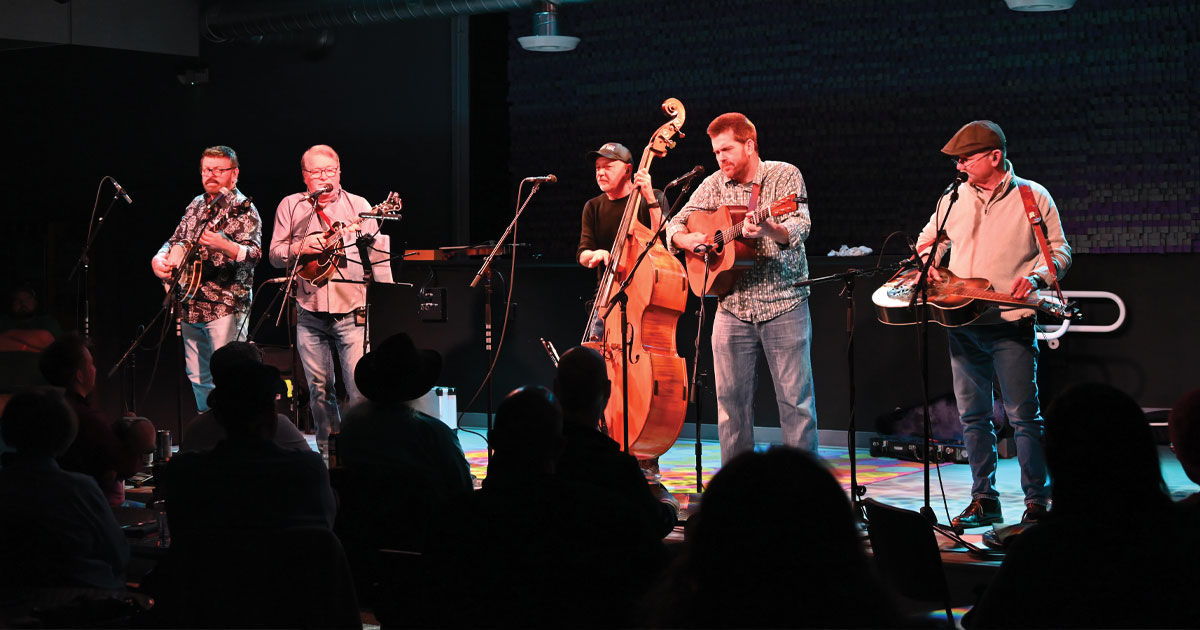
The Seldom Scene is changing…again, and this is to be expected. Longtime guitarist and vocalist Dudley Connell has stepped aside and Clay Hess has joined the band. If one looks back at their fifty-plus years you’ll note that about every seven or eight years there’s a change in the band. In most cases, it’s a matter of one person leaving and another joining. Sixteen people came and went over that time, and yet the band remains. Generally, there is a core group of three or four members who remain.
The Seldom Scene first appeared in 1971, according to legend it was at a party where they all first played together and realized there was something worth continuing. Of course, legends often leave out many details. In truth, most of the future members of the group had known each other or even played in other bands together.
There are different versions of the story of the band’s beginnings but all agree that John Starling, Mike Auldridge, John Duffey, Ben Eldridge, and Tom Gray began playing together in late 1971. The band name, legend has it, came from Charlie Waller who had played with both Duffey and Gray in The Country Gentlemen. As word spread of this new group playing together, Waller noted that no one had actually seen them perform yet. Waller said “I keep hearing this rumor that you have a band, what do you call yourselves? The Seldom Seen?” Everyone liked the name, especially after John Starling suggested they change the spelling to “Scene.”
With a name in place, they started playing out. A few gigs at a less than appreciative venue led them to find a place better suited to bluegrass and that place was the Red Fox in Bethesda, Maryland. The band kicked off 1972 at the Red Fox and began building a following in the Washington D.C. area. An early promotional flyer for the band states that they got together for the “avowed purpose of playing for fun” While you’d be hard-pressed to find a band that says they’re trying to have an awful time playing music there was something in that declaration from the band that set them apart from other groups at that time.
Mike Auldridge said that the group “Was just trying to please ourselves.” Ben Eldridge added, “We started the band for our own amusement more than anything else and I don’t think the attitude has changed much.” Asked about the band’s beginnings and what caught the attention of the audience, Tom Gray said “The essence of the Seldom Scene was to play contemporary bluegrass from the perspective of urban dwellers in the Washington area. There has always been an active bluegrass community there. Along with tunes from contemporary writers, we would continue playing bluegrass classics, but smooth out the rough edges. It was a continuation of what John Duffey started in The Country Gentlemen.” He continued “As Duffey suspected, there are a lot of others in the same demographic. People who would grow to love the traditional music but didn’t grow up listening to it. He knew there were a lot of people, college students or city dwellers who liked acoustic music but hadn’t been introduced to bluegrass. Of course, we were blessed with the extreme vocal talents of Duffey, Starling, and Auldridge.”
“Some of this music that had been sung for several decades, and maybe was getting a bit stale. When we did play bluegrass standards, Starling observed that we could play that material smoother, and neater than the originals so we were like a breath of fresh air. We respected the tradition and sang Monroe, Stanleys, etc. but also sought out material from more contemporary writers, Starling had a wide taste and would find material we could play.”That wide taste in material would be another important ingredient in the band’s evolution, along with their style of performance. Dudley Connell observed “Presentation has always been a significant part of the legacy of the Seldom Scene. There’s a certain nonchalance about it, it wasn’t canned or schtick, it was real, it was a bunch of guys playing music and having fun who enjoyed each other’s company and it just so happened that the music was really great.”
“The Seldom Scene literally changed the map,” says Connell, “The Scene crossed all the barriers. Some of the earlier artists like Monroe or the Stanleys when people up north listened to that it sounded absolutely foreign and The Scene was presenting something different. Others like the Country Gentlemen or Emerson and Waldron brought in contemporary writers, however, the Scene had that smooth voice of John Starling combined with the power of John Duffey’s tenor that could peel the paint off the walls and that combination of singers is one of the most influential things that ever came into bluegrass.”
Lee Olsen who was the booking agent for the band for many years had this to say about the group “They’re legendary, one of the most significant bands in bluegrass history, they were innovative in so many different ways. They also had a deep connection with top singers in the pop and country fields like Linda Ronstadt and Emmy Lou Harris as well as great songwriters like Paul Craft. Live At The Cellar Door was a real breakthrough album, one of the first double albums in bluegrass.”
For many people, myself included, The Seldom Scene was a “gateway” to hardcore bluegrass. Along with Will The Circle Be Unbroken album from The Nitty Gritty Dirt Band and the Old and In The Way album, the early records and performances of The Seldom Scene drew a wider audience into bluegrass. One factor is the synchronicity of their approach with what was going on in popular music at the same time. The early seventies was a time when singer-songwriters were coming to the forefront of pop music. James Taylor, Gordon Lightfoot, Joni Mitchell, and groups like Crosby, Stills, Nash, and Young were not only releasing albums of acoustic-based music but presenting concerts where matching suits and well-rehearsed stage banter were out the window and replaced by a more easygoing, natural flowing connection with the audience, exactly what the Seldom Scene was doing. Listen to those early albums from the Scene and you’ll hear any number of songs that would have easily fit onto an album by Jackson Browne or James Taylor and indeed the Scene covered those writers. Conversely, songs like “Ripple” from The Grateful Dead would have sounded completely at home on a Seldom Scene album. Whether they were trying to or not, the band was breaking down barriers that were in reality arbitrary in the first place.
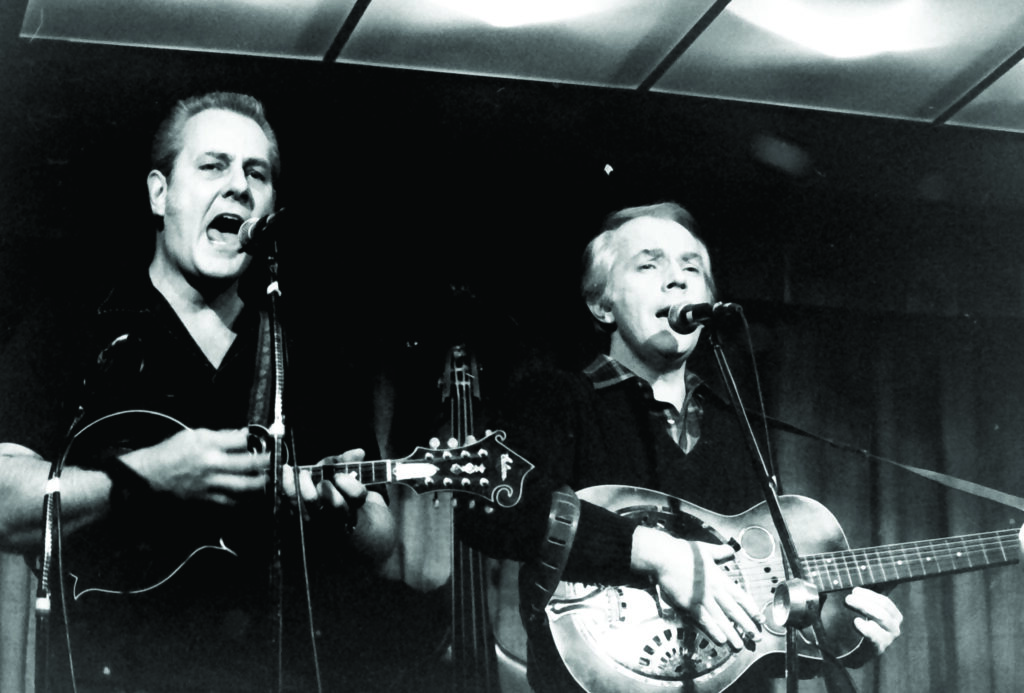
One of the stand-out tracks on that album was “Rider” which had appeared on their album Act III and was well known in folk music circles having appeared in the book American Ballads and Folk Songs by John and Alan Lomax. The song was also a counter-culture hit for The Grateful Dead who recorded it in the mid-sixties. Tom Gray recalled “Regarding the way ‘Rider’ worked out, I guess we were a jam band before that term was created. The tune kept getting longer, with each player playing all his licks in the key of C. Once someone pointed out that we took up 13 minutes, we agreed to shorten those extended breaks.” Even so, the song clocked in at almost seven minutes on the live album which was another bit of synchronicity with trends in popular music – long jam songs on double live albums. That album ended up on shelves in people’s record collection next to The Rolling Stones or Jimi Hendrix.
While the band was opening new doors and ears to bluegrass, they had a dedicated following in those who already loved the genre although some, including some well-known bluegrass artists, found them unserious and didn’t care for their live shows in particular John Duffey’s antics. To a much wider audience, though, those antics and irreverent humor were what made the band stand out and brought in that new audience who stayed when they heard the quality of the songs and the arrangements.
The Seldom Scene has always chosen songs that they enjoy playing and can arrange in a way that best shows off the individual members of the band. That’s not uncommon in the music business, any group wants to have great material, but the Scene has always been especially skilled at finding songs that work for a bluegrass band and will also catch the attention of a wider audience. Importantly those songs that might have been recorded before by an artist like James Taylor or Jackson Browne never sound like a novelty, but as something that sounds exactly like The Seldom Scene. There never appeared to be a song selection based on appealing to one segment of the audience or another and yet the band, in those early days especially, was very much in sync with the broader music world.
Interestingly, the first song the band recorded in 1972 for Rebel Records was not an old bluegrass standard but rather the James Taylor song “Sweet Baby James” Tom Gray related that “It’s not an easy song to do, the chords and timing are different than the standard bluegrass tunes.” As would become a tradition for the band, once they had the song down, they started to rearrange things. Gray continues “Duffey had an idea in that song—instead of going to the six minor chord in the chorus, the usual way the song goes, we’ll go to the four chord because it will sound stronger but we’ll save it until the last chorus. It’s in the key of Eb, that suited John Starling’s voice, so instead of playing the Cm, we played the Ab which sounded stronger. It was only one note that was different—Duffey’s higher note on the chorus, that’s the kind of idea that we worked into the music. People might not recognize what was different, but they heard something they liked.”
Starting with that first album Act I in 1972, The Seldom Scene would release five albums at the rate of one per year featuring a wide range of material filtered through the Scene’s arrangements including songs previously recorded by The Monkees, Peter, Paul and Mary, Eagles, Steve Goodman, John Prine, The Grateful Dead as well as artists like Merle Haggard, Hank Williams and a solid collection of Bill Monroe, Stanley Brothers, and other traditional material.
Also, essential to the early Scene records and shows was original material from writers like Paul Craft and Herb Pedersen, the latter having written perhaps their most famous song “Wait A Minute,” the recording of which features the classic trio harmonies, an ending where they shift parts in a tapestry of sound and a unique bass part for a bluegrass record. Bassist Tom Gray relates “What I did with ‘Wait A Minute’ was not my idea originally. Herb Pedersen had given John Starling a tape to learn the song and the bass player on the demo was playing electric bass in more of a folk-rock style. The bass was on the 1 and the 2, not on the 1 and 3 as it usually is. When we recorded the song, Starling suggested we do it just like the demo, so I played on the 1 and 2 and I played the electric bass guitar.”
The original lineup of the band would continue until 1977 when John Starling would leave and Phil Rosenthal would join the band. By this time, the Scene had already recorded some of Rosenthal’s songs, and one, “Muddy Water” was already a fan favorite.
He recounts the process of joining the band, “I was in a band called Old Dog and Mike Auldridge really liked that band and suggested that we do a record together which was very exciting. While we were recording, I looked in the control room and there was the rest of the Seldom Scene sitting there. During a break, John Duffey said they’d like to talk to me. They told me that John Starling was leaving and they were looking for someone to take his place and would I be interested in auditioning them?
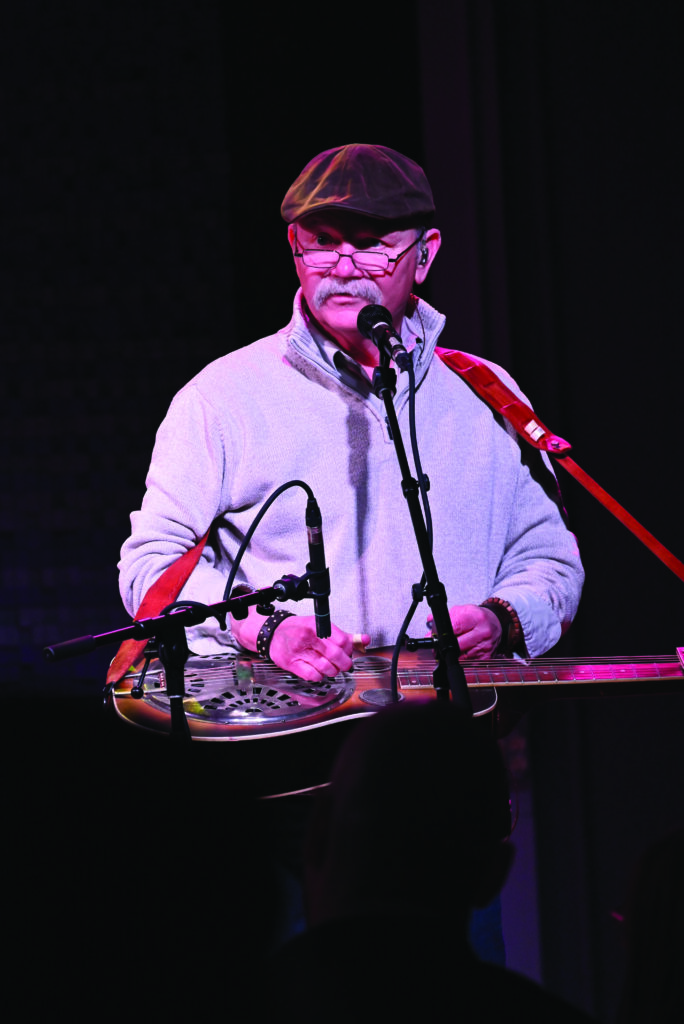
“Here I am doing an album with this band, Old Dog, that I really loved and they asked me to audition. I said I was flattered but that I thought I just wanted to continue with the group I was playing with. I remember John Duffey looked at me with a double-take ‘What the heck?’ kind of look, and said, ‘Well think about it, Phil.’
“Later my wife and I were driving and we said ‘Wait a minute, the Seldom Scene? We’d have to move but this band was the Seldom Scene! I called them that afternoon and said that I would like to audition. They said the most important thing was to see if our voices fit together well because the harmonies needed to be right. Four or five days later they called and offered me the job.”
Rosenthal would continue with the band for the next nine years during which time the band released another five albums, approximately one every year and a half. There would be a healthy dose of Rosenthal’s originals and songs from the wide variety of sources the band had become famous for such as “After Midnight,” “Lay Down Sally,” “Jamaica, Say You Will” and “Stompin’ At The Savoy.”
By 1986, about fifteen years into the band’s history, Phil Rosenthal and Tom Gray had departed and T. Michael Coleman took over on bass alongside Lou Reid on guitar and vocals joining Duffey, Eldridge, and Auldridge. This lineup of the band remained in place until a two-year period between 1993 and ’95 when Reid left, Starling returned briefly followed by Moondi Klein taking over guitar and vocals. The original members remaining were John Duffey, Ben Eldridge, and Mike Auldridge. During this time the band released a greatest hits album as well as two concert recordings for the 15th and 20th anniversaries of the group.
In 1995 there was a major overhaul of the band when three-fifths of the group left. Dudley Connell picks up the story “I was on the mailing list for the band Chesapeake, and I got a postcard that said they were forming as a full-time band and the Seldom Scene is retiring. I called John Duffey and said how sad I was that the band was quitting—John said, ‘Well, we’re not really quitting we’re just looking for a guitar player and singer, a Dobro player and singer, and a bass player who sings.’ He was kind of making fun of the situation. I said that we should get together and sing sometime and it was dead silence on the other end of the line and I thought, oh no, I’ve stepped over some kind of line. John asked me if I knew any of their songs, I said not really but I’ve heard them. He gave me a half dozen songs to learn.
“He invited Ronnie Simpkins, who I’d played music with, and Fred Travers, who I knew as well. He hired us on the spot but he didn’t actually tell us that so we were walking around for a while before our first gig asking each other, ‘Are we in the band or not?’”
Out of this major overhaul came the longest-running version of the band in terms of a core group that stayed together. Connell, Ronnie Simpkins, and Fred Travers, joined by Lou Reid returning on mandolin, would play together for the next twenty-nine years.
As the band has continued, they have reached back to that founding principle of having fun both in the playing of the music together and in sharing that fun with the audience. In an interview in 1983, John Duffey had this to say “If your presentation is good it doesn’t matter if you’re having the worst night you ever had on your instrument, if you presented it well, then it’s okay. The audience is intelligent and you can’t fool them and they might notice a mistake but the rest of it was okay.”
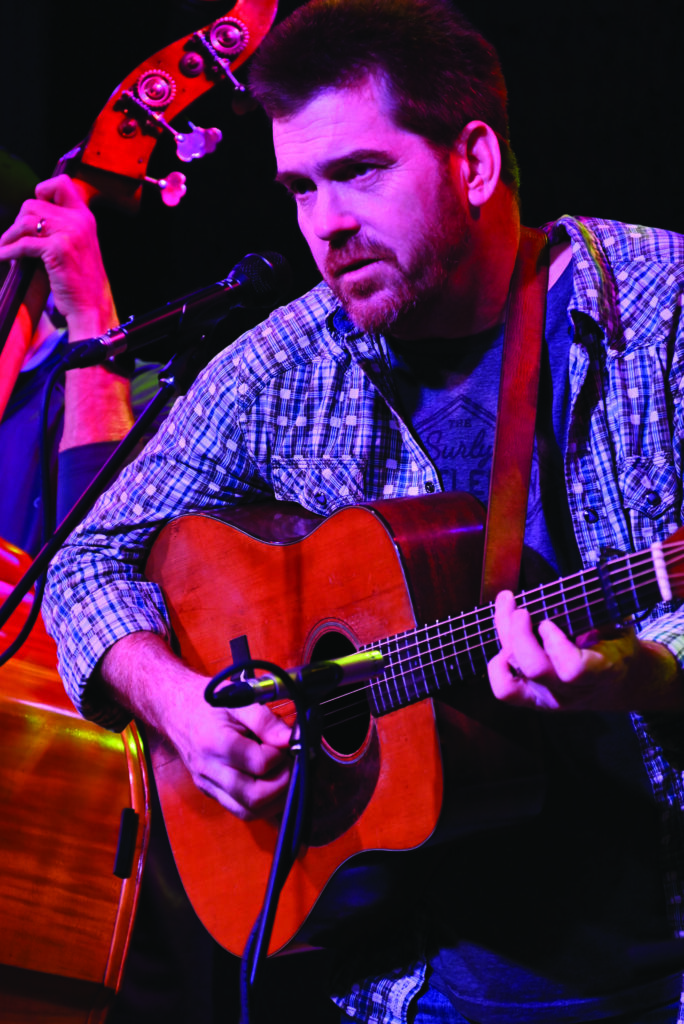
Lou Reid related how Duffey’s attitude of being real with the audience worked, “John Duffey always made me feel better about making a mistake and I learned how to deal with that, it can bring the band and the audience together, we’re all in it together. John used to make a joke about messing up and that helped connect with the audience.”
Every member of the band that I spoke with shared their appreciation for John Duffey. Dudley Connell put it succinctly “John WAS the scene.” It was not only his piercing tenor voice and his creative if sometimes crazy, mandolin playing, Duffey was also a major force in the business end of the band early on.”
Phil Rosenthal remembered “We didn’t have an agent when I joined the band. John did the booking, and by that I mean he answered the phone if you called. We didn’t really go looking for work, people wanted the band and so we had as many gigs as we wanted.”
Lou Reid remembers that Duffey told him to never sell the band short, “John Duffey was really a stickler about getting the best deal for the band. Back in the original band, they got a call from a festival in Canada. John asked how much money they were talking about and they said probably fifteen hundred dollars and John said ‘Which one of us do you want?’ John gave him a price of about 10 grand and they eventually gave him that amount.”
As the band has moved past the fifty-year mark and no original members remain onstage as part of the Seldom Scene, finding and maintaining the essence of the band becomes more important.
Connell talks about the challenges and benefits of playing in the Seldom Scene “None of us has ever tried to copy the players who had been in the band in the past. What we’ve tried to do is compliment each other to the best of our ability. It’s a loyalty to the Scene’s sound and legacy. The hardest thing to do is to introduce new songs but not neglect the old ones and since there’s a limited amount of time that you’re on stage, it’s a trick, but it’s a good trick to have. We have more material than we know what to do with. A band that has this much longevity, you realize that these songs represent something in people’s lives and it’s important to keep that legacy alive, adding new songs and respecting the tradition.”
Lou Reid adds “It’s not easy to pick just one thing that is the essence of the group, but the Seldom Scene is a playful band. We take the music seriously, but not to the point that you can’t make a mistake—and if you do you laugh it off. We just keep with the formula that has worked. It’s hard to emulate the original guys, but the formula that we use is to keep the Scene the band it’s always been. We take music from whatever sources we can, wherever we can find it.”
Clay Hess, the newest member of the band is already well acquainted with the traditions of the band, “The main factor is fun. There are no egos, it’s all about music and having a good time. If you make a mistake, make fun of yourself, that was the first thing I was told when I joined the band.”
Like others who have been in the Scene, he referred to John Duffey’s influence still being a major part of the group, “Duffey really set the tradition he loved to play music and the fans loving it was just a bonus, everyone that’s ever been here just loved to play music, and that’s a pre-requisite to being asked to join the band.”
Hess reflected on the way the band continues to arrange music with the song first and foremost, selecting the instrumental and vocal approach that best supports the song rather than starting from a point of having to have a certain number of solos or playing at a speed that might impress some in the audience “That’s musical maturity—making what you do fit the song rather than trying to make the song fit what you do,” Hess observed.
Thinking about the longevity of the band and the prospects going forward everyone is optimistic. “In some straight-ahead bluegrass bands there’s a lot that doesn’t fit, it’s like trying to put a square peg in a round hole trying to bring in different material,” said Hess, “That’s the beauty of the band—there’s nothing off limits. We could play an old Flatt and Scruggs tune or a Kinks song and pull it off. It’s the Swiss Army knife band, it can do anything. As for the future, Hess says “The band could go on forever as long as you’re playing the songs, paying homage to the tradition but you’re not trying to duplicate the exact way they were done before.” Lou Reid mentioned the great fans of the Seldom Scene and how much he appreciates them “Hanging in there with us over the years, I think we’ve all grown together I’m just really thankful.”
Watching the latest version of the band recently at a gig in Hagerstown, Maryland. I was struck by the power of the songs and the connection with the audience. A track from the latest album Man at the Crossroads is almost whispered by Fred Travers with instrumental backing that seems almost too subtle and fragile to be coming from the bluegrass band while a stillness fills the room and the performance becomes an intimate conversation between old friends. Indeed the audience is an old friend to the Seldom Scene, in many cases literal friends who have known the band members for decades, but even first-timers are welcomed into that conversation with the band.
The “No Egos, Playful Band” was on full display when someone shouted out “Little Georgia Rose.” “Do you know that one Clay?” asked Lou Reid. “I mean do you know the vocal intro?” To which Hess replied, “I think I can do that, I’ve heard it before.” Cue laughter from the rest of the band and the audience. “How’s your voice Lou?” asks Fred Travers from the other side of the stage, referencing the key change at the end of the song that sends the lead vocal into the stratosphere. A chord from the guitar, and they launch into the familiar opening, sliding into the harmonies, if not on the first note, by the second or third, sending a jolt through the audience that is electric. It’s safe to say that even if the performance isn’t note perfect (and it was at least 95%) no one is unhappy, we’re all basking in the wonderful song we love, shared by the band we love.
And so the Seldom Scene changes again and goes on again and just might do that forever. As long as there are musicians who have fun playing and sharing the music with an audience, instead of playing at them. As long as musicians are willing to honor the legacy of the band and understand that a big part of that legacy is to never rest on your laurels but keep experimenting and laughing at mistakes, there can always be a Seldom Scene.
Dudley Connell put it like this, “Let the Scene live forever, I know I’ll go see them as long as I can,” and I think it’s fair to say most of us agree.