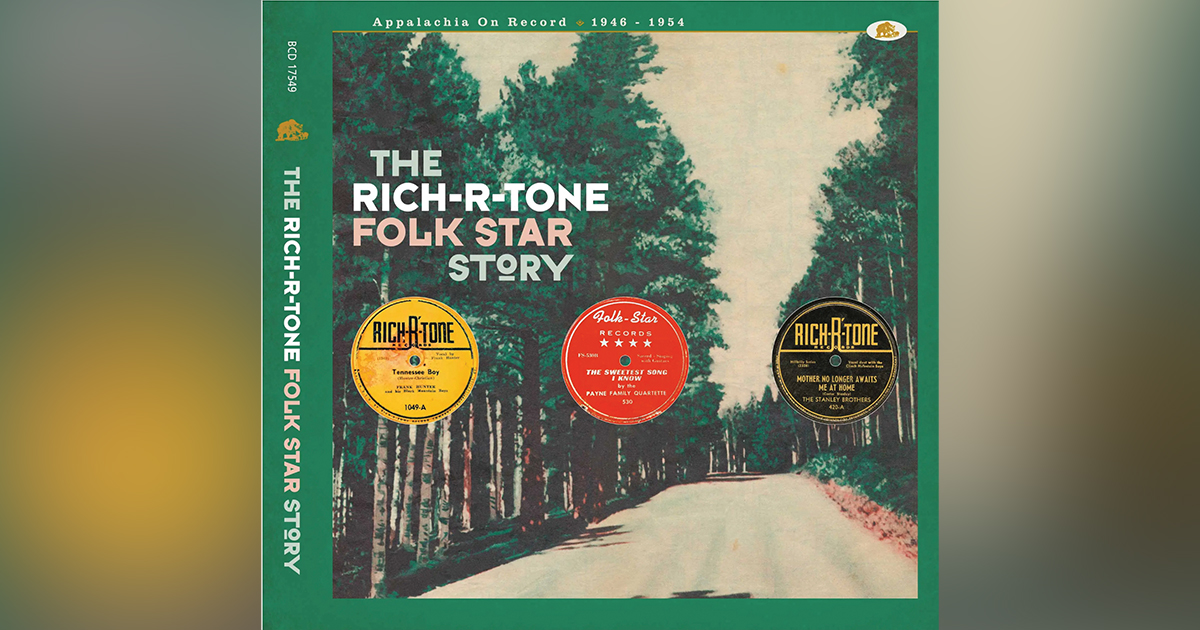
The Rich-R-Tone/Folk Star Story
Old Music Gets A New Life
Discovering music that you have never heard before can be exciting if it is music that lifts your spirit, resonates with your heart and sinks deep into your bones. For fans of traditional bluegrass and early country music, finding this kind of music today can sometimes be difficult. Sure, there are new bands today who are releasing retro traditional-sounding music. But there is also a real thrill in discovering music that is new to your ear but was recorded back in the early days of bluegrass and country. If you are someone who finds pleasure in discovering new music that was recorded long ago, you have got to check out Bear Family’s new box set The Rich-R-Tone/Folk Star Story.
This new Bear Family box set is an incredible collection of 317 songs presented on 12 CDs that were all originally released on either the Rich-R-Tone or the Folk Star labels between 1946 and 1954. The package is accompanied by a full-color 144-page hard-cover large-format coffee table-style book that presents the history of the Rich-R-Tone and Folk Star labels and the artists they recorded. In the book, there is information about each of the 92 artists and bands who are featured on the recordings, and many historic photos of these performers. There are 165 photos of artists and bands, and there are over 300 images of record center labels. Additionally, there is a section that includes images of pages from various bands’ songbooks that the bands sold at their shows. Also included are other recording details, including a release dates master list, a session discography, and a Rich-R-Tone and Folk Star label discography.
When Bear Family sent this box set in to Bluegrass Unlimited Magazine for review, I looked over the package and immediately became curious. How did this amazing package come together? It was obvious that the people behind creating this package, Ted Olson and Matteo Ringressi, had put in a lot of time and effort. When I reached out to Ted Olson—a professor in the Department of Appalachian Studies at East Tennessee State University in Johnson City, Tennessee—and asked him to tell me about compiling the recordings and producing the book for this box set, the story turned out to be even more fascinating than I had imagined.
Bear Family Records
If you are a fan of bluegrass music, you are probably familiar with Bear Family box sets. Over the years they have compiled and released traditional bluegrass, country, blues, folk, R&B, and early rock box sets and, in the process, have reintroduced long-lost or hard-to-find recordings from these genres. For bluegrass fans, the Bear Family box sets of Flatt & Scruggs, Bill Monroe, and The Osborne Brothers are “must have” items.
Richard Weize, born in 1945 in Bad Gandersheim, Germany, founded Bear Family Records in 1975. Weize had been an avid fan of American music since the 1950s, and in the 1960s, he began importing hard-to-get country and rock albums from the US and selling them to friends in Germany. Over the past 40 years, with an emphasis on quality, Weize built Bear Family Records into the most important roots-oriented re-issue record label in the world. Although Weize retired in 2015, he continues to compile recordings for Bear Family Records.
In 2005, Ted Olson wrote a book with country music historian Charles K. Wolfe titled The Bristol Sessions: Writings About the Big Bang of Country Music. Regarding this book, Olson said, “The book was well-received, but it felt to me that what was necessary was bringing those records to the public because how can people debate whether or not the Bristol Sessions were ‘the big bang of country music’ without hearing the records? So, I approached Bear Family Records in 2009 and said it would be wonderful to release these records. Thus began a long working rapport with Bear Family Records.” After working on The Bristol Sessions 1927-1928 box set, Olson also worked with Bear Family on The Johnson City Sessions 1928-1929 box set and The Knoxville Sessions 1929-1930 box set.
Regarding these projects, Olson said, “These featured early country music recordings before bluegrass was identified, but the roots of bluegrass were in place. The sessions captured the roots of bluegrass from East Tennessee.” The work on these projects led to Weize reaching out to Olson to work on the Rich-R-Tone and Folk Star project. Olson recalls, “On New Year’s Eve 2017, Richard Weize contacted me to ask if I could help him explore the output of Rich-R-Tone Records, which documented a later generation of East Tennessee musical life. Of course, I said yes. Richard knew that I was based in Johnson City, Tennessee, where Rich-R-Tone Records was based. It was a logical partnership for me to work on this project.”
In 2018, Olson wrote an article for a local newspaper that was picked up by the Associated Press. The article put out a call for participation from the collectors of old 78 records from 1946 to 1954, which was the “golden period” of Rich-R-Tone Records. Olson said, “The post-war rise of bluegrass was documented by Rich-R-Tone Records, yet the recordings had never fully been collected. Rounder had done one album of some of the bluegrass sides, but it was not comprehensive.”
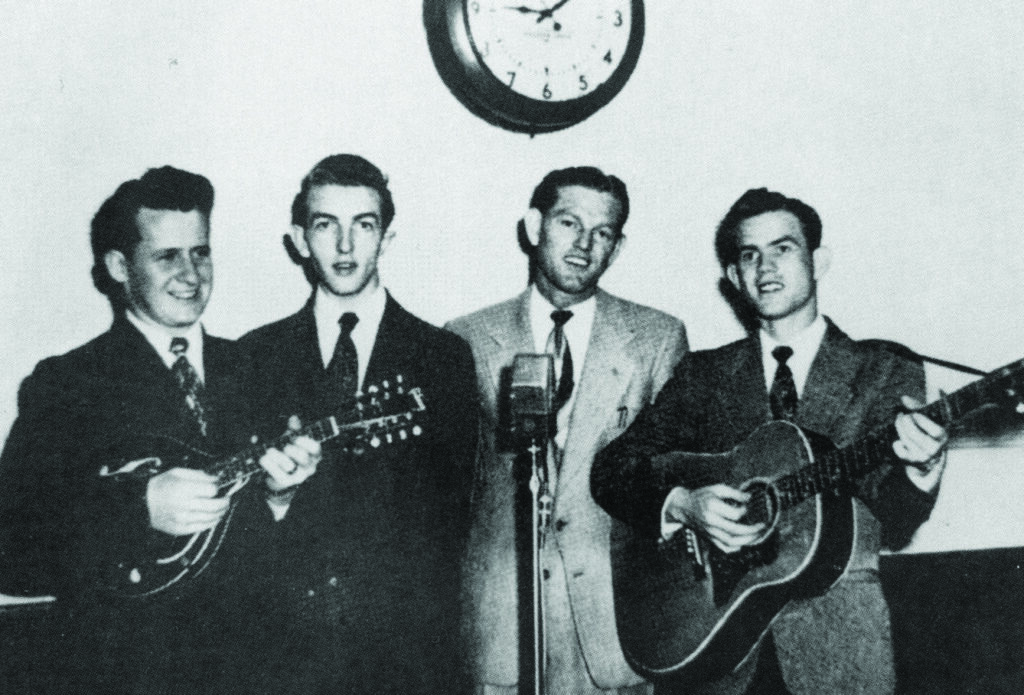
While Rich-R-Tone recorded many bluegrass artists, Olson explains, “Rich-R-Tone was not just about one genre, it was about a multiplicity of genres played in Appalachia during the post-war period…country, gospel, folk, blues, rockabilly…so our set includes all of those genres and I think, very importantly, provides extensive documentation of the bluegrass work of Rich-R-Tone Records.”
The real challenge in putting together this massive set of recordings was that there were no master tapes available. Olson said, “All we had access to were the 78s, and they were rare; and there was no complete discography.” The 78s that were still available were owned by various record collectors from around the world. Olson recalls, “The 2018 article that I wrote and put out, by means of the Johnson City Press, went out on the AP wire and was published nationally.” Immediately, Olson started hearing from record collectors around the world saying, “I have records!” Olson said, “Through that kind of networking, we were able to start incorporating missing parts of the story. That process took many years…from 2018 to 2024.” So, if it were not for the donations of record collectors from around the world who liked the idea of this project, it would have never come to pass.
Some collectors were willing to send in their rare 78 discs; others, who were not willing to part with their rare records, had the disc content digitized locally. Olson said, “Most of our collectors were not local. There was a process of collectors arranging for the digital transfer in their neck-of-the-woods. In some cases, there might have been only a few copies on earth. This was a volunteer process, and we received recordings from all over the world.”
The Rich-R-Tone and Folk Star Story
James Hobart Stanton, the founder of Rich-R-Tone Records, grew up in Johnson City, Tennessee. Stanton had started out in business as a juke box operator. His job was to fill juke boxes around Appalachia with records. What he recognized in populating these juke boxes was that he wasn’t hearing the kind of music that Appalachian people wanted to hear in the mid-1940s. All of the recordings that were available to place in the juke boxes were mainstream national releases, not music by local artists. He wanted to change that. Olson said, “That is one of the reasons that Rich-R-Tone Records was so impactful. It was the first label based in East Tennessee. Stanton had an ‘ear to the ground’ so-to-speak, to locate the music that, at the time, was being made in Appalachia and that the people wanted to hear. He was quite successful in that. It was always a small-scale operation, but he was artistically and culturally very astute and left a long trail of very impactful recordings.”
In addition to the Rich-R-Tone label, Stanton started a “custom label” called Folk Star. Musicians and bands on the Folk Star label would pay for their own recording sessions and record pressings. These discs were produced in very small quantities for the artists and bands to sell at their shows. Since there were such small quantities produced, finding Folk Star recordings was difficult. Olson said, “They were extremely difficult to find. It was a measure of the degree to which the record collector population—a devoted group of collectors who are out in the world scouring through antique stores and garage sales and flea markets—were able to help us locate these records. The Folk Star recordings were never common and, due to the brittle nature of the material used to make these discs, a lot of the records that were manufactured back in the late 40s and early 50s would not have lasted over the years. It is kind of a miracle that we were able to obtain as many recordings as we did.”
As mentioned above, Olson was also involved with the Bear Family projects relating to The Bristol Sessions 1927-1928, The Johnson City Sessions 1928-1929, and The Knoxville Sessions 1929-1930. Even though those recordings were older, he mentioned that the Rich-R-Tone and Folk Star recordings were much harder to obtain. He said, “With the Bristol sessions, Johnson City sessions, and Knoxville sessions, we knew exactly what records we were dealing with. The track lists were clear and indisputable since the companies involved were major labels that had documented what had transpired during the sessions. We knew exactly what records we were looking for. In the case of Rich-R-Tone and Folk Star, we didn’t know exactly what was out there. It was a mystery. It was exciting to receive things out of the blue. We were not aware that such-and-such an artist had recorded for, say, Folk Star, because there was inconsistent documentation.”
Until this Bear Family box set was released, the history of Rich-R-Tone and Folk Star was largely unresearched. Olson said, “I don’t mean to take anything away from the effort that Rounder made in there release to explore some of the early records, but the full story of these labels has not been told.
“We were able to explore this material so that downtown Johnson City, near the site of Stanton’s former record store, and Appalachia in general, would be aware of the pioneering work by James Hobart Stanton in preserving all of this post-war music in the wake of Bill Monroe’s recording for Columbia in Nashville. As bluegrass took off, a lot of that music came out of Appalachia. In Johnson City, there is now a Tennessee state historical marker dedicated to Rich-R-Tone Records. That happened three years ago. In November 2025, the state dedicated a Tennessee Music Pathways marker to James Hobart Stanton. Both of these markers are in downtown Johnson City.”
Rich-R-Tone and Folk Star Artists
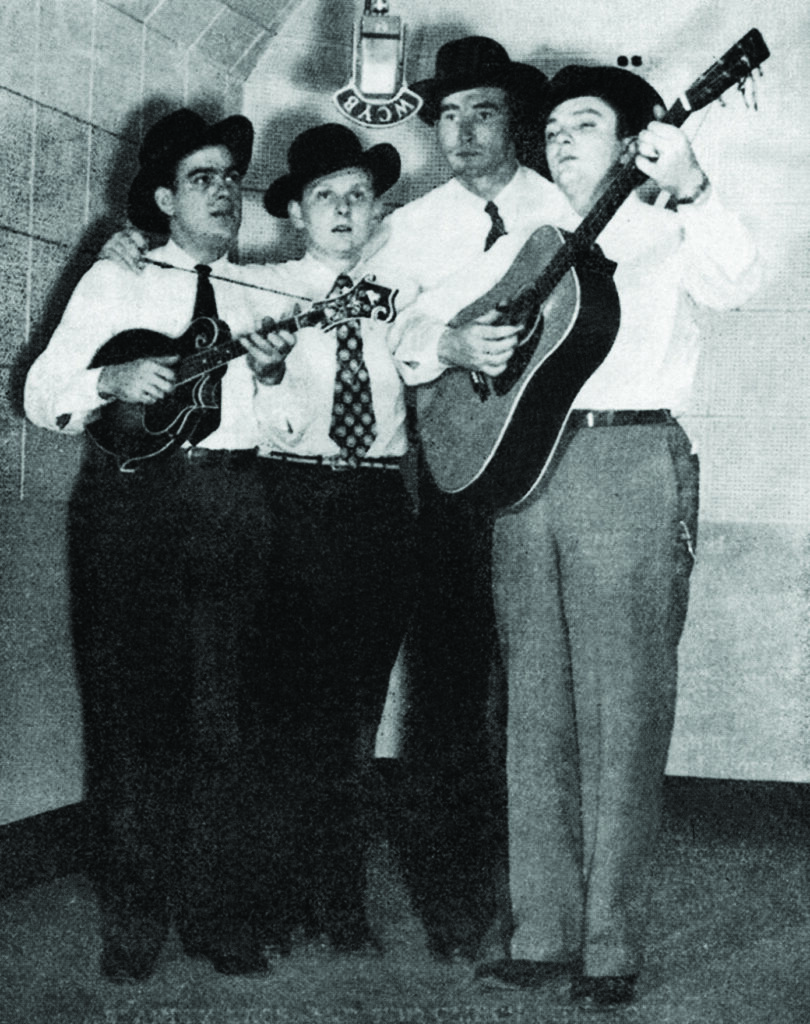
While we certainly can’t address all of the 92 artists and bands featured in this box set, some of the names that will be most familiar to bluegrass fans are The Stanley Brothers, Wilma Lee and Stoney Cooper, The Bailey Brothers, The Church Brothers, Jim Eanes, and Pee Wee Lambert. When asked about The Stanley Brothers’ involvement with Rich-R-Tone, Ted Olson said, “The Stanley Brothers recorded their first records on Rich-R-Tone. I can say that Carter and Ralph deeply respected James Hobart Stanton. They appreciated that Stanton wanted them to succeed even if it meant leaving Rich-R-Tone for another, bigger label, which ultimately happened. Stanton wanted to celebrate their music while they were emerging; then, pretty quickly, it was apparent that The Stanley Brothers were headed towards the big time, and Stanton gave them his blessing and said, ‘Good luck, I’m always here to help out when I can.’ Stanton was awarded later when they came back and recorded for him again in the 1950s after they had become nationally known.”
Another well-known act that got their start with Rich-R-Tone was Wilma Lee and Stoney Cooper. Olson said, “Wilma Lee and Stoney Cooper initially recorded for Rich-R-Tone, and they likewise expressed great affection for Stanton in their brief time recording for Rich-R-Tone. The story that comes down to us today was that Stanton was a distinctively supportive and encouraging record man. He was an advocate for the artists and their success. He would specifically help artists find larger platforms for their music, particularly those two acts I just mentioned. They both went on to much larger popularity. Stanton never wanted to stand in the way of their success. He was very conscious that he was a small record label owner, and he was realistic about his role in the life of the musicians whose music he recorded.”
In the late 1940s and early 1950s, Stanton also recorded The Sauceman Brothers (J.P. and Carl). Carl Sauceman (1922-2005) was featured in the August 1976 issue of Bluegrass Unlimited. The article was based on an interview conducted with Sauceman by Dick Spottswood and Ken Irwin in October of 1973. In that interview, Sauceman remembers that the first recording he and his brother did for Rich-R-Tone was a country record. Stanton wanted them to “try for an Eddy Arnold-style song.” After that recording did not sell, they later switched gears and moved to recording more of a bluegrass-style sound with “Pretty Polly” and “Little Birdie.” Regarding these songs (recorded in the fall of 1949), Sauceman said, “I went back to do some ‘corn’ as we call it.”
Recording the “corn” was a direct result of the success of The Stanley Brothers on Rich-R-Tone. Sauceman remembers, “About this time, Hobe [Stanton] started recording The Stanley Brothers, and they were hot! I know because I went on the road part-time selling records for Hobe, who also had the distributorship for Mercury, so I was a salesman for both labels. Every time I walked into a record store, and they found out I was selling Rich-R-Tone, they’d holler for me to bring them a load of Stanley Brothers records. Hobe would know that if I hadn’t been to a place for a week, that they’d be out of Stanley Brothers, so I’d take a carload with me, deliver them, and bring the money back to him. It was kind of embarrassing when they’d order 500 Stanley Brothers and maybe three of yours. Which may be why Hobe got the idea for us to record that ‘corn.’” Sauceman also spent time working as a field scout for Rich-R-Tone.
The Rich-R-Tone /Folk Star Story Package
As mentioned above, the presentation of this box set is extensive and provides everything that you might want to know about these recordings and these artists and bands. This is typical of Bear Family offerings. They do their best to not only provide the recorded music, but their box sets also provide everything that is known about the history of the music that is provided on the CDs. Olson said, “In addition to releasing the recordings of yesteryear, Bear Family is proud of their interpretation effort. It is key for the success of the Bear Family box set. That is the signature of their brand’s approach. As someone who researches music history, that is something that I find to be admirable. They have had a commitment to doing this sort of thing for 50 years now.”
I agree with Mr. Olson. In the past, whenever I have purchased a Bear Family box set, I’m always torn between placing it on the bookshelf with all of my music history books or on the CD shelf with all of my music CDs. I don’t want to break up the set by putting the book on the bookshelf and CDs on the CD shelf, so it is a quandary. Plus, with this one, the large-format book is so gorgeous I want to lay it out on the coffee table (I don’t think it is a coincidence that Bear Family made the size of the book the same size as a 12-inch record). I will solve these storage issues at some point. But for now, the box set is laying on my desk so I can continue to flip through the book as I enjoy the 317 cuts of classic bluegrass and country music from the late 1940s and early 1950s. Without this effort from Olson, Ringressi, and Bear Family, these incredible recordings could have only been found in the hands of various record collectors. Thanks to Bear Family, this old music lives on and is, once again, available to the public. Thanks to all involved in bringing this wonderful music back to life!