The Music and Times of Jim Lunsford
Part 1: Jim Lunsford: Growing music from the mountains and beyond
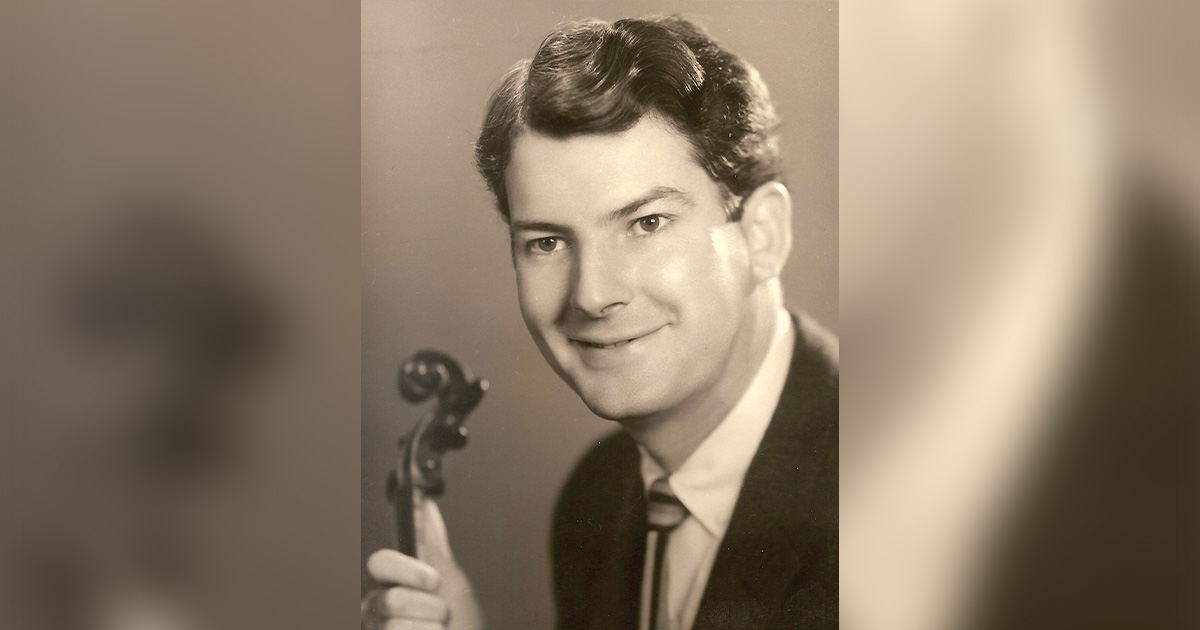
At a Charlotte, North Carolina, studio in April 1954, 26-year-old Jimmy Lunsford cranked up wild fiddle solos on “Dixie Breakdown,” a tune he’d written with banjo innovator Don Reno. Lunsford’s presence on Don Reno & Red Smiley releases was just one of the creative gifts that he gave the world of bluegrass, country music, folk, and pop. A proud Western North Carolinian and the nephew of folklorist/musician Bascom Lamar Lunsford, James Camille Lunsford made music that married deep tradition with a constant drive toward new sounds.
During a career that lasted from the 1940s until his untimely death in 1978, Jim Lunsford excelled as an all-around artist. He played far-reaching fiddle, wrote striking songs, created visual art, and led a remarkable family act in the last decade of his life. “Jim mixed his musical influences of folk, jazz, blues, western swing, country, and bluegrass to make his own thing,” his daughter Tomi Lunsford said.
Only months before Lunsford died, record executive Mary Martin and producer John Simon, who worked with top acts from Bob Dylan to Janis Joplin, recorded the Lunsfords’ adventuresome music with the goal of a major label release.
Building a Name, Breaking Down ‘Dixie’
For now, let’s return for a minute to “Dixie Breakdown,” a Reno-Lunsford tune that dozens of acts would cut — from the Dillards to the Flying Emus — and countless others performed. Lunsford achieved the “wild fiddle” sounds on the track with the special tuning AEAC#, said North Carolina musician Mark Wingate, who noted that old-time versions of “Black Mountain Blues” also used this “calico” tuning. It’s akin to the sounds that Bill Monroe, fiddler Benny Martin, and other musicians were crafting with the use of nonstandard tunings. (More in Part Two)
Lunsford’s keen ear for other musicians’ work often found him breaking new ground in a wide range of styles. One of a special class of talented band members in the early years of bluegrass, he helped develop the style when it tended to offer hard traveling and slim rewards. In Lunsford’s case, a family story says such considerations meant that Jim passed up the opportunity to work with the founding father of Bluegrass. “He was going to play for Bill Monroe,” Frances Lunsford, Jim’s wife for 32 years, said in 2021. “And everybody had all the time talked about Bill Monroe never paid his musicians, so he didn’t take it.” (Monroe typically paid his Blue Grass Boys, but at wages that contributed to departures by Lester Flatt, Earl Scruggs, and others.)
As a sideman, Lunsford performed and recorded with major acts such as Reno & Smiley, Jim & Jesse, Don Gibson, Roy Acuff, and Marty Robbins. Acts who recorded his songs included the Country Gentlemen, Charley Pride, the Cox Family, Reno & Smiley, Ronnie Milsap, Hank Williams III, George Hamilton IV, and the Bluegrass Alliance.
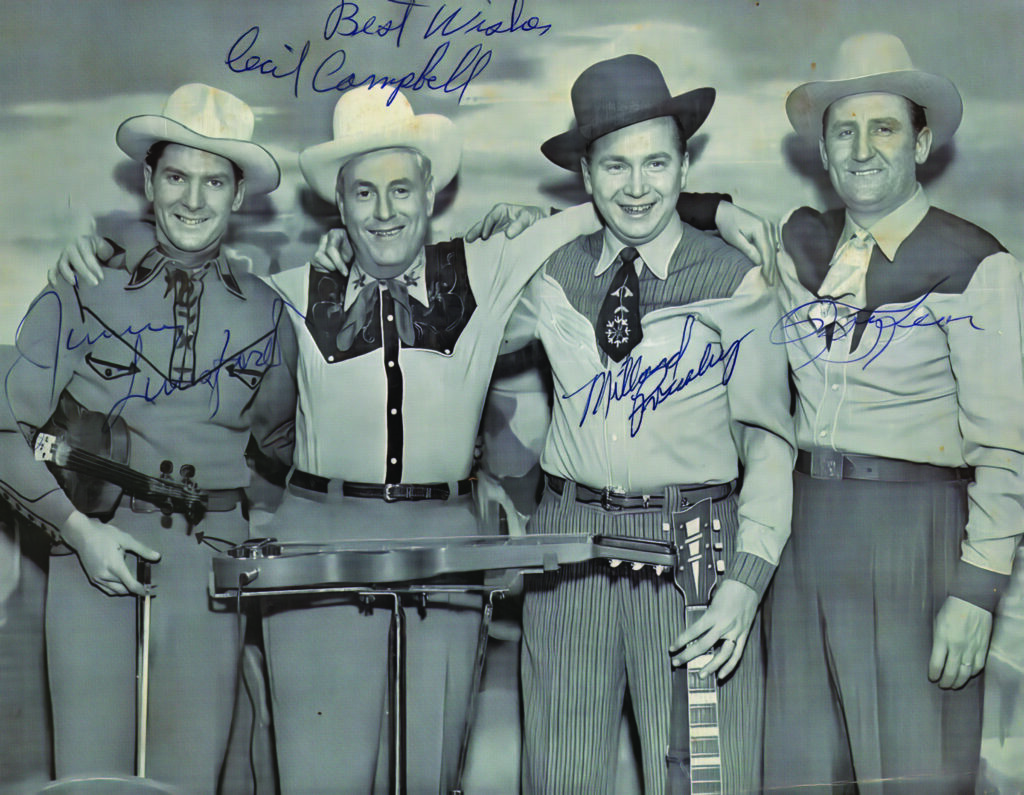
Lunsford’s fiddling stood out on records, countless radio shows, and even on network TV, where in 1958 he appeared on the Ed Sullivan Show along with his friend and banjo-picking pal Bobby Thompson. Their string-band quartet backed up a group of school-age cloggers on a broadcast that also presented the teen-idols Everly Brothers and actor Douglas Fairbanks Jr. (See Part Two).The rough-and-rambling country music landscape of the ‘40s through the ‘70s found Jim Lunsford fiddling with a succession of distinctive, creative artists.
‘I couldn’t Wait to Get to Myself’
“The fiddle of course is my favorite musical instrument,” Lunsford wrote in a memoir preserved by his family. “My daddy played the fiddle and his daddy taught him many of the old tunes. If there is any instrument that has a soul, it’s got to be the fiddle.”
Jim Lunsford was born on Oct. 12, 1927, near Waynesville in Haywood County, North Carolina. By the age of 8, he was learning from fiddlers he met, as well as those heard on Grand Ole Opry radio broadcasts from across the Blue Ridge Mountains, in Nashville, Tennessee. “When I heard a fiddler really getting with it, I couldn’t wait to get to myself and try the damnedest to play what I heard,” Lunsford said. “It’s hard to retain these fast furious notes in your head, so you knock your brains out trying to remember just how it went. And for me, I just played it the best I could with what I did retain.”
Jim Lunsford’s music had roots in the earliest years of country-string recording. Blackwell Lunsford, his father, not only played fiddle, but also sang along with brother Bascom Lamar Lunsford in August 1925 for Okeh Records sides “Fate of the Santa Barbara” and “Sherman Valley.” Producer and publisher Ralph S. Peer ran both the Asheville sessions and the 1927 Bristol Sessions, where the original Carter Family and Jimmie Rodgers first recorded.
A Young Player in Demand
By his mid-teens, Jimmy Lunsford was playing fiddle over the airwaves of Asheville stations WISE and WWNC. He and mandolinist Red Rector had a band called the Blue Ridge Mountain Boys. “I never had the chance to play in any organized band until I was probably 13 years old, with Dempsey Cothran, Jimmy Lunsford … and Snoops Wadell,” Rector recalled in a 1971 interview with Doug Green. “In those days we did a lot of Roy Acuff tunes.” In 1943, the band of schoolboys started a regular radio broadcast, each Saturday morning on Asheville’s WISE.
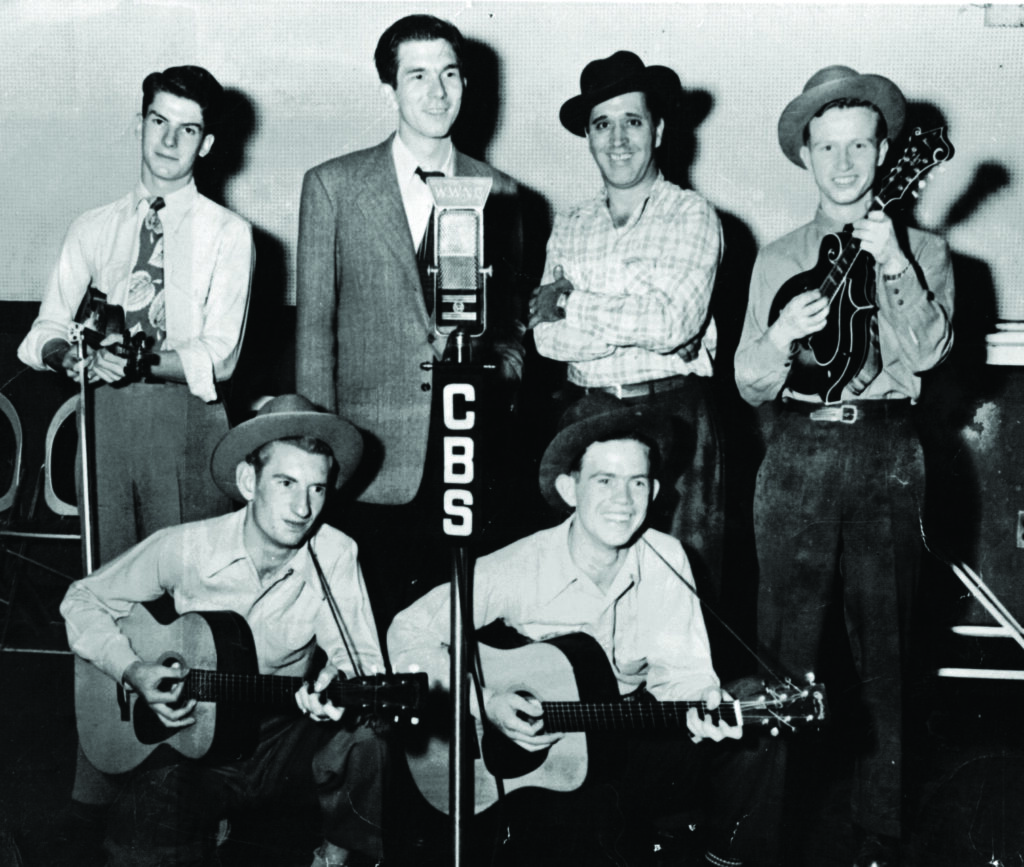
“Didn’t get paid! We would get up and ride the bus — of course, nobody had a car, wasn’t old enough to drive anyway—from West Asheville to Asheville on Saturday morning, carry our guitars under our arm, and run down to the radio station to do the program. And we’d rehearse all week for the program.” Among other advertised dates, the boys performed at the downtown Paramount Theater between showings of Standing Room Only with Fred MacMurray and Paulette Goddard. At 16, Lunsford was among musicians entertaining some 1,000 attendees at a 1944 rally that North Carolina Gov. Clyde Hoey held to encourage the nation’s World War II efforts. Lunsford “and his mountain boys and girls” also entertained both the public and the military at a USO club event. “A large attendance is expected,” the newspaper said. At 17, Jim led his Mountain Boys band at Asheville’s Mountain Dance and Folk Festival, an annual event organized by his Uncle Bascom.
Hearing Music from All Over
In these years, Lunsford played the sounds of his native mountains but also expanded his tastes. “When I got in town and started playing over the radio, I had access to a record player and got to hear a bit more different styles,” Lunsford said. “But I still didn’t have too many to go on, as a war was on and that cut down the records,” Lunsford soaked up the sounds of diverse, influential fiddlers including French jazzman Stephan Grappelli and Western-swing king Bob Wills with “his hot boys” such as Louis Tierney and Jesse Ashlock.“I went crazy trying to pick up all that hot stuff by ear, but I loved it and did a fairly good job of interpreting what I heard,” he said.
Additional influences included Midwestern fiddler Wiley Walker and partner Gene Sullivan; old-time fiddlers Gid Tanner, Fiddlin’ Arthur Smith, Steve Ledford, J.E. Mainer, and Marion Sumner; and regional favorites Fiddlin’ Bill Hensley and Marcus Martin.
While in his teens, Lunsford got to know budding musicians at radio station WWNC, where Earl Scruggs, 21, was playing with Lost John Miller and the Allied Kentuckians. That band was Scruggs’s last gig before elevating Bill Monroe’s sound on the Grand Ole Opry on December 8, 1945. During the same period, Lunsford took his fiddle along into military service, registering for the Army in Knoxville on Oct. 12, 1945, his 18th birthday.
‘In the Army Now,’ Starting a Big Family
Lunsford’s memoir describes his service at Camp Stoneman, California, about 40 miles northeast of San Francisco. Soldiers headed to the Pacific in World War II and the Korean War departed from the camp. “Me being a fiddle player, it didn’t take me too long to establish myself with all the buddies that picked, listened, or were charmed by country music,” Lunsford wrote. “We were a well-mixed group. All the homesick Southern boys identified with this kind of thing and the Midwestern boys, too. And many Eastern New Yorkers (and) New England buddies were attracted to it out of its unique novelty to what they had been used to.”
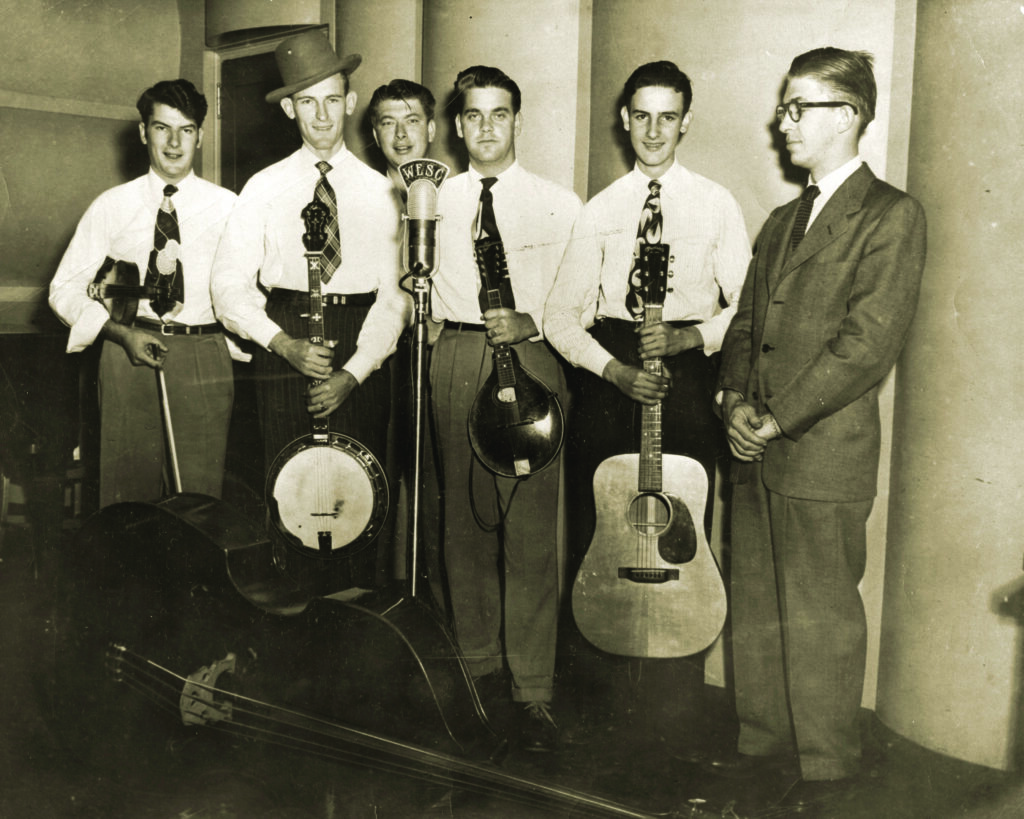
Lunsford remembered that soldiers from regions outside the South discovered country music’s appealing “rebellious flair,” contradicting what they had believed about its fans. “They all liked the shouting, hell-raising, don’t-give-a-damn way we had going when we got to riding out a long hoedown, swing, shit-kicking tune like ‘Orange Blossom Special,’ ‘Train Forty-Five,’ ‘Salty Dog’ and ‘San Antonia (sic) Rose,’” Lunsford said.
During basic training in Virginia in 1946, Jim Lunsford married Laura Frances Stroup, whom he met as an Asheville teen when she waited on him and friends at a Woolworth’s counter. Frances remained by Jim’s side until his untimely death from a heart attack in 1978. Their Catholic union produced thirteen children, 20 eventual grandchildren, and five great-grandchildren.Lunsford was discharged from service on Oct. 25, 1947. Back on Southeastern home ground, he worked as a backing musician at a long list of radio stations, Frances Lunsford recalled. “Back then, musicians were all the time going from one job to another,” she said. “Usually when you had a show on the radio back then, it was like you had to sign a contract for 13 weeks.”
Life as a country musician’s wife in the day seldom held much glamour, she said: “I never went to any of Jim’s show dates or anything, because I had kids back then. You didn’t have babysitters.” Frances remembered her parents’ refrain: “‘I just wish he had a job.’ They didn’t look at being a musician as a job.”
In 1950 Jim Lunsford joined the band of future country star Don Gibson, the Shelby North Carolina-born singer whose hits include “I Can’t Stop Loving You” and “Oh, Lonesome Me.” In another link between early bluegrass, country, and jazz , top Bill Monroe sideman Kenny Baker followed Lunsford in Gibson’s band a few years later, from 1953 to 1956. Like Lunsford and Baker, Gibson was a Django Rheinhardt devotee. During a 1968 BU interview with Alice (Gerrard) Foster, Baker called Gibson a “very good teacher” of his band members. “He don’t play, but he’s got enough know-how about him to where he can put his finger right on what he wants,” Baker said.
Working Life Before ‘Bluegrass’
In 1951 Lunsford took a job with the Western-tinged singer Tommy Sosebee, born 1923 in South Carolina. The gig earned him a mention in the Greenville (South Carolina) News as “James (Maugwah) Lunsford, fiddle man and a North Carolina boy.” The nickname was an apparent reference to Lunsford’s Cherokee lineage.
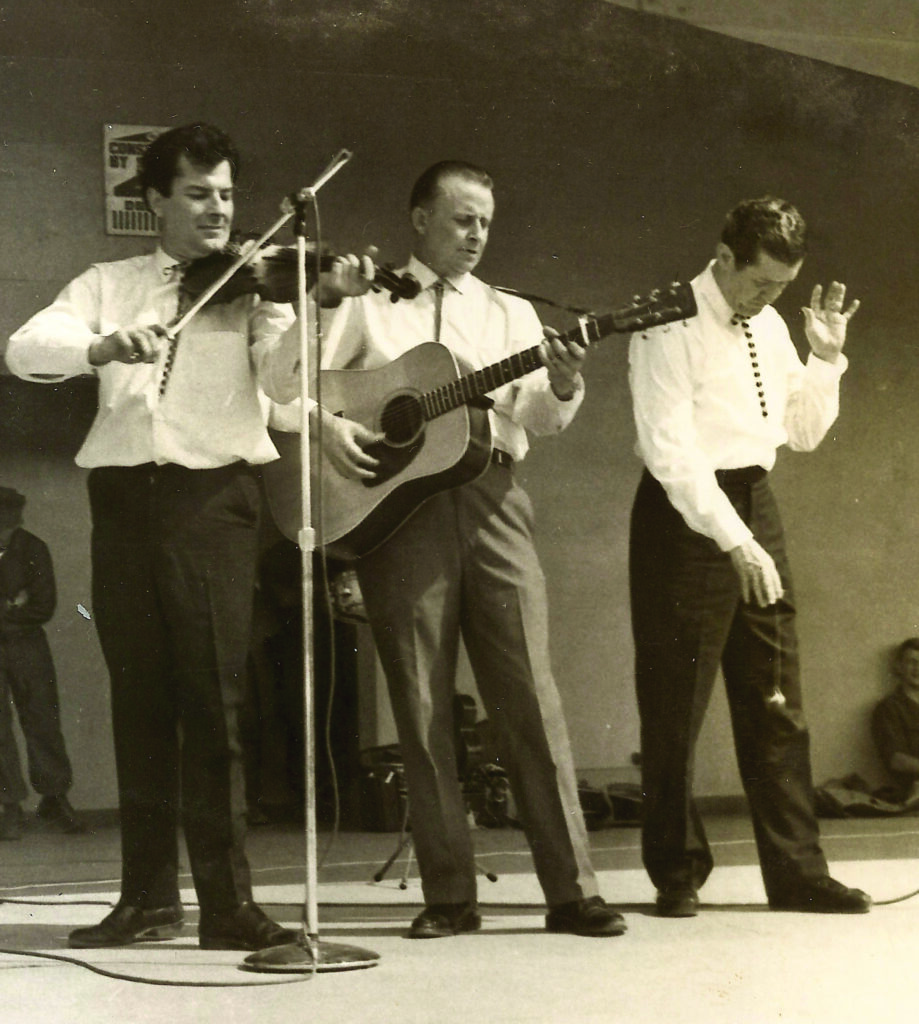
Sosebee hasn’t earned the same profile as some of Lunsford’s other bandleaders, but he’s remembered as a proto-rockabilly artist who joined the Grand Ole Opry in the mid-1950s. His 1952 Coral Records release “Love Me” includes fiddle playing that sounds like Lunsford’s characteristic double stops and vibrato. A picture posted with “Love Me” on YouTube shows a smiling Lunsford playing fiddle with Sosebee. Throughout these years and beyond, Frances Lunsford kept house and home for a growing family. In 2021, she spoke fondly when asked about life with Jim, although she remembered some frustration about his habit of getting a conversation going when home from the road. “I was glad he was gone,” she said. “I could get something done when he left, because he just wanted to talk all the time. He was oblivious as to what I had to do as a mother and keeping house. Sometimes I’d have to work in the kitchen or get something done, but he wasn’t even aware of that.”
As he raised a family with Frances, Jim Lunsford also grew as a musician, blending jazz and pop with his vast store of fiddle music. That resource would find him rosining up with such talents as John Hartford, Benny Martin, and Roy Acuff. And he would join two of the most accomplished “second-generation” bluegrass bands, those of Reno & Smiley and Jim & Jesse.
Next Month:
Jim Lunsford, Part Two: Early bluegrass fiddling, Music Row songwriting, and a creative family band