
Skip to content
Register |
Lost your password?
Subscribe
logo
  • Magazine
  • The Tradition
  • The Artists
  • The Sound
  • The Venue
  • Reviews
  • Podcasts
  • Lessons
  • Jam Tracks
  • The Archives
  • Log in to Your Account
  • Contact
  • Subscribe
  • Search
  • Login
  • Contact
Search
  • Magazine
    • Current Issue
    • Past Issues
    • Festival Guide
    • Talent Directory
    • Workshops/Camps
    • Our History
    • Staff
    • Advertise
    • Contact
  • The Tradition
  • The Artists
  • The Sound
  • The Venue
  • Reviews
  • Podcasts
  • Lessons
  • Jam Track
  • The Archives

Home > Articles > The Tradition > The Man to See if You Wanted to Make a Record

Dickson-Feature

The Man to See if You Wanted to Make a Record

Jon Hartley Fox|Posted on October 1, 2025|The Tradition|1 Comment
FacebookTweetPrint

Bluegrass has never been known as a producer’s music. The bands get famous; the producers of their albums don’t. Unlike their counterparts in such genres as rock, soul, hip-hop, or country, bluegrass record producers have mostly toiled in obscurity, their contributions known only to a few. Jim Dickson deserves better than that, deserves to be acclaimed for his landmark productions that helped shape bluegrass in the 1960s and 1970s. 

Between 1963 and 1976, Jim Dickson produced ten albums that are today rightly considered bluegrass classics. He produced the first three records by the Dillards, the first four albums by Country Gazette, Doug Dillard’s first solo album, the only album by the Hillmen, and the soundtrack to the movie Deliverance. When it comes to recorded music, Jim Dickson put Southern California bluegrass on the national map. 

James Thomas Buchanan Dickson was born January 7, 1931, in Los Angeles. His father, a U.S. Navy officer, introduced him to sailing, and Dickson was an avid sailor for life. He entered the U.S Army in the late 1940s and served a couple of years with the occupation forces in Japan under General Douglas MacArthur. 
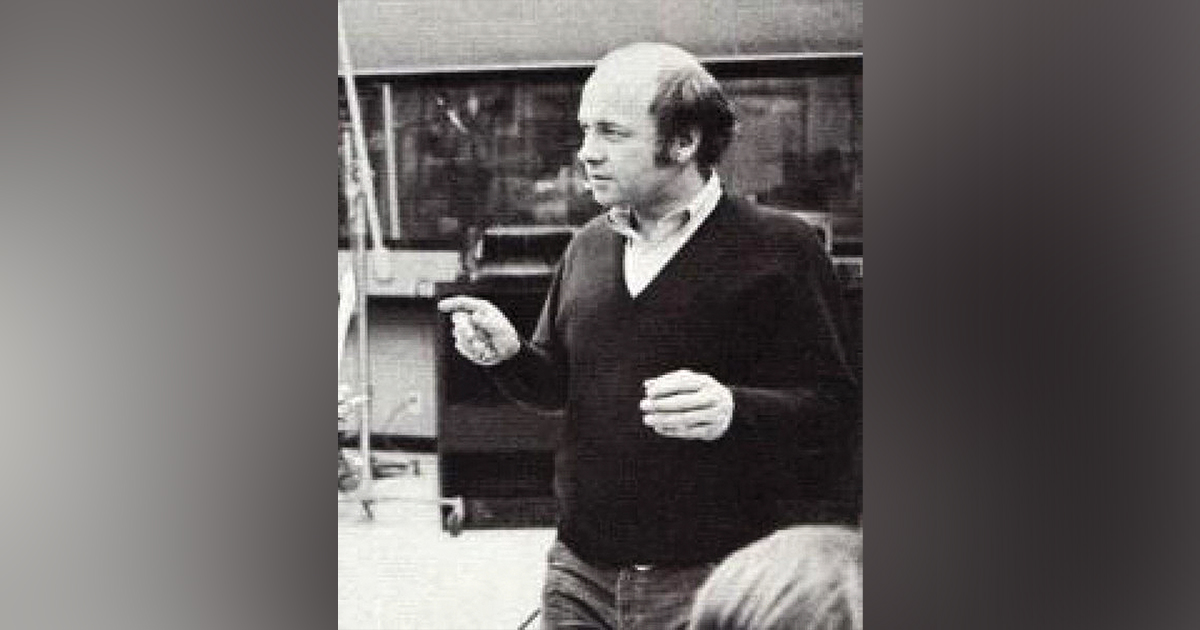
After returning stateside, Dickson dabbled in a number of ventures in the early 1950s, from riding with motorcycle gangs to working in sales to racing sailboats. He was actually pretty successful at the latter, twice winning in his class at the Transpacific Yacht Race.

Dickson was working in the film industry as a sound engineer and assistant cameraman when he first encountered the eccentric entertainer Lord Buckley. Buckley was a hipster stand-up comedian whose improbable stage persona combined the trappings and bearing of English aristocracy, beatnik sensibility, rhyming jive talk, scat singing, absurd recountings of historical events or stories, stoned philosophy, sound effects, and more.

Convinced that Buckley deserved wider exposure, Dickson decided to record him. His first production was a recording of Lord Buckley titled Euphoria for his own label, Vaya, in 1955; Euphoria Volume II followed the next year. Dickson licensed (or sold) another Lord Buckley album, Hipsters, Flipsters and Finger Poppin’ Daddies, Knock Me Your Lobes, to RCA Victor, and just like that, he was in the record business.

Dickson continued producing albums on Buckley and produced albums by jazz bassist Red Mitchell for World Pacific and the Modern Folk Quartet for Warner Bros. In 1962, Dickson began producing bluegrass records for Elektra. The first album was Dian and the Greenbriar Boys, featuring a Los Angeles country singer named Dian James with backing by the New York City bluegrass band, which consisted of John Herald (guitar), Ralph Rinzler (mandolin), and Bob Yellin (banjo).

Working as a free-lance producer, Dickson produced two albums for World Pacific in 1963, 12 String Guitar! and 12 String Guitar! Vol 2, by the Folkswingers (actually Glen Campbell on 12-string guitar with backing by Dean Webb and Doug and Rodney Dillard). According to Dickson’s obituary in Billboard, 12 String Guitar! “sold enough to save the label from bankruptcy.” Dick Bock, the grateful head of World Pacific, gave Dickson unlimited, free access to the company’s recording studio after hours.

“I had the key to World Pacific Studios,” explained Dickson, “a few blocks away from L.A.’s leading folk club at the time, the Troubadour. Late at night, I would make tapes of the folk singers who were on the scene. I was primarily looking for talent for Jac Holzman of Elektra Records, then essentially a folk label.”

His usual modus operandi in the early days was to hang out at the music clubs in Los Angeles, especially the Troubadour, checking out young talent. When he found someone with talent and potential that he thought he could work with, he’d take them into the World Pacific studio and start rehearsing and working up material. The first young singer he worked with in this way was future-Byrd David Crosby. He couldn’t get a record deal for Crosby, but Dickson now had his process in place.

Dickson realized that the field of music publishing was an often-overlooked revenue stream, which he thought could be the perfect complement to his recording endeavors. He formed a partnership in 1963 with a business manager named Eddie Tickner. “I was doing business management,” said Tickner, “working with Odetta [whom Dickson would later produce]. Jim was producing records, and since I was experienced in accounts, he asked me if I’d like to go into publishing. So, we each put up $100 and formed Tickson Music.”

Dickson’s next client was a bluegrass band that had just arrived in town. The Dillards—Rodney Dillard (guitar, lead vocals), Doug Dillard (banjo), Dean Webb (mandolin), and Mitch Jayne (bass)—came roaring out of Missouri in 1962 and took the Los Angeles folk and bluegrass scenes by storm. 

On their first night in town, the band went to the Ash Grove, where the Greenbriar Boys were appearing. The Dillards met Ralph Rinzler, the Greenbriar Boys mandolinist, in the lobby, and they were subsequently called up on stage and given a chance to play. Jim Dickson heard them that night; the Dillards had a recording contract with Elektra the next day.

The Dillards had it pretty well figured out as a band, so they didn’t require the extensive teaching and woodshedding Dickson provided for some bands. In fact, the Dillards were, in Mitch Jayne’s memorable comment, “slick as deer guts on a doorknob.” Led by Doug Dillard’s incredibly fast Scruggs-style banjo playing, the Dillards would help usher in the modern era of bluegrass in the 1960s. Dickson produced the band’s first three albums, which firmly established the Dillards as a major force in the music. 

Banjo players Eric Weissberg and Marshall Brickman were veterans of the Sunday afternoon bluegrass jams in Washington Square Park in New York City’s Greenwich Village. Both had played in a popular folk group called the Tarriers, and Weissberg was a founding member of the Greenbriar Boys. It’s unclear how and when they linked up with Dickson, but there they were at World Pacific in 1963, recording some of the earliest examples of a picking style that would come to be called melodic banjo. 

The Hillmen—Vern Gosdin (guitar and lead vocals), Don Parmley (banjo and baritone vocals), Rex Gosdin (bass and tenor vocals), and Chris Hillman (mandolin)—had been working as the Golden State Boys until a band founder reclaimed the name. Dickson suggested the Hillmen name, not because of new member Chis Hillman, but because he thought the name sounded folkier and therefore more appealing to the young set. Dickson had met the band at the Troubadour and worked with them for months in the studio. 

“I’d been taping [the Hillmen] for over a year at World Pacific,” said Dickson. “I’d recorded 16-18 sides with [the band], taping over and over until we’d built an entire album with choices. It was aimed at Elektra Records, but they turned it down.” It was finally released in 1969 by a short-lived Los Angeles label named Together Records.

After leaving the Dillards in 1968, banjo picker Doug Dillard joined the Byrds for a European tour, playing electric banjo on the country songs the Byrds were currently recording for their Sweetheart of the Rodeo album. When he returned, he joined forces with former-Byrd Gene Clark in a band called Dillard & Clark (aka the Dillard & Clark Expedition). They recorded two seminal country-rock records for A&M, The Fantastic Expedition of Dillard & Clark and Through the Morning, Through the Night. For my money, The Fantastic Expedition of Dillard & Clark is the finest country-rock album ever recorded. 

Country Gazette was the most progressive of the bluegrass bands that Dickson recorded. The band was formed in 1971 by fiddler Byron Berline and bass player Roger Bush. They were soon joined by guitarist Kenny Wertz and banjo player Alan Munde. All four had solid credentials: Berline with Bill Monroe, Munde with Jimmy Martin, Bush with the Kentucky Colonels, and Wertz with the Scottsville Squirrel Barkers. 

Dickson produced the first four albums by Country Gazette, beginning in 1972 with A Traitor in Our Midst. The band stood out from the pack in two notable areas: material and vocals. Ranging outside bluegrass, the Gazette covered songs by Elton John, Don McLean, Waylon Jennings, Gram Parsons, Don Gibson, the Louvin Brothers, and Crosby, Stills, and Nash. Vocally, Country Gazette mostly avoided the high, lonesome road, with lush trio harmonies that owed more to California country-rock than to traditional bluegrass.

Dickson also did some work in the studio with Clarence and Roland White in 1964, not long after the Kentucky Colonels recorded the landmark album Appalachian Swing. It’s unclear what they planned to do with the 17 instrumentals they recorded. Most of the cuts are solos by Clarence; the rest are duets with Roland. 

While there’s plenty of fine picking here—check out Roland’s wild cross-tuned mandolin work—the recordings don’t sound complete to me, as if maybe the project was abandoned. The recordings were finally released in 2006 on the Rural Rhythm/Sierra Records CD, Flatpick, augmented by a second CD of guitar duets by Clarence White and Roger Bush from 1970.

As a producer, Dickson felt that the key to making great records was starting with great songs. He always encouraged the bands he worked with to expand their horizons with regard to repertoire. Chris Hillman recounted in a recent phone interview that Dickson once confronted the Hillmen, asking if they just wanted to be another bluegrass band that played songs by Bill Monroe and Flatt and Scruggs, or if they wanted to be something more. 

“He said to us, ‘There are a million great songs out there,’” recalled Hillman. “He introduced us to so much good music. Bob Dylan and Woody Guthrie, for two examples. Dickson drilled into our heads—the greatest advice we ever got—when he said, ‘Go for substance in the songs and go for depth. You want to make records you can listen to in forty years that you will be proud to listen to.’ He was right.”

A big Bob Dylan fan, Dickson was one of the first producers to recognize the commercial potential of covering Dylan’s songs. Dickson introduced Dylan to the bluegrass world by encouraging the Hillmen to cut two Dylan songs, “When the Ship Comes In” and “Fare Thee Well,” and the Dillards to cut “Walkin’ Down the Line.”

Jim Dickson’s ten classic bluegrass albums, in chronological order of recording:

1. Back Porch Bluegrass, the Dillards (Elektra, 1963) 

One of the all-time great debut albums in bluegrass, Back Porch Bluegrass introduced the Dillards to the world and contributed several great songs and tunes to the bluegrass repertoire. These included three outstanding banjo tunes by Doug Dillard—“Banjo in the Hollow,” “Hickory Hollow,” and “Doug’s Tune”—and two original songs that have become modern standards, “Dooley” (written by Mitch Jayne and Rodney Dillard) and “Old Home Place” (Jayne and Dean Webb).

2. New Dimensions in Banjo & Bluegrass, Eric Weissberg and Marshall Brickman (Elektra, 1963)

Dickson paired Eric Weissberg (banjo, mandolin) and Marshall Brickman (banjo, guitar) in the studio with guitarist Clarence White, fiddler Gordon Terry, and bass player Jimmy Bond for a set of 18 fiery, mostly traditional instrumentals. In 1972, the album was reissued as the soundtrack to the hit film Deliverance, with “No Title Yet Blues” removed and “Dueling Banjos,” performed by Weissberg and guitarist Steve Mandel, added. A superb introduction to instrumental bluegrass.

3. The Hillmen, recorded 1963-64, (Together, 1969)

After Dickson’s extensive World Pacific coaching sessions, the Hillmen emerged with a confident, innovative debut showcasing the band’s superb trio vocals, Parmley’s powerful banjo work, and distinctive, outside-the-box material, including songs by Bob Dylan and Woody Guthrie. Vern and Rex contributed two original songs, both of which have become standards, “Goin’ Up” and “Roll On, Muddy River,” and Parmley and Hillman burn through a hip, progressive arrangement of Bill Monroe’s “Wheel Hoss.”

4. Live!!!! Almost!!!!, The Dillards (Elektra, 1964) 

Dickson recorded the Dillards live at a concert for this one and wisely included Mitch Jayne’s emcee work. Jayne was the funniest man in bluegrass, and his comedy routines and song introductions are priceless, still funny after sixty years.  Doug Dillard’s virtuosity on the banjo is still stunning, on tunes like “Sinkin’ Creek,” “Dixie Breakdown,” and “Buckin’ Mule.” “There Is A Time” foreshadows the progressive ideas the band would pursue in a few years.

5. Pickin’ and Fiddlin’, The Dillards (Elektra, 1965)

On the band’s third album, the Dillards turned the spotlight over to a special guest, the brilliant young fiddler Byron Berline. Recorded, in part, as a reaction to criticism from the folk music establishment that their first album wasn’t “authentic” enough, this all-instrumental set of mostly traditional fiddle tunes established the band’s bona fides in that regard. This was the first all-instrumental album of fiddle music in bluegrass history. Highlights include “Hamilton Breakdown” and “Sally Johnson.”

6. The Banjo Album, Doug Dillard (Together, 1969)

Doug Dillard’s first solo album was a full-on experimental, ultra-progressive effort with old friends John Hartford (fiddle), Bernie Leadon (guitar), Don Beck (Dobro), and Gene Clark (harmonica), augmented by a jazz rhythm section of Red Mitchell (bass) and Milt Holland (percussion). The all-instrumental album includes a pair of Dillard originals, “With Care from Someone” and “Runaway Country,” as well as ultra-modern takes of some traditional tunes and classics from Eddie Adcock, Ralph Stanley, and Earl Scruggs. 

7. A Traitor in Our Midst!, Country Gazette (United Artists, 1972)

With a cover depicting the members of the band as Mexican banditos that today could be described most charitably as “campy,” the band’s recording debut acknowledges its southern California contemporaries, covering songs by Gene Clark, the Gosdin Brothers, the Kentucky Colonels, and Herb Pedersen, who contributed vocals on three cuts on the album. Berline and Munde tear it up on “Lost Indian,” “Hot Burrito Breakdown,” and “Aggravation.” Dobro player Skip Conover also guests. 

8. Don’t Give Up Your Day Job, Country Gazette (United Artists, 1973)

The most consistent and fully realized of the early Country Gazette albums, this one includes rock-solid traditional picking from Berline and Munde (“Deputy Dalton” and “Down the Road”); innovative material from the likes of Elton John and Crosby, Stills and Nash; smooth vocals; and a guest appearance on five cuts by Clarence White (including two on Dobro!). Contains the definitive recording of “Huckleberry Hornpipe,” with Berline, Munde, and Clarence White all in top form. 

9. Live, Country Gazette (Transatlantic, 1974) 

Recorded at an appearance at McCabe’s Guitar Shop in Santa Monica, CA, in November 1974. Dobro player Skip Conover sits in for a few, and new member Roland White (he replaced Wertz) shines on mandolin and guitar; his sparkling lead playing on “Laughing Guitar” just might remind you of someone. Country Gazette had parted ways with United Artists after two albums, so this highly enjoyable set was released by the British label Transatlantic. 

10. Out to Lunch, Country Gazette (Flying Fish, 1976)

Thanks to its association with the Flying Burrito Brothers, Country Gazette brought many new fans to bluegrass, in part because of their material, which here includes songs by Gram Parsons, Waylon Jennings, and California country singers Wynn Stewart and Tommy Collins. For the band’s Flying Fish debut, founding member Byron Berline had been replaced by Dave Ferguson (he’s credited as a guest on the album), and Kenny Wertz had returned on guitar.

Outside of bluegrass, Dickson produced some excellent country-rock albums, including Gene Clark with the Gosdin Brothers, Morning Sky by Chris Hillman, Sounds of Goodbye by the Gosdin Brothers, The Flying Burrito Brothers, and several albums by folk artists such as Bob Gibson, Hamilton Camp, Odetta, and the Sidewalk Swingers.

Dickson was most famous for his work with the Byrds. Chris Hillman called him “our Brian Epstein,” and he was that, and more. Dickson put the band together, rehearsed them endlessly, helped them pick material, recorded countless demos, managed them, and got the band a contract with a major record label, Columbia. 

Though Columbia allowed only staff producers to be officially credited, Dickson helped produce the first four Byrds albums—Mr. Tambourine Man, Turn! Turn! Turn!, Fifth Dimension and Younger Than Yesterday—and returned a few years later to produce Untitled, which contains an abundance of mind-blowing electric guitar work by Clarence White.

Dickson’s relations with the bluegrass bands he worked with were apparently cordial, or at least not made public. Not so with the Byrds. Dickson and David Crosby often butted heads and once or twice came to actual blows in the studio. 

Of one such incident, after it was reported that Dickson had Crosby on the studio floor and was choking him, Dickson begged to differ. “It probably looked that way,” Dickson explained. “I wasn’t choking him, though; I had him by the shoulders. Crosby had just cut the last track on the album and announced he wasn’t going to sing on it. He was leaving…I sat on his chest and told him, ‘You’re going to stay in this room until you do the vocal.’” He did the vocal.

Despite their differences, Crosby had a perceptive understanding of Dickson’s importance to the Byrds. “He was the father figure to us,” said Crosby. “He did everything he could to keep that band together and to keep us working with each other. He was a practical man, and he was a lot older than any of us, and he knew how to make it work. He did exactly that, and it worked very well for all of us.” 

It worked pretty well for Dickson, too. He retired to Hawaii, where he lived the good life and raced sailboats competitively. Dickson spent his last years in Costa Mesa, CA, where he died on April 19, 2011. 

“When all is said and done,” said Jim Dickson, “there never was and never will be anything more important than getting the right song and the right performer together and achieving the best possible performance. Musicians are naturally eager to place their own songs on a record to receive writer’s royalties, but I always thought it was better to do somebody else’s marvelous song than to do something of your own that might not be as strong.” 

FacebookTweetPrint
Share this article
Facebook
X (Twitter)
Linkedin

1 Comment

  1. WILLIAM FORREST on November 12, 2025 at 10:14 am

    I don’t think these tracks were, actually, recorded live at McCabe’s. Listen, the audience only shows up at the end of every song. A very polite applause. No spirit. There may have been a live recording at McCabe’s, but I think the tracks on the CD were re-recorded in the studio.

    Reply

Leave a Comment Cancel Reply


This site uses Akismet to reduce spam. Learn how your comment data is processed.

October 2025

Flipbook

logo
A Publication of the Bluegrass Music Hall of Fame & Museum / Owensboro, KY
  • Magazine
  • The Tradition
  • The Artists
  • The Sound
  • The Venue
  • Reviews
  • Survey
  • New Releases
  • Online
  • Directories
  • Archives
  • About
  • Our History
  • Staff
  • Advertise
  • Contact
  • Subscriptions
Connect With Us
Facebook
Instagram
Twitter
YouTube
bluegrasshalloffame
black-box-logo
Subscribe
Give as a Gift
Send a Story Idea

Copyright © 2026 Black Box Media Group. All Rights Reserved. Privacy Policy
Website by Tanner+West

Subscribe For Full Access

Digital Magazines are available to paid subscribers only. Subscribe now or log in for access.