The Evolution of Jamgrass
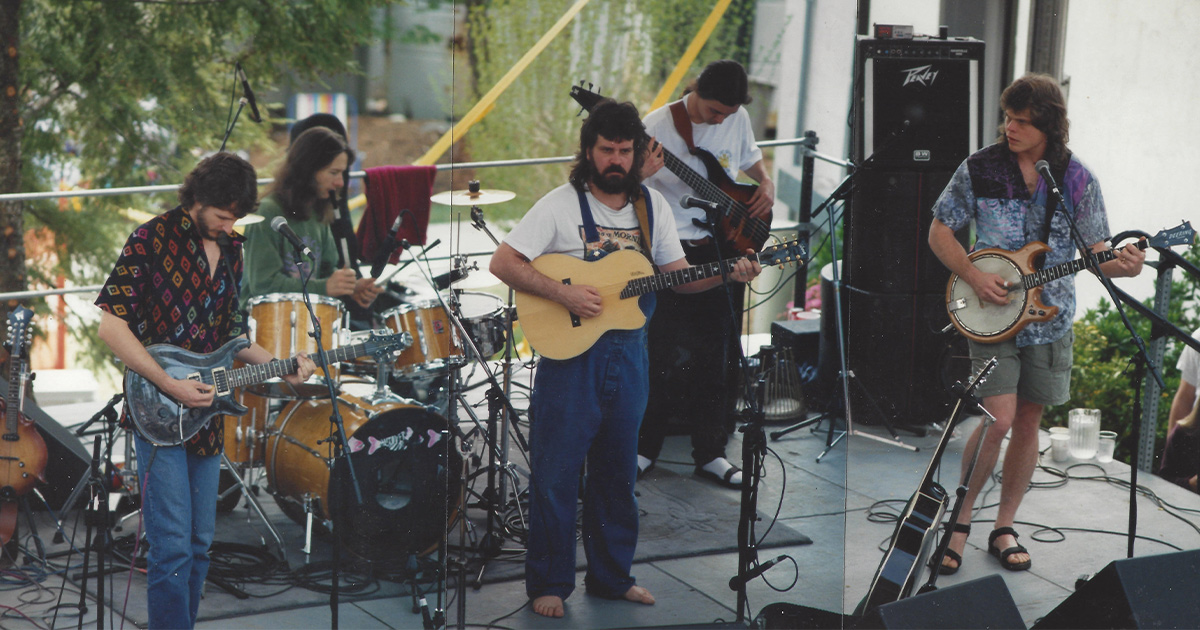
On June 22, 1989, at the Roma in Telluride, Colorado, during the annual Telluride Bluegrass Festival, the seeds of what would become the modern jamgrass scene were first planted. On stage was Vince Herman’s Cajun jug band, the Salmon Heads. Joining them were a couple of friends from the Left Hand String Band, Drew Emmitt on mandolin and Glenn Keefe on bass. They were also joined by a banjo-picker from Virginia, Mark Vann, who Emmitt had met earlier in the day and invited to play with them at Roma that night. For Emmitt and Herman, it was simply the continuation of a friendship and musical partnership begun when Herman encountered Emmitt on his first night in Colorado four years prior. For Vann, it was the first time he played with Emmitt and Herman and the first time the “Big Three” of Leftover Salmon played together on stage. The music they made at the Roma was more akin to the progressive bluegrass style of bands like New Grass Revival, John Hartford, Hot Rize, and the Seldom Scene, but with everyone’s shared interest in traditional bluegrass, combined with Emmitt’s desire to play rock ‘n’ roll, Herman’s deep love for Cajun music, and Vann’s otherworldly picking, something special was launched that night.
Those seeds blossomed a few months later, on a chilly New Year’s Eve in 1989, in the small Colorado ski town of Crested Butte. The Salmon Heads had a gig booked, but not everyone in the band could make it. Herman struggled to find replacement players until Keefe suggested he and Emmitt play with the Salmon Heads. Since their energetic evening at the Roma, Emmitt and Keefe had played with the Salmon Heads a couple of times, but for this gig, they had something different planned. They would play under the name Leftover Salmon, a silly idea Herman had on the long drive from Boulder to Crested Butte when, in a moment of simplistic inspiration, he decided to combine the names of his and Emmitt’s bands, the Salmon Heads and Left Hand String Band. More importantly, washboard player Dave Dorian was going to play drums. “We said, ‘Let’s take bluegrass, crank it up, add drums, and that will be Leftover Salmon,” explains Emmitt. With the traditional style as their foundation and a progressive bluegrass intention in their soul, Salmon combined a heavy dose of rock ‘n’ roll, the influence of the Grateful Dead, and the burgeoning jam scene into an electrifying brand of bluegrass defying description. As if the bluegrass gods knew what was happening, in Oakland, California, the same night, Salmon’s musical predecessors, New Grass Revival, played their last show opening for the Grateful Dead.
Salmon was unsure what to call this new combustible, hybrid form of bluegrass played with electric instruments and drums. “The guys at the doors at these ski towns didn’t know what to say when people asked what kind of music we played,” says Herman, who knew calling it electric bluegrass did not cut it. “So, we came up with the phrase, ‘Polyethnic Cajun Slamgrass.’ That enabled us to include all the musical directions in our heads.” Eventually, this sound would come to be known as jamgrass, a rock-inspired take on traditional acoustic bluegrass incorporating the improvisational, anything goes live spirit of the Grateful Dead, as well as the inventive approach of their progressive bluegrass forefathers. For some hard-core bluegrass traditionalists, jamgrass is viewed as being played by less talented musicians with no understanding of the true values and traditions of bluegrass. To outsiders, it is often derided as being played by a bunch of long-haired, hippie stoners. Neither of which is true. Jamgrass is a word that stirs strong emotions among those who play it, those who listen to it, and those who do not understand it. Some dislike it because of the negative connotations they feel the word evokes. “I think it’s the ‘jam’ part that gets me,” explains Leftover Salmon bassist Greg Garrison. “While it’s definitely a useful term in relation to the loose improvisational nature of the music, it seems to be considered unserious by many, which isn’t the case.” While others accept it as a straightforward way to describe rock-adjacent bluegrass bands who get improvisational on stage. “Personally, I like the term,” says mandolinist Shawn Swain from the Kitchen Dwellers. “It describes what’s happening, and something that can get a negative reaction out of some folks can be very appealing to others.” Despite the dislike and hesitation for the term jamgrass, when pressed to come up with a better term to use, those asked struggle to come up with an alternative, leading to the idea perhaps we do not need a better term or description for this scene and sound, but need to better understand and more accurately define the term we already use.
With this new sound and an energetic live show, Salmon would find a place in the emerging jamband scene of the nineties. This scene included fellow misfit bands with differing styles and backgrounds, such as Phish, Widespread Panic, moe., Strangefolk, and the Aquarium Rescue Unit. These bands were united in their desire to break musical boundaries and the emphasis on their live shows. This developing jamband scene used the model of the Grateful Dead as their template, building their audience through relentless touring and ever-evolving live shows. They were not reliant on one hit to break them. Live shows were their preferred medium to reach fans. Instead of dictating what they felt the crowd should hear by focusing on studio albums, they changed the way their music was presented and focused on live shows, playing off the energy of the crowd, creating a new and special experience each night. This allowed fans to develop deep, personal connections with bands from the live experiences they shared and gave them a reason to attend multiple shows of the same band, as each night was new.
For many discovering bluegrass via the jamband scene, Leftover Salmon was exactly what they wanted their bluegrass to be, rowdy and loud, with a taste of the old-timey, delivered with a wink and a nod. Emmitt says, “We came from the bluegrass tradition, we weren’t just a bunch of rock guys playing bluegrass. We played bluegrass and rock. We felt we were carrying on the tradition but maybe bastardizing it some.” This bastardizing of the original bluegrass sound, while offensive to some of the more hardline traditionalists who enjoy their bluegrass unplugged and polite, was in line with the original spirit of Bill Monroe when he first created the sound now known as bluegrass. And that is the dirty little secret, while Monroe is held up as the standard against which all bluegrass is compared and any deviation is viewed with side-eye disgust by the most staunch, hardcore, bluegrass traditionalist, when Monroe was first creating the template for what would come to be recognized as bluegrass he, himself was breaking rules and going against established norms. “That’s the ultimate elephant in the room,” says Chris Pandolfi of the Infamous Stringdusters, who have emerged as leaders of the modern jamgrass scene, “and something that always comes up in the discussion of bluegrass and jamgrass. Monroe was an insane innovator, but bluegrass sticklers always point to that one year in 1946 with Lester Flatt, Earl Scruggs, and Monroe all playing the roles we know, but he had countless other bands with different instruments and styles, he was a total innovator.” Guitarist Larry Keel agrees, “Bill Monroe was the original alternative musician. He brought blues, panhandle swing, mountain music, and Irish music into what he did and made his music his own way, and that’s great. He formed his style. What people should take from that is that we all should form our own style and carve our own path. Look at the best mandolin players in bluegrass, does Sam Bush play exactly like Bill Monroe? No, but he honors him. Did David Grisman do it exactly like Monroe? No, he honors him.”
Despite its natural, strait-laced, buttoned-up, traditional tendencies, there has always been a subtle, rebellious, progressive element in bluegrass. This progressive element was built by bands who used bluegrass instrumentation and performance style as a foundation, but who did not always adhere to a traditional bluegrass sound. They applied bluegrass methodology to their musical repertoire, which frequently drew from contemporary rock music. That is the beauty of bluegrass. Despite the hesitation of some, what one musician creates can (and should) be different than what came before. Those who came before can be looked to for inspiration and guidance, but all music is best served when musicians create in their own unique way, pushing the sound in new, sonic directions. Music does not have to follow the same rules; it can find different avenues and paths to explore, but still exist under the larger tent of bluegrass. The music and ideals Monroe first laid down in the 1940s can serve as inspiration, but do not have to serve as unbreakable rules of instruction.
Leftover Salmon, while challenging the norms established before, were respectful of the tradition and paved a path for others to follow, incorporating those ideals. With their unique bluegrass-inspired blend, they were at the forefront of a new style and approach to traditional music and became the elder statesmen of jamgrass bands. They kicked down the door limiting possibilities, creating an anything goes atmosphere, a generation of younger bands, not raised solely on bluegrass, found appealing.
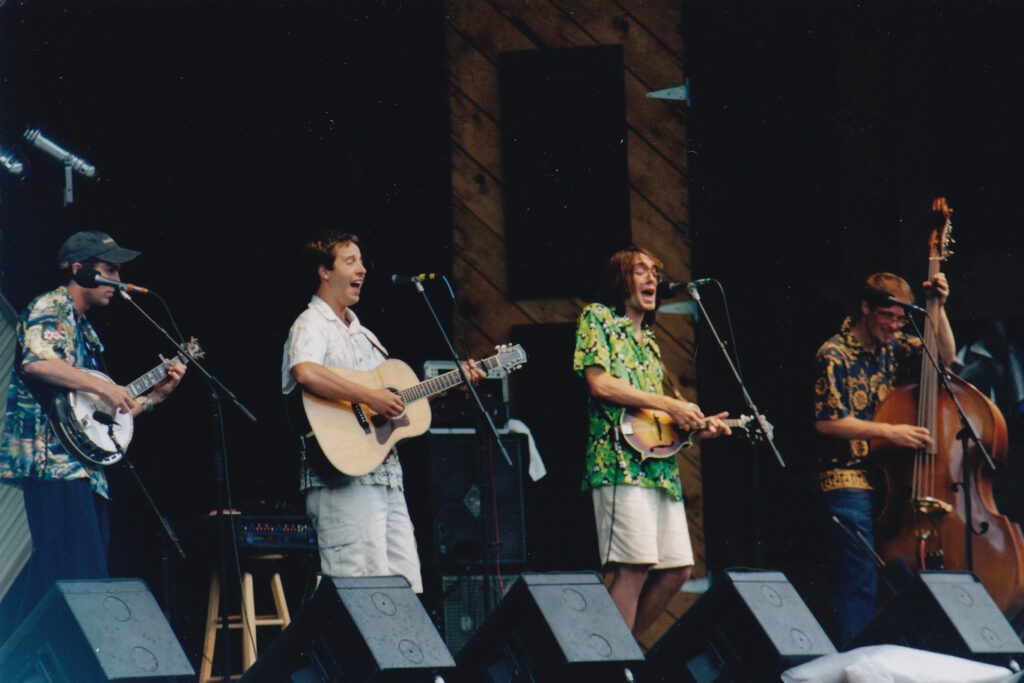
Yonder Mountain String Band first emerged from the mountains of Nederland, Colorado, in 1998, after being inspired by Leftover Salmon and the progressive bluegrass scene they found flourishing in the area. Yonder Mountain bassist Ben Kaufmann points out the influence Leftover Salmon exerted on the nascent jamgrass scene, “I can say quite confidently that without Leftover Salmon there would be no Yonder Mountain String Band … these guys were playing their music for years establishing Colorado and the Front Range as the epicenter for this experimental, kind of bluegrass, but kind of other things, rootsy whatever it is they do, Polyethnic Cajun slamgrass. They set it up. When we arrived on the scene, it was like shooting fish in a barrel. It was almost cheating. You still had to pay your dues and log your miles and survive Wyoming in the winter, but the real legwork had already been done. We show up and there are already people who were turned on and interested in what we were offering.” Kaufmann’s bandmate Adam Aijala agrees, “Salmon set a path that gave us the balls to be able to even say we are going to play this kind of music, and we are going to be playing in bars, so we better plug in and be loud. They were the ones that made us go, yeah, we can do this.” For Pandolfi, the importance of Leftover Salmon on the development and popularization of this new sound was vast. “Salmon’s (first album) Bridges to Bert, I hadn’t heard anything like that, and then they released Euphoria, which remains one of my favorite albums of all time. I didn’t know what I was hearing, but it served to open my perception of what was thought possible.”
A number of similarly like-minded, roots, and traditional-inspired bands sprouted up at this time in the jam scene, including the String Cheese Incident, Blueground Undergrass, the Recipe, Runaway Truck Ramp, and Railroad Earth. Fans conditioned to the live, improvisational environment of the jamband scene recognized a similar approach and sense of purpose in these groups. These early jamgrass bands were perceived as the odd string-band cousins of jambands who came of age in the nineties, as the descriptive term jamgrass had not yet been coined. They regularly shared the same bill and festival line-ups with bands whose sound was far ranging, diverse, and nowhere near bluegrass. It was not uncommon to go to a jamband festival and experience the southern-boogie of Widespread Panic, the experimental banjo-jazz of Bela Fleck, the free-flowing exploration of Phish, the prog-rock of moe., or the bluegrass-based soul of Leftover Salmon, all comfortably existing together.
As the jamband scene evolved throughout the nineties, smaller, more distinct subgenres began to emerge. They all carried the same characteristics that first powered the jam scene: relentless touring, encouraging fans to trade tapes of live shows, the desire to investigate a combination of seemingly misplaced musical styles, and nightly live improvisation onstage. Over the years, these bands fused a wide range of styles onto the original jamband template. An article in the Village Voice by Robin Rothman in October 2000 examined these various jamband offshoot scenes and is one of the earliest appearances of the term jamgrass in print, as it attempted to give the jamband bluegrass offshoot a name and identity. “For every genre, there’s a jamband out there: jazz, electronica, hip-hop, country, funk, and bluegrass,” wrote Rothman, “Bands like the String Cheese Incident and Leftover Salmon have managed to turn Jerry [Garcia]’s dual love into a sustainable sub-scene. Let’s call it jamgrass-not to be confused with similarly nonsensical terms like newgrass, progressive bluegrass, spacegrass, or even groovegrass (which Bootsy Collins swiped before my genius ass could come up with it).”
Among jamband fans, this inclusion of more traditional and roots-based music was a well-received, refreshing change and breath of musical fresh air, but among the more traditional bluegrass crowd, the jamgrass style was at times looked down upon due to the perceived lack of musical virtuosity. This perception is fundamentally false, as this new generation of pickers showcases a musical virtuosity, while not always rooted in tradition, is balanced by pure, unabashed musical skill.
Bluegrass has historically been a close-knit society, with the music passed down through familiar and insular groups. This new generation of jamgrass pickers has often grown up outside the traditional bonds of the genre. For many, they came into bluegrass through the back door, discovering the music through bands like the Grateful Dead, Old & In The Way, and bluegrass-inspired jambands like Leftover Salmon, the String Cheese Incident, and, to a lesser degree, Phish, who, while not rooted in bluegrass, has included bluegrass tunes in their sets. These bands set many fans on a winding path of discovery after hearing a bluegrass or traditional tune in one of their live shows.
The Grateful Dead’s role in helping introduce bluegrass and traditional music to a new generation of fans was massive. The Grateful Dead and all the Jerry Garcia acoustic offshoots reached a far larger audience than traditional bluegrass bands, and the importance and impact they had on introducing new fans, who may never have been exposed to traditional and bluegrass music, cannot be overstated. Many first discovered bluegrass when they heard the Grateful Dead play a traditional number like “Dark Hollow,” “Deep Elm Blues,” or “Sitting on top of the World,” or Garcia and David Grisman’s string-band supergroup Old & in the Way (which featured bluegrass heavyweights Vassar Clements on fiddle and Peter Rowan on guitar). Old & in the Way helped expose a massive audience to the traditional sound, planting the seeds of bluegrass for many. For years, their self-titled debut was one of the best-selling bluegrass albums of all time.
The use of the term jamgrass gained traction in 2001, when Yonder Mountain String Band, in one of their earliest press releases, wrote, “There is bluegrass, newgrass, slamgrass, and now jamgrass. Taking bluegrass where it has never gone before.” Yonder differed from their predecessors in the early jamgrass scene as they did not have drums. Whereas Leftover Salmon and the String Cheese Incident showed what was possible when you twist the traditional, paving the way for rock and jam-inspired bluegrass bands with drums, Yonder redefined what is possible for acoustic bands in an electrified rock ‘n’ roll world. Yonder showed how string bands can not only exist but excel in a rock environment without drums. When asked at the time about his band’s approach, Yonder’s Jeff Austin explained, “It’s jam-grass. It’s like bluegrass without drums, and the jam doesn’t need the drums to push the jam to keep the audience interested in 10- or 30- or 60-minute jams.”
Like Leftover Salmon, Yonder Mountain String Band are a band known for their improvisation and can just as easily slip into a lengthy, take on the Grateful Dead’s “Althea” or punk-icons the Buzzcocks “Ever Fallen In Love,” as they can blast through a perfect rendition of bluegrass classics like Jimmy Martin’s “Hit Parade of Love,” or Flatt & Scruggs “Big Spike Hammer.” It is this ability to exist in both the traditional and nontraditional that defines this new generation of jamgrass bands. While appealing to a crowd less familiar with bluegrass, these bands found that, despite the lack of familiarity, it was regularly the traditional bluegrass tunes that got the crowd going. “We found the older the song we played, the more old-time bluegrass it was, the rowdier the crowd got,” says Herman.
The usage of the term jamgrass exploded following Yonder Mountain String Band’s press release. Any band remotely rootsy, bluegrass leaning, or with a banjo was labeled jamgrass. (Now, the label jamgrass is often used to categorize any bluegrass band that does not wholly adhere to the understood and prescribed traditions of bluegrass, regardless of how much they may or may not actually jam or improvise on stage.) Despite the term jamgrass not having been used prior, it became retroactively applied to early progenitors of the genre like Leftover Salmon and String Cheese Incident. In August of 2001, there was even a one-day event called “Jam Grass” at Waterloo Village, in Stanhope, New Jersey, featuring Sam Bush, Jazz Mandolin Project, Lake Trout, Jazz is Dead, and Railroad Earth (who had only formed a few months prior).
The use of the word jamgrass to distinguish this modern style from the bluegrass that came before was much like what Monroe had done decades prior when he declared his music was not country, not hillbilly, but bluegrass. While it would have been easy to lump early jamgrass bands under the umbrella of “newgrass” (long used to describe any rock-inspired bluegrass band), this description was not wholly accurate, and following the lead of Leftover Salmon, who shattered musical boundaries, did not make sense for this next generation of bands. Jamgrass as a genre descriptor came to be accepted, begrudgingly by some musicians, and among music journalists who realized it was a convenient, shorthand description for bands of a similar ilk. In 2002, the Chicago Tribune attempted to clarify the meaning of this new musical genre descriptor, writing, “The term ‘jamgrass’ is of fairly recent vintage, describing the acoustic-based, bluegrass-influenced counterparts of the heavier electric jamband movement, with many bands of both categories filling the void left by the late Grateful Dead.”
Jamgrass, the word and style, were taken to a wider audience in 2002 when the traveling JamGrass festival played twenty-four shows from July to September. The acoustic-based lineup featured a mix of younger and established roots and bluegrass bands with Yonder Mountain String Band, David Grisman Quintet, Sam Bush Band, Peter Rowan, Tony Rice, John Cowan Band, Leo Kottke, Jorma Kaukonen, String Cheese Incident, and Dark Star Orchestra. The festival gave the term traction as it became a recognizable way to describe progressive acoustic-roots bands, much as the traveling H.O.R.D.E. (Horizons of Rock Developing Everywhere) Festival of the nineties helped unify the burgeoning jamband scene and give it identity. The JamGrass tour attempted to fill not only the void left by H.O.R.D.E., which held its last festival in 1998, but also to give voice to the new acoustic and roots-based bands who were coming to prominence at the time.
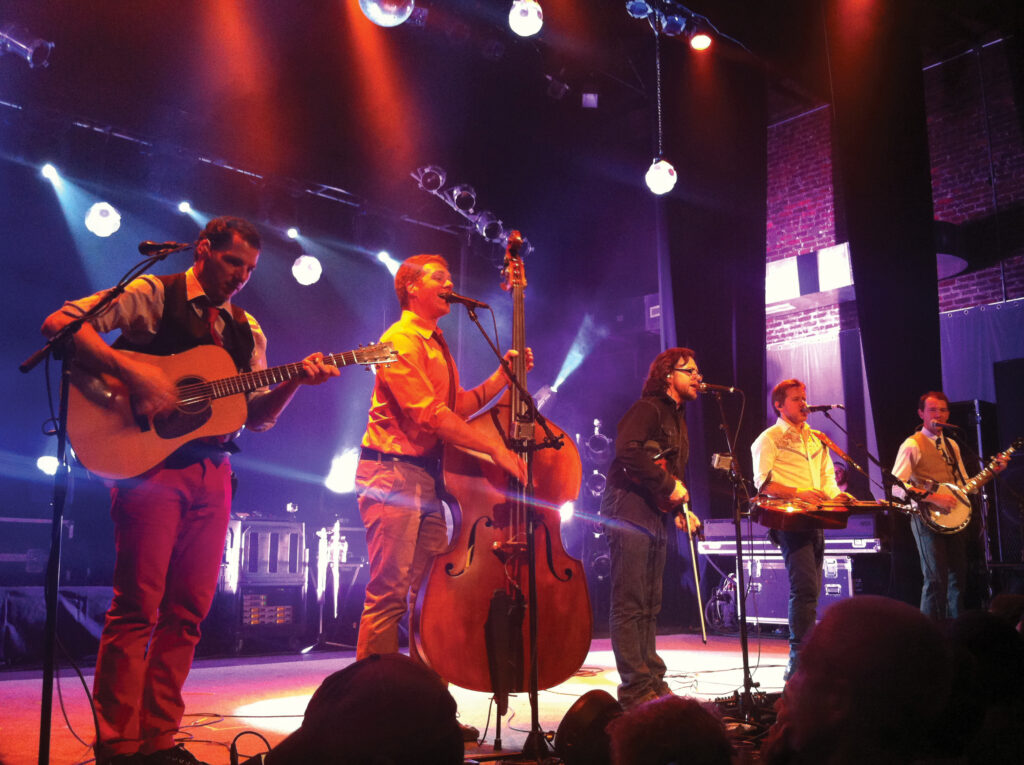
The festival also allowed the newly realized jamgrass scene to define its history and recognize its progressive forefathers like Peter Rowan, David Grisman, and Sam Bush, who were on the tour and long stretched the fabric of what was believed possible in bluegrass, providing inspiration for the first jamgrass bands. Grisman and Bush are two of the greatest influences on redefining and understanding the roots of modern bluegrass and the jamgrass sounds of today. Mandolin virtuoso Grisman first gained notoriety as one of the all-star members of Old & In the Way, formed in 1973 with Garcia. His impact and influence on acoustic improvisational music was forever cemented with the debut of the David Grisman Quintet in 1977 and continues today with his genre-bending music. Mandolinist Bush was one of the originators of the modern bluegrass sound with his band New Grass Revival. New Grass Revival was a revelatory shot in the arm to bluegrass when they burst onto the scene in 1971. They were a bunch of crack pickers who broke the traditional mold at the time, with their long hair, jeans, and T-shirts. Their psychedelic-influenced take on bluegrass fused everything from rock, jazz, funk, and blues. They shook off the shackles tethering the genre and changed the face of modern bluegrass. In addition to Grisman and New Grass Revival, fellow innovative progressive bluegrass musicians like John Hartford, the Dillards, David Bromberg, Hot Rize, Strength in Numbers, and Tony Rice, all tweaked the accepted norms of the genre as they blurred the lines between bluegrass and rock, setting the stage for a new generation of pickers. While still influenced by what Monroe first created, jamgrass bands instead looked to those progressive rebels for guidance and inspiration.
While the music this new generation of bands makes is recognizable as bluegrass by broad definition, as it relies on bluegrass instrumentation and incorporates recognizable traditional tunes, it does not always fit neatly into the well-defined bluegrass box. This has allowed jamgrass bands to sound both youthful and traditional, with a style described as “drive without drums” for the way it meshes traditional bluegrass arrangements, ballad-oriented songs, and rock covers in a fast-picking, high-energy approach. Jamgrass, while looking to the genius of Monroe for inspiration, breaks the rules and shatters those norms he helped establish. These bands are clearly schooled in the traditional rules of bluegrass but break free of those rules through non-traditional instrumentation and an innate ability to push songs in new psychedelic directions in live settings. These new musicians who grew up outside of the normal confines of bluegrass found they could include more of what inspired them in their musical mix. These musicians grew up on a wide range of influences, ranging from classic rock to heavy metal to jazz to jambands to rap, and desired to bring those disparate sounds and elements to bluegrass. Jamgrass bands proved bluegrass does not have to fit neatly into a well-defined box; it can be traditional and modern, it can be acoustic and loud, it can be thoughtful and unruly.
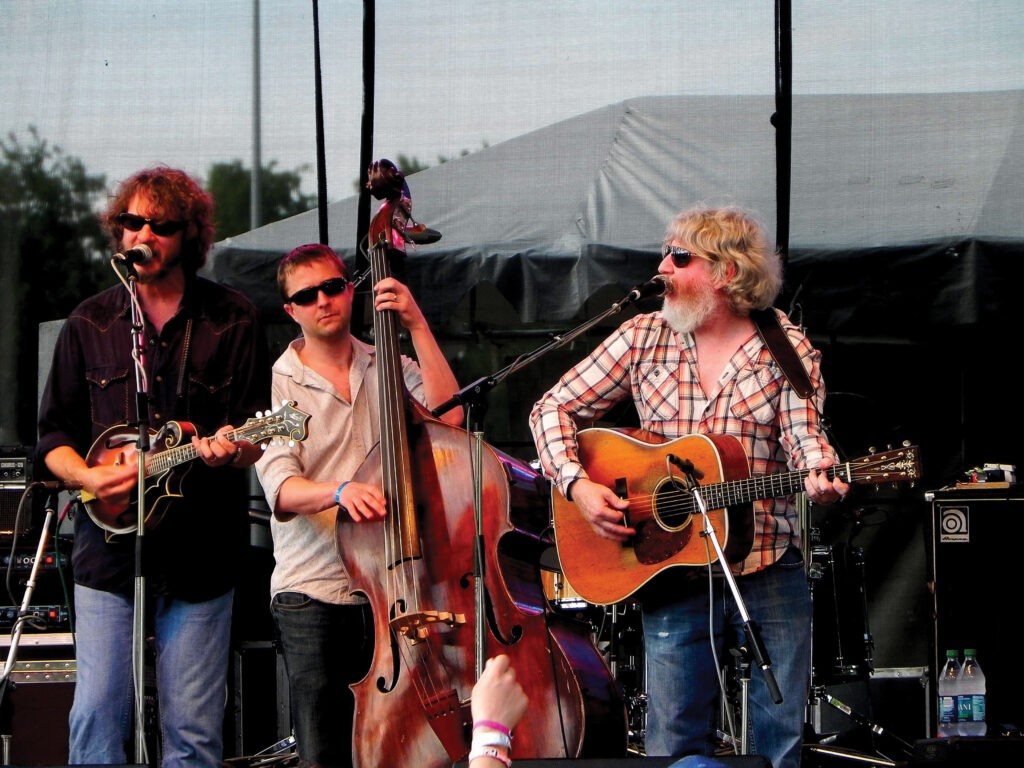
Following in the footsteps of Leftover Salmon, String Cheese Incident, and Yonder Mountain String Band were the next generation of jamgrass artists including Greensky Bluegrass, Billy Strings, the Infamous Stringdusters, Cabinet, Horseshoes & Hand Grenades, the Kitchen Dwellers, the Sweet Lililes, Pixie & the Partygrass Boys, and the Dirty Grass Players who continue to evolve the bluegrass tradition through their own unique rock and progressive approach. This next generation, while as enamored by the first generation of bluegrass musicians as their musical forebears, is more than willing to push that sound in new directions. This new crop of pickers was exposed to and interested in unique styles and genres of music and continues to combine and incorporate them together. Much like bluegrass musicians in the seventies who identified more with a progressive or newgrass style, this latest incarnation of pickers, while serious about their bluegrass, is more closely associated with a roots-based sound that, for many, was born from the improvisational approach and vast repertoire of the Grateful Dead and found home among the jamband scene of the nineties.
A key element of jamgrass music is the live show, a trait they inherited from their jamband brethren. The jamband scene had its roots in the evolving live shows of bands such as the Grateful Dead, the Allman Brothers Band, and Little Feat, and the improvisational instinct of jazz giants like Miles Davis and John Coltrane. These jambands incorporated similar elements of improvisation during their live shows. From night to night, the arrangement, structure, and sonic nature of their songs was experimented with, creating unscripted and unplanned moments of musical spontaneity. Varying and changing their set lists each night, they created a unique experience at every show. These bands shared a D.I.Y. attitude and improvisational approach to their live shows, which, more than crafting studio albums, became their primary focus.
Early on, these bluegrass jambands, whose live show was key to what they were doing, struggled to understand how to play acoustic instruments in rock clubs and at rock volume. Leftover Salmon was one of the first bands to attempt to take acoustic-based music into a rock setting and showed those who followed what would and would not work, and how to translate the quieter acoustic sound to larger and louder settings. It was not just the musical element bands had to solve when trying to transition from an acoustic world to an electric rock one. Pandolfi explains, “You can have great bluegrass, but you can’t have jamgrass until the live show evolves and incorporates all the different elements of production regarded as part of a live rock show, the lights, the sounds, the crowds, and the venues. All those elements are essential…All of this plays into the evolution of jamgrass, as you can’t have the jam part without the live part.” The Kitchen Dwellers Swain recognizes the importance of the live aspect of jamgrass shows, “Jamgrass gets a bad rap in the traditional communities, but the shows can be a lot of fun to see and play.”
The role of the audience in the development of jamgrass was also crucial. “You can’t have jamgrass until you have an audience that is ready and willing to have live improvised music,” says Pandolfi. Fans who love bands improvising and jamming on stage could now get the same experience in a string band environment and become exposed to traditional bands and music they might not have been exposed to before. For Pandolfi and the Infamous Stringdusters, the crowd element is as important as any other part of the live dynamic of their stage show. “It is hard to play something we would term jamgrass or jamming in a living room,” says Pandolfi. “A lot of what we do really exists authentically in front of a live audience because they are part of the experience. The energy and reactions to the different directions the music takes help guide what we do. They are part of the music.”
This next generation of jamgrass bands, with their explosive live shows, has regularly done more to introduce new ears to bluegrass and spread the gospel of Monroe than most traditional acts could ever hope to do. These bands play sold-out shows at non-traditional venues like Red Rocks in Colorado and festivals like Bonnaroo (and in the case of Billy Strings, sports arenas), far exceeding the audience that even the biggest-name traditional bluegrass acts draw. Bluegrass is more popular now than it has ever been, in large part due to artists like Strings, who have opened the eyes of a new generation of fans to the beauty of the traditional style. Strings is a generational guitar talent. While he was introduced to bluegrass as a child through his stepfather, when he was younger, his musical calling was more rock and heavy metal, before later discovering the Grateful Dead. This odd mix of styles marks him as a guitarist who avoids easy description yet easily fits into both music worlds. This crossing of sounds and his ability to draw new converts to bluegrass has drawn much attention. “He is what I am seeing that is changing the bluegrass world because, as I have said, if bluegrass doesn’t grow, if anything doesn’t grow, it will die,” says guitarist Keel. “You have your purists who want to keep it as is, but you have to keep an open mind for the music to achieve its greatest potential, and people like Billy Strings are achieving that. You look at the crowd size Billy has, and it is amazing. He is really putting bluegrass music to more people than anyone that I have ever seen in the history of bluegrass. That is what is going to take bluegrass to another level, being able to put it out to the masses like bands like Billy, the Stringdusters, and Greensky are doing.”
The insular nature of traditional bluegrass audiences often found them closing doors to anything different. These new jamgrass bands closed the gap between styles and fans with their innovative approach. Despite the resistance of some of the old guard, the growing interest in jamgrass only serves to help shine a light back on the traditional roots of bluegrass. The long-term irony is that bands like Leftover Salmon, Yonder Mountain String Band, Greensky Bluegrass, Infamous Stringdusters, and Billy Strings have likely driven more new fans to discover traditional bluegrass than traditional bluegrass musicians have over the years. Some of the biggest champions of the traditional sound are those accused the most of not adhering to it. “Music isn’t a competition,” says the Dirty Grass Players’ mandolinist Ryan Rogers, “and musicians and fans should be open to the chance to hear all these different influences and where they take the music. If you’re on the fence about a band, the best thing you can do is buy a ticket to see them. You may be exposed to something outside the norm of what you listen to and love the show.” Rogers speaks from personal experience as he admits growing up, he was an “opinionated metalhead kid,” before eventually broadening his musical interests and discovering bluegrass. The Infamous Stringdusters’ Pandolfi concurs about the willingness to be open, “Evolution is going to help whether the traditionalists like it or not.”
Another who should be given credit for helping close the gap between the old and the new is 86-year-old bluegrass icon Del McCoury. McCoury is one of the only musicians who can truly say they reached the upper echelon of both the bluegrass world and the jamband world, the slim peninsula of land known as jamgrass. McCoury has established himself as one of the most important bluegrass artists of all time with a career spanning over 50 years and including over 30 albums, 31 IBMA (International Bluegrass Music Association) Awards, and two Grammy awards. He finds himself equally accepted by the aging bluegrass traditionalist who believes the music should be un-amplified, have no drums, and not veer from what Monroe and Scruggs started, as much as he is loved by the dreadlocked, tie-dye wearing, hippie kid who emerges from his car in a haze of blue smoke before each show. While what he plays is traditional, he is utterly unique in that he represents both the qualities of traditional bluegrass and the open-mindedness of jamgrass. McCoury is perfectly comfortable sharing the stage with anyone from Jesse McReynolds to David Grisman to Leftover Salmon to the String Cheese Incident to Greensky Bluegrass to the Preservation Hall Jazz Band. It is this quality that sets him apart from other bluegrass legends. Pandolfi calls McCoury the “unicorn,” explaining, “He is really the only guy who has risen to the top of the traditional bluegrass and the jamband world. He is the only guy who wins IBMA entertainer of the year and plays ‘Beauty of My Dreams’ on stage with Phish in front of 100,000 people in the same year.”
McCoury is unique among many of the old-time performers in that he is open and willing to accept new music and try new things, while remaining true to his bluegrass roots. It is the ability to embrace the past but change with the times over his lengthy career that has made him such an important figure. His role in both the traditional bluegrass world and jamgrass scene highlights the similarities between the two and reinforces the idea that the evolving jamgrass style is not hurting traditional bluegrass music but enhancing it by greatly expanding its fanbase to both a younger and more diverse market. He rightly recognizes the intent of jamgrass bands is not to ruin bluegrass, but to help keep the tradition and sounds alive and vital, while at the same time helping the music to continue to evolve. As jamgrass grows, it continues to further establish its own identity, while still being respectful of the music and bands that came before.
No matter what it is called, jamgrass, progressive bluegrass, acoustic rock ‘n’ roll, or simply bluegrass, Yonder Mountain String Band’s Austin, who helped popularize this style, understands what it is that defines this music and creates this unique scene. He was once asked about the influence of Leftover Salmon on the jamgrass scene. His answer not only spoke about Leftover Salmon’s influence on the genre but also defined what jamgrass is and what differentiates it from what came before. “Leftover Salmon’s ethos and message they imparted to the bands who looked to them for guidance was that there does not have to be any rules. You can throw a party and also play great music. You can play a show with acoustic instruments where people will leave with their heads blown off. You can play a beautiful, touching song, and follow it up with the most ridiculous, silly song. You can pick a quiet tune and then rock out. You can incorporate bluegrass into a world that does not seem to fit and make it your own. Most importantly, Leftover Salmon taught the bands that followed them that it is ok to do all of that. It’s not weird, it’s music, and most importantly, it’s fun, and that is what music should be, regardless of labels.”