The 2020 IBMA Hall of Fame Class
A Diverse Genre Celebrates Both Ends of the Spectrum While Honoring A Legendary Venue
In one of the most eventful years in history, a time that has seen the onset of the covid-19 pandemic, nationwide protests, a comet, a 5.1 Southeastern earthquake and the Backline bluegrass band releasing a single titled “If The Corona Don’t get Me, Quarantine Will,” the IBMA announced the 2020 class that will go into the Bluegrass Hall of Fame.
Last month, in a sign-of-the-times virtual version of the annual World of Bluegrass Awards Show, the IBMA gave New Grass Revival, the Johnson Mountain Boys and Station Inn owner JT Gray bluegrass music’s highest honor.
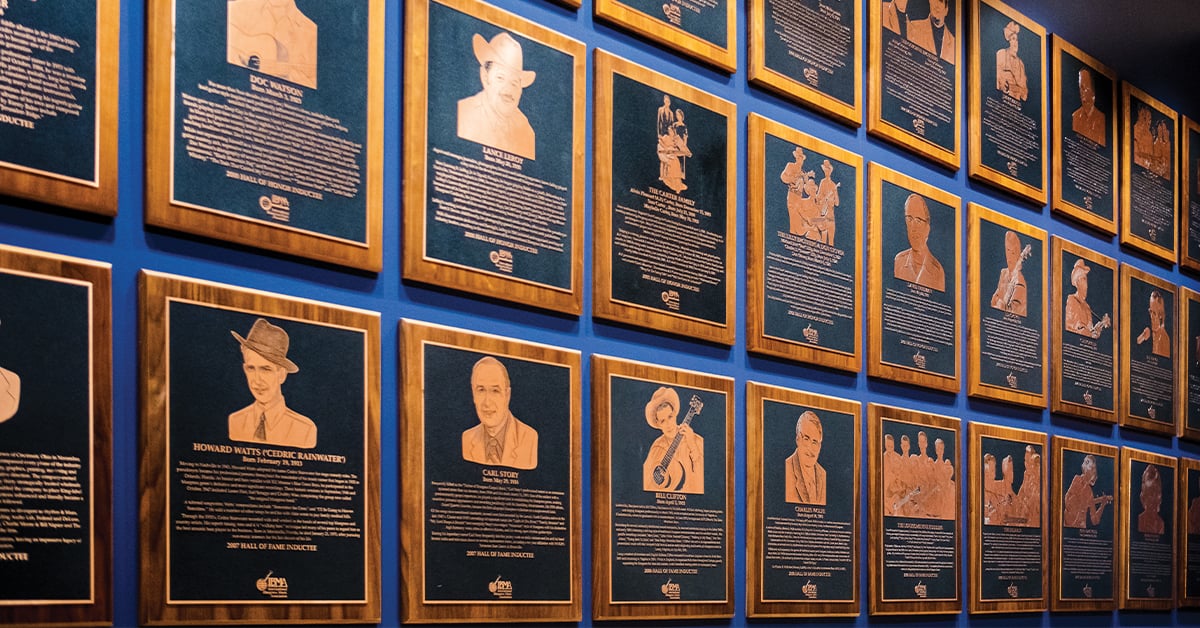
The idea of inducting these distinguished individuals with a historic plaque of their own next to the genre’s other previous inductees has proved to be a refreshing selection that represents the wide diversity that makes up bluegrass music.
As we speak, we are in the process of celebrating the 75th anniversary of the beginning of bluegrass. Since those heady days when Bill Monroe’s musical vision met Earl Scruggs’ three-finger, syncopated style of playing the banjo in post-war Nashville, the debate about what constitutes true bluegrass began soon after that exciting big bang spark. After all, Sally Ann Forester performed in Monroe’s Blue Grass Boys band for three months in 1945 alongside Scruggs, playing her accordion and adding her vocals to the show. Once Forester’s accordion left the group, after she played on eight very important recordings by Monroe; the bluegrass sound simplified and solidified.
Scruggs and band mate Lester Flatt would only stay with Monroe for a couple of years, leaving to eventually create their own legendary group Flatt and Scruggs and the Foggy Mountain Boys in the late 1940s. As a purposeful nod to changing things up, the new super group brought in a resonator guitarist in the form of Uncle Josh Graves, who played an instrument that Monroe never used in his own groups. From that point on, new ideas began to creep into America’s newest original form of music.
Fast forward 20 years later and the U.S. is a whole different country. From the mid-1950s to the 1970s, the onslaught of rock and roll and the Folk Music Revival would have an effect on bluegrass. In the mid-1960s, for example, future Hall of Fame band Jim and Jesse recorded an album of songs written by Chuck Berry done in the bluegrass style and they caught all kinds of guff for it for the unfortunate reasons of racial mixing and genre bending. Still, they held their ground.
When the late 1960s and 1970s came along however, the open-minded generation of that time period was set on following their own musical muse. They began to create an evolving version of bluegrass music that reflected their musical hearts and the period in which they lived. And, if the old-timers had a problem with it, that was the needed reaction to their action that gave them cred and set them apart in a revolutionary way.
In the early 1970s, the New Grass Revival brought counter-culture attitude and creativity to their music with aplomb. The history of the ground-breaking band consists of two distinct periods and lineups.
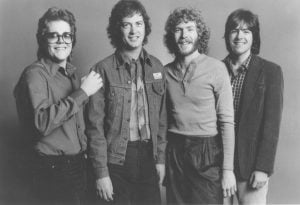
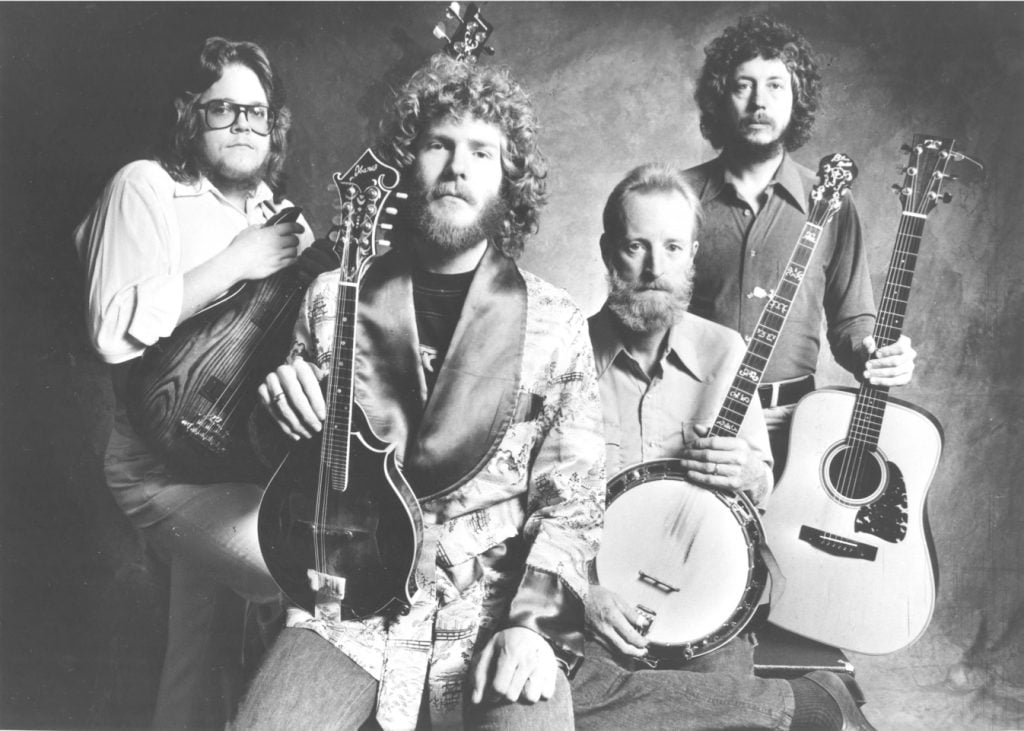
The initial New Grass Revival squad featured multi-instrumentalist and vocalist Sam Bush, Courtney Johnson on the banjo, Ebo Walker on bass and Curtis Burch on resonator guitar. Walker left the band after their first album dropped, briefly replaced for about a year and a half by Butch Robbins. After Robbins departed, John Cowan solidified the bass chair for the next decade-and-a-half with his powerful lead vocals and four-string bottom chops.
Soon after the turn of the decade, the 1980s version of New Grass Revival featured Bush, Cowan and Pat Flynn on guitar and Béla Fleck on the banjo. This version of the group signed a contract with a high-profile record label and recorded an amazing live album with rock and roll legend Leon Russell.
While there were other bands who were pushing the envelope and creating their own forms of progressive bluegrass music back in the day, that approach was eventually called ‘newgrass,’ borrowing from the New Grass Revival band name.
The response to the music of New Grass Revival back in the day was confrontational at times. There were moments when the bluegrass traditionalists would literally boo the New Grass Revival if they went too far off the purist path while onstage, the now-defunct 1970s Stone Valley Bluegrass Festival in Indiana being a prime example.
“That didn’t happen that much, but it did happen on occasion at certain festivals,” said Sam Bush, the one consistent member of the New Grass Revival throughout its run. “But, if anything, when we met resistance from the audience simply about our music, when it came to Courtney’s and my mentality; we would just dig in and be all the more determined to play exactly what we meant to play as we called out the set list. If anything, it made us, Courtney and I especially, even more determined to achieve our goals.”
While the newgrass moniker came from the group, Bush points out that they were just a part of a bigger scene making music on the edge during that turbulent yet creative period.
“Let’s not forget that we were just one of a few bands that were doing different kinds of things at that time,” said Bush. “In North Carolina, there was the New Deal String Band, who were brothers of the newgrass with us. Coming down from the Northeast was Breakfast Special, the group that Tony Trischka was in with Kenny Kosek, Andy Statman and others. So, I don’t think we felt like we were leading the charge in anything. Honestly, we were just playing music the way we felt it. The phrase that keeps coming back to my mind as I think about New Grass Revival and those old times is that we were playing it like we felt it.”
The truth is, as with most progressive bluegrass bands worth their salt, groups like New Grass Revival were bringing in new fans to first generation-style bluegrass that might not otherwise had made that journey. That is at the heart of the big tent philosophy of the genre.
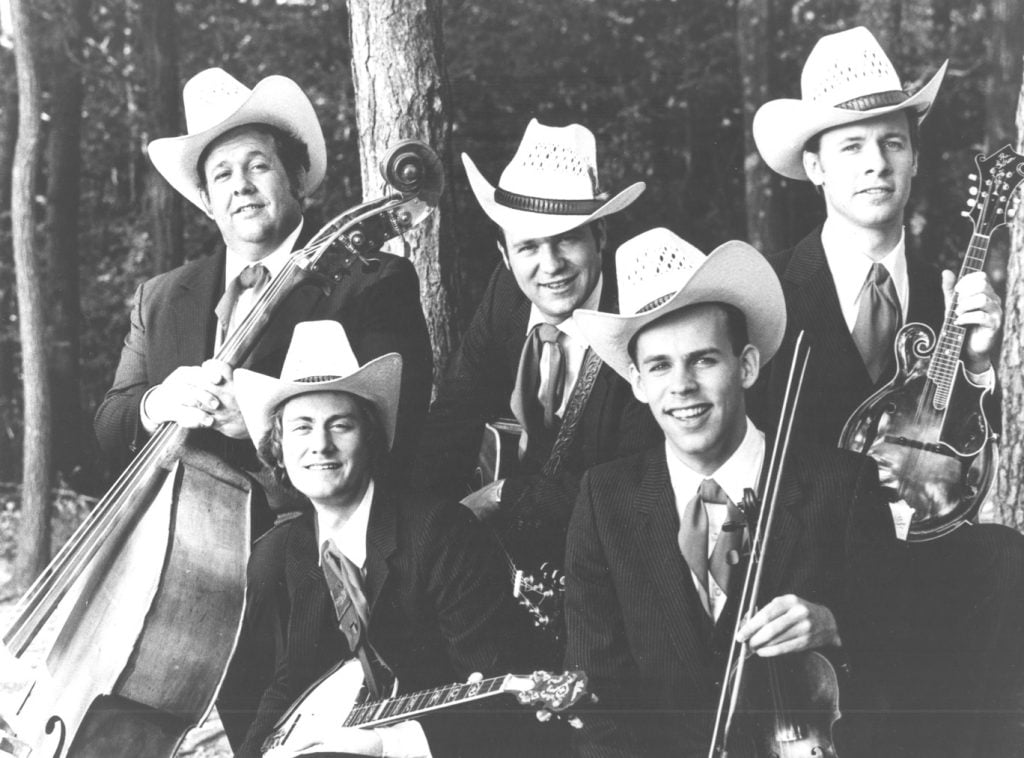
Dudley Connell, Eddie Stubbs, David McLaughlin
“Traditional bluegrass audience members would come up to us after a show and would want to voice their opinion to us about our music,” said Bush. “And the common phrase that we heard was, ‘That ain’t bluegrass.’ We would say, ‘We know.’ Concerning bluegrass music, if we were on any kind of mission, we felt that one of our contributions would be the following. When we played to a non-bluegrass audience, they would say to us, ‘I don’t generally like bluegrass music, but I like you guys.’ Then we could say, ‘Well, if you like what we do, you should go back and check out the original versions of some of the songs we just played by Bill Monroe, by the Stanley Brothers and others.’ When the original version of the group, with Ebo, Courtney, Curtis and I, opened up for Leon Russell for two-and-a-half months on his big rock & roll tour, which averaged a crowd of 25,000 a night, as far as that audience was concerned we were a bluegrass band. Then again, if our same band played, as we did, at the Anderson, Indiana Coon Hunters Lodge, to them we were a rock band. We could play the same music to two different audiences and be perceived differently.”
Yes, there was a time when Bill Monroe would not book the long-haired New Grass Revival at his Bean Blossom festival, yet Monroe did book them when the mid-1980s came around. According to Bush, the group did not catch as much flak back in the day as we would imagine.
“What was very encouraging to us at the time was that we really got positive feedback from the musicians that we looked up to whom were on the same circuit with us,” said Bush. “Mac Wiseman was always very encouraging to us. The Osborne Brothers were as well, as were the Country Gentlemen. One of the first ways that we got to play at the Shamrock Club in Washington, D.C., which was one of the legendary bluegrass clubs that you played in during the early 1970s, was because the Country Gentlemen played there and they recommended us to fill in for them when they did their first tour of Japan.”
The Country Gentlemen, of course, was a part of that fertile greater Washington, D.C. bluegrass movement that also produced the Seldom Scene, both of whom are previous inductees into the Bluegrass Hall of Fame. Another group that rose out of that impressive uptown cauldron of roots music was our next 2020 Bluegrass Hall of Fame inductees, the Johnson Mountain Boys.
Hailing from nearby Montgomery County in Maryland, located right outside of Washington, D.C., the Johnson Mountain Boys was a band of young pickers who loved traditional bluegrass music. They were known for being a high octane act from the beginning of their live act until the last notes.
As the group formed in the late 1970s, the Johnson Mountain Boys played at a lot of open mic nights around the area. At first, it was simply a love of playing the music that motivated them. But when it came to playing music as a full time job, combined with living in the greater D.C. region where the cost of living was high, they learned from the Seldom Scene band that one should insist on getting paid what they are worth.
In the early days, however, the group set out to perfect their chops and establish themselves locally before making the big decision to go national.
“We found ourselves at a place called O’Brien’s Pit BBQ on route 1 in College Park that was right across the road from the University of Maryland,” said Dudley Connell, original member of the Johnson Mountain Boys. “On Wednesday, they had an open mic night and we would go there every week and play. One night, we were playing there and Buzz Busby came in with Richard Underwood and a couple of other guys and they were going to do the open mic thing as well. I was really excited as I was a big fan of Buzz’s music. If you like high lonesome bluegrass, it doesn’t get much more high and lonesome than Buzz Busby’s Starday label records. Anyway, that night, we got to be friendly with him and his band pulled me in and I started backing up Buzz. But at the same time, the Johnson Mountain Boys were beginning to develop their own sound and there was too much demand on my time, so Richard and I both left Buzz to concentrate on the Johnson Mountain Boys.”
By the beginning of the 1980s, they became a sensation on the circuit as young folks that played traditional bluegrass music with passion and drive.
“We were in our 20s and ready to go after it, and we did,” said Connell. “I quit my day job in 1980 and I was on the road full time until 1988. It was my first job out of high school working for the Montgomery County School Board. I worked in the maintenance division cutting down trees, putting in sidewalks and fences, cutting grass, plowing snow in the wintertime and I learned to drive a clutch in a dump truck. It was a positive experience and I learned a lot and liked my co-workers, but as the schedule for the Johnson Mountain Boys increased, I reached a point where I really couldn’t do both.”
The three main members of the Johnson Mountain Boys included Connell on guitar and lead vocals, Eddie Stubbs on fiddle and mandolin player David McLaughlin. Along the way, other future members of the group would add to the band’s sound and evolution, which is why all of them will be inducted into the Bluegrass Hall of Fame. The additional lineup of the Johnson Mountain Boys featured bassists Larry Robbins, Marshall Wilburn and Earl Yager along with banjo pickers Richard Underwood, Franny Davidson and Tom Adams.
“I always viewed Washington D.C. as the home of the Seldom Scene and the Country Gentlemen, yet we were not like either one of those bands,” said Connell. “But we did play a lot in the D.C. area. We got on this thing for a while, and I give all of the credit to Eddie Stubbs for this, where we found that we could work most every weekend playing a festival or a club or a concert date but there wasn’t much to do during the week to help supplement our income. So, Eddie had the idea of going out and soliciting us to play some of the firefighter’s carnivals. The beauty of that is that every little town in rural Maryland had a volunteer fire company. Eddie put together a promotional kit and started knocking on doors at these fire companies. So, during the week, we would work in counties all over the area.”
The Johnson Mountain Boys recorded 10 albums and were hitting their stride when they decided to stop full-time touring in 1988. While they would do 25 shows a year afterwards until the mid-1990s, the news of the Johnson Mountain Boys ending their road warrior status hit the bluegrass community hard.
There is a now-famous article in the Washington Post written by Richard Harrington in March of 1988 that expounded on the consequences of the band’s full-time schedule demise. The article, which can be read online, centered on the notion that the bluegrass industry was in decline at that time. Each member of the band that was interviewed talked about wanting to change careers while they were young enough to do it, so they could make a better, less-stressful living. Said Connell in the article, “Anybody that’s ever played any kind of grass-roots music has thought about quitting from time to time. Artistically, it’s very rewarding, but monetarily it’s very hard to make ends meet playing a type of music that is not accepted by the general public.”
In the same piece, Ken Irwin, co-founder of the Johnson Mountain Boys’ label Rounder Records, said that bluegrass music was now going to be left to “amateurs and tired old warhorses.” Said Eddie Stubbs at the time, “Most bluegrass fans now seem to be 40 and 50 and on up. There are no young people interested in the music anymore. Maybe one reason is it’s hard for someone in their late teens to relate to a song about mother and home when they haven’t been out on their own. The audiences are dying off, and you wonder what the future of the music is when those people can’t come see you anymore.”
While bluegrass music did not die, at times it was on a respirator up and until the soundtrack from the O Brother, Where Art Thou movie was released in late 2000. That album, spurred on by the desire to get back to the basics after the 9/11 tragedy, would go on to sell over 8 million copies and spark a renewed interest in roots music with young and old alike that continues to this day.
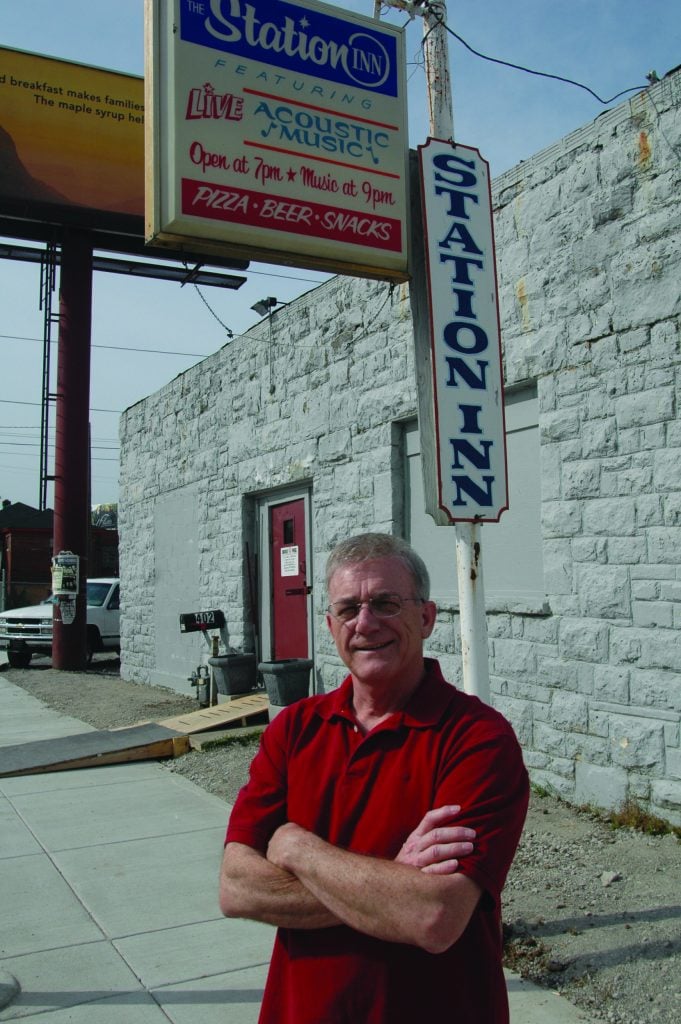
One person who has witnessed the ups and downs of the bluegrass industry is our third Bluegrass Hall of Fame inductee JT Gray, who has owned the historic Station Inn live music venue in Nashville since 1981.
Practically every top bluegrass musician in the genre’s history has performed in the Station Inn over the years, and it is still a go-to stop for all of the up-and-coming bands as well. There have been many a magic night experienced at the small club; making a visit there a rite of passage for performers and bluegrass fans from all over the world.
“As for one of our favorite guests, that is easy to say; the man who started bluegrass music, Bill Monroe,” said Gray. “It blew my mind that he came to the Station Inn as much as he did. While he played there several times with his band, he would stop by on almost any night of the week on his own and would come in and bring his mandolin with him. When he walked in the club, people would turn their heads. When he came in, he came in to play music. He never came in to sit back and listen to whoever was playing. When you saw him come through the door, you saw that mandolin in his hand, too. He would come by and say hello to everybody at the door and at the bar. Then, most of the time he would go to the side of the stage and take his mandolin out of its case and walk onstage with whoever was up there. He didn’t care who was playing that night, or how good they were; he got up there and played with them and made himself at home. That is the most mind-blowing thing that happened here in all of the years I have owned it.”
There have been other notable guests to walk in the Station Inn, from top country music stars like Alan Jackson, Dierks Bentley and Dolly Parton to actor William Shatner to New Orleans music legend Dr. John.
“William Shatner has been in here several times,” said Gray. “Dr. John came in and sat there all night long, which is unusual for famous guests. Then, he sat there and talked to us for about an hour-and-a-half after the show was over. He told me, ‘I love Bill Monroe’s music.’”
If you have ever been to the Station Inn, the over-growth of the city of Nashville has crept in all around it. The small building sets amongst many other tall buildings, making the ground the venue sits on worth a lot of money. The question has always been, ‘How long will the club hold off the developers?’ Gray has good news on that end.
“While I do not own the property that the Station Inn is on, fortunately the family that owns it has a company here in Nashville and they like bluegrass music,” said Gray. “We have always had good communication between us and we like each other, they love the music and they like what we are doing. The good news is that I actually just signed a new lease with the family and they are telling me, although it could change in time, that they are not going to sell the property as long as the Station Inn wants to be here. Years ago, we’d walk out the side door and see the old railroad tracks and the old train station. Now, you see nothing but tall buildings. You have to look straight up to see the sky.”