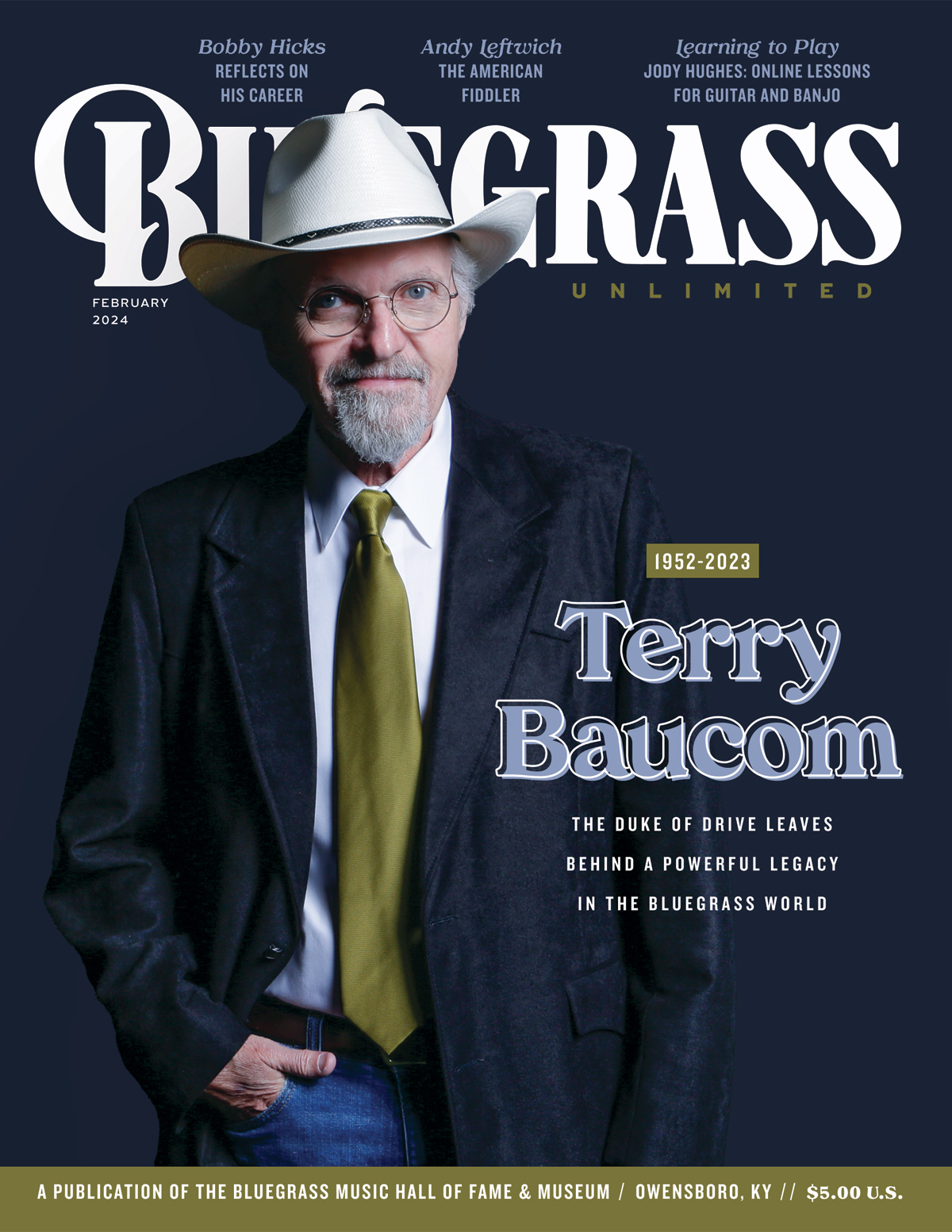
Terry Baucom
The Duke of Drive Leaves Behind a Powerful Legacy in the Bluegrass World
The old mill town of Elkin, North Carolina, is an oasis for folks who want to live in a rural area located between the mountains and the big cities of the Piedmont. It exists about 44 miles from Winston-Salem, 75 miles from Charlotte and 72 miles from Greensboro. At the same time, Elkin is 55 miles from the mountain town of Boone, 25 miles from Wilkesboro, the home of MerleFest, and about 100 miles from Mount Mitchell, the tallest mountain east of the Rockies.
What is cool about Elkin is that the old downtown buildings have been preserved, including the Reeves Theater. Built in 1941, the Reeves Theater stood empty and unused for many years. But in 2013, it was bought, remodeled and turned into the Reeves Theater and Café live music venue that it is today.
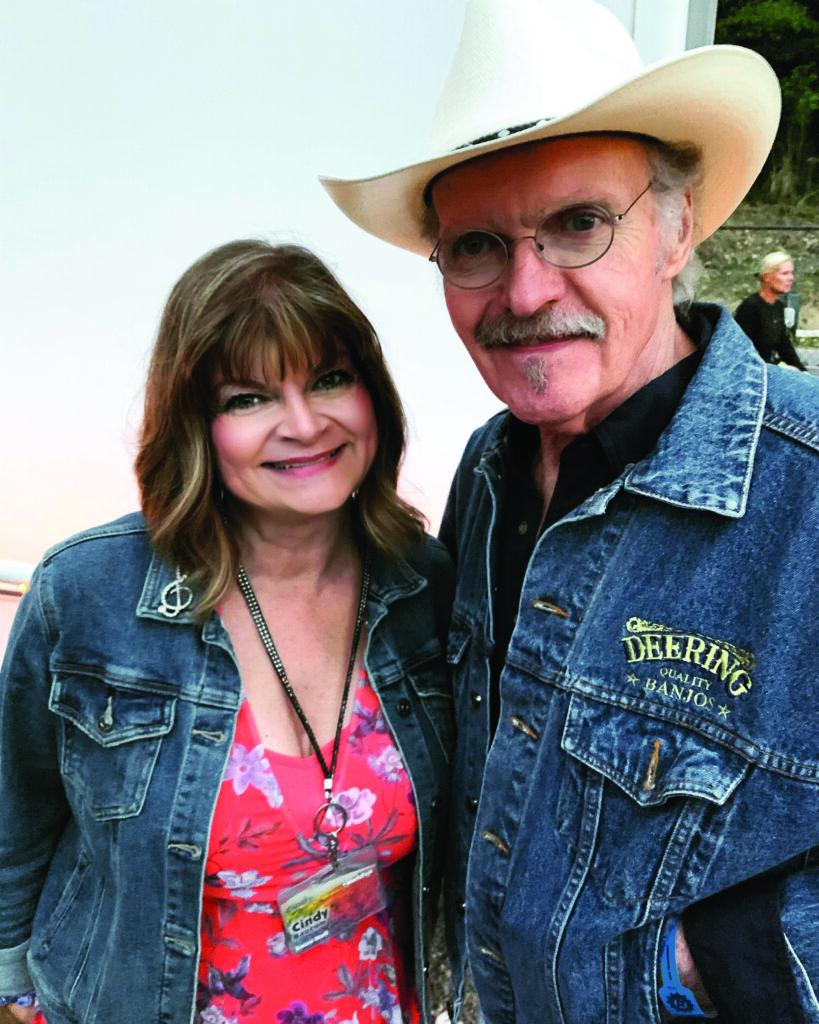
About a decade ago, the bluegrass power couple of banjo great Terry Baucom and his wife Cindy Baucom, the long-time host of the syndicated radio show Knee-Deep In Bluegrass, decided to move to Elkin. But, instead of finding a nice home with some land just outside of town, they had another dream in mind.
“I already owned a home in Elkin when Terry and I got married, but we both wanted to select a house together that we could truly make our own as a couple and as a family. We lived on West Main Street, which is literally a mile from the Reeves Theater,” said Cindy Baucom. “Ten years ago, we bought a two-story Victorian house that was built in 1912 because we always wanted a place with old character to it. We had a sidewalk that went from our house all of the way to the other end of Elkin and back. We walked twice a day, morning and evening, and we loved being this close to town. If friends of ours were performing at the Reeves Theater, we would walk down there to catch the show. We would walk to the restaurants that they have downtown and eat outside. There are also cool arts studios and shops there, and a music school. We took advantage of being together every day and doing something fun every day.”
On Tuesday morning, December 12, 2023, I made the trip to Elkin from Grandfather Mountain seventy miles away, passing through both Boone and Wilkesboro. While driving through the rural areas of Wilkes County, I listened to the Trading Post show broadcast on the local radio station WWWC-AM, where folks called to announce, “Ma’am, I got a six-foot scrape blade on the back of my tractor and I’m taking $300 for it.”
As I continued to drive through the farmland and crossed the old train tracks, I pulled into Elkin via route 268 and then turned right on Church Street. Up ahead, where Church Street dead ends into Main Street, the beautiful marquee of the Reeves Theater reminded me of the task ahead, reading, “Remembering A Life Well-Lived – Terry Baucom – 10/06/52 to 12/07/23.”
On December 7th, Terry Baucom died from the fast-moving disease known as Lewy Body Dementia, and his funeral service at the Reeves Theater and Café was full of family, friends and many of his bluegrass cohorts.
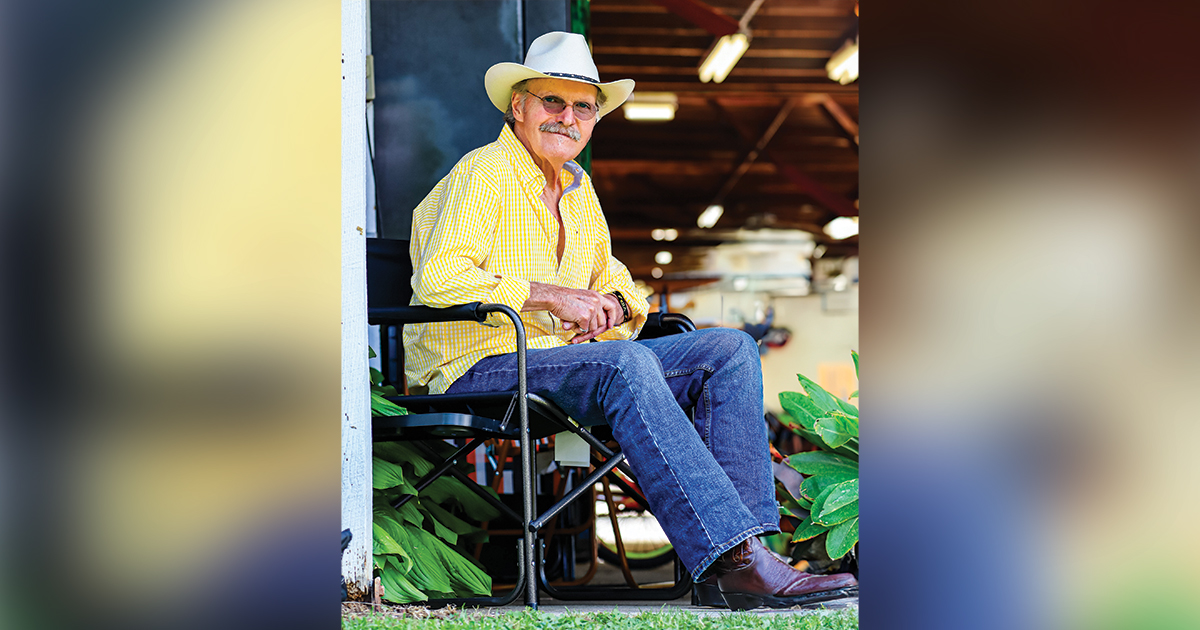
Baucom is considered one of the best banjo players in bluegrass history, known for playing the instrument with power and precision. That is why he became known as the “Duke Of Drive.”
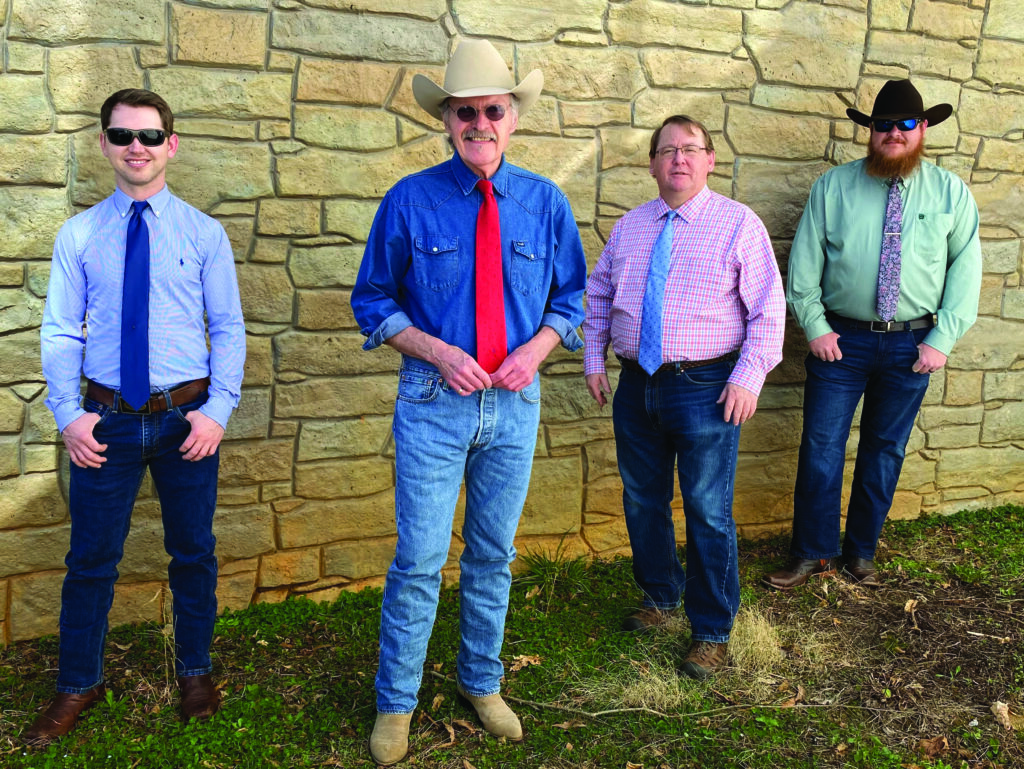
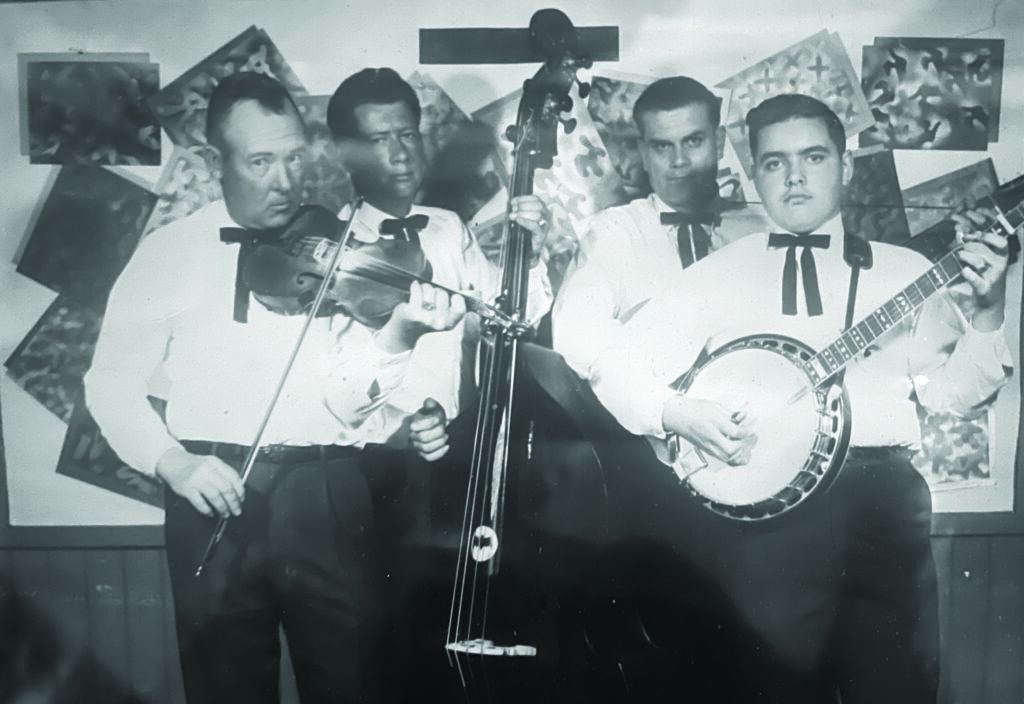
After his days performing with Charlie Moore as a teenager, Baucom would go on to be an original member of the bands Boone Creek, Doyle Lawson and Quicksilver, New Quicksilver, IIIrd Tyme Out, and Lou Reid, Terry Baucom and Carolina. During the last decade of his life, he led the group Terry Baucom and the Dukes Of Drive while being honored with the IBMA Distinguished Achievement Award in 2023. And, just days before he died, Baucom was given the prestigious Steve Martin Banjo Prize as well.
In this tribute article to Terry Baucom, Bluegrass Unlimited has interviewed many of his friends and former band mates, with each happy to tell his story as they mourn his passing. Those interviewees include Doyle Lawson, Jerry Douglas, Alan Bibey, Gena Britt, Rex McGee, Lou Reid, Jason Burleson, Gena Britt and Terry’s wife Cindy Baucom.
All of those interviewed for this article distinctly remember Terry Baucom’s arrival on the bluegrass scene, and when he first came into their lives.
Jason Burleson – “I got the first Doyle Lawson and Quicksilver record and Boone Creek’s One Way Track album around the same time. I’d only been playing a couple of years by then, and when I heard Bauc, it really lit a fire under me to want to try to play like that, with that drive, that precision and that feel. You have to keep in mind that there was really nothing else like that at that time. It was definitely Scruggs-style banjo picking, but with a different attitude. It’s hard to explain, but it just had a different feel to it, with almost a sense of urgency attached to it. His picking was really on top of the beat, with really clean pull-offs, and playing what was proper for the song. It made me say to myself, ‘I want to try to learn how to play like that!’ Eventually, I met Terry sometime around when we in Blue Highway started playing our first shows. From day one, Terry treated me like he’d known me his whole life. It really meant a lot to me to have a hero be that nice and encouraging to me. We struck up an instant friendship.”
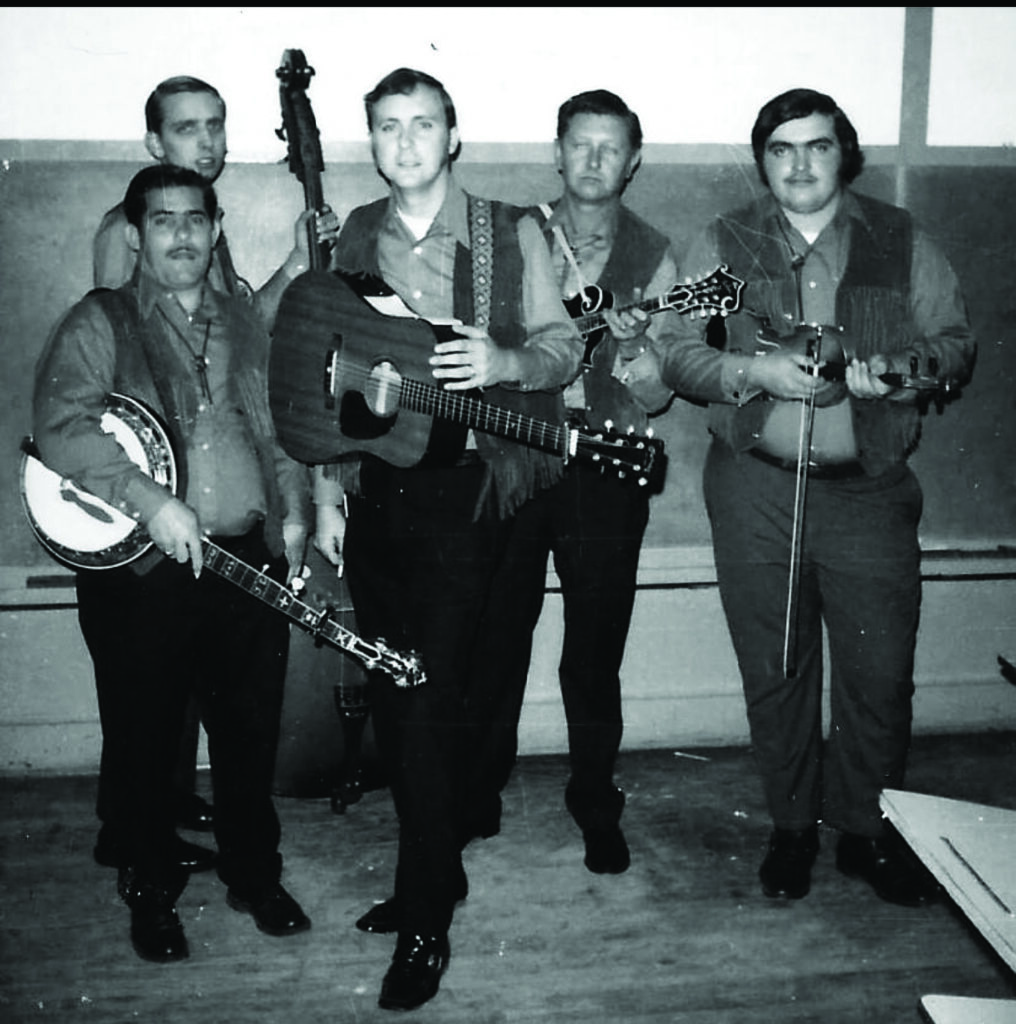
Doyle Lawson – “I first knew Terry Baucom before he was in Boone Creek, way back when I was playing the guitar with J.D. Crowe. This would have been in the early 1970s or so and the festival circuit then was still not as big as it would become, but it was starting to take hold. Festivals gave working musicians like us a few more opportunities to play and make a little bit of money, more than the ten or fifteen bucks we’d make in a club. Back then, I believe Terry was playing the fiddle for L.W. Lambert, who was a banjo picker from Iredell County, North Carolina, who played around that area in places like Statesville, Monroe and elsewhere. When we would see them play, it was obvious that Terry was a monster fiddle player, as he was wearing that fiddle out. Just like his banjo playing later on, Terry played the fiddle with authority. Crowe and Larry Rice, Bobby Slone and I would travel in this little Winnebago motorhome that J.D. would rent sometimes so that we could get some rest on the road, and one day, Terry came up and asked Crowe if he’d be interested in hiring him. Crowe said, ‘I’m really not looking for a fiddler right now,’ when the truth was that we were struggling trying to keep the four of us fed. But, that was my first awareness of Terry Baucom. Then, in the Boone Creek era, I saw those guys one day at a festival. I had known Ricky Skaggs and Jerry Douglas prior to that, when Ricky was with Ralph Stanley and then with The Country Gentlemen. Jerry also worked with The Country Gentlemen part-time during the summer while he was still in high school and then full-time after he graduated. I would also see a young Wes Golding around the festivals in North Carolina and in Virginia. But, on that day, I didn’t recognize the tall and slender banjo picker or knew who he was, so I asked somebody, ‘Who is their banjo picker?’ ‘That’s Terry Baucom.’ And man, when Terry cracked down on that banjo the first time I heard him play, I was like, ‘Wow!’ Little did I know at the time that about four years later, he would be the original banjo picker with my band Quicksilver.”
Alan Bibey – “I started playing music when I was five, and I had a cousin named Gary Brown that played with Boone Hill and he was out playing the festival circuit and he would tell me about the new things that were happening at the time. I had already heard of Ricky Skaggs because of the Rounder 0044 album, but when the Boone Creek album came out, I was even more of a Skaggs fan. I ended up seeing Boone Creek four or five times. I was around ten years old then, and I was a Boone Creek fanatic. They may be my favorite band of all time. I lived about 40 minutes from the Camp Springs festival in North Carolina and one year, Boone Creek was there and I got to see them live. My dad was always one of those guys that wanted to leave before the crowd left, to beat the traffic, and I always minded my Dad because he was the best dad. But about halfway through the Boone Creek set, I was sitting down in front and he said, ‘Hey, let’s move back up the hill so we’ll be ready to leave to beat the crowd.’ I said, ‘Daddy, I love you, but I ain’t going. I’m staying here if I have to walk home. I want to see this band so bad, I can’t stand it.’ He said, ‘Alright. We’ll stay.’ That was probably the only time that I ever told him I wasn’t going to do something. It was a few years later, when I was probably 15 or so, when we went to the Doyle Lawson Festival in Denton, North Carolina. I was now a teenager, but I didn’t have my driver’s license yet, so my Dad would leave me there because he knew I was going to jam all night anyway, and he’d pick me up in the morning. So, that night, I got to jam backstage with Terry Baucom and Joe Greene and J.B. Prince and we played until the sun came up. I broke every string on my mandolin.”
Lou Reid – “I met Terry at various fiddler’s conventions back in 1969 and into the early 1970s. He said he was rehearsing to go to work with Boone Creek and he wanted to know if I was going to join the band. I said at that time that I didn’t know if I could do it, that I had a tobacco crop to harvest with my family. All of the time that we spent together was memorable, but it was probably when we formed Doyle Lawson and Quicksilver that he became more important to me than just being my friend, because he was like my older brother. Terry taught me how to iron pants and shirts. And, we went on a serious diet together, too, when we started Quicksilver. We would eat one meal a day with all we wanted to eat, and we both lost weight, but I think that I lost the most. Terry was a 300-pound fiddle player at one point and he lost the weight and never regained it.”
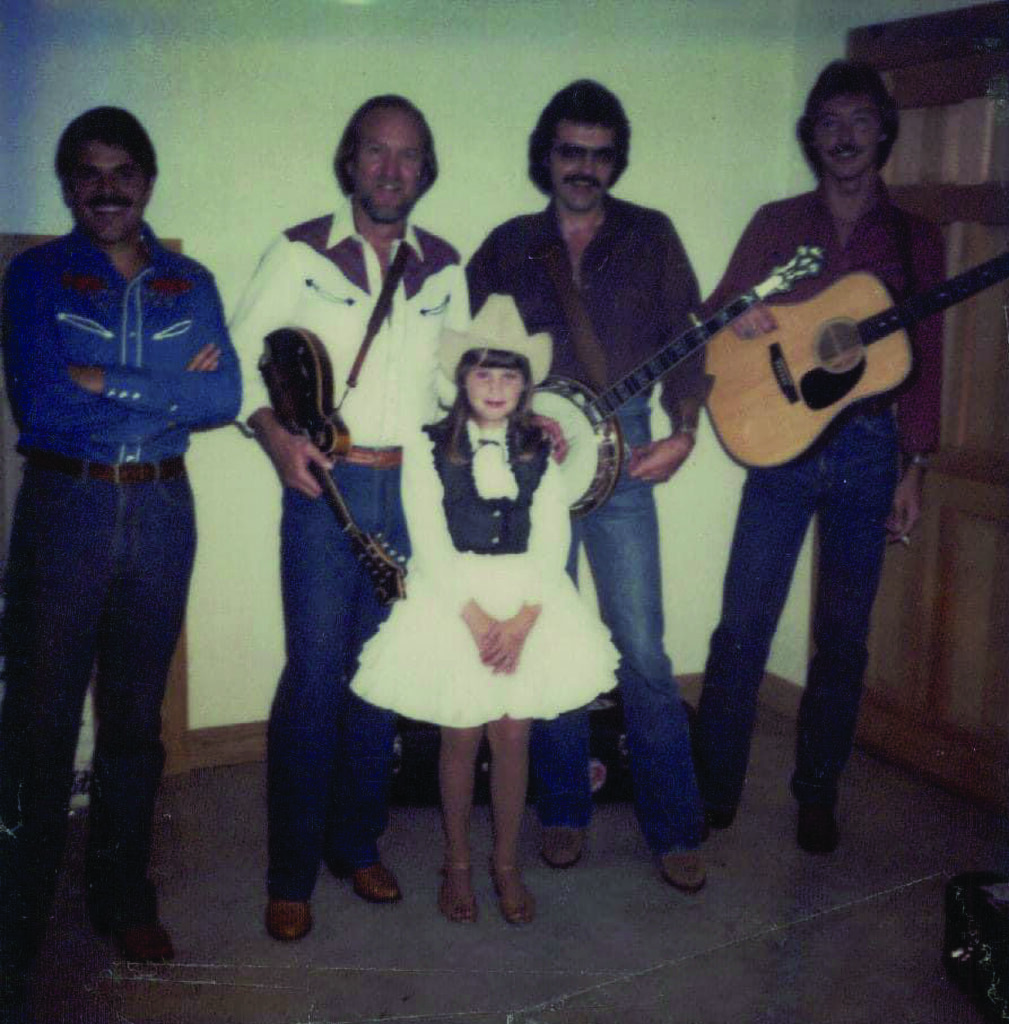
Rex McGee – “During my teenage years, my dad ran a live music venue in Pilot Mountain, North Carolina, called the Pik-N-Parlor and presented a few shows between 1984 and 1990. By the time the New Quicksilver band played there, I was a casual fan of Terry’s banjo playing, primarily from going to Milton Harkey’s Doyle Lawson and Quicksilver Festival in Denton, North Carolina, every July. Terry was a favorite of my picking buddies at the local fiddler’s conventions as well, along with Clay Jones and Wayne Benson, during a time when ‘fancier’ players dominated my attention. Before I was old enough to drive, I was taken to festivals by my older sisters and their girlfriends who were quick to express their admiration for his Terry’s tan, sunglasses, accessories and his stylish good looks in general. Terry was accommodating when I would nudge my way into late night jams that he was involved in, and that is where I also learned as much about the North Carolina bluegrass community’s spirit as I did about the music.”
Gena Britt – “I first became aware of Terry as a member of the Original Doyle Lawson & Quicksilver band. When I was a little girl, DL&Q got me up on stage to play with them. From that moment, Baucom was who I patterned my playing after. He was an incredible mentor and was always gracious with his time to answer questions or help me when I was learning to play. Later in life, I became friends with Terry and had the great fortune of playing in a band with him (me on bass) with Lou Reid, Terry Baucom and Carolina. That was one of the most exciting times of my musical career. I’ll never forget his kindness, his humor and his unwavering friendship.”
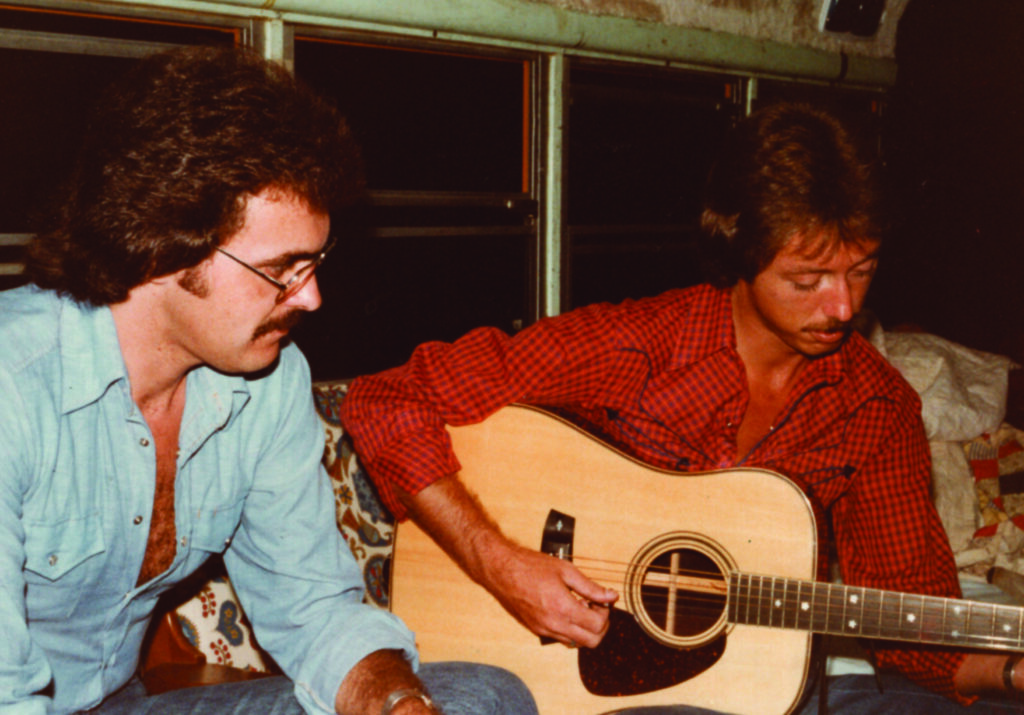
Jerry Douglas – “I met Bauc when he was playing the fiddle with Charlie Moore in White Pine, North Carolina. I was 18 or 19. When we started Boone Creek a couple of years later, I was 20 years old at the time and Ricky Skaggs and I wanted to get out of the shadows of our former bands, finally doing our own thing away from J.D. Crowe and the Country Gentlemen. That is when we busted out and thought we would drag bluegrass kicking and screaming along with us as we tried out these news ideas on people, taking songs and revamping them. Terry Baucom was there, and Vince Gill was there for a while, as was Wes Golding. What a lot of people don’t know is that the original lineup for Boone Creek was Ricky and me, Marc Pruett on the banjo, Baucom on the fiddle, Lou Reid on bass and Keith Whitley. But, then Lou couldn’t come and do it, Marc couldn’t do it either, and Keith didn’t want to leave Ralph Stanley. That is when we called Wes Golding.”
What was so special about Terry Baucom’s way of playing the banjo?
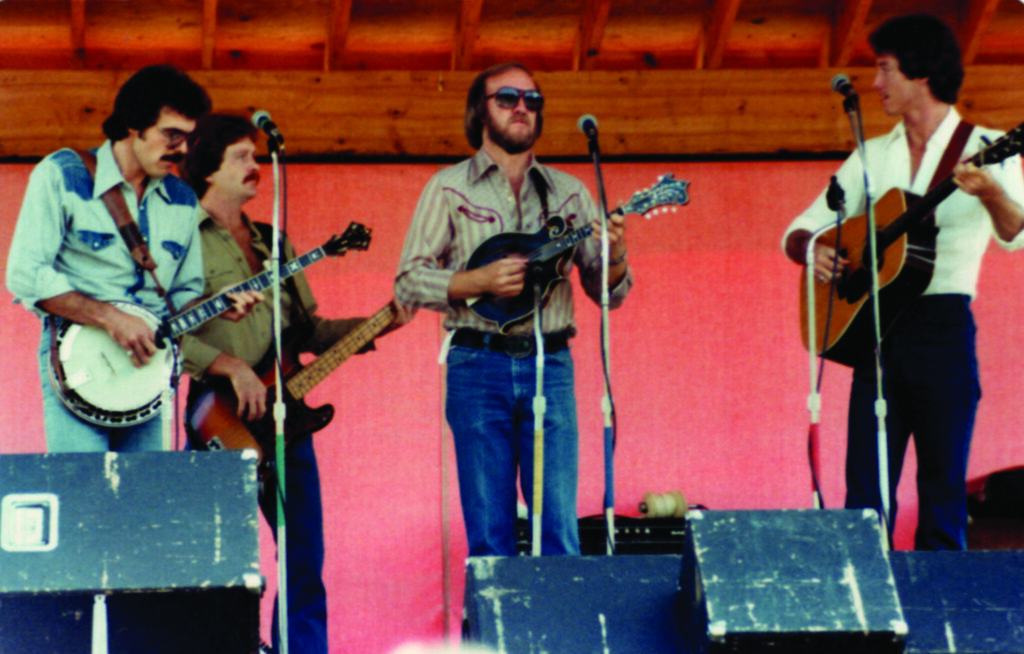
Rex McGee – “It was watching Terry assault an SM-57 microphone onstage at my dad’s Pik-N-Parlor music venue that made me understand the fuss over a guy that lived below the first seven frets on his banjo, which was capoed up to ‘B’ much of the time. Terry punched harder than many of my banjo heroes did at the time and naturally, I had to take a stab at that approach. After breaking a few 4th strings, I learned that playing hard can come at a cost. Tone, speed, timing can go downhill quickly, but Terry had it figured out. To this day, I don’t believe anyone else has ever controlled those elements of banjo playing with as much strength and perfection.”
Doyle Lawson – “Terry played with such authority, and his notes were clean, and I was impressed with the space in between the notes. Crowe was always big on the space between the notes, which is based on your sense of timing. There was separation in Terry’s playing. You could hear a good, solid roll and yet, it wasn’t all jumbled up. When you put space in between the notes, you can put the emphasis where you want it to be, if the song calls for it. That is why when Terry wanted to put some emphasis on a certain part of a song, he was able to do it.”
Alan Bibey – “I learned so much just getting to play with Terry. He was more of a musician that led by example. I would watch how he worked a mic with his banjo. How he worked a mic was like watching Fred Astaire dancing. Terry would stand up there onstage and he would rock back and forth, almost like a dance, and then he would go into the mic at just the right time. When there was a hole somewhere, he’d lean in and fill that hole and then come back out. I had never seen anything like that before, and it helped me a lot as far as playing backup in a way that would help the song and make it better.”
Gena Britt – “I was drawn to Terry’s banjo playing from the very first time I heard him play as a little girl. I will never forget a comment that my dad, Parker said to me after listening to something Terry played. He said ‘That guy right there….you always know what song he’s playing. Always try to do that baby.’ That definitely stuck with me. Terry’s playing was very melody driven, and he played with such drive. And by that, I don’t mean fast or loud. I mean he helped carry whichever band he was with by keeping a steady rhythm going with his roll. It was life-changing for me. His separation of notes is also worth noting. His timing was impeccable. I know so many players that were influenced by Terry for all of the same reasons I’ve mentioned. In my opinion, his legacy will live forever with him being one of the most unique and creative players of our time. He was one of the greats and I for one will miss Terry and his playing very much.”巠
Jerry Douglas – “Now, all of these years later, when I listen to Boone Creek, the thing that grabs me first is Baucom’s banjo riffs. Terry played the banjo like he was known for from the day he picked one up. He sounded then like he did a year ago. Terry had this sound in his head with the banjo, and that is how he played it. It was just there, and his sound was his signature and it kind of led a generation of bluegrass players into that zone, as in the ‘take no prisoners’ kind of banjo playing. There wasn’t anything graceful about it. It was almost threatening. He meant it.”
Terry and Cindy Baucom’s romance developed nearly 25 years ago. Cindy said, “We had met and been casually acquainted, being around so many of the same music festivals and shows. The two of them fell in love and got married. That was no easy feat, because at the time, Cindy had three young kids of her own to raise. There are a lot of men out there that would avoid walking into an “instant family” like that, but Baucom followed his heart and stepped up to the plate.
With Cindy Baucom holding down the Knee-Deep In Bluegrass radio show, which is now broadcasting in its 20th year on over 100 stations in syndication, they were instantly a bluegrass power couple.
A couple of years ago, however, Terry began to show signs of something being off, with his demeanor changing on occasion and those alterations began to be noticed by those that knew him well. When Terry announced that he was retiring from the music business in August of 2023, that turned a few heads among his friends and his fanbase. When it was announced shortly thereafter that Jason Burleson would be stepping in to play the banjo during those last shows by the Dukes Of Drive, that is when folks realized that he was truly in trouble.
“Cindy called me one day and told me the situation,” said Burleson. “She said that Bauc had hand-picked me to finish out his dates on the banjo. What an honor it was for me to be asked to stand in for my hero and friend. Luckily, my schedule with Blue Highway and the Dukes touring schedule worked out perfectly, so I was able to play every date they had on the books. I think the Good Lord had a hand in that, as it took the pressure off of Cindy so she did not have to find a different banjo player every week, and she could concentrate on taking care of Terry. To be asked to help Terry out like that was definitely the highlight of my musical career. Cindy sent me the set lists and I went to work. I remember texting her and saying, ‘I thought my right hand was in pretty good shape, but it isn’t in Bauc shape.’ My approach was not to try to memorize every break, note-for-note, but to try to stay true to Bauc’s style and always think, ‘What would Bauc do?’”
On the home front, Cindy Baucom was dealing with the hard reality of watching her husband succumb to the Lewy Body Dementia disease.
“When you are with someone every day and the changes in them are so slight at first, all of that was probably more noticeable to people that didn’t see him as often,” said Baucom. “People started coming up to me and saying, ‘Is Terry ok?’ I mean, Terry was very health-conscious. He quit smoking the year that we got married. He walked every day, ate healthy and he always had an annual physical done. But folks began to say to me, ‘I was talking to him, but he just didn’t seem like the same old Bauc.’ Jerry Douglas was one of those friends who contacted me and said, ‘The last three times I’ve been around Bauc, it’s just not him. There is a distance there that is not my old friend. He is not talking to me like we used to stand around and do. He is nice and cordial, but there is something different about him. Jamie Dailey said the same thing, saying that it didn’t seem like his usual personality. I said, ‘Yeah, he is fine. We just went to the doctor and everything checked out normal.’ Fans would also come up and say, ‘Is he ok? His posture looks different to me.’ I would say, ‘Well, you know, as folks get a little older, they change.’ I was making excuses, and I may have been somewhat in denial myself.”
What became a real clue for Cindy was noticing the change in Terry’s everyday habits, which were perplexing and hard to deny.
“Terry was always very organized and very meticulous in his daily habits and in the house, to the point where if I would sit my cup down in the sink after having coffee, he was right behind me, washing the cup and putting it away,” said Baucom. “Then, I noticed when he stopped doing that. He was always good about keeping up with finances and doing his own laundry, but those things started sliding as well. I just thought that he was tired of doing all of that, and I was happy to take over those rolls.”
Then, however, an incident happened with Terry at home that truly pulled at Cindy’s heartstrings.
“Before we went to bed at night, Terry would always be the one that would turn off the TV, turn off the lights, lock the door and wind up the clock,” said Baucom. “Then, he just started leaving all of that stuff on or not done, and then he would go straight to brushing his teeth and going to bed. The first couple of nights, I said, ‘Bauc, you left everything on in the living room.’ He said, ‘Did I? I thought I turned it off.’ So, I just started doing it. But one night, he went to my side of the bed to lie down. You know how people are about their side of the bed, so I asked him if he wanted to change sides. So, it was things like that, that began to worry me.”
Eventually, the Baucoms went to the doctor, looking for answers, and that is when the diagnosis of Lewy Body Dementia was shared.
Lewy Body Dementia is a brutal disease that is somewhat like Alzheimer’s and normal dementia, only it goes downhill a lot quicker. With Alzheimer’s and normal dementia, the patient can stick around for years, but that is not the case for those with Lewy Body Dementia. It is very progressive, fast-moving and there is no cure.
Within months, Terry Baucom’s slide was gaining steam and his brain and body began to shut down and he was placed in hospice care. For many days at a time, he was barely responsive. But then, just ten days before his death, something magical happened.
“It was on a Monday, and he was alert, he was asking if his grandson Kayden could come and see him, and my daughter brought Kayden to see him,” said Baucom. “Terry was sitting up in his bed and they were laughing and visiting and eating snacks. There was a Dairy Queen just down the road and I said, ‘Would you like a milkshake?’ He said, ‘I would love a milkshake.’ So, he was drinking his chocolate shake and we were having a really good visit. That was when my daughter urged me to tell Bauc about the letter we received telling us that he had won the Steve Martin Prize for Excellence in Banjo and Bluegrass, and to do it while he was alert and happy, so I told him. Bauc said, ‘Wow. That is a big one. That is so cool.’ Then he said, ‘I am so lucky. My family is doing well. My band is doing well, and now this. Thank you for all your help.’ I said, ‘Bauc, you were a banjo legend long before I came into your life.’ And he said, ‘But you kept me up there. You kept my name out there and my music out there.’ I just thought that was really sweet that he would say that, because that was the last good day that he had. When he went to sleep that night, he was never the same again.”
Terry Baucom’s Legacy
Jason Burleson – “To me, it sounded like Bauc meant every note that he played, and because of that, he really influenced a whole generation of banjo players. We all wanted to play with that same intensity and drive. We all wanted to get a pull-off that was clean and crisp. We all wanted to make the whole band sound better, just like he did. I think his influence on my generation of banjo players is immeasurable.”
Rex McGee – “Many of my closer musician friends worked with him professionally and his legendary sense of humor was always a favorite topic about life on the road with him. I last spoke to him at the Mount Airy fiddler’s convention the year before last, with both of us a step slower, but I noticed Terry being a bit softer spoken and hesitant, with Cindy quick to cue him. I soon learned his sad diagnosis and realized a powerful banjo era would come to an end. The long-term picture will define him as an influencer of influencers. I maintain the copy is always a little less satisfying than the original, and that is why there will never be another Bauc.”
Jerry Douglas – “Just like there is a whole phalanx of Tony Rice guitar players, there is a whole phalanx of Terry Baucom banjo players. Baucom took the banjo to another level. Terry played like J.D. Crowe 24 hours a day, whereas Crowe would weave in and out, sometimes turning into a slow rockabilly and blues banjo player. But Baucom played with the power of Crowe constantly, never letting up, being relentless, and we loved it. You loved having it there because it should be there. He didn’t do it on songs that he shouldn’t do it on, but he was a constant underpinning to everything he ever played on. Every note that he played counted, and it became an integral part of your sound. He was a no-nonsense kind of person, and that is how he played. But lord, off stage, he had a big sense of humor and he had a whole language of his own that he spoke. He had a whole lexicon of words and phrases that would stick with us for years.”
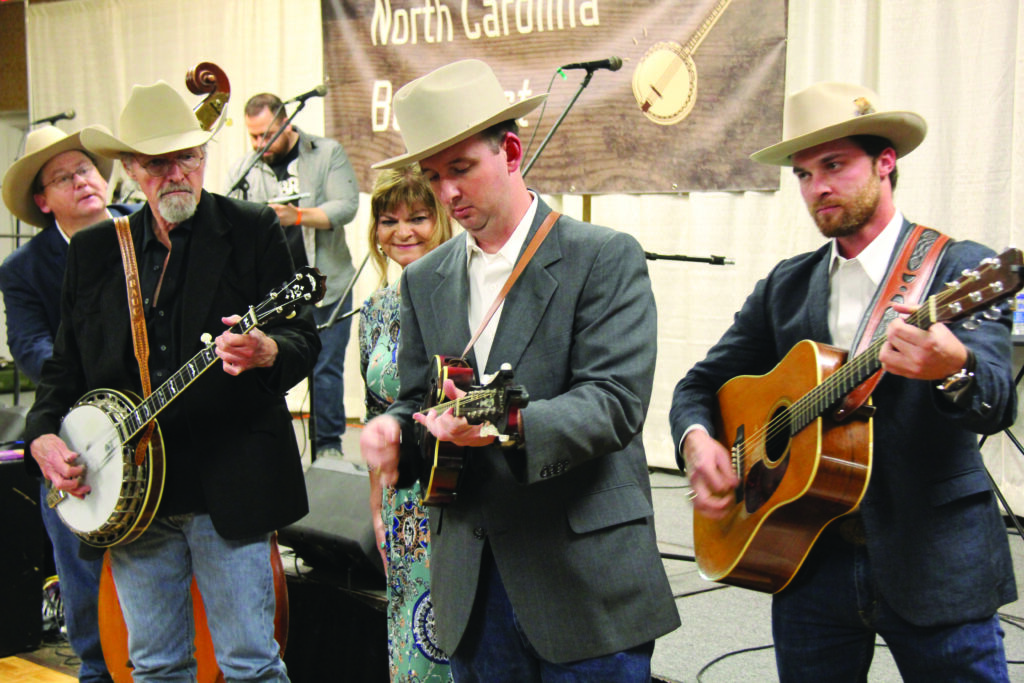
Alan Bibey – “I was really lucky, towards the end, that I got to see him on his good days. I’m really happy that the last four or five times I got to see him, we got to tell each other how we felt about each other. He would hug me and say, ‘Alan, I love you like a brother.’ I said, ‘I love you, too, man.’ The last time I talked to him was when I called him on his birthday, which was October 6th, and that was the clearest-minded I had heard him in a while. We talked for probably 50 minutes and we had the best conversation, talking about whatever came into our minds. He told me in an earlier conversation, ‘I just don’t have the power in my right hand anymore. You know, me and you like to bust it.’ I said, ‘That’s right. We do like to bust it.’ He said, ‘I don’t think I can do it anymore.’ I said, ‘I understand, but you did that aplenty, buddy. You made your mark, so I wouldn’t even worry about it.’”
Lou Reid – “I went to visit Terry seven weeks before he passed. Lord knows that I didn’t know that he would pass this quickly, and no one else did, either. We reminisced about our time together and he was hopeful that the medicine would prolong his life, somewhat. I told him that I loved him, and I hugged him and said, ‘I’ll be back to see you.’ But, I never had the opportunity to see him again before his passing. I think that Terry will be remembered as a driving force in bluegrass music for generations to come. He will be remembered as ‘the Bauc’ and ultimately ‘The Duke of Drive.’”
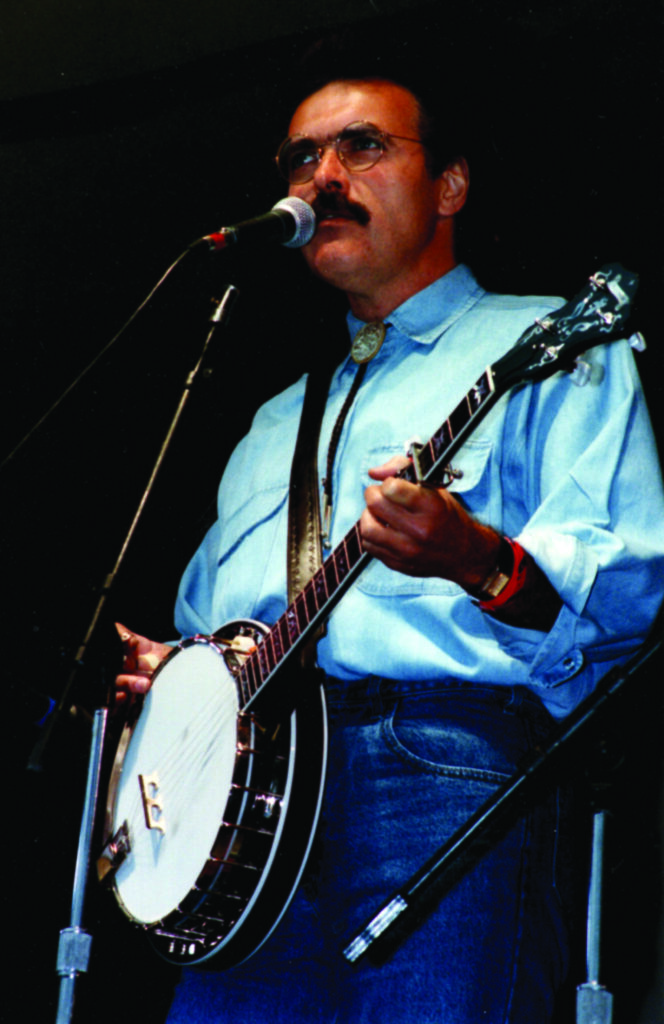
Doyle Lawson – “Terry played the ‘Baucom Style’ of banjo from the first time I heard him play to the last time I heard him play. He never tried to dazzle anybody or tried to draw attention to himself. He was just Terry Baucom, and people gravitated to him because of his demeanor. When he was offstage, the guy was funny and friendly, but you wouldn’t think he was all of those things by watching his stage presence. He was all business onstage and really quiet and totally focused and totally ready to do the job. But, in reality, he was a warm and friendly guy and one of the funniest people I have ever been around. He had his many unique sayings that nobody else had and he’d have us in stitches. He was easy to travel with and he got along with everybody. But, I was always struck by his professionalism. I’m going to miss that feller because every time you saw him he was ‘Bauc!’ He had a lot of admirers that I don’t think he was even aware of, and he will not be forgotten.”
According to Cindy, Terry became aware of his diagnosis early on, it understandably upset him greatly as he stared down his own bleak future. But as time went on, he apparently began to think less of his future and more about his life’s accomplishments.
“Tommy Hough was one of the bass players for Boone Creek and Tommy was killed on his motorcycle when he was in his late 20s and Terry would say, ‘Hough never got to live out his life. Look at what I got to do,” said Baucom. “Bauc said, ‘I got to be onstage until I was in my 70s. Don’t feel sorry for me.’ Even deep into his illness, he approached it with grace and gratitude. Even on the day that he was admitted to the hospice home, it was the first overnight hospital stay that he ever experienced because he was so healthy for most of his life. He looked around and he looked at me and he said, ‘Now that I am here, I know that I won’t be traveling or be onstage anymore.’ Still, he approached his illness with gratitude for the life he had lived, because he realized that a lot of people don’t get to pursue their passions, yet he did it. If somebody can say that, then they have a lot about life figured out. Hopefully, that will be a lesson to folks out there that are just sort of shuffling through life with their head hung down. Instead, learn from Bauc and live every day to its fullest.”