Story Behind The Song Sin City
By Chris Hillman & Gram Parsons
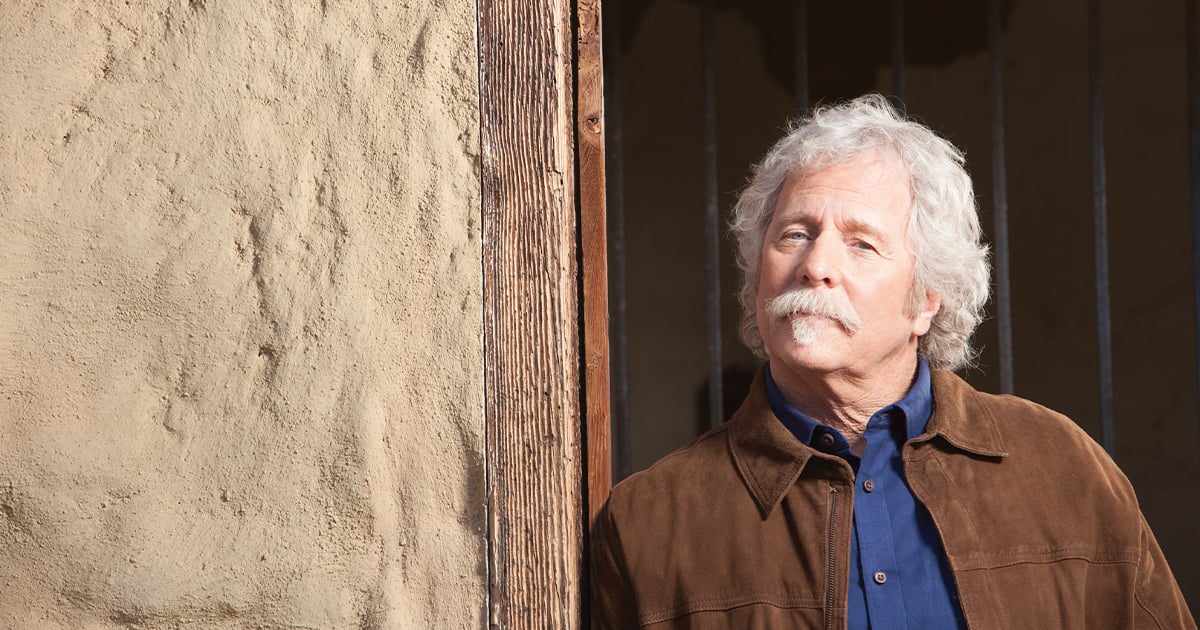
You might wonder what place a Flying Burrito Brothers song has in the world of bluegrass. Quite a worthy one, as you’ll see from the history of the iconic “Sin City,” penned by Chris Hillman (The Byrds, The Flying Burrito Brothers, Desert Rose Band, Manassas) and the late Gram Parsons (The Byrds, The Flying Burrito Brothers).
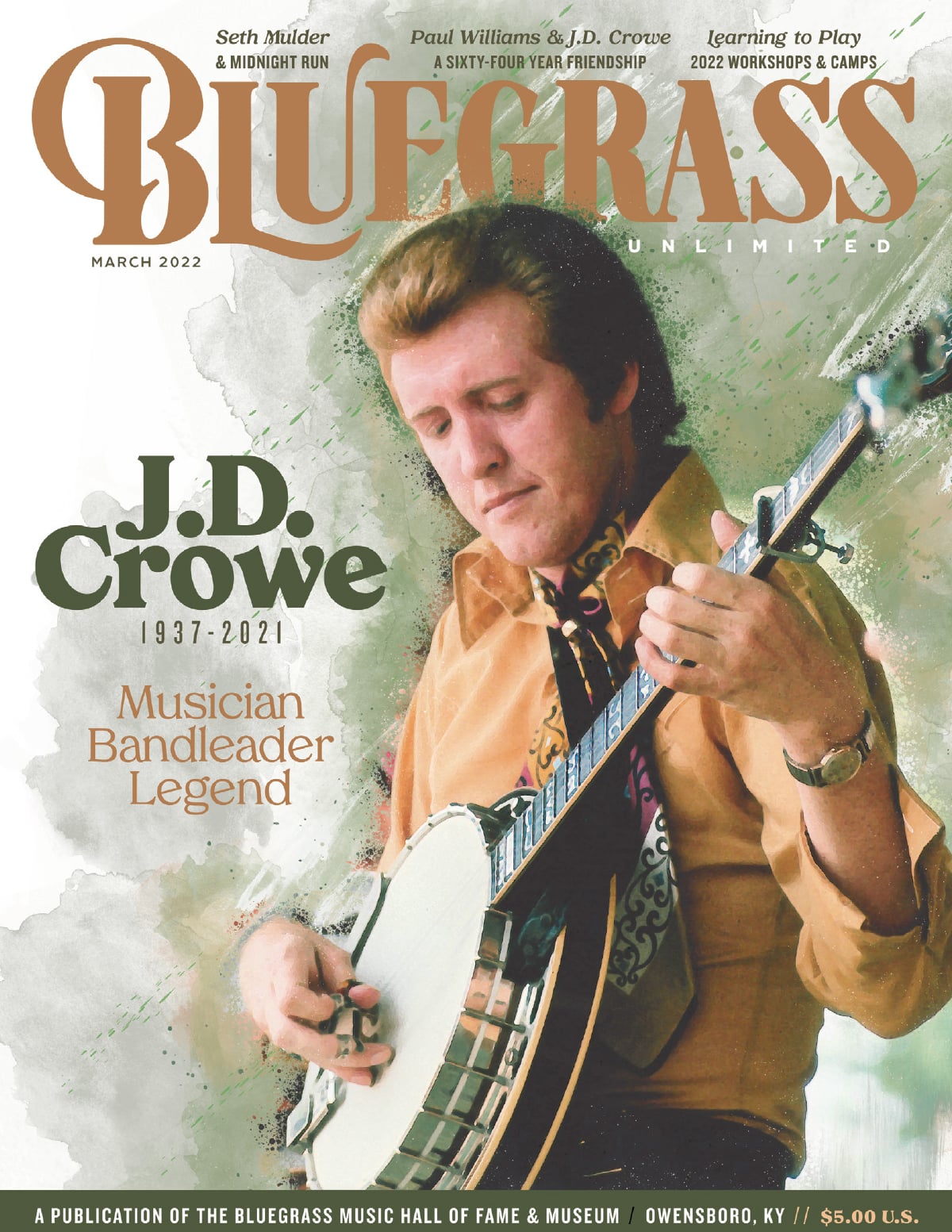
First recorded by The Flying Burrito Brothers (The Gilded Palace of Sin, 1969), “Sin City” has since enticed artists from various genres. It has been covered by country stars Emmylou Harris (Elite Hotel, 1975) and Dwight Yoakum (with K.D. Lang, Just Lookin’ for a Hit, 1989), but not before being given a decidedly bluegrass treatment by innovative bluegrass bandleader and banjoist (and this month’s tribute-issue honoree), J.D. Crowe.
Crowe, who passed away recently on Christmas Eve 2021, first recorded “Sin City” with his band The Kentucky Mountain Boys (1971, Ramblin’ Boy) for an album that was later reissued (Blackjack, 1978). The song also appeared onCrowe’s album with The New South, My Home Ain’t In the Hall of Fame (2005).
Songwriting for the Times
With the wisdom, warning, and easy cadence of an old Baptist hymn, “Sin City” captures the intriguing time in which it was written. In an exclusive interview, Hillman helps us also understand the song’s lasting endurance.
By 1968, Hillman and Parsons had played together in The Byrds and were about to become founding members of The Flying Burrito Brothers. They were sharing a house and, for a while, had become a songwriting power team. In two weeks’ time, they wrote future band hits “Juanita,” “Devil in Disguise” (also cut by Crowe, and later, Cherryholmes) and “Sin City,” to name a few. “We were very different people, but, for a time, we had a real connection,” confided Hillman, of his relationship with the notoriously unpredictable Parsons. “We shared a warped sense of humor and a deep love for country music.”
The two also shared a “terrible” manager, whose devious ways served as inspiration for “Sin City” and came out in its chorus lines (On the thirty-first floor a gold-plated door/won’t keep out the Lord’s burning rain). “He actually lived behind a gold-plated door,” explained Hillman, “in the most garish, ugly condominium you’d ever see.”
Hillman started writing the song early one morning. He had the first verse (This old town’s filled with sin, it’ll swallow you in …) and the chorus before waking Parsons to help him finish. “Gram added a second verse ending with we got our recruits and our green mohair suits / so please show your ID at the door,”he said. “I wasn’t sure where he was going with that, but in the end, it worked perfectly in the context of the song.
“Sometimes you get a song down quickly, and sometimes, you agonize over it for weeks. We had ‘Sin City’ in 35 or 40 minutes. Each verse is a vignette about the culture in Los Angeles in 1968. The vignettes wrap around the chorus, which wraps around the earthquakes (This old earthquake’s gonna leave me in the poor house). In the 1960s, we were all reading Edgar Cayce, with his premonitions. One was about California being swallowed up by a giant earthquake, so we wrote about that. We were grabbing at a lot of things like that, a lot of it was tongue-and-cheek. It’s strange that, when you look at the lyrics now, nothing has really changed. Take it home right away, you’ve got three years to pay and other lines are still relevant.”
Expounding on the references in the song, Hillman confirmed that the last verse, which begins A friend came around tried to clean up this town, was about Robert Kennedy running for President. Incidentally, The Byrds played for Kennedy during his primary, and Hillman shared a lasting regret from that night. “I didn’t meet him,” he said. “Everyone was going upstairs to meet Kennedy, but I went home. Less than two weeks later, he was assassinated. From that day on, I told myself I would never miss an opportunity like that again.”
Country Rocker Born Out of Bluegrass
Before he was a Rock and Roll Hall of Fame member (The Byrds) and four-time Grammy nominee—or earned acclaim as a prolific songwriter and true architect of what we know today as country rock—Hillman was chasing a bluegrass sound. He caught it, too, performing in bluegrass bands The Scottsville Squirrel Barkers and The Hillmen (originally The Golden State Boys), with Rex and Vern Gosdin.
“At 16, I was into folk and old-time string band music,” recalled Hillman. “When I saw The New Lost City Ramblers live, with Mike Seeger playing a Gibson mandolin, I thought, ‘I gotta do that.’ But when I heard Flatt and Scruggs—on the Live at the Newport Folk Festival compilation from 1961—it really struck a nerve. They played the best live cut of ‘Salty Dog Blues’ I’d ever heard. When I heard Bill Monroe and Ralph Stanley, well that was it! But where I grew up in California, you couldn’t find records—let alone bluegrass—to save your soul. When I’d find one, I’d put it on the turntable, slow it down, and try to figure out what they were doing. John Duffey in the early Country Gentleman was someone else I emulated.”
Hillman was a longtime J.D. Crowe fan, too, which made Crowe’s take on ‘Sin City’ stand out for him. “A lot of people have covered ‘Sin City,” but J.D. Crowe doing it was special to me because I came out of bluegrass and, of course, later I got to know him,” reflected Hillman, who met Crowe in 1972 but first heard him on the 1961 Jimmy Martin album Good and Country. “He played this incredible banjo thing on ‘Honey, You Don’t Know My Mind.’ When he recorded ‘Sin City,’ I was totally flattered. I mean, here was another hero of mine growing up, and there’s no better stamp of approval for a songwriter than to have his songs covered by another artist. When I heard it—and it was great—I was over the moon.
“J.D. was a sweet guy and a wonderful musician. He wasn’t a man of a lot of words, but he told me that he loved the song and thought he could do it well with his band. I told him, ‘You DID do it really well, and I’m honored that you saw the song for what it was and that it lent itself to a bluegrass arrangement.”
Author’s note: For more on Hillman and his music, life, songs, and stories, read his captivating 2020 memoir, The Time Between: My Life as a Byrd, Burrito Brother, and Beyond.