

Southern Legacy
Putting The Right Pieces Together
Individual photos by Jeromie Stephens
Take bluegrass A-listers: Don Rigsby, Josh Williams, Mike Anglin, Ron Block, and Steve Thomas. Individually, each is talented, versatile, and well-known throughout the bluegrass community. Collectively, they form a powerhouse group that is destined to have a huge impact upon the bluegrass industry. Meet Southern Legacy.
Rigsby explained the reasoning behind their moniker. “Our name is important. The reason we named the band Southern Legacy is quintessential to our mission. We are southern-born people with the exception of Ron, but he was born in southern California. We have all been heavily influenced by the music of J.D. Crowe and everyone knows his band was the New South. The southern part is about that. We have that New South, southern perspective from the music. The legacy part, we all feel like we have been left a legacy by the first and second generation musicians, a road map to follow. We have all been influenced from their legacy. This is our opportunity to leave this as a big part of our legacy. I feel this band may be my most important piece of my legacy.”
Williams agreed. “Southern comes from the New South thing. That’s where our interests were. The five of us wanted to bring our own perspectives in and carry on, still playing traditional bluegrass, but also gospel, country, who knows. We all want to bring our own ideas to the table, but carry on the legacy.”
Though the band consists of bluegrass super heroes, they have their feet firmly planted on the ground. Rigsby declared, “Everybody in the band is as cool as can be. We communicate well and that’s the key to success. No jealousy, no big I’s or little u’s. I want to lean on them. I respect them all as being better than me. I feel the least among them, but they’re all really modest. They all have the credentials to be sold on their selves, but no one is like that. I’ve been doing this for 40 plus years and I’ve never been in a situation exactly like this before where everybody was on an even keel and didn’t have attitude issues. I’m not saying you won’t have good days and bad, that’s just the nature of living, but these are all solid people. When we stand together, I think there’s a whole lot we can accomplish. We’ve got enough talent that things we want to do, we can achieve them. The key factor is making the public aware and we’re serious about it.
“No one in this band is an unknown. Everybody has a history and good standing in the business. We have equally talented people. I feel like we have a winning team. Anytime that you’re with a bunch of guys that pray, you can’t really say anything negative about that. Everybody here is faithful, not perfect, but just human beings who believe in a higher power and His ability to direct our path.”
Williams underscored his band mate’s remarks. “I see this band being a big and long lasting thing. We all decided that from day one that there would be no egos. We all have notoriety on our own. We want to create our own stuff as a band and maintain the control.”
Rigsby likened the formation to that of putting together a jigsaw puzzle. “How Southern Legacy came to be is an interesting little tale. I got to know Josh (Williams) when he was just a kid. His dad was his biggest advocate, kind of like mine. He encouraged Josh to hang out with the older guys in the field and I was one of those. At some point in his career, he decided to do a solo record and I was tabbed to produce it. I ended up producing his first two solo projects for Pinecastle Records. I was a fan of his work. That guy has enough talent for a whole band. He can play any of the instruments. If he could duplicate himself, he wouldn’t need anybody! He’s a great singer, a great player, and became a really good friend. So at various times when our paths crossed, we’d sing a little together. We got to thinking about how cool it would be to do it all the time together.”
Williams echoed his sentiment. “Don and I had talked about working together for years. We knew we sounded good together. We started doing things for MACC (Musicians Against Childhood Cancer). We had something really special between us.”
Rigsby laid the ground work. “One thing led to another and the first generation of the band was me, Josh, and Mike (Anglin). We were using interchangeable people at the time until we could find the right pieces for the puzzle. Mike and I had decided that we were going to pursue the best of the best. Why wouldn’t we?
“I called Ron Block and asked if he would be willing to play a couple of dates with us. He agreed. I can’t say enough good stuff about that guy. He is a multi-Grammy award winning musician, a theologian, an author, a singer, and a songwriter. He’s just a genuinely good person. When we got together and played, there was just a magic with that piece and he wanted to be a part of it. He was one of the biggest pieces that we could add to the band. He’s a big deal! (He’ll be there) as full time as he can be. He’s still in Union Station. He’s been there over 30 years. He’ll be with them as long as there is a there to be, as he should. We agreed to work around his touring schedule with Alison. The band will continue to tour and we will perform with substitute players until his commitment with Alison has been fulfilled. So we got that piece nailed down.
“We had used different fiddle players. I was calling around and don’t know why, but Steve Thomas had slipped my mind. When I saw his number in my rolodex, I said, ‘Hey! Now that guy right there has the pedigree! He can play all kinds of music and he’s a good hang.’ I talked to the guys about it and they said to give him a call. Sure enough, he was looking for something like this to get into and that completed the final piece to the puzzle. When we got together to play and sing, it was just kind of magical.”
Thomas agreed. “Everyone is so talented. It’s not going to sound like we’re trying to copy anyone. Any style of music, these guys can do as well as anybody. We’ve all wanted to play together and decided this is the time to do it”. Each band member shared part of their own legacy within the music industry.
Don Rigsby
“I was blessed to be born and raised in an area right in the center of Keith Whitley and Ricky Skaggs’ pathway to each other. They became popular locally even as kids. I got to experience all that lore. I grew up with one of Keith’s nephews and that started a keen interest in music for me.
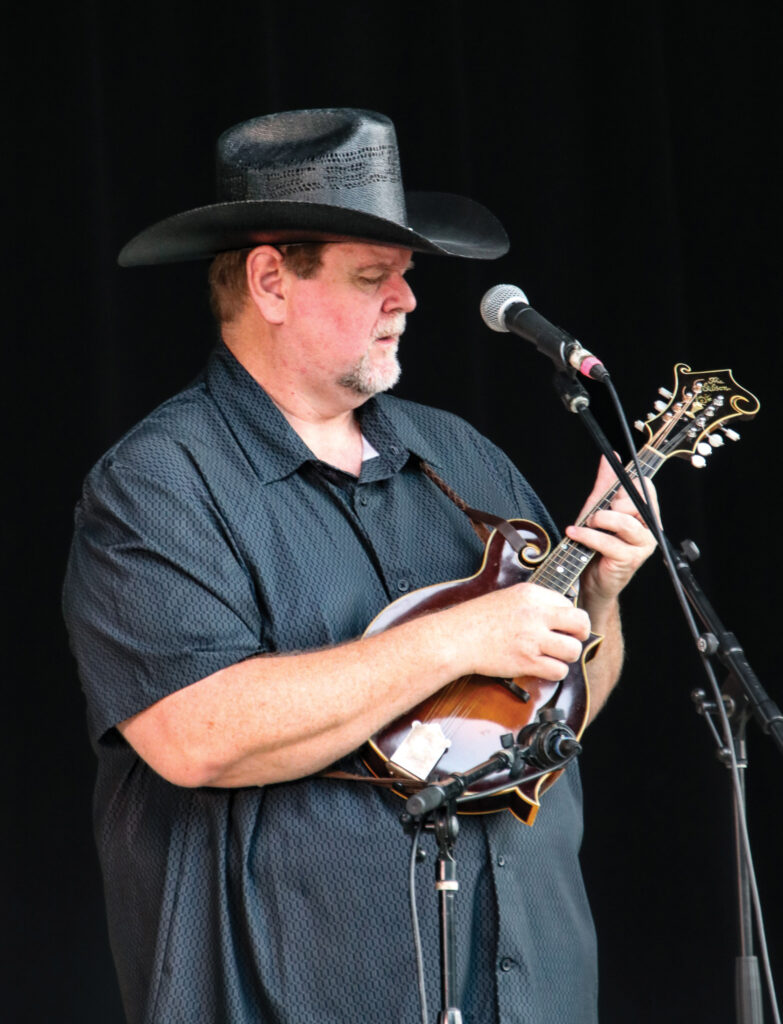
“My brother, Ron, is a really, really good banjo player who won all kinds of contests and picked for Charlie Moore. He moved off so I wanted to follow in his footsteps, due to the fact that my dad loved it so much. Mom seemed to tolerate it pretty well, too. Guitar was my first instrument. I played it at age 11. Got my first mandolin at 13 and started playing fiddle at 17. I’ve always sung since I could talk. Mom said that I would sing all the time.
“I grew up with Primitive Baptist Church singing, nothing but vocals (all a cappella, no instrumentation). The preachers (Jerry Brown and Paul Keaton) would sit me on the pulpit with them. They’d hand me a songbook even when I couldn’t read. I would pretend like I was reading. They lined out the songs so I heard the words like the stuff Ralph Stanley always did. He was a big influence and very popular in my area.
“Ralph became one of my best friends, a mentor, and someone that I could count on to give me straight advice and an honest opinion about things. He was instrumental in helping me. I was saddened when he passed, but honored to be part of the Masonic services that they held at his funeral.
“My first band was the True Grass Band with another friend of mine, Johnny Lewis, who now plays banjo with Wildfire. We grew up making music with John Whitley. We started while I was still in high school. Then Johnny and I went on to college at Morehead State University. There we found different musicians to play with, but kept the name, True Grass Band. I graduated with a journalism degree with an emphasis on PR and advertising and a minor in radio and television. Imagine that from a musician!
“Since I was such an avid follower of Ralph, I got to know his band. Charlie Sizemore was the lead singer in the band for nine and half years. When he started his own band, I had the opportunity to play with him the latter years of my college days.
“After college, I went to work for Vern Gosdin, singing the high parts and playing utility instruments. I moved to Nashville, stayed less than a year, and didn’t like it so I came back home. I wound up joining the Bluegrass Cardinals for two years, then JD Crowe & the New South just shy of three years, then the Lonesome River Band for just shy of seven years. I wound up having my own band and one with Glen Duncan called Rock County, then Band of Ruhks. I’ve done a ton of recording work. As people introduce me, they say I can’t keep a job!”
Josh Williams
“I started when I was five years old. My grandmother lived next door and kept me while Mom and Dad were at work. She played the ukulele. One day I said, ‘Granny, I want to learn how to do that.’ She sent me to get my little one, tuned it up and taught me how to play right then and there! That’s when something clicked. It made sense to me.
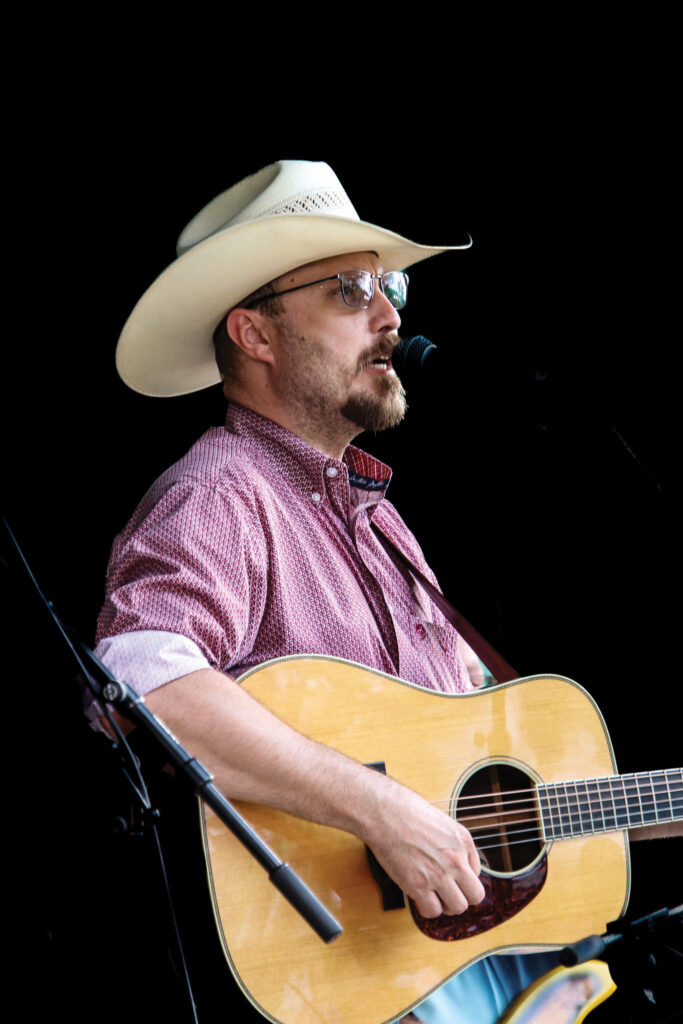
“Soon Dad started teaching me guitar chords. When I was eight years old, I saw Hee Haw. Mike Snider and Ronnie Stoneman were playing banjos together. I pulled my dad out of the shower and said, ‘that’s what I want to play!’ I started taking lessons from Scottie Henson in western Kentucky. He was a Scruggs-style player. I fell in love with Earl Scruggs. Dad had a lot of Flatt & Scruggs records that I listened to all the time. That was my first exposure to bluegrass and I fell in love with it. I remember waiting on Dad to come home from work so we could sit down together and listen to those records.
“Once I started learning banjo, it was pretty much all downhill from there. I got enamored with it. I wanted to play banjo, guitar, mandolin, and learn everything that I could. My uncle was a fiddle player so he made sure that I had whatever instrument I needed. It might not have been a great one, but it was one. I learned how to play bass and Dobro. He taught me how to play a fiddle. By 12, I pretty much learned how to play every bluegrass instrument. My classmates were into sports growing up and I was into music. I knew that I wanted to do that for the rest of my life.
“I entered contests and won some state titles. I actually won one junior national title for juniors under 12 on the Dobro in Smithville, Tennessee, but there was only me and one other guy in it. I beat him, but he beat me in all the other instrument categories. The funny thing is that was Cody Kilby who played for Skaggs for years. He and I grew up playing contests against each other. He took more to the guitar and Dobro where I took more to the mandolin and fiddle. Another funny thing, as kids we were both banjo players and as adults, we ended up being guitar players.
“I met J.D. Crowe when I was 10 years old and he took me under his wing since I was a banjo player. He called me to come sing when Ricky couldn’t make a show. Then I met Michael Cleveland. Pete Wernick put together for IBMA what he called the Bluegrass Youth All-Stars. We performed on the Awards Show when it was still in Owensboro. I picked banjo, Cody was on guitar, Chris Thile on mandolin, Michael Cleveland on fiddle, and Brady Stogdill was the bass player. It helped me because I gained those friendships through that. Then Chris Thile’s family moved from California to western Kentucky and we were literally 15 miles from each other. We played all the time together. It definitely helped my playing because I played guitar all the time.
“All of us ended up moving to Nashville at some point. I joined Special Consensus in 1999, the second semester of my senior year of high school. After graduation, instead of going to parties, I went on the road. We started in Branson the next day. I was with them five years and then Rhonda Vincent called. She wanted me to try out for guitar. She said Cody Kilby had recommended me. I tried out and she offered me the job on the spot. I started with her in January 2004. She fired me in 2007 because I was partying too much. That’s when the drinking and drugs started being an issue for me.
“I started my own band and played mandolin with Tony Rice Unit for five years, bouncing back and forth. I checked myself into rehab in 2010, but they let me leave to play Merlefest. Tony knew where I came from and where I was going back to. He offered to sponsor me which was awesome when you have your hero offer to do that! He was my biggest influence on guitar. I thought Tony was the greatest and coolest guy that I had ever seen. I loved his singing. I initially learned who he was due to the Rounder 0044 album. It was a really cool friendship for me.
“I went back to work with Rhonda in 2013 and stayed until 2021. By that time, all three of my kids were school age and the only time I could see them was every other weekend. I couldn’t be gone 300 days a year anymore. I felt like I’d already missed a lot. I’ve got a teenager now and it’s going by so fast that I didn’t want to miss anymore. I wanted to be there. I’ve been able to do cool things with my kids, like fishing with my son.
“Music has been something I’ve always been in love with. I’ve always wanted to play bluegrass. Something about it just really spoke to me. I had fun with it. That’s where I found my individuality.
“I miss Rhonda. She was really good to me. I’m the only one that she fired and rehired. I’ve been really blessed to be surrounded by bluegrass all my life and to be able to become friends with all the people that I looked up to.”
Mike Anglin
“I was raised in a musical family. My uncle, John Cosby, had a regional band from early 60s until 2012 and won the first SPBGMA contest in Nashville. He gave me my first professional job when I was 15 in 1985. We were playing a ton back then. I’ve been on the road ever since chasing dollars.
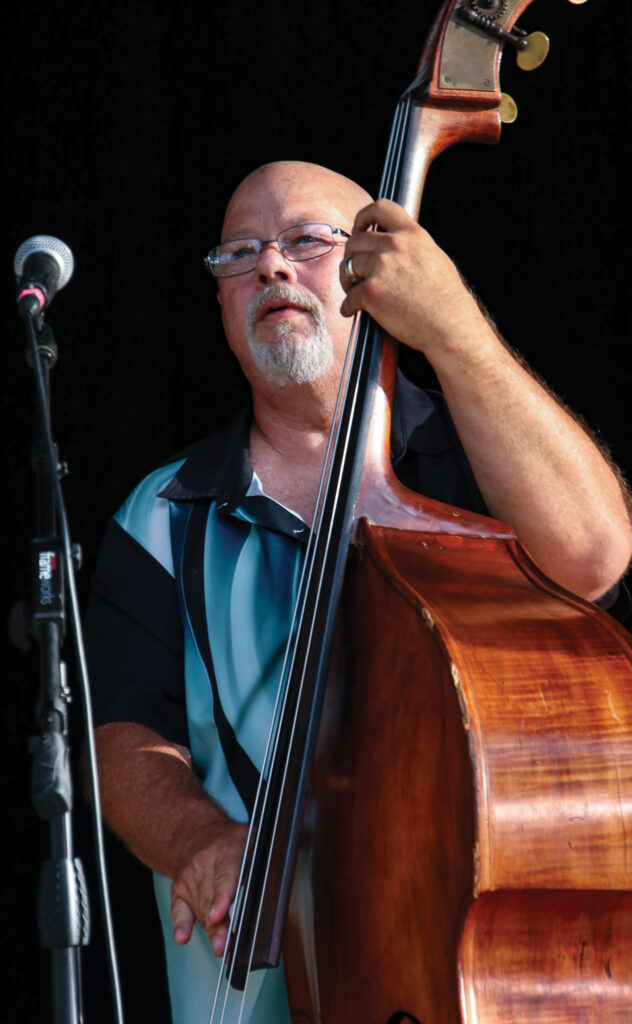
“I have been blessed to play with some of the best in the business including: Bill Monroe, Ralph Stanley, Tony Rice, Ronnie Bowman, Dave Evans, Continental Divide, Lonesome River Band, Larry Cordle, and Charlie Sizemore. Those were high points for me. Getting to play with Monroe was a huge thing.
“Bass has always been my main instrument. I’ve played half the time electric and half the time acoustic over the years. Electric seems to come and go in cycles in bluegrass. Hanging with LRB, electric seemed to suit their sound. Playing with Continental Divide, the upright laid right in there and gave David (Parmley) what he was looking for. For Southern Legacy, both serve as a good fit. On stage, I’ll be switching back and forth. It depends on the song. We have the option with these guys to do a lot of different things. It gives me the opportunity to play whichever bass that I want.”
Ron Block
“My mom loved country music, so the earliest music I remember hearing was Marty Robbins’ Gunfighter Ballads & Trail Songs. I got a guitar when I was about 11. My dad had a music store in Lawndale, California, called Hogan’s House of Music.
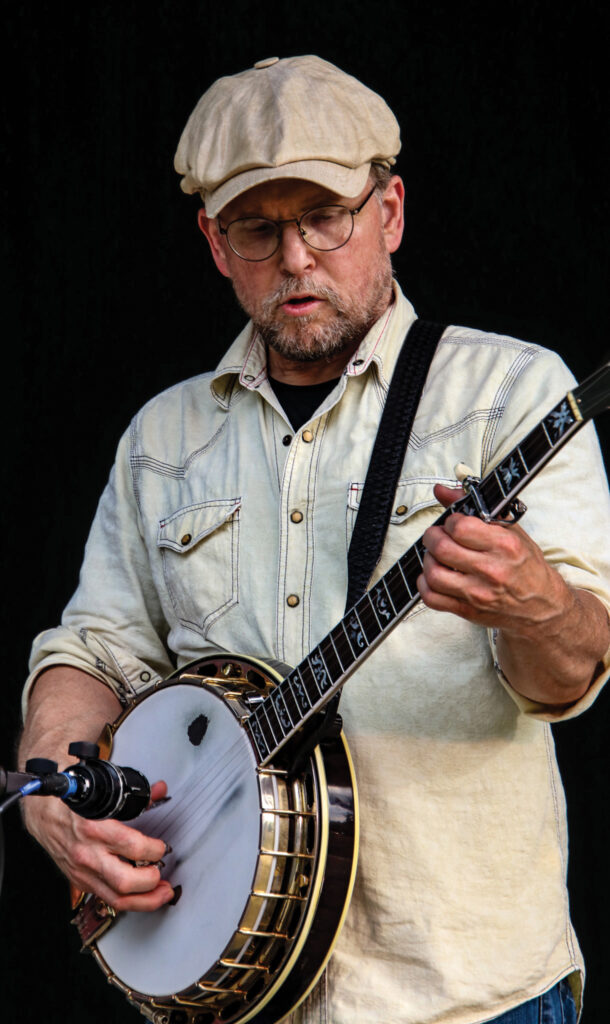
“When I was almost 13 in the late 70s, I heard Lester Flatt on TV and I think Haskell McCormick was on banjo. I had never seen people play bluegrass. I said, ‘Dad, I need a banjo. I want a banjo.’ Nobody played banjo that I knew of, but I didn’t care. Dad bought me a Harmony banjo and I immersed in bluegrass. John Hickman was helpful; he gave me a stack of reel-to-reel tapes to put on cassette, and that music became my soundtrack for the next few years – live Flatt & Scruggs, Crowe with Red Allen, Crowe with Rice and Skaggs, Jimmy Martin, the Stanley Brothers. In those teen years I kept upgrading to better sounding banjos.
“At 16 I started working for Dad. He loaned me money for a car and I bought a ‘65 Mustang. I paid him back through working at the store. The car gave me freedom; I could go to festivals, jams, concerts. The festival scene in California was great – national acts would come through nearly every year – Monroe, the Osbornes, Don Reno, Crowe, Newgrass Revival, Hot Rize, Tony Rice Unit, Larry Sparks, Ralph Stanley – you name it, we got to see it. The first festival that I went to, I was asked to join a band. So I got in a local band and started making money on the weekends playing bluegrass in addition to working for my dad.
“In ’85-’86, I quit working for Dad and quit the band, and attended South Plains College for two semesters. That was a great experience. John Hartin, Ed Marsh, and Joe Carr were all good to me, and hilarious. I used that time mostly to study and practice, and I didn’t work a job while I was there – in fact I never had a day job after I quit working for Dad, other than teaching lessons a few times.
“Before and during South Plains, Eric Uglum and I had been playing as a duo together. We started a band with Mike Bub and Butch Baldassari called Weary Hearts, traveling to the Pacific Northwest, Colorado, Nashville, Branson, Missouri, and up to BC and Alberta. At around 23, we were in up in Canada and I met my future wife. We married the next year in July of ‘88.
“Throughout my travels with Weary Hearts, I was meeting other young players who would eventually be national musicians. Barry Bales, Tim Stafford, and Adam Steffey were in a band called Boys in the Band. I met them at Branson, met Alison at SPBGMA in Nashville, and Dan Tyminski, too, along the way. We’d get together and jam, which is one of the best things about bluegrass; so many of my musical relationships started with the jamming culture.
“After Weary Hearts I played for a year or so with Eric Uglum on guitar, Rob Ickes, and my wife, Sandra, on bass. When she and I moved to Nashville in November of 1990, I played guitar with Lynn Morris’ band for maybe eight months, but I quit because it was just too much of a drive. Later that year Alison called me in October ’91, and I joined AKUS. After several days of rehearsal, my first weekend performing with the band was the Opry television segment, a taping of Hee Haw, and Austin City Limits. I can’t imagine a better career than I’ve had playing with Alison and the guys all these years.
“In my own music since about 2000, I’ve made three albums of original songs, two Christmas instrumental recordings, a gospel album with Jeff Taylor, a bluegrass banjo instrumental album, a peaceful guitar instrumental album, and two recordings with Irish tenor banjoist Damien O’Kane – blending Celtic music and bluegrass.
“I’ve known the guys in Southern Legacy for a long time from playing festivals and other events – we’d run into each other on and off through the years. They asked me to play a couple of gigs a while back, and I had a blast. Then they said, ‘Hey, want to be in the band?’ It’s great fun. They’re good, solid guys, some of the best singers and pickers around.”
Steve Thomas
“I was 15 years old when I got invited to play with a bluegrass band from the Norfolk & Western Railroad. At age 17, I filled in for Tim Smith with the Bluegrass Cardinals. I snuck out of school, got on a bus, and rode with them to the Everglades in Florida. I played with Del McCoury in 1982 and Jim & Jesse in 1983. I was anxious to get on the Grand Ole Opry. It was a big deal.
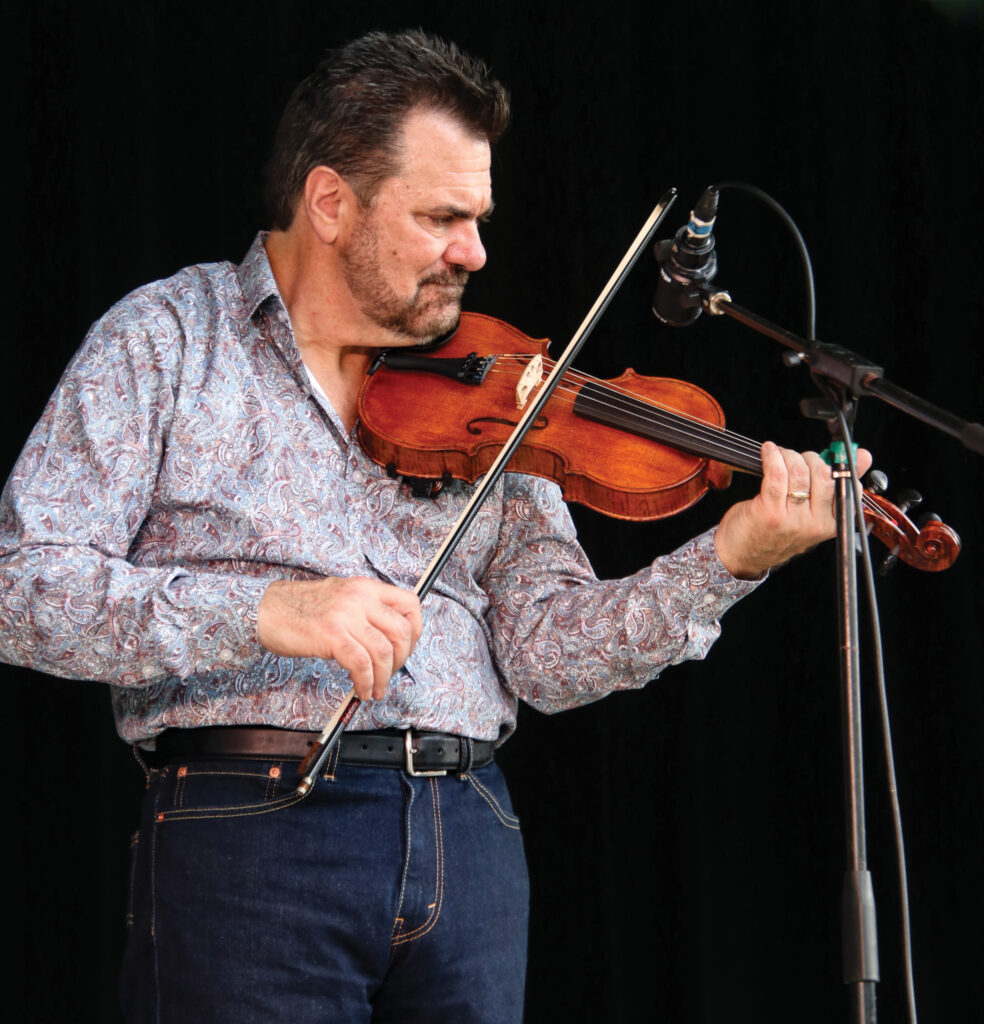
“I played with Lost & Found, the Whites, the Osborne Brothers, and was a founding member of Lonesome River Band with Tim Austin. I came up with the name for that band. That’s one of my favorite things that I’ve ever done.
“I worked with various country artists: Barbara Mandrell, Kenny Chesney, Brooks & Dunn, LeAnn Womack, John Michael Montgomery, Lorrie Morgan, plus did lots of studio and freelance work.
“Don Rigsby called me in October (2023) and asked me if I had any interest in playing fiddle with Southern Legacy. After a brief conversation about their vision for the band and their role in the bluegrass community going forward, I was very excited to say yes. I love playing the stuff that they play. Coming of age in the 80s, one the most innovative and influential fiddlers was Bobby Hicks. He was playing on all those Bluegrass Album Band recordings. That’s right up their alley so I get to play some of that stuff. With Southern Legacy, Bobby Hicks’s influence on my playing has a natural vein. You just can’t beat it so you might as well just play it.
“At my age, 62 in September, I’ve done enough to be content and perfectly satisfied making music and playing with my band, or at least that’s what I thought. Back in 2008, I played fiddle two seasons with J.D. Crowe, so I’ve been invited the last couple of years to play at Crowe Fest. In 2023, I played quite a few sets of music with Don Rigsby. About a month after that weekend Don called, ‘We’ve had several different fiddle players and haven’t really filled that spot, would you be interested?’ I think it providence that I played that festival because we don’t do it for the money, we do it to tip our hat out of respect to J.D. Crowe.
“Southern Legacy was Don’s brainchild. He and Josh had wanted to do something and bring our own flavor to it. He called about doing something with better musicians. When Don asked me, I said ‘I’d love to play with Southern Legacy.’ These guys are so pro and so solid. We’ve all been friends for years. We all respect each other and have been fans of each other.”
Two iconic promoters in the industry weighed in on the formation of this conglomeration of talent. Milton Harkey of MRH Bluegrass noted, “About once in a generation, it seems for bluegrass music that a band comes along that ‘gets it.’ The music they play is within the pillars of bluegrass (as Tony Rice referred to it). They don’t try to redefine the music, and their music is played and sung in a manner worthy of the actual genre itself. When listening to Southern Legacy, I hear bluegrass played and sung impeccably and when that’s done you get bands like Flatt & Scruggs, the Bluegrass Album Band, and Southern Legacy. Remember, this band has instrumentally and vocally paid the price to be able to play in this genre. They are worthy!”
Ernie Evans of Evans Media Source shared, “Less than a year ago, a serious discussion and growing concern regarding the loss of so many bluegrass legends in such a short period of time became a hot topic of conversation throughout the bluegrass industry. What made it so important was that our legends were really not replaceable and we were left with a void that may never be filled. Compared to other genres, ours seemed too young to be already having this problem.
“What we didn’t expect was a band of young legends in the making with decades of their own music, sharing a common love for traditional bluegrass to form a super group perfectly named Southern Legacy.
“This group not only pays respect to the legacy left behind with spot-on renditions of some of the greatest tunes ever recorded, but also offers so much more to their audiences. Their combined talents form a chemistry that is also producing a fresh sound that we have all been waiting for. Southern Legacy has restored a confidence in our industry that ensures us that our pioneers left their music in good hands. When these boys take the stage, I can only imagine that the legends that have left us have to be smiling, knowing that their music lives on and is done with justice.”
Looking to the future of Southern Legacy, Rigsby noted, “We’re going to release a record and tour all that makes sense; that is financially feasible to do. I don’t want to start any more new bands. I’ve done that a time or two. At my age, I just don’t want to do it anymore. This is my last hurrah as far as starting new bands. I plan to be here until I retire if I have my way about it.” Williams stressed, “It’s going to be original stuff with New South flavor. There’s always going to be that no matter what we do.”
In what continues to be many positive developments, the band has officially signed with Pinecastle Records, and the buzz is building around their highly anticipated new music. They’ve been hard at work in the studio, blending their rich experience to craft an album that is sure to captivate their audience. Their first single is about to be released, and if you’ve caught one of their recent live performances, you might have already had a sneak peek at the new tracks.
Anglin shared his excitement: “The audience’s reaction has been incredible! We’re thrilled with all the positive feedback and we can’t wait to get this music into fans’ hands. The experience of collaborating in the studio with this group of musicians is one of the high points in my career.”
Additionally, Southern Legacy is gearing up for an exciting year ahead. In March, they’re heading to Prague, Czech Republic, for the European Bluegrass Summit. They’ll be hosting workshops to inspire young musicians and performing concerts at the iconic Pyramida Hotel for bluegrass enthusiasts, promoters, and representatives of the International Bluegrass Music Association (IBMA) & the European Bluegrass Music Alliance (EBMA). This event, organized by Iva and Rostislav Capkova of Capek Instruments, is not to be missed.
Recording and touring artists, ambassadors and torch bearers, they are all on a mission. Stay connected with Southern Legacy for thrilling updates and events. Follow them on social media and be part of the journey as they continue to make waves in the music scene.
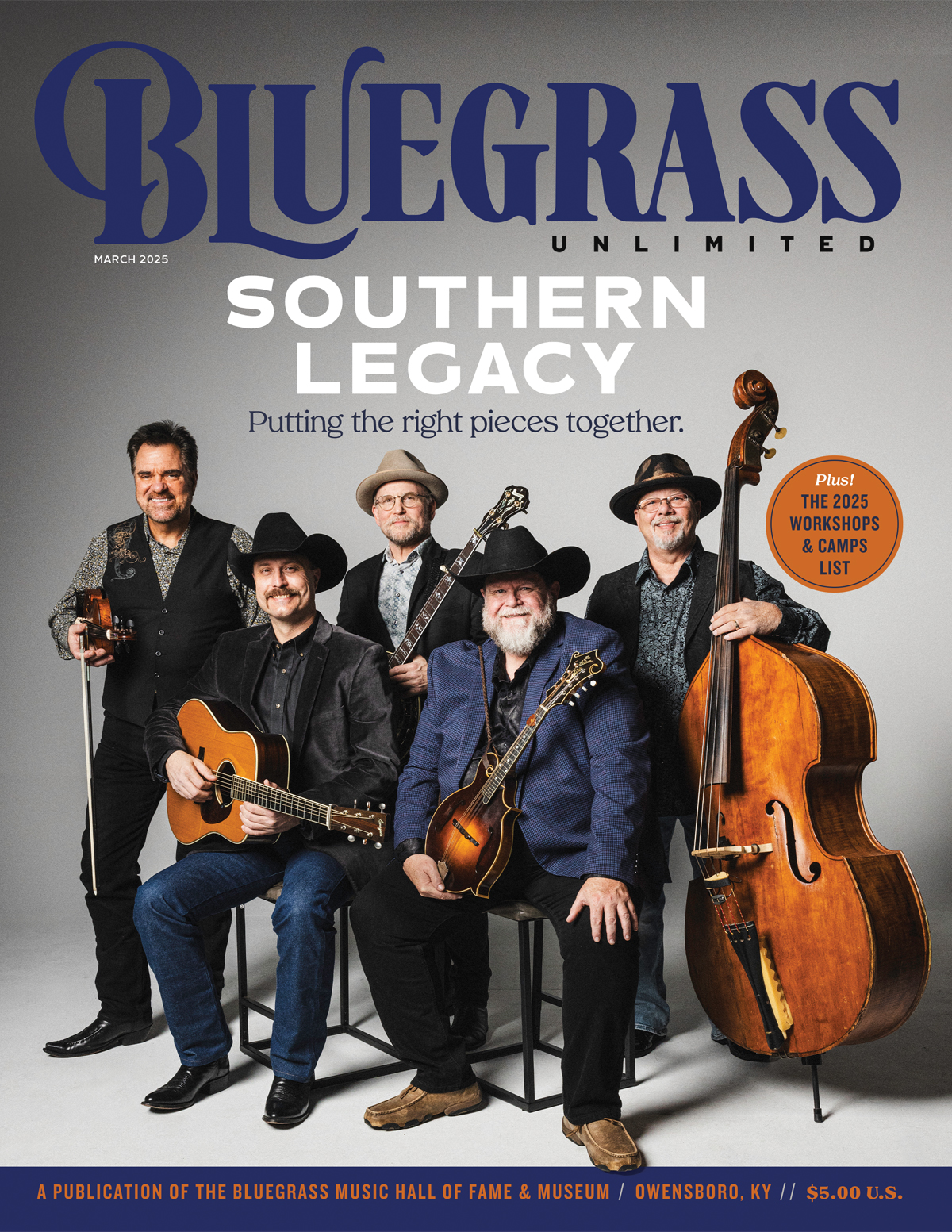
How do I get 8 magazines I need March edition?