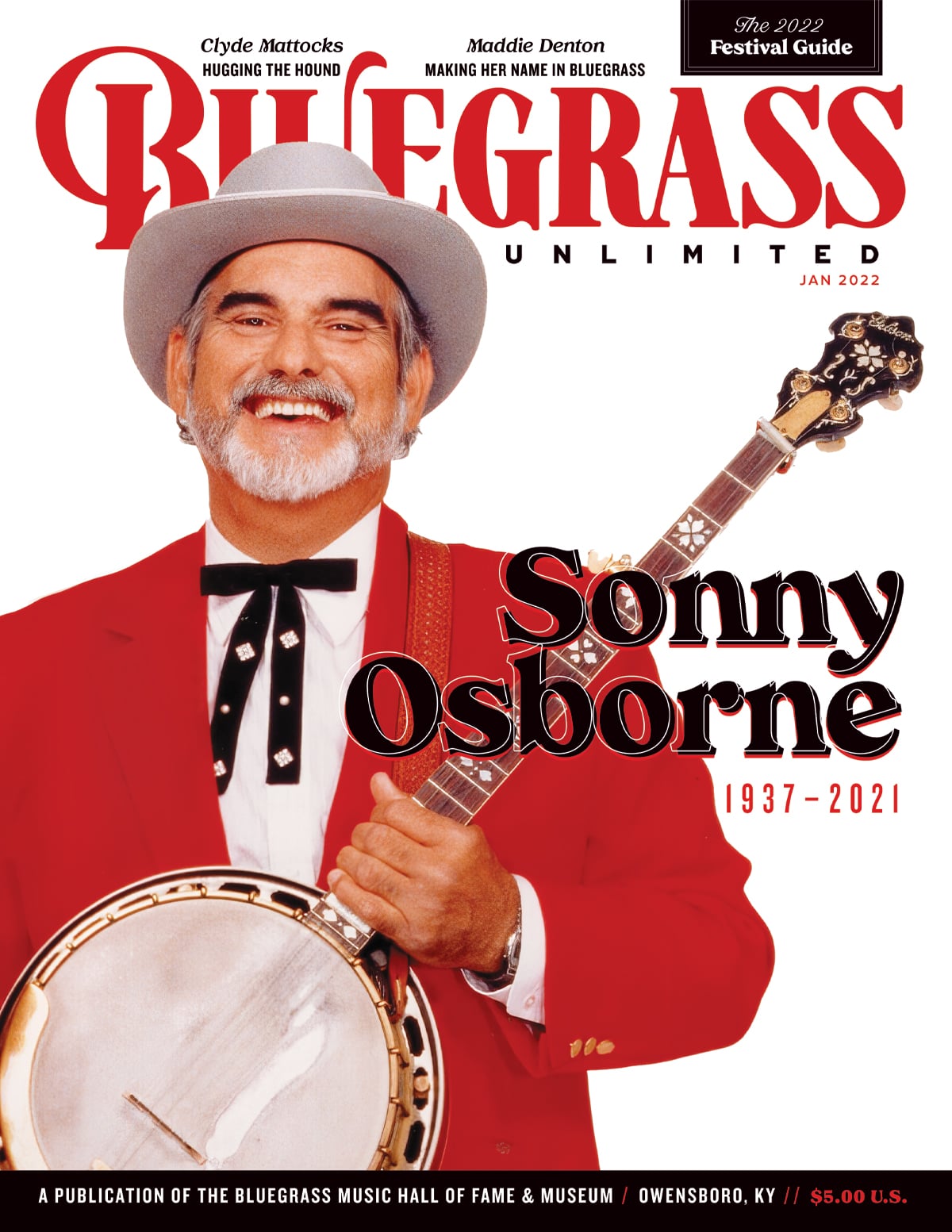
Sonny Osborne
Remembered by his Older Brother Bobby and his Friends in the Bluegrass World
The first signs that bluegrass legend Sonny Osborne was in real trouble came with the announcement that he had experienced a stroke in late August of 2021. The reality of what was to come was further solidified when it was announced that his weekly “Ask Sonny Anything” column on the Bluegrass Today website would be suspended. On October 24, 2021, Sonny’s body gave out and he left this world behind.
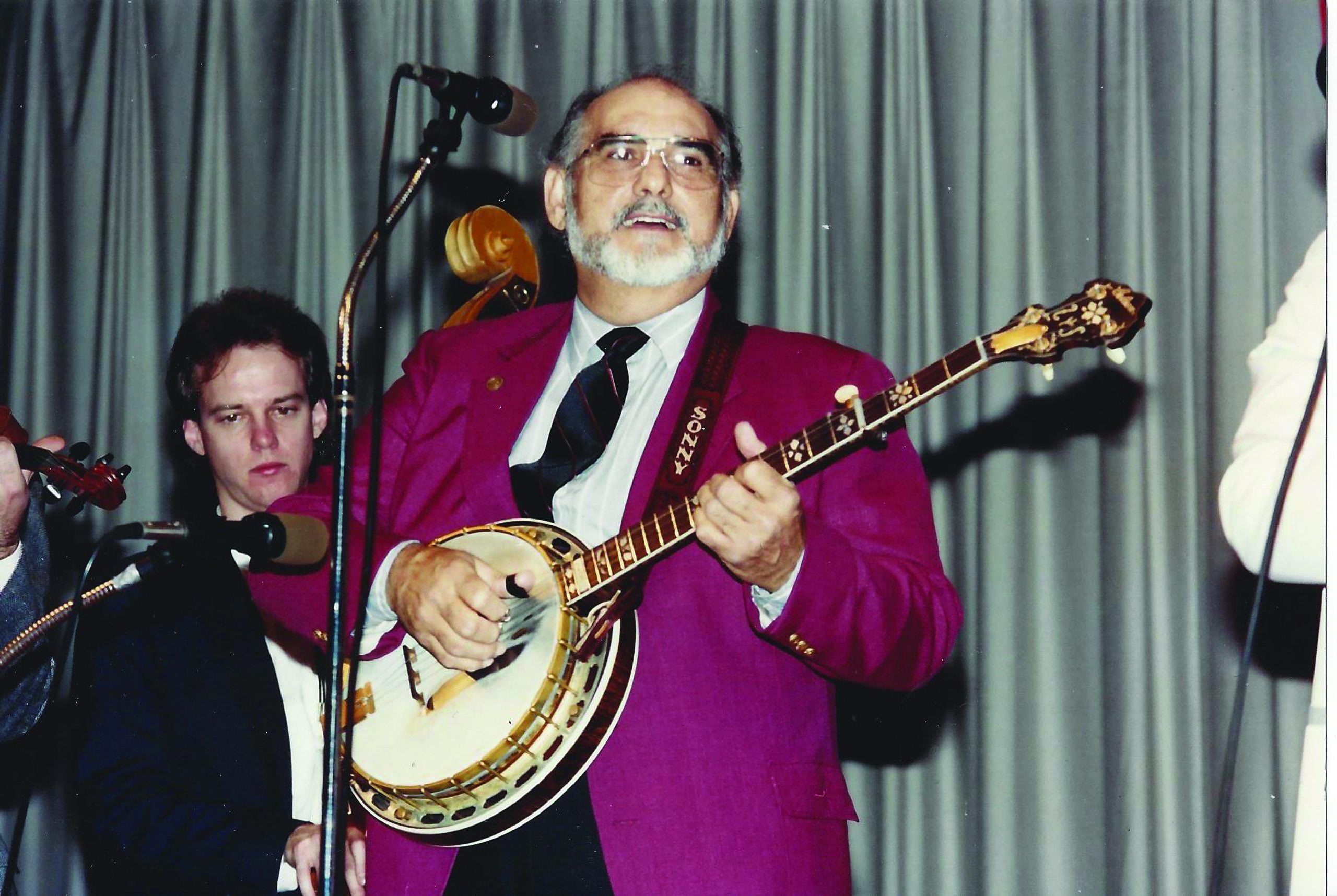
Although Sonny had retired from the bluegrass stage in 2005, the eventual creation of the weekly “Ask Sonny Anything” column proved to be an impressive final act for the world-renown banjo player and singer. Every weekend, the column took advantage of Sonny’s bluegrass knowledge and penchant for expressing his opinion on things in no uncertain terms. With his wife Judy typing in his answers in real time, Sonny took on multiple questions from his fans and bluegrass enthusiasts week after week with both humor and unvarnished views on music and the characters who made the music. After the stroke, however, Sonny’s highly-anticipated stories and insight ended.
Sonny and Bobby Osborne created over a half of a century of great bluegrass music together. They did so by combining Sonny’s powerful banjo playing with Bobby’s stunningly pure tenor voice and mandolin playing and a choice of songs that would become standards of the genre. It is tough to lose a sibling. With Sonny and Bobby Osborne, there is the added weight of 50 years of accomplishment, a career that made them world famous and an undeniable choice for their plaque in the Bluegrass Hall of Fame and Museum in Owensboro, KY.
With the weight of all of that in mind, I called Bobby Osborne a little over three weeks after the death of his brother, and did so hesitant yet not nervous. Unfortunately, I have sadly written many tributes over the last 20 years as our first generation of bluegrass artists continues to fade away. Bobby Osborne, however, was open and happy to speak about his fallen brother.
As my conversation with Bobby Osborne begins, I call upon the common ground between us, letting Bobby know that my family was also a part of the Great Migration of folks who relocated from Appalachia to Ohio and other states in the region during the last century. The Osborne’s went from deep Eastern Kentucky to Dayton, OH, while my family migrated out of West Virginia to Cincinnati, Ohio, a couple of decades later.
“That all happened in West Virginia and Kentucky and other states, of course,” said Osborne. “There were a lot of guys working in the mines back then, and they still are doing it, for that matter, although they have a lot better equipment now than they had back in those days. Coal miners are some of my favorite people. I admire coal miners for going back underground and making a living digging coal, and have always felt that way.”
For a young Sonny and Bobby Osborne, it was quite the change to move from the heart of Kentucky to the more industrial Dayton. To the Buckeye State’s gain, those mountain migrants thankfully brought their culture and music with them as they travelled north. “There wasn’t much work back then where we were down there, so my Daddy decided that it was time to move on,” said Osborne. “So, he went up to Dayton to work for the National Cash Register Company and retired there. I spent a few years in Ohio before I was called to military duty in the Marine Corps. I began to play music, though, a little bit before I went to be in the Korean Conflict.”
A lot of folks do not realize that Bobby began to make his mark in bluegrass music for a short yet memorable time before he was drafted into the Marine Corps. “First of all, I got tied in to trying to sing like Ernest Tubb,” said Osborne. “I was singing his songs and trying to learn them. Then, I was running across the radio dial one night and was listening to the Grand Ole Opry and I heard Earl Scruggs playing the banjo. I found out he was playing with Bill Monroe. I used to have a low voice, trying to sing like Ernest Tubb, but all of a sudden my voice changed and went into a higher range. That is when I began to listen to Bill Monroe and switched to singing his songs and started to play bluegrass music. I heard Flatt and Scruggs when they were still with Monroe and I was just loving it. Then, Sonny began to try and play the banjo like Earl Scruggs.”
Early on, however, Bobby says that his younger brother Sonny was more interested in playing football in school. But after watching Bobby’s early pre-military gigs with the Lonesome Pine Fiddlers and briefly the Stanley Brothers, Sonny got bit by the music bug. It had to be cool for a very young Sonny to watch and hear his older brother of six years finding success while playing onstage and on the radio.
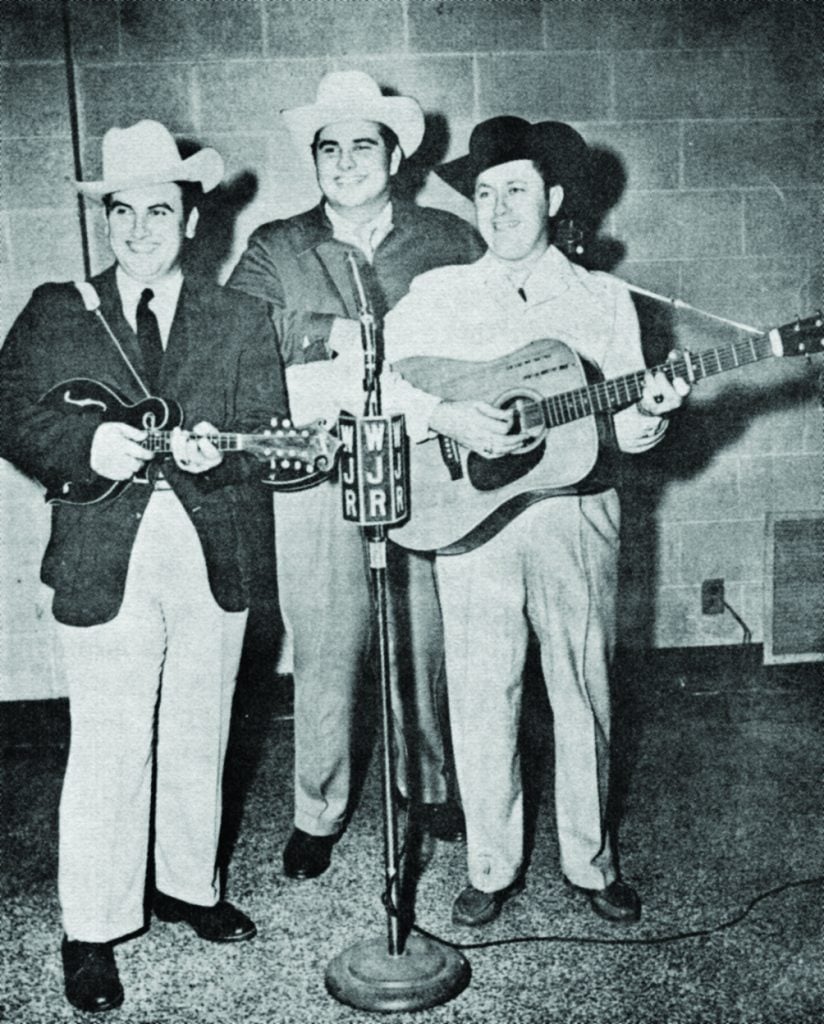
“When I was playing guitar back then with the Cline family in the Lonesome Pine Fiddlers, Larry Richardson and me were singing together,” said Osborne. “Larry played the banjo and when Sonny heard his playing, that is how Sonny really became interested in the banjo, too. I was with the Lonesome Pine Fiddlers for three years beginning in 1949. Then, Larry Richardson just upped and quit the band all of a sudden. I had met Jimmy Martin back when he was playing with Bill Monroe. We needed a guitar player and a singer to sing with me, so I called Jimmy up after he had gone back to his hometown of Sneedville, TN, an asked him if he wanted to come to West Virginia to sing with me. He said, ‘Yeah, I’ll be there tomorrow.’ Jimmy got in his car and drove to Bluefield and we decided to play together.”
This first encounter with Jimmy Martin would set the stage for the up-and-down relationship that Sonny and Bobby would have with Martin a few years in the future. “Jimmy and I finally organized a band to go down to Bristol, TN, to play on the radio on WCYB,” said Osborne. “We stayed there for about two or three months, and then I learned that I would have to eventually go into the military. Then, Jimmy just upped and quit. At that time Ralph Stanley was in a terrible car wreck and he was out for six months. When Ralph got healthy again, him and Carter came back to WCYB. After Jimmy Martin walked off and quit me there, when Carter and Ralph came back, I just worked with them for about three months before I went into the military.”
While Bobby was overseas, Sonny was wood shedding on the banjo and ended up playing for Bill Monroe when he was just 14 years old. Sonny also played on the legendary bluegrass radio station WPFB in Middletown, OH, and recorded four home-made songs before recording some official singles for the Gateway Records label in Cincinnati.
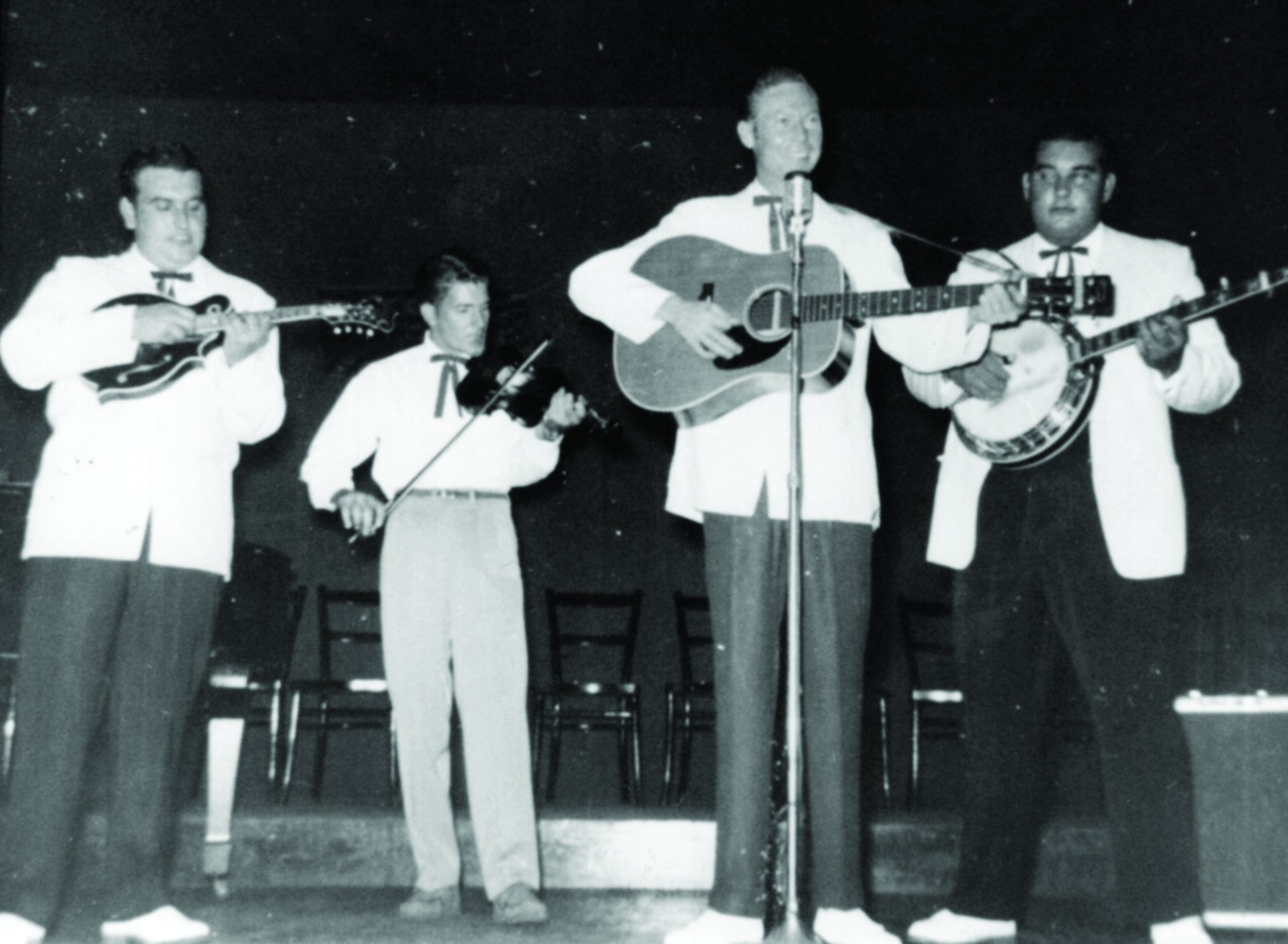
Bobby left the Marine Corps in 1953 after seeing action in the Korean War, returning home with four medals including a Purple Heart for being wounded in battle. Bobby dreamed of finding a new or established band to play with once he was back in the U.S. But, after seeing how good Sonny had become on the banjo and finding out that Sonny’s single “Sunny Mountain Breakdown” had sold over 60,000 copies; it was an easy choice to form the Osborne Brothers act.
Right out of the gate, the newly-formed Osborne Brothers decided to combine forces with Jimmy Martin and the trio recorded some amazing singles such as “20-20 Vision.” That collaboration worked for a while as the band found steady work on TV and on the radio in Knoxville, Detroit and Windsor, Ontario, Canada. After a year or so with the head-strong Martin, however, the inevitable happened.
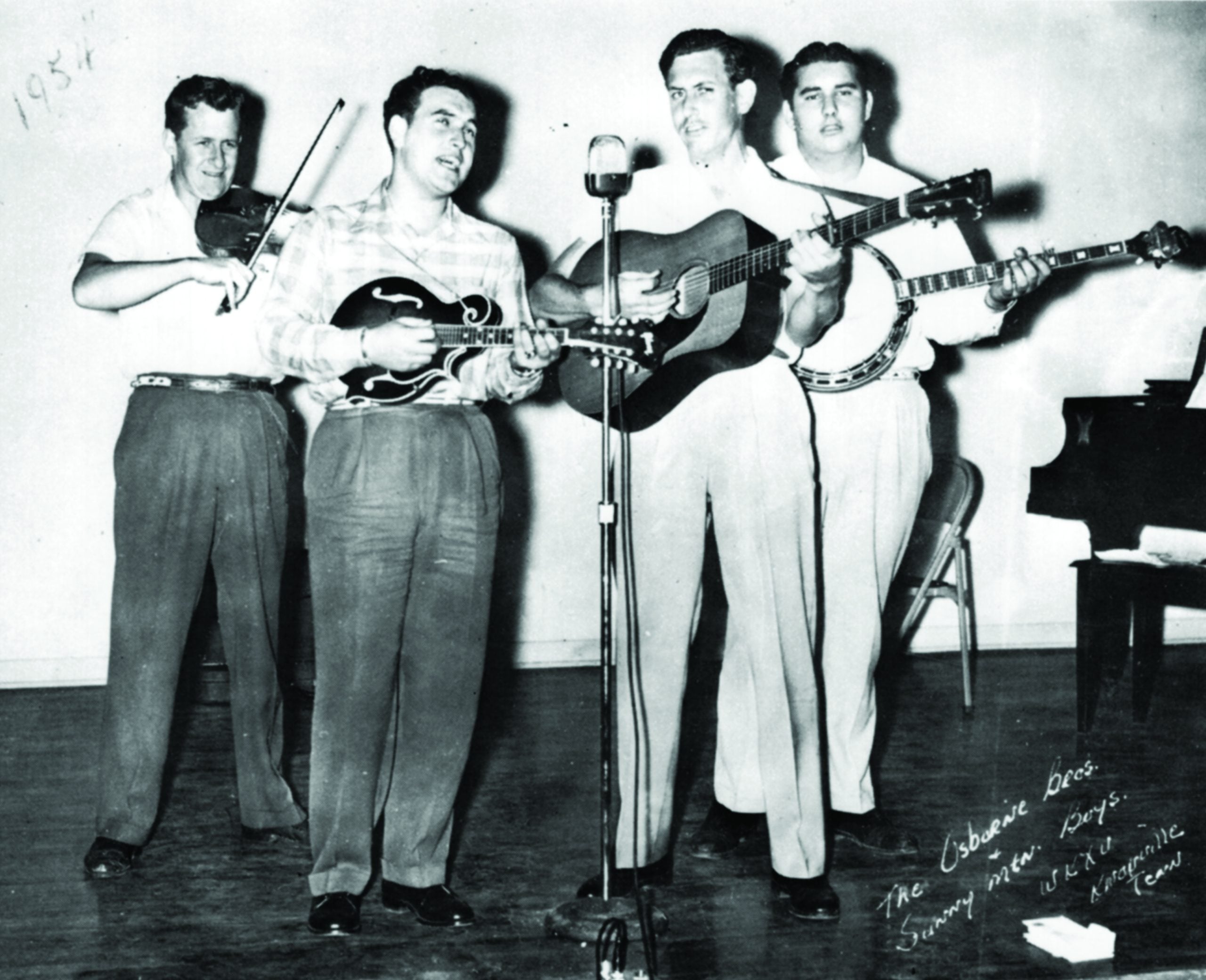
“Sonny and I were playing music in Dayton at that time when Jimmy Martin showed up to play at a night club in Cincinnati,” said Osborne. “Sonny and I weren’t doing anything that night, so we went down there to see him. Of course, Jimmy and I had worked together before, and he immediately wanted to form a band with us. Right then, we joined together as ‘Jimmy Martin and the Osborne Brothers.’ We worked with him for a little while and finally ended up with a recording contract. But, Jimmy was hard to get along with. It had to be his way or no way. When you are partners with somebody, it doesn’t work that way. At that time, it was three ways with me and Sonny and Jimmy Martin being all partners. But, that never worked out because he was a one-way person. And, I should have known that after what happened when Jimmy and I worked together in Bristol. You just couldn’t get along with the guy. If you are partners with someone, it is a give-or-take proposition. The last time I walked away from him, I had nothing else to do with him after that, although I did go and see him before he passed away.”
The Osborne Brothers then went about the task of trying to make it on their own. Folks may not remember that their successful career took a while to create. As time wore on, however, Sonny became more and more innovative when it came to promoting the band and helping to develop the Osborne Brothers sound. Sonny was open-minded when it came to the music he listened to and was influenced by, including jazz artists like Miles Davis, and that was reflected in his innovative banjo technique.
At the end of the 1950s, the Osborne Brothers combined forces with fellow Ohio resident Red Allen. “We were originally from Hyden, Kentucky and Red Allen was from close to Hazard, Kentucky, which was only about 30 miles away,” said Osborne. “We’d been singing and playing around Dayton a little bit with another boy from Tennessee whose name was Enos Johnson. We got some jobs playing in some clubs in Dayton, but Enus didn’t want to be around where there was alcohol. And, of course, you can’t play in a night club without dealing with alcohol, so Enos quit. At the same time, Red Allen had a band up there and Sonny asked him if he wanted to come up and sing with us. Red let his band go and he joined me and Sonny right away and we began to play those same clubs in Dayton.”
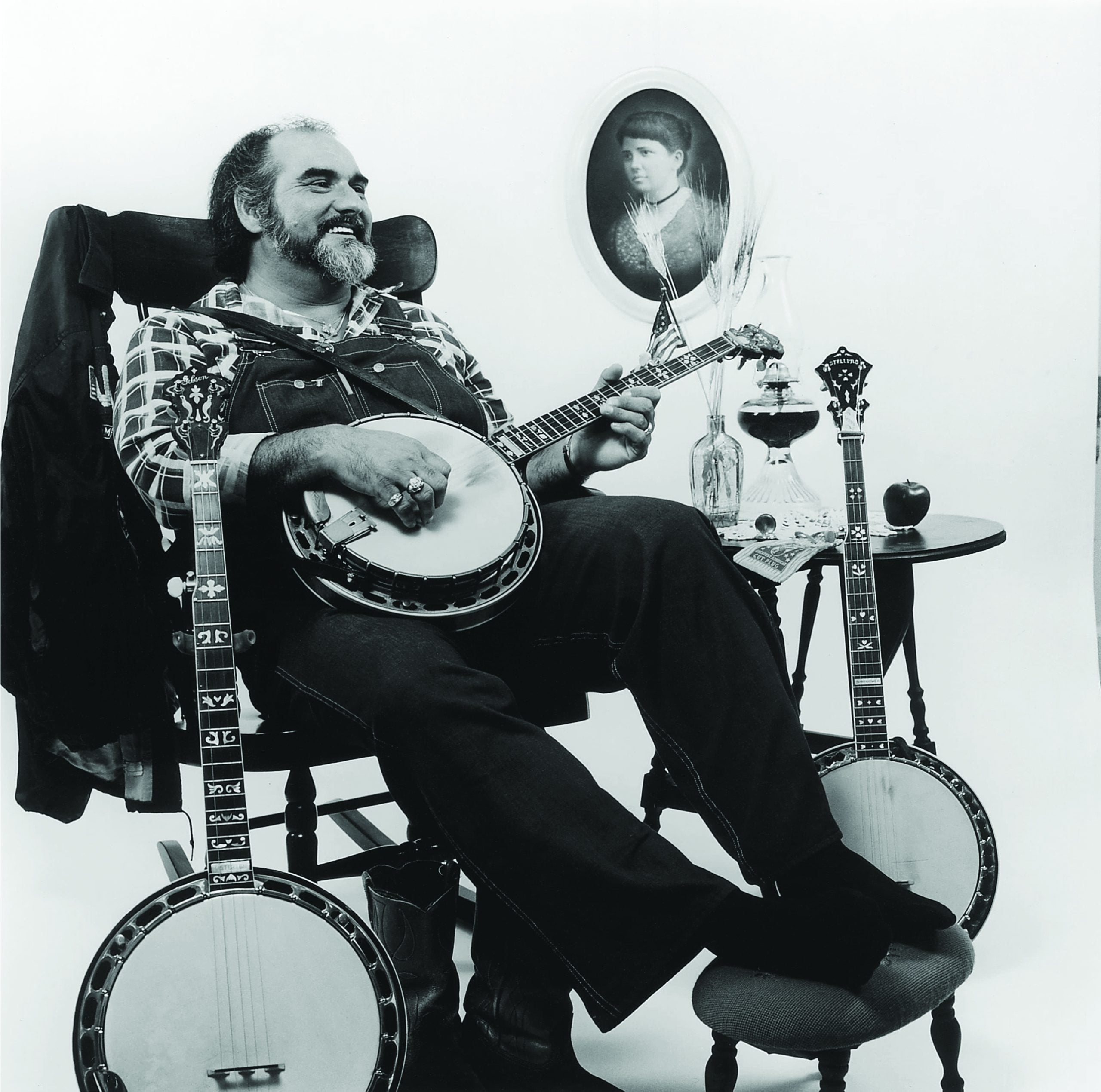
The Osborne Brothers and Red Allen then came up with a way to get more publicity, and more importantly, find a connection to the record labels in Nashville. The idea involved cash money and a train. “We got to know a DJ there in Dayton who played country music on radio station WHIO and his name was Tommy Sutton,” said Osborne. “We got acquainted with him and went over to his house. He listened to us sing and play a little bit and then he said, ‘If you guys pay my train fare to Nashville and back, I know some people down there that might be able to help you.’ So, we paid his train fare to Nashville and when he came back, he got us an appointment with Wesley Rose, who was with the famous Acuff-Rose Publishing Company. So, we made a little tape of some of our songs and Wesley Rose heard it and signed us and soon the Osborne Brothers and Red Allen were recording for MGM Records.”
MGM was a big label in those days, producing records by Hank Williams and other great artists, and the trio hit Number 13 on the country music charts with the single “Once More.” Allen then struck out on his own and it was finally down to just the Osborne Brothers. It was during this period that the brothers scored their first true legacy hit with “Ruby (Are You Mad),” which is still a bluegrass standard. The single “Ruby” also marked the first time the Osborne Brothers heard one of their songs on a major radio station.
“I’ll never forget that,” said Osborne. “My Dad got me a job at National Cash Register Company back in Dayton and I started going to work one morning and I stopped at a red light. I always listened to WLAC-AM on the radio, which was broadcast from Nashville. It was a big 50,000-watt radio station that came into Dayton just as plain as day. There was an early morning DJ on and ‘Ruby’ had just been released and we had never heard the recording played by anybody. I happened to have the car radio on WLAC and all of a sudden that DJ played it. I pulled the car over and got out and walked around the car a few times, thinking about what just happened. It was a dream come true, happening right at that red light. I was so excited, I started running the rest of the red lights on the way to work.”
As the 1950s turned into the 1960s, the Osborne Brothers hit a plateau, still recording great music yet working a lot of show dates while not making the living they had envisioned. Finally, at their wit’s end, the made a late night call to their friends the Wilburn Brothers, who recorded wonderful country music records of their own while hosting one of the best country music television shows of the Golden Age of the genre.
“Doyle Wilburn of the Wilburn Brothers went to bat for us,” said Osborne. “When we were a guest on the Opry, Doyle gave us a card and said, ‘If you ever decide to change your minds, give me a call.’ They were in with the Opry people and they helped us to get the chance to be members of the Grand Ole Opry. The Wilburn Brothers also helped us get a contract with Decca Records after our contract ran out with MGM Records. When that happened, why, we had a real career going. The Wilburn Brothers were a big part of our success once we got onto the Opry.”
In 1967, the career of the Osborne Brothers really went through the roof when they recorded the definitive version of “Rocky Top.” The song is still played, and at times overplayed, with much fanfare in music venues all over the world and, of course, at the University of Tennessee in Knoxville.
From there, all things led to the Osborne Brothers being inducted into the International Bluegrass Music Association Hall of Fame in 1994, with their plaque and memorabilia being moved into the new $15 million Bluegrass Hall of Fame and Museum in Owensboro, KY, in 2018.
Sonny Osborne had cemented his reputation as one of the best banjo pickers in bluegrass history. Nicknamed “Chief,” Sonny is remembered as an interesting person to be around, knowledgeable and a good conversationalist, yet capable of having an attitude and being a bit grumpy at times as well. But, he is also known as a great family man, a husband to his wife Judy for over 60 years, father to son Steven and daughter Karen, a fun grandfather and a solid friend with a big heart.
I saw all of it first hand, but in a good way, when I met Sonny at the first big event I ever covered as a bluegrass journalist. It was the all-star tribute to Earl Scruggs that Joe Mullins hosted in Dayton, Ohio, on April 14, 2002.
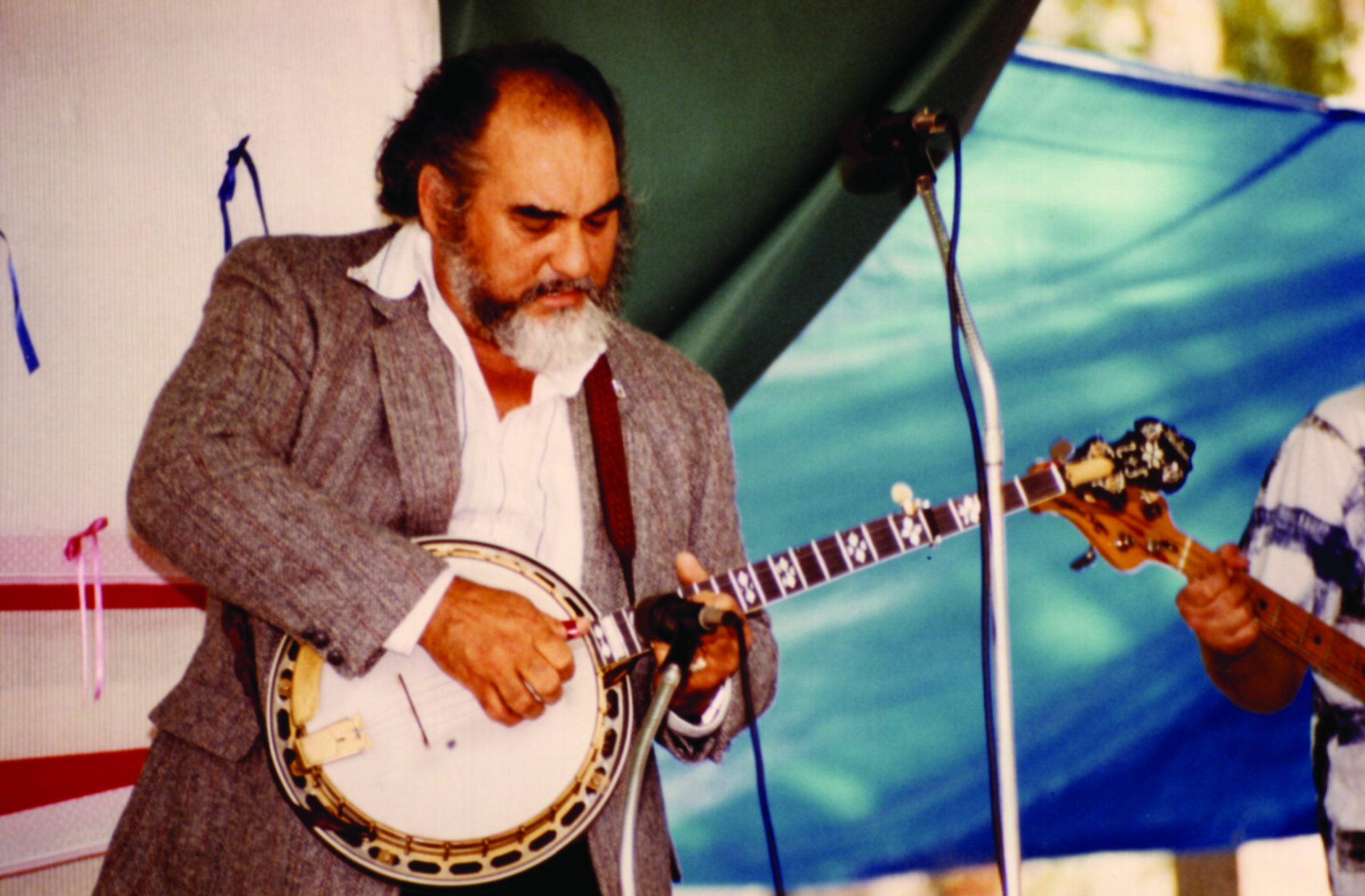
I found myself backstage, sitting around a table with Sonny Osborne and J.D. Crowe talking about various things when J.D. tells Sonny that he mentioned him upstairs during his turn in the banjo workshop. Sonny didn’t want to believe it, thinking J.D. was goofing with him. But I told Sonny that yes, I witnessed J.D. talking about the ‘country side’ of Sonny’s talent on the banjo. Sonny then proceeded to grab up J.D.’s banjo and started playing some of those country licks that he is made famous. Then, they challenged each other to remember a song or two, and then Sonny started playing some tunes by an old time guitar picker named Thumbs Carlisle. An upstart, I was in over my head, surrounded by legendary company.
Sonny then talked of his celebrated disdain of micro-managing sound techs. Once a sound board was set, Sonny knew how to lean into or away from a microphone to achieve his desired dynamics and loudness levels. But if he looked up and saw the sound person’s hands anywhere near the knobs on the sound board, or God forbid saw hands moving those knobs, steam would quickly come out of the top of his head. Eventually, the Osborne Brothers carried their own sound board, which they operated from the stage.
Sonny made many friends in the bluegrass world over the years, and here are a few to remember him in their own words.
Larry Stephenson
“I really got to know Sonny when I was working with Bill Harrell in the early 1980s. We worked a lot of dates together, and I really got to know him when I played with the Bluegrass Cardinals. With the style of singing I was doing, he walked up to me one day when I was with the Bluegrass Cardinals and asked me if I played the guitar and knew how to sing the third part. I guess he was looking, you know? I told him I probably couldn’t pull that off. But, when I started my own band and moved to Nashville in 1992, I really got to know Sonny very well. The Osborne brothers were recording for Tom Riggs and Pinecastle Records, like I was at the time, and Sonny started producing a bunch of our CDs.
“We just became fast friends and spent a lot of time together. I bought his Tennessee Titans tickets from him when he got tired of going to the games. The first time I saw the planes going into the Twin Towers, I was sitting at Sonny’s house that morning on 9/11 while picking up those Titan tickets. The generator in my bus came out of the Osborne Brothers’ bus when they retired it, so there were many connections.
“As far as his attitude at times, it was one of those things where if I said ‘black’ he say ‘white,’ but he always said something that would make you think why he said ‘white,’ and most of the time he was right. It was hard to argue with him because he had good points about things and he just saw things a little different. He was very smart and a good business man. He was a great banjo player and a great singer and he loved his family. I just don’t think that what Sonny did on the banjo and his singing and what the Osborne Brothers accomplished in general will ever be matched.
Lizzy Long – It was in Mineral, VA, when I met Sonny Osborne. Mr. Dodd still ran the festival at that time. I had just become Lil Pap’s (Little Roy Lewis) ward, foster child, however you want to call it and I didn’t know anybody. Some of the family was not excited about Pap taking me in at the time. The Lewis Family was on stage and I was sitting behind the stage on a picnic table by myself. No one knew me, and no one was talking to me. There were other bands back there, but it was Sonny Osborne who came and sat next to me and said, ‘You look like you don’t have a friend in the world.’
“I didn’t know him personally then. I just remember still being quite timid and just hurt from the whole mess of being in a new home, with new people, in a strange place, all by myself. But Sonny sat with me during their whole show, talking to me and getting to know me. I never forgot it. After that he was like an uncle to me, always speaking to me, always giving me advice, whether it was Sonny being the teddy bear or in his teddy-bear-with-teeth mode. His harsh mode never bothered me, though, because I had came from a much
harsher atmosphere.
“We were always good with each other, regardless. He knew I had rough days, just like he had bad days. And yes, we talked banjo. I have #4 of his Krako banjos. He was really excited about me having it and was really inquisitive about what I thought about it. ‘Did it crack?’ ‘Was I really happy with it?’ ‘Did it feel and sound like him?’ We also talked a lot about Earl Scruggs and Little Roy and the unique book-end sounds they both had, and how Pap at 79 could still pick faster than anyone else but still and never could tune it
right (laughing).”
Little Roy Lewis
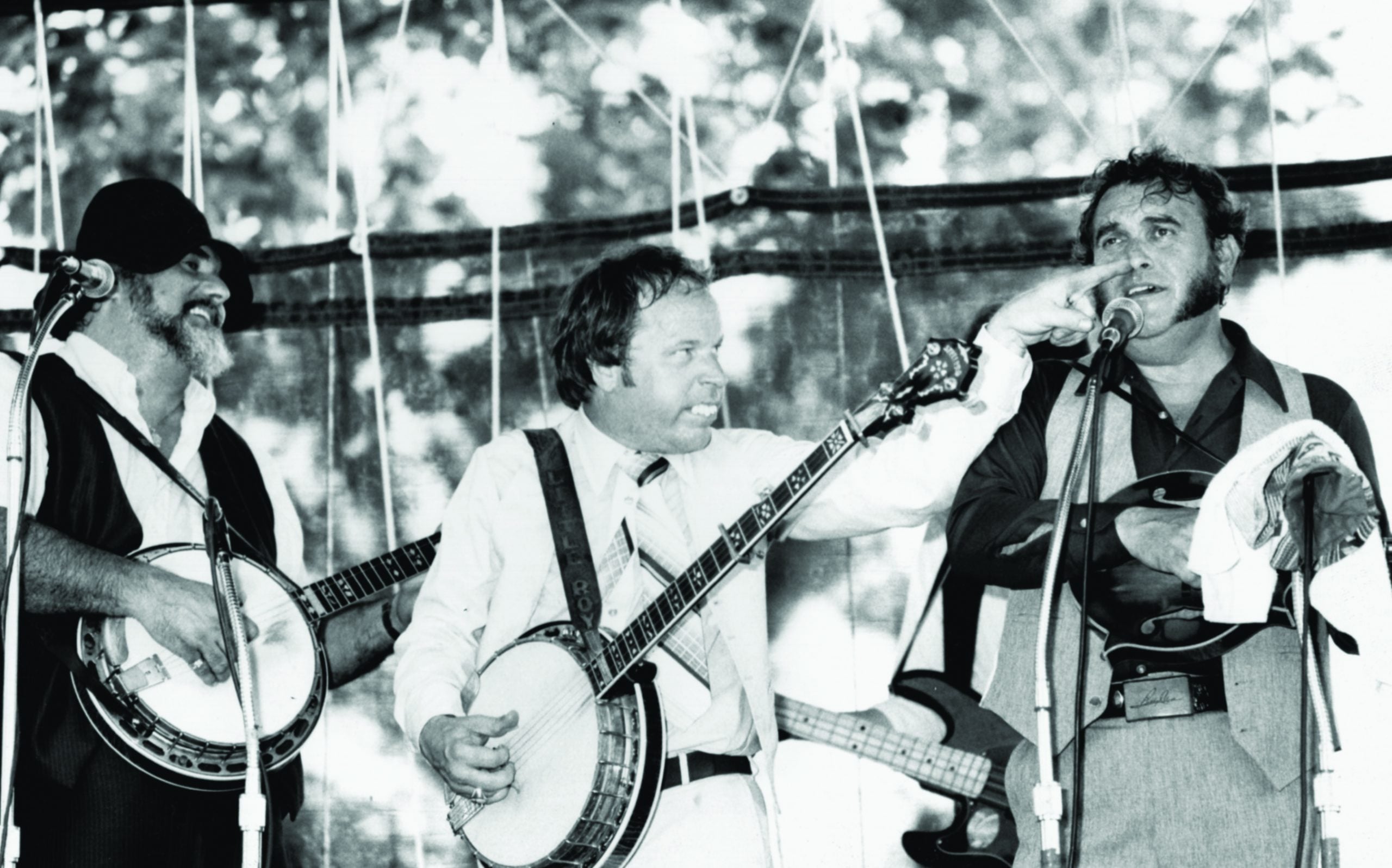
“I always loved Sonny and Bobby and the Osborne Brothers because nobody else in the bluegrass world could get that sound. On one Saturday night in Berryville, Virginia, at a huge bluegrass festival there around 1972, Sonny was having a good time onstage, and I could tell it, so I said to myself, ‘I’m going to fix him up.’ I put two bananas in my pants pockets like they were going to be pistols and I walked out onstage with the bananas and my banjo and said, “Stick ‘em up!’ Sonny took that banana and peeled it and slung it up against the wall, and that right there started it all. For years and years, we did antics and comedy acts together.
“It is unbelievable what we would do together and I always enjoyed that part of the show. Sonny was kind of special because he had that look, kind of like ‘I don’t like it,’ then when he would eventually laugh, that was the best laugh I could get out of anyone. I enjoyed his laugh as much as the stuff I did to him. He was just a fine fellow. He was also really moody and you could never tell exactly what mood he was in. But that didn’t make no difference with me because I knew he was my friend.
“We did some crazy stuff onstage and I almost got hurt a lot of times. One time where I almost got hurt real bad happened in Florida. Evel Knievel had just tried to jump the Grand Canyon and I thought that was the greatest thing ever. So, that next week we were in Florida and the Osborne Brothers were on the stage and a little boy came by me with a bicycle. I had a costume on and I said,’ Do you mind if I borrow that bicycle?’ He said, ‘No sir.’ There was a ramp that went up on the stage and I actually thought I could ride that bicycle up that ramp and jump across the stage without a ramp on the other side. I went over head first and I could see a thousand people jump up to see if I was hurt.
“Another time in Texas, there were rafters above the stage so I climbed up there. The people in the audience could see me but the Osborne Brothers could not see me. So, I climbed up in all of those spider webs nine feet up in the air and when it was time for Sonny’s break on the banjo, I jumped down from the ceiling and took his break for him. We did that stuff for years and years. The Osborne Brothers were the greatest bluegrass band I had ever heard along with Flatt and Scruggs. When Sonny picked the banjo, you always knew it was Sonny. He had a different style than anybody else.”
Brothers, of course, can and do butt heads with each other. It has been true since the beginning of time. With Sonny being a football-loving husky boy with attitude and his older brother Bobby being a combat veteran Marine, it is somewhat amazing that they played together for over half a century. But, they worked it out.
The partnership, however, came to an end in 2005 when Sonny had to retire from playing music and touring. By that time, he could not raise his left arm above his head and it was a painful endeavor to play the banjo. The Osborne Brothers were at a crossroads and they disagreed on how to handle Sonny’s retirement. Bobby still had the passion to keep on playing while Sonny wanted the both of them to ride off into the sunset together.
“If Sonny could not get his banjo playing and singing perfect, he wasn’t happy with it,” said Osborne. “He asked me five years before he retired, while we were riding down the road on the bus one night, he said, ‘I’d like to quit playing. Why don’t you quit with me?’ But, I just couldn’t do that, and I told him, ‘I just can’t quit something that I was born to do.’ I love singing and playing and I’d rather not quit. So, he went ahead and retired, which was up to him. I had the choice of either quit or keep going, and I chose to keep going and it’s been over 15 years now. On December 7, I’ll be 90. When the Man Upstairs sees fit that I don’t have to work anymore, he will let me know. ”
When Sonny was near the end of his life, Bobby went to visit his baby brother one last time. “Sonny’s wife Judy called me and said that he wanted to see me,” said Osborne. “When I went to see him, he was in pretty bad shape when I got there. He was passed talking by then. All of a sudden, he just got the point where he couldn’t talk anymore. So, I spent three or four hours with him, just talking to him about the things that we did together down through the years, the wars we won and things like that. At the end of the visit, when I took my hand and shook his, when he squeezed my hand in return, I knew it went well and he heard me talking to him. Judy was there and when she saw that happen, she said, ‘He knows you’re here, Bobby.’ I’m glad I went to see him as he passed away a day or two after that.”
Bobby Osborne is still touring and making music these days, and you can hear him often performing those classic Osborne Brothers songs on the Grand Ole Opry. The library of great bluegrass music that he and his brother made will be enjoyed and studied for centuries to come.
“Sonny and I were pretty close,” said Osborne. “As brothers, he and I had so many things in common. I don’t know of another set of brothers who worked together as long as Sonny and me. Fifty years is a long time to keep a partnership going with no contract signed between us. It’s a pretty hard thing to lose a brother, especially a brother that you worked with for 50 years. I feel like we went half way around the world as we spent those many years together.”