Sonia Shell
The Banjo Sound Never Gets Old
If you were to picture someone sitting outdoors picking on a five-string banjo, the setting that comes to mind would probably be somewhere in the southern regions of the United States—most likely in the area of southern Appalachia—as opposed to say, southern California. Southern California and banjos are not two things that typically to go together. However, if you are a bluegrass banjo fan and think hard, you’ll start to realize that there are actually a good number of great banjo players that either come from southern California, or have spent some time living there—Doug Dillard, Billy Ray Latham, Alan Munde, Herb Pedersen, Larry McNeely, John McEuen, Steve Martin, Ron Block, John Hickman, John Hartford, Alison Brown, Craig Smith, Pat Cloud, Bill Knopf, Dennis Caplinger, Bernie Leadon, Don Parmley, Janet Beazley, are a few that come quickly to mind. I’m sure I’m missing many others. That is a darn good list of banjo players!
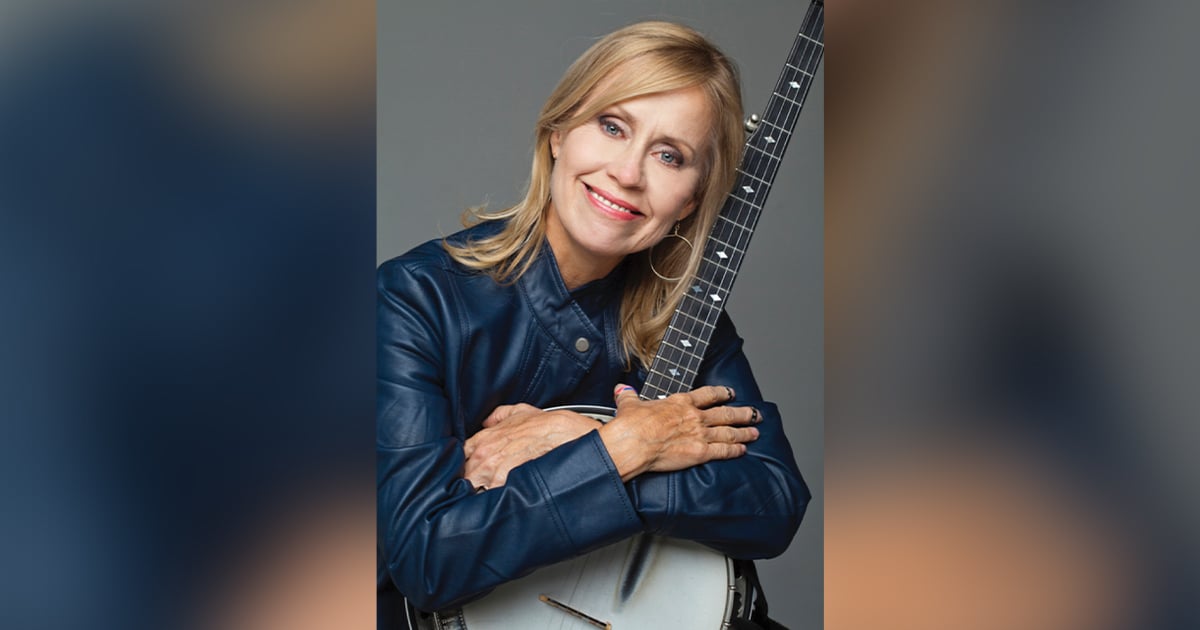
Banjo player and instructor Sonia Shell is a solid part of that southern California banjo lineage since one of her early banjo teachers was Craig Smith, and Craig spent time studying with John Hickman. Sonia has been playing the five-string banjo for forty-seven years now and has been teaching others to play for forty-one of those years. She has also been playing professionally in various California-based bands since she was in college in the late 1970s and has been teaching a jam class for over twenty years. Through it all, she says, “That banjo sound doesn’t get old.”
The Early Years
Sonia first became interested in playing the banjo when she was about fifteen years old due to a friendly rivalry. She said, “My best friend used to beat me at everything. When she started learning how to play the banjo, I thought that this would be my opportunity to out-do her at something because I had been playing the cello and guitar since I was eight and she had no musical experience.” Sonia adds, “She quit pretty quick, and I never stopped. It stuck and I’ve been playing ever since.”
Sonia grew up in Yucaipa, California and her first lessons came from Jerry Dickey—a local guy at her church. He then referred her to the owner of a local music store, Caleb’s Guitar in Redlands, California. Within the first year of learning how to play, the guy at the guitar store referred her to Craig Smith and she started taking lessons out of Craig’s home in San Bernardino.
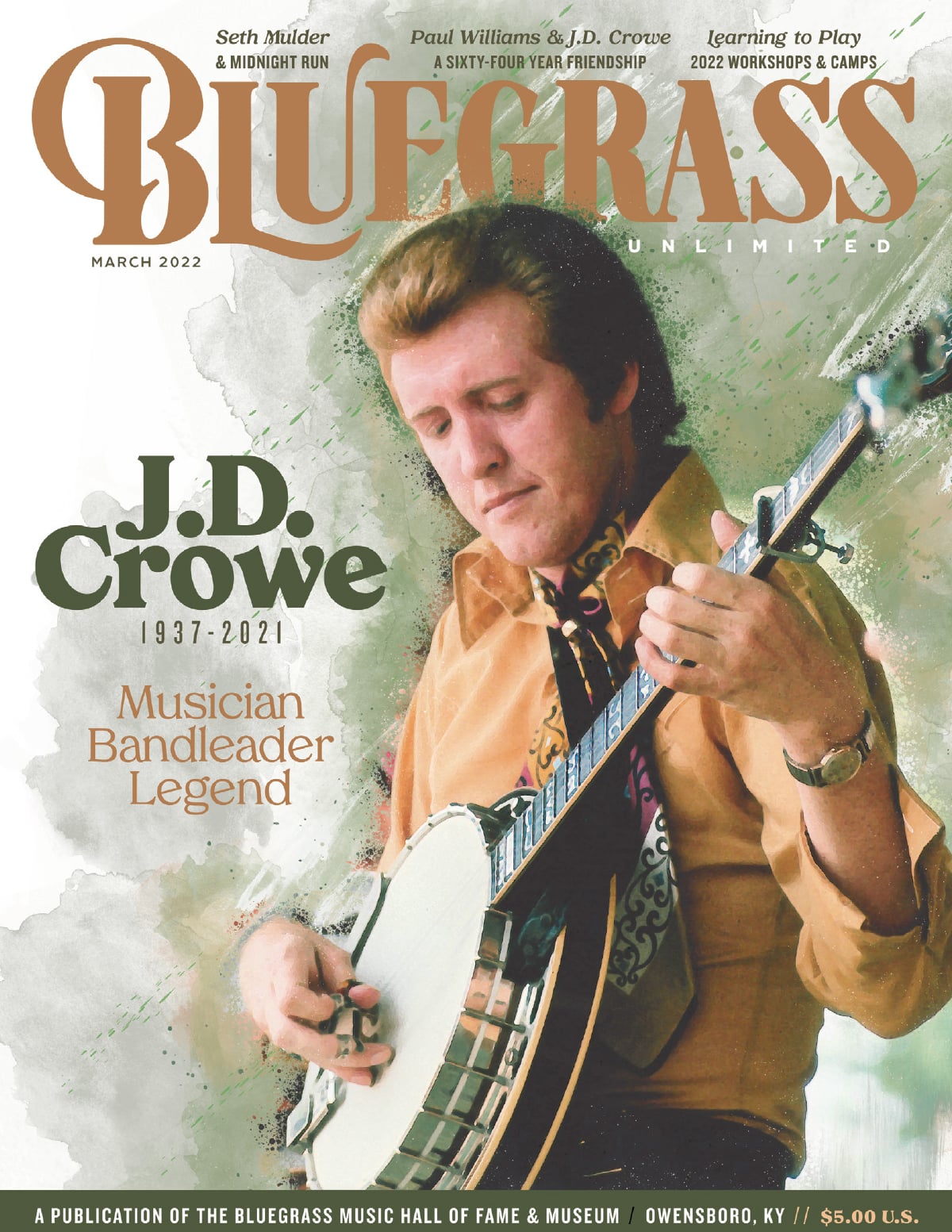
Recalling her early days in an interview conducted for Bluegrass Unlimited Magazine in November of 1986, Sonia told writer Sam Mitchell, “My mom told me she would pay for banjo lessons if I practiced the cello. So I practiced the cello for an hour a day and the banjo for four.” She added, “When I was wanting to be a banjo player, I think my parents were thinking, ‘What on earth is wrong with you!?’ I was completely not following the path that they would have liked.”
Other than taking lessons, Sonia experienced bluegrass music that was broadcast on a local radio station at San Bernardino Valley College and at a coffee house called Penny University. Penny University had a Thursday night “Hoot Night” and bluegrass groups such as Lost Highway, Wild Hickory Nuts (with Craig Smith on banjo), Bodie Mountain Express, Toe Jam, and Pain in the Grass would perform there. Additionally, Sonia formed her first bluegrass band while she was still in high school and entered the banjo contests at the Calico and Idylwild festivals.
San Francisco Bay Area Bluegrass
In 1977 Sonia left southern California to attend college in Marin County, Calfornia (just north of San Francisco) and study creative writing. Her interest in the banjo did not fade. One of her college teachers gave the class an assignment that involved interviewing someone in their chosen career field. Sonia decided to interview Larry Cohea, the banjo player for the bluegrass group High Country.
While in college, Sonia also started working at Paul’s Saloon in San Francisco’s Marina District, which was the home for the bluegrass music scene in northern California from the early 1970s through 1991. Sonia said, “I saw that they were looking to hire a cocktail waitress and I thought that this would be a good way for me to meet all of these bluegrass people. I was too young to work there, but I got a fake ID and got the job. By the time I confessed to Paul that I wasn’t old enough, I was fully trained and he didn’t want me to quit. But, until I was old enough, he made me leave the bar the minute my shift was over.”
Working at Paul’s, Sonia became familiar with many of the California bands and artists who performed there including Laurie Lewis, Done Gone, The Any Old Time String Band (with Suzy Thompson), High Country, and many more. She said, “Famous bluegrass people would also come through town and play at places like the Great American Music Hall and they would come to Paul’s afterward. The Seldom Scene played there and I got to make Irish coffee for Ben Eldridge. It was a fun time.”
In addition to working at Paul’s and getting a chance to see live bluegrass, Sonia also had the opportunity to perform at Paul’s Saloon when she helped form the band, Pick Of The Litter. She said, “When we played there, the hours were grueling. It was 9:30 to 1:30 in the morning.” Sonia also participated in the Monday night jam sessions at Paul’s, which were led by High Country’s Butch Waller. She said, “I would work at the bar all afternoon and then go to the jam until they shut the place down. I kind of lived in that bar for a long time.”
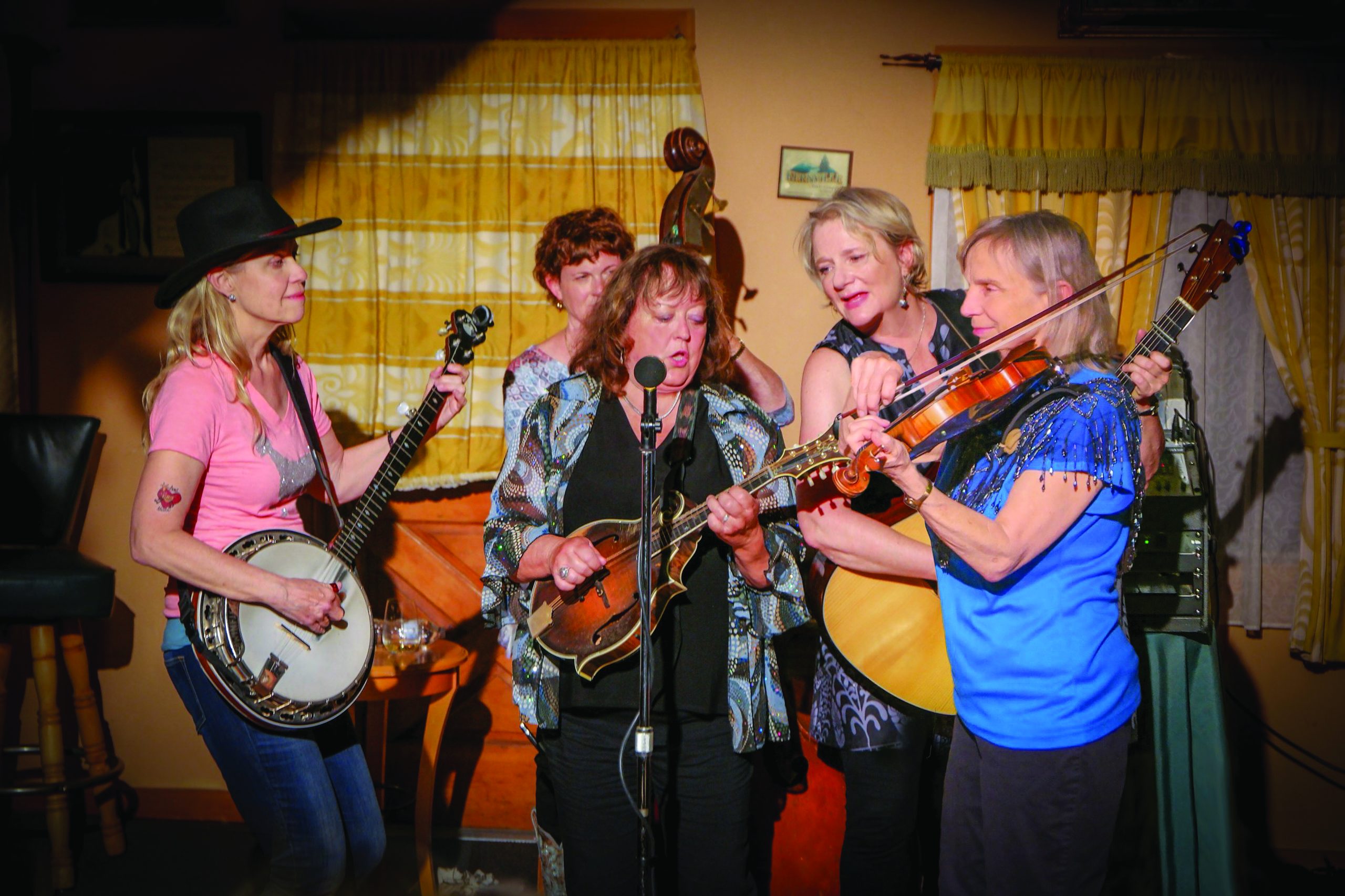
In 1985, Sonia joined the band Sidesaddle and stayed with them for nine years. At the time, Sidesaddle was an all-girl bluegrass band consisting of Diana Deininger on guitar, Karen Quick on bass, Sonia on banjo, Lee Anne Welch on fiddle, and Kim Elking on mandolin. The group was formed in 1979 and Sonia replaced the original banjo player. While Sonia was with Sidesaddle they recorded three albums and they shared the stage with such great acts as Hot Rize, Byron Berline, Lacy J. Dalton, Kate Wolfe, David Grisman, and Bill Monroe.
Sidesaddle was based in San Jose, California and while Sonia was with the band she was teaching banjo lessons at a music store, Joplin & Sweeney Music Company, in Los Gatos. Although she had been teaching private students since about 1981, she started teaching at the music store in 1984 and taught there for 25 years. When Joplin & Sweeney was sold in about 2010, she moved to teach at another store, Keith Holland Guitars, and continues to teach there today.
Even though she started teaching students in 1981, Sonia continued to seek out instruction for herself. In 1986, she traveled to New York City and stayed with Tony Trischka for a full month, taking banjo lessons with him the entire time. She said, “I rented a room from him and had a banjo lesson every day. He was out with his girlfriend a lot (who would later become his wife). That gave me time to practice what he was teaching me. I also went to see his gigs, met some of his other students, and went to see Bill Monroe play at Carnigie Hall. He was really nice to me…like a brother.”
In 1993, shortly after leaving Sidesaddle, Sonia traveled to the Walnut Valley Festival in Winfield, Kansas to enter the banjo contest where she placed second. Considering that the only woman ever to win the contest at Winfield is Lynn Morris, this was a great accomplishment. Sonia said that the tunes that she performed in the contest were “Arkansas Traveler,” “Foggy Mountain Special,” “Earl’s Breakdown,” and her original tune “Winter Holiday.” She still plays the Deering Deluxe banjo that she won at that contest.
In 1995, Sonia joined another all-girl California band called The All Girl Boys. She stayed with them for about a year and a half, leaving the band about a year after her daughter was born in early 1996. When she was with The All Girl Boys, the band configuration was Kathy Barwick on the Dobro, Sonia Shell on banjo, Mary Gibbons on guitar, Chris Lewis on mandolin, and Carolyn Cirimele on bass.
When asked about being in the band with Sonia, Kathy Barwick said, “Sonia joined The All Girl Boys when founding member Debby Cotter left the band. When you have a name like The All Girl Boys, replacing members can be difficult, as your potential pool of players is significantly reduced! We were so lucky that Sonia agreed to come on board. She’s not only a great player, but an enthusiastic and supportive musician to work with. One of the best things about playing with Sonia was her ability to push the tempo. She can flat-out get it!”
When her children were young, Sonia performed in a band called Harmony Grits. She said, “That was a local Santa Cruz band and it didn’t require a huge level of practice and commitment. I could go out on a Sunday and leave the kids with their dad and play banjo. It was like a little vacation.”
Currently Sonia is performing with another all-girl band called The Goat Hill Girls. This band has three members in common with her old band Sidesaddle—Sonia (banjo), Kim Elking (mandolin), and Lee Anne Welch (fiddle). Rounding out the band are Linda Maki (guitar) and Lisa Burns (bass). The band has a regular one-night-per-month gig (first Thursday) at the Summit House off Highway 17 in Los Gatos, California. Other than that gig, the pandemic has slowed things down. They are hoping to get back into a full performance schedule once venues and festivals start to open up again. Currently, Sonia is also working on a CD of banjo music.
Teaching Bluegrass
Sonia Shell has taught banjo lessons out of a music store for thirty-eight years. During the majority of those years she also held another job and used the income from teaching to help make ends meet. About four years ago, she also started teaching guitar lessons. Additionally, she has been teaching a bluegrass jam class every Monday at Keith Holland Guitars for the past ten years.
When teaching banjo students, Sonia likes to give them a foundation in solid Scruggs style. She usually starts them learning to play songs that the students might typically run across at jam sessions. Although, if students have interest in specific tunes, or a specific genre of songs, she will accommodate them. She said, “I try to be fundamentally Scruggs style, and I like to teach students all of the basic things that they will need to know if they were to go to a jam.” After her students get a good foundation in Scruggs style, Sonia will have them explore the playing of other banjo greats such as Alan Munde and J.D. Crowe.
Although she feels that her students should start with the basic rolls and vocabulary of the Scruggs style, she says that she does also introduce some melodic style playing fairly early. She said, “It is nice for the beginners to learn about the melodic style. I have melodic versions of ‘Turkey In The Straw’ and ‘Devil’s Dream’ that I teach. It is nice because you can hear all of the melody notes. Sometimes Scruggs style can be mysterious in relation to the melody of a fiddle tune. I like to give the students a well-rounded experience.”
When approaching any tune, Sonia said that she really likes hearing the melody. She said, “In a lot of arrangements in banjo books, I really don’t hear as much melody as I’d want for a beginner. So, my arrangements stick more to the melody.” In order to do that, Sonia will mix Scruggs rolls with melodic and single-string phrases. She said, “I guess I wouldn’t say that I’m cut-and-dried in any one style.”
Sonia feels that back-up banjo is also an important aspect of beginning banjo playing. She remembers that before she joined Pick of the Litter she had mostly played banjo in her room by herself and didn’t get a chance to practice much banjo back-up. So, she likes to educate her students about back-up not too long after they have some basic banjo technique and have learned a few songs. She says, “I like to give them a back-up vocabulary and demonstrate where to place the backup techniques and licks.”
Sonia started teaching her bluegrass jam class in 2000. At first, she taught a six-week course in the summertime. Later, at the suggestion of Keith Holland, the jam class turned into a regular weekly class. She said, “I have a loyal group of eight to ten people who come every Monday. It is a nice symbiotic relationship with the community and the store.”
During the pandemic shut down, Sonia switched to teaching her lessons online. She also continued teaching her jam class online. She said, “The online jam was more like a song sharing. Everyone on Zoom would put themselves on mute and play along with whoever’s turn it was to lead the song, and I moderated. It is a very supportive group.”
Because her jam class is advertised as a bluegrass jam class, Sonia says, “I try not to let it get too far afield. Sometimes it will start leaning very folky and singer/songwriter, but I bring them back to bluegrass basics. I love singer/songwriter stuff, but that is not what I want the group to be. That is not my vision for the group.” Although the tempo of the songs and tunes that are presented during the class is such that all of the participants feel comfortable, Sonia said, “At the end of class I always play something that is up tempo on the banjo and make them keep up with me. I like to push them a little bit.” Another way that Sonia pushes her students is to have them give a recital every year.
Alexander Technique
In addition to being a music teacher, Sonia is a certified teacher of the Alexander Technique. The Alexander Technique was founded by Fredrick Matthias Alexander, an actor and teacher born in Tasmania in 1869. As a young actor, in the late 1890s, he experienced vocal difficulties and traced the problems to a straining of his vocal organs. Through self-examination, he taught himself to relax his body, improve his anatomical alignments, and adjust his breathing such that his body functioned optimally. His vocal use and stage presence improved greatly and other actors started coming to him for help.
Through her work with the Alexander Technique, Sonia teaches her music students how to relax and relieve overall body stress while holding their instruments and/or singing. She said, “If you pursue music, you have to learn to use your body efficiently. When you know how to use your body correctly, you don’t have to work as hard and you can avoid muscle strain or injury.”
Although the majority of her students are local, Sonia is open to teaching anyone who wants to learn the banjo through the Zoom format. Regarding her teaching style, Sonia said, “I think that I am a good explainer and with each lesson I try to throw in some music theory nuggets—too much talk of theory and people’s eyes glaze over. I tend to have a lot of women students. I think sometimes young girls are more comfortable with a female teacher.” Sonia added, “I feel so lucky and appreciative of my students and the path we are on. I feel so grateful to be able to have a life in music.” If you are interested in studying bluegrass banjo with Sonia, you can contact her through her website: soniashellbanjo.com.