Songwriting In The Quarantine
Photo By Ben Bateson
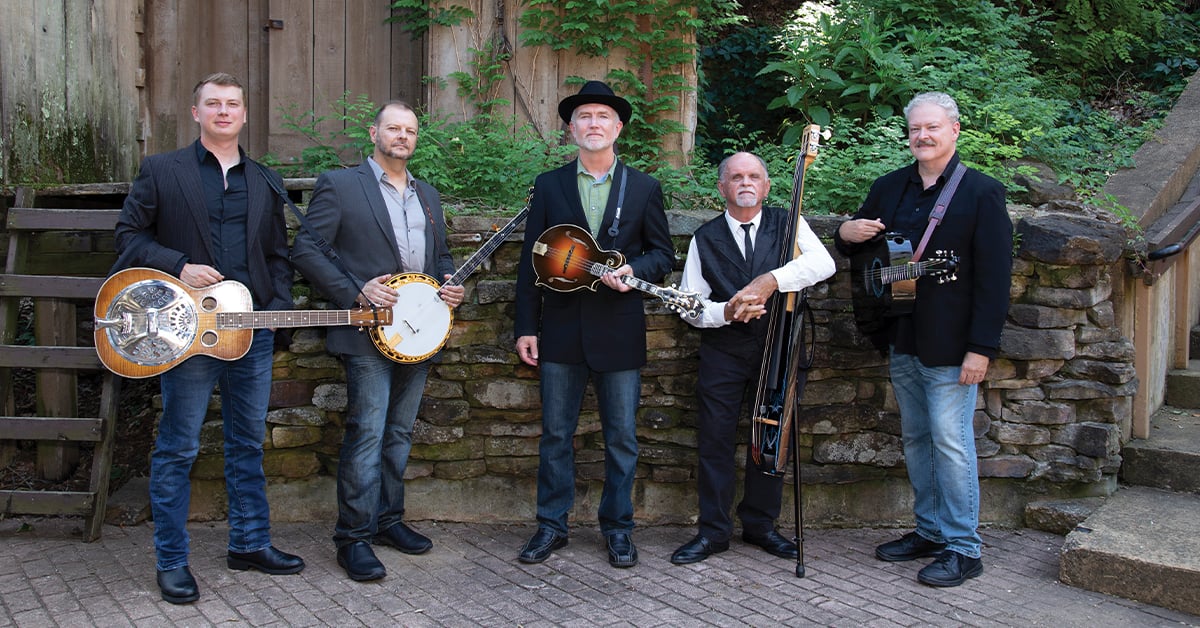
Tim Stafford was named IBMA Songwriter of the Year in 2014 and 2017, tapped for co-writing the IBMA Song of the year in 2008, and in 2020 has been again nominated for Song of the Year as co-writer (with Steve Gulley) of “Both Ends of the Train.” As guitarist for Blue Highway (recipient of more than 30 IBMA awards and once again nominated as IBMA Vocal Group of the Year for 2020), Tim’s credentials as a songwriter stand for themselves.
BU: Let’s start at the beginning, which is songwriting solo.
When I first started out that’s all I did, but I slowly got to where I would collaborate more and more. Once you get into collaborating, it’s hard to go back to doing a lot of solo writing. These days I don’t do a lot. I was looking at my list and, as of today, I have written 51 songs during the pandemic, 49 of which are co-writes. That’s the ratio I’m at these days. I went several years where I did not write any solo things, but I have had a few in recent years. In fact, I have three or four solo writes on this new solo record that I have technically finished. I’m juggling that with the Steve Gulley record, and I think we’re going to release one more single before it comes out next year. We’ve already done “Still Here.” I think I’ll wait on the release of my solo album so I won’t compete with myself for airplay, although I may release some singles.
BU: 51 songs in the span of six months: that is productive.
Well, I’ve not had a whole lot going on, like everybody else in the world. But I try to stay at it, and the Zoom thing has actually been a boon. It’s something that should continue after this pandemic is over. People have discovered they can do this easily, and there are some advantages to writing this way: I don’t have to go to Nashville for 2-3 days at a time, and it just saves everything.
BU: Over Zoom do you actually play back and forth or is it more a conversation?
It all depends on who I’m writing with. With Thomm Jutz, for example – Thomm and I have written a lot of songs together this year— we’ll usually work on a lyric idea and get the whole lyric written. Then we’ll go back and say “Okay, what does this sound like?” I’m usually the first one that comes up with a melody of some kind, and then we’ll work on it together. I’ll throw out a line and Thomm says “What if we do this?” So, it does not have to be simultaneous, like a teaching format, or like we were playing together.
BU: Essentially, two writers conversing back and forth lyrically and melodically.
That’s exactly what it is.
BU: So, by collaborating with a variety of folks, you get a variety of ideas based on their views of life: a wonderfully fertile ground.
It certainly can be. It has great advantages. They can come up with an idea you never would, and vice versa. You might bring a perspective to what they are already thinking that just takes an idea in a different direction than you would have. I really like that. Thomm is a very good writer; he’s very quick and disciplined and he has a lot of the same passions as I do. And he’s helped me grow as a writer too.
BU: Is he a student of history as you are?
Very definitely. He’s also a voracious reader, and we’ve done several songs based on what he or I have been reading at the time. In fact, we wrote a song called “On Foot.” We were talking about what to write about, and he mentioned this line “Don’t write the book by talking; make the way by walking,” so he already had the line. I had just read an article about the filmmaker Werner Herzog, who had just completed a documentary about a legendary academic who had just quit everything to go out and travel on foot. So we put those two things together: “Life’s an endless highway running on and on/One day I had a feeling; got up and I was gone/I wasn’t searching for an answer but I found one anyway/Just opened up the door and walked away.” So that worked out.
BU: And do the lyrics – the story – come first, followed by the melody?
Again, that depends on who I’m writing with. With Thomm, it is. There are a few other folks I write with where it all happens at one time, or the melody comes first. Two things I have always tried to do: first, keep a detailed notebook of ideas. I have a copy on my phone and a couple other places. The other thing is to record every melody I come up with, and I keep those recordings on both my phone and my computer. That gives me a bank of melodies and sometimes when I know I’m going to be writing with someone I go in and check out one of my melodies to see if it might work. In that case, it works the opposite: melody first, lyrics second.
BU: Can you give an example of a song you wrote where the melody just did not go, so you had to reach into that melody bank?
That has certainly happened before. I would have a melody idea and we’d try to fit a lyric idea into it. And it would just not sound right. You can have a fine lyric and a fine melody which do not go together. At that point you just back up. The easiest way to go from there is that if you really like the lyric, then you come up with another melody and save the “wrong” melody for something else.
And saving is important: I have copies of my lyric bank and melody bank on my phone and my computer, just in case. And email is also useful; I can send a copy to my wife and to my co-writer. That way nothing is lost.
BU: I sense that’s a practice borne out of experience.
When I first started, I did lose a melody or lyric or two. I was not disciplined enough or had enough grasp of the craft of songwriting to know that I needed to record everything and write everything down. Of course, you’re sure you’re going to remember it, but you really never do. [laughs] You might get close—especially with a melody— but there might be one or two critical notes that make all the difference in the world. So, if you don’t have it as it should be to fit a lyric, it’s not going to work, and you will know it. The only way to make sure is to record it. And you should record the first idea you get melodically.
BU: Your goal is to fit the feeling of the lyric with the feeling of the tune (or vice versa). But in a collaborative process, you might have different ideas on how that song should “feel.” How would you resolve that difference? Do you play it both ways and discuss it?
In that case, I think the main thing is which melody fits the lyric best. If I’m doing the melody—and I find that most of the time I am doing the melodies—there are some exceptions to that. Craig Market is a great melody guy, and a lot of time I defer to him on melodies. Most of the time the songs we write together involve putting pieces together. But if it is mostly my melody, my main concern is “does this melody sound like the lyric; does it fit the lyric?” You have to be able to ask yourself that question, and if “no” is the honest answer you have to go with another melody, no matter how much you like the “wrong” melody.
BU: Again, that sounds like the product of experience. Have you done a song or two and set it aside, realizing that a particular melody is just not right for that lyric?
Not often, but I’ve been luckier more often than not. Usually the first thing that I come up with is the best thing, and lots of times I won’t be recording. I’ve learned that I need to immediately turn the recorder on when I’m ready to start doing melody. For me, the creation of a melody is a mysterious process. It just occurs, and I don’t know why it occurs. I can’t describe it and it’s not a purposeful compositional thing. I think that everyone who writes melody has much the same experience. They are looking at the lyric, at the idea. As much as I don’t like the terms “left-brain” and “right-brain,” it’s not a left-brain/analytical process. It’s a right-brain thing that’s very hard to describe. I don’t want to force it too much, and I don’t even want to think too much about it because I will kill it.
Diane Warren said much the same thing: she was afraid to even talk about the melody creation process for a long time because it was so mysterious, and if she did talk about it, she might lose it. Although she did overcome that inhibition and imparted some great advice about writing melodies.

BU: Essentially, it’s literally a process of inspiration.
Yes, and then you have to think “Well, have I gotten that from somewhere else?” The way I try to avoid that now is that I just don’t listen to a lot of other music. That’s bad, because I used to be such a music fan and listened to everything back in the day. But once I started taking songwriting seriously, I found that if I listen to stuff on a regular basis it starts creeping into what I write. It’s inevitable; it will happen. So, on the days I write, I isolate myself, to prevent that intrusion. I’ve had that happen; every songwriter has had that happen. You have to ask “Hey – am I on the top of something?” In recent years one of my problems is that I find I’m on top of one of my own tunes. I recently had to rewrite a song for that reason.
As I said before, there is definitely a discipline to the craft and a learning of how things fit together. That’s a result of learning by doing, which is really the only way to learn. You can read a book—and I’ve read a bunch of books about songwriting—and some have been really helpful. Jimmie Webb’s Tunesmith book was really well-done and had some great stuff in it. There are great books on lyric writing, like Sheila Davis’ The Craft of Lyric Writing. Those are classic books, but they still can’t teach you how to do it; it’s a craft that’s learned by doing because it’s so personal. And you only build up that craft over time.
BU: Coming back to inspiration and the source of your song lyrics. When you read, does a particular kind of content – traditional histories, or historical fiction, or contemporary histories – speak to you?
It’s really all of that. If I look at the list of recent songs, there’s a lot of historical things on there, but there are also other things as well. It just depends. Sometimes people will come to me and say, “I’ve got this historical idea, and I figured you might be able to help me with it.” [laughs] Zack Autry did that with an historical idea about the “Queen of Laramie,” a prostitute, and we collaborated on the idea and it turned out really well. Similarly, Thomm Jutz had an idea on “1800 And Froze to Death,” about the summer of 1816, which was the year without a summer [due to the 1815 eruption of Mt. Tambora in Indonesia]. So that’s another historical song. And we wrote a song “Banner Gals,” about the “banner” Gibsons – the women working at Gibson (the “Kalamazoo Gals”) made between 1942 and 1945. Rick Lang and I wrote “Old Wooden Boat,” about a fishing boat up in New England, which is not an historical song but more contemporary. And then you have some straight-forward up-tempo bluegrass songs. Eric Gibson and I wrote “Everybody Has a Nine-Pound Hammer” (based on an idea from my long-time friend Greg Cornett), which means that everybody has something they are dealing with. Then there are clever songs, I have a file of funny songs, and traditional song ideas. Traditional songs have their own dynamic and own process. Someone like Jon Weisberger really understands that style well, so he and I wind up writing traditional bluegrass songs that don’t sound like Bill Monroe/Stanley Brothers/Flatt & Scruggs (or whoever) songs.
BU: A paradoxical benefit of this quarantine age is the rising use of Zoom and similar audio-video technologies. You don’t have to travel to Nashville or California, but you have quick access to anyone when you need to collaborate. How has that affected your collaborative network?
As I said before, there’s no way Thomm and I and others could have written this many songs together if we had to travel. It’s like every Tuesday: time for another song.
BU: That sounds like a great song idea: “The Tuesday Song.”
Too late; already thought of that and written it down. [laughs] But there are benefits to this that you might not see, like practicing more, and being more disciplined. It’s the old “lemonade out of lemons” situation. The collaborative songwriting process is social anyway. As you know, Steve Gulley—who just passed away—was not only one of my best friends but a great songwriter and it was really cool to get with him. We’d always catch up for 30 minutes before we started writing, and songs just came out of that relationship.
BU: Interesting point: some working relationships are very fluid, with an easy and quick exchange of ideas. Others require more work.
Well, you have to be both disciplined and flexible. I don’t necessarily prefer one working relationship over the other: both can yield great things. A couple of the writers I work with are very meticulous, they worry over every line and sometimes rewrite. I’m not usually made that way. If I decide on something, that’s probably the way it’s going to end up. They bring something different with that approach, often to great results. And with other people the process is very fast, like Thomm: he’s super-fast. We can be talking about an idea and he just recites a verse. While we’ve been talking, he’s been writing. It’s crazy how fast he can write.
BU: As you are co-writing, based on an idea, how do you mesh what might be two views on that idea into a coherent song?
Sometimes that is exactly what happens: one verse will be one person’s view and the next is another person’s view. Let’s take this latest song “On Foot” that Thomm and I wrote. I was thinking about an endless highway, not searching for an answer but finding one anyway, essentially a more philosophical tone. Thomm said “Well, let’s put it in the context of Jesus and the disciples James and John, Peter and his brother Andrew, who answered the call because they knew it would set them free.” That’s another way of looking at the same idea. “On Foot” is not a gospel song, but the disciples did walk everywhere.
BU: Essentially, you resolve the different views by layering the song with interpretations of the idea, providing a more universal appreciation of the song.
Hopefully that’s the goal, which allows someone listening to the song to pull out their own meaning. I’ve had people come up and tell me how meaningful a certain song has been to them, and while their interpretation is nothing like what was intended, that doesn’t matter. The song was significant to both of us in different ways.
BU: You cope with this period of social isolation by reaching out virtually to a wide variety of people and ideas: that sounds like a perfect recipe for artistic expression.
I think we are going to be hearing the creative stuff people come up with for several years to come. I would not have written so many songs in this amount of time otherwise. As an artist you need to write and record and get your stuff out there. That’s been a major element of Blue Highway: between Shawn and Wayne and I, we determined that if we could write our own stuff there would be no need to cover tunes. That originality has been a part of the brand of the band, and after 25 years it
doesn’t make sense to change that [laughs].
BU: Let’s talk about tunesmithing in a band for a second. When you develop a Blue Highway instrumental, does someone come up with a tune idea, email it to everyone else, and solicit comments, or is it presented as a complete tune to which you figure out our solo?
Again, it’s a different process with different tunes. Jason [Burleson] has been our primary tunesmith over the last several records. He records the tune and plays it to us (or sends it to us, now). Sometimes he has more than one tune. We decide which one we want and we learn it. From there the arrangement evolves organically, based on what we think it “should” be. There’s not a lot of argument, because after this time we pretty much know what a Blue Highway tune should sound like. We just let the tune come out, playing the melody the best way we can. The melody and the sound of an instrument is such a beautiful thing.
BU: In the same way, when you take a solo in a song, the guitar is your instrumental voice.
Exactly. Your solo needs to speak the melodic line, and to support—not compete with—the melody. I was guilty of that when I was younger. Now I just can’t play as fast, but the tone is still there to pull out. Jake Workman is a great player: he can play as fast as anybody but gets great tone as well. And he has a great melodic sense.
One of the things I used to do was to work up an elaborate arrangement of a tune. Technically, it was pretty cool. But when I listened, I realized it just didn’t sound good. So, I would simplify it and simplify it and simplify it and after a while I realized the simplified version sounded way, way better. It invoked the melody better than all those notes did. Simplifying the arrangement to the essence of the tune made the solo all the better. But that’s a never-ending process.
BU: It’s almost as though we are addicted to “lotsa-notes.”
Simplification is one of the hardest things to do. Simpler is more memorable. I will know when Blue Highway has a hit when the tune gets into my head as an earworm. And that’s true in songwriting as well: if a lyric sticks in your head, that’s good.
BU: Right: “…out beneath the quilted sky so I can see both ends of the train.” Those images do have sticking power. What if you have a bit of melody or a particular lyric phrase: how do those grow over time?
I generally have to expand a lyric or melodic phrase before I can use it somewhere else. There are exceptions. Occasionally I might have a phrase I can use inside something else. Lots of times I get a melodic idea which needs to be expanded before it can have any sort of lyrical context. But that’s my job. [laughs]
BU: Let’s talk about your tools. I recall a while back that you had a D-18 that was your main workhorse instrument. Picked up anything new in the interim?
Ah, the ’34 D-18. Yes, I still have it, and I have another, a ’39 D-18, that I picked up last year. I’m liking it. It’s a very different instrument than the ’34: not forward-braced, it has the thinner 1 11/16”-inch neck. That takes some getting used to. I have big hands and the 1 3/4” neck on the ’34 just fits my hand better. And it’s hard for me to jump quickly from one to the other. I play the ’39 for a while, and it has a great voice, but the ’34 just records so much better. I have been thinking about a herringbone for a while now, so perhaps I will trade the ’39 up. I’ve had the ’34 for 20 years, so it’s here to stay. And I have some other guitars as well. I went through a Gibson phase a few years ago and that left me with a couple of banner J-45s.
BU: Ever considered an Advanced Jumbo?
No, but that’s something I would not mind checking out. I did play a couple a few years back. One of the best guitars I played was a ‘30s Washburn Regal 5240. That was an absolute beast! I could not believe how good that thing sounded. I was talking with Kenny Smith, who got into them as well at the same event, the Wintergrass festival in Seattle. A guy in the area has a vintage guitar shop and has several Washburns. I’d love to have one of those. But I have recorded in the past with a big-bodied herringbone and just loved it. There is nothing like that sound. So perhaps one day I might have one of my own.
BU: And, of course, you endorse a bunch of cool tools.
Right. I’m a firm believer in D’Addario strings, Shubb FineTune and the G7th Heritage capos, and Matthew Goins’ Blue Chip picks, which are some of the best non-tortoise picks I’ve played. I also like the I-Tone picks Shawn Lane is marketing. Unfortunately, he’s only producing a large triangle shape right now. But as soon as they produce a teardrop I will try it. I have always used a teardrop, really, the shoulder of the teardrop. I can’t use the point. I love the tone from the shoulder, plus it puts a huge amount of pick surface on my thumb and I never have any slippage issues. And with the Blue Chip TD 35, Matthew puts a bevel on the pick all the way around, so I don’t have to worry about the shoulder not having a bevel.
BU: Any parting words?
As much as I love playing and recording with Blue Highway and recording my own solo projects, I find I really enjoy the challenges of songwriting. I suppose that I would do it all the time if I could. And I also am working on another book. It’s been 10 years since the Tony Rice book Still Inside came out, which was truly a labor of love. Recently I’ve been working on an update on the history of bluegrass music since the 1970s, which is essentially where Neil Rosenberg’s Bluegrass: A History ends. That may take a few years more, although I work on it a bit at a time.
BU: Tim, many thanks for the conversation, and best of luck at the IBMA awards!