
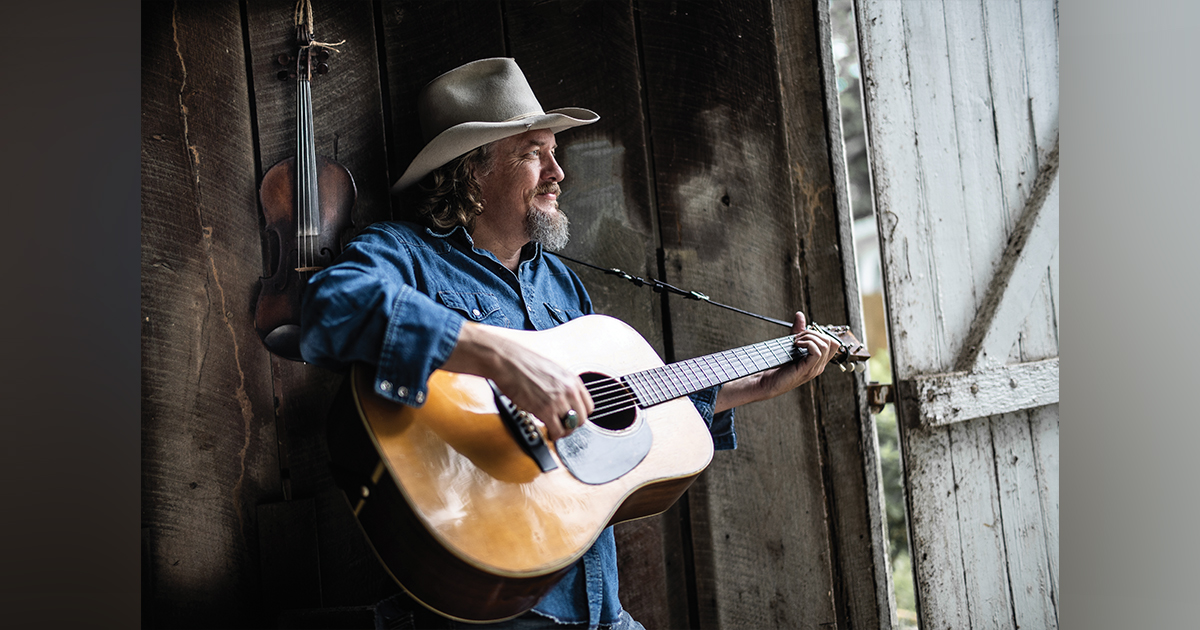
Sis Draper returns in new concept album from Shawn Camp & Guy Clark
Sis Draper, one of the most beloved bluegrass song characters in recent years, has returned to tell us a little more about her life and music through a concept album co-written by Shawn Camp and Guy Clark, The Ghost of Sis Draper, released September 12 on the Truly Handmade Records label.
Sis Draper was a real person, a fine fiddle player with an exceptional bow arm from the state of Arkansas, that Shawn’s grandpa and Uncle Cleve revered. Some of the stories in the new album, The Ghost of Sis Draper, are true, and some could be true.
Shawn was seven years old when the much-anticipated Sis Draper finally arrived at a picking party at his grandparents’ house in the hills of Perry County, 50 miles northwest of Little Rock. “I remember her walking in the house, the first time I saw her, with a big beehive hairdo and a fiddle in a coffin case,” Camp said.
Twenty-five years later, Camp sat down with his friend Guy in his Nashville basement workshop, and Shawn told him about Sis. “Guy said, ‘Well, there’s your song,’” Camp remembered. “We wrote ‘Sis Draper’ that day, and ‘Magnolia Wind’ came next. If we got stuck on something, we’d end up going to the Sis Draper project.” Guy recorded “Sis Draper” in 1999 on his Cold Dog Soup album, and Ricky Skaggs included it on his Brand New Strings album on Skaggs Family Records in 2004, which won the 2005 Bluegrass Grammy.
“For more than a decade, Shawn Camp and Guy Clark created a dozen songs based on the character, Sis Draper,” said Tamara Saviano, president of Truly Handmade Records. “Now, the label that manages Guy’s legacy is the home of Shawn Camp and The Ghost of Sis Draper, a masterpiece album that only Shawn could record. Shawn is the keeper of the flame of Sis Draper. Truly Handmade Records is the keeper of Guy’s legacy. It’s a match made in folk music [and bluegrass] heaven.”
The publicist for Guy Clark and the manager, producer, and label president for Kris Kristofferson, Saviano has produced tribute albums for both Clark and Kristofferson, written their biographies, and directed film documentaries about them. Tamara said she had been after Shawn for years to record the Sis Draper collection as one album. “I had hoped that would be something he and Guy would do together, but by the time the songs were all written, Guy was just too sick,” she said. “I hope this recording turns more people on to Shawn and Guy, and the incredible Sis Draper stories. I’m glad Shawn let Truly Handmade Records release it.”
“I want people to feel like they’ve been spoken to by Guy from the other side,” Camp said. “This is as much Guy Clark’s album as it is mine. That’s part of my passion for putting it out: to try and keep him alive!”
The album kicks off with Camp’s spirited, tasteful guitar flatpicking and lead vocals on the original “Sis Draper” song. Fiddle tunes underpin the entire album, and the first cut borrows from “Arkansas Traveler.” After all, “Sis Draper is the devil’s daughter, plays the fiddle Daddy bought her, plays it like her mama taught her. She’s a travelin’ Arkansawyer,” as Shawn sings.
Bluegrass fans who know fiddle tunes will hear pieces of “Soldier’s Joy,” “Sally Goodin,” “I Don’t Love Nobody,” “Lost Indian,” “Old Joe Clark,” and “Shady Grove” in the songs. “There are patterns in those melodies, and we altered some of them,” Camp said. “I’d play an old tune, and we’d just start making stuff up around it.”
“Magnolia Wind,” written in contemplative three-quarter time, is told from the perspective of someone so in love with Sis Draper that he sings, “I’d rather not hear pretty music again if I can’t catch your fiddle on a magnolia wind.”
The narrator in “Soldier’s Joy 1864” is Sis’s great-grandpa. “Soldier’s Joy,” an old tune that dates back to the 1700s, is played here in a minor scale with a flatted third that matches the dark mood in the story of a soldier’s leg amputation on a Civil War battlefield. Some say “soldier’s joy” was morphine or whiskey, to deaden the pain in dire situations like this. Others subtitle “Soldier’s Joy” as “Pay Day in the Army.”
The soldier becomes the main character in the next song, “The Fiddlin’ Preacher,” with echoes of “Sally Goodin’” and “Amazing Grace” in the melody. It was unusual to hear of a fiddling preacher, Camp said. “The song stemmed from Guy and me thinking about the devil’s box—the fiddle—and what a tormented soul you’d be if you felt called to play the fiddle, drink whiskey, and preach the gospel, too.”
“Old Hillbilly Hand-Me-Down,” co-written with third writer and friend, Verlon Thompson, talks about shared family treasures. At the end of the song, “Little Sis” picked up the fiddle as they laid the fiddling preacher in the ground, and the music continued into the next generation. The fiddle she played so well was a hand-me-down in her family.
Between cuts five and six, a murder of crows can be heard cawing and calling to each other, foreshadowing Sis Draper’s murder at the end of the album. “And Guy is a crow now, you know,” Shawn added. Guy Clark’s ashes have been put into a statue made by artist Terry Allen called “Caw Caw Blues” in the shape of a crow, which sits in the Wittliff Collections at Texas State University in San Marcos, Texas.
Chris Henry’s mandolin kicks off “The Checkered Shirt Band.” The song is written from the perspective of Uncle Cleve’s nephew, who played in a local band who “probably knew 200 tunes and could play the dog out of 50,” as Shawn sings. Fragments of “Sally Goodin” and “I Don’t Love Nobody” drift through the melody, while Sis Draper plays circles around all the local pickers at a party at Cleve’s house.
As a teen, Shawn played the fiddle with an Arkansas band called The Grand Prairie Boys, the inspiration for this song. “On June 2nd, the Arkansas Country Music Association gave me a Lifetime Achievement Award and put me in their Hall of Fame,” Camp said. “I rounded up Rodney, Chuck, and Rodge, The Grand Prairie Boys, and had them come and join me and Mike Bub and Tim Crouch, and we played ‘Sis Draper’ and ‘The Checkered Shirt Band.’ We all wore our matching checkered shirts at the award show.
The fiddle tune, “Lost Indian,” cues up for “Big Foot Stomp,” a song about Shawn’s Uncle Cleve’s dancing boots. “If you’re gonna dance with Cleve, be careful of your feet,” the lyrics warn. Sis Draper was playing fiddle at the dance, and she could get those size 14s stomping. Cleve was Shawn’s grandpa’s brother—there were nine brothers and sisters in the family, his papaw being the eldest. The musical talent came from Shawn’s paternal grandmother’s side of the family, the Chisms, from around Mountain View, Arkansas.
“Grandpa’s Rovin’ Ear” is about how much Shawn’s grandpa thought of Sis Draper. Grandma was slightly jealous of his “rovin ear,” even though he never did more than shake Sis’s hand.
“Cornmeal Waltz” was inspired by another character Shawn remembered from back home. “I got to talking about this little guy named Jack at the VFW Hall when I was 15 or 16,” he said. “He had him a little flat-top cowboy hat and a little brass belt buckle that said ‘Jack’ on it, and he was maybe five foot, if that tall. He was probably in his 70s in 1980, and he would come in there wearing his little hat with a two-and-a-half-pound sack of cornmeal, and he’d sprinkle it around the dance floor before the band started. Then he’d dance with every old woman in there. He had this crazy dance step, and he would shuffle around on the cornmeal. I like the picture of that song.”
“New Cut Road” was written about Guy’s granddaddy, Coleman Bonner. His family left Kentucky to go to Texas, and Coleman stayed in Kentucky to play the fiddle. “In the dialogue for the play I’m sketching out, Coleman and Sis Draper meet up at a fiddle contest, so that’s how it connects,” Camp said. “When I was 15, I remember I was standing on a step ladder with my daddy in Saline County, Arkansas, remodeling a house. I was holding up a piece of sheetrock and we had a little Gilligan’s Island radio on, and Bobby Bare came on with his new single, which was ‘New Cut Road,’ and Ricky Skaggs was playing fiddle on it. And it just completely inspired me to be a fiddler. I had probably been playing the fiddle for a couple of months, and I didn’t know who Guy Clark was at that point. And then to come to Nashville and become friends and get acquainted with him, and that song being such an inspiration to me as a fiddler in Arkansas—it made me feel like it belonged in this batch of songs, and I wanted to honor him by putting it on there. I just love doing it! Tim Crouch [on the cut] is probably my favorite fiddler on earth. He’s awful good.”
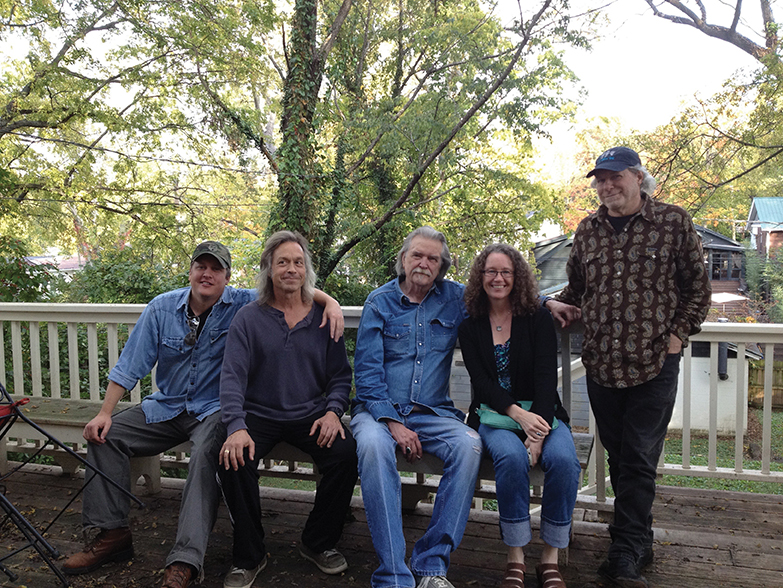
Shawn called on a top-notch group of musicians for the new album. Along with fellow Arkansas musician Tim Crouch, Chris Henry plays mandolin. “Chris is my favorite,” Shawn stated. “He’s just ‘out there’ and forceful and brilliant. I just love the way he does it. There’s a lot of great mandolin players out there, but to me, he’s got more fire than most of them. And my buddy, Jimmy Stewart, played Dobro on this record. He used to play with me in the ‘90s when I was on Warner Brothers, and he’s been one of my best friends for over 40 years. Mike Bub was on bass, and Cory Walker—who I’d never played a note with before—did a great job on banjo.
“The Death of Sis Draper” kicks off with a slow, melancholy version of “Shady Grove” on the guitar and then the fiddle. The song introduces Kentucky Sue, who was Sis’s friend and guitar-pickin’ travelin’ companion. It tells the tale of a waitress at the El Patron bar in Santa Fe, New Mexico, who thought her ole man was slipping around with Sis, so she poisoned her whiskey. Sis was buried in a shallow grave behind the bar. The real Sis did die in New Mexico, but she is buried in Las Cruces, so this part of the story may be slightly embroidered.
“Hello, Dyin’ Day” is a matter-of-fact, facing up to death song. It’s meant to be Sis Draper’s last words as she lay dying. It was also the last song Shawn Camp wrote with Guy Clark before he died.
In “The Ghost of Sis Draper,” listeners can hear the fiddler moan up high on Petit Jean Mountain, “a will of the wisp in a cotton dress.” On the wings of her fiddle music, Sis flies down from heaven and haunts her old stomping grounds near Toad Suck, Arkansas. (Yes, that’s a real place. Shawn’s father, a union iron worker, helped build the bridge across the Arkansas River west of Conway, where the Toad Suck ferry used to run. Arkansas probably has the most colorful town names in the nation.)
When asked what was most fun about writing with Guy Clark and what he picked up from those experiences, Shawn said, “I hope I picked up everything. He was great. The exciting thing about working with Guy Clark was the fact that you knew that if you wrote something with him, it was going to be strong and solid. He wouldn’t let it leave the room if it wasn’t solid. There was an air of integrity in every word when Guy was there. It validated whatever we were doing to be in his presence.
“He liked to think of himself as an artist,” Camp continued. “He made guitars. We’d get stuck on a line, and he’d say, ‘I gotta work on this guitar,’ and he’d get up and mess with a guitar and sand on it. It would take his mind out of the ‘mud hole’ and get his mind working. He could look at that problem from the other side of the mud hole after whittling a little bit. It was always great to sit and be a part of that. It’s an exciting thing to write songs if you’re doing it right. If it’s moving your heart, it’s exciting. That, to me, is what I love.”
Camp arrived in Nashville at age 20 to play the fiddle. “I’ve been gone from Arkansas so long, I really don’t recognize it when I go home,” he said. “Nashville has changed more than Arkansas has, in my mind. I thought this was a major city when I got here in 1987, but really, it was a quaint little town, compared to what it is now. Nashville is more like Atlanta now. Getting around and driving around is not near as fun as it used to be. I’ll say that,” he smiled. “And I’ll say this: Any of my heroes that were alive when I moved to Nashville, I’ve been blessed to work with them all, to get to know them, to get to be friends with them, or work with them in some way. That’s been a real blessing, for sure. That was kind of my dream, to work with these people. Thank God I got here when I did. I really didn’t even sing when I first came to town. I played fiddle for the Osbornes. I worked as a sideman for several people and started making up songs later. About seven or eight years later, I got on Warner Brothers as an artist and kind of got my foot in the door, and that got me started. I never claimed to be a singer,” he noted modestly.
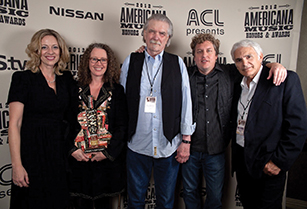
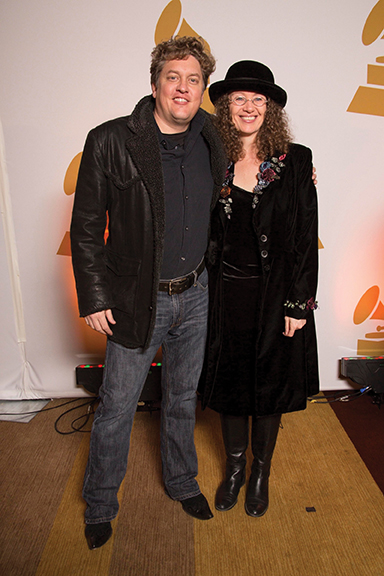
Growing up in Perryville, Arkansas, Camp mastered guitar, mandolin, and fiddle before he was old enough to drive. Along with the Osborne Brothers, he played fiddle for Jerry Reed, Alan Jackson, Shelby Lynne, and Trisha Yearwood. He released his first, self-titled solo album on the Reprise label (Warner Brothers), but found even greater success writing hit songs for artists ranging from Ralph Stanley, Del McCoury, and Skaggs, to Willie Nelson, Garth Brooks, Brooks & Dunn, Josh Turner, Blake Shelton, George Strait, Alan Jackson, Loretta Lynn, and Porter Wagoner. Besides Guy Clark, Shawn has been a trusted collaborator with John Prine, Cowboy Jack Clement, and Loretta Lynn. Guy Clark won a Grammy in 2014 for his last album, My Favorite Picture of You, and Shawn took home a trophy as one of the producers. In 2015, Shawn received another Grammy as the lead vocalist for The Earls of Leicester.
Camp loves putting on the string tie and tilting his hat slightly to the right to play the part of Lester Flatt in the Earls of Leicester. “We’re all trying to play as close to Flatt and Scruggs as we can,” he said. “It’s like a Broadway play, to me. It’s like Redd Foxx being Fred Sanford. He wasn’t that guy until he put on the shoes. I love it because they made some great music, and I’m honored to be in that band with that level of musicianship. It’s just as close to the original recordings as I could ever hope to be in the middle of. I hope we can make a couple more records and have some more years of good touring.”
There’s a lot of joy on the Earls stage. Jerry Douglas has said his fans tell him he smiles more with this band than any he’s ever been a part of. It’s like he’s a little boy again, playing the music of his heroes. “That’s the way we all are, really,” Shawn said. “The thing about that band is there’s no real personal ego. It’s hard to say that because everybody in that band is the alpha dog of what they do. But we’re not doing it for us; we’re doing it for Flatt and Scruggs. That’s why we’re smiling.”
It’s easy to imagine a series of videos or a play centered on the story of Sis Draper, and Shawn is interested in the idea. “I want to work this record,” he said. “I can do it solo, with a small band, or with a full bluegrass band. Tim Crouch and I can go out and do these songs, just the two of us.” Check www.newfrontiertouring.com or shawncamp.com for more about that.
“I think we all have nostalgia for people and places in the past,” Tamara Saviano said. “Set those to fiddle tunes, and The Ghost of Sis Draper album is just haunting. I’ve been intrigued by Sis for many years, and witnessing Guy and Shawn bring her to life has been fascinating. I love Sis Draper, and I love this album. Guy and Shawn had a true-blue friendship. For Shawn to go into the studio and lay down all of these songs with a crack bluegrass band is an extraordinary nod to the love between them as writers and friends.”
It’s also a tremendous gift to bluegrass fans. Go check this one out.