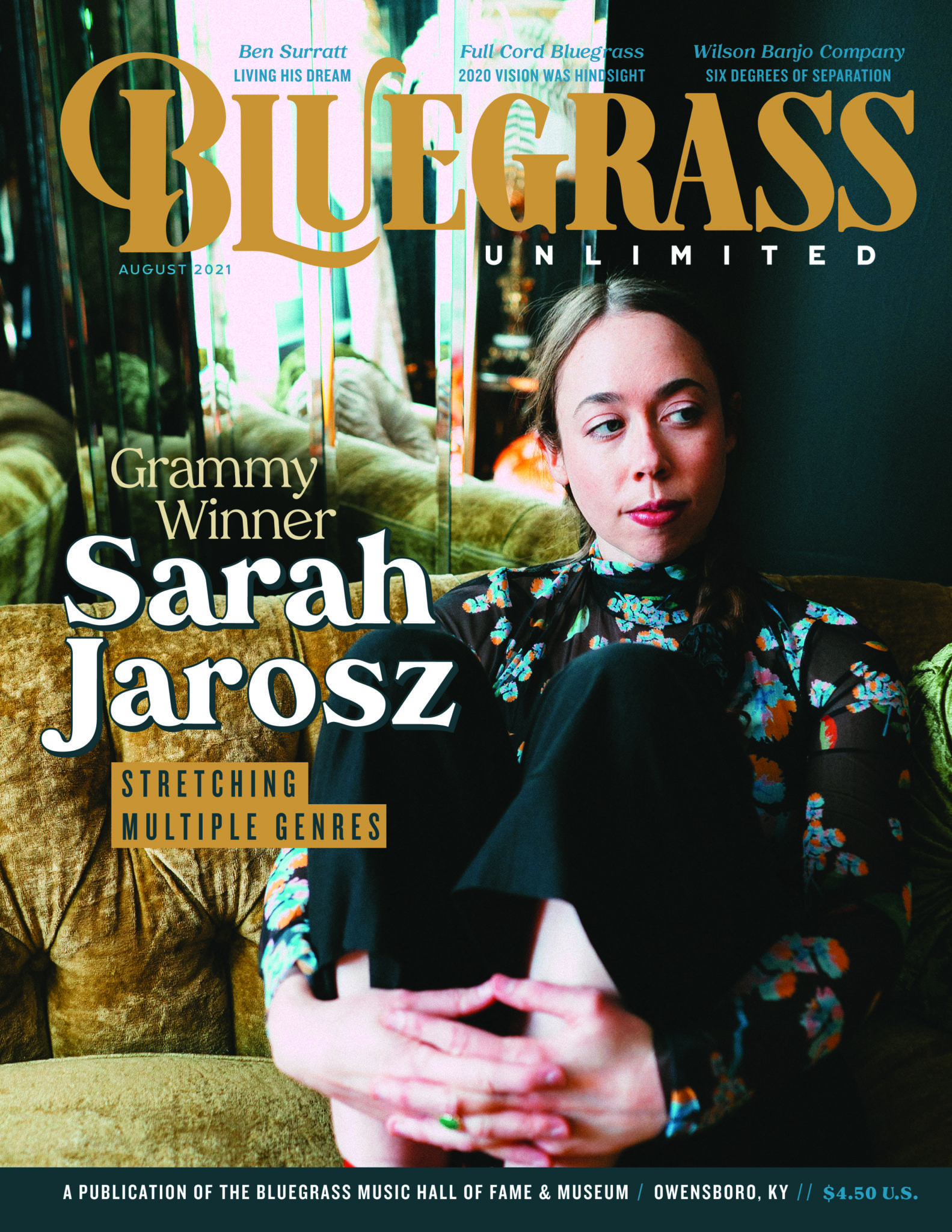
Sarah Jarosz
Grammy Winner Stretches Multiple Genres
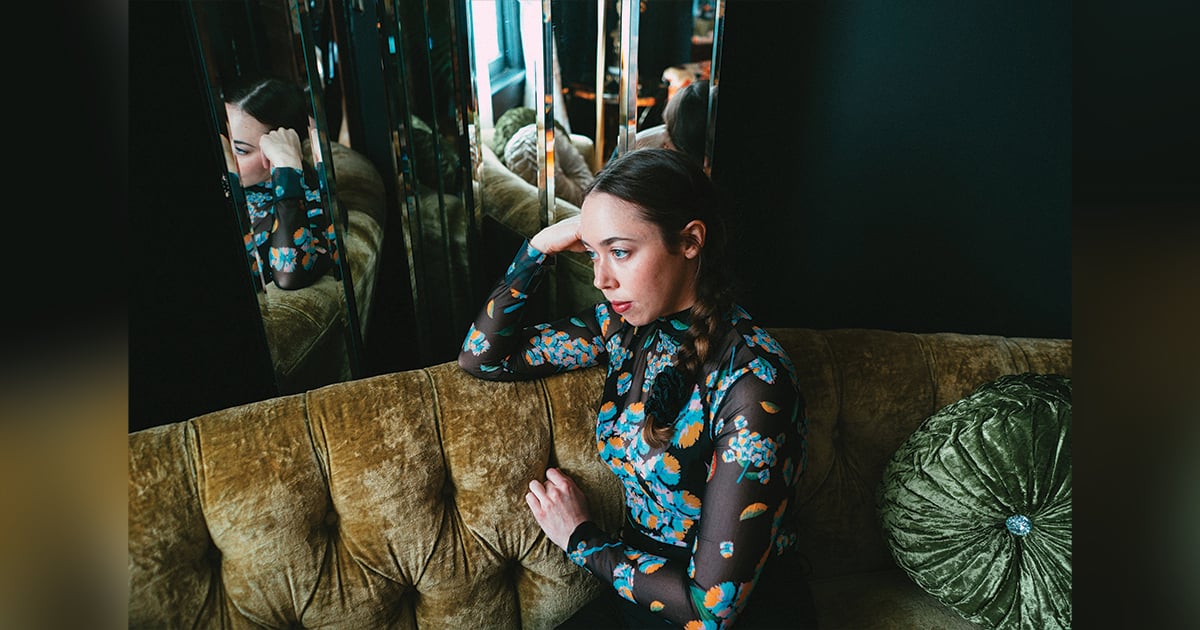
Photo by Kaitlyn Raitz
For most musicians, it’s pretty easy to classify what genre they fit into—essential, really, to success—but good luck locking Sarah Jarosz into any kind of category. The singer-songwriter isn’t exactly anything, but is a little bit of a lot of things and maybe that’s the secret formula to her runaway success.
Before she turned 30, she captured four Grammys, was nominated for five others and has seen all of her albums garner critical acclaim. Her newest release, Blue Heron Suite, out in May, is almost certain to put her in the mix next awards season.
But what do you call her music?
“I don’t feel my records are bluegrass, after the first one, anyway,” Jarosz said. “That’s what’s so beautiful about bluegrass, it’s open to so many interpretations.”
She lists among her early influences Nickel Creek and Hot Rize.
“Some traditionalists might not consider them bluegrass, but it’s telling they were my way in, already pushing the boundaries. I worked my way backwards from there with Gillian Welch, Tim O’Brien, Abigail Washburn and Darrell Scott,” Jarosz said. “I was still learning and my love turned to traditional bluegrass and the outer edges.”
For clarity—or not—her Grammys have come for Best Americana Album (2021), Best American Roots Song (2019), Best American Roots Performance (2017) and Best Folk Album (2017). Among her other nominations is one for Best Country Instrumental Performance.
However, it was the bluegrass stage where she made her big splash, and a fortuitous encounter with a producer.
“[I’m] rooted in bluegrass,” Jarosz said. “A little bluegrass, folk, Americana, indy rock, some Texas—that’s what being a musician is.”
Early Start
Jarosz was fittingly born in Austin, Texas, one of the country’s most eclectic music cities. She started on instruments at age nine, but performing came sooner.
“I’ve been singing my whole life and it’s first documented at two with ‘You’re a Grand Ol’ Flag’ at a school function,” she said and laughed. “Music has always been around me. My parents were as big music lovers as they come. Mom played guitar and sang and dad was an avid collector of albums.”
Like so many successful performers, it all started at a local jam.
“My parents bought me a mandolin and we found a weekly bluegrass jam about that time [nine]. That’s when I took ownership of wanting to play and practice. I got excited about making music and played banjo and guitar, and around 13 or 14 started writing songs,” Jarosz said.
Jarosz’s education gained traction quickly.
“I had an incredible music teacher at school, Diana Riepe, who believed every child should have access to music and music instruction,” Jarosz said. “I was blessed with that. I started learning music by ear and took lessons with Billy Bright, who I met when he was playing with Tony Rice and Peter Rowan. My folks took me to the bluegrass jam every Friday. Once I was into my teens, I started attending music camps and Pete Wernick was a huge mentor early on.”
It doesn’t take long to notice a level of maturity and insight well beyond the artist’s years. “I was an only child and was always comfortable being around adults. My parents took me everywhere, even clubs in Austin,” she said with a laugh. “There were a lot of people in their 50s and 60s who were my friends and they never treated me like a kid, I was never looked down to. Part of that was my level of work and my desire to be a musician.”
Turning Point
The big break came for Jarosz in 2007, right after she turned 16. She’d been attending festivals and academies and travelling and playing in the summers, hitting places like Telluride and Rockygrass.
“Craig Ferguson offered me a set at Telluride and gave me that opportunity based on hearing me sing—I didn’t have an album, a label or a band—that was all he was going on. Gary Paczosa heard me for the first time there and asked me to Nashville and I signed with Sugar Hill Records. Even though I’d been working for years, paying lots of dues, gigging around Austin … this was the start of something incredible, to be given this opportunity was life changing.”
Jarosz was joined on stage at the end of her set by Washburn and Noam Pikelny for the Hazel Dickens’ number “Won’t You Come and Sing for Me.”
“Gary likes to tell that he was leaving, heard my voice, and had to come back,” she said. She went on to make four records with Sugar Hill and refers to Paczosa as “like family.”
Jarosz understands the importance of that break and how important bluegrass was to her start.
“It’s more of a gift,” she said. “Being surrounded by musicians who allowed me to see [music] as a life, signing a record deal at 16, and the people who helped me see beyond that, to be a true artist instead of a flash in the pan — that’s the special aspect of the bluegrass world. It allowed me to see the long game.”
That first album was Song Up in Her Head and included the title track as well as “Come On Up to The House” and “Mansinneedof,” which garnered her a first Grammy nomination in 2009. She was joined on the project by heavyweights Darrell Scott, Chris Thile, Jerry Douglas, Stuart Duncan, O’Brien, Mike Marshall, Chris Eldridge and Aoife O’Donovan, as well as others.
“I was too young to know what I’d be nervous about,” Jarosz said. “I had confidence, but no experience [making an album]. I was very aware of what was happening. Gary had made so many of the albums I’d loved growing up. I felt the weight of being in the studio with him … the ability to bring in some of my heroes on my first album … I’d never been in the studio and it was like going to school every day, making music.”
Her sophomore album, Follow Me Down, came in 2011. “Annabelle Lee,” a rhythmic, haunting tune adapted from the Edgar Allan Poe poem, got lots of bluegrass air play. This effort was also loaded with guests, many from the first album with the addition of the Punch Brothers, John Leventhal, Shawn Colvin, Bela Fleck, Dan Tyminski and Vince Gill, among others.
Jarosz garnered three nominations from the American Music Association: “Emerging Act of the Year,” “Instrumentalist of the Year” and “Song of the Year” for “Come Around.” She credits her parents and Paczosa’s support as key to her early success.
“My parents gave me a lot of freedom and trusted me by letting me travel. Gary opened his arms fully to my music and artistry and he had two daughters and they really were like a second family. It was a beautiful creation of records and a lifestyle.”
While she was having a great time, she was also still trying to finish high school and keeping a hectic schedule. Breaks meant playing out or hitting the studio.
“It became a blur, never a moment to catch my breath,” she said. “But it was exciting. I always came into the studio with the exact number of songs we needed, partly because I knew what I wanted and how I wanted it to sound. Gary wanted me to come in with 40 songs and whittle it down, but I didn’t feel like I had the time. He had the trust in me to do my thing.”
Build Me Up From Bones was the third album, two years later, and it brought Grammy nominations for “Best Folk Album” and the title track for “Best American Roots Song,” as well as an AMA nomination for “Album of the Year.”
Although there were many notable guests, Jarosz was looking something a little different.
“I wanted to capture more of the trio sound, not have a million guests, my songs in a more stripped-down way. She wrote or co-wrote nine of the 11 songs.
Breaking Through
It was the release of Undercurrent in 2016 that broke Jarosz through the awards barrier. The album won the Grammy for “Best Folk Album” and “House of Mercy” won for “Best American Roots Perfomance.”
“It was so thrilling and unexpected,” she said. “I had been nominated several times and not won, and after not hearing your name called and then hearing your name called, it’s … special.”
The special feeling would repeat itself a few times after those 2017 awards. In 2015, she formed I’m With Her with Sara Watkins of Nickel Creek and O’Donovan of Crooked Still, and they wrote and played shows together. They released See You Around in 2018 and won the AMA award for “Duo/Group of the Year” and then captured the Grammy for “Best American Roots Song” for “Call My Name” in 2019.
Earlier this year, Jarosz took her fourth Grammy, this one for “Best Americana Album” for World on the Ground.
“It was incredibly thrilling, sitting in my living room to accept it,” Jarosz said of the pandemic-induced virtual awards. “It was surreal not leaving home for something so big. It meant so much — whenever I’ve won, it’s been about who I’ve made the work with, and [for World] it was with John Leventhal and I got to be the one who told him we’d won. After all the work, especially this last year after not being able to tour, not knowing if you’ve connected … each [award] means all the more. I wanted to create music for a lifetime and when you win [more] it means people must be digging it.”
While the awards are satisfying, it’s clear that’s not the motivation for Jarosz.
“It means a lot to win when you’ve poured your heart and soul into it, but I’d still be doing it, regardless,” she said.
It’s also not been all about albums. True to her eclectic spirit, she’s released a “grassy” version of Prince’s “When Doves Cry” that can only be heard on music service Spotify, as well as recent covers of U2’s “I Still Haven’t Found What I’m Looking For” and pop star Billie Eilish’s “my future.” She collaborated with Parker Millsap on the Luck Mansion Sessions that produced the hypnotic “Your Water” and “The Glory of Love.”
The Prince cover came about as part of a larger project that wasn’t intended for an album, but has been extremely popular.
“I worked that up with Jeff Picker,” she said. “We were working with Tony Trischka on a breast cancer fundraising project, for a Prince-themed concert. We also did “Sometimes It Snows in April.” I started throwing it in live sets and then Spotify asked for a cover outside [an artist’s genre] so we recorded it for them.”
‘We Made a Band’
I’m With Her came along at the perfect time for Jarosz and presented a chance for her to work with two musicians she’d long admired.
“We made a band,” she said. “It happened organically, naturally — we were asked to do a workshop with others and we were the only three who could get together every day. We’d met backstage at Telluride in 2014 and sparks flew. [At the time] we were heavily into individual projects, but wanted to record, be a band and we didn’t want it to just be a one off.”
For an artist who is always looking for something different in her work, it was just what she needed.
“I was ready creatively for something different, I was ready to shift gears, be part of a team and sing with two of my favorite musicians,” she said. “As a musician, there is a need to re-imagine oneself, getting a jolt of creativity from somewhere else besides yourself. I think we were all sort of feeling that.”
For a long time, Jarosz wrote almost all of her own material and has now found herself enjoying working with other writers.
“I was very closed-off to co-writing for a long time, even though people were often pushing,” she said. “Writing was such a personal, lone idea, it was scary going into that process with someone else, let alone someone I didn’t know. With World on the Ground, I let go of so much. I have such respect for John Leventhal, I was more ‘let’s see what happens.’ I wrote the words and he wrote the music, and it was nice not having all of it occupy my mind.”
Things were coming at Jarosz fast as the pandemic set in. She was last year’s keynote speaker at the IBMA awards. She’s working on a piece for NPR’s Morning Edition. She’s sitting on a 2021 Grammy-winning album she’s not been able to tour and support, and she moved from New York to Nashville, TN.
And, she just released a new album in May, Blue Heron Suite. It would best be described as it’s Sarah Jarosz, but completely different. Oddly enough, it was actually written before her most recent album.
“This album was written in a completely different way. It was a commission from [non-profit] Freshgrass [Foundation]. The end game was playing this for a festival. Normally, you make a record and then tour, this was for the stage, so it was done in reverse, a shake-up of the creative process, and knowing that [the show] might be the only time performing it.”
The project came up in 2017, a tough time for the Jarosz family. Her mother had just been diagnosed with breast cancer and was starting intense chemotherapy and radiation treatments. She wasn’t sure it was doable.
“I started thinking back on great blue herons,” Jarosz said. “When travelling with my family, we went to Port Aransas (Texas) and we’d always see these birds. They’ve symbolized calm, peaceful, nature, and mom saw them as good omens and she’s into omens. It was like a healing to me.”
Jarosz’s mother is now in remission and the record is out. It is not like anything the artist has produced before.
“It’s really designed to be played start to finish without stopping,” she said. “It’s written as a suite, a song cycle. When I perform it in a show, I don’t talk in between songs.”
As the country comes out of COVID-19 lockdowns, Jarosz is excited about getting out and playing live, being around audiences and fans again. It seems as though she has little interest in turning back over old ground, no matter the past success.
“Nothing is off limits, musically. I like musicians who aren’t afraid to mix things up, explore, be creative, try new things — that’s the kind of musician I want to be.”