
Rounder Bluegrass
The First Fifty Years
All Photos Courtesy of Rounder Records Archives
I bought my first Rounder album in 1974. I was a recent convert to bluegrass and Rounder was likewise a new entry in the field of bluegrass and old-time record labels. I continued to buy more Rounder albums and my immersion in bluegrass grew deeper and deeper. A few years later, when I had the audacity to think that I, too, could start a bluegrass record label, I wanted my product to have a Rounder look. Something that was graphically appealing, well-annotated, well-engineered, and pressed on decent vinyl.
My friend Walt Saunders, a record reviewer and frequent contributor to Bluegrass Unlimited magazine, was an early friend of the Rounders. He helped steer deserving talent to the label and occasionally sat in on some of the recording sessions as an observer. He let me tag along with him to one session that featured the solidly bluegrass band led by Ted Lundy and Bob Paisley. He also told me stories about the Rounders, about their “collective” approach to the “business” – a word they probably found ill-favor in – of music.
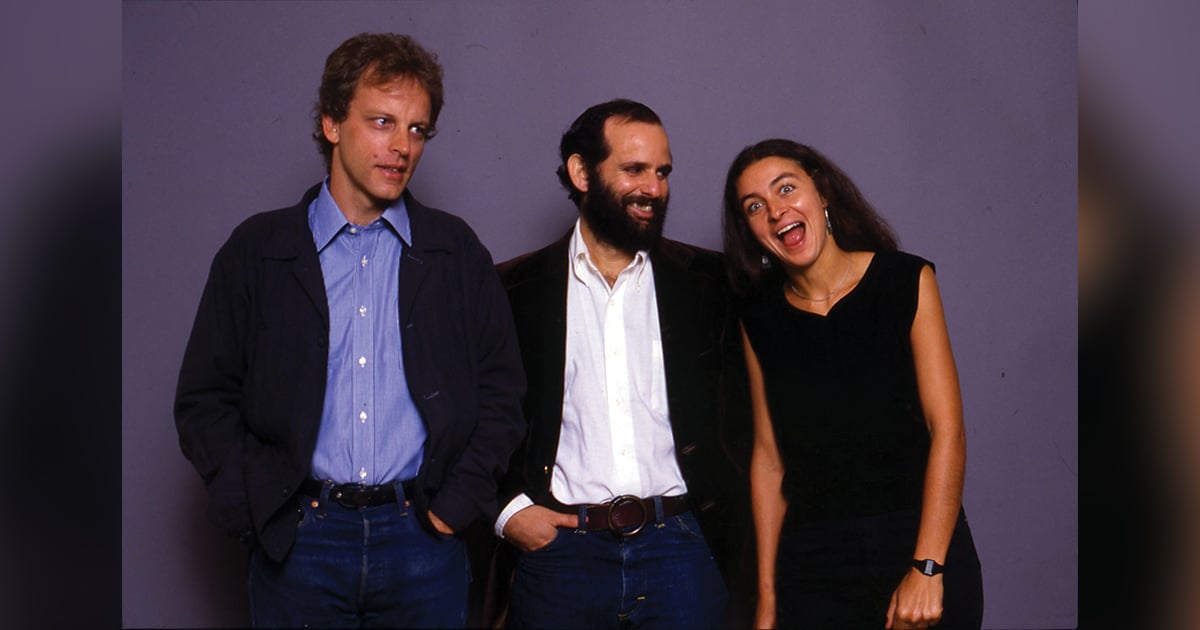
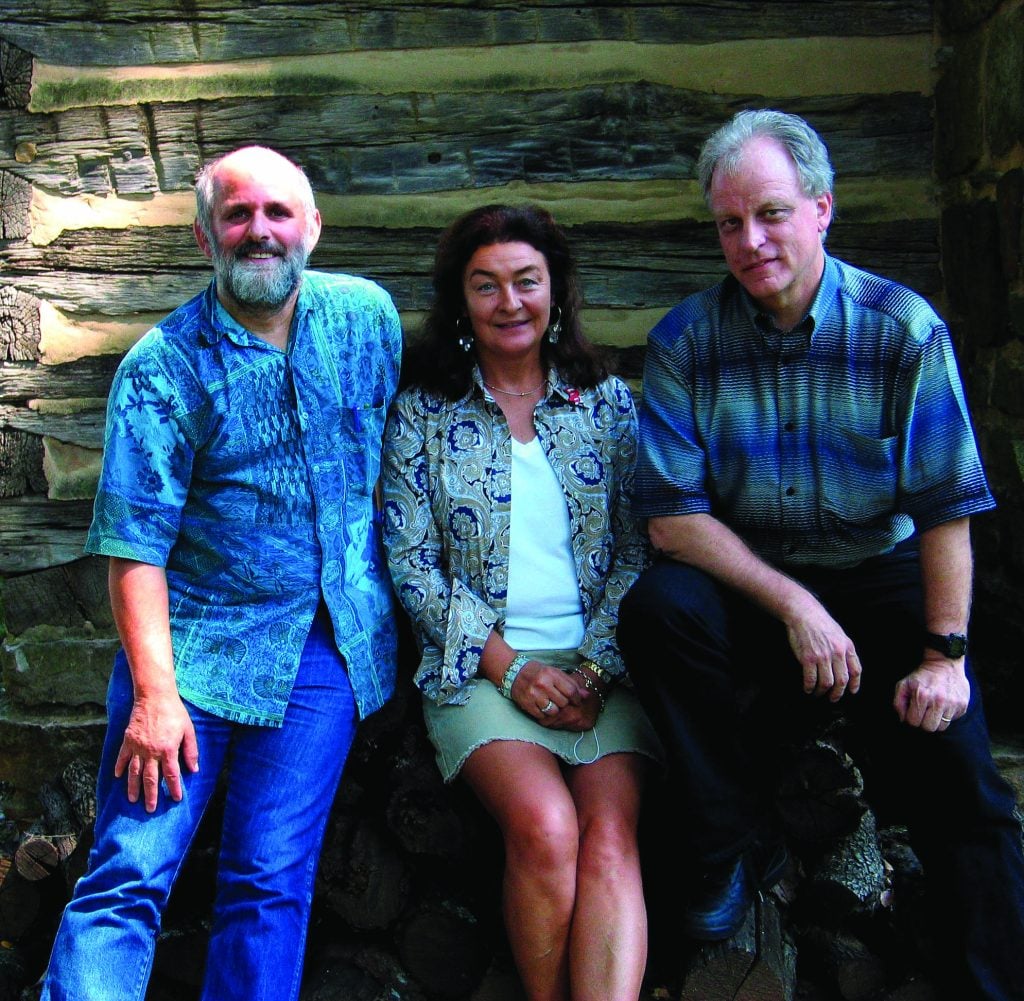
Rounder started on a shoestring budget in 1970. The founders initially utilized a communal approach to the division of labor to take bluegrass and old-time music to the masses. Amazingly, the original trio of Rounder founders are still at it, although their roles have changed in recent years. Most familiar to bluegrassers is Ken Irwin, the soft-spoken producer who has overseen the creation of literally hundreds of albums and CDs. Historically, Bill Nowlin concentrated on business (which included day-to-day operations, foreign distribution, and royalties) while Marian Leighton Levy specialized in publicity and promotion. Today, the threesome’s involvement leans more toward working on occasional productions and new releases. And now, 51 years later – yes 51 YEARS! – Rounder enjoys a universal reputation as one of THE premier roots music labels. Its catalog counts blues, Americana, folk, rock, country, jazz, Cajun, Zydeco, conjunto, reggae, R&B, polka, gospel, pop, and music for children as being integral parts of the mix.
But for bluegrass fans, 2021 is the year to celebrate; it marks the golden anniversary of the label’s first bluegrass release. That inauspicious start came with an album by Joe Val and the New England Bluegrass Boys called One Morning in May, Rounder 0003. The next dozen or so releases set the tone for Rounder, and it was a mix of tried-and-true old-school bluegrass juxtaposed with envelope-pushing progressive variants. Releases by Don Stover, Red Cravens and the Bray Brothers, Del McCoury, Ted Lundy, and Ola Belle Reed were right at home with those from Country Cooking, Frank Wakefield, and Vassar Clements. Still other albums by Tut Taylor and Norman Blake (the first Rounder artist to be signed to a multi-album contract) fell somewhere in between.
These, and other releases, formed the bedrock that paved the way for commercial successes with high-profile releases by Alison Krauss, the Bluegrass Album Band, guitar legend Tony Rice, and J. D. Crowe, to name but a few.
After a successful run of forty years, transfer of ownership of the label to California-based Concord Recordings began in 2010 and concluded in 2013. Ken, Bill, and Marian, along with much of the upper-level management, remained on board during and after the transition. Rounder’s catalog of nearly 4,000 releases found a very welcoming home in the 12,000-strong Concord (which also includes Sugar Hill, Takoma, Vanguard, and Flying Fish). The ink on the deed was barely dry when yet another change came in 2013; Wood Creek Capital Management acquired Concord.
Last year, under the Concord umbrella, a number of events celebrated the anniversary of Rounder’s launch. There was a “50 for 50” campaign assembled by long-time producer Scott Billington that each week drew attention to a different Rounder album of note and included releases by Alison Krauss, JD Crowe and the New South, Joe Val, Hazel Dickens, and Ola Belle Reed. Podcaster Otis Gibbs, host of Thanks for Giving a Damn, gave an in-depth look at the label and included interviews with the Rounder founders and key artists. Music services such as Apple Music, Pandora, Spotify, and YouTube featured genre-themed monthly playlists that highlighted folk, old-time, bluegrass (and more). Still in the works is a book on the label by journalist David Menconi for the University of North Carolina Press.
At the outset, none of the Rounders had any idea that the label – or in some cases, themselves – would survive to enjoy a 50-year anniversary. Ken noted that in 1970, the average life expectancy for those living in the United States was 71 years of age while Marian opined that golden anniversaries were something that “their parents or grandparents” enjoyed. Indeed, a career path in music seemed an odd choice for all three founders. In college, Ken obtained a degree in special education with the goal of working with disturbed children, while Marian focused on modern European history, and Bill’s forte was political science. None of them had degrees in business, much less music business.
Initially, the mindset of the trio was to issue music that they liked and that others labels weren’t releasing. But, according to Bill, “it was not with the idea of forming a record company and running a business. But we seemed to have come at the ‘right time.’ With a lot of help from many people, we embarked on an adventure that built its own momentum and was both energizing and very fulfilling.” While Bill maintained a day job (which oftentimes covered rent and food for the trio) for the first several years of the label, Marian stated that “Ken and I were both were committed to doing it as our main thing right from the start.” What drove the trio from the start was a passion for the music and the artists. A case in point involved long-time traditional music professional Randy Pitts who caught James King at a low moment. James bemoaned, “I don’t know why Ken puts up with me.” To Randy it was obvious, “Because he loves your singing beyond all reason.”
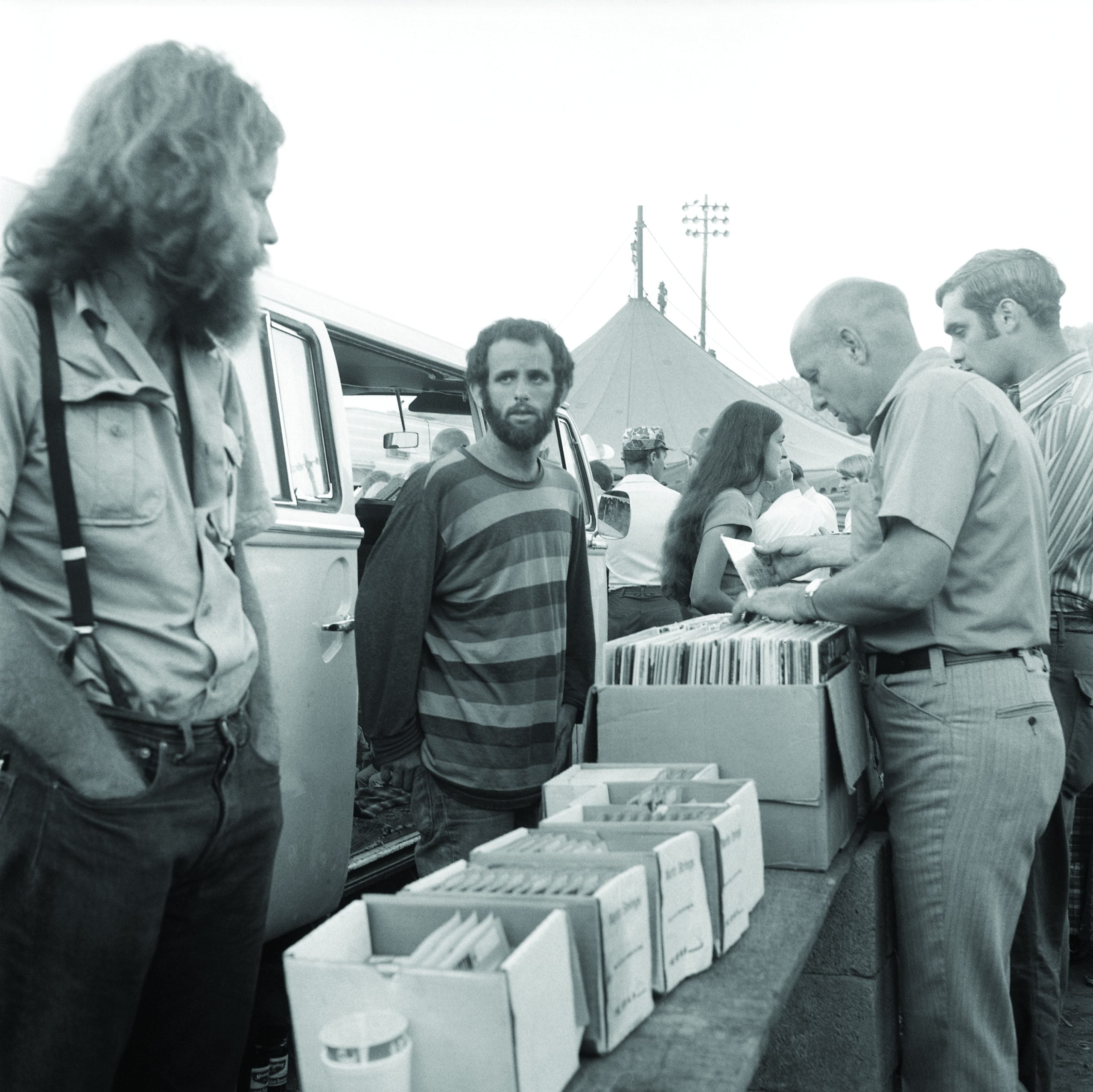
Necessity sometimes forced the Rounders into being trend setters. Such was the case with the formation of their distribution company (a first for a bluegrass/old-time-centric label) in the early 1970s. Making records was great, but it you had no way to sell them, that could be a problem. They visited a record retailer in Boston in hopes that they would carry copies of new Rounder projects, only to be told to “come back when you get a distributor.” They approached several other independent labels who likewise needed an avenue to the marketplace and Rounder Distribution was born. Eventually the concern grew to distribute music for 400 labels, making it a key player in the dissemination of independent music to the public.
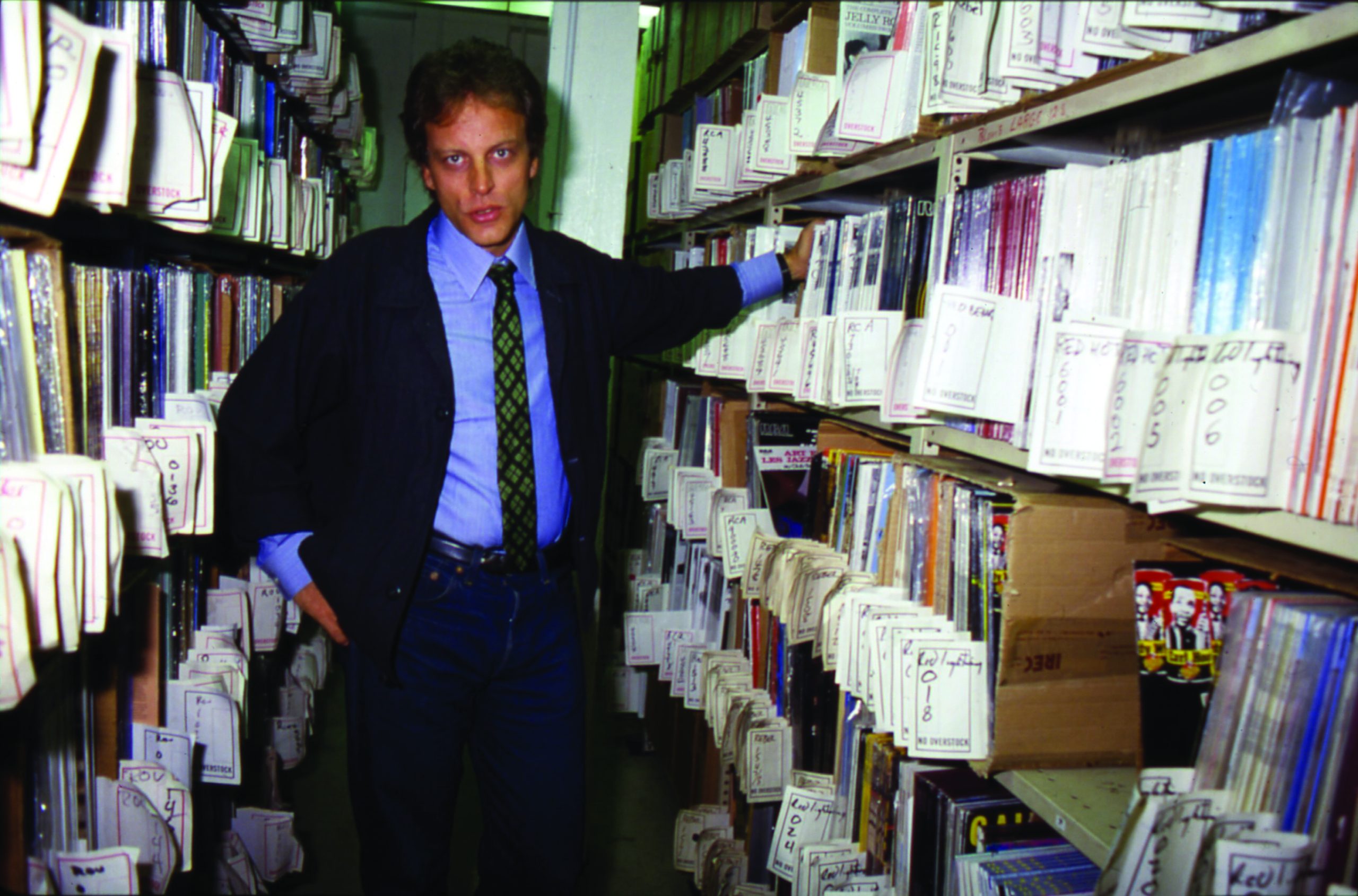
Rounder also set the bar for bluegrass album packaging. Ken noted, “We like liner notes.” Bill added that “the fact [that] we all came from academic backgrounds contributed to our belief in the importance of liner notes. We were ‘on a mission’ to spread the word about the musics we loved.” While the Rounders have always been fans of the music, they all grew up outside of the bluegrass heartland. Consequently, their content knowledge about the music was somewhat limited. Reflecting on their own frustrations in learning about the music, extensive notes adorned many of the Rounder albums with the goal of creating a more informed clientele. The only downside was that staffers in the shipping department were frequently found reading the liner notes instead of packing orders!
But it was more than just the notes. The albums featured expertly engineered music, quality pressings, and sported graphically appealing covers – in full color, no less. (Many indie labels of the day sold albums with black and white covers, or ones with only one or two colors.) It was all part of an attention to detail that made a Rounder album something special.
So, the albums came at a frenetic rate. With such a prodigious output, the Rounders were hard-pressed to name a favorite. As Bill pointed out, “I doubt that any one of us could ever say we have ‘a’ favorite album. There are dozens of them. We used to think of them as our children, and if someone has more than one child, the idea of favorites doesn’t seem right. Now if you were to ask me what bluegrass album that I thought Rounder had released that doesn’t get remembered today the way I think it should, it’s Honkytonk Bluegrass (fondly remembered as Rounder 0031) by Buzz Busby and Leon Morris. It’s not even digitized yet!”
Ken expressed an affinity for some of the tradition-laden bluegrass groups. “I love the first Whitstein Brothers album… love the Vern Williams.” It was Williams’ approach to the music and how soulful he was and “his love for finding old songs and making them bluegrass gems.” With the Whitsteins, it was partly personal. “I didn’t know them well at first but became very close, especially with Charles and his wife.” Again, it came down to songs and arrangements. “I would send them a cassette with some songs for them to consider. We would get one back with what they had worked up and it was so exciting what they had come up with arrangement-wise. I’m a huge duet fan.” The Johnson Mountain Boys, with their high-energy stage show, deft original compositions, and spunky revitalization of bluegrass traditions also earned them a place on Ken’s top-tier list.
Matching songs with artists is something Ken has enjoyed doing from the start. Suggesting “High on a Mountain” to Del McCoury was one of his first successful marriages of artist and repertoire. Ken had seen Ola Belle Reed perform the song at the Smithsonian Folklife Festival and immediately thought of Del. Another fruitful pick was “Bed by the Window” for James King. Others such as the Poor Rambling Boys, Darin and Brooke Auldridge, and the Johnson Mountain Boys, have benefitted from Ken’s song suggestions. Ken estimates that he pitched at least one hundred songs to various Rounder artists.
For Marian, with “so many favorites” it was “impossible to choose” a best-loved Rounder release. It was an ephemeral thing. The personnel for the group that recorded the landmark J. D. Crowe and the New South album, aka Rounder 0044, had changed drastically before the album was even released. There was never going to be another. It was historic. “Fact is, the music was just great.” The album’s significance hit her not long after its release. She attended a bluegrass festival and was astonished to find that so many of the parking lot pickers were singing songs from Rounder 0044!
And then there were the ones that got away. “At times,” Bill thought, “it would have been good to capture a little more than we did, like another studio album of J. D. Crowe and the New South’s ‘0044’ group.” Another bucket-list item was for more music by the Lilly Brothers and Don Stover. Marian’s list was less specific and contained a wish that “some people were in better health and still recording.” Ken was perhaps most explicit of all. A chance encounter with the New Kentucky Colonels at the Indian Springs Bluegrass Festival in 1973 kindled a desire to do a project with them. The idea never made it off the planning table as guitarist Clarence White was killed barely a month later. Another ill-fated project touched by the hand of death was a duet project involving Danny Paisley and James King, the latter who passed away in 2016. There was also a tentative Don Reno guitar album that never came to fruition and an album of Creedence Clearwater Revival songs as performed by the Steel Drivers. One album that didn’t get away, exactly, but took a turn along the way was an acoustic country album by Jeannie Kendall. It was contracted to be a bluegrass album by Jeannie and her father, Royce. They were better known as The Kendalls and had a few mainstream hits dating back to the late 1970s. Sadly, Royce passed away shortly after the first session. Jeannie regrouped and finished the album – with excellent results – several years later. While fully supporting Jeannie’s release, Ken opined, somewhat wistfully, that the father/daughter bluegrass album “would have been a great record.”
For the ones that didn’t get away, especially in the earlier years, deciding what to put their energies into was easy. “Taking on a new group was simple in the old days,” says Marian. “It was based on consensus and we would discuss problems.” Ken added that “it was just the three of us . . . at that time it was very rare for us not to agree.” The nature of the music business in the 1970s and ‘80s made it possible for the Rounders to operate in their close-knit manner. Bill recalled, somewhat reflectively, that “the music business was very different for our first 25 or so years. Very personal, face-to-face contact with others in the business. There were (gasp) record stores. By our 10th year, Rounder was releasing 50 or more albums a year, and sometimes closer to 100.”
Success can be a double-edged sword. Having an intense release schedule meant having a sizeable staff to get things done, not to mention warehousing. Payroll and overhead became more of a concern. It was no longer a matter of the trio deciding to do a new project and hoping that it broke even. Although a few projects still wound up in that category, more and more the bottom-line needed to be looked after. The ever-changing nature of the marketplace (brought on in large part by those pesky computers and a readily available cache of free music) brought further changes to the label.
As Rounder grew, the need for business expertise became imperative. Help arrived in 1992 in the form of John Virant, a recent graduate of Harvard Law School who showed up as an unpaid intern wanting to learn the business of music. Ken recounted that “we gave him some jobs . . . let him do the contracts.” John quickly “proved himself invaluable” and in 1997 was made president of the Rounder corporation; it was the first time that anyone outside of the original trio held this position. Bill added that John “led Rounder for a couple of decades, through the rocky times of the changing business, and is known by the Rounder Founders as the ‘Fourth Rounder’.”
Rounder’s success benefitted not only themselves but bluegrass in general. Ken likened a breakthrough artist’s success to that of rising water. When, for instance, Alison Krauss generated so much attention for bluegrass in the early and middle 1990s, rising waters elevated her boat. And when the waters rose, everyone else’s boat rose, too.
The label sported an eclectic mix of artists. And, the Rounders didn’t just record and release albums, they actively worked on artist development. They were very promotion-driven, thanks in part to a hard lesson they learned early on. The Rounders and a competing label were both keenly interested in a group that was starting to generate some buzz. After much deliberation, the group went with the other label. The reason? The other label was, according to the artist, more promotion-driven. Lesson learned.
With the 2013 Wood Creek acquisition, Rounder’s headquarters moved from the Somerville/Cambridge, Massachusetts, area to Nashville. Heading up the label’s operations there is Rounder president John Strohm. He came at the job from two directions, one as a musician and two as an entertainment lawyer. An Indiana native, he started out in music as a drummer in a punk rock group. He later moved to Boston where he switched to guitar and co-founded an indie rock trio called the Blake Babies. The group’s 2001 album God Bless the Blake Babies appeared on the Zoe label, a Rounder subsidiary. After tenure in several other rock-oriented groups, he transitioned from performing to academia. John attended Samford University’s Cumberland School of Law in Birmingham, Alabama, where he graduated Magna Cum Laude in 2004. From 2011 to 2017, he served as Senior Counsel in the Music Industry practice of Nashville-based Loeb & Loeb LLP. He came to Rounder directly from Loeb & Loeb and currently oversees Rounder’s day-to-day operations in Nashville.
Although the future for Rounder isn’t theirs to predict, Ken, Bill, and Marian hope that the Rounder identity will continue. Marian said that “if we had our druthers… the legacy would still be there, that people will remember the kind of music Rounder tried to represent.” There is also the anticipation that “people would still be able to know about Rounder and be able to listen to the catalog.”
Ken’s expectation is that the label will “continue to follow in the roots tradition. We were very broad in who we covered. We were putting out Americana before there was Americana. Blues and Cajun, George Thorogood, Greg Allman, Robert Plant, as well as hundreds of bluegrass and old-timey releases.” In reflecting on the legacy that he hopes will continue, he opined that “if somebody does write that follow-up to Neil Rosenberg’s Bluegrass – A History, a lot of it will be about artists that we worked with over those years.”
As the roles of the original founders have diminished, they find themselves involved in other endeavors. For Bill, it’s writing. “I always thought when I grew up, I’d write some books. I’ve increasingly turned in that direction and become very active both in writing books and articles, and editing books – about baseball more than anything else.” He recently passed book number 100 and will number 107 or 108 later this year. Among Bill’s music-related titles are The Rounder Book of Bluegrass Music Trivia, The Early Days of Bluegrass (which accompanies a 6-CD set of the same title), a book on Woody Guthrie, and Vinyl Ventures: My 50 years at Rounder Records.
Ken stays busy with a variety of activities. For starters, there’s a new puppy whose sleep schedule doesn’t always coincide with Ken’s! Then there’s the Belleville Roots Music Series which is located two doors from his house in Newburyport, Massachusetts. Since 2011, the series – of which Ken is one of the steering committee members – has presented an average of six concerts per year. They take place in the historic 1867 Belleville Meetinghouse, with its adjacent Fiske Chapel. The events are intended as a means to help restore and maintain the structures and, as their logo states, “to build community through music.” The concert series, like Rounder, covers a broad range of roots music including bluegrass, Cajun, zydeco, blues, roots rock, singer/songwriter, and more.
Another passion is his 1953 AMI jukebox. The unit came stocked with an array of 45 rpm records by pop singers such as Connie Francis and Pat Boone (although there was one Bill Monroe record on it!). Locating roots-friendly discs for the machine has been a varied and enjoyable process that has involved trips to used records and thrift shops. As friends heard about the project, they sent records. The unit now has a nice selection of vintage bluegrass, “early doo-wop, early rock that I grew up listening to,” and, amazingly, an assortment of platters by old-time artists including Uncle Dave Macon, Jimmie Rodgers, Gid Tanner, and the Browns Ferry Four.
Having survived fifty years in the music business is no easy feat. But the Rounders didn’t just survive, they thrived. And along the way, they set the bar for others to aspire to. Long-time Rounder artist Dudley Connell (Johnson Mountain Boys, Longview, etc.) summed it up best. “Their artwork, liner notes, sonic recording value and the sheer tastes of Rounder have influenced generations of artists and the listening public, which include not only bluegrass fans, but any number of other genres of music. The folks at Rounder launched my career in the music business. They were not only an important element in the development of the Johnson Mountain Boys, but many others as well. There are many, many artists that were touched by Rounder and owe them a tip of the hat. Congratulations to the Folks at Rounder Records for fifty years of promoting music and capturing some of the best.”
Gary Reid is a three-time winner of the IBMA award for Best Liner Notes. He was also the organization’s nod for 2015 Print/Media Person of the Year. He is currently touring his one-man show A Life of Sorrow – the Life and Times of Carter Stanley.