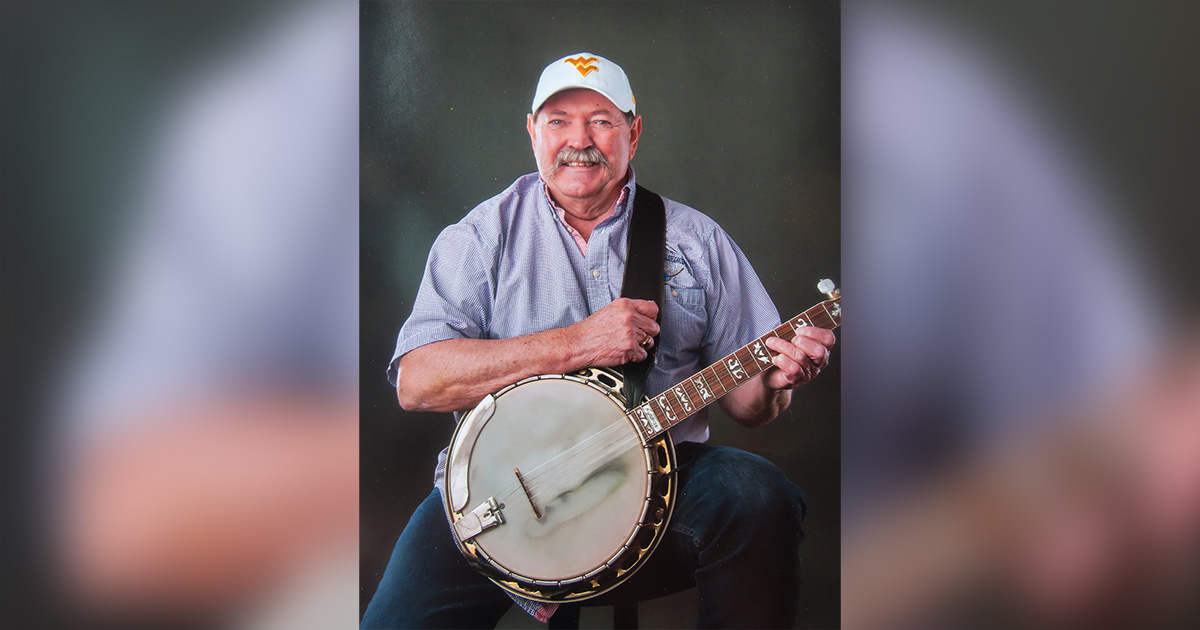
Richard Hefner of the Black Mountain Bluegrass Boys
A West Virginia Bluegrass Legend’s Signature Song Revived for Modern Times by Kenny and Amanda Smith
Pocahontas County is not only one of the most beautiful counties in West Virginia, it is one of the most nature-filled regions in all of the 400-year-old Appalachian Mountain chain.
The county, which contains the headwaters of eight rivers, also features the small town of Marlinton, West Virginia. What separates Marlinton from other mountain towns like Boone, North Carolina, Huntington, West Virginia, or Johnson City, Tennessee, is that the latter places contain a university while Marlinton does not, leaving Pocahontas County mellow and quiet.
Bluegrass legend Richard Hefner was born and raised in Pocahontas County in a place called Mill Point, which exists on RT 219 in-between Marlinton and Lewisburg, West Virginia. When you travel through that turn in the road while on the way to the Cass Scenic Railroad, the arctic fauna of the Cranberry Glades, or the ski slopes at Snowshoe, you can see the remains of the water-powered McNeel Mill that existed there as far back as the 1800s in various incarnations.
Right around the bend from the mill is the large nine-room house that Hefner grew up in. His grandparents originally moved into the place during the second decade of the 20th century. Soon after, however, his grandfather would find himself in peril on the other side of the globe.
“My grandma moved into that house in 1917 when her and grandpa got married,” said Hefner. “My grandpa was in the Army for a while and he was in World War One. During that time, Grandma kept boarders in the old home place while Grandpa was overseas. Unfortunately, my grandpa was mustard gassed while fighting in the war.”
World War One was especially brutal as it happened before many of the nasty chemical weapons and gasses used in that conflict were made illegal by the time World War II rolled around just 20 years later. Mustard gas was not only lethal but those that survived being exposed to it suffered from a range of health issues. On the psychological side of being exposed to war, seeing men, friends and fellow soldiers dying right in front of you took its toll as well.
Many times, if the wind changed, the mustard gas would blow back on the troops that fired it into the air to begin with, making for a brutal day on the battlefield. Hefner’s grandfather came back home after experiencing a full dose of the warfare agent, which is made by combining ethylene with sulfur dichloride.
“My grandpa would go a little crazy at times after being in the war in Germany and France, and they would take him to Huntington, West Virginia, and put him in the hospital there, and then he would break out and get on a bus and come home to Pocahontas County,” said Hefner, “He finally killed himself in that house, and did it with a straight razor. I think it was a combination of the mustard gas and just the things he had to do while being in a war. My Dad found him upstairs, and that was probably in the early 1930s. My grandma eventually moved into another house and used the first house as a rental, and I think she got a little bit of money from the Army, but not much. Then, my Mom and Dad moved into the house in 1940.”
After Hefner was born in 1946, he and his brothers and sisters would run up and down all of those nearby hills during those normal post-war days in Mill Point. “We would go down over the hill behind the house,” said Hefner. “It is all woods now. But, back then, it was a steep-yet-cleared sheep pasture. The land didn’t belong to any of us, but we’d go down there and our Mom would fix us a peanut butter sandwich and give us a can or a bottle of pop and send us down there about 9, 10, or 11 o’clock in the morning. We could have washed down to the Greenbrier River and she would have never known it. She would come out and holler at us at suppertime. Back then, my Dad ran the big store down by the mill, which is torn down now, and we would go down there and hang out on the porch and talk to people. We were good bicyclers, too, and we rode all over those roads on them.”
As Hefner and his siblings grew older, music began to enter the equation. His older Bill, who still lives next to the old home place as we speak, quickly learned how to be a very good guitar player, playing in the style of Merle Travis and Chet Atkins. Bill also learned how to play the mandolin with all of it happening in his junior high school years.
Hefner also has an uncle on his Mom’s side named Dude. Dude was small and deformed from a severe bout of polio and was paralyzed from the waist down. And yet, Dude was also known to have a brilliant mind and he was a fantastic musician, mastering many instruments along the way. “My uncle stayed with us most of the time, and he could play everything,” said Hefner. “Uncle Dude was a danged genius and he learned how to play music on his own. He started out playing the harmonica when he was five years old and he went on from there. He could play a steel guitar, he could play a mandolin, and he could play some Chet Atkins style on the guitar as well. He lived into his mid-40s. He was smart. He never went to school and yet he taught some of the younger brothers and sisters how to read and write. He was an amazing guy.”
Uncle Dude also helped Hefner’s brother Bill when it came to learning the guitar. “Dude knew all of the people that played music around here, although many of the local musicians in Pocahontas County ended up moving away to Baltimore and places like that looking for work,” said Hefner. “But, when those guys came home during the holidays, they would always come down to the house and sit around and play with Uncle Dude, or they would pick him up and take him out to the car and then take him to play in the beer joints. He also played a lot of square dances as well.”
As Hefner got older, he picked up his Uncle Dude’s tenor banjo and began to mess with it. “It was a cheap tenor banjo, and I even still have it up on the wall here,” said Hefner. “But, he would tune it up as if it were a five-string banjo, even though it only had four strings on it. That is why I have a little bit of a different roll when I play the five-string, even today. I went to Charleston, West Virginia, around 1967 or ’68 or so and I traded a really nice Winchester pump shotgun for a 100-dollar five-string banjo. I played that for about a year. Then, my Dad called me, he was living in Bridgewater, Virginia, at the time and he knew I was getting into playing the banjo, and he said, ‘Hey, they have one of those expensive Gibson Mastertones over here in the music store. They got it for $615, but they will take $400 for it without a case.’ I drove over there on the next Saturday and I bought it, and that was my first really good banjo. I came home that night and played a square dance that same evening up in Hillsboro.”
Some of Hefner’s banjo heroes at the time included Ralph Stanley and a picker named Alan Chambelain. “I believe his name was Alan Chambelain, or something close to that,” said Hefner. “He was a truck driver that lived up around Baltimore, Maryland, and he was married to a girl from Marlinton. He was a typical banjo player, as in he was big and tall and good-looking with wavy hair and he drove a bus and a truck up there. When he was in Marlinton, he’d always come down to see Uncle Dude and he had a 150 Gibson banjo with him. When I heard him play, I thought, ‘God almighty, whoa! I really like this way of picking right here.’ He was a great picker and just died about three or four years ago. Other than Alan, I loved Ralph Stanley and Earl Scruggs because you couldn’t find any bluegrass albums anywhere near here in Pocahontas County, or even in Lewisburg. But, on Saturdays, Flatt and Scruggs was always on TV on the WHIS station broadcast out of Bluefield, West Virginia, and it was the only channel we could get in the mountains.”
Eventually, Hefner became good enough on the banjo to form his first serious band, which included original members Uncle Glen ‘Dude’ Irvine, his brother Bill Hefner and friend Harley Carpenter. This would be the beginning of the legendary Black Mountain Bluegrass Boys.
“Harley kept coming down and he kept after me, wanting me to play,” said Hefner. “He loved Hank Williams and Bill Monroe and Elvis Presley, and he could really sing, man, and looked the part as he looked just like Elvis. He kept after me and would say, ‘Son, they are wanting us to play.’ The first show we ever did was in the small neighborhood called Cambelltown located in between Marlinton and the Marlinton Motor Lodge facilities where Allegheny Echoes happens every June. There was kind of a ritzy motel in Cambelltown and Harley knew the guy that ran it, and I believe that was the first gig for us.”
Hefner’s first album came in the form of an 8-track tape called Pure Old Bluegrass, which was recorded at Major Studios in Waynesboro, Virginia, in 1969. The recording facility was owned and run by Johnny Major, who famously ran a gas station in the mid-1950s while managing the Brent Mountain Boys, who would go on to be the first bluegrass band to win Ted Mack’s Original Amateur Hour TV Show. After the 1970s rolled around, the Black Mountain Bluegrass Boys would begin to record those great vinyl albums that sound so good and real in these modern times.
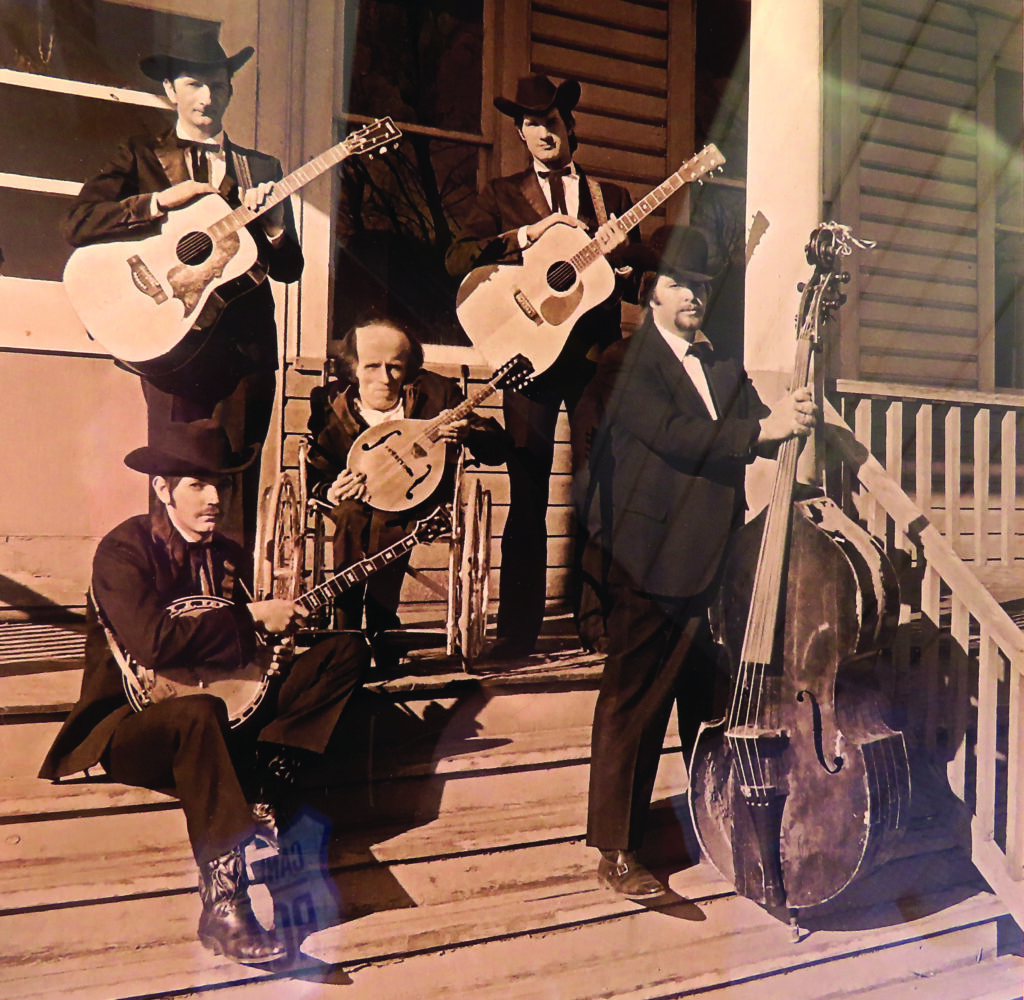
In recent years, the bluegrass recording collector Takehiko Saiki of Japan has posted a couple of the Black Mountain Bluegrass Boys’ best albums including 1973’s Million Lonely Days, featuring Richard and Bill Hefner, Harley Carpenter along with Joe Meadows on fiddle and Dwight Diller on bass, and 1975’s Talk Of The County, which includes Hefner, Carpenter and Diller along with Wayne Erbsen on mandolin. Both projects can be found at www.youtube.com/@TakehikoSaikiBluegrassAlbums.
Both of these efforts are spectacular if you love true rural, hard-driving bluegrass music from half a century ago. What stands out from the recordings is the title song “Million Lonely Days.” Written by Hefner, it is nothing short of a true classic bluegrass song, even if you did not realize it until now.
After bluegrass stars Kenny and Amanda Smith heard the song, played live by Hefner in Pocahontas County when all three were asked to do a Master Class at the Allegheny Echoes roots music instructional week, hosted by West Virginia legends The Bing Brothers, they knew almost instantly that they wanted to record it. After adding their signature sound to the cut, Kenny and Amanda Smith and their band released it a few weeks ago. More on Kenny and Amanda’s thoughts on the song are in the companion article on page 50.
It is the chorus of “Million Lonely Days” that grabs you, with a faraway feel to it that is just plum full of that high lonesome sound, saying, Oh, the night is so cold, and there is no one here to hold, far away and all alone, Allegheny is my home.
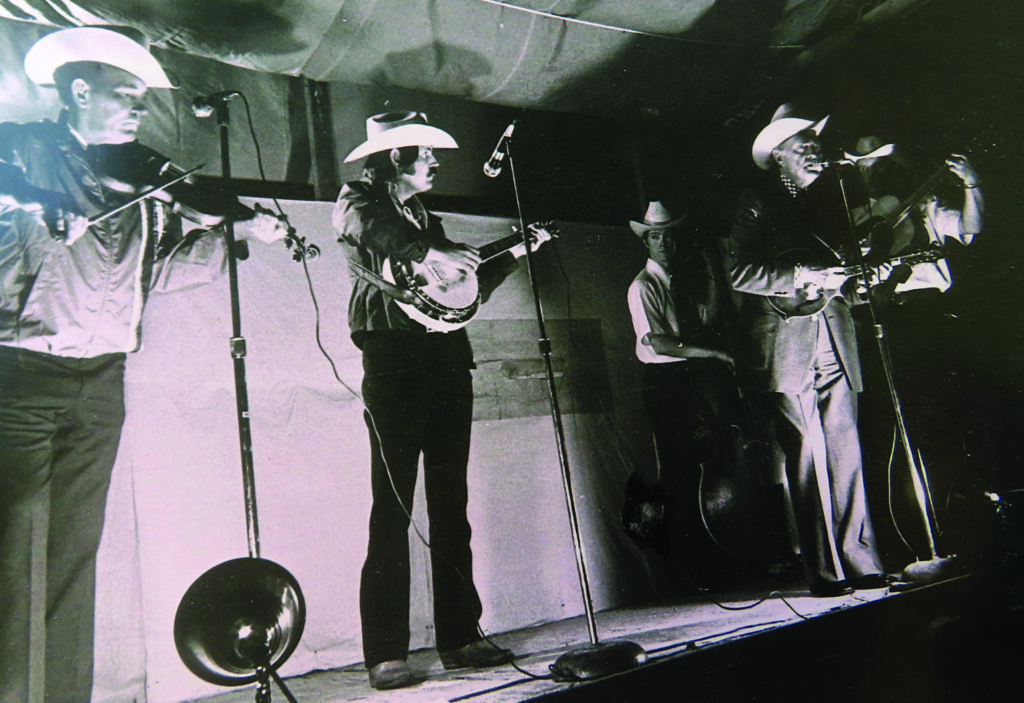
From there, Hefner and the Black Mountain Bluegrass Boys entered the mainstream of the bluegrass world. They played at many festivals, including the yearly festivals that the late Melvin and Ray Goins would host at Lake Stephens in southern West Virginia.
Hefner also spent an unexpected yet memorable weekend playing the banjo for the Father Of Bluegrass Bill Monroe. “We had met and been around Bill Monroe a few times and he had an interest in Harley Carpenter as a lead singer, I believe, because Harley was truly a strong singer,” said Hefner. “I was going to go to Bill’s festival in Rosine, Kentucky, but I was working a job running an inloader over in Fayette County. So, Harley went on to Rosine without us. Then, Harley called me on the CB radio and said, ‘Hey, Monroe wants you to come down and play with him this weekend.’ I said, ‘Nah, no he don’t.’ Harley said, ‘Oh, yes he does. Jack Hicks quit his band.’ I said, ‘I don’t know if I can make it or not, so I’ll be there in six hours or I won’t be.’ We had three inloaders going where I worked and one of the drivers was my best friend Steve. I told him that Harley had called me and told me that Monroe wanted me to play the weekend with him, and Steve said, ‘Heck, let’s park these dang inloaders and go.’ We parked them and then got in my car and drove all of the way to Rosine.”
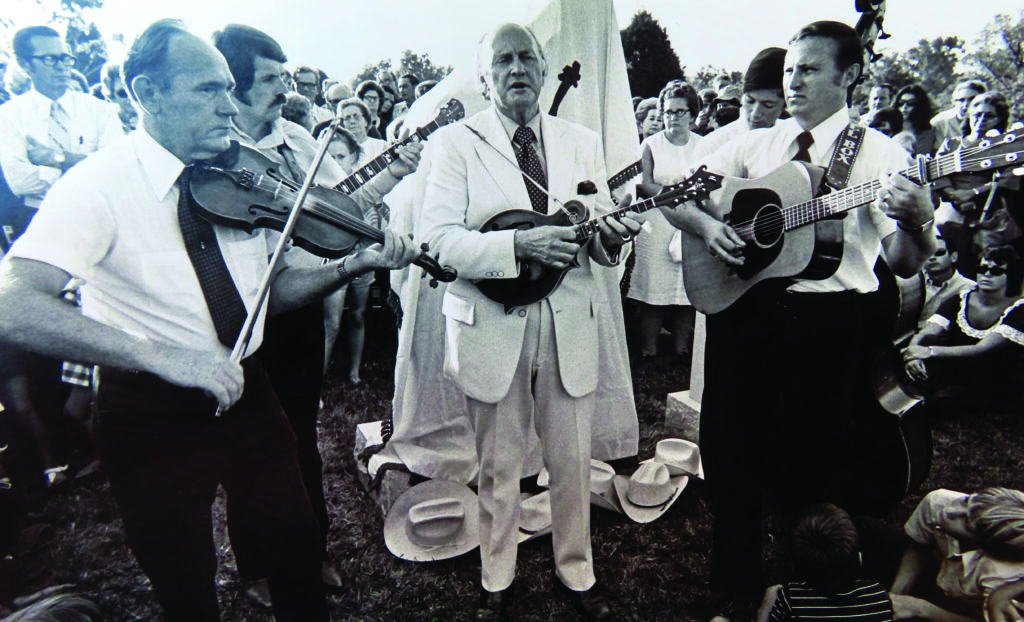
Once in Monroe’s home county in western Kentucky, Hefner strapped on his banjo and began playing with the bluegrass legend with little words of preparation coming out of Monroe’s mouth. The other members of Monroe’s band during these performances included Kenny Baker, Greg Kennedy, and Bill Box. “Monroe didn’t say much,” said Hefner, laughing. ‘Bill just said, ‘Have you got a hat to wear?’ I said no, so he sent somebody onto his bus to get me a white hat. I think it was one of his because it was way too big for me. We ran over a couple of tunes and I asked him, ‘What other songs are we going to do?’ He didn’t have a setlist, but somebody in the band told me that since we were in Rosine, he’d probably start with ‘I’m On The Way Back To The Old Home’ as he had been opening up with that song recently. So, when we got up onstage and Bill said to me, ‘We’ll do tunes you’ll know.’ We get out there to begin the show and sure enough, he hits that mandolin two or three times and starts off with ‘Footprints In The Snow,’ which was totally different than what I was told. But, Bill never told any of us what he was about to play, and I had only been playing for about four years or so at that time and I didn’t know all of his stuff because we couldn’t get all of his records back home. But, what I did quickly notice was when he was done playing a song, he would hit that mandolin two or three times in the next key that he was going to play in. You didn’t know what the song would be, but you knew which key to get into.”
That weekend with Monroe also put Hefner into some unique and positive situations that he would never forget, sharing some special moments with legends. “I got to ride in Bill’s bus over to the family graveyard in Rosine,” said Hefner. “It was the weekend when they unveiled Uncle Pen’s memorial and we got out and played Uncle Pen’s song by his grave. That was pretty cool. Also, I got to play with Bill during his Midnight Jamboree, I think he called it, where he brought everybody out who had played at his festival that weekend. All of a sudden, I am playing onstage with Lester Flatt and the Sullivan Family and my banjo hero Ralph Stanley, and that was pretty amazing.”
On a personal note, a few months ago I hung out backstage with Del and Ronnie McCoury at the Appalachian Theatre in Boone, North Carolina, and for some reason, I asked Del if he had ever heard of Richard Hefner, and that is when the elder McCoury’s eyes lit up. Del immediately told me the story of driving the first band bus that he ever owned to a show and having a flat tire with no means to fix it. This took place literally 50-plus years ago before Del was a superstar in the bluegrass world. So, Hefner and friends took it upon themselves to find a way to jack the bus up, take the flat tire off, and have it fixed at the local tire shop so the young Del McCoury could continue down the road. I recorded a message that evening from Del to Richard and it was animated and fun and was a glimpse into the camaraderie many folks of that generation had as bluegrass musicians, and the appreciation of being helped by someone when it counted.
Hefner would stay with his day jobs over the years, playing it smart, yet he is still playing and singing as we speak. With a band often made up of fellow West Virginians such as Dave Bing on the fiddle, Danny Arthur on the guitar, and Joanna Burt-Kinderman on bass, Hefner still performs in and near Pocahontas County and Lewisburg while also traveling to Huntington, West Virginia, to occasionally play at the Fly In Bluegrass Festival every July (facebook.com/FlyInFestival).
Next month, Hefner is also scheduled to do a Master Class in June at the aforementioned Allegheny Echoes music week (June 22-28, alleghenyechoes.com) in Marlinton, West Virginia.
Meanwhile, out there on the worldwide bluegrass airwaves, Kenny and Amanda Smith have turned a new generation onto his always-a-bluegrass classic song “Million Lonely Days.”