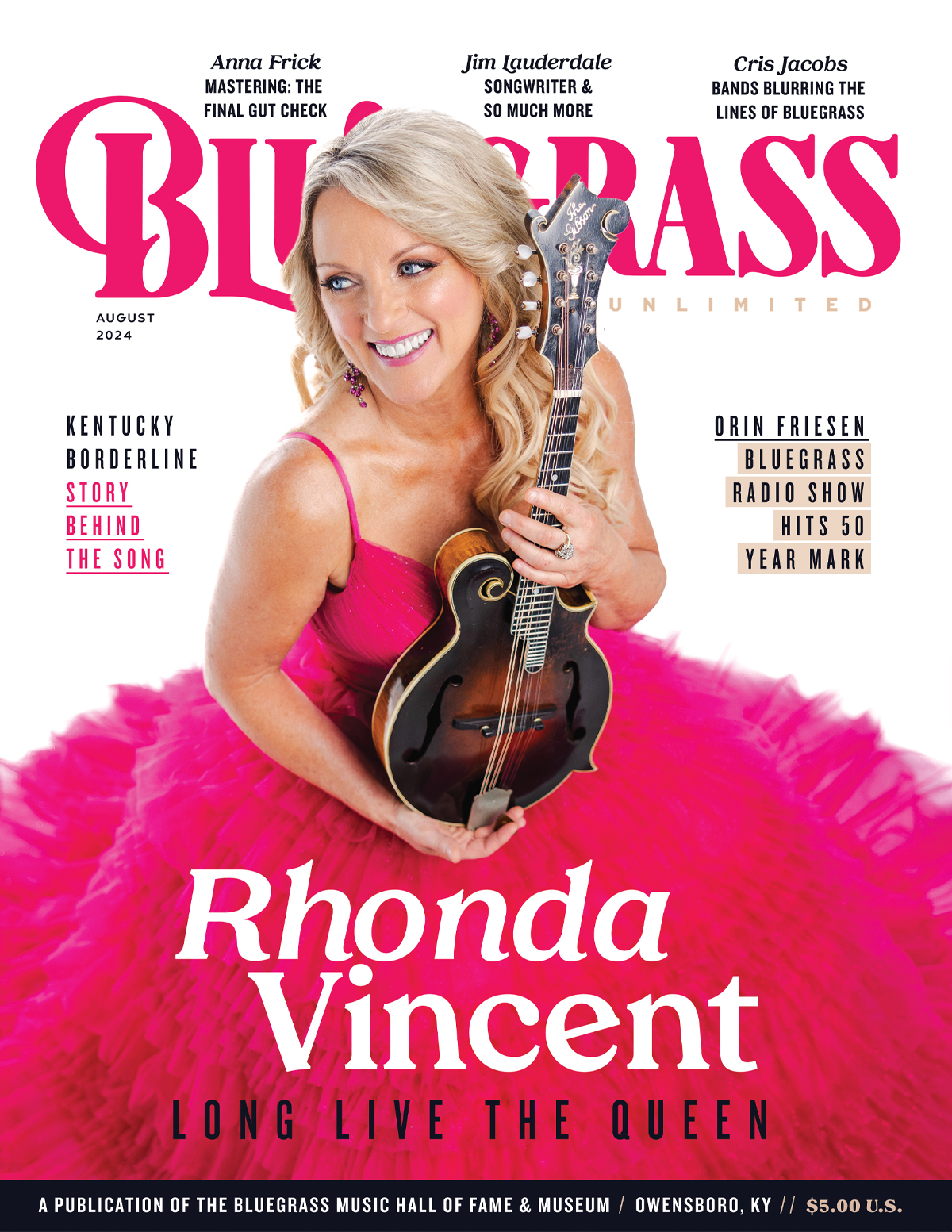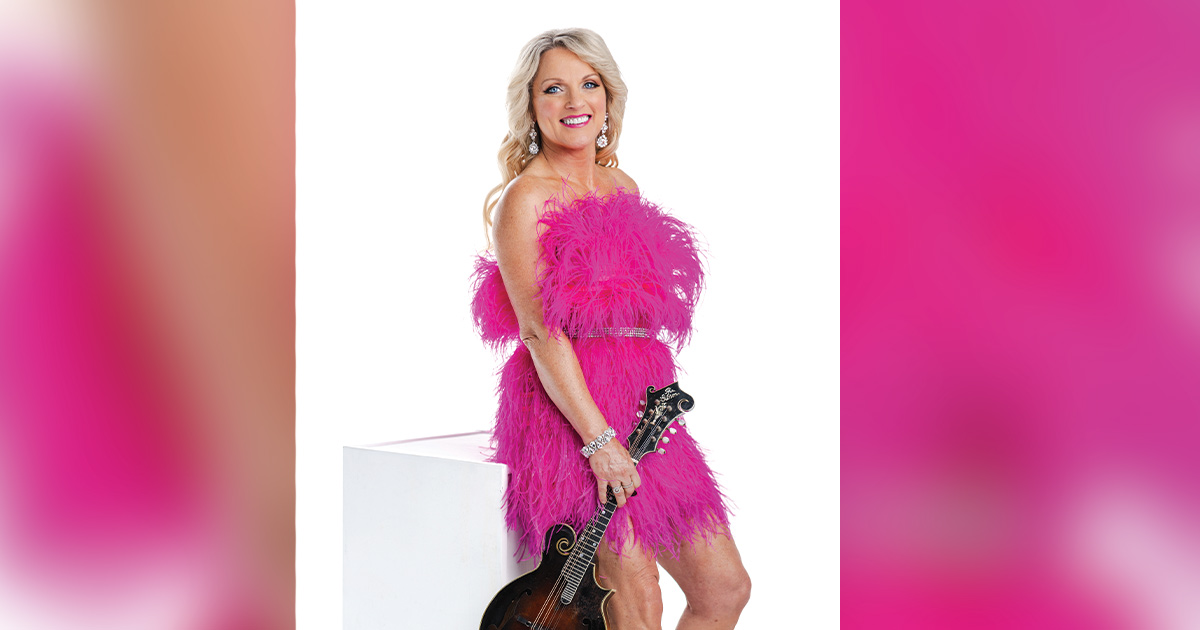
Rhonda Vincent
Fifty-Seven Years on Stage and Still Going Strong
When a writer for the Wall Street Journal reviewed Rhonda Vincent’s first Rounder release, Back Home Again (2000), proclaiming Vincent to be the “New Queen of Bluegrass,” that reviewer could not have predicted how long the “new” queen’s reign would last. The music industry tends to be a fickle business and kings and queens come and go. But here we are, nearly 25 years later and the Queen—who is now celebrating her 57th year on stage—is as strong, vibrant, hard-working and full of energy as ever. Anyone who has heard Rhonda Vincent sing and play the mandolin, guitar or fiddle, observed the energy she puts into her live shows, witnessed the attention and respect she gives to her fans, listened to the songs she has written, or knows about how hard she works—as both an entertainer and business woman—will naturally come to express the same sentiment…“Long live the Queen!”
Soon after the release of Back Home Again in early 2000, Rhonda strongly made her mark in the world of bluegrass music by winning the International Bluegrass Music Association’s (IBMA) “Female Vocalist of the Year” award seven years in a row (2000 through 2006, plus an eighth win in 2015). However, as most of her fans will know, although Rhonda was proclaimed the “New Queen” in 2000, she was in no way new to bluegrass.
Given Rhonda’s long, and continuing, reign as the Queen—and the fact that most fans now know her full story—it is surprising to look back at the first feature story Bluegrass Unlimited printed about her in our April 2000 issue and discover that writer Jon Weisberger begin the article by stating, “Rhonda Vincent’s name may not be familiar to everyone in the bluegrass audience yet, but with the release of her debut for Rounder Records it’s impossible to believe that it won’t be before the year is out. Though Back Home Again will make her many new fans with its passionate singing, powerful harmonies, fiery picking and strong material, Vincent is scarcely a stranger to bluegrass—in fact, she’s been performing it for more than 30 years. As Alison Krauss said a few years ago, ‘I can’t wait for the rest of the world to catch on and see what they’ve been missing.’” For the last 24 years Rhonda has proved both Jon and Alison to have been 100% correct.
Rhonda’s Early Years: The Sally Mountain Show
Although our first feature story about Rhonda was printed in 2000, it was not the first time that Rhonda’s name or photograph appeared on the pages of BU. In our September 1983 issue, we featured Rhonda’s family band The Sally Mountain Show. At that time the band members included Rhonda (mandolin and fiddle), her father, Johnny Vincent (banjo), her mother, Carolyn Vincent (bass), and younger brothers Darrin and Brian Vincent (guitar & mandolin). However, the original incarnation of The Sally Mountain Show dated back to 1967 and included more members of the extended Vincent family.
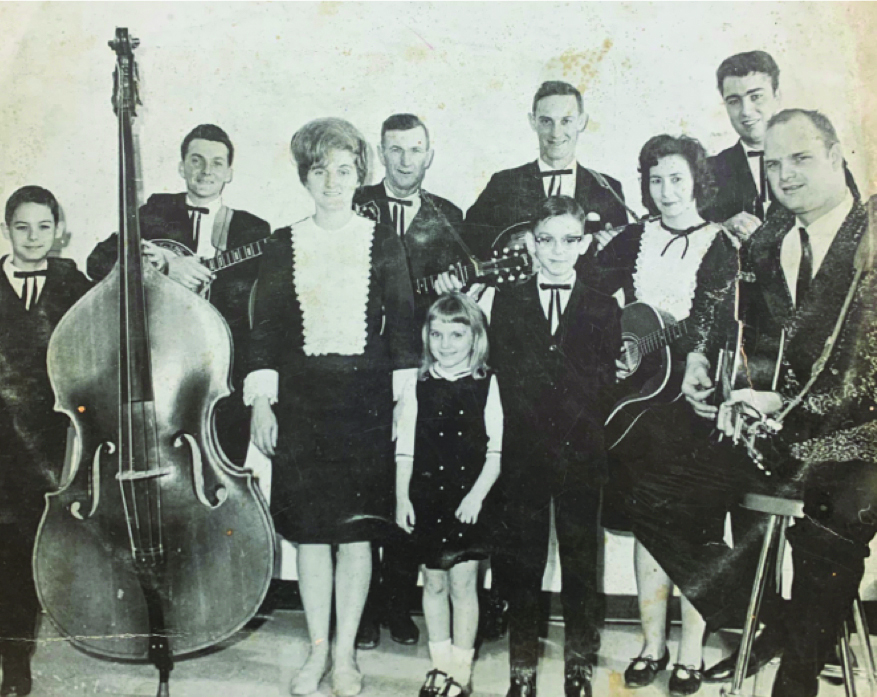
Rhonda Vincent was born in July of 1962 in the northwest Missouri town of Greentop (about 13 miles north of Kirksville). She was on stage singing by the time she was three and her first instrument was the snare drum (a gift from her father on her sixth birthday). By the time she was five she was part of The Sally Mountain Show band which included her grandfather Bill Vincent, Rhonda’s mother and father, her dad’s brother, Pearl, and his wife Kathryn. Pearl’s sons, Ricky and Joe, would also join the group, as well as some family friends. Every Friday morning at 5am, The Sally Mountain Show performed on television at KTVO in Ottumwa, Iowa.
The band was named after a hill near Greentop that the locals called “Sally Mountain.” In the 1983 Bluegrass Unlimited article, Johnny explained, “…near where we live there’s a big hill and my grandmother used to tell me about an old lady that lived up there on the hill. She was ninety-some years old and her name was Sally Mosley. She kinda run off a little brew and played an old-time fiddle. My grandmother said that Sally always claimed to be the composer of ‘Sally Goodin.’ Everybody called that old hill ‘Sally Mountain.’”
A year after The Sally Mountain Show started playing on the television broadcast in Ottumwa, they also began appearing Saturday nights at 6:15 on a radio program out of Kirksville, Missouri. But, because Saturday was usually a gig night, if the band had a gig on a Saturday, they would record the radio program in advance. A couple weeks before the air date, they would clear everything out of the kitchen except the table, which supported a reel-to-reel tape deck, record the radio show and send it over to the station. Both the television program and radio show continued for several years.
By the time Rhonda was eight, the band was also performing in Marceline, Missouri, (Walt Disney’s boyhood home) at the Frontier Jamboree. This is when Rhonda started playing the mandolin. The rule at the Frontier Jamboree was that any person on stage that was not playing an instrument did not get paid. At that time, Rhonda had just been on stage singing. In order for Rhonda to earn the $10 musician fee, her father showed her three chords on the mandolin and she began chopping chords along with the band, as well as singing, so that she could earn her paycheck. Rhonda recalls, “I didn’t get that $10, but I know that he did.”
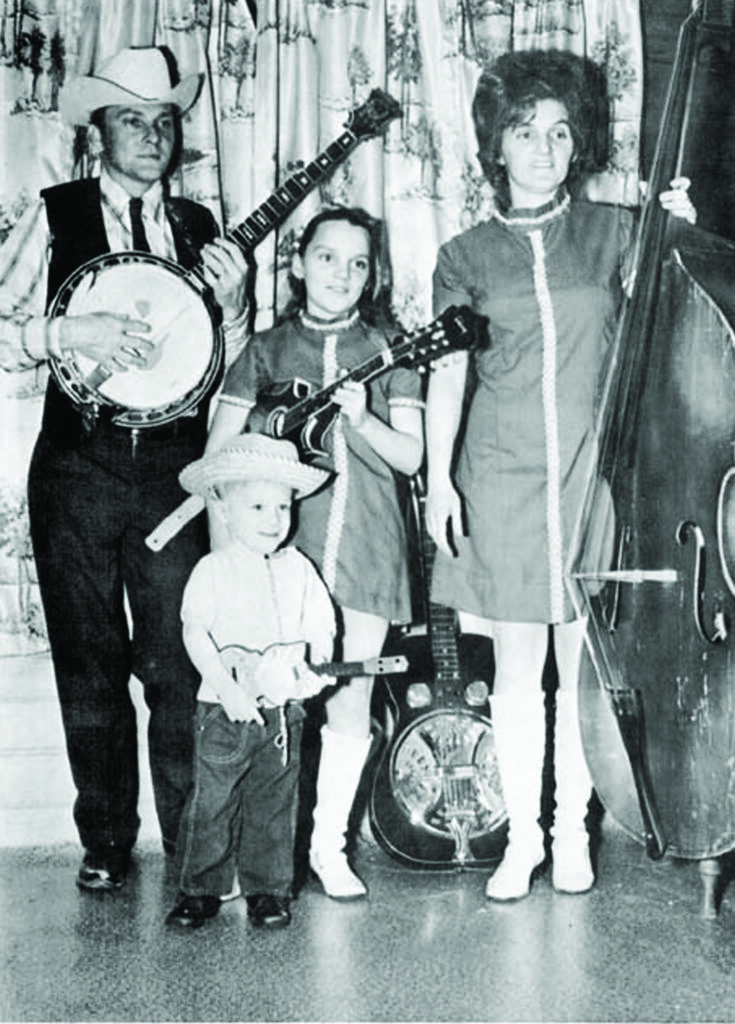
At the Frontier Jamboree, the Vincent family would back up bluegrass and country music artists who performed at the venue if they had not brought their own band. When artists did bring their own band, the Vincents opened the show. Many of the bluegrass and country music stars of the day performed at the Frontier Jamboree—from Bill Monroe to Ernest Tubb, Johnny Paycheck, Conway Twitty, Billy Grammer, Roy Acuff and many more.
When asked about her memories of those days, Rhonda said, “I remember when Jeanne Pruett’s song ‘Satin Sheets’ was number one in 1973, she was there and I sang harmony with her and dad played that iconic guitar intro. Freddie Hart was there the day that ‘Easy Lovin’ was the number one song. I also saw Dolly Parton for the first time. Dolly and Porter had their own band and usually after we played, we would leave. But I said, ‘Dad, please, we have to stay. I have to see Dolly.’ Roy Acuff was there one time and he kissed my cheek and I said, ‘I will never wash my cheek again.’”
Generations of Vincent Family Music
For generations the Vincent family has played music. Rhonda’s great grandfather played the fiddle. Her grandfather played the guitar and sang with his brothers—George and Dave—in a band called the Lazy River Boys. At one point, when Johnny Vincent was still in his teens, someone came by the Vincent home with a portable vinyl record cutter and recorded the whole family. Rhonda said, “They pretty much got my great grandfather out of his death bed to play the fiddle. My dad was a teenager and sang ‘Your Cheatin’ Heart.’ So, we have this recording of the whole family sitting in the living room and singing together.”
At first, the family band played country music. Her dad and his uncle George played electric guitars (her dad had started playing electric guitar at the age of eleven). Her mom played the upright bass. Uncle Pearl (her dad’s brother) played the mandolin and his wife, Kathryn, played the guitar. Kathryn sounded just like Kitty Wells and Rhonda’s mother was partial to singing songs by Loretta Lynn. Rhonda’s early influences were Connie Smith, Loretta Lynn and Dolly Parton. The first song Rhonda recorded was Kitty Wells’s “How Far Is Heaven,” which she sang with her mother.
In 1964, Rhonda’s father was in an automobile accident that left him temporarily paralyzed for a period of three months. During his long period of recuperation he learned to play the banjo. Regarding the formation of the first family band to play professionally, Johnny told BU in 1983, “After I got in the accident, then we had to figure on makin’ a living some way or another seein’ as I was partly paralyzed. Soon as Rhonda got old enough to pick we started right into it full-time.” As a result of the accident, Johnny Vincent walked with a cane the remainder of his life. Rhonda said, “Dad broke his neck and was paralyzed from the neck down. He wasn’t expected to live, let alone ever walk again. He said, ‘Lord, if you’ll give me one good leg, I’ll drag the other one.’ He ended up walking with a cane and dragging his right foot.”
Rhonda remembers that when she was in elementary school, her father would pick her up from school and take her to her grandfather’s home to pick. She would play music with her father and grandfather until supper time. After supper, friends and family would come over to pick until it was time to go to bed. She said, “Every night there was a music party.” By the time she was nine (1971), Rhonda had cut her first solo 45 rpm single. She sang “Muleskinner Blues” on side A and the Martha Carson gospel classic “Satisfied” on side B. (In 1974 her cut of “Muleskinner Blues” won the award for “Best Single of the Year” at the Society for the Preservation of Bluegrass Music of America (SPBGMA) awards. She has since won nearly 70 SPBGMA awards.)
Around that same time, Grandpa Bill’s emphysema had gotten to the point where the doctor recommended a warmer and dryer climate and so Bill and his wife Erma moved to Arizona. During the fall of 1971 Johnny drove his mother and father to Arizona in a camper. At Christmas time of that year Rhonda and her father drove to Arizona to visit her grandparents. By the last day of school that next year (1972) the family buried Bill Vincent. At that point, the extended family band dispersed and Johnny continued The Sally Mountain Show with his wife Carolyn, daughter Rhonda and oldest son Darrin. By 1975 the youngest Vincent sibling, Brian, had joined the band. Carolyn once told an interviewer, “We take ’em off the bottle and put ’em on bluegrass,” to which Johnny added, “If they don’t pick, they don’t eat.” The band cut their first album in 1975 and by 1986 had seven albums out.
The Sally Mountain Show stayed busy. During the summer months, when Rhonda was age 13 to 16, the band played eight hours a day at Silver Dollar City during the weekdays and traveled to perform at festivals on the weekends. In the winter, after Rhonda graduated high school in 1980, the family would travel to Florida and play festivals in that state from November through January. At first the family traveled in an RV that her mother drove because her father still had a disabled leg from the automobile accident and could not drive.
By 1982 the band had hired Lance LeRoy, who they had met at a festival in Florida, to be their agent and by 1985 they had purchased a tour bus from Jim & Jesse McReynolds. Rhonda recalls, “Mom had never driven a bus. Jim took her down the lane and gave her one lesson on how to double clutch that bus. She probably drove one mile and then he turned her loose. We bought the bus and she drove the 500 miles back home to Missouri having never driven a 35-foot bus before. My mother would always rise to the challenge. She’d say, ‘You want me to drive that bus? Sure, I’ll do it, and I’ll put on a crock pot of beans and cook some cornbread so we can eat after the show.’ She also made our matching stage dresses and shirts, and I helped later on, when I learned to sew.
Rhonda the Instrumentalist
It was during her teenage years that Rhonda’s fiddle and mandolin talents began to blossom. She recalls getting help from other mandolin players she met, such as Buck White and Gene Hayes. She was also listening to David Grisman, The Seldom Scene and New Grass Revival during those years and working out Sam Bush mandolin solos by slowing down recordings. Regarding her work on the fiddle, she said that she started with the fiddle a few years after learning to play the mandolin. To get her started, her father bought her a Benny Martin double record set. By age eleven she was entering fiddle contests in the Midwest and she won the Missouri state contest in 1973.
When Rhonda started to excel on the fiddle her dad noticed that she was losing interest in the mandolin. To solve that problem, he took Rhonda to a street fair in Keokuk, Iowa, to see the Stoneman Family perform. Rhonda saw Donna Stoneman play and said, “I want to play like her!” Rhonda was not only excited to see a female mandolin player of Donna Stoneman’s caliber, but she was also impressed with Stoneman’s energy, dress and fiery red hair.
Some may wonder if a young girl during her teen years really wanted to be practicing and performing music with her family. In that 2000 Bluegrass Unlimited article, brother Darrin answered that question. He said, “We practiced at home a lot, and that’s when the fights would start, because Brian and I didn’t want to practice. Dad did, though, and Rhonda was right with him; she and my dad were the ones that really pushed.” What Rhonda remembers about her siblings is that everything—singing and playing instruments—came very easy to Darrin and that Brian was more interested in playing football than practicing music.
In 1980, after the movie Urban Cowboy had been released, country bars and country bands became popular nationwide. A DJ at a night club (called JR’s) in Kirksville, Herb Sandker, who also played the guitar, wanted to put a together a country band to perform at a St. Patrick’s Day show. He heard through the grapevine that there was a young gal in Greentop, Missouri who could play the fiddle. He called the Vincents’ phone number and father Johnny answered the phone. Herb said, “I hear you have a daughter that plays the fiddle. I have one question for you. Can she play ‘Orange Blossom Special?’” Johnny said, “Yea, standing on her head!” So, Herb said, “Well, she’s hired.” Johnny replied, “You hire her, I come with the deal. I play electric guitar.” So, Herb hired both of them and that is how Rhonda met her husband. Rhonda and her dad played the St. Patrick’s Day show and then Herb brought the band back together for a Christmas show. Herb and Rhonda started dating around that time. Married in December of 1983, and divorced in 2024, after a 40 year marriage.
The First Move to Nashville
In 1985, Rhonda was a contestant on the TNN television show You Can Be A Star, an amateur talent show for country and western music. Although she did not win, she caught the attention of the show’s host, Jim Ed Brown. Brown had grown up singing with his sisters, Bonnie and Maxine, and liked singing with female harmony. He hired Rhonda to be in his band—singing and playing mandolin and fiddle—from April through October of that year. The first time that Rhonda performed with Brown was on the Grand Ole Opry.
Although she was performing with Brown, Rhonda still tried to make as many of the family band’s shows as she could. Rhonda remembers that when promoters who had booked The Sally Mountain Show for appearances that summer found out that Rhonda would not be with the band, they expressed their displeasure to Rhonda’s father. Johnny told them, “One monkey don’t make no show.” Johnny hired a young singer and fiddle player from Illinois to replace Rhonda. That young woman was a fourteen-year-old Alison Krauss.
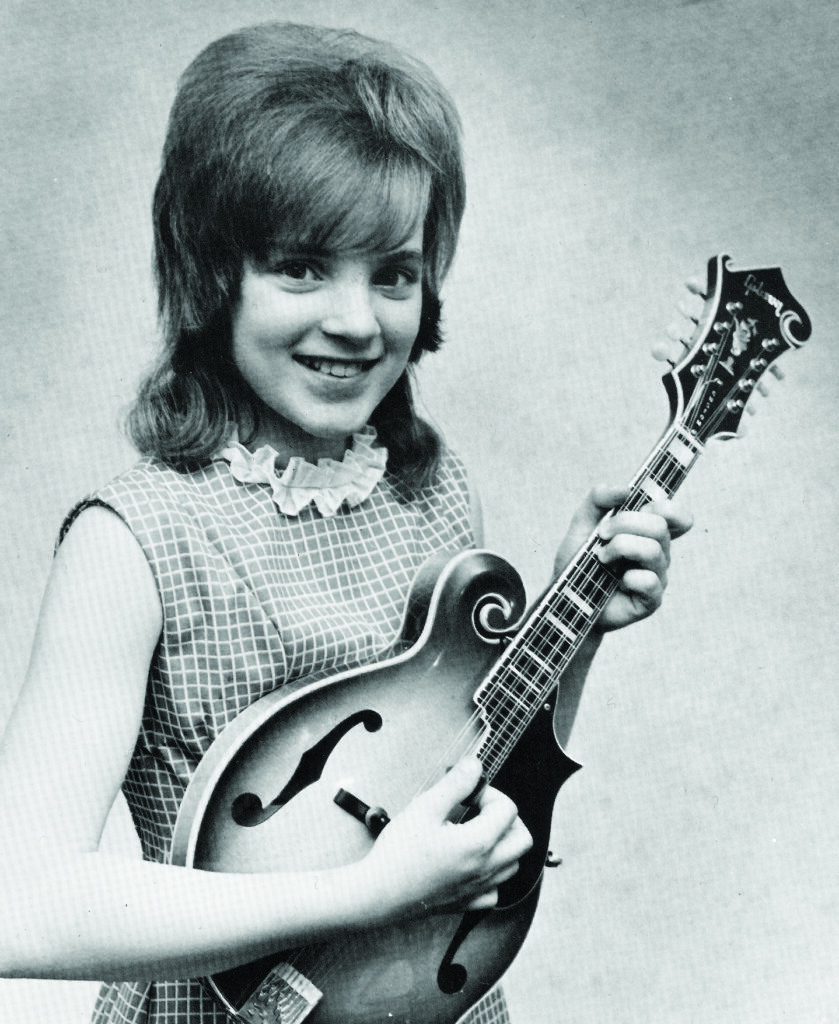
Rhonda remembers her father always being very supportive of any opportunity that came her way. She said, “Whenever I would say, ‘I have this opportunity Dad,’ he would say, ‘Go do it.’ I also had an opportunity to go to Las Vegas for two or three weeks and he said, ‘Go do it. Knock them out. Go do it.’ He never told me not to do something even though it was at his own peril. My brothers would say, ‘Oh Rhonda, the promoter was so mad because you weren’t there.’ That summer is when he heard about Alison Krauss and she joined the band and wore my clothes. When I could be there, we’d play twin fiddles.”
After spending about six or seven months in Nashville, Rhonda was ready to leave Music City. In an article that appeared in Bluegrass Now magazine in 1999, Rhonda said, “I didn’t like Nashville and I missed performing full-time with my family.” In the 2000 Bluegrass Unlimited article she said that even though Jim Ed Brown recommended that she stay in Nashville she “felt that family was more important.”
The Rebel Records Years
Rhonda’s first stay in Nashville did not last long. She was back home by about October of 1985. Although she continued to perform with the family, Rhonda was now twenty-four years old and ready to make her own mark. She wrote to a handful of bluegrass record labels to see if they would be interested in helping her put out a solo album. Rebel Records expressed interest and between 1988 and 1991 released three Rhonda Vincent solo albums and a Sally Mountain Show gospel recording.
Gary Reid, who was working with Dave Freeman at Rebel at that time recalls, “Dave was good at spotting talent and giving deserving artists an opportunity.” Rhonda’s first Rebel release came out in 1988 and was titled New Dreams and Sunshine. The second release (1990) was A Dream Come True.
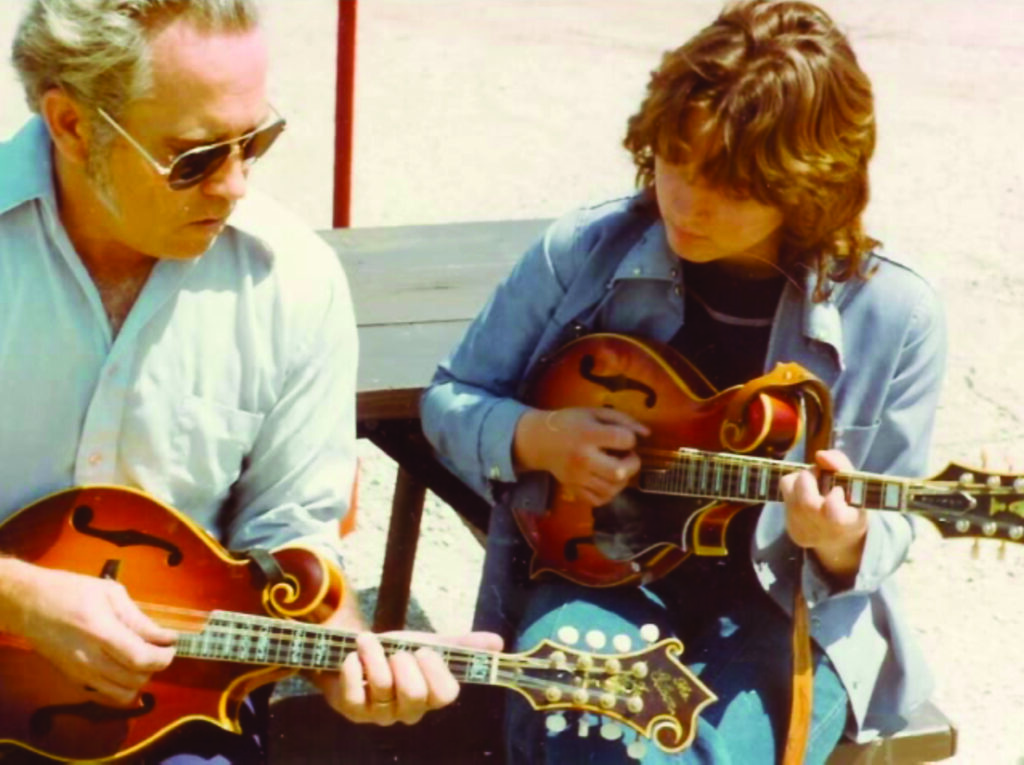
During 1991 Rebel released Rhonda’s third album, Timeless and True Love and also released The Sally Mountain Show’s Bound for Gloryland. Although Rhonda released albums under her own name during these years, she did not tour on her own. She continued to tour with her family band. During the recording session for Rhonda’s last Rebel release, Timeless and True Love, she was introduced to country music record producer James Stroud of Giant Records. Stroud was working on Clint Black’s first album in studio A—the studio next to where Rhonda was recording in studio B—and Carl Jackson introduced the two. In an interview with Bluegrass Unlimited in 2014, Rhonda recalls, “We were in between the control rooms, getting coffee, and Carl introduced me and said, ‘Go get a CD for James.’ I didn’t know who James Stroud was. And I’m thinking, ‘Man, this CD cost me $8 and he wants me to give one to this guy?!’ That was my thought, but I didn’t say anything. I went out to Mom and Dad’s bus, which was Jim & Jesse’s old bus. I got the CD and gave it to him.”
Stroud liked what he heard and called Rhonda the next day and said that he was interested in working with her. A year later he was the president of Giant Records and signed her to the label. At the time, country music producers were looking to bluegrass as something of a farm league since many country stars of the day—such as Ricky Skaggs, Vince Gill, Keith Whitley, The Whites, Marty Stuart, Shawn Camp, Harley Allen and Joe Diffie—had strong bluegrass roots.
Nashville Round Two
Rhonda’s second move to Nashville lasted a bit longer than the first. However, when she got to work on her first album, she was not happy with the direction the country music producers wanted to take. The first problem was that they asked her to forget about her roots, asking if she could “take the bluegrass out of her voice.” The lyrics of the songs that were pitched to her were another problem. She said, “I was uncomfortable singing drinking and cheating songs.” They would present Rhonda with lyrics and she would say, “I would never sing that!” She added, “I was not willing to make those concessions for the country music business.”
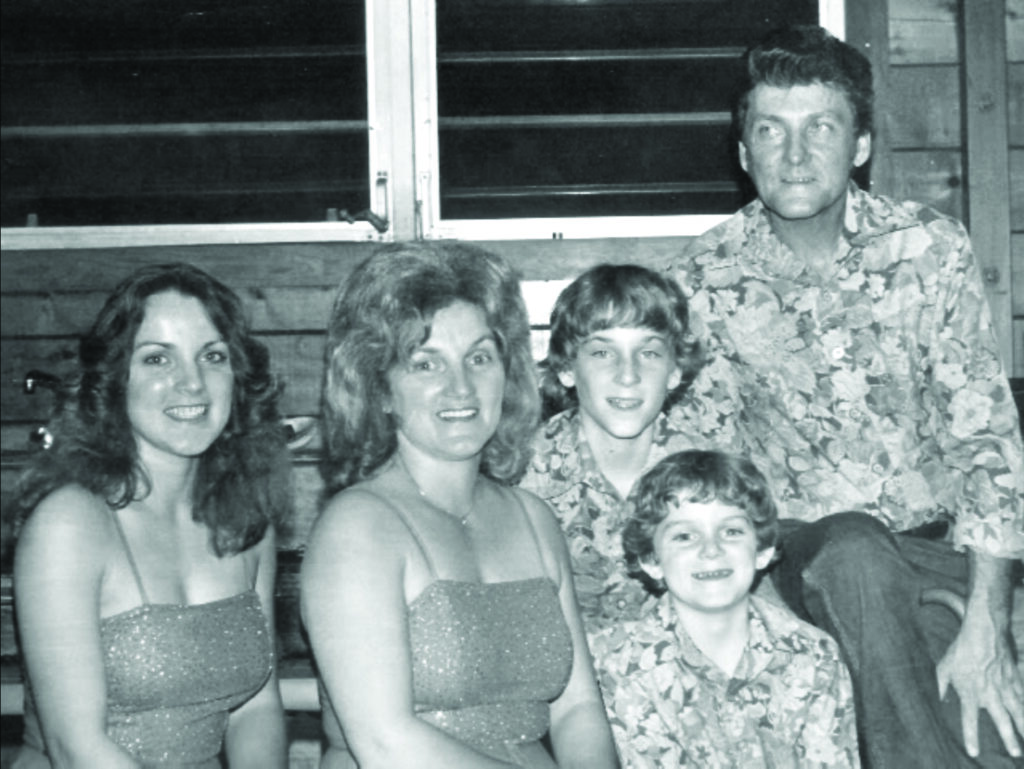
Giant released Rhonda’s first country record, Written In The Stars, in 1993. A second record, Trouble Free, was released in 1996. With lackluster label promotion, the records did not do well on country radio. When asked if she did any touring to support these recordings, Rhonda said that she did play the Opry, but if she wanted to tour she would have had to hire a band herself and she couldn’t afford to do that because not enough dates were being offered. At one point, Alan Jackson wanted to take Rhonda on the road as an opening act. After playing that gig for two weeks she realized that she couldn’t afford the expenses. She said, “There is a budget and the tour has to pay for itself. That is a lesson my mother taught me. She would keep the receipts for all of the food and fuel and other expenses and each trip had to pay for itself.”
Even though Rhonda’s attempt to make it in the world of country music did not work out, all was not lost. She said that in working with industry professionals like Jack McFadden, Stan Barnett and James Stroud, she was able to watch them and learn a lot about the music business.
A Return to Bluegrass
In 1996 Rhonda returned home to Missouri. Shortly after her return, she got together with a group of friends to pick at her home. That turned into playing a few festivals and that group formed the first iteration of Rhonda Vincent and the Rage. The band name was made up of the first letters of each of the bandmembers’ names—Rhonda on mandolin (the R in Rage), Allen Jones on banjo (the A), Joey Wieneman on guitar (the J change to G), and Irl Hess on bass (I changed to E). Rhonda said, “As we were playing these festivals, I started enjoying myself again. I actually started making money, I loved what I was doing and I was happy. What a concept!”
In the 1999 Bluegrass Now article, Rhonda stated, “I was healing over the country music thing. We started playing festivals and the support was incredible.” She added, “This could have gone a totally different way because Patty Loveless offered me a job at that moment. I would have been making more money. I was going to take it, but I had children and when I looked at the schedule I saw that I would have been gone 300 days out of the year. I couldn’t do that. It would have been so exciting to be on the road with Patty Loveless, but I said no. I didn’t want to be away from my family that much and I didn’t want to be a background singer. I wanted to run my own band.” In addition to getting back to playing bluegrass, Rhonda and Herb bought a restaurant in downtown Kirksville, Missouri. The restaurant included a Wednesday night bluegrass jam session and they also offered groups passing through the area a place to perform.
In 1998 Rhonda released a self-produced retrospective album titled Yesterday and Today: Thirty Years of Music. One of the cuts on this album was the first song that Rhonda had recorded with her mother “How Far Is Heaven.” However, for this cut, she added another generation of musicians as Rhonda’s daughters, Sally and Tensel, sang with their mother and grandmother. That year Rhonda also hosted the IBMA Awards Show with co-host Ricky Skaggs and brought a new iteration of the Rage on stage with her—Bob Black on banjo, Bull Harman on guitar and Rob McDonald on bass.
Around this time, Rhonda was also talking with Skaggs Family Records about recording with their label. She said, “Ken Irwin would call me every few weeks and say, ‘Hey, we want to sign you to Rounder.’ I told him that I was already involved with Skaggs Family and Ricky Skaggs was going to produce me. But, Skaggs Family never came up with a contract and I was ready to make music. So, Ken called again and said that they were ready to sign me.” After having trouble in the country music world with labels and producers insisting that she do things their way, Rhonda was not ready to do the same thing again. She told Irwin, “I have some concerns.” He told her, “Write down your concerns and write down what you want to do and I will send you a contract.” She said, “They overnighted me a contract and I signed with Rounder Records.”
In October of 1998 Rhonda sat down with Ken Irwin to discuss the first project. Irwin had looked at what other female artists in bluegrass—Alison Krauss, Claire Lynch, Lynn Morris and others—were producing and decided that there was an opening for a female bluegrass artist to lean more towards the traditional side of the genre. In an interview for a Bluegrass Unlimited article printed in July of 2004, Rhonda said, “Ken and I agreed that there wasn’t a female doing in-your-face, kick-butt bluegrass. There was a void.” The result was the aforementioned Back Home Again.
For Back Home Again, Rhonda brought in an A-list of bluegrass session players and singers, including Bryan Sutton, Ron Stewart, Marc Pruett, Jerry Douglas, Luke Bulla, Glen Duncan and her brother Darrin. She also sang a duet with her father. By the time this record was released, personnel in the Rage had changed to include Steve Sutton on banjo, Jimmy Campbell on fiddle, Randall Barnes on bass and Keith Tew on guitar. Later Michael Cleveland replaced Jimmy Campbell on fiddle, Tom Adams came in on banjo and Audie Blaylock took over the guitar spot.
When Rhonda took the Rage out on the road they were very well received by both bluegrass and country fans. Rhonda said, “People kept asking if we were country or bluegrass. I was very conflicted.” The band was booked to open some shows for country star George Jones. After the first show in Salem, Virginia, the crowd of Jones’s country fans bought every CD Rhonda had to sell in 15 minutes. She said, “There was cellophane and money flying everywhere! It was like a scene from a movie in slow motion. It was a madhouse. I remember this guy said, ‘We love your country music!’ And we had just played as a bluegrass band. I realized that whether it is country or bluegrass is in the perception of the listener. From that moment on, I was at peace. I thought, ‘I’m going to play my style of music, and you can call it whatever you want.’”
By 2004, Rhonda had released three albums on Rounder—Back Home Again (2000), The Storm Still Rages (2001) and One Step Ahead (2003)—and the label had shipped over 230,000 copies of these albums in four years. The Storm Still Rages marked the beginning of Rhonda writing and recording more of her original material. The first cut on One Step Ahead, “Kentucky Borderline,” was written with Terry Herd. That song won IBMA’s “Song of the Year” in 2004.
In 2001—after recording the Martha White theme on The Storm Still Rages—she wrote to the Martha White Flour Company and proposed that they re-establish their relationship with bluegrass music by sponsoring her band. That letter led to a fifteen-year relationship between Rhonda and Martha White. Rhonda said, “Martha White gave me such a leg up as far as economics and budgeting of having a bus and a driver.” By 2004, the band that was riding the roads with Rhonda in the Martha White bus included Hunter Berry (fiddle), Mickey Harris (bass), Josh Williams (guitar) and Kenny Ingram (banjo). Although Rhonda hasn’t always used members of her band on studio albums, in 2004 she showcased this band on a Rounder CD and DVD titled Ragin’ Live (2005), recorded at the Sheldon Concert Hall in St. Louis, Missouri.
Over the course of the next three years (2006 t0 2009) Rhonda would release four more projects on Rounder—All American Bluegrass Girl (2006), Beautiful Star —A Christmas Collection (2006), Good Thing Going (2008) and Destination Life (2009).
The Business Woman and Label Owner
Rhonda started learning the business side of music at a young age. As a young girl she was able to learn from watching her parents. Shortly after returning to The Sally Mountain Show after her first move to Nashville, Johnny turned the responsibility of producing the band’s music and booking the band over to Rhonda. She said, “I learned how to navigate all of that. I would get the Bluegrass Unlimited Festival Guide and I would go down the whole list and start calling every festival to see if they would book Sally Mountain Show. Then, when I started my own band, I was doing the same thing.”
While some artists might feel bitter about trying to make a go of it in country music and not reaching the top tier in that business, as mentioned previously, Rhonda did not pine over lost opportunity. Instead, she spent her time in Nashville constructively observing and learning the business side of music from the talented people she encountered there. She not only learned about the business, she has worked tirelessly, and tremendously hard, to achieve all of her many accomplishments as an entertainer, recording artist, song writer and business woman. Time and time again she has demonstrated the ability to not only come up with innovative ideas, but she has displayed the ability to put those ideas into action and see them to completion. One example is her record label, Upper Management Music, which she started in 2010.
After recording eight albums with Rounder, Rhonda decided to start her own label with the release of Taken in 2010. When asked about that decision, Rhonda said, “The format was changing and people were telling me that I should do this. They said, ‘You do everything anyway, you should have your own label. You will make more money doing that.’ There was the control factor, too. Every time we would get to an album cover design, or something like that, there would be some kind of dispute. I would say, ‘I don’t like that photo’ and they would want that. So, it seemed to be a constant tug and pull. I said, ‘You know what? I can make all the decisions myself.’ I wanted to do an all-duet project with Gene Watson. They said, ‘No way.’ I wanted to do a gospel project. They said, ‘No way. You do a gospel project whenever your career is over.’ I put out the gospel project myself and that is still my number one selling project. That was the third project that I did on my label. Today the Gene Watson project and the gospel project are our two best-selling albums.” The second project Rhonda released on her own label was Your Money & My Good Looks—Gene Watson & Rhonda Vincent (2011). The third project was the gospel release Sunday Mornin’ Singin’ (2012).
The fifth project that Rhonda released on her label, which followed her fourth release, Songs from The House With The Red Light (2013), was another one that bluegrass labels may have passed on. This one is titled Only Me (2014). The idea for this project dated back to the days when the Rage first hit the road and fans where asking, “Is she bluegrass or country?” It even goes back further to the days when The Sally Mountain Show was performing as many country hits as they were bluegrass songs during their shows. Only Me is a two-CD set that includes both bluegrass and classic country. The title is Rhonda’s answer to the question, “Is it bluegrass or country?” Rhonda’s response was, “No, it’s Only Me.”
Other recordings that Rhonda has released on her label since 2014 include Christmas Time (2015), All the Rage—In Concert Volume 1 (2016) which won a Grammy for Best Bluegrass Album (2017), American Grandstand—Rhonda Vincent & Daryle Singletary (2017), Music Is What I See (2021) and a very special project released in 2018 titled Live at the Ryman—Rhonda Vincent & the Rage with Bluegrass Legends.
The Bluegrass Legends Show
Another example of Rhonda Vincent’s entertainment business acumen was when she put together the Bluegrass Legends show at the Ryman Auditorium in Nashville, Tennessee. Rhonda explained how this historic show came together, “I was looking at the Ryman bluegrass series and I saw that they did not have one of the slots filled. I called the manager of the Ryman and I said, ‘I see you have an opening. We would love to play that show.’ I said, ‘I have this idea. What if we did it with bluegrass legends…the Osbornes, Mac Wiseman and Jesse McReynolds?’ She said, ‘I love that idea!’ But she said, ‘How do you think we would pull that off?’ I said, ‘You give me the budget and I will put it together.’”
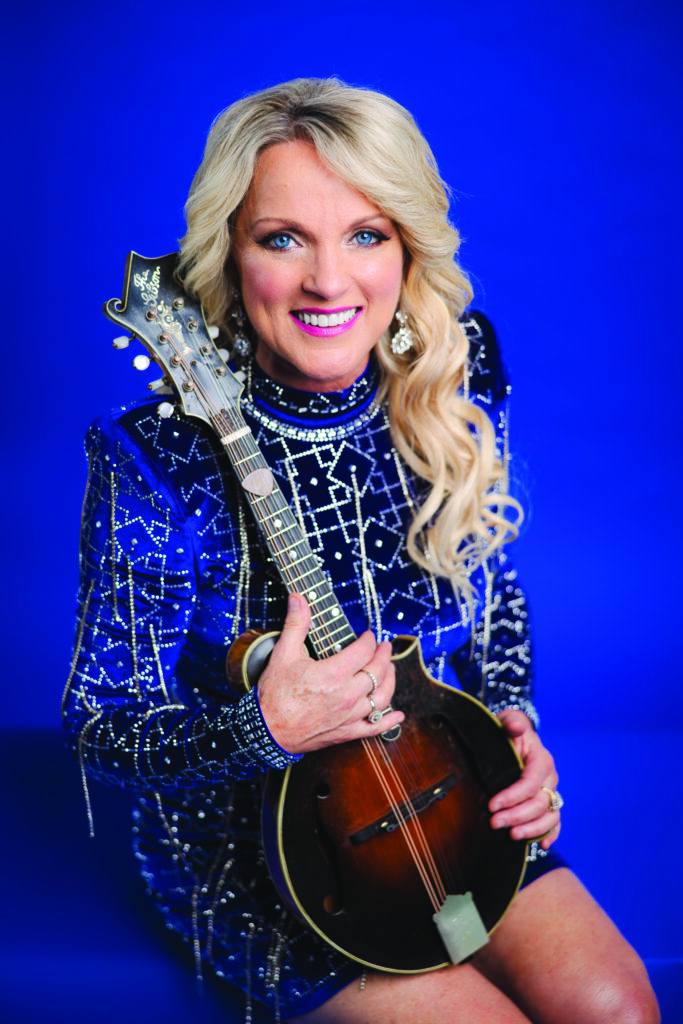
Rhonda admits, “It was a little tricky. I was friends with Sonny and Bobby, knowing that neither one of them was speaking to the other. I had recorded ‘Mama Tried’ in the studio with Sonny. So, I thought that Sonny might come and sing ‘Mama Tried.’ I talked with Sonny about it and said, ‘Hey, would you come to the Ryman and sing ‘Mama Tried’ with us?’ He said, ‘No, no…no, I’m not doing that.’ But, finally, he agreed to do it. So, then I said, ‘What if you and Bobby came and sang a song?’ He said, ‘No, he wouldn’t do that.’ So I said, ‘If he would do that, would you do that?’ He said, “I’ll think about it.’
“So then I called Bobby, told him I was doing the Ryman and asked him to come be a guest with me. He said, ‘Sure, I will.’ I said, ‘We’ll sing ‘Midnight Angel,’ because we were nominated for a Grammy for that. He said he would do it. I let that go for a little bit and then called him back. I said, ‘Hey, Bobby, while you are down there with us, would you sing with Sonny?’ He said, ‘He would never do that…never.’ I said, ‘If he would agree to do that, would you do that.’ He said, ‘Yes, I would do that.’ So, then I called Sonny. So, it was back and forth for a little bit. Finally, they both agreed to do it. I called Jesse and Mac and they were both on board.”
When Rhonda later told Jeanne Pruett about the show, Jeanne told her, “You have to film this.” Rhonda already had five or six different projects going at that time. She told Jeanne that she could not afford to video tape this project with everything else that she had going on. Jeanne said, “You can’t afford not to.” Rhonda said, “This was two weeks before the show. I bit the bullet and found people to come and record it and video tape it.”
Rhonda’s plan to get Bobby and Sonny performing together wasn’t over yet. She said, “Sonny came out first and sang ‘Mama Tried.’ I then introduced Bobby. They are not even looking at each other, or speaking to each other, and we sing a medley of ‘Beneath Still Waters’ and ‘Windy City’ and ‘My Favorite Memory.’ So, then we take the intermission. Not everyone had been on the stage at the same time, so I hadn’t gotten a picture of everyone together. While Jesse and Bobby are out there doing their thing, I’m back stage with Sonny and said, ‘Sonny, I need you to come back out because I didn’t get a picture with everybody.’ He said, ‘I’m not doing it.’ I said, ‘Please, we have to get this picture.’ Then he started talking about how the last performance that their mother ever saw was The Osborne Brothers at the Ryman Auditorium and they sang ‘Medals for Mother’ to her. I said, ‘Come out and sing that.’ He said, ‘OK. I’ll do it.’ I’m getting chills just thinking about this.”
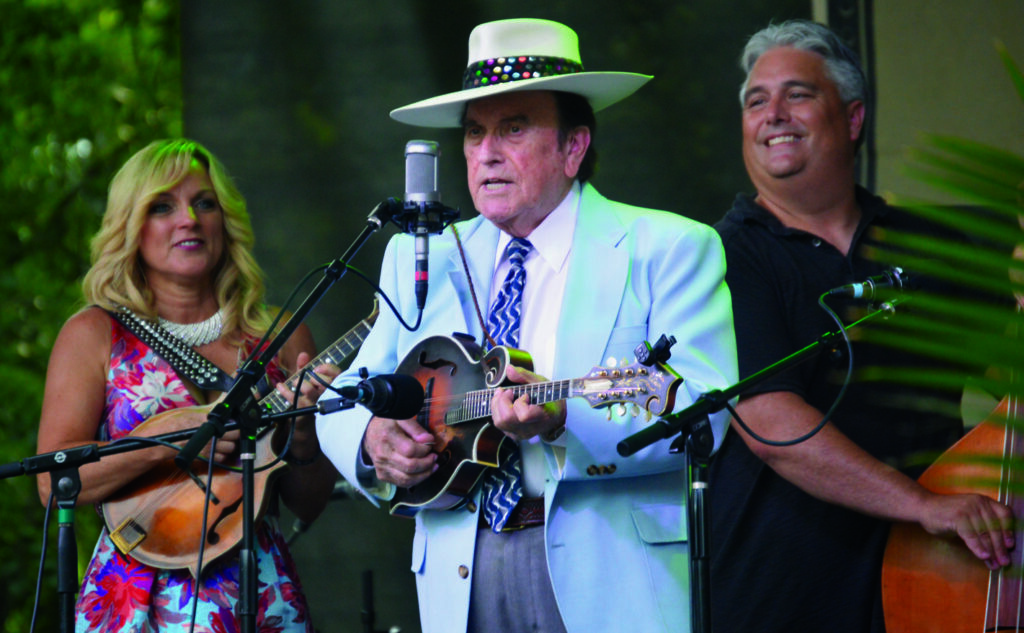
Rhonda continued, “When Mac went on, I talked with Bobby and said, ‘Will you come on and sing ‘Medals to Mother?’ He agreed. So, when we had them come out, I moved my microphone out of the middle and I put their microphones together because I want that picture of Bobby and Sonny together. Bobby turns to Sonny and points down to the seat and said, ‘The last time that our mother saw us, she was sitting right down there.’ And they started speaking again from that moment on. After that show I wrote an email and sent it to Sonny and Bobby in the same email. Sonny replied and said, ‘Thank you. I’m talking to my brother again.’ I feel like that show orchestrated that and put it together.” That project, Live At The Ryman—Rhonda Vincent & The Rage with Bluegrass Legends was released by Upper Management Music in 2018.
The Next Album: Its About Destinations
Since starting her own label, Rhonda has had the freedom to produce the kind of recordings that she feels inspired to record. Although record industry people—even in bluegrass—might question some of her choices, Rhonda has always had great instincts and has always been successful. The same might be true of her newest album, which is being released this month (August 2024). Rhonda said, “When people hear that I have recorded a seven-and-a-half minute long version of ‘Wagon Wheel’ and a cover of ‘Country Roads’ they roll their eyes and say, ‘Why would you do that!?’ But then they hear it and say, ‘OK, I get it.’ You have to hear it to appreciate it.” The “Wagon Wheel” cut features Rhonda singing with Alison Krauss. The “Country Roads” cut features Rhonda with Cody Johnson and Dolly Parton.
Regarding this new record, Rhonda said, “I’ve never made a project like this and it kind of organically came together. Jeannie Seely wrote a song years ago called ‘I Miss Missouri.’ She had the lyrics written down, but when the flood came through Nashville in 2010 she lost everything. She lives right on the Cumberland River. So, she lost the lyrics to that song. On February 28th of 2020, she invited me to be a member of the Grand Ole Opry and told me that those lyrics started coming back to her. She invited Erin Enderlin and me to come to her house and we ended up finishing the song. She said, ‘It talks about Missouri…and I thought, how many destination songs are there?’ I made a list. I think we came up with 100. Other than the song by Jeannie and one by Bob Minner and his wife, the rest of the songs are familiar classics.”
When asked about the cut of “Wagon Wheel” lasting so long, Rhonda said, “Well, the song ends and then there is an acappella section where Alison and I are singing it and then it goes into a minute-and-a-half all-out instrumental jam to end the song. So, there are three different endings if someone wanted to play it on the radio.”
The “Country Roads” cut is another special recording. Rhonda said, “I sang on Cody Johnson’s album on a song called ‘Treasures’ and I wondered if he would sing on my album. He said, ‘Absolutely.’ So he sang on ‘Country Roads’ and as I was singing my vocals I thought ‘Who do I hear?’ It had to be someone who made sense, so I invited Dolly Parton. It is a very unique arrangement of ‘Country Roads.’ Adam Haynes, my fiddle player, arranged a string section. He and I play a lot of twin fiddle and twin mandolin parts throughout the album.
The next “eye roller” song on the list is Jimmy Buffett’s “Margaritaville” featuring Rhonda with Jeannie Seely and Trisha Yearwood. Also included is Dolly Parton’s famous song “9 to 5.” Rhonda said, “We started doing ‘9 to 5’ because the Opry asked me to sing for Dolly Parton’s birthday a year ago. I wanted to do ‘Jolene’ and they said, ‘No, someone else is doing that.’ So I looked for a song that I knew of hers. I called her office and asked if anyone had ever done a bluegrass version of ‘9 to 5?’ They said, ‘We don’t think that has ever been done.’ So, we started doing that at the Opry and I invited Sonya Isaacs to sing it with me on the album.”
Other cuts on the album include a live version of “I’ll Fly Away” that was cut for a movie soundtrack about three years ago. She said that the band (which at the time included Hunter Berry, Jeff Partin, Mickey Harris, Aaron McDaris and Josh Williams) cut a slow version and a fast version for a movie sound track. The movie used the fast version and Rhonda is using the slow version on this record. Rhonda also cut “City of New Orleans,” “Please Mr. Please” and “Four Strong Winds” for the new project. She sums it up by saying, “This is the most fun project I’ve ever done.”
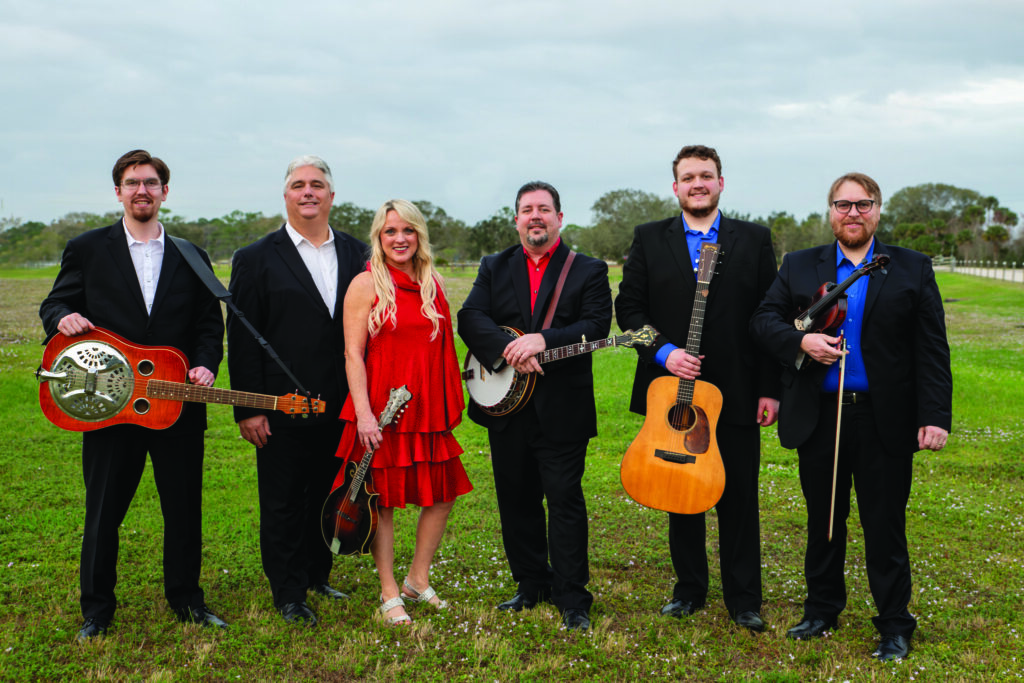
Other than the guest musicians listed above, this album includes the current members of the Rage—Rhonda Vincent, Aaron McDaris, Mickey Harris, Adam Haynes, Zack Arnold and Jacob Metz.
Long Live The Queen
It has been fifty-seven years since Rhonda first started performing with her family on the television and radio back in 1967 and she has yet to slow down. Her family has gone through some changes—father Johnny passed away in 2014, brother Darrin has gone on to a very successful bluegrass career and become a member of the Grand Ole Opry (Darrin and Rhonda Vincent are the first ever brother and sister to hold separate Opry memberships. Rhonda said, “My father would be very proud.”)
Brother Brian is a CFO at a corporation in Chicago. Daughter Sally is a member of the US Navy band Country Current and a new mother. Daughter Tensel majored in marketing in college and works in that field while taking care of two small children of her own. Life rolls by with its ups and downs, but through it all Rhonda has continued steadily recording and performing and being a champion for bluegrass music…and we love her for it.
Over the years whenever I’ve seen Rhonda Vincent’s tour schedule, I’ve said “She is the hardest working person in bluegrass!” When you think about all the time she spends on the road and then add in the time she spends recording, writing songs, running her label, keeping in contact with fans over social media, leading her band and handling every other aspect of her career, it is exhausting. But she does it all with grace, passion and enthusiasm. It is no wonder that she is still the Queen. There is no better person that bluegrass music could have as the spokesperson for this genre, and we are proud to have her sit on that throne for as long as she is willing to do so. Thanks, Rhonda!