Remembrances of Herschel Sizemore
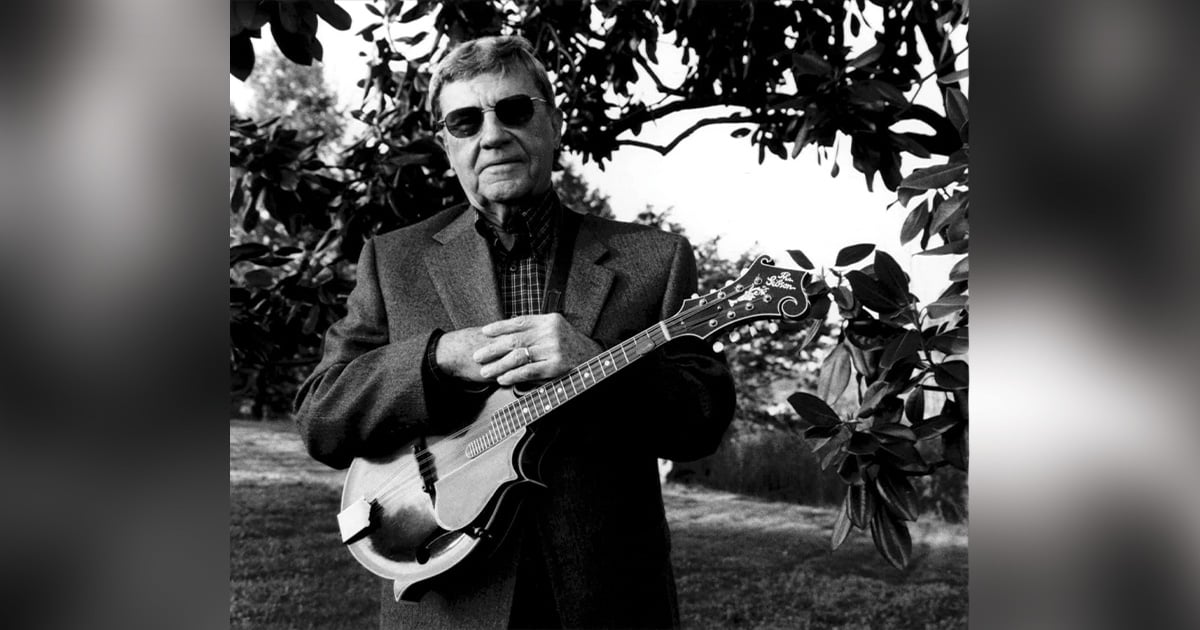
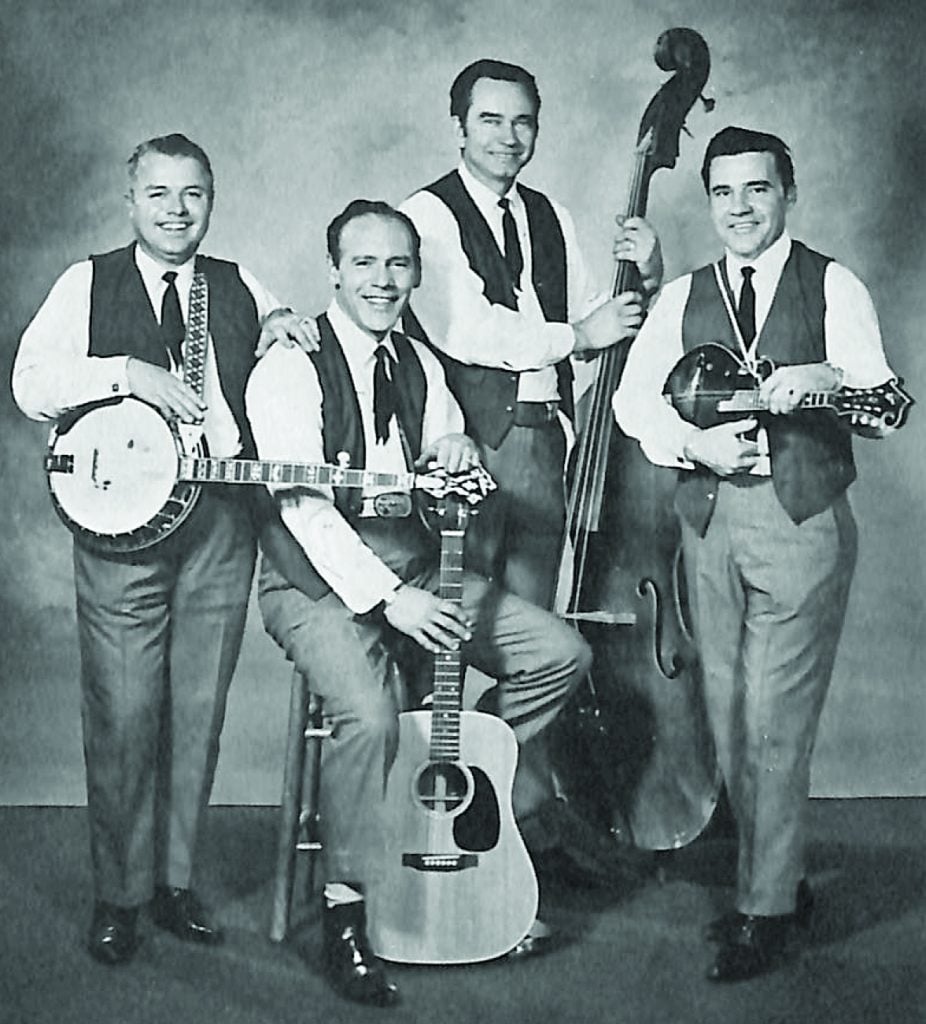
On Sept 9, 2022 the bluegrass and mandolin worlds lost a true icon. I would dare say most modern mandolin players have been influenced by Herschel even if it was unknowingly so. He made a name for himself in his early years with the The Boys From Shiloh and The Dixie Gentlemen, along with three years on the road with Jimmy Martin from 1967-1969. He later played with The Shenandoah Cut Ups and was a founding member of Country Grass (featuring Wes Golding and Tom McKinney). After a few years hiatus, he played joined with the Del McCoury Band (The Dixie Pals) starting in 1978.
It was during this time with The Dixie Pals that Herschel composed and recorded the mandolin classic, “Rebecca,” in honor of his mother, written in the key of B Natural. The song has become a bonafide jam standard. His intro to “Rebecca” has been used to kick off many a mandolin break over B chord.
Herschel later toured with the Bluegrass Cardinals (1992) and recorded three more solo projects after the great Bounce Away project in 1979. He recorded Back In Business in 1993, My Style in 2000 and B-Natural in 2009. It’s been stated, “Many musicians’ playing styles reflect their personality. There could be no truer example of that than Herschel and the way he played.” He was one of the most honest, faithful and wonderful souls I’ve ever met. So too was his playing style: clean-noting, precise, articulate, true to the melody and with wonderful tone and timing. He meant what he said and said what he meant (both musically and in what he verbalized), but always in a very caring way.
Herschel loved the Lord, his family and friends, mandolins and bluegrass, and probably in that order. He played individual notes when needed but almost always to enhance the melody. That’s what he was about, and man did he do it well. He had played the melody his own way that was exquisite and way ahead of his time. The “Sizemore Roll” is a staple in modern mandolin playing. It’s a sound resembling crosspicking but Herschel primarily used it on two pairs of strings in a controlled fashion instead of the McReynolds style of crosspicking incorporating alternate pick strokes on three pairs to simulate a banjo roll.
I thought it would be nice to hear from some of the great musicians Herschel worked with during his long career and from a few of his mandolin contemporaries. The following reminiscences only serve to highlight the impact Herschel made.
Doyle Lawson: “I was working with J.D. Crowe in Lexington, Kentucky and we worked Wednesday, Friday and Saturday at Martin’s Tavern. I think it was sometime in 1967 that a group of fellows came in and introduced themselves. They we’re the Dixie Gentlemen and consisted of Herschel Sizemore, Rual Yarborough, Jake Landers and a bass player whose name I can’t recall. Les was his first name, I think. Anyway they did a set of music that night and Herschel’s mandolin playing blew me away with his smooth delivery and melodic breaks. I could see right away that he and I thought about playing close to the melody of a song pretty much the same.
“Although we played a little differently than one another, there was a kinship there. They had a great band at the time with good original songs written by Jake Landers. Herschel went to work for Jimmy Martin not long after that for a little while and a few times, if they were going to a date in southern Ohio, I would hop on the bus a ride with them if it was a one-off date. He was a completely non-assuming musician, never one with a ‘look at me’ attitude and he did his job in a most professional way. One of the finest of the finest!”
Jimmy Gaudreau: “I became aware of Herschel when I moved to D.C. from Rhode Island in March of 1969 to replace John Duffey in the Country Gentlemen. A fact that is not widely known is that Herschel had gotten the call before me and came here from the Roanoke area to audition for the job, which he passed with flying colors, of course, unsurprisingly. The reason he didn’t stick around long was that he was turned off by the much larger urban area and that the job didn’t offer enough security for him and his family to relocate. I also believe that he’d already gotten hooked up with the USPS, which he stayed with for years, which did offer financial security back home in a place where he was much more comfortable. Please note that I got this information third hand, so I didn’t actually get it from Herschel, whom, as I recall, I met at Bean Blossom when he was playing with Red Smiley’s band. Pretty sure about that and very sure that when I saw him on stage and heard him play, I felt that my presence at that festival with the Gents was almost certainly due to the fact that Herschel passed on the job offer I’d ended up taking.
“To me, his playing and tenor voice were, in my way of thinking, a much better fit. Indeed, a killer mandolin player with a voice that somewhat resembled John’s distinctive tenor, something I couldn’t come close to since I believe it is something you have to be born with. Thus, New Look, New Sound.
“But getting back to Herschel’s style of playing, I was blown away by his command of the instrument, his ‘clean’ licks and impeccable tone, all of which I immediately envied and continued to do so over both of our long careers. When he passed away, bluegrass music sadly lost one of the ‘underrate’ true GREATS and I hope this article will go a long way to raise the awareness of his rightful place in the evolution of our beloved music.”
Del McCoury: “I was playing with Bill Monroe on the Opry in 1963. Everything was new to me. It was the first time I’d played the Grand Ole Opry.
I met Herschel Sizemore who had come up from Alabama along with Rural Yarborough, Jake Landers and Vassar, who played with them at that time. I had no idea he played music. One night he asked if I wanted to play some music and I said, ‘Yeah.’ We went up to the hotel and I thought, ‘He sure is a clean mandolin player.’ Most of the mandolin players I’d played with before were a little more rough. His notes were all clean and such good timing and rhythm. It was just effortless when he played. I thought, ‘I bet he would really sound good if he had a good mandolin.’ I didn’t see him for a while until he played with the Shenandoah Cut Ups because we played a lot of dates with them.
“I was going four-piece without a mandolin for a while there until I asked Herschel if he would be interested in playing with me and he said yes. It was a time when he wasn’t working with another band. We went to Japan and did a live record there. One night someone taped the show and when Herschel stepped up to do some emceeing he said, ‘Folks its an extreeeeeeme pleasure to be here in Tokyo.’ Listening back, Herschel said, ‘I want you to listen to that.’ He knew he had the long Alabama draw in his speech. We got a big laugh out of that. We became great friends and remained that way.”
Ronnie McCoury: Herschel started playing with dad in the late 1970’s. In 1977, I was a 10-year-old boy who was just learning the violin in school. I hadn’t really thought about playing the mandolin yet. Our family’s would be at the festivals together in those days and also we’d visit at the Sizemore family home. I have fond memories of Joyce and Lee and just being kids having fun!
“I started playing mandolin at 13, right after Herschel had left the band. He left the band sometime in 1980. Dad helped Herschel with his first solo mandolin project in 1978. Del McCoury & the Dixie Pals went to Japan in December of 1979 and during the trip recorded a live record. He also recorded with dad on his Take Me To The Mountains record for Leather Records in 1980. I tagged along to Roanoke for some of this recording. It was the end of 1980 when I started to pick up the mandolin. I’d only been playing six months when I joined dad onstage in May of 1981. This was the year Take Me To The Mountains album came out. I remember thinking, I need to learn how Herschel played his kick-offs and solos for this album. Wow! What a task? I’d pick the needle up and drop it on his solos and try to learn. At 55 yrs old, I’m still trying to figure it out! (His “JD Jones” solo.)
“As I grew as a mandolin picker I studied his Bounce Away album. It is still one of my absolute favorite mandolin albums. Besides his clean, fluid picking and his compositions, he was always an incredible cross picker.
Through the years, every chance I got, I’d have him play for me and show me things to try to figure out what only he could do! His playing legacy, whether known by some or not, is his influence on creating a more modern bluegrass mandolin style of playing. I’ve said it often, there’s Bill Monroe, Jesse McReynolds and Bobby Osborne style bluegrass playing but I don’t think anyone was as clean and fluid as Herschel. He moved the mandolin pendulum and todays pickers can thank him for it.
“We both shared a passion for Gibson Master Model mandolins signed by Lloyd Loar on the same day, April 25, 1923 and we always talked and compared them. Herschel loved his Loars, owning several during his career!
In addition to his wonderful mandolin playing, I genuinely miss his lovely friendship and keen sense of humor. He always felt more like an uncle to me.”
Alan Bibey: “I first heard Herschel as a member of the Shenandoah Cut Ups in the mid 70’s at the Camp Springs, North Carolina Bluegrass Festival and was amazed at how clean he played. We later became friends when I transcribed the Bounce Away album (an all time fave). We got to be very close friends through the years and I was honored to get to play on a couple of his albums. He was a hero, mentor and dear friend.
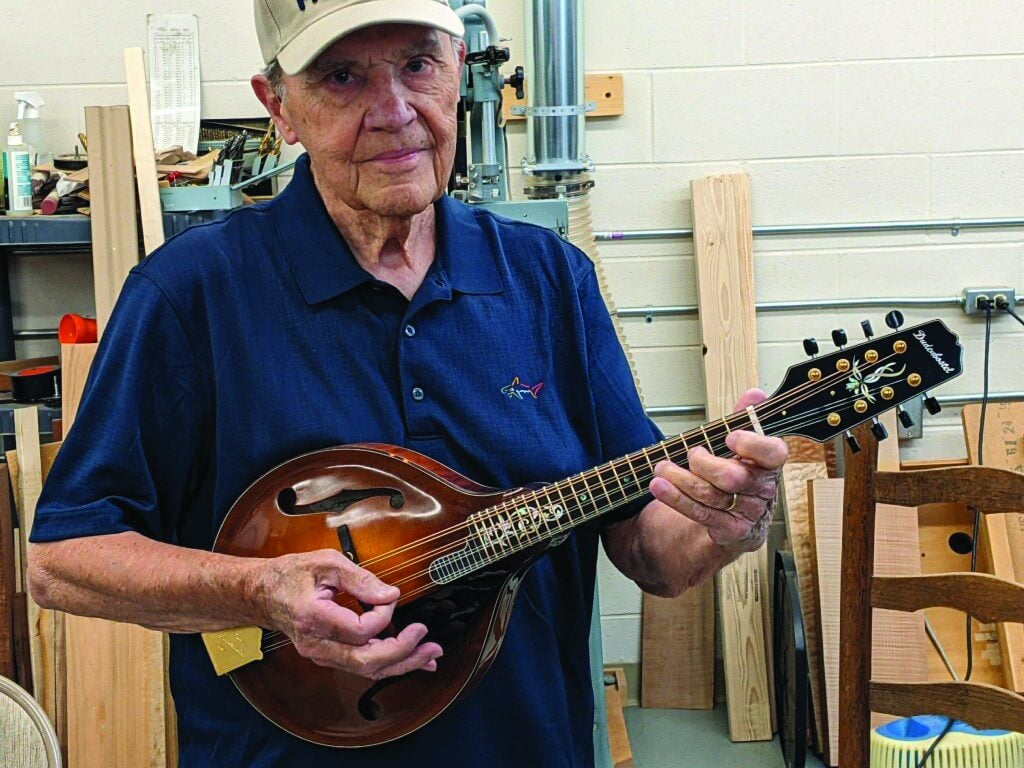
“I’ll forever be influenced by his marvelous playing but even more by the person he was. His wife Joyce and children have all become family. After my Dad passed a few years ago he kinda became a second Dad to me. We talked mandolins, music and about the Lord every conversation and laughed our heads off. If I told him I was coming by he would have the couch full of mandolins by the time I got there. All of our visits together were a true blessing to me.
“His playing made me want to be a better player and his personal influence and humble personal character definitely made me want to be a better person. You made the world a much better place buddy.”
All this from the little boy walking alongside his mother in the garden humming to himself at the age of 6. When she asked what he was humming, he would tell her that he kept hearing this music in his head. He couldn’t describe it as he had never heard bluegrass before. On their first trip to the Grand Ole Opry, when he was 8 or so, he heard Bill Monroe and he told her, “That’s the music I’ve been hearing,” and was so moved by it that it brought him to tears. He told his family that night, “That’s what I wanna do!”
Herschel’s son, Lee, recalls asking his dad what it would mean to be in the Hall Of Fame? He said “It would be a great honor, but if you ever reach a point in your career where you’re excepted and admired by your peers for what you do, there is no greater honor.” That’s what every musician strives for. He surely achieved that and much more. Herschel Sizemore is truly one of the all-time greats of bluegrass mandolin. RIP our friend.