Remembering Earl Scruggs at 100
[Editor’s Note: In our January, 2024 issue we ran an article about the new Earl Scruggs exhibit at the Earl Scruggs Center in Shelby, North Carolina. Part of that exhibit includes information from a 17,000 word document that Earl had written about his life. In our previous article, we included a few excerpts from that document and promised to provide more this year in order to help celebrate Earl at 100. This article provides more from that document, as put together by the exhibit’s co-creator Zach Dressel.]
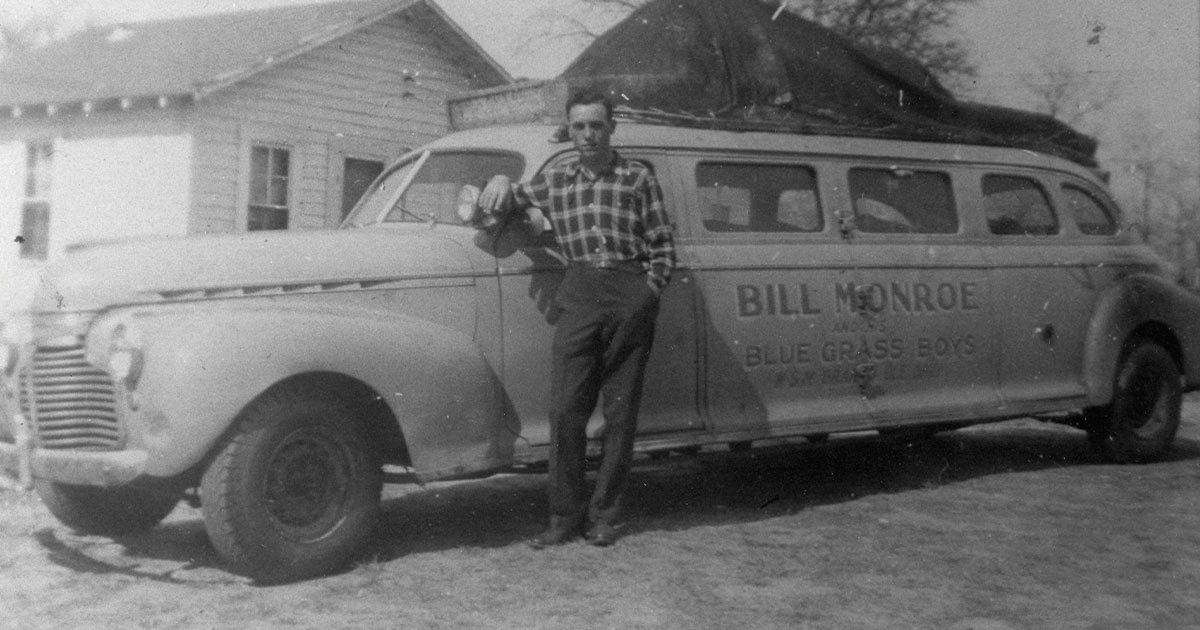
This quote from Earl’s personal remembrances references his first experience of recording in a studio environment. In September of 1946 Bill Monroe took his band to CBS Studios located in the Wrigley Building in downtown Chicago. Up until this point the largest city Earl had been in was Nashville, and just two years prior to this trip he was still working in the Lily Mill in Shelby, North Carolina. This first recording session showed the culmination of all of Earl’s efforts to become a professional musician and cemented the sound that would become known as bluegrass.
“I don’t remember what month it was, but I think it was on into late 1946 before (Bill) was asked by CBS to record again… There were no recording studios in Nashville during that time and we went up to Chicago and recorded in a… hotel which housed C.B.S. Recording Studios. I remember the excitement that had built up inside me. Had never seen a Recording Studio and Chicago and the big buildings there were really exciting for me. Mr. Art (Satherley) was the C.B.S. A&R man and…could inspire a group better than anyone I had been around before or since when it comes to recording. He sensed the unrelaxed situation we were in and came out of the control room to talk to us. He did it with a big smile and a lot of inspiring remarks. He started by bragging to Bill about his new band and sound. He said, “Bill you have the best band I’ve ever heard you have they are all good and wherever you picked this young man up, you found a good one.”…Gave me a big smile and told Bill you have a sound I’ve never heard before and that we were going to make some good records… To really turn us on, he said ‘I’ve got to stay out here and listen to this.’”
In the Winter of 1948 Earl and Lester Flatt had grown tired of the conditions of working in Bill Monroe’s Band. Earl was ready to head home to Shelby, North Carolina, and continue work in the mill, pursuing a less chaotic lifestyle. However, the pair decided instead to try their own hand at forming a band. The quote below from Earl’s personal remembrances details the earliest days of what would become Flatt and Scruggs and the Foggy Mountain Boys.
“When we decided to start our show, discussions started, and many ideas came up… I was going to work close to Home and at the same time Danville seemed to be the best Place out of all our traveling…Lester and I seemed to be the best known in that vicinity. (We) packed houses and we had established a firm recognition around there…I had been bookkeeper and sold tickets, handled (Bill’s) cash, did his contacts with sponsors, made up his payroll, worked with his booker. I knew quite a bit about the business end and took that responsibility. The Radio station was very happy to let us have a noon slot, but no pay. The advantage was to get bookings, sell song books, etc.
“I thought Foggy Mountain Boys was a good name. Something with “mountain” tied to the name seemed to be the thing or a factor. Something to tie the name and a theme song together was my idea for something catchy. The Carter Family song Foggy Mountain Top seemed to override all the other Ideas. Lester wanted at one point to call the group the White County Boys. He was from Sparta, Tn. (in) White County. We went with Foggy Mountain Boys and used Foggy Mountain Top for our theme song for a while. The name started catching on fast.”
As a child, one of Earl’s earliest exposures to music came from the pews of Flint Hill Baptist Church that many of his relatives attended. It was in churches that many of the founding voices in bluegrass music learned the art of harmony which would become such an integral part of the sacred numbers that rounded out the repertoires of groups such as the Stanley Brothers and Flatt and Scruggs.
“I usually got some picking done on Sunday. Some people called it sinning. Depending mainly on how well they liked picking. Picking was a no no in church. I always thought it would have made or set things up for a nice service if some of the good singers would quartet, etc. and have string music. But it was the old organ, out of tune and bad playing in most cases, sometimes no one to play the organ. Just grab a pitch and hope everyone could reach all the notes. Singings all day or monthly… Mr. Newt Harold was, I suppose, among the longest prayers at Flint Hill Church. Or at least to me, he was the one I always wished they would not ask to dismiss church in prayer—He seemed to recap what the preacher had said plus giving his point of view for good measure. Anyway, I was starving.
“Most or lots of songs were about life people lived. Uncle Luther Blanton song leader. Best part of going to church. He could sing all parts. Some good Singers.”
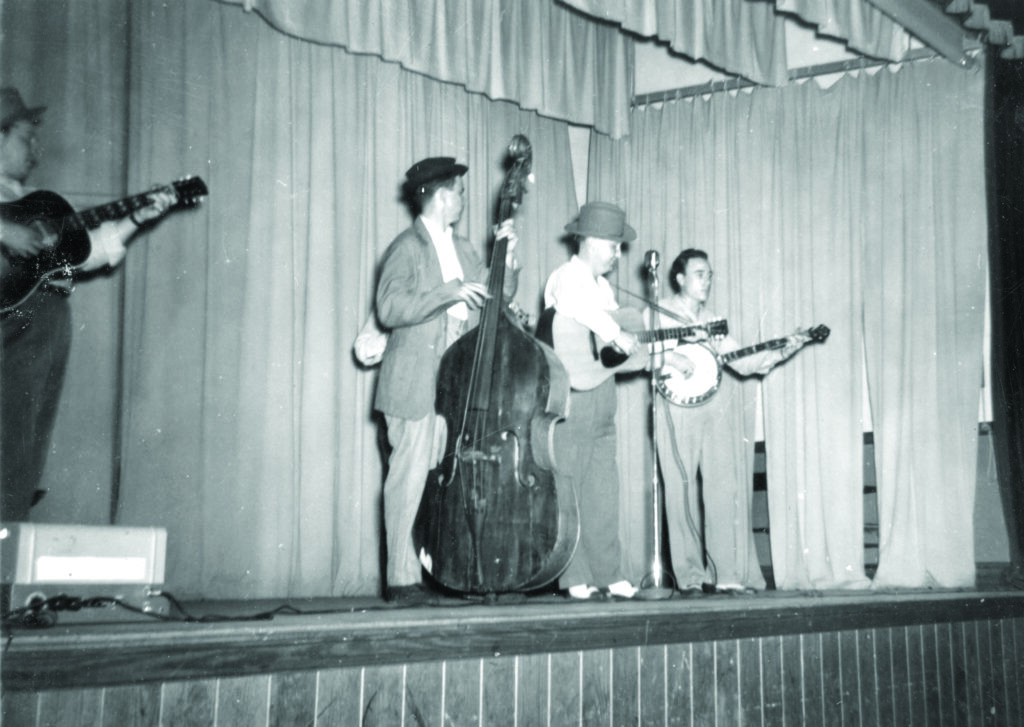
One of the ways that Flatt and Scruggs set themselves apart in the beginning was their orchestration around a single mic. What began as a necessity of older PA equipment, became one of the most defining characteristics of their show. Working the mic became somewhat of a dance for the Foggy Mountain Boys with instrument necks bowing in and out in time with the constant shuffle. This quote from Earl’s remembrances showcases the early development of the Flatt and Scruggs signature stage choreography while Earl and Lester were still playing alongside Bill Monroe.
“I remember working out arrangements on tunes with Bill’s band and how diligently I had to word my thoughts. It was in no way my show, I was a Junior in age, and was reminded of that often when I heard Lester and a bit of Bill’s conversation…. I couldn’t get to the mike at times and Chubby Wise and others couldn’t either. So, we even tried analyzing how the person at the mike was turning, or just what he could do to “get out of the way better.” After all, when the singer or picker’s last word or lick was done, he needed to clear the mic. It could be done easily and simple. Lester standing on the left could back up a bit (enough) by bringing his right foot back first followed with his left side. Bill on the right comes back with his left foot and side of his body, this was like swinging doors opening, and the mike was wide open. I for instance could duck the Banjo neck downward as to bow out and Lester and Bill could bow in so to speak as they stepped back in, and their first words were into the mic. It is as simple and as important as five or however many people in a conversation.”
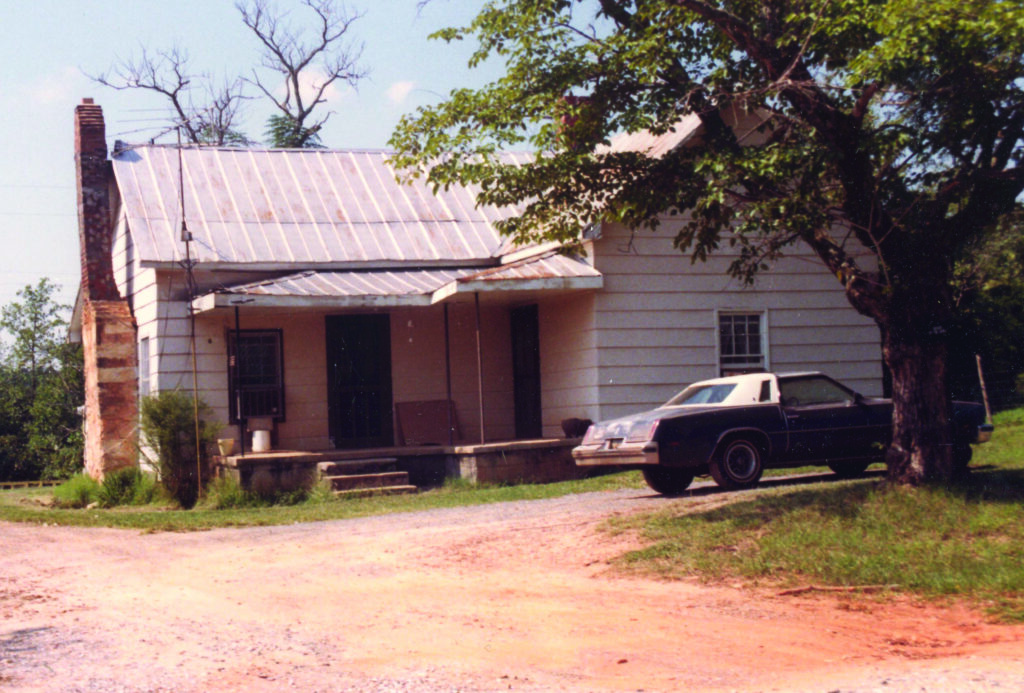
This description of Earl’s childhood home shows the average living conditions of farming families in the rural south during the Great Depression. Many of the homes in rural Cleveland County, North Carolina did not have access to electricity or running water during this time and Earl’s home was no exception.
Interestingly, Earl mentions the work of the Roosevelt Administration and the effect that the New Deal had on many families at the time. His reference to a mattress provided by “Roosevelt” may link to one of the efforts by the Emergency Relief Administration to employ out-of-work laborers to make around one million mattresses in 1934. This surplus in government-subsidized mattresses meant families like Earl’s would be able to afford them for the first time.
“Our house was a framed one with a large living room which most of the time had one and part-time two beds in it, one bedroom, and what we called the front room. This is where the couch, organ, and best bed with a Feather tick mattress on it, were. Used only (for) Christmas or special events.
“A kitchen that consisted of the wood burning Majestic Stove, cupboard, a long table with one full length bench, and chairs on the other side and ends. Cupboard, table, and miscellaneous furniture like a desk, clothes thing, and trunks for storing quilts etc., my father had made. Our beds were straw (wheat) tick and our first mattress I recall was a 50₵ homemade (Roosevelt). What a difference his administration made for us.”