Remembering Buddy Hogan
A Life of Music, Stories, and Connections
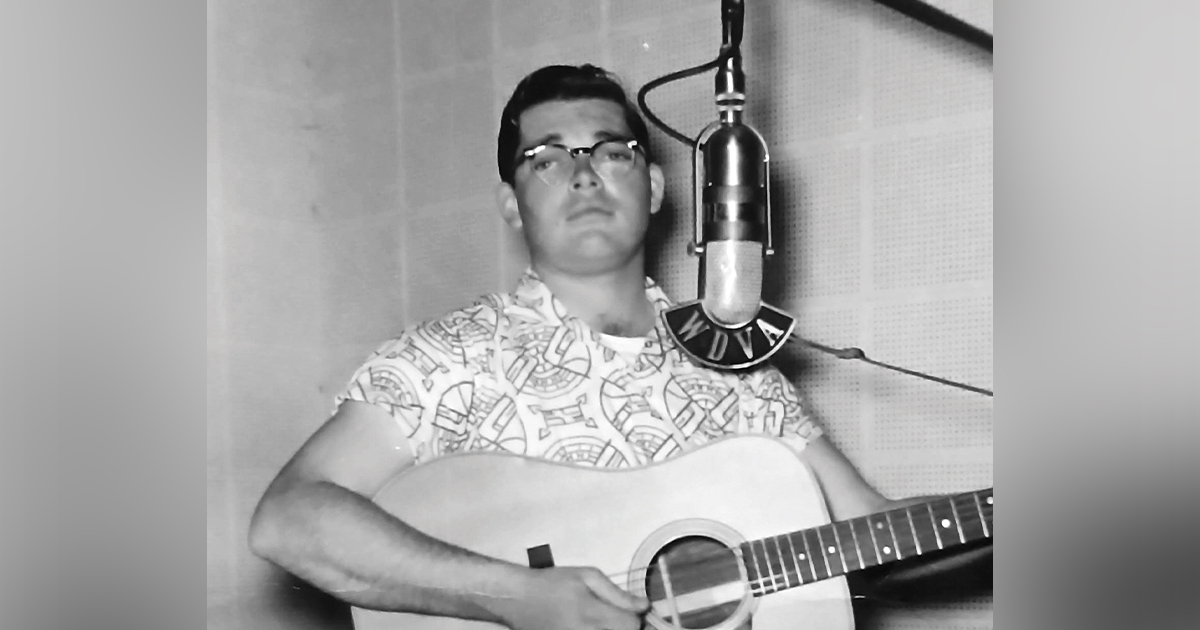
Roscoe VanBuren “Buddy” Hogan, Jr. (August 26, 1935 – October 13, 2025) was a man whose life was deeply intertwined with the world of country and bluegrass music. Although he frequently joked with family and friends that he was a “legend in his own mind,” Buddy lived a full life with many accomplishments that others can only dream of. He was a master storyteller, a gifted musician, and an astute historian of the music industry, with a near-century full of remarkable experiences and connections.
Born in 1935, Buddy grew up in Roanoke, Virginia, a city that was a bustling hub for country music in the 1930s and ‘40s. His father, who went by Rusty, was a mechanic at Woodson Pontiac on Williamson Road, where he became a trusted figure among musicians passing through town. Rusty taught Buddy how to play the guitar, sparking his lifelong passion for music. Through his father’s connections, Buddy became acquainted with prominent figures in the music industry. Among the earliest was fiddler Tommy Magness, who appeared with Roanoke personality Roy Hall and the Blue Ridge Entertainers in 1941-’42. Buddy recalled that “Tommy came to our house a lot.”
Magness gained national fame in the 1940s when he performed with Roy Acuff’s Smoky Mountain Boys. Throughout the decade, the fiddler bounded several times between Roanoke and Acuff. One fond memory was made when, according to Buddy, “We were sitting at the house one Sunday and I looked up and saw a brand-new Packard drive up. It was Tommy Magness and Roy Acuff. Daddy went out and welcomed them in. Tommy introduced Roy Acuff to Mama. Roy said Tommy talked so much about her good food that he had to come over and see for himself. Mama said, ‘You go in there and sit down, and I’ll call you when it’s ready!’ About every Sunday, some hillbilly was there to eat.”
It was through Tommy Magness that Buddy met two of his best friends and all-time favorite musicians: Don Reno and Red Smiley. When Magness left Acuff for the last time, he made his way to Roanoke with a newly formed group. On January 2, 1950, the outfit began a new stint on radio station WDBJ. Advertising for the new group described its members as consisting of “Smilin’ Red Smiley – with all favorite songs, Don Reno – King of 5-String Banjo, Verlon Reno – Former Reno Brothers Duet, and ‘Wild Bill’ Haney – with Red Hot Mandolin.” Various members made up the “Famous Cumberland Quartet” as well as the duo of Chicken & Gravy, “The South’s Funniest Comedians.”
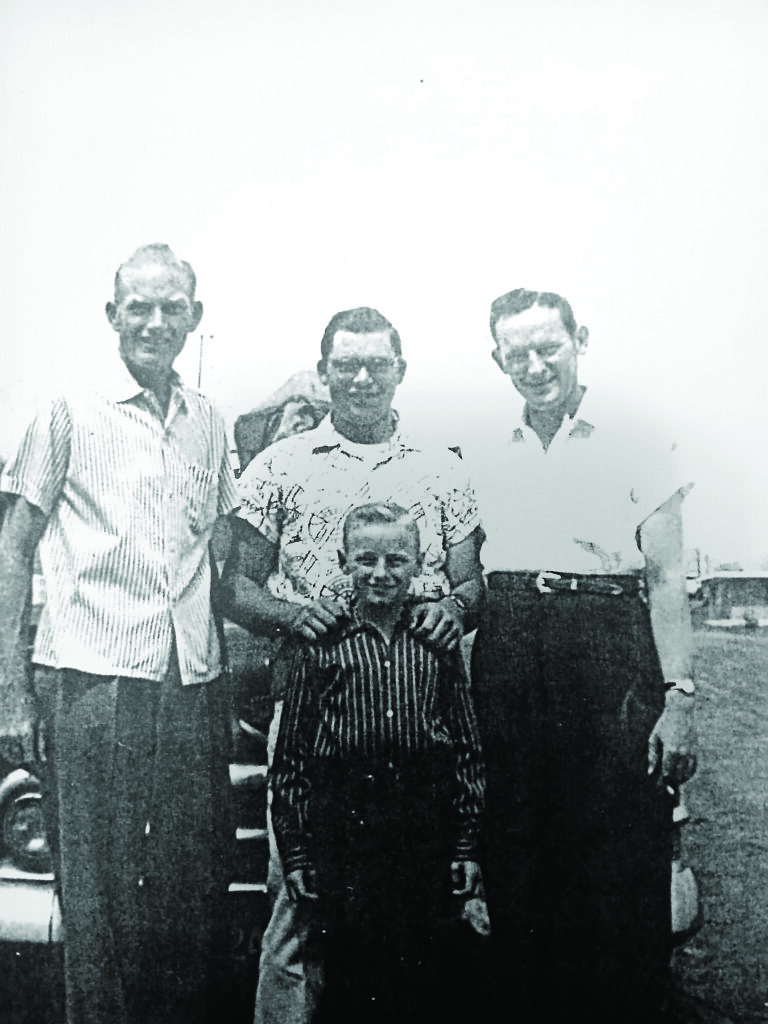
Don Reno and Red Smiley stayed with Magness in Roanoke for nearly a year and a half, from January 1950 through March 1951. Buddy recalled Smiley as being “about ten years older than me and into music, and music was all I thought about at the time, so we were destined to be friends. Red took me under his wing and treated me like a brother. I went fishing with him and I tagged along to all the shows.”
Recording under the name of Tommy Magness and the Tennessee Buddies, the group recorded four songs for Federal Records – all of which were written by Don Reno: “When I Safely Reach That Other Shore,” “Little Country Preacher,” “Wings of Faith,” and “Jesus Will Save Your Soul.” Barely a month later, the group disbanded. Buddy recalled that they “played at Haymakertown, Virginia. Don and Red quit that night. They went to work with Toby Stroud in Wheeling, West Virginia.”
If there was a musical void left by the departure of Reno and Smiley, it was soon filled by Lester Flatt and Earl Scruggs. Roanoke Times reporter Ralph Berrier wrote that, in the fall and winter of 1951, “Buddy Hogan used to sneak out of William Fleming High School at lunch-time, drive his 1938 Plymouth downtown to the old WDBJ radio studios, where he could watch Earl Scruggs play that five-string banjo in person. ‘I’d slip off from school and go down there . . . They had Art Wooten on the fiddle and Jody Rainwater on the bass, I believe. Earl, he was just another old hillbilly like the rest of us.’”
It was a full five years before Reno & Smiley returned to Roanoke. Buddy was now 22 years of age and was in a better position to blend in with the group. He often appeared with Don and Red as a special guest on performances of the Old Dominion Barn Dance in Richmond, Virginia, and on the daily Top ‘O The Morning television show in Roanoke. As a performer, Buddy only made one recording. It was a 45-rpm single with two songs, both of which were written by him: “A Girl Like You” and “Live Like a Fool.” The musicians backing him up on the disc just happened to be Reno & Smiley with their bandmates Mack Magaha and John Palmer!
Another adventure with Reno & Smiley involved backing Willie Nelson on one of his first solo performances. In April 1961, country singer Ray Price hired Nelson to play bass in his Cherokee Cowboys band. Barely two months later, on June 11, 1961, Carlton Haney, Reno & Smiley’s manager, booked Price for an engagement at the ball field in Salem, Virginia. To hear Buddy tell it, “One of his (Haney’s) acts backed out and he asked Willie if he would take his place. Willie said. ‘What am I going to use for a band?’ Carlton said, ‘Won’t Ray let you use some of his band?’ and Willie said ‘I wouldn’t even ask him.’ Carlton said, ‘Well, I’ll ask him!’ So, we went to Ray and he said, ‘H___ no!’ Ray and Carlton got to arguing but Ray still wouldn’t let any of them back him. So, Don and Red, Gene Burrows, and I backed him, and the show went on.”
Buddy’s life was filled with extraordinary encounters and friendships with some of the biggest names in country and bluegrass music. He was a regular presence backstage at shows, where he mingled with stars like Dolly Parton, Merle Haggard, Randy Travis, and Willie Nelson. Buddy’s ability to connect with people was unparalleled; he was never just a fan but an equal among the musicians he admired.
Buddy’s life was not without its hardships. His first wife tragically passed away in 1976, leaving a lasting impact on the family. Despite this, Buddy remained a pillar of strength, raising four children and continuing to pursue his passion for music. He was a blue-collar worker who balanced his love for music with his responsibilities, even working as a security guard at a hospital while still finding time to perform and share his stories.
Jerry Hogan fondly remembers his father’s resilience and humor, recounting tales of live TV mishaps, backstage antics, and Buddy’s ability to light up a room with his presence.
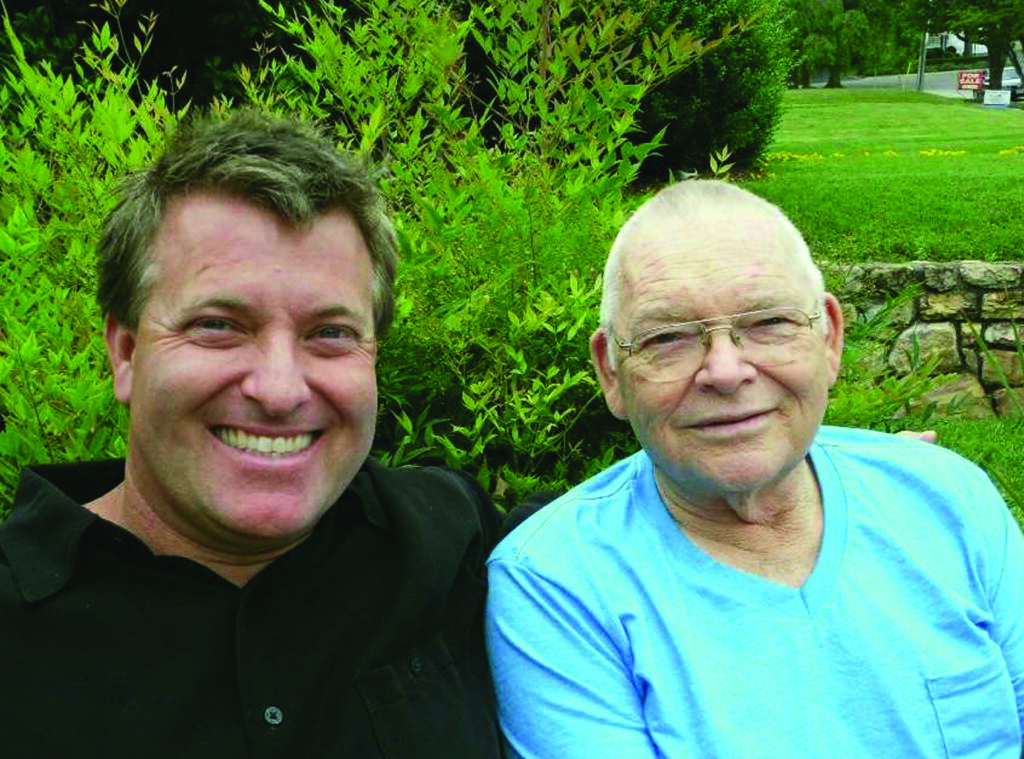
Ronnie Reno reminisced that Buddy was “not only a friend to bluegrass music, he was a true friend to the Reno family. Buddy saw and lived our musical journey first-hand and was a great supporter of Reno and Smiley. He was a very talented man and a wonderful entertainer himself. He traveled with us back in the ‘50s and ‘60s and saw the popularity of Dad’s band from the beginning until the end. What a true historian of the music. In later years, we would stop many times in Salem, Virginia, and pick him up to go with us to festivals on the weekends; he would tell the band all the stories and times he spent with Dad and Red. What great times we had with Buddy. I will miss him a lot, but knowing he is with our heavenly band singing and enjoying the fruits of his long journey will bring me happiness in the years and days to come.”
Buddy’s legacy lives on through his music and the countless stories he shared with his family and friends. He was a man who lived for the connections he made and the joy he brought to others. As Jerry said, “He was the historian of all that because he had the stories. For the most part, he was a sober guy, so he was probably the only sober guy in the room!”
My own path crossed with Buddy’s on numerous occasions throughout the 1990s and early 2000s. Two in particular remain fresh in my memory. One involved a 2005 road trip to Waynesboro, Virginia, where Buddy was in search of a long-lost recording master by Red Smiley. In 1968, Smiley recorded an album’s worth of country music songs for Major Records. A 45-rpm single featuring “Best Female Actress of the Year” was released, but the rest lay dormant. More than 30 years after the fact, Buddy bought the rights to the album and, with the assistance of his nephew David Cannaday, issued the CD called Red Smiley Sings Country.
Another time, Buddy and I drove out to nearby Fincastle, Virginia, to visit the site of what had been the first multi-day, weekend-long bluegrass festival. I had secured the permission of the property owner to visit the site, and on a cold, overcast winter day, we made the trip. Buddy had been to the original event, which took place on Labor Day weekend in 1965. Soon after we arrived, he began pointing out where the stage had been and the rows of wooden benches that served as seating for festival attendees. As we stood there, shivering in the cold and surveying the lay of the land, Buddy got the idea to call Carlton Haney, the promoter of the festival. “Carlton, guess where I am?” was how it started. I was only privy to one half of the conversation, but it was a moment in time, listening as two old friends rehashed and relived bluegrass history.
Tim White, longtime host of the Song of the Mountains program on PBS, recalled meeting Buddy “some 25 years ago. Bluegrass was our common denominator, and we kind of started running around a little bit when I would go to Roanoke. Once, he and his girlfriend, Donna, came to visit me in Blountville. I had some really nice framed and matted prints of the Bristol Birthplace of Country Music mural. I gave him one because he just absolutely loved the music. And he got real quiet. I mean . . . he didn’t even say thank you right off. I looked over at Donna, and she said, ‘He’s gonna cry.’ He was just that kind of guy. Very, very humble. Very, very polite. But he loved his music, especially when it came to Reno and Smiley. He ran around with them a lot back in the day.
“One New Year’s Day, Buddy and I went over to Rufus Hall’s place to do an interview for my radio show. Rufus was Roy Hall’s brother (a well-known Roanoke performer in the late 1930s and early 40s). Afterwards, Buddy and I got in my truck and rode out to, I think it was Eureka Park in Roanoke, and he showed me the exact spot where Roy Hall basically killed himself. He would show off driving between two big oak trees. One night, he was coming through late at night, showing off, and hit a tree, and it killed him right there. Buddy took me and showed me that exact spot. Another time, Buddy showed me where Red Smiley lived in a mobile home park out in Roanoke County.
“Buddy used to cruise around with Don and Red and hang out. He was kind of a fly-on-the-wall type. He was fortunate to be able to go around with them and just listen in. Occasionally, they’d get him up to sing a song. He was quite a good tenor singer . . . had a high lonesome kind of voice. But he was an encyclopedia, especially when it came to Reno and Smiley. When one of our seniors passes on, we lose an encyclopedia. I will miss him.”
Buddy was very supportive of newer bluegrass musicians who arrived on the scene, especially those who played his style of music. One of his favorites was banjo picker Jeremy Stephens, who now plays with High Fidelity. “When I played in Shallow Creek, we started doing a lot of Reno and Smiley stuff. We played at the Farmers Market in Vinton, Virginia, and Buddy came up to us after the show and started talking about Don and Red. That’s my first memory of actually meeting Buddy, although he had seen us over the years. After that, I got to know Buddy, and he was a major supporter of everything we did… of everything I’ve continued to do down through the years.
“He was just a big friend and fan of the music and a great person, and he always loved to share the history. He knew so much about the things that went on in that area, and he has been a great value to me in my research on Don Reno. He was always willing to share everything that he knew and had . . . artifacts and pictures and all that sort of thing. I can’t say enough good things about Buddy because I love Buddy. He was great.”
Another young picker that Buddy took under his wing was banjoist Mike Scott. “As a 19-year member of Ronnie Reno and the Reno Tradition, I have many special memories of my friend Buddy Hogan. He often went on road trips with us, and when we saw Buddy climbing onto the bus, we all knew we were in for a fun ride. He could sing, play, and tell stories like no one else, and he kept us laughing for miles down the road. He was, without a doubt, the best shotgun rider of all.
“Buddy was full of life. So quiet, heavy moments with him were rare. But one that stands out in my heart came about fourteen years ago when he called me unexpectedly. His voice was low; I could tell that something was troubling him. I asked, ‘Buddy, are you okay?’ He said, ‘Mike, something just isn’t right.’ He expressed his uncertainty about his salvation and a desire to know Jesus. We had a long and meaningful conversation that ended in prayer. Afterward, I sent him one of my favorite books, The Purpose Driven Life. A few days later, he called again and asked if I would baptize him. I was honored. I left Nashville, picked up our bass player, Heath VanWinkle, in Greeneville, Tennessee, and drove to Buddy’s home in Roanoke, Virginia. We sang, worshiped together, and then I baptized him there in his hot tub; a moment I’ll never forget.
“Buddy had a tender heart beneath that big personality, and I thank God I got to walk part of life’s road with him. To everyone who loved Buddy, let’s honor him by doing what he did best: love people, share music, and make the road a little brighter.”