Remembering Buck White
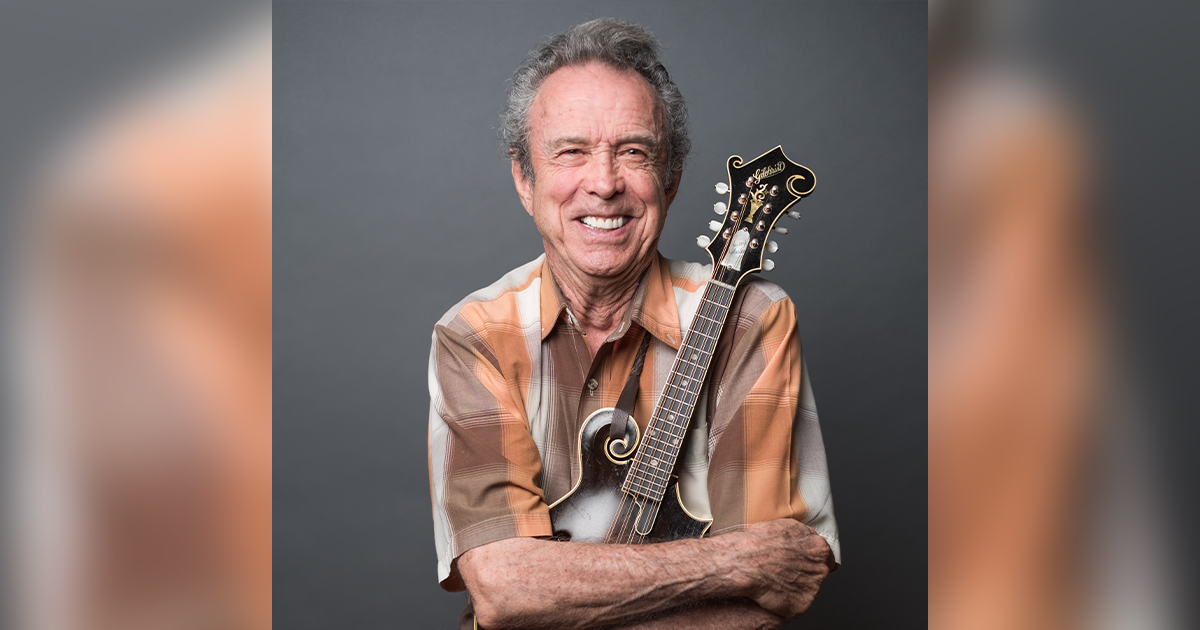
Photo by Scott Simontacchi
Harry Sherile “Buck” White (December 13, 1930 – January 13, 2025) was the patriarch of the popular acoustic, bluegrass-friendly group The Whites. Although known primarily for his mandolin playing and vocals, he was also an amazing piano player. White’s career as a musician got its start in the late 1940s and hit its stride in the early 1980s when The Whites, a group that also included his daughters Sharon and Cheryl, scored several chart singles and landed as members of the Grand Ole Opry.
White was born in Oklahoma City, Oklahoma, and soon afterwards moved to Wichita Falls, Texas. He developed an interest in music starting around age 13. A dalliance with drums was short-lived and he soon moved to piano and accordion. White picked up the mandolin around 1947 and, while still in high school, played in an old-time/western swing outfit called the Blue Sage Boys. The group enjoyed a daily radio broadcast in Wichita Falls and eventually graduated to television. Along the way, White turned down offers to play piano for popular mainstream country performers including Lefty Frizzell and Hank Snow.
The middle 1950s found White performing in a country music outfit that was headed by Nat Flaming, a rodeo announcer/western wear store owner. He mostly played piano but occasionally got to show off on mandolin. The gig lasted for five years, from 1953 to 1958. Towards the end of his tenure, he also did double duty with a bluegrass group called The Red River Boys; it was White’s first opportunity to perform in a bluegrass band setting. White noted later that “I was playing the piano (with Flaming) for money, but the mandolin (with the Red River Boys) because I loved it.” By decade’s end, the advent of rock ‘n’ roll necessitated that White perform electric piano in a group called The Volcanoes.
In 1962, White moved his growing family to Fort Smith, Arkansas. There, he and wife Pat, partnered with another couple to launch a group called the Down Homers. The foursome played locally and even secured a television program. In time, the group came to be known as Buck White and the Down Home Folks and included Pat, and daughters Sharon and Cheryl.
Attendance at the 1966 Fincastle Bluegrass Festival whetted the family’s appetite for bluegrass. An appearance not long afterwards at Bill Monroe’s Bean Blossom festival got the group started on the festival circuit. In 1971, the family relocated to Nashville and became regulars at the Bluegrass Inn. Throughout the 1970s, the group recorded albums for the County label (Buck White and the Down Home Folks and In Person at Randy Wood’s Old Time Picking Parlor), for Ridge Runner (That Down Home Feeling), and for Sugar Hill (Poor Folks Pleasure).
It was about the time of the last album that Buck, Sharon, and Cheryl came to the attention of Emmylou Harris, who used them on her Blue Kentucky Girl and Roses in the Snow albums. Subsequent touring in support of those albums opened doors for Buck and the girls. A name change for the group, to The Whites, coincided with a well-produced major label release on Curb/Warner Brothers called Old Familiar Feeling. Other releases followed for MCA, New Canaan, Step One, and Ceili. Among their early pick singles were “You Put the Blue In Me,” “Hangin’ Around,” “Give Me Back That Old Familiar Feeling,” “Pins And Needles,” “If It Ain’t Love (Let’s Leave It Alone),” “Hometown Gossip,” and “When The New Wears Off of Our Love.” The resulting airplay and media attention netted a Grand Ole Opry induction for the group on March 2, 1984.
The addition of Jerry Douglas in 1979 expanded the group’s instrumental versatility. The following year, the band logged 200 performance dates. An international presence included tours in a host of foreign countries including Thailand, Burma, Pakistan, India, Sri Lanka, Oman, Portugal, Greece, Turkey, Cyprus, Japan, Thailand, India, and Greece.
Accolades for The Whites include 1987 CMA Vocal Duo (Sharon and Ricky Skaggs); Grammy and IBMA awards for inclusion on the Oh Brother, Where Art Thou? soundtrack; 2006 IBMA Distinguished Achievement award; 2007 Dove award for bluegrass gospel album; 2008 induction to the Texas Country Music Hall of Fame; and 2000 IBMA award for participation in the various artists collection Bluegrass Mandolin Extravaganza.
While White’s resume speaks volumes for his talent and contributions to our music, it is a flood of shared memories from his many friends, fellow musicians, and fans that convey his warm and gentle spirit.
Doyle Lawson – Buck White was truly a good man and great musician. I never saw Buck without that big grin on his face and his music reflected his personality. Buck played happy sounding mandolin and piano! My condolences to his family.
Laura White – Buck White made amazing contributions to bluegrass and country music. He was always a wonderful example of how to be a family man, consistently spreading joy and enthusiasm. He looked after all us ‘youngins’ when we came to town without family or a home church. His sense of humor was on a different level, and his love for the Lord was above all.
Kenny Smith – Buck White was one of my favorite people to be around. I bought a bunch of records from Ruby’s Record Store when they were closing. I was just a kid. One of those records was Buck White and the Down Home Folks Live at Randy Wood’s Picking Parlor. I have played this record a lot! It was one of the few live records I had to listen to. I finally got to see them perform when I was a junior in high school. About a week before the concert, I came down with the chicken pox. My face looked like I had been in a car wreck. I was supposed to stay home, but I wasn’t going to miss that show! No way. It was so good. Thank you, Buck, for being so kind to me and a huge inspiration.
Butch Robins – I’ve known Buck since the early 1970s and was always amazed by his many talents. I always enjoyed working and playing with him; he was a wonderful addition to the cast of musicians on my first Rounder album, Forty Years Late. I produced That Down Home Feeling by Buck White and The Down Home Folks for him in 1977. He was the oldest living member of the Grand Ole Opry and I have many fond memories of him there.
Darin & Brooke Aldridge – Buck White had one of the biggest and kindest hearts. He always made everyone feel like a someone. You never saw him without a smile and a funny gesture to go along with his bubbly personality. We’ll always cherish our moments we got to spend with him at the Opry. Blessed that we got to know Buck call him our friend over the years. Heaven is so much sweeter with him there.
Orin Friesen – I first met Buck White in 1971 when he was fronting his family band called Buck White & the Down Home Folks. This band later changed their name to simply, The Whites. I saw The Whites numerous times over the years, even when Jerry Douglas and Ricky Skaggs were both in the band. One Saturday night, my wife Bekki and I were backstage at the Grand Ole Opry and we ran into Buck. He invited us to go to church with him the next day. Since we weren’t very familiar with the Nashville area, we wanted to make sure we got there on time. We arrived at the church early and sat in a back pew. It wasn’t long before Buck came in and saw us sitting in the back. He said, “You can’t sit way back here. Come with me.” He took us to the second row from the front. I sat next to Buck and Bekki was next to me. Then three other people came and sat next to us: Bill Monroe, Ginger Boatwright, and Doug Dillard. The hymn singing was great, from both sides of us, and even behind us. I turned and looked behind me; it was Ricky Skaggs and Sharon White. I’ve been to thousands of church services in my life but none more memorable than that one.
Darren Beachley – I first became aware of Buck White and the girls, Sharon and Cheryl, in either 1979 or 1980 at Indian Springs, Maryland, at the Bluegrass Unlimited bluegrass festival. As a 12-year-old kid, what struck me the minute I heard Buck and The Down Home Folks was the approach they took to the music and the sound they created. Buck had a wonderful jazzy style on the mandolin and the harmonies he Cheryl and Sharon had were bar-none the best in the biz, add Ricky Skaggs and Jerry Douglas and it was perfect. Mr. Buck was a showman and an incredible piano player. Years later when I would see him backstage at the Opry he always had kind words and still had the world class sense of humor. Mr. Buck was true to his faith and his work here is done. 94 years, what a wonderful life.
Kevin Williamson – to say The Whites have been an influence on our family would be a huge understatement. Their records were played often at our house when I was younger. When I was 15 my dad somehow got me into the Bojangles Club in Huntington, West Virginia, to see Buck White and the Down Home Folks. I sat there in awe as Buck, Sharon, Cheryl, Jerry Douglas, and Ricky Skaggs laid down some of the most beautiful music I’d ever heard. Later, The Whites became not just a musical influence, but also a godly influence. Their faith is evident in all that they do. They have been a source of love, encouragement, and wise counsel from folks who have walked the road that we are on. We sure will miss Buck’s mandolin picking as well as his singing and that mischievous grin he got when he was about to throw down some honky tonk piano. Hey, who says the Lord doesn’t love some Texas swing? I am thankful that he is once again smiling that mischievous smile and singing in the presence of The Most High.
Jon D. Weisberger – I met Buck White when I wrote a bio for The Whites when they released the wonderful (and under-appreciated) album A Lifetime in The Making. I would run into him from time to time after that, and a conversation with Buck was always a delight. He was such a sweet and good-humored fella, and, considering the depth of his talent, modest to a fault. He was, after all, one of the great mandolin stylists, a mighty fine piano player, and a memorably engaging singer, too. RIP, Buck White.