Skip to content
Register |
Lost your password?
Subscribe
logo
  • Magazine
  • The Tradition
  • The Artists
  • The Sound
  • The Venue
  • Reviews
  • Podcasts
  • Lessons
  • Jam Tracks
  • The Archives
  • Log in to Your Account
  • Contact
  • Subscribe
  • Search
  • Login
  • Contact
Search
  • Magazine
    • Current Issue
    • Past Issues
    • Festival Guide
    • Talent Directory
    • Workshops/Camps
    • Our History
    • Staff
    • Advertise
    • Contact
  • The Tradition
  • The Artists
  • The Sound
  • The Venue
  • Reviews
  • Podcasts
  • Lessons
  • Jam Track
  • The Archives

Home > Articles > The Tradition > Remembering Bobby Hicks

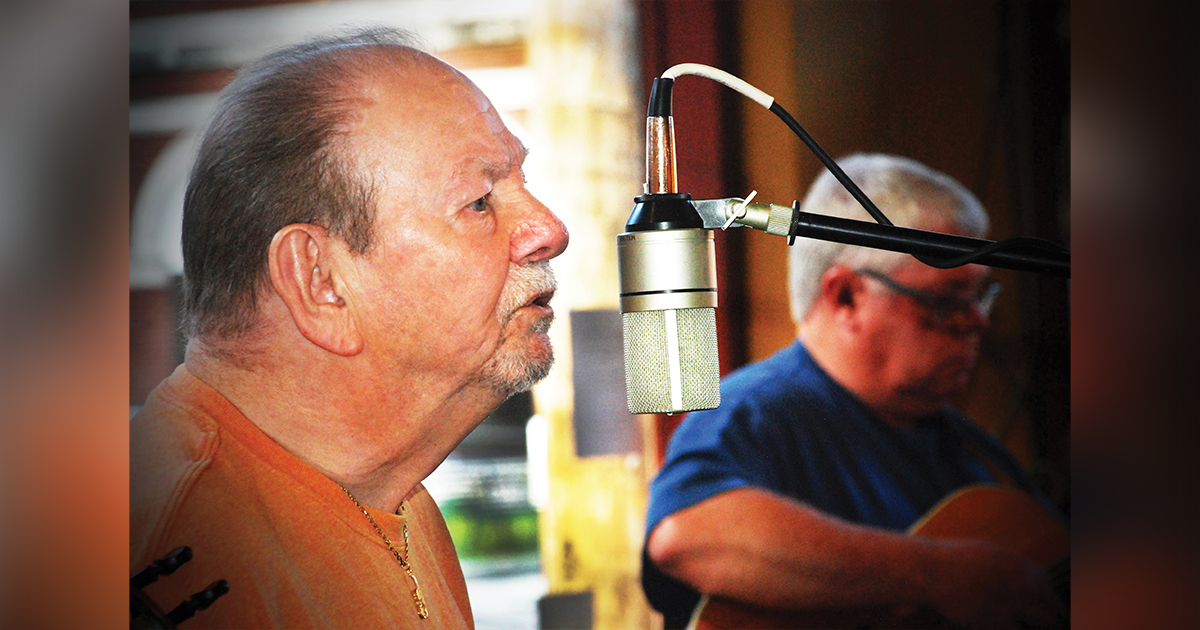
Bobby Hicks // Photo by Bill Guerrant

Remembering Bobby Hicks

Gary Reid|Posted on September 30, 2024|The Tradition|No Comments
FacebookTweetPrint

Robert Caldwell “Bobby” Hicks (July 21, 1933 – August 16, 2024) was at the forefront of bluegrass fiddling for nearly 70 years. He logged time with many of the top names in bluegrass and country music including Jim Eanes, Bill Monroe, Porter Wagoner, Las Vegas entertainer Judy Lynn, and Ricky Skaggs. While many admired him for his expert musicianship, a host of fellow musicians and fans alike cherished him for his pleasant demeanor and warm friendship.

Hailing from Newton, North Carolina, an outlier of Hickory, Hicks got his first tastes of live music from his clawhammer banjo picking mother and two brothers who played banjo and guitar. Bobby started out on mandolin and guitar before he was even big enough to hold an instrument.

Around 1945, the Hicks family moved to Greensboro, North Carolina. The area sported programs by acts such as Charlie Monroe and local favorites like Jim Hall. It was Hall’s fiddle player, Smokey Graves, who inspired Hicks to take up the fiddle. It was only a short time later that he entered a fiddlers’ convention and took honors with a $50.00 prize.

Hicks secured his first professional job in 1953 when he was hired by Decca recording artist Jim Eanes. The group was headquartered in Danville, Virginia, and over a two-year period recorded a total of fifteen songs and tunes. The sessions featured several instrumentals that highlighted Hicks’ fiddle work: “Ridin’ the Waves,” “Plunkin’ Rag,” and “Cotton Picker’s Stomp.” The most successful piece, however, was a novelty called “Wiggle Worm Wiggle.”

During the middle 1950s, Hicks worked in two regional bands. While working with one of the groups, he received a call that Bill Monroe needed a bass player for several dates in North Carolina. At the conclusion of the tour, Monroe invited Hicks to join his Blue Grass Boys. Straightaway, he fiddled on three of Monroe’s best-known instrumentals from the middle 1950s: “Wheel Hoss,” “Cheyenne,” and “Roanoke.” A two-year stretch in the Army interrupted Hicks’ work with Monroe. After his discharge in 1958, he returned to Monroe and helped to record four more classic instrumentals: “Panhandle Country,” “Scotland,” “Big Mon” and “Monroe’s Hornpipe.”

Working with Monroe did much to develop Hicks’ talent as a bluegrass fiddler. Oftentimes, when not performing on stage, Hicks and Monroe would hole up in a dressing room and play music together. Monroe, at times, would work with Hicks to get the sound out of the fiddle that he was looking for. Another byproduct of Hicks’ time with Monroe was his exposure to other fiddlers in Nashville. At the top of the list was Missouri fiddler Dale Potter. When paired together on package shows, Hicks and Potter would frequently jam together.

Near the close of 1959, and not making a lot of money as a Blue Grass Boy, Hicks turned in his notice to Monroe. He then dabbled, briefly, with Western Swing before returning to Nashville to appear with Opry star Porter Wagoner. The stay with Wagoner lasted for several years, but as with Monroe, the monetary rewards were slim.

Eventually, Hicks wound up in Las Vegas where a trip to the Golden Nugget put him in touch with Judy Lynn. She fronted a nine-piece country music show. Starting in 1963, Hicks served as the group’s fiddler and music arranger. He kept the position until 1970, at which time he organized his own Vegas act.

After nearly a decade out west, Hicks returned to Greensboro and busied himself teaching fiddle, guitar, banjo, and mandolin to a rotating cast of around fifty to sixty students. He also found time to record several well-received albums for the County label. One was Texas Crapshooter, which was a mix of western swing and bluegrass, and the other was Darkness on the Delta, which paired him with Kenny Baker.

The year 1981 proved to be a banner one for Hicks. For starters, he was hired by Ricky Skaggs. It was a pivotal time for Skaggs, who was on the cusp of launching a traditionalist movement in mainstream country music. As a headline act, Skaggs kept Hicks busy for the next 22 years. The same year saw the first release in the popular Bluegrass Album Band series. It was a super group that, in addition to Hicks, included luminaries Doyle Lawson, J. D. Crowe, Tony Rice, and Todd Phillips. The group created excellent renditions of songs and tunes from the golden era 1950s bluegrass. In all, the group released six albums, five of which featured Hicks, and all of which were among the best-selling bluegrass releases of the 1980s and early 1990s.

Bobby Hicks  //  Photo by Bill Guerrant
Bobby Hicks // Photo by Bill Guerrant

In 1997, Hicks released a fiddle album called Fiddle Patch; it received the International Bluegrass Music Association’s award for Instrumental Album of the Year. That same year, he also participated in the IBMA’s Album of the Year, a star-studded tribute called True Life Blues – the Songs of Bill Monroe.

Hicks’ last serious musical endeavor got underway in 2015 when he partnered with Mark Kuykendall to form a group called Asheville. Their group recorded two albums for Rebel Records: Down Memory Lane and Forever and a Day. Kuykendall dealt with several serious health issues which limited the activity of the group; he later passed away in 2023.

Hicks received numerous honors for his talent and years of service. Inductions into various halls of fame include the Blue Ridge Music Hall of Fame (2010), IBMA Hall of Fame (2017), National Fiddler Hall of Fame (2018), and North Carolina Music Hall of Fame (2024). He also received a North Carolina Heritage Award in 2014. He also counted nearly a dozen Grammy awards to his credit.

Hicks remained musically active until just a short time before his passing.

A multitude of fellow musicians, students, and fans shared their sorrow at Bobby’s passing in a series of heartfelt postings on Facebook. A representative sample follows . . .

“Really sad to hear of the passing of Bobby Hicks, fiddler extraordinaire. He was still fiddling great as ever at age 91, having done some appearances a few weeks before his passing. Hicks laid a solid foundation for so much of the fiddle sound for Bill Monroe in the mid ‘50s. An absolute perfect Southern Gentleman from North Carolina. R.I.P. my friend.” 

– Tom Isenhour

“Bobby was a great friend, and a caring soul. He strove deeply to connect, to help, and to love. He loved my wife Cathy, who is a classical violinist, and we all laughed a lot together. Besides being a great player, he was the among best of humanity. We are all better for having known him, and his passing leaves a hole in us all.” 

– Mark Wilson

“Fiddle master Bobby Hicks helped me play the fiddle better than I ever could have without his knowledge and patience. For a couple of years or so, we roomed together while on the road with Ricky Skaggs. That’s where I learned to play my best. His knowledge of several acoustic and electric instruments was incredible! Bobby’s one saying was, ‘Just remember, I didn’t teach you all I know, just all you know!’ He was right. I asked Bobby once, ‘How do you do all of the chords and double stops that you play?’ He replied, ‘You just have to be equal with the object you’re working with.’ I wasn’t equal, but Bobby was, on any instrument!

In the 1970s, I was at Carlton Haney’s Camp Springs bluegrass festival playing the fiddle under a tree with my friend and musical partner Jimmy Haley. I saw a guy walking across the field. It was Bobby. When he approached me, he got his fiddle out, he crossed his hand to where the bow would be in my right hand and the fiddle in my left! I know this doesn’t seem like much, but to me I had never seen this hand-off before?! I will forever be indebted to Bobby for his help with my musical knowledge on the fiddle and banjo.

Later, in May of 1982, I was living in Lynchburg, Virginia, and playing music with the original Doyle Lawson and Quicksilver band when I received a call from Bobby about a job with Ricky; he must have seen something musically within me worth reaching out to offer me a job.

Bobby was the best teacher and friend. He never bragged about how good he was. I was honored to be on a recording playing twin fiddles with him, on a Bill Monroe instrumental that won a Grammy: ‘Wheel Hoss.’

May you rest in peace my friend! You will be missed by so many and I hope to see you on the other side where I’m hoping we can play twin fiddles once again!” 

– Lou Reid

“I’m saddened to hear of the passing of Bobby Hicks, one of the greats and possibly the last of the first-generation bluegrass musicians. I was invited to play a handful of shows with him in 2016, including a TV taping of Song of the Mountains in Marion, Virginia. You could say Hicks was sizing me up during those rehearsals, and it ended with him throwing his arm around me, and telling me a joke (that I’ll keep to myself). Another memory is meeting up to rehearse at his rural retreat home near Asheville, North Carolina. At that time, all of his Grammy awards were being used as doorstops throughout his house. He wasn’t hung up on accolades . . . he only cared about playing great music, and boy, did he ever throughout his lifetime.” 

– Scott Napier

“Bobby Hicks was a one of kind. So unique in every way. I traveled with him with Skaggs in the mid-’90s and have the stories that I tell regularly of him. Bobby was my friend that I didn’t get to see much but when I did it was like time had stood still. This man was the greatest bluegrass fiddler ever and an innovator of how fiddle should be played. The king of double stops. Above all his talent though, he was kind to Me…and we laughed a lot. I love him and I’m grateful to say I loved him!” 

– Dennis W. Parker

“Bobby, I just talked to you a few weeks ago and you sounded great. I’m glad I had a chance to tell how much I 

care for you. I’ll miss you buddy. You are an inspiration to us all.” 

– Steve Kaufman

“What can I say about my friend who just happened to be a bluegrass giant. I stood beside Bobby Hicks for around 7 years when he started his band after moving to my hometown of Marshall, North Carolina. He was something special. As a person and a musician. I would often get distracted by his playing while on stage and forget to play my own break. Bobby encouraged me to start my own band and believed that I could be successful. I am thankful for that every day. He also made me laugh every time we were together. We checked on each other throughout the years and some of my most special memories were made with him. Standing next to him I can safely say I have witnessed greatness. Thank you, Bobby, for your friendship and for the music you gave us that we all cherish. Rest In Peace.” 

– Nick Chandler

“Bobby Hicks and Kenny Baker are the two most mentioned fiddlers to me when I say I like the simple double stop style.  Bobby was great at beautiful double stops. He had a lot to do in person with the path I’ve taken in learning fiddle. His wife had an event to attend in San Antonio, Texas, and she insisted he come to our jam to have fun. It was amazing. He even let me play his 5 strings with the head carving.  We were talking about styles when taking breaks and he said, “What’s wrong with just playing the melody?” That’s what I’d been wondering! And that’s what I do. He was so friendly and generous. RIP and we’ll fiddle again one day.” 

– Sheryl Sultenfuss 

FacebookTweetPrint
Share this article
Facebook
X (Twitter)
Linkedin

Leave a Comment Cancel Reply


This site uses Akismet to reduce spam. Learn how your comment data is processed.

October 2024

Flipbook

logo
A Publication of the Bluegrass Music Hall of Fame & Museum / Owensboro, KY
  • Magazine
  • The Tradition
  • The Artists
  • The Sound
  • The Venue
  • Reviews
  • Survey
  • New Releases
  • Online
  • Directories
  • Archives
  • About
  • Our History
  • Staff
  • Advertise
  • Contact
  • Subscriptions
Connect With Us
Facebook
Instagram
Twitter
YouTube
bluegrasshalloffame
black-box-logo
Subscribe
Give as a Gift
Send a Story Idea

Copyright © 2026 Black Box Media Group. All Rights Reserved. Privacy Policy
Website by Tanner+West

Subscribe For Full Access

Digital Magazines are available to paid subscribers only. Subscribe now or log in for access.