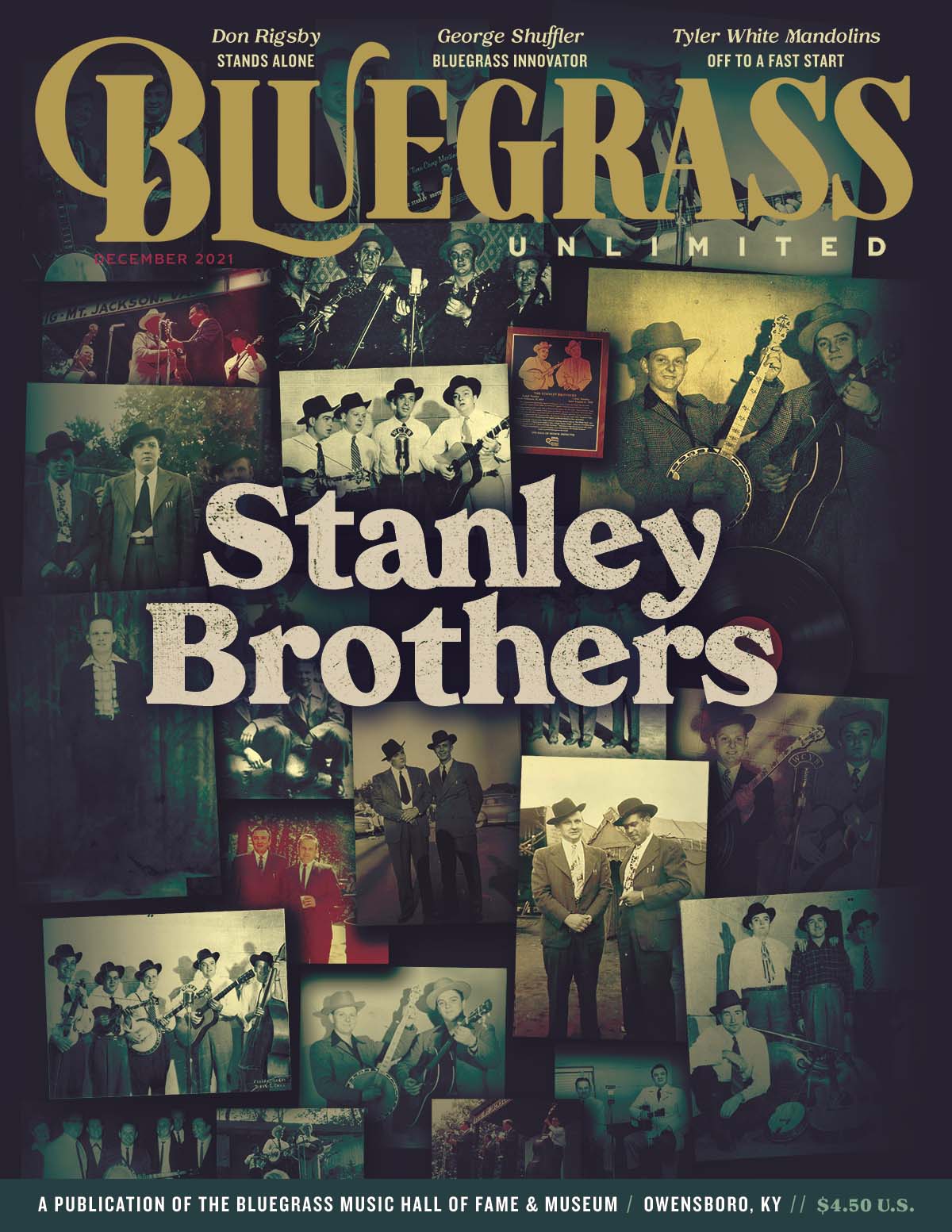
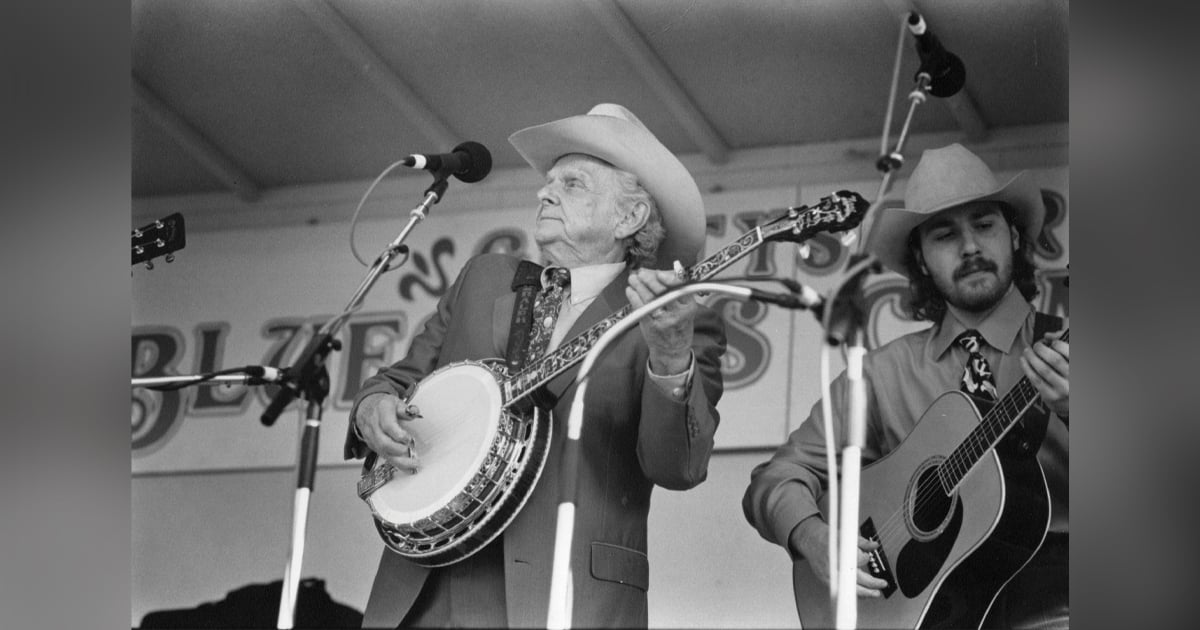
Ralph Stanley II Shares Stories of his Dad and Uncle Including a Sign From Beyond the Grave
It was a dramatic moment when Larry Sparks walked onto the stage at Ralph Stanley’s funeral in the summer of 2016 to sing a song of tribute. Before he hit the first notes, Sparks turned to his right to address Ralph Stanley II, who was sitting in a chair near the microphone. There had been speculation at the time as to who would carry on with the elder Stanley’s band the Clinch Mountain Boys. Grandson Nathan Stanley played with his grandfather until the end of the IBMA Hall of Famer’s career while Ralph II had left the Clinch Mountain Boys to lead his own group, so the question lingered until Sparks spoke before the large crowd gathered that day in the mountains of southwestern Virginia. “The Stanley Brothers meant a lot to me,” said Sparks. “Carter and Ralph had the best feeling to their gospel songs that I ever heard. They matched so good from 1946 until 1966. You couldn’t ask for a better sound or more heartfelt singing than Ralph Stanley and his brother Carter, and this gentleman sitting right here has the potential to carry it on. Right here—Ralph II.” Ralph II missed playing with his Dad, yet it was the elder Stanley that asked him to form his own group and go out on the road to learn the ins and outs of the music business. Still, father and son thankfully reunited to record one last album together called Side By Side about a year before Stanley’s death.
“I really wanted to do that album with him,” said Ralph II. “I wanted to sing with him at that point because he had sent me on my own to learn the ropes and get out of his shadow. He said, ‘You’re going to have to get out here and learn to run a band.’”
Over the years, many have noticed and commented on the fact that there are strains of Carter Stanley’s voice in the vocals of Ralph II. The fascinating aspect of that bloodline is that Ralph II never met his Uncle Carter, who died on December 1, 1966, at 41 years of age due to years of alcohol abuse.
While Ralph Stanley churned out some remarkable mountain music after the death of his brother, the two decades when Ralph and Carter recorded and toured as the Stanley Brothers is where the true legend begins.
The Stanley Brothers created an amazing body of work, much of it recorded at King Records in Cincinnati, Ohio. The incredible blend of sibling voices harmonizing together with authentic bluegrass instrumentation brought to life many now-standard songs written by Carter that fascinate and inspire roots music lovers a half of a century later.
Here, Ralph II will share stories of his uncle Carter and his father that were passed down to him as well some otherworldly encounters that he experienced that will add to the Stanley mystique.
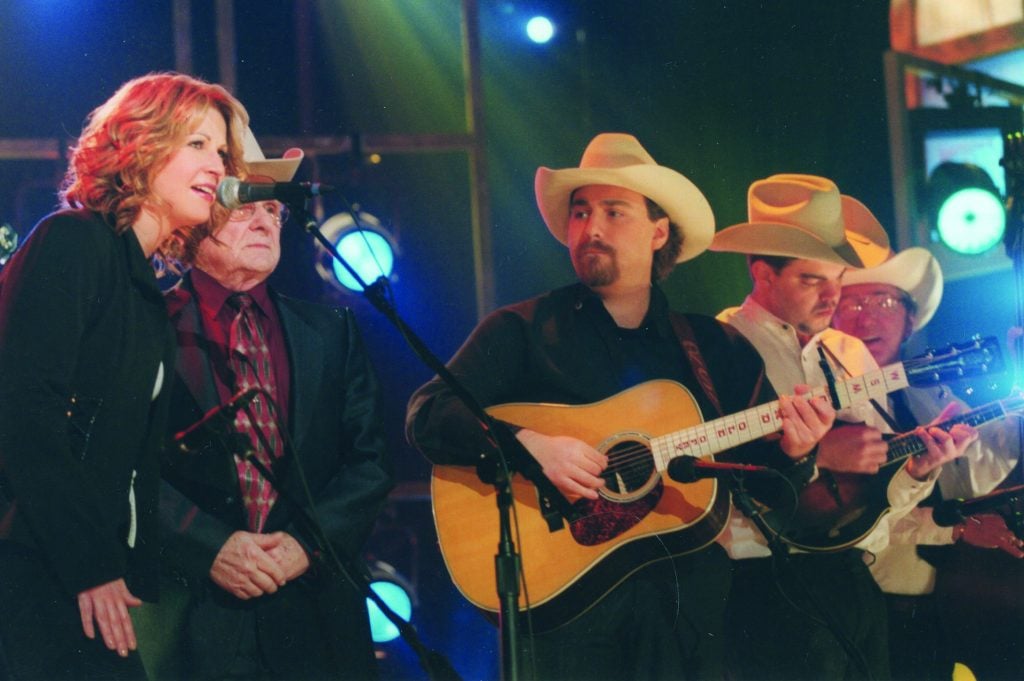
Ralph II grew to appreciate his Uncle Carter’s voice and original songs at an early age while also being inspired by country singers such as George Jones and Keith Whitley. “My mother had 8-track tapes in her car of the Stanley Brothers and George Jones and I’ll never forget listening to them,” said Ralph II. “It would blow me away. I just loved it. Eventually, I would ask Dad some questions about Carter and the experiences they had together. Everybody knew that Carter drank a little bit and Dad said he would drink some and then write songs, kind of like Hank Williams, I guess. He said Carter’s biggest problem was that he didn’t eat a lot. He wished he would have eaten more, but he just didn’t do it. Dad said they’d go in and eat breakfast and Carter wouldn’t go in with them and they would come out and he’d have a new song ready to roll for them to work up going down the road in the car.”
It was a similar situation when Carter wrote the classic song “White Dove.” It was a different time back then, obviously, with mostly two-lane roads and cool old cars filled with then-young men trying to make a living playing music.
“Dad said they were coming back home after they had been on a long trip and Dad was driving the rest of the last leg in,” said Ralph II. “They were coming up the mountain and Carter wanted the light left on in the car so he could see good enough to write everything down. He was writing ‘White Dove’ and Dad didn’t realize it. Dad said that he got a little aggravated because he couldn’t see good with the inside lights on. He then said, ‘But after he wrote that song, I never questioned him again about a light being on in the car.”
Knowing that Carter had died from drinking, Ralph II and his father had a conversation about that subject as well. “It’s alright to have a little drink, but you have to put your food before your drinking,” said Ralph II. “You can’t wake up drinking and go to bed drinking and not eat. Nobody is going to last long doing that. That is one thing my Dad always stressed to me, saying, ‘Ralph, if you’re going to drink a little, and I’m not encouraging you to do it, but if you’re going to; be sure and eat and don’t put the alcohol first.’ It’s easy to get caught in all of that in this business if you’re not careful.”
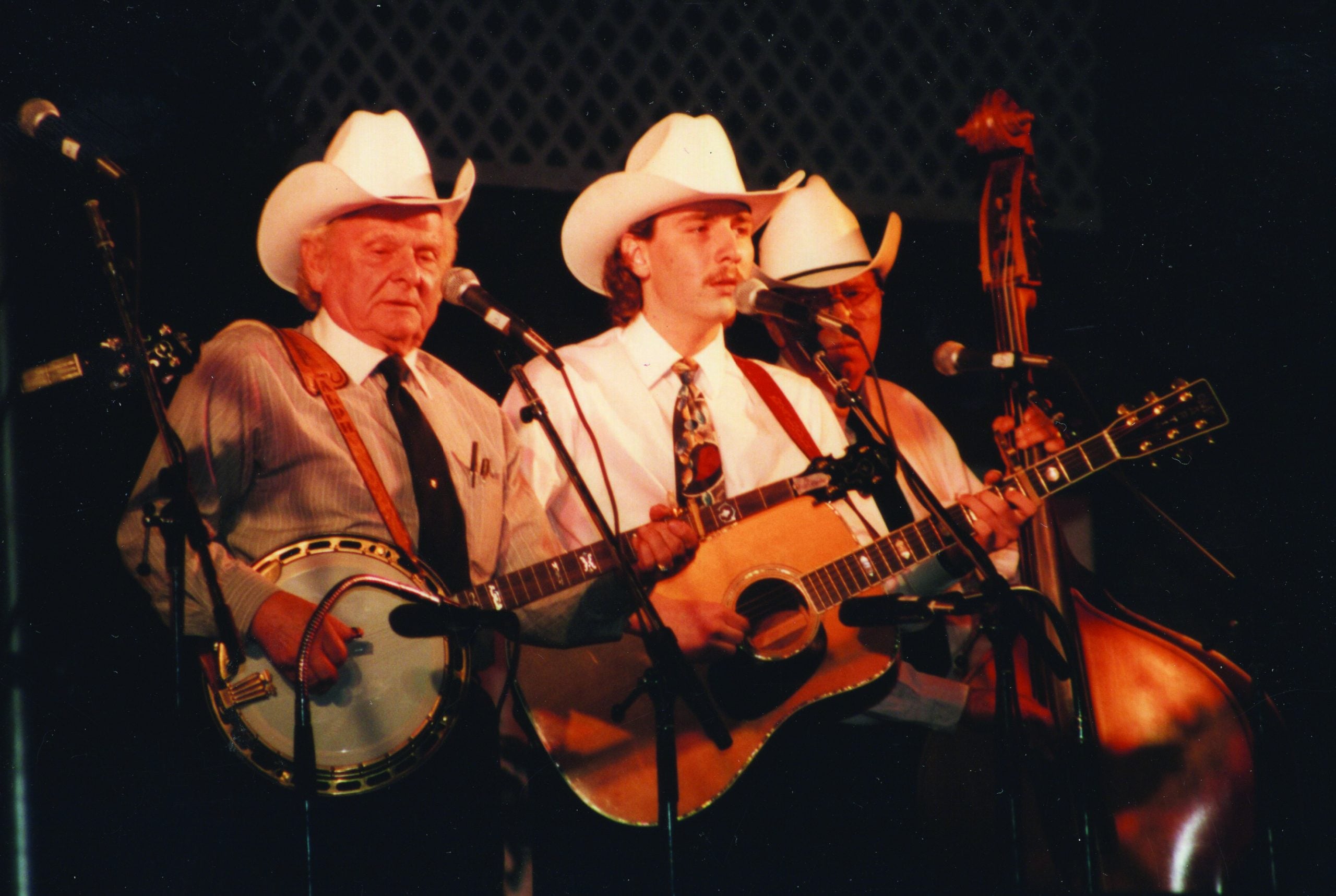
Ralph II would also collect a few stories here and there about his Uncle Carter from the other musicians that played with him over the years. “(Bassist) Jack Cooke traveled a little bit with Carter and would see them up in the Baltimore area when they were playing there back in the late 1950s,” said Ralph II. “Years later when Jack played with my Dad; we would always room together when we booked a motel. Jack always called Carter ‘Chase.’ So, he would get up the next morning and we’d get ready to go somewhere else and he would say to me, ‘I dream of Chase all of the time and I don’t know why. But, I dream of him about every night.’ That was later on in Jack’s life. And, Jack ended up dying on the same day that Carter did on December 1st, 43 years apart. When Jack died on that same day, it really made wonder what was going on with those dreams.”
Ralph II had some other memorable encounters with former band members of the Stanley Brothers as well. “I remember one night when I was probably ten years old and Curly Ray Cline stayed all night with us,” said Ralph II, about spending time with the former Stanley Brothers fiddler. “He was getting to the point where he was a little feeble then and he was setting in the recliner in the TV room. Somebody had given us the video of that KET-TV show that was recorded when my Dad had Keith Whitley with him and at about 1 or 2 in the morning, Curly and I watched that video. I remember that when I watched that video and saw them play that music live and not just on a record, it triggered even more a light bulb in me (when it came to playing music). And, I remember Curly Ray crying back in the recliner, saying, ‘God, I wish I could do that now. I was in my prime,’ and things like that. We probably sat and watched that video over and over a couple of times and it ended up being 4 or 5 in the morning before we knew it.”
After that marathon viewing of that special moment in Cline’s life, the old fiddler was ready to eat some breakfast. “Curly Ray asked me to drive him to Hardee’s to get him something to eat and I said, ‘I don’t have my driver’s license, Ray,’” said Ralph II. “He said, ‘Well, you can drive better than I can.’ He was having a hard time driving then, and I ended up driving him to Hardee’s to get him a biscuit. I’ll never forget that. I had already learned to drive some by that point, but I wasn’t supposed to be on the road at ten years old, but we did it.”
Though the two never met, Ralph II and his Uncle Carter would connect in other amazing ways over the years. “Carter’s song ‘Mary, Merry Christmas,’ which I recorded twice, was the last song that Carter wrote and he never got to perform it live while he was dying,” said Ralph II. “When I was learning it the first time, Carter’s blood was on the paper that he wrote it on. The paper belonged to Norma Fannin, who was the head of the fan club for the Stanley Brothers for a while (and also published the Stanley Standard fan club newsletter in the 1960s). She brought it to me and said, ‘Ralph, you’re starting to sing a little better now, so why don’t you see if you can work this song up. Your uncle wrote this.’ There was dried blood on it that had been there all of those years and you could see it on the paper where Carter had hemorrhaged at the end of his life.”
While Ralph II was lucky enough to spend a lot of time with his legendary father Ralph Stanley, performing and recording with him up and until his last days. Having never met his Uncle Carter left a mysterious void in his life. But that all changed one day when Ralph II asked for a sign from his uncle from beyond the grave, and he got one. And, the fact that there was a witness to what happened that night adds to its veracity.
“I had an experience at the Stanley graveyard,” said Ralph II. “It was a real calm night. I was dating my future wife Kristi at the time and I had taken her to the prom over in Pikeville, KY. I was supposed to take her home by 11 o’clock, but she didn’t want to go home and I didn’t want her to go home so, as young people do, we barged over this way and I was playing some Stanley Brothers tapes and other music as we drove. I told her, ‘I’m going to take you over to the Hills of Home festival grounds and show you the graveyard.’ I was listening to the song ‘Seek Jesus (He Still May Be Found)’ that was recorded by Carter and my Dad and it made me cry. It just hit me that night for some reason and I had tears coming down my cheek.”
Eventually, they young couple had reached the Stanley cemetery. “Again, it was a real calm night and there was no wind and no breeze was blowing,” said Ralph II. “I walked into the graveyard and she didn’t go with me. I looked at Carter’s grave and I said, ‘Uncle Carter, you are the best lead singer I ever heard and I really wish you were still here with us.’ Then, I got this eerie feeling like somebody was standing there with me and I kind of got spooked. You don’t see anything, but you feel something. When I got that little nervous, anxious feeling, I walked out of there and didn’t say a word about it to her. I just got back in the car and I was pulling out. We got back down to the bottom where you get back out onto the main road and Kristi tells me, ‘Ralph, turn around and go back.’ I said, ‘What?’”
After looking at each other for a few seconds, Ralph II turns his vehicle around. “She said, ‘Turn around and go back,’” said Ralph II. “I said, ‘Well, why? There’s no sense in that. I better get you back home.’ She said, ‘No. I have a feeling that you need to turn around.’ So, we went back up there and she walks into the cemetery with me this time. As we walk in, it is still calm with not a breeze blowing. Nothing. So, I was trying to be a little cute with her and said out loud, ‘Carter, if you know we’re here and you can hear what were saying, make that flag move.’ There was an American flag behind his grave. And, it wasn’t a half a second later, and I mean nowhere near a second, when the most awful, almost tornado-like gust came through there by us and it had enough wind that it moved you, it was so strong. It blew just for a little bit, and then it stopped. You can say it was a coincidence or whatever, but it was powerful.”