
Preserving & Presenting the First Family of Country Music
Photos by Jack Bernhardt
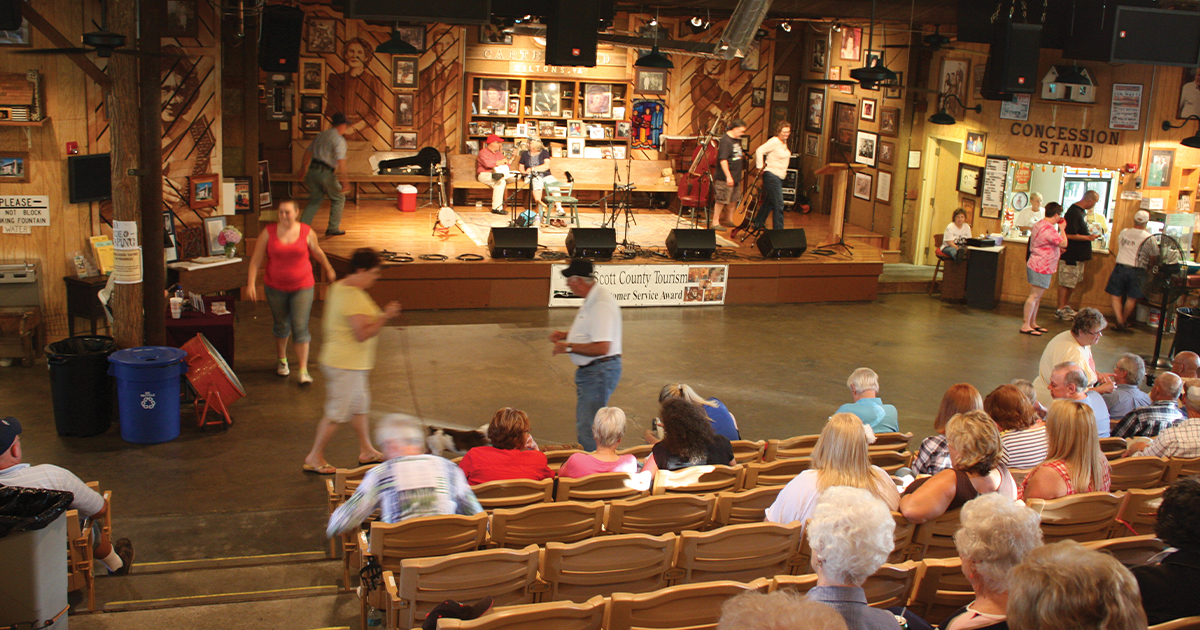
It’s 3 p.m on a comfortably warm October 4, 2024. Rita Forrester is hard at work, getting food and concessions in order before fans arrive for the evening’s show featuring Marty Stuart and the Tennessee Mafia Jug Band. Tonight’s concert is part of the 50th anniversary celebration of the Carter Family Fold. The 825+ seat theater was established by Rita’s mother, Janette Carter, to preserve the legacy of her father (and Rita’s grandfather), Alvin Pleasant Delaney (A. P.) Carter.
It was Rita’s grandparents, A. P. and Sara Carter who, along with Sara’s sister-in-law, Maybelle Carter, made history in 1927 when they participated in a recording session led by talent scout Ralph Peer. Held in a warehouse in the Tennessee-Virginia border town of Bristol, the Bristol sessions featured the Carter Family and other musicians from the region. In the words of the late music historian Charles Wolfe, those recordings were the ‘big bang’ that put country music on the map.”
Stars of records and radio, the Carter Family was active until 1943, when A. P. returned to his home in Maces Springs, near Hiltons, Virginia. Two years later, he opened a grocery store on family land in southwest Virginia’s Poor Valley, a verdant expanse carved by the Holston River and flanked by storied Clinch Mountain. Before he died in 1960, A. P. asked his daughter, Janette, to ensure his work and life in music would be remembered for generations to come.
Rita Forrester recalls her mother’s response to A. P.’s request. “She told him she was a single mother, divorced and raising two kids. She told my granddad that she didn’t know how she would be able to do that, that she had children to raise. When she said that, he looked at her and said, ‘You know, I did too.’ He took his children [Gladys, Janette, and Joe] and raised them when he and my grandmother separated [in 1933]… I don’t know how much detail they went into, but it never left her mind that that was what he wanted. She worshipped her father. I did, too.”
Reflecting on A. P.’s legacy, Marty Stuart, the star of tonight’s celebration, once remarked, “If you look at country music as if it were a musical bible, I’d say he would be in the genesis, where God says ‘In the beginning, God Created A. P. Carter.’”
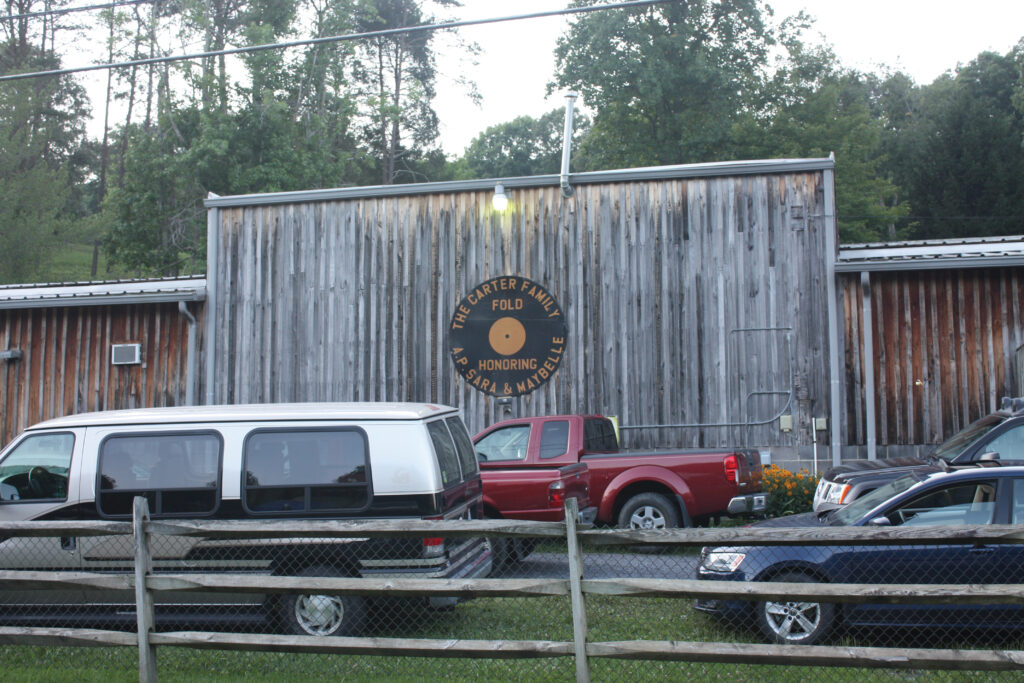
It was music that moved A. P. during and after his time with the Carter Family. For a while, he had staged shows he called “Music in the Park” outdoors on his property. Acts included Bill Monroe and the Stanley Brothers. A. P. willed his land, a house, and the store to Janette. “The store was not being used for anything – they had tobacco in it,” Rita says. “Some family members had run it as a store for a while. But Mom found a way to bring music to that little store. She quit her job and started having music shows. She borrowed the money to allow her to do it.
“It was a leap of faith. We didn’t have a lot of money growing up. And as a single mom, she didn’t. But the first show spilled out into the parking lot. Within two years, we had outgrown that one-room store. Because it’s an historic landmark, it could not be added onto or changed unless done according to historic landmark standards. In 1974, ’75, and part of ’76 the shows were in the store. In ’76 we started to build the Fold building.” Later that year, shows were held in the Fold. The store became a museum in 1977, and in 1979 the Carter Family Fold registered as a nonprofit organization.
“My grandfather died not realizing fully what he had done,” Rita offers. “He knew what he had done, but he wasn’t sure it would be remembered in the way he wanted it to be, and that he’d go down in history. He sacrificed a lot for what he did.”
Renovations And Beyond
Janette built the Fold next to A. P.’s grocery store. Today, the store serves as a museum with displays of Carter Family memorabilia, including musical instruments, stage costumes, songbooks, letters, and photographs. By 2004, Janette and Rita realized the 27-year-old Fold and 59-year-old store/museum required upgrades. Priorities included replacing the Fold’s old, plastic-covered school bus seating, installing a more durable floor, and better sound. They applied for and received a one million dollar grant from the Virginia Tobacco Commission. Fighting Parkinson’s disease and other illnesses, Janette passed away in 2006 at 82. Already, Rita had assumed primary responsibility for managing the grant and renovating the Fold.
“I was named Executive Director in 2004,” Rita says. “We got the grant to completely remodel the Fold. Mom lived next door above the Fold so anything she did I was right there helping her. I had been helping from the very beginning as far as printing schedules and [applying for] grants. I was on the Board from day one and helped her in any way I could. I was familiar with the booking process and the banking—virtually everything. It was kind of a seamless transition into running things.
“The major renovations of the Fold and bulk of the grant was spent on concrete flooring, nice seating, new electric. We also got new sound equipment. We did some electronic and cosmetic things in the museum, but it was minimal compared to what we did in the Fold.”
One notable improvement with the museum was installing a heating and air conditioning system to protect the artifacts in a climate-controlled environment. Rita and the board turned to outside consultants to organize the exhibits and create information panels that tell the story of the Carter Family and their music through the years. Though relatively small, the museum now has the look and feel of a major museum, such as the Birthplace of Country Music in nearby Bristol, dedicated to the seminal Bristol Sessions.
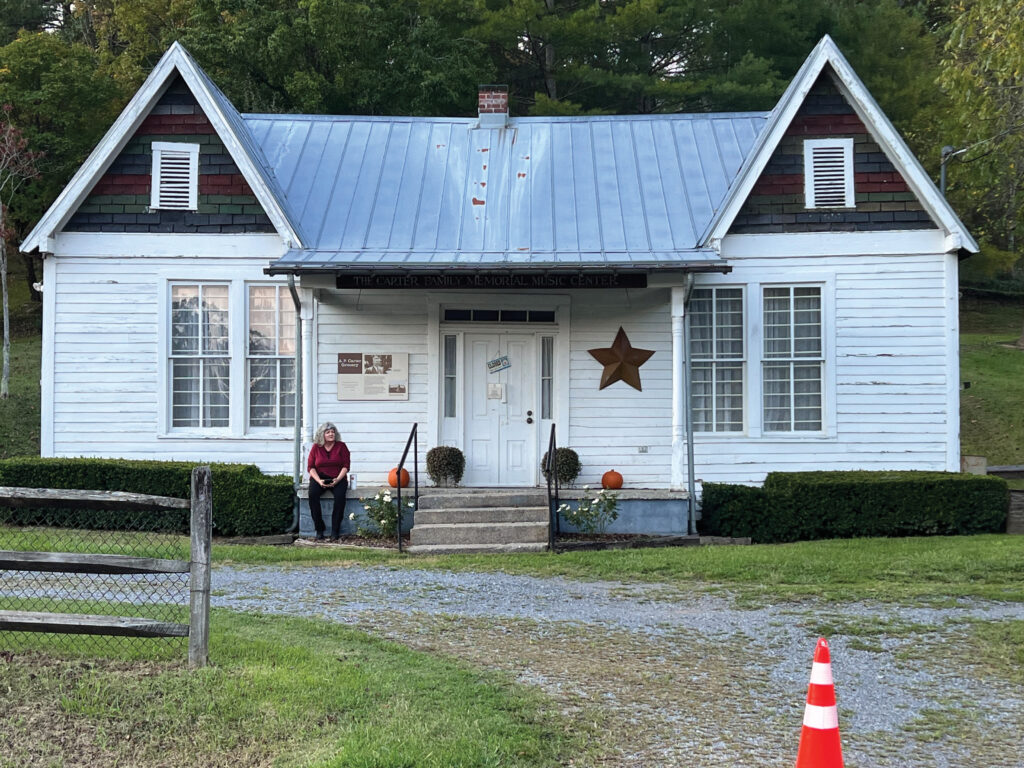
Rita explains, “We hired a museum specialty group from northern Virginia and they spearheaded all that. We had to remove a lot of things. Mom had so many things in there that it was hard to follow chronologically how everything happened. We used the services of museum consultants to get everything the way it needs to be. We put an air and heat unit in there. And we bought a house across the road for surplus things we took from the museum and from my house. We have a house full of items we can’t display because we don’t have room.”
With renovations underway, Rita and the board began the challenging process of moving the A. P. Carter homeplace from across the mountain to its current resting place beside the museum. The log cabin had sat unoccupied and unattended on a farm owned by Rita’s cousin.
A visit to the cabin by Marty Stuart gave impetus to the efforts for its relocation and preservation. As Rita recalls, “Marty came through in 1999 doing his Pilgrims: Sinners, Saints, and Prophets book. I took him and Connie [Smith] to the cabin—it was right before they married.”
Stuart recognized the historic and cultural importance of the cabin. As family patriarch, A. P. had collected and arranged many of the songs the Carter Family popularized. They include such classics as “Can the Circle be Unbroken,” “The Storms are on the Ocean,” “Wildwood Flower,” “Keep on the Sunny Side,” “Bury Me Under the Weeping Willow,” “Jimmy Brown the Newsboy,” “Single Girl, Married Girl,” “When the Roses Bloom in Dixieland,” “Will You Miss Me When I’m Gone,” and “Foggy Mountain Top.”
Of the visit, Stuart says, “The thing that struck me was it was just sitting out there in the field all by itself and time was having its way with it. This is where these songs came from. Some of the foundational pieces to this whole culture were brought to this front door. It shouldn’t go back to the earth, I don’t think.”
Rita discovered that moving a historic landmark is not an easy task. It can also be costly. Seeking advice, she phoned Stuart and told him, “We raised $7 thousand and stopped counting at $40,000 for the cost of materials and equipment. The labor was pretty much donated. Marty said, ‘Don’t cry anymore. We’ll raise the money and we’ll get the cabin moved.’” A fundraising effort mounted by Marty and Connie Smith, and Johnny and June Cash raised the funds to bring the cabin to the Fold.
Once the cabin settled into its new location beside A. P.’s store, restoration work began. Labor was donated by family, friends, and neighbors. Tom T. Hall and other friends worked on restoring the cabin. Rita recalls that several music friends and family were present at the dedication, including John Carter [Cash] and his family, and Janette. “I got to be there on ribbon-cutting day,” Marty Stuart says. “I was really proud to be a part of that.” The cabin and museum are open to visitors from 6 p.m. on show nights.
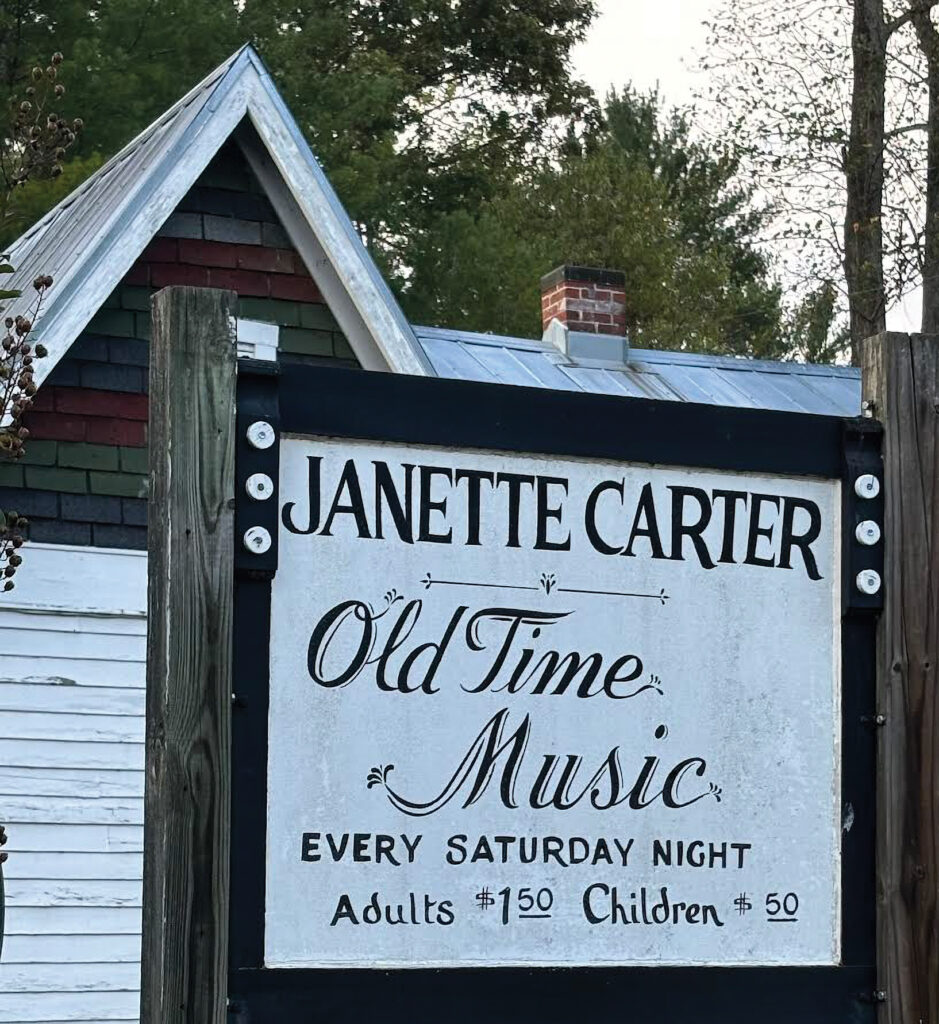
The Carter Fold continues hosting musical acts at 7:30 on Saturday nights. Following her mother’s lead, Rita books local and regional acts emphasizing old-time and bluegrass music. National headliners also perform at the Fold. In addition to Marty Stuart and the Jug Band, the 50th Anniversary celebration featured the Wood Box Heroes and Po’ Ramblin’ Boys, Appalachian Roadshow, and Larry Gatlin and the Gatlin Brothers. Johnny Cash, who married Maybelle’s daughter, June, gave his final public performance at the Fold on July 5, 2003, a few months before his passing.
The National Park Service’s National Register of Historic Places lists five Carter-related properties along A.P. Carter Highway. The Carter Homeplace was registered in 1976. The store, along with A. P. and Sara Carter’s home and Ezra and Maybelle Carter’s home, were entered in 1985. (While visible from A. P. Carter Highway, neither home is open to the public.) Mount Vernon Methodist Church, the Carters’ home church, was also registered in 1985. The graves of Sara, A. P., Janette and her brother Joe, along with other Carter family members, can be visited in the cemetery behind the church.
For her dedication to preserving and presenting her family’s contributions to America’s culture history, the National Endowment for the Arts honored Janette with the prestigious National Heritage Fellowship in 2005. In 2022, the General Assembly of the Commonwealth of Viginia, recognized Rita Forrester with the Outstanding Virginian Award.
Despite the honors and gratitude of family friends, and fans, Rita looks ahead to some day retiring from managing Carter Family Fold. Her current responsibilities of booking, arranging volunteers, and cooking the food served on show nights, along with caring for a young granddaughter, leave little time to herself. She’s not sure who will take the reins, but is hoping another family member will shepherd the Carter Family legacy into the future.
“I have a son and granddaughter I hope will carry things forward,” she says. “I don’t know if they’ll do it the same way I do as long as there is music at the Fold. It is hard to fill my mom’s shoes. I hope and pray I am doing it the way she and my grandfather wanted. I think I am. I certainly try my best.”
If You Go
Located at 3449 A.P. Carter Highway (VA-614), the Carter Family Fold is part of the Crooked Road and Virginia’s Heritage Music Trail. The Crooked Road features 10 venues and some 50 affiliated festivals. Bristol’s Birthplace of Country Music is a short 25 miles from the Carter Fold. It offers an excellent overview of the Bristol Sessions and an introduction to the music and history of the Carter Family. If you arrive at the Fold early, take a leisurely 2-mile drive along the winding A. P. Carter Highway to view the Carter homes, the church and cemetery. Information can be found at carterfamilyfold.org, thecrookedroadva.com, and birthplaceofcountrymusic.org
We should also acknowledge the contribution to the birth of country music to A.P.’s collaborator Leslie Riddle, who later emigrated to Rochester, NY. He was known as A.P.’s ‘human tape recorder’, A.P. would travel the backroads of Virginia collecting songs he heard, but he relied on Riddle’s amazing memory to preserve the melodies they heard. Riddle’s also credited with writing memorable Carter Family songs such as ‘Hello Stranger’ and ‘Cannonball Blues’ and other songs such as ‘I Know What it Means to be Lonesome’.