
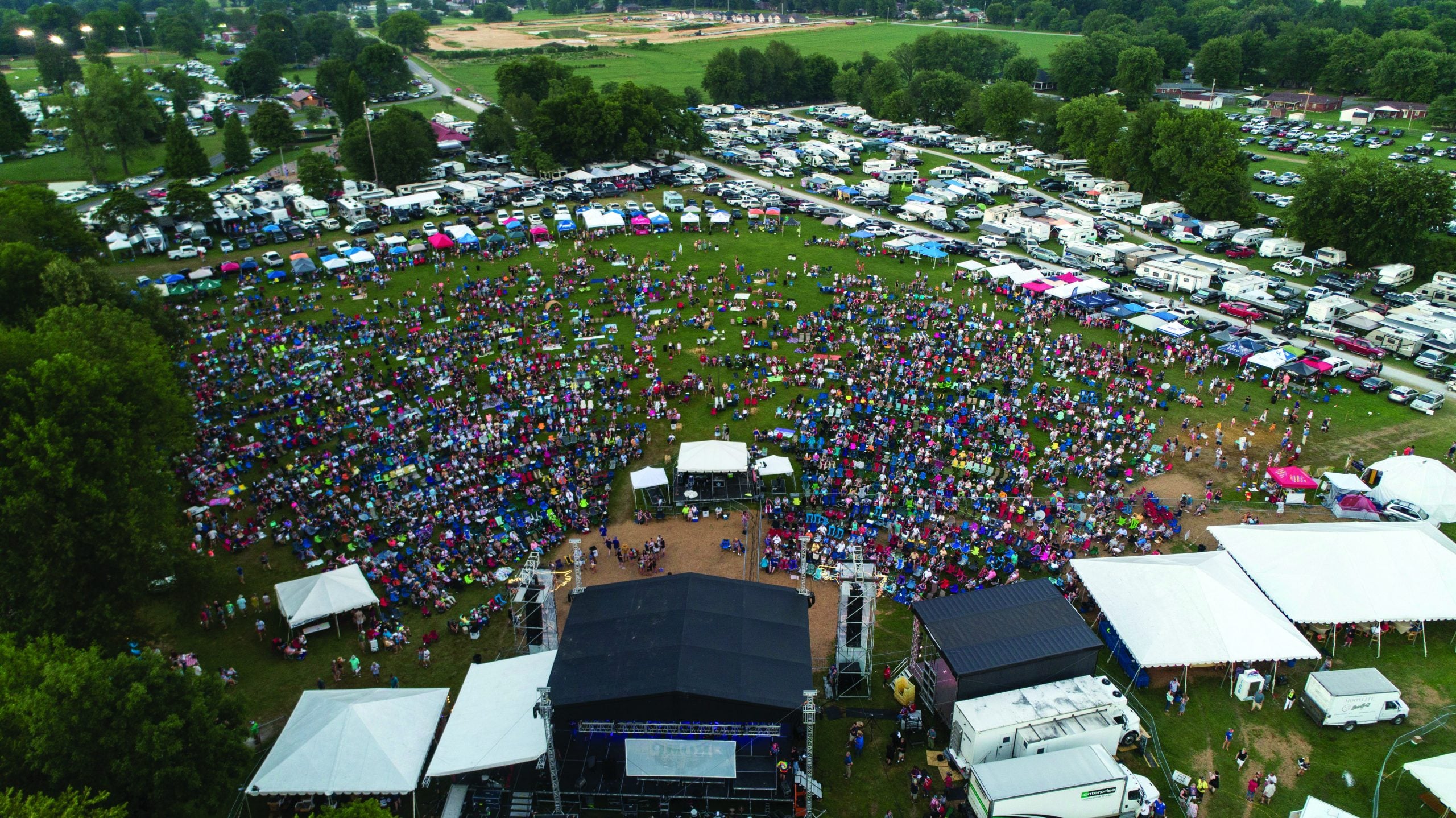
Preparing for Festival Season
Photo by Elliot Carter, Courtesy of ROMP Festival
Anyone that has spent a long weekend at an outdoor bluegrass festival knows the importance of being well-equipped and well prepared. Whether you are baking under the hot sun, getting drenched from a torrential downpour, or finding yourself ankle deep in mud, it is essential to have quality gear and ample supplies on hand to keep your festival experience comfortable and safe.
Festivals are often staged in remote locations in open fields removed from the conveniences of home. And this is part of the appeal. Every summer, festivalgoers flock to their favorite festivals to “get away from it all.” But when it comes to festival gear, the irony is that we often decide to bring a lot of it with us, which is not necessarily a bad thing.
Festivals are an exercise in building a weekend long “portable community.” So when we pack for the festival, we are not only preparing for ourselves, but also to ensure our campmates and neighbors are well taken care of. But knowing exactly what to bring can be difficult.
In my personal and professional life, I have thought a lot about what it means to be prepared for the unexpected. For my day job, I am a professor of sociology at Linfield University in Oregon where I research music festivals and community responses to natural disaster. My recent academic book, The Portable Community: Place and Displacement in Bluegrass Festival Life (Routledge, 2020) examines the rise of festival culture in the American West. In it, I describe the festival campground as a genuine source of community often found in short supply in our daily lives.
Suffice it to say, two years of COVID-19 outbreaks, lockdowns, and safety protocols means that we are all probably a bit rusty and out of practice when it comes to preparing and packing for the upcoming festival season. I’ve prepared the following guide can help you and your campmates think through your packing list to make sure you are well equipped for anything the festival weekend throws your way.
Campsite Gear: The festival camp is the central hub of activity at outdoor bluegrass events, so making your campsite as equally comfortable as it is functional is a top priority.
Tents: If you are roughing it in a festival or satellite campground, select a tent that is large enough for you and your family, whether they be fellow humans or your beloved instruments. Having a sturdy, fully waterproof tent that you have set up before (with all of the poles and stakes accounted for, especially if the tent is a borrowed one) is important because we have all seen the frustration that ensues from a poorly assembled tent. A strong shelter with a rainfly and vestibule area is key for keeping your bedding and music gear cool and dry and your tent mud and bug free. In fact, some veteran campers often bring separate tents just for their instruments! REI, Marmot, and Kelty have a large selection of high quality tents that have been festival tested.
Sleeping Bags/Mats: A high quality sleeping bag is important to keep your body regulated when sleeping outside in the elements. Select a temperature rating that is a bit lower than you would normally expect, just to be on the safe side. Inflatable sleeping mats are also important to keep your body elevated above the cold, wet ground and to provide contoured padding to even out bumps and valleys underneath your tent. Therm-a-rest provides high quality options various weights and thicknesses to choose from.
Tarps/rope: Regardless of whether you use them, bring at least a few tarps of various sizes. Not only do they allow you to secure ample seating space in front of the main stage for your friends and campmates when doing the morning “tarp run,” but they also provide essential shade and rain protection in campgrounds when you are placed in an open field without a lot of trees. Believe me. Nobody likes waking up inside of a 100-degree tent (or an inch of water) after staying awake until dawn picking tunes!
Pop-up shelters: If you plan to spend some time in your camp and want to create a homey atmosphere and shaded shelter area, the gold standard is the EZ-up pop-up canopy tent which can be quickly set up by two people. Some veteran festivalgoers have taken their shelter game to the next level by rigging sailboat sails to nearby vehicles and trees to create a large shade canopy for their entire crew.
Camp chairs: Cozy camp chairs are essential equipment for those planning to spend time in the camp before and after the mainstage events. For banjo and guitar pickers, I recommend a folding camp stool or chair without armrests as they often get in the way. If you plan to take chairs into the festival site, many festivals have restrictions on the allowable height. In this case, it is good idea to have a second set of low-backed chairs that do not obscure the view of those behind you. Both of my favorite camp and low-back chairs are made by REI, which are comfortable, durable, light-weight, and come with a mesh carry bag.
Portable Shower: If your favorite festival or campground does not have access to a shower, consider a gravity fed solar shower or other portable shower options to rinse off dust and festival grime. Some feature a battery or propane-powered heating element to provide hot water on demand. While pop-up shower shelters are available through most camp stores, using a hula hoop, some twine, and a cheap shower curtain, you can improvise your own portable shower stall on the edge of your camp.
Kitchens and Food:
Food is a key part of the festival experience and sharing it with neighbors makes it even more meaningful. When I attended my first Walnut Valley Festival in Winfield, Kansas, I arrived with little more than a few PB&J sandwiches, some trail mix, and a six pack of beer. Feeling sorry for my paltry setup, several of my festival neighbors figured I was a “Winfield Virgin” and invited me to share in their communal spread of pork barbecue, beef brisket, and smoked salmon complete with all the fixings. I truly felt at home.
While you don’t need to plan a gourmet feast, packing enough food for large communal meals and having the supplies to cook it can make the campground experience a festive one. Coordinating with campmates to share meals can be a great option to share the financial and logistical burden of preparing food each morning, afternoon, and night. Sharing fresh pineapple and watermelon can provide a refreshing snack for the masses in between meals and don’t need much refrigeration.
Camp Stoves: At Rockygrass, an old festival friend nicknamed “Barefoot” would cart in his full-sized propane cooktop oven and refrigerator into his camp. He handmade biscuits and gravy for anyone in camp who lined up for his feast on the first morning before the festival. This was a definite treat for those who stayed up way too late picking tunes and weren’t quite in the mood for making an elaborate breakfast for themselves.
You certainly don’t need anything as elaborate as Barefoot, a simple white gas-powered two-burner Coleman camp stove will suffice. But if you want to up your culinary game, there are a number of great portable propane grills and griddles on the market. The Weber “Q”, while a bit heavy, will provide the comforts of backyard grilling in a packable size, while their “Go Anywhere” gas grill provides a solid table-top option without the mess or hassle of charcoal. Don’t forget a variety of camp-sized pots and pans, cooking utensils, and spices. Most camping stores have a variety of space saving options.
Camp Tables: Another key item is a portable table to place drinks, food, lanterns, plates, and other camp items. Larger camps may consider bringing a lightweight foldable table that can be packed in the bottom of a truck bed. Camp Time and REI both offer a sturdy, packable table where the table top rolls conveniently onto a foldable aluminum stand. Camp Chef’s “Sherpa Table” provides a similar model for that could be used as a cook station, featuring a built in a four-cubby kitchen organizer under the table to keep your supplies in order.
Coolers: While bringing ample food to share sounds good in practice, keeping it cold can be a challenge in a festival environment. Some festivals feature freezers or mobile freezer trucks to supply bags of ice for a small fee. Some actually deliver ice to the campground each morning in a golf cart or in the back of a truck. Unless ice is provided on site, locating and lugging in ice from a nearby store may be logistically difficult and require you to leave the festival site. For this reason, a high quality, high-capacity cooler is a must.
Avoid the entry level models found at most big box department stores as they are often cheaply made and do not keep items cool for long. I recommend brands like YETI, Otter Box, or Igloo’s BMX or IMX lines for maximum durability and ice retention. Other brands like Dometic provide plug-in models that keep your beer and munchies cool without ice, as long as you have a reliable power source.
Packing for Children:
Bluegrass festivals are well-known for providing a family-friendly environment for kids of all ages. However, making sure that the festival experience is a comfortable and stress free one for young families can be a challenge. Camping with my music-loving daughter over the years has given me some insight into some must have items on your family packing list.
Wagons and all-terrain strollers: Probably most important item on your packing list should be an all-terrain stroller or wagon to haul your gear (and your tired kiddos) to and from the festival grounds. Umbrella style strollers are nearly unusable given the rough, uneven terrain of most festivals. Radio Flyer still makes their iconic red wagons that you probably remember from your own childhood, but they are also not always the best option given their small plastic wheels and shallow depth.
I recommend strollers or festival wagons with larger, inflatable rubber wheels to handle the bumpy terrain common at most festival sites. These are especially important if you encounter rutted or muddy ground as the smaller plastic wheels can become easily stuck. Models with removable wooden walls and canopy tops can provide necessary structure and shade to pack and protect all your precious cargo without fear of dumping it along the way. Some models fold down and collapse, which your tarp neighbors will certainly appreciate. Wagons can also be easily pulled aside into a quieter area of the festival so you do not have to leave the festival and return to the campsite for naptime.
Shade Tents: Some parents also bring collapsible, three-sided “beach shade” tents that they often set up at the rear of the venue. These portable spaces are essential for nursing mothers or napping children who need a quiet, private area away from the hustle and bustle of crowds, or for parents to sleep off the late-night jamming and libations.
Some other items that are musts to pack for festival families:
Glow sticks: Glow sticks are a fan favorite to entertain (and locate) your kids when trying to squeeze in that last, headlining band for the evening before returning to camp.
Wet wipes: Even for those who do not have kids or diapers to change, several packages of wet wipes are essential to clean off the layer of festival dust and grime that will inevitably accumulate on your face, arms, legs, and especially your feet.
Sunscreen: Keep kids happy for the duration of the festival by ensuring their exposure to the sun is moderated by a high-quality sunscreen spray or lotion rated at SPF 50 or above.
Bug spray: While not an issue in some areas of the country, the festivals in humid areas of the Midwest and South can be a magnet for mosquitos, gnats, chiggers, and no-see-ums. While some have experienced sensitivity to DEET based sprays, those with picaridin or natural oils can provide some relief as well.
Festival Lighting:
When you return to your campground after the festival, stumbling and bumbling around in the dark, you probably don’t quite remember where you and your campmates left important items. To make your late-night escapades safe and stress free, I recommend a reliable supply of several different types of lanterns, flashlights, and headlamps with replacement batteries and fuel for each.
Lanterns and headlamps: Propane or white gas lanterns or battery or solar powered LED lighting arrays are perfect for keeping the campsite area well-lit for your late-night festivities. While roaming from campsite to campsite in search of a hot jam, I highly recommend a high-quality PETZL headlamp to keep your hands free.
Solar lights: At the Walnut Valley festival several years ago, I witnessed a rather portly gentleman walking with his instrument from jam-to-jam through adjacent campsites when he tripped over a tent stake. He apparently had one swig too many of the local corn whiskey, because he fell awkwardly to the ground and flattened his beloved Martin D-18 like a pancake! A great solution is purchasing solar garden path lights and placing them strategically around campsite tethers and other tripping hazards and to illuminate camp boundaries. A pack of four or six can often be found relatively cheaply at most garden supply stores.
Instrument gear:
If you are a bluegrass fanatic and cannot wait to hit the late-night picking sessions after the mainstage festival acts wrap up, here are a few recommendations for music related gear.
Lyric sheets and music stands: If you are anything like me and easily forget the lyrics to that new song that you just learned, bringing a portable music stand and printed copies of lyrics and tablature can help keep you and your jam mates on task. Because many festivals take place in remote locations without ready access to power, wi-fi, or cell phone reception, we can’t always rely on our smart phones or tablets to hunt down the chords or lyrics to our favorite songs.
Instrument stands: If your campsite is in a well-traveled location or at the center of attention for the evening jam circuit consider bringing a portable instrument stand from brands like Gator or Hercules. Leaving cases haphazardly around the camp can turn them into clunky tripping hazards, especially at night. And it is not a good idea to leave your instruments on the ground, balanced against a chair, or sitting on a table. I have heard the dreadful sound that a guitar makes when an unsuspecting foot lands awkwardly on the neck and snaps it in half. It is certainly the last sound you want to hear in your festival camp.
Extra gear: As you are packing, be sure to bring extras of just about anything you might need in your instrument case: extra strings, shoulder straps, picks, rosin, bows, bridges, capos, and tuners (including batteries for your tuners). These items are often broken due to heavy use, left behind, or picked up by others by mistake when left around the campsite. Occasionally, these items can be picked up at the festival merchandise tent, but it is always best to arrive prepared to keep the late-night jams flowing.
Tuners: Instead of using handheld tuners, I recommend inexpensive clip-on tuners like those made by SNARK or KLIQ. They free up your hands and keep you from fumbling around in your pockets or instrument case, and needing to find a quiet spot while the jam launches into the next tune. For the same reason, I prefer the Paige brand guitar capo which conveniently slides up the neck and behind the nut when not in use.
Instrument Hydration: Whenever spending time in especially hot or dry weather locations, it is important for people and their instruments to remain hydrated. Traveling from the humid deep south to arid Colorado for a summer festival with your brand new guitar, for example, could lead to a host of issues related to the hot and dry climate. New finishes and under-cured woods are prone to checking and cracking if the guitar dries out too quickly. Rapid temperature or humidity changes can also lead to the warping of the neck or raising or sinking of the guitar top and bridge leading to high action, string buzzing, or intonation issues. For this reason, purchasing an instrument humidifier and portable hygrometer (with temperature gauge) for your case can keep your investment sound and secure.
Cases: Speaking of cases, I recommend a sturdy, protective case that is insulated or comes with an insulated cover. While they are not inexpensive, Calton or Hoffee cases are worth their weight in protecting your investment while traveling. While I know you really want to show that new mandolin to all of your friends, I recommend bringing a dedicated, inexpensive festival instrument rather than your irreplaceable $20,000 heirloom. But if you do decide to pack it, make sure it is well-protected.
Leaving your instrument in your hot vehicle is probably the worst mistake you can make during the festival weekend. Check to see if your favorite festival provides a climate controlled “instrument check” to store your instrument. If you have no choice but to store it in your car while inside the venue, wrapping the instrument in layers of blankets, venting the windows, and purchasing window shades or curtains for your vehicle can help to moderate the temperature a bit.
Hopefully, these packing and gear tips will keep you well equipped to weather anything and everything the festival weekend throws your way. While you might not end up using some of these items, having them on hand, especially for an unexperienced newcomer can help to make them feel at home and invite them into your portable festival community.