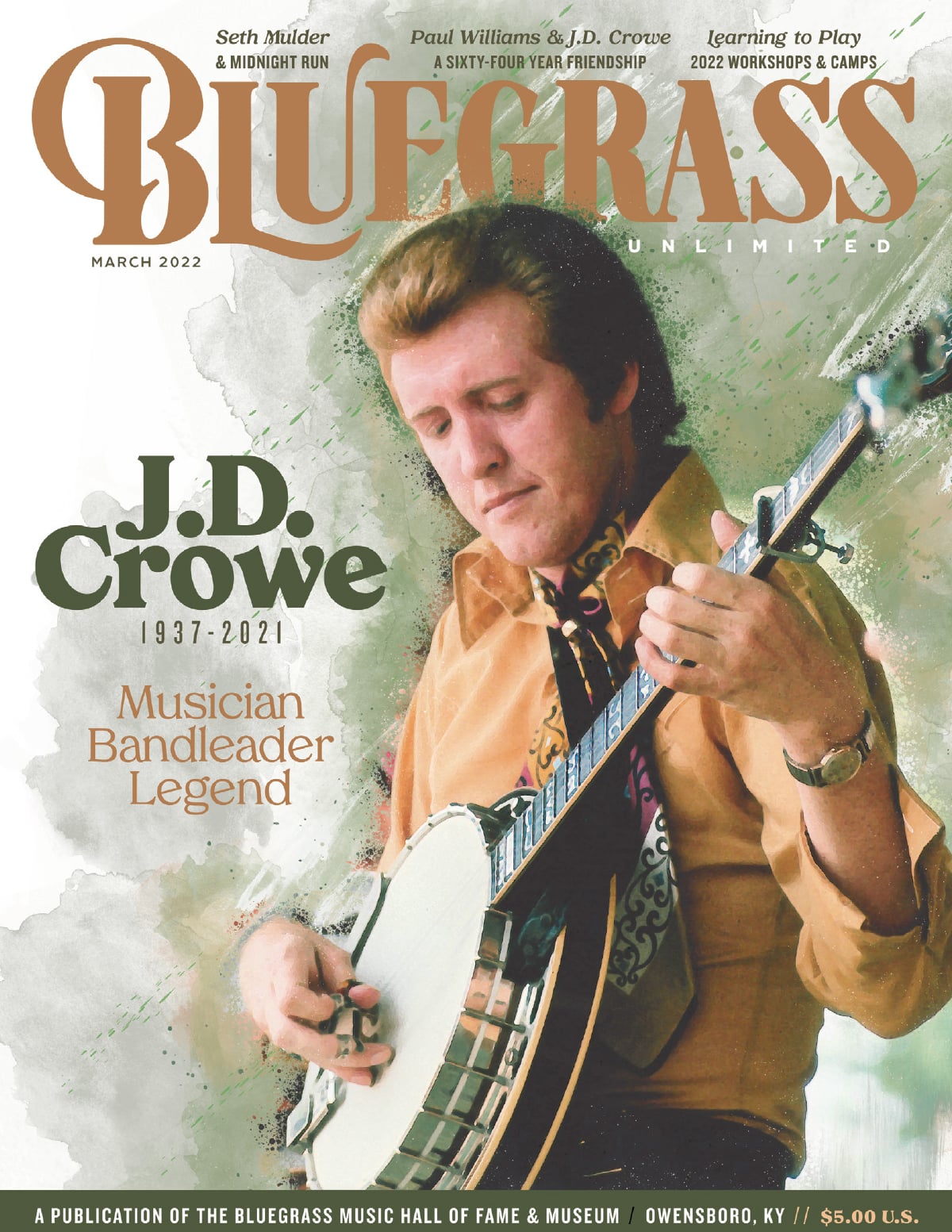
Paul Williams & J.D. Crowe
A Sixty-Four Year Friendship
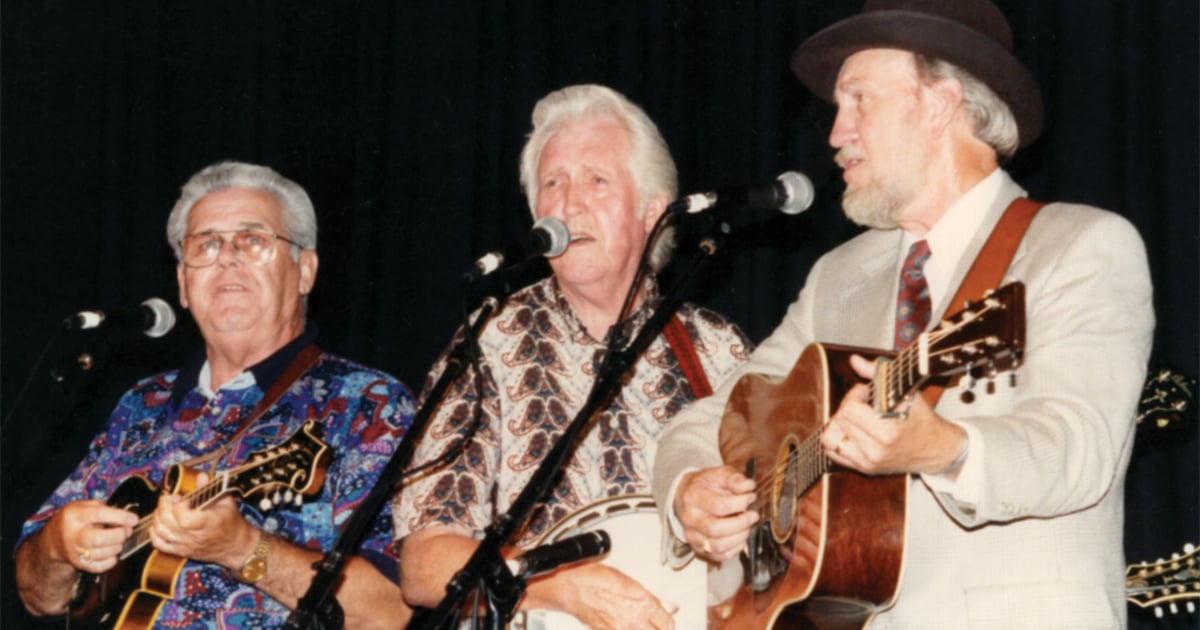
Tight three-part vocal harmonies are a trademark of bluegrass music. One of the most famous vocal trios to ever step on a bluegrass stage was formed in November of 1957 when Paul Williams joined J.D. Crowe and Jimmy Martin as a member of Jimmy Martin and the Sunny Mountain Boys. In addition to their vocal prowess, the combination of Jimmy Martin’s “rumble” rhythm on guitar, Paul’s rock-solid mandolin chop, and J.D.’s precise banjo timing provided an energetic and exciting rhythmic foundation to support the tight vocal blend.
Although the Martin-Crowe-Williams era of Martin’s band ended in 1961 when J.D. left the band, bluegrass fans still point to that relatively short four-year time span in Martin’s career as being the best. In the book Crowe On The Banjo: The Music Life of J.D. Crowe by Marty Godbey, Jimmy Martin is quoted as saying, “Fans say J.D. and Paul Williams got the best sound with me of anyone in bluegrass, and we did it all in one mike, so you know the soundman didn’t have nothing to do with it. I’ll never have a band as good as J.D. and Paul, and I’ll never have one as good as me and the Osborne Brothers.” In the same book, Doyle Lawson—a former Sunny Mountain Boy himself—is quoted as saying, “Jimmy, and J.D. Crowe, and Paul Williams: I think that was the premier Jimmy Martin sound.”
Paul Humphrey
The man bluegrass music fans have come to know as Paul Williams was born Paul McCoy Humphrey on March 30th of 1935. The youngest of George and Hattie Humphrey’s nine children, Paul was raised on a farm on the banks of the New River in Wythe County, Virginia. George Humphrey was a brick mason by trade and an amateur fiddle player. Paul said, “My dad played the fiddle and my brothers, Sam and Jerry, played the guitar. Dad would play the fiddle for about an hour after he got home from work. I went to sleep many nights hearing him play those old fiddle tunes.”
When Paul was nine-years-old, his father bought a curly maple blonde Gibson A-model mandolin. Paul’s friend and neighbor Jimmy Williams’ Uncle Steve was a mandolin player and showed the boys some basic mandolin chords and technique. Paul would also watch his brothers play the guitar and, when they were not around, he would sneak the guitar out and pick on it.
In 1948, Paul (on guitar) and Jimmy (on mandolin) were joined by friends J.P. Viars and Udell McPeak (both also on guitar) and played on a Saturday radio program on WYVE in Wytheville, Virginia. Later, they also had a weekly program on WBOB in Galax, Virginia. When Paul sang with Jimmy, he sang lead and Jimmy sang tenor. Paul said, “Jimmy could sing tenor to a siren.” The young boys were fans of the Lonesome Pine Fiddlers, who played on radio station WHIS out of Bluefield, West Virginia—which was about forty miles away from their home in Wythe County, Virginia.
On one of the Lonesome Pine Fiddlers’ programs, in June of 1951, Ezra Cline announced that Bobby Osborne (on guitar) and Larry Richardson (banjo) would be leaving the band and they were looking for replacements. Paul and Jimmy caught a Greyhound bus to Bluefield to audition for the band. Paul said, “We had a pretty good duet. I played the guitar and Jimmy played the mandolin.”
Ezra liked what he heard and hired the two boys. When they came to audition, Ezra asked what name they went by, Jimmy spoke up and said, “The Williams Brothers” and so it was at that point that Paul Humphrey became known as Paul Williams. Paul said, “Brother duets were popular at that time and so we thought that might be the way to go.” Paul was only sixteen when he joined The Lonesome Pine Fiddlers. Jimmy Williams was two years older than Paul.
Those readers who have studied bluegrass history may also remember a time when Paul Williams and Jimmy Williams played with the Stanley Brothers. Although the exact dates are not clear, Paul said that he and Jimmy worked with the Stanley Brothers prior to joining the Lonesome Pine Fiddlers. Paul played the bass and Jimmy played the mandolin. He recalls that it was during the summer and that they lived at the Stanley Brothers home place while they were with the band. He said, “We played at a lot of drive-in theaters. We’d stand on top of the concession stand and perform the show. Each car had a speaker in it and the people would honk their horns at the end of a song.”
The Lonesome Pine Fiddlers
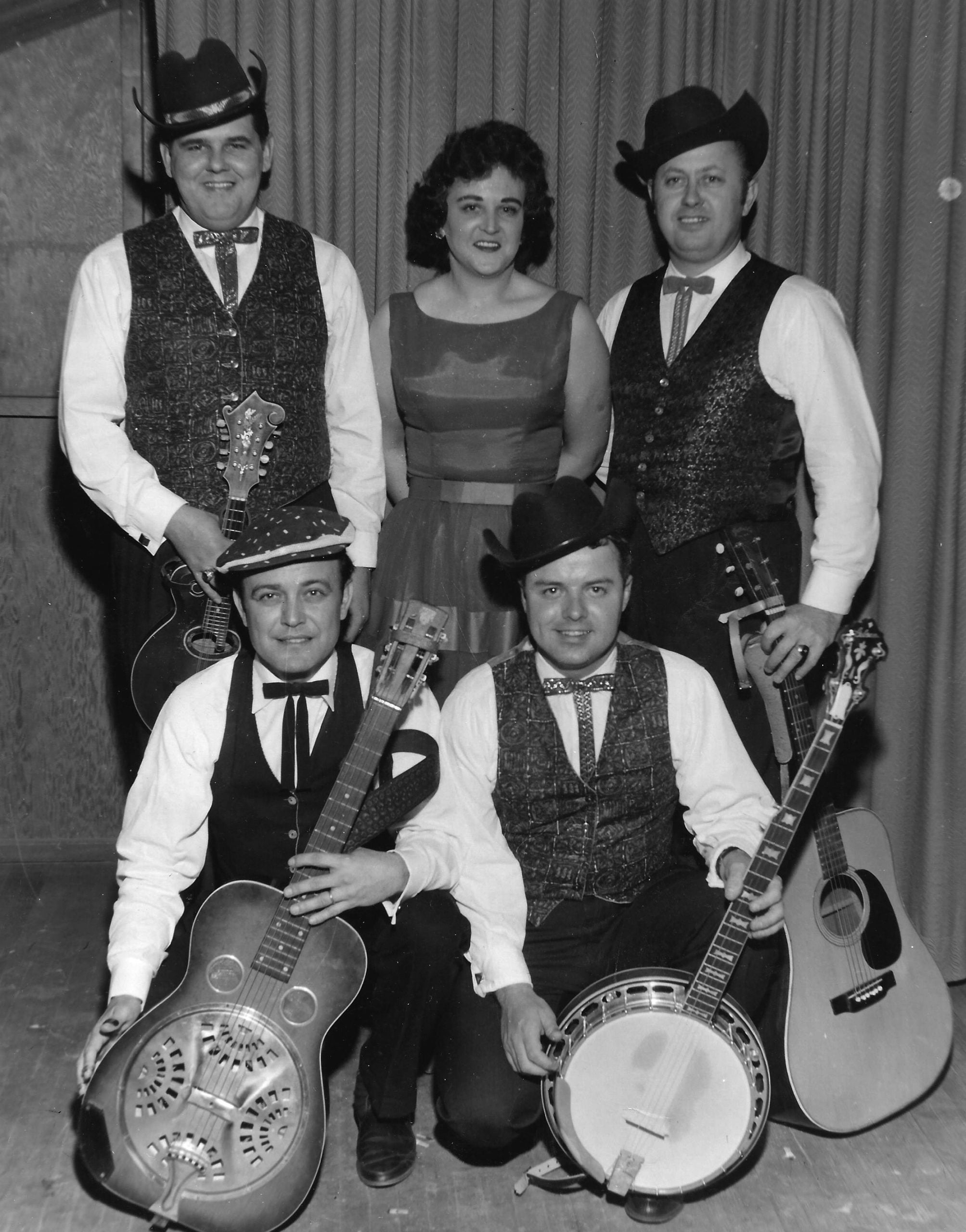
The Lonesome Pine Fiddlers began performing in 1938 and included band leader “Cousin Ezra” Cline on bass, his nephew “Curly” Ray Cline on fiddle, his cousin Ireland “Lazy Ned” Cline on tenor banjo, and Gordon Jennings on guitar. They started out playing old time country—or hillbilly—music, but when Bobby Osborne and Larry Richardson joined the band in 1949 they added music that was more in the style of Bill Monroe and his Blue Grass Boys.
When Paul and Jimmy joined the band the members were Ezra Cline, Curly Ray Cline, Paul Williams, Jimmy Williams and Curly and Ireland’s brother Charlie Cline on banjo. Charlie replaced his brother after Ireland’s unfortunate death during the invasion of Normandy on D-Day (6 June 1944). The group was often billed as Ezra Cline, the Williams Brothers, and the Lonesome Pine Fiddlers.
After a short time, multi-instrumentalist Charlie left to be a fiddle player in Bill Monroe’s band and was replaced by a 16-year-old Ray Goins. When Mac Wiseman came through Bluefield in late 1951, he convinced Jimmy Williams to join his band, the Country Boys. When Jimmy left, the Fiddlers brought in Charles “Rex” Parker to play mandolin on their recordings. Parker did not play with the band on their radio shows as he had his own show on WHIS with his wife, Eleanor. Even though the Williams Brothers were now separated, Paul continued to use the Williams name. While Jimmy Williams was with the band, he sang the tenor parts, but when he left, Paul moved over to sing tenor on the chorus.
Paul Williams recorded four sides with the Lonesome Pine Fiddlers on RCA in May of 1952—“You Broke Your Promise,” “I’m Left Alone,” “Nobody Cares,” and “Twenty One Years.” Paul wrote all but the last one. In October of 1952, the band went back into the studio and recorded four more songs. One of these—“My Brown Eyed Darling” was written by Paul and not only became a big hit in the day, but was later recorded by many country and bluegrass artists. The last Lonesome Pine Fiddlers session that included Paul Williams was recorded in Chicago in August of 1953. That session produced six songs. “Dirty Dishes Blues” became the most popular song from this session. For the majority of the Lonesome Pine Fiddler’s recordings Paul sang lead on the verse and tenor on the chorus.
After working at WHIS in Bluefield, West Virginia, the Lonesome Pine Fiddlers spent a short period of time in the fall of 1952 at WOAY in Oak Hill, West Virginia before moving on to the Saturday evening Big Barn Frolic at WJR in Detroit, Michigan from January to November of 1953. WJR was a 50,000 watt clear channel station and thus gave the band more exposure. In addition to performing their own show, the band backed up the Davis Sisters. One of the sisters, Skeeter, would go on to a enjoy a successful country music career.
As an interesting parallel, Skeeter Davis’ was born Mary Francis Penick and nicknamed “Skeeter” by her grandfather. While in high school, she teamed up with Betty Jack Davis to form a duo that billed themselves as the Davis Sisters. Skeeter adopted Davis’ last name for the remainder of her career just as Paul Humphrey had adopted Jimmy Williams’ last name.
Paul stayed with the Lonesome Pine Fiddlers through the fall of 1953 when he decided to join the Air Force to avoid being drafted into the Army. He was inducted into the Air Force on January 4th, 1953. After going through Airborne Radio School, Paul was sent to a base in Japan to begin work as an airborne radio operator. He stayed in the far east until the summer of 1956. He was then stationed in Texas until he left the active service in October of 1957 (he continued to serve in the inactive reserve until 1962). During his time in the Air Force, Paul was able to continue playing music as the electric guitar player in a country and western swing band. The band played in the NCO and Airmen’s clubs on the military bases.
Working with Jimmy Martin
About one month after being released from active duty in the Air Force, Paul Williams received a call from Jimmy Martin while he was visiting with the Lonesome Pine Fiddlers in Pikeville, Kentucky. Paul said, “I was in the studio with the band during their radio show and the announcer, who was in the control room, pointed at me and put his hand up to his ear to signal that I had a phone call. I eased out of the studio to answer the phone and it was Jimmy Martin. I don’t know how he knew that I was there, or even that I was out of the service.”
Jimmy was looking for someone to replace Earl Taylor on mandolin and tenor vocals and he thought Paul was the man for the job. Paul and Jimmy first met when Paul was working with the Lonesome Pine Fiddlers in Bluefield, West Virginia. At the time Jimmy Martin and Bobby Osborne were working together and came through Bluefield. At first, Williams was hesitant to join Jimmy Martin since he had not played the mandolin or sung bluegrass music for years. However, Martin was persistent, saying “It will all come back to you. I know you can cut it,” and talked Williams into coming to Detroit and joining his band. Paul said, “I thought I’d give it a try.”
When Williams joined Martin’s band, he did not own a mandolin and so he started playing a Gibson F-12 that Martin owned. Sometime in 1958 Martin bought a 1919 Gibson F-4 mandolin in a pawn shop in Nashville for $35. Williams said, “Jimmy wanted me to play that F-4 because he thought it had a better tone that the F-12. The F-4 was a little brighter.” The Gibson F-4 that Jimmy bought in 1958 was still in his possession at the end of his life and is now on display at the Bluegrass Hall of Fame and Museum in Owensboro, Kentucky.
Williams remembers, “When I started with Jimmy, I didn’t know any of his music and I had not played any bluegrass while I was in the Air Force. J.D. was a great help to me. I had to get back in the groove of it.” In the book Crowe On The Banjo: The Music Life of J.D. Crowe by Marty Godbey, Williams is quoted as saying “Jimmy worked with me on phrasing and [vocal] tone—we worked hard on that. Jimmy and J.D. both worked with me on timing. I’d been playing country, and bluegrass is a whole different ball game.”
In an article written by Glenn Roberts, Jr. for Bluegrass Unlimited Magazine and appearing in the April 2003 issue, Jimmy Martin is quoted as saying, “Paul had music on his mind all of the time; he was dedicated and was not only willing, but wanted to work and put in the hours necessary to make good music. He had great timing and rhythm; Paul and maybe Bobby Osborne were the greatest tenor singers I ever had; Paul pronounced words clear so you could understand em.”
When asked about singing harmony with Jimmy Martin, Paul said, “Singing the harmony notes is one thing, getting the phrasing and vocal tone so that you get a good blend is different. We worked hard to get a good blend. It is that feeling of closeness that you work for. Jimmy felt the song when he sang it and I tried to put that feeling in there too.” Jimmy also gave Paul ideas about what he wanted on the mandolin. Paul said, “Jimmy liked a brisk kick-off, a good bluegrass chop, and he wanted you to play it like you meant it. Jimmy was always there with his rhythm and we tried to compliment him with our backup.”
J.D. Crowe has always been known for his impeccable timing. When asked if J.D. developed that timing while working with Jimmy Martin, Paul said, “J.D. had that timing from the moment I met him. He helped me with that. He would show me the rhythm on the banjo and I would get with the feel of it. It wasn’t a struggle. By just doing it, I got it.”
When Paul was with Jimmy the band rehearsed every day. Paul and J.D. also spent time working together without Jimmy. He said, “J.D. and I worked a whole lot together. Jimmy would tell us about the songs that he wanted to record. J.D. and I would work up the arrangements that we thought sounded good and we’d play them for Jimmy. Nine times out of ten he liked what we came up with. If you had an idea, he would listen and if he liked it, he would go with it. But, if he didn’t, he’d say, ‘Let’s do this another way.’ I always appreciated that.”
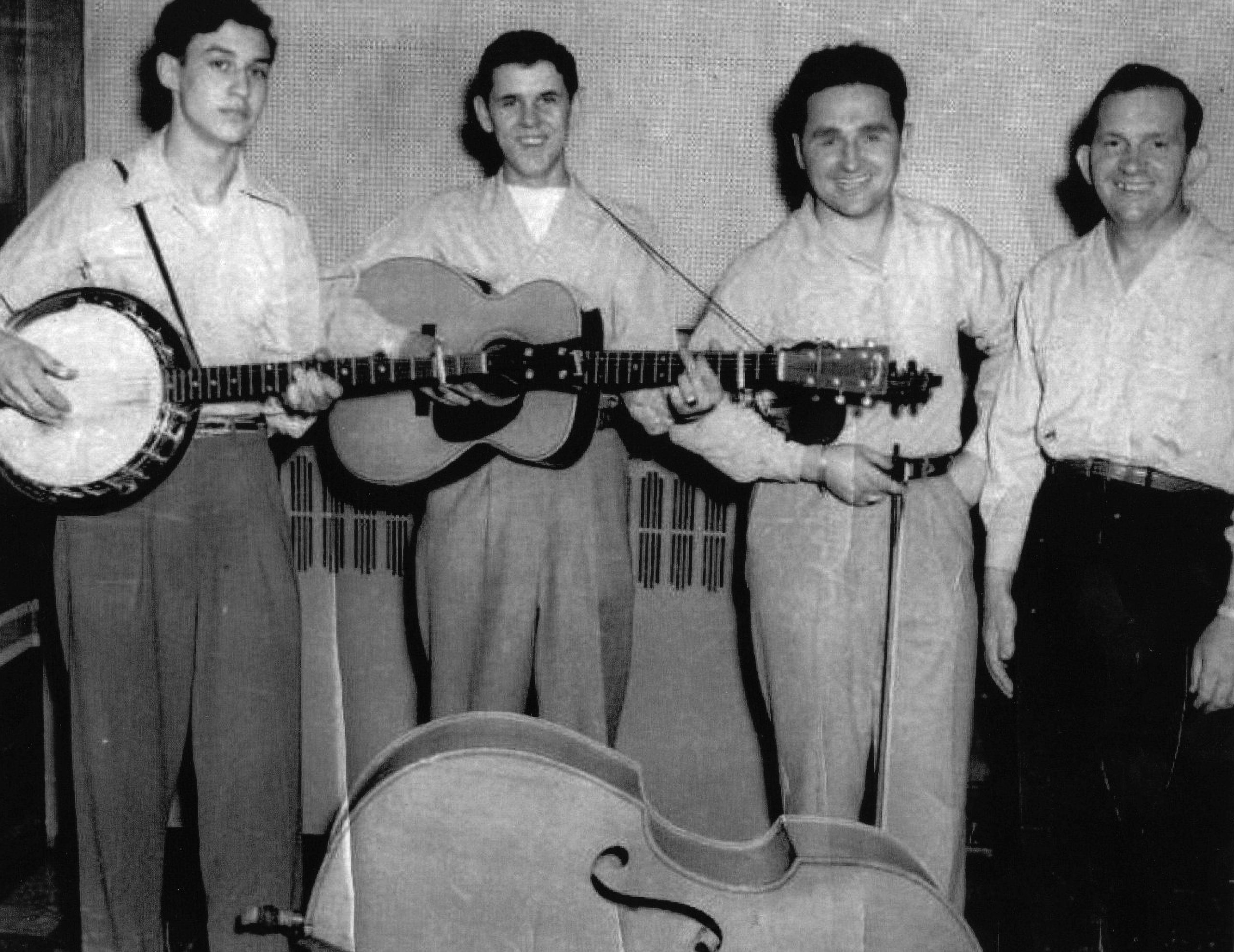
When recalling his work with Martin in the Bluegrass Oral Histories Project recorded for the Bluegrass Music Hall of Fame and Museum in August of 2005 (interview conducted by Lance LeRoy), Paul said, “More often than not, it was just us three. Once in a while, Jimmy would pick a bass player and, once in a while, a fiddle man. But a good part of the time it was just Jimmy, me, and J.D. and we worked on instrumentation and harmony to where we could get the job done with just us three.”
An interesting side note to the fact that the band was usually a three-piece is that when they released their first LP on Decca records (Good ‘n Country), the album cover featured four people—Jimmy, Paul, J.D. and one other person. The other person was not in the band and was not even a musician. They brought him in for the photo because Jimmy thought that every band ought to have at least four members.
In 1958, Jimmy Martin and the Sunny Mountain Boys moved from Detroit to Shreveport, Louisiana to play on KWKH’s Louisiana Hayride. Paul’s time with the band wasn’t consistent during their stay in Louisiana because Paul took a few side jobs playing electric guitar. He said, “Jimmy didn’t have much work [outside of the Hayride] when we were in Louisiana, so when I had the opportunity to get work, I would do that.” Paul spent time playing with Johnny Horton, Jimmy O’Gwynn, Stonewall Jackson, and other Hayride artists.
Paul Williams remembers one of the highlights of being on the Hayride was when Ray Price came down to be a guest artist and asked Jimmy Martin if he could “borrow” his tenor singer. Ray wanted to sing a particular song and chose Paul to be the person to add the tenor part to the chorus. Jimmy agreed to let Paul sing with Price and Paul and Ray went off in the corner to work on the song. That song, “Crazy Arms,” was Price’s first number one hit (released in May of 1956) and helped launch his career.
In the later part of 1959, Jimmy Martin and the Sunny Mountain Boys left Louisiana and moved to WWVA’s Jamboree in Wheeling, West Virginia. Paul was back with the band and made the move to Wheeling with Jimmy. Many consider the time spent in Wheeling to be the high point for the band. J.D. Crowe stayed with the band until 1961. He was replaced by Paul Craft and then, in late 1961, Bill Emerson took the banjo spot in the Sunny Mountain Boys.
Regarding his work with Emerson, Williams said, “Bill was a great guy. He was fun to be around and a great artist. I wrote a song called ‘Theme Time’ on the mandolin and showed it to Bill. He conquered it in about a minute. Bill had a different pull on his roll than J.D. did. J.D. was more forceful. Bill was very clean.” Shortly after Bill joined the band, Jimmy Martin and the Sunny Mountain Boys (Zeb Collins, Paul Williams, Kirk Hansard, and Bill Emerson) became the first bluegrass band to play in Las Vegas when they got booked to play for two weeks at the Golden Nugget.
Many musicians who have worked with Jimmy Martin over the years express that they had a hard time coping with Jimmy’s strict demands when it came to creating his music, Paul said, “Jimmy had a lot of input. He told me how he wanted me to play. Of course, I have always sung what I felt and tried to play what I felt—but when you are working for somebody, you try to please them and do what they want you to do and do it the best you can. Jimmy could be over-bearing and we never agreed on everything, but we didn’t let our disagreements make enemies of us. We remained friends.” Paul recalls that he visited with Jimmy shortly before Martin’s passing and told him, “I’ve been through the Martin school of music. Jimmy said, ‘I never done much for you.’ I said, ‘You taught me a whole lot.’ I still use it today and I appreciate him for that. We had a great relationship. He was a friend.”
Leaving Bluegrass Music
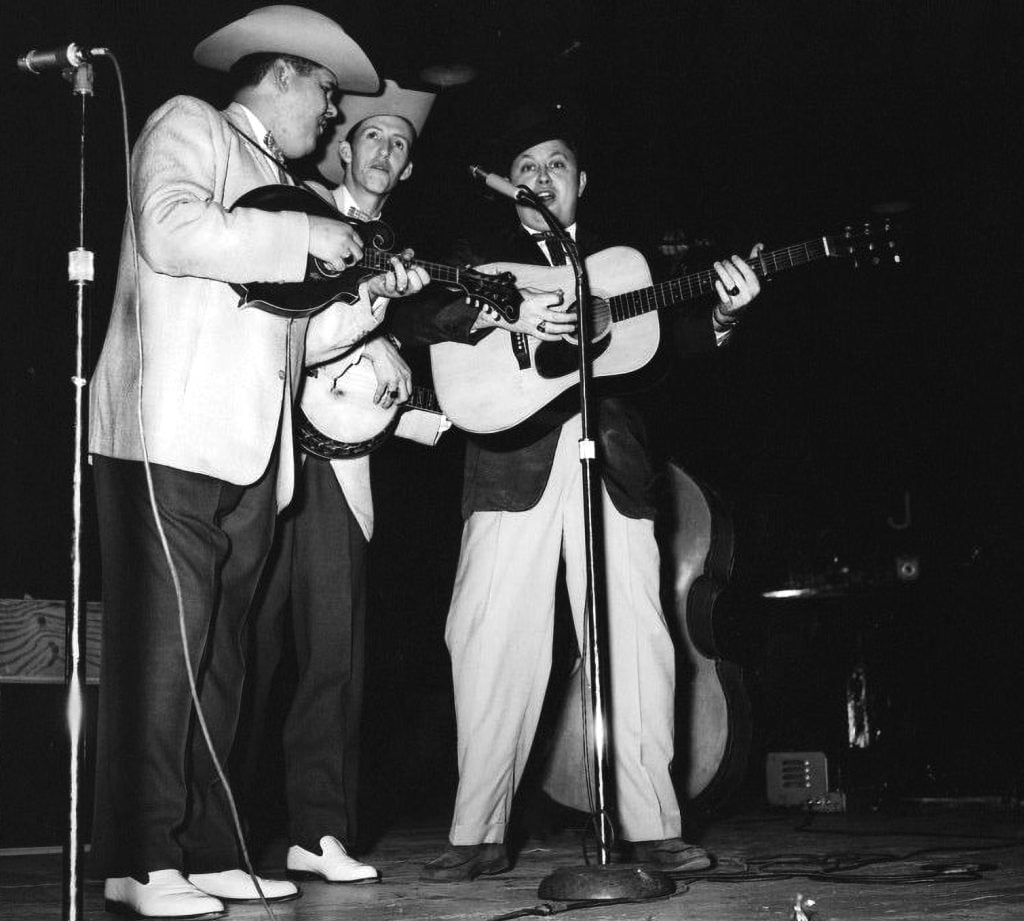
Jimmy Martin and the Sunny Mountain Boys stayed in Wheeling until December of 1962 when they moved to Nashville. Around that same time, Paul married Jimmy Martin’s half-sister Edria (Jimmy and Edria shared the same mother). Paul had met Edria in December of 1957 and they married six years later, on December 4th, 1962. They recently celebrated their 59th anniversary.
In August of 1963, Paul attended a church service with his wife and was saved. He said, “I didn’t feel like I could keep playing in bars and be a witness for the Lord.” Paul left Jimmy’s band and moved to Donaldson, Tennessee. He held a series of jobs—working construction and for the fire department—until he got a job with the post office in Morristown, Tennessee. He stayed at the post office until his retirement in April of 1995.
Although he was not performing in a bluegrass band, Paul stayed active leading the choir in church and singing in an a cappella quartet. He also said that he “wrote songs for the Lord.” From the time he left bluegrass until the time he retired from the post office, Paul also hosted a Sunday morning “preaching and singing” program on WMTN radio out of Morristown, Tennessee.
After retirement, Paul decided to form a band called Paul Williams and the Victory Trio. The group was very successful and toured for about fifteen years, recording a new album roughly once per year. He also teamed up to do a recording on Rebel with Cliff Waldron and he recorded albums with Doyle Lawson and J.D. Crowe as well. Over the years he also performed a few reunion shows with Jimmy Martin and J.D. Crowe.
Paul Williams Songwriting
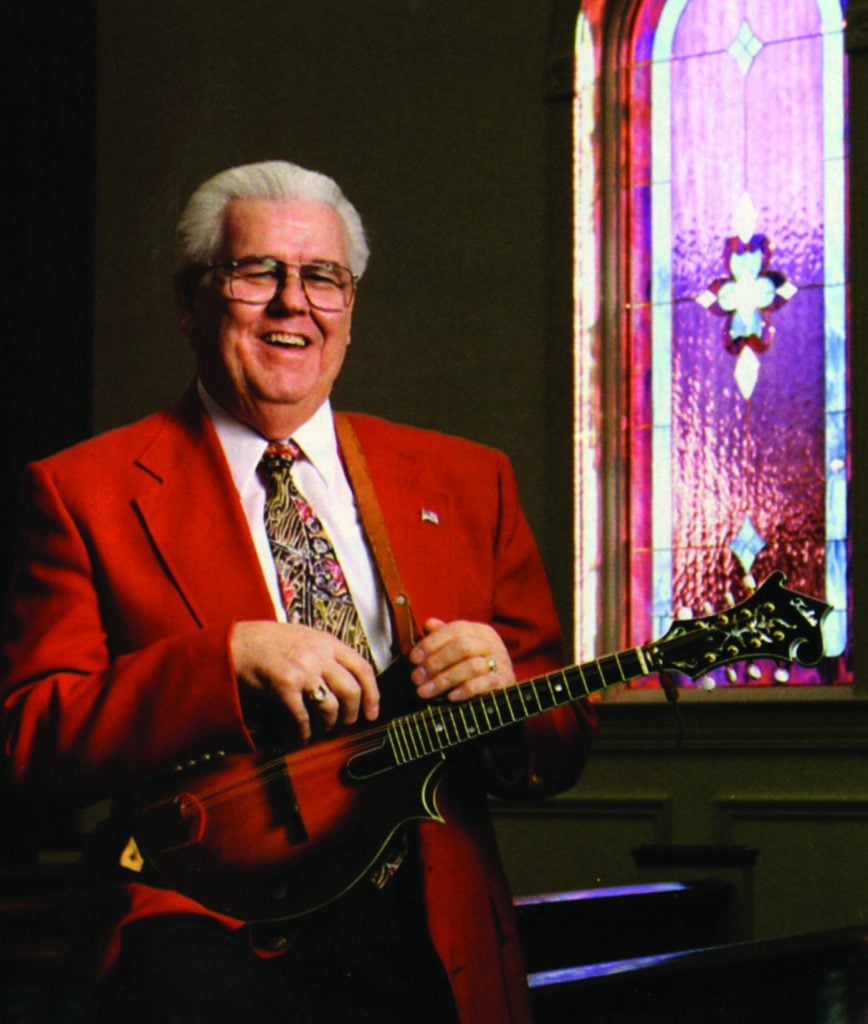
Paul Williams became very well known in bluegrass and country music circles for his songwriting abilities. As mentioned earlier, he was writing hit songs from the time he was sixteen years old. When asked how he got started writing songs, Paul said, “I wrote poems when I was young. I got the idea about writing songs from J.P. Viars. He saw my poems and said, ‘You ought to put a tune to them. That is how I got started writing songs.”
In a short Paul Williams biography—written by Gary Reid on the occasion of Paul being inducted into the Bluegrass Music Hall of Fame (in 2018)—it states, “During his six years as a Sunny Mountain Boy, Paul recorded eleven sessions and forty-nine songs. He returned to the studio with Jimmy as a guest in 1967 and 1968, adding two sessions and six more songs. By his own reckoning, Paul wrote at least half of the songs he recorded with Martin. Some were credited in his own name, some were listed as joint collaborations between himself and Martin, and others—for whatever reason—were copyrighted in Jimmy’s name. In at least one instance, one of Paul’s songs was published under his wife’s name. Among his credited and uncredited triumphs are bluegrass classics: ‘Night,’ ‘Hold Whatcha Got,’ ‘The Joke’s On You,’ ‘Old Fashioned Christmas,’ ‘I Can, I Will, I Do Believe,’ ‘My Walking Shoes,’ ‘Pretending I Don’t Care,’ ‘Mr. Engineer,’ and ‘Shut-In’s Prayer.’” The Copyright Office database credits Paul Williams with 137 published compositions.
Other artists who have recorded Paul’s songs include Ernest Tubb, Ray Charles, Hank Williams, Jr., Charlie Walker, the Nitty Gritty Dirt Band, Larry Sparks, Doyle Lawson, IIIrd Tyme Out, the Osborne Brothers, Blueridge, Junior Sisk, Petticoat Junction, The Goins Brothers, and many more. Regarding his songwriting, Paul said, “I don’t sit down and try to write a song. If something comes to me, I’ll write it down. That is the way I’ve always done.”
Friends to the End
Paul said that when he went to Detroit to work with Jimmy Martin, it was the first time that he met J.D. Crowe. At the time, Paul was twenty-two and J.D. was twenty. Paul said, “He was a skinny red headed boy when I met him. He didn’t even look like he could hold a banjo. We became just like brothers. He stayed a dear friend for sixty-four years. We did a lot of things together, played a lot of music together and had good times together. We were dear friends and remained as such until his passing, which was Christmas eve. I talked with him on the phone for about an hour a month prior to his passing. We liked to talk about the old times. We were good friends and the Lord’s will was done in his life. He said he was ready to go. His soul is in the paradise of God today, so he is in far better shape than I am.”