On The Fringe
Bands Blurring the Lines of Bluegrass
“The cool thing about Broke Mountain Bluegrass Band is we thought we were something special,” says Anders Beck with a laugh, “but we were just five dumb kids. Only time can tell if we were right or not. I guess we were something pretty special though, because the bands we went on to form and be part of. It’s pretty crazy to think of. The idea that we get to do more with this band, that twenty years later we can go back to this band is so exciting. It’s like a tribute to our younger selves.” Beck is speaking about the comet streaking across the sky, big-bang explosion that was the brief, often overlooked moment that was the Broke Mountain Bluegrass Band and their upcoming reunion.
The Broke Mountain Bluegrass Band’s time together was short, a couple of years and one album, and at the time barely registered on the national radar, but in hindsight is perhaps one of the most important bands of the burgeoning jamgrass scene that has taken flight in the last twenty years. At the time the band’s importance was hard to recognize, but over the years, as the members of Broke Mountain have gone on to form and play with some of the foremost bands of the modern bluegrass scene, it has come into focus. “It’s a reverse super group,” says Travis Book. “That we started a band when we were just getting into bluegrass, and we’re all playing professionally twenty years later in some of the biggest and most relevant bands in the scene we wanted to be in when we started, is remarkable.”
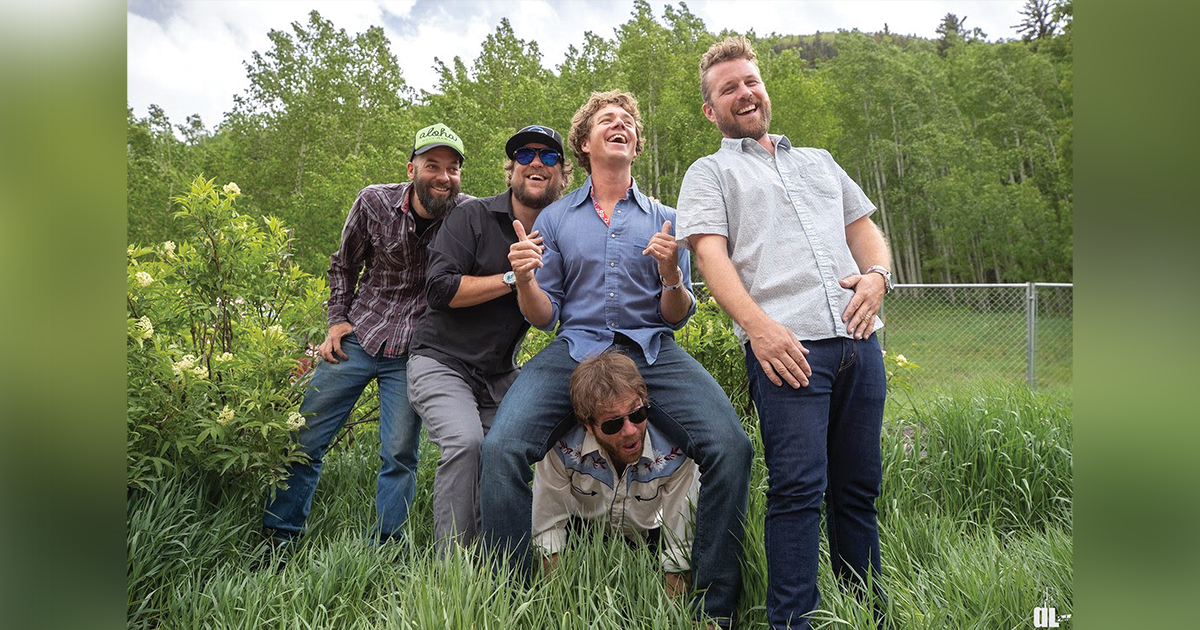
“It was just five hippies sitting around in a living room and now those hippies have gone on to do some pretty cool stuff,” explains Beck about the unlikely origins of Broke Mountain, who he calls, “a pretty amazing farm team for bluegrass bands.” Those five hippies from that farm team—Beck (Dobro), Book (bass), Robin Davis (mandolin), Rick Hauchman (guitar), Andy Thorn (banjo) and later Jon Stickley (guitar)—have gone on to be part of some of the most important progressive bluegrass and jamgrass bands of today, with Beck joining Greensky Bluegrass, Book the Infamous Stringdusters, Thorn Leftover Salmon, and Stickley forming the Jon Stickley Trio.
Those origins had their genesis on a ski trip Thorn and Hauchman had taken to Durango, Colorado, from their home in North Carolina in 2003. One afternoon the pair wandered into a local music store, Canyon Music Woodworks, to kill some time. One of the employees, Beck, heard this impeccable picking coming from the banjo area of the store and went to investigate. Book says what Beck found was Thorn and Hauchman “just absolutely shredding.” Book would hear of these Carolina pickers via an excited phone call from his good friend Beck moments later, “He called me up and said we had to jam with these guys that night. They came over and we played all night, and then we skied the next day. We repeated that for about three days nonstop.” From those all-night jam sessions, the Broke Mountain Bluegrass Band was born, with the name coming from a comment from Hauchman who remarked one afternoon how much money they did not have at the time, saying, “We are just a broke mountain band.”
With their Colorado and North Carolina backgrounds, Broke Mountain had a traditional, old-time soul, but delivered it with a freewheeling, mountain-hippie spirit. “Musically it could be described as the love child of Hot Rize and Doyle Lawson & Quicksilver,” explains Stickley. Beck says they were simply just trying to be themselves, “The influence that led us to all be part of jamgrass bands was not necessarily part of those times when we were Broke Mountain. We were just trying to play like our bluegrass heroes. That’s what we were listening to at that time. Then later went on to be the jamgrass superstars that we are.” Thorn sums it up simply, “Just imagine a band started by twenty-somethings who were not yet in these bands, but who were super hopped up on bluegrass, who were picking with their buddies, and making fun of each other — if you can imagine that, you can probably imagine our music.” This loose approach breathed a youthful vitality into the traditional genre and unknowingly pointed to what would come with bands like Billy Strings, Molly Tuttle, the Kitchen Dwellers and others who, like Broke Mountain did, continue to push bluegrass in new directions.
Thorn and Hauchman returned to Colorado the summer following the band’s first meeting to continue their musical conversation. The newly christened band traveled around Colorado playing shows when they could get them. Stickley says, “It was just five young men living the dream of free wheeling around Colorado, playing festivals, picking late nights, going on hikes, and swimming in rivers.” They eventually ended up at the RockyGrass Bluegrass Festival and just a few short months after meeting and first playing together they surprisingly won the band contest. Further validating the talent of the band Thorn and Davis won the banjo and mandolin contests. The win was not a surprise to everyone. “It was thrilling, but not entirely unexpected,” says Book. “There’s this thing that happens when you have set your goal, and you’ve manifested something, and it comes to fruition, where, on the one hand, you’re surprised, elated, and grateful, and on the other hand, it also feels like the logical unfolding of the universe. I had already decided we were going to win that band contest six months prior when I invited Andy to come back and play music with us that summer so I wasn’t really surprised.”
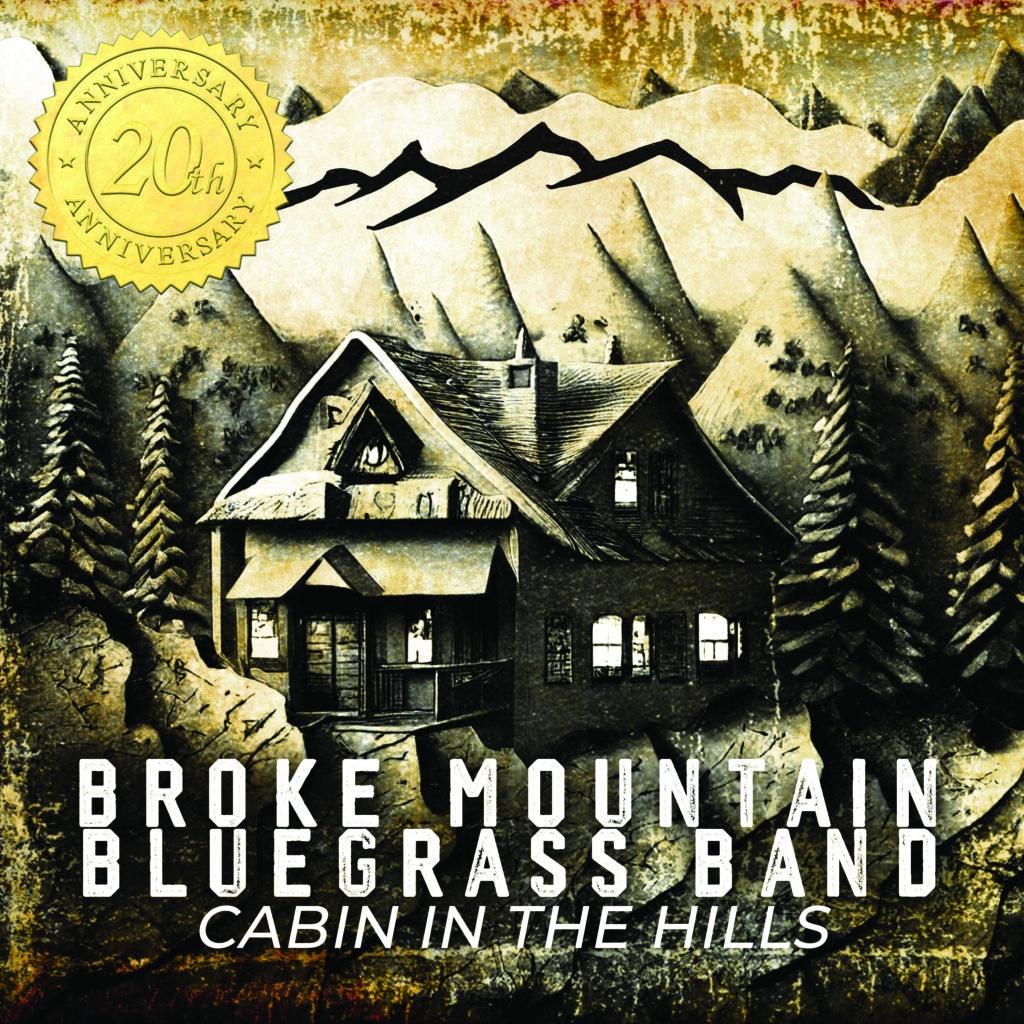
The future seemed limitless and the band headed to North Carolina to record their debut album, adding Stickley who replaced Hauchman. Recorded under the watchful eye of former Ralph Stanley fiddler Dewey Brown, Cabin in the Hills, captured the indefinable spark that made Broke Mountain such a special band. For the band it was the first time many of them had recorded in a studio, and that raw energy comes through on the album. “I don’t even remember recording it, I was so green,” says Book. “That was the first thing I’ve ever recorded in my life, we were just in there, playing music, giving it hell, doing the best we could. I listen back now and I can really hear the naïveté. But there’s real magic in music like that, I can’t make music that sounds like that now.” Stickley agrees, “I love its youthful energy and unrefined exuberance. It really takes me back to those early years that were just pure fun all around.”
Just as the band was gaining momentum following their RockyGrass win and the release of Cabin in the Hills, the band was already coming to an end. In 2005 Thorn had an offer to join Larry Keel’s band (later joining Leftover Salmon). Thorn leaving opened the door. He was followed by Book who was asked to join the Infamous Stingdusters just as they were getting started. Beck and Davis would soon join Benny “Burle” Galloway in the Wayward Sons, with Beck later leaving to join Greensky Bluegrass. Stickley would form his own self-titled trio. Shortly after disbanding the band noticed their website getting a lot of attention. “We were kicking ourselves when our website traffic started exploding — until we realized it was just people looking for a new movie called Brokeback Mountain, who kept ending up on our page by accident,” laughs Thorn.
For many familiar with the bands that Broke Mountain evolved to, the music they made was just as unfamiliar, resigned to a limited release of Cabin in the Hills and the short life of the band. Despite its lack of wider familiarity, the album helps point in the direction of the modern, progressive jamgrass sound that Broke Mountain would be so important in creating in their various new bands and projects. The album was a mix of original tunes, Benny Galloway songs, and a cover of “Dark Hollow.” Some of the songs would find new life in various other projects going forward. Musically it’s traditional with an underlying hint of the progressive that points to the band’s potential and a plethora of untapped ideas they possessed. “I sometimes wonder what would’ve happened and what could have been if Andy hadn’t left,” says Book.
This could have been the end of Broke Mountain’s story. The five musicians maintained their strong friendships and would cross paths when their new bands shared a stage or festival together, but Broke Mountain as a band seemed finished. Over the years, they sat in with each other’s bands, occasionally played together in various configurations, and dreamed about a reunion, eventually reuniting in 2019 at the Telluride Bluegrass Festival.
The reunion got the band thinking about the future and what could be. With five musicians all with busy schedules it was hard to find time they could all get together, but they realized that Broke Mountain was indeed something amazing and unique and did not want to see the 20th anniversary of the band go by without acknowledging it. They decided to re-release Cabin in the Hills, which had an initial release of just 1000 CDs with no digital version, so for most people the album was something that simply existed in the ether that few had actually heard. The band rectified that by re-releasing it in November of 2023. In addition, they played a pair of anniversary shows in Denver in December, 2023. The new attention to the band and the reflection of something created twenty years ago that still resonates has all of the band thinking about new possibilities and the future of Broke Mountain. “I think Broke Mountain is special, because we are a new band, with a long history, if that makes sense,” says Book. “We haven’t even come close to cementing the legacy of Broke Mountain. We’re entering into Broke Mountain 2.0, but there will be a 3.0, after that. I hope the legacy will be that we were able to make music over the course of 50 years of our careers and lives together. We started early enough, and we were able to spend enough time apart, learning and gaining perspective, but I’m hoping when we get back together, start making records again, it’ll be like we’re a new band with a veteran perspective.”