Notes & Queries – November 2022
Queries
Q: “In the early 1990s, I was a young man living in Richmond, Indiana, near the Ohio state line. Bluegrass music was nowhere on my radar until, by accident, I stumbled on the Oak Street Ramble broadcast on WMUB. The host, Jan McLaughlin, did an excellent job discussing the history and performers while introducing old and new recordings. I moved from the area years ago. What happened to the show? Was Jan ever recognized for her outstanding broadcasting work?”
– Jeff Hutson, Indianapolis, Indiana.
A: Shortly after WMUB began airing Oak Street Ramble, a note from the show’s host appeared in the October 1980 “General Store” column in Bluegrass Unlimited. It told that “Janice McLaughlin is the producer/host of the Oak Street Ramble on WMUB-FM in Oxford, Ohio. The emphasis is on traditional and progressive bluegrass and related influences. So if your band is playing in the Dayton/Cincinnati area, drop her a line and she’ll be glad to tell her listeners where you will be appearing as well as playing your records.” The following month, the same column reported that “Traditional and progressive albums needed.”
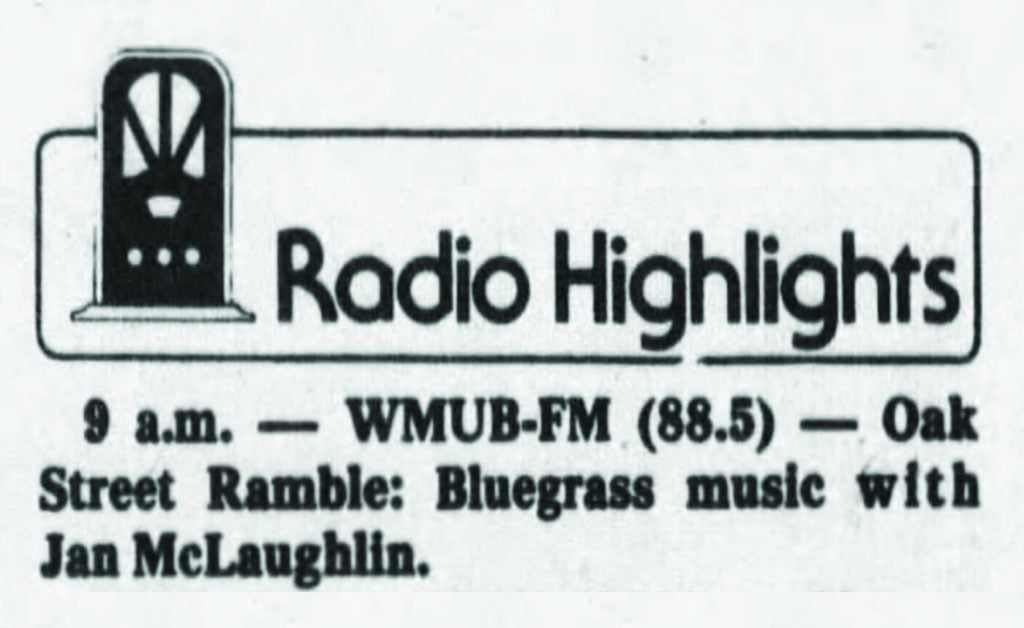
WMUB is located slightly west of the corridor that runs from Cincinnati to Dayton, Ohio, and is just a stone’s throw from the Ohio/Indiana border. The area served as an incubator and hotbed for bluegrass since the early 1950s and the station’s launch of the Ramble in mid-1980 was a no-brainer. After a successful twenty-five-year run, the show ended and its host drifted into bluegrass obscurity. Queries to several in-the-know Ohio bluegrassers concerning the show’s host yielded no clues to her post-radio activities or whereabouts. On a whim, a snail mail letter to a random Janice McLauglin from the Oxford, Ohio, telephone directory elicited the following response:
“Yes, indeed I am Jan McLaughlin, the long-time host and producer of the Oak Street Ramble on public radio WMUB Miami University located on Oak Street (hence the name) in Oxford, Ohio.
“From 1980-2005 I shared my love of Bluegrass via WMUB 88.5 FM. To have a listener from the past remember my show and inquire about it really touches my heart and is all the recognition I need.”
As a post script, she added, “And thank you Gary for all the treasured music from Copper Creek that made programming a joy – including the copy of CCEP 0101 of the Johnson Mountain Boys! They blew me away . . .”
Over Jordan
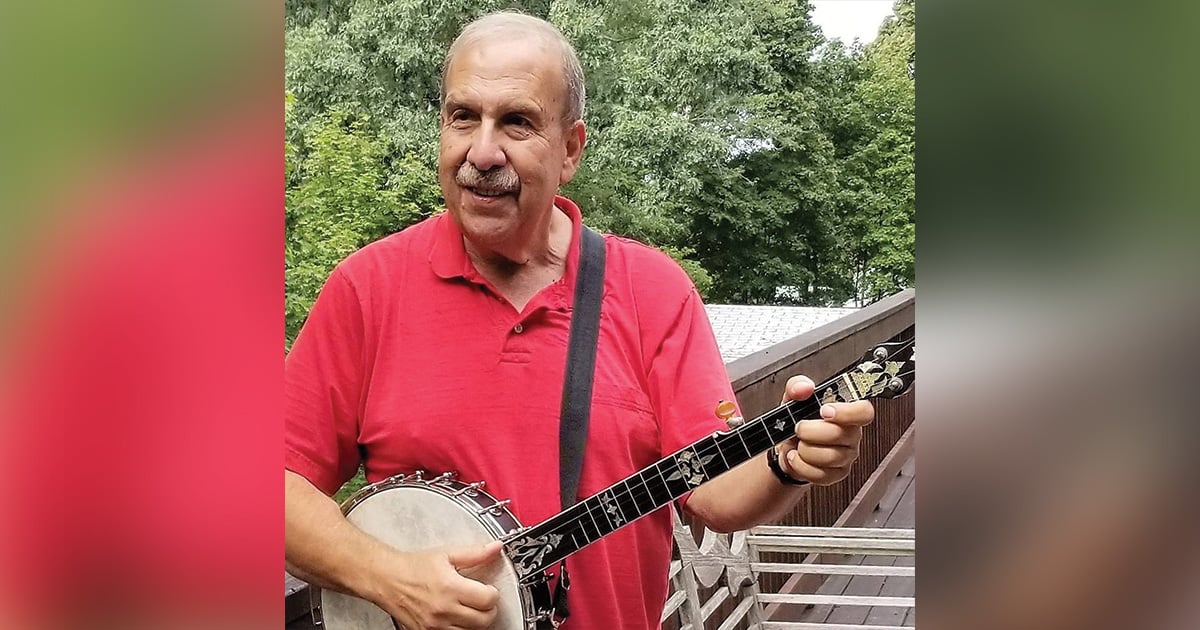
Stephen Ivan “Steve” Arkin (May 1, 1944 – August 24, 2022) In Jim Rooney’s book Bossmen, Bill Monroe was quoted as saying that “Arkin could play the best back-up banjo I have ever heard . . . Now there ain’t no way around it. He could do it. He could put stuff in it and make it sell.” It was lofty praise for a twenty-year-old banjo picker who logged less than three months service as a Blue Grass Boy.
A native of Brooklyn, Steve grew up in an environment that appreciated folk music. Several of his uncles and cousins played and sang and Arkin’s own musical tastes included the likes of the Weavers, Pete Seeger, Woody Guthrie, and the New Lost City Ramblers. Older cousin Alan Arkin (a member of the popular folk music group the Tarriers and later well-known as a Hollywood actor) showed Steve some of his first chords on the guitar when he was about thirteen. A year or so later, a chance visit to Washington Square Park to play chess with a friend had the unintended consequence of exposing Steve to the sound of the banjo.
Steve’s first attempts at learning to play the 5-string were centered around the methods taught in Pete Seeger’s banjo book as well as the playing that he heard on recordings by the New Lost City Ramblers. It was a late 1950s Mercury album by Flatt & Scruggs – with the original recording of “Foggy Mountain Breakdown” – that made a bluegrass convert of Arkin.
In 1961, Arkin met and became friends with banjo player Bill Keith. At the time Keith was refining his approach to playing chromatic style banjo and Steve became an enthusiastic disciple. While still in his teens, Steve joined several area bluegrass bands, the most well-known of which was the Down State Rebels (Gene Lowinger on fiddle, Jody Stecher on mandolin, and Peter Szego on dobro). The group enjoyed two separate performances at Carnegie Hall. While performing at Gerdy’s Folk City in Greenwich Village, they were discovered by pop singer Bobby Darin who recorded (but never released) an album by the group.
During this same period, Arkin competed on banjo at the Philadelphia Folk Festival; he placed second to Bill Keith’s first-place win.
Following Bill Keith’s tenure with Monroe’s Blue Grass Boys, both he and Monroe’s manager, Ralph Rinzler, recommended Steve to be Monroe’s new banjo player. While on summer break from college, Arkin spent several months touring as a Blue Grass Boy. At season’s end, he left Monroe to compete for a third time at the Philadelphia festival (where he took top honors on banjo) and to return to school.
Throughout the balance of Arkin’s professional life, music was an avocation. In the 1980s, he performed with Boston-based progressive bluegrass band Northern Lights. A chance visit to the Southern Appalachian String Band Festival in Clifftop, West Virginia, ignited Steve’s passion for old-time music and clawhammer style banjo. While his banjo work was vastly under-recorded, his outing with the Trouble Creek String Band, As Fast As They Can Take Me, received rave reviews.
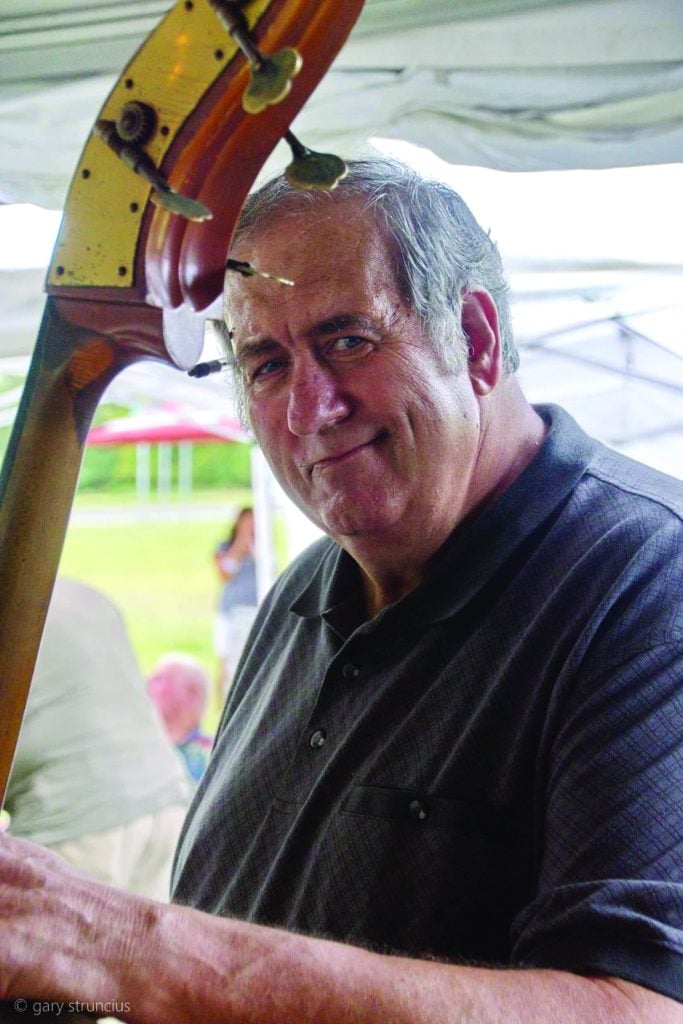
Randy Harold Bailey (February 25, 1954 – August 16, 2022) was a mainstay of the New Jersey bluegrass scene as a much-respected bass player and as a long-time disc jockey. A native of Princeton, West Virginia, he credits his parents for his love of music. His father had a rather extensive record collection and listened to country music on the radio; his mother played guitar. Randy moved with his family to the Garden State in 1962. Bailey started out playing guitar and later added bass to his repertoire. He regularly attended various jam sessions – including now-legendary get-togethers at a hunting cabin hosted by Joe and George Albert – and subsequently joined several bands. Among the first, in the middle 1970s, was the Sandy Mountain Boys. By the early 1980s, he was playing bass with D. W. Griffiths and the Rank Strangers. One of Randy’s few trips to the recording studio took place in 1982 when he played bass and sang baritone and bass on the D. W. Griffiths album Hopeless Passion.
Starting in the late 1980s, Bailey became the host of the Bluegrass Jam program on radio station WBJB. In May 1990, the Asbury Park Press reported that “Bailey’s knowledge of the music form, not to mention his enthusiasm for it, makes listening to his show a must for Shore area bluegrass fans.” He hosted the program for over twenty years, ending in 2012. His stature as an authoritative broadcaster led to numerous emcee opportunities at various festivals and concerts. And for at least thirteen years, starting in 1992, he coordinated the talent for the Cream Ridge Winery Bluegrass Festival.
Other professional activities included a long-time position on the board of trustees of the Bluegrass and Old Time Music Association. The organization was founded in 1978 and was instrumental in fostering bluegrass in the New Jersey, New York, and Pennsylvania regions. As part of the group’s educational outreach, Randy hosted several history-of-bluegrass events. A few of the events involved the showing of documentary films such as High Lonesome – the Story of Bluegrass Music and American Roots Music. Author Richard Smith moderated a discussion of the music’s roots at one of Bailey’s presentations.
Bailey summed up his feelings about bluegrass in a statement to the Asbury Park Press in 1997: “Once you hear the music, it’s a part of you. It’s internal. When you hear about a festival, it’s something you want to go see. (The audience) chooses to come here because they love the music and they love the fellowship . . . Even though we’re not related, we are related in a way through our music. The music is the bond for either people who play or people who listen.”
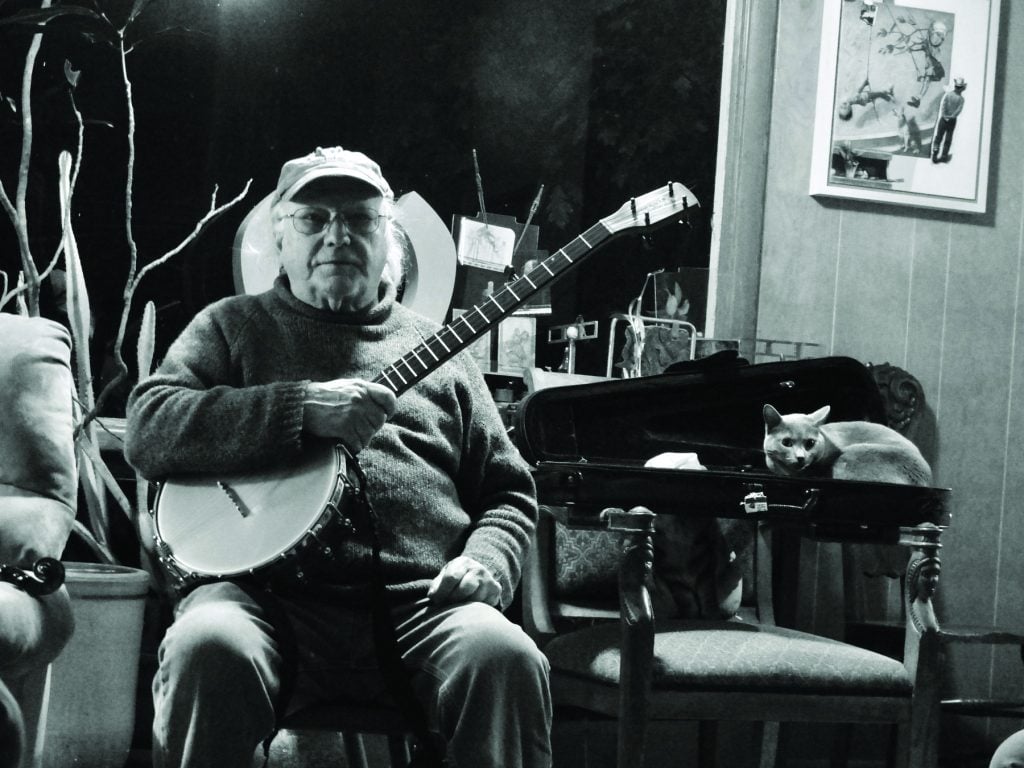
Arthur Spark “Art” Rosenbaum (December 6, 1938 – September 4, 2022) wore many hats during his lifetime involvement with traditional roots music. He was a musician, a collector, a producer, an educator and historian, and an author. Drawn particularly to old-time music, his name seldom graced the pages of bluegrass publications over the last half century. When it did, it met with laudatory praises. Muleskinner News’ Bill Vernon wrote that “Rosenbaum’s banjo work is brilliant.” In 2009, his Art of Field Recording Vol. I: Fifty Years of American Traditional Music Documented by Art Rosenbaum won a Grammy award for Best Documentary Recording.
Born in Ogdensberg, New York, a small city on the Saint Lawrence River that shares a border with Canada, Rosenbaum traced his earliest musical memories to age five when he heard Pete Seeger (with the Almanac Singers) performing “Green Back Dollar.” Later influential recordings included those by Uncle Dave Macon, Buell Kazee, and a 1953 ten-inch album by old-time banjoist Tom Paley called Folk Songs from the Southern Appalachian Mountains.
Around 1949 or ‘50, Art began making the transition from listener to picker; it was then he started taking guitar lessons. A few years later, he acquired a banjo and a Pete Seeger instruction book. It was during his high school years of the early and middle 1950s that he began giving public performances.
Following graduation from high school, Art relocated to New York City to attend Columbia University. The move put him in close proximity to other like-minded pickers, including Pete Seeger and the members of the fledgling New Lost City Ramblers. He also hosted a folk music program called the Keys to the Kingdom on the school’s radio station.
Starting in the 1960s, Art began seeking out traditional music makers and documenting their songs and tunes. Throughout his lifetime, he released fourteen album documentaries, the first of which was released on Folkways in 1964: Fine Times at Our House: Traditional Music of Indiana: Ballads, Fiddle Tunes, Songs. The same time period found him propagating a melodic style of clawhammer banjo playing. In 1968, he put his years of performance and song collecting to good use with an instruction book called Old-time Mountain Banjo. In it, he covered a variety of styles including two-finger picking, clawhammer style, and fretless banjo techniques.
Throughout the early and middle 1970s, Art released several albums on the Meadowlands and Kicking Mule labels. A self-titled duet album, Art Rosenbaum and Al Murphy, was tagged as “a jewel of an album” while two other outings highlighted his solo banjo work: Five String Banjo and The Art of the Mountain Banjo.
From 1976 until 2006, Art taught drawing and painting at the Lamar Dodd School of Art in Athens, Georgia. While there, he joined one of the most recent incarnations of the Skillet Lickers band, which included descendants of the original group. His years in Georgia yielded at least three books: Folk Visions and Voices: Traditional Music and Song in North Georgia (1983), Shout Because You’re Free: The African American Ring Shout Tradition on the Coast of Georgia (1998), and The Mary Lomax Ballad Book: America’s Great 21st Century Traditional Singer (2013).
As Art’s work as an author began with his 1968 banjo book, he brought his career around full-circle with the 2015 release of Art Rosenbaum’s Old-Time Banjo Book. The package also included two DVDs that afforded aspiring pickers the opportunities to see and hear the music.
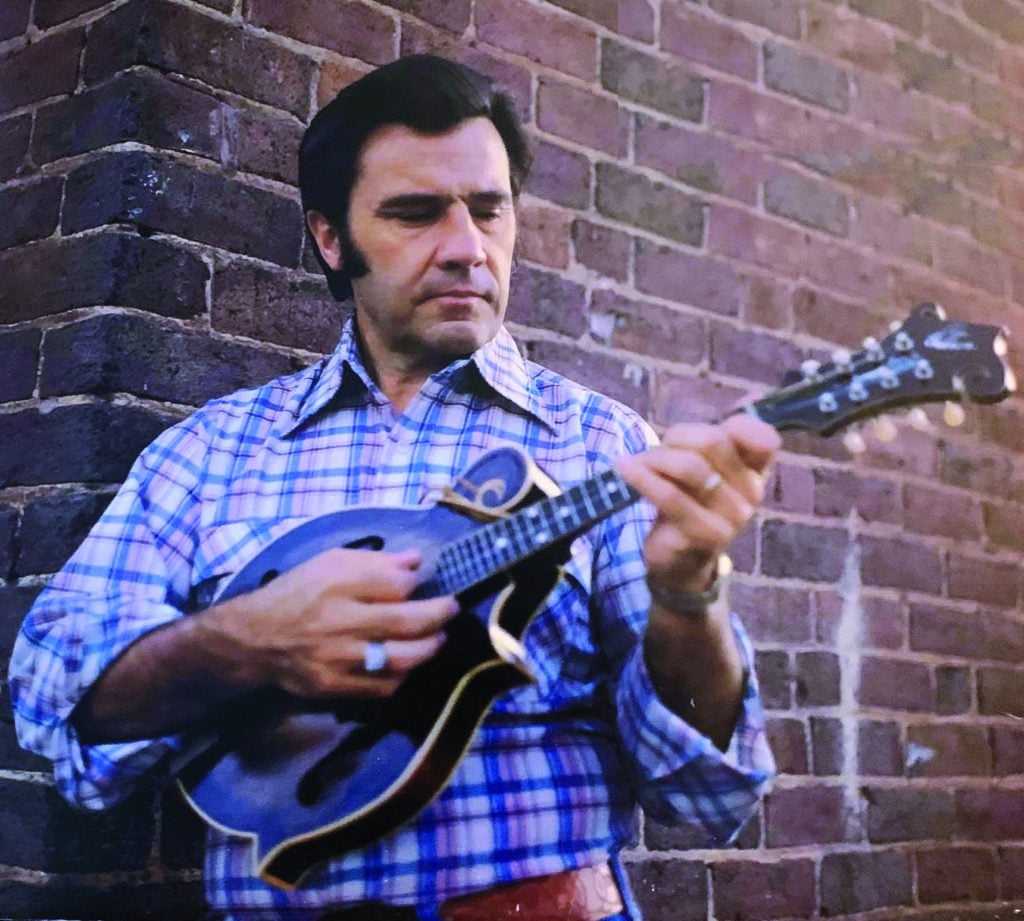
Herschel Lee Sizemore (August 6, 1935 – September 9, 2022) was a renowned mandolinist who served with distinction in groups including the Dixie Gentleman, Jimmy Martin, Del McCoury and the Dixie Pals, the Bluegrass Cardinals, and Rambler’s Choice. A native of Alabama, his career got under way around 1949 and lasted well into the 2000s.
Some of Sizemore’s first exposure to music came from family members at home; his mother played guitar in the style popularized by Maybelle Carter. Sounds from outside the home came by way of a Silvertone battery radio. In the early 1940s, several events transpired that set Herschel on the road to becoming a musician. At age eight (ca. 1943) he saw Bill Monroe in person at the Grand Ole Opry. Additionally, an older brother who was in the military sent a mandolin to the Sizemore home.
Herschel’s first public performances came at age fourteen when he joined a regional group billed as Ned Campbell and the Sunnyside Playboys. He stayed with the band for three years. In 1956, he teamed up with banjo picker Rual Yarbrough, Linden Smith, Billy Sizemore, and Edison Dooley to form the Tennessee Valley Playboys. The group went through several name changes, including the Country Gentlemen and finally the Dixie Gentlemen. Later band members included guitarist/songwriter Jake Landers, fiddler Vassar Clements, and Al Lester. The group sported a major label release on the United Artists label with an album titled The Country Style of the Dixie Gentlemen.
The Dixie Gentlemen disbanded around 1965. The following year, Herschel landed a spot with Bobby Smith and the Boys From Shiloh. The group also included former bandmate Rual Yarbrough. From 1967 to 1969, Herschel banded with Chris Warner and Bill Yates as part of Jimmy Martin’s Sunny Mountain Boys. Sadly, none of Sizemore’s work with Martin was captured in a studio setting.
From 1969 through the early 1970s, Herschel played with Virginia-based Shenandoah Cut-Ups. With notable players such as fiddler Tater Tate, bass player John Palmer, and banjoist Billy Edwards, the group quickly established itself as one of the better traditional bluegrass bands on the scene. The group, with Herschel, recorded eight albums for County, Revonah, and Rebel.
In 1974, Herschel took a part-time job with Purolator courier service. He continued to play music, this time with several former Shenandoah Cut-Ups members, in a new band called Country Grass. The group had one lone album on the Rebel label.
After taking a break from music in 1976 and 1977, Herschel returned with then-rising-star Del McCoury. Other members of McCoury’s Dixie Pals included brother Jerry McCoury on bass, banjo player Dick Smith, and fiddler Sonny Miller. Sizemore helped with the recording of Del’s Take Me to the Mountains album. He also accompanied the band on a tour of Japan that also resulted in a minimally distributed live album. It was while working with McCoury that Herschel recorded his first solo album, Bounce Away. It contained one of his most popular mandolin instrumentals, “Rebecca,” which was named for his mother.
Seeking financial security for his family, Herschel took time off from the road for twelve years of full-time employment with Purolator. He re-emerged in 1992 with one of the top touring groups, the Bluegrass Cardinals. With David Parmley, Craig Smith, and Bobby Hicks, Herschel recorded a second solo album, Back in Business. Over the next decade, several additional recordings appeared including My Style, B-natural, and a duet project with Jake Landers called For Old Times Sake. A deep-dive into Herschel’s mandolin playing style, the AcuTab Transcriptions – Volume One, was issued in 2001.
Not only was Herschel a highly respected master of the mandolin, he was also a collector. At one time, he owned four highly-prized Gibson Lloyd Loar mandolins. A more personal remembrance by Alan Bibey is slated for the December issue.
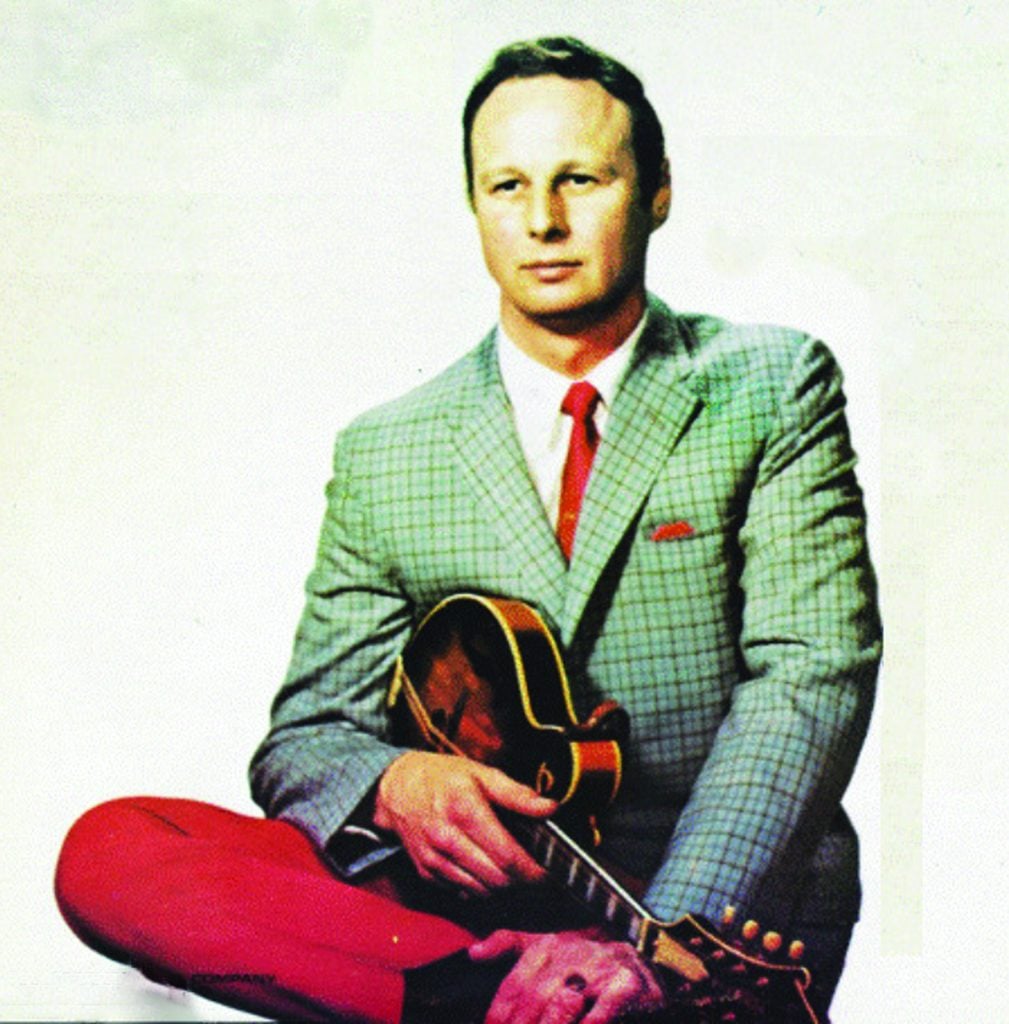
George Edward Winn Jr. (February 14, 1933 – January 23, 2022) was a fixture on the Virginia bluegrass music scene since 1954 when he launched his band, the Virginia Partners. Born and raised in the town of Kenbridge, a small community in Lunenburg County and about seventy miles southwest of Richmond, he credited his gospel-singing mother, the recordings of Jimmie Rodgers (who died the year George was born), and the music of Bill Monroe for his interest in music. It was Monroe’s band that influenced the sound of Winn’s Virginia Partners.
Winn started learning to play the guitar as a pre-teen. In recalling his early efforts, he told of “asking everybody who came by the house to show me a chord.” He began his career around 1946 and cited his first radio performance as a 1947 duet with his sister on the gospel song “Where Could I Go”; he was fourteen years old.
At some point in his career, George mastered the mandolin and used that as his instrument of choice with the Virginia Partners. The band played locally in south central Virginia for nearly a decade before venturing into the recording studio. A series of well-received 45 rpm discs appeared first. In reviewing one of the releases for Bluegrass Unlimited, Dick Spottswood wrote that “This is the band that put in a surprise appearance at our Carter Stanley benefit (April 1967) and nearly broke up the show.”
For a period of time, Winn was one of the most widely-traveled bluegrass performers. In tours that were set up by the State Department, and with military (USO), the Virginia Partners traveled to fourteen countries including Japan, Korea, Vietnam (two tours), the Dominican Republic, Germany, and in South America. Stateside, the group logged shows in thirty-five states and netted several guest appearances on the Grand Ole Opry.
From the middle 1960s until the middle 1980s, George recorded five albums, most of which appeared on the Waynesboro, Virginia-based Major label. A significant feature of most of his albums was that they contained a high percentage of original material, the lion’s share of which was contributed by George and various band members. Winn had twenty-six songs and tunes that were published and listed with BMI.
Not only was George an accomplished musician but he was a talented craftsman as well. He built at least seventeen mandolins, one guitar, and one fiddle. Coming from a family of woodworkers, George did everything by hand and non-electric tools. Some pieces were even shaped using a woodcarver’s knife.
As a firm believer in bluegrass in the state of Virginia, Winn was instrumental in the formation of the Virginia Bluegrass & Country Music Foundation, Inc. He served as the organization’s president for a number of years. The group owned a twenty-one-acre tract of land in Lawrenceville, Virginia, that was used each year for festivals in April and September. In recognition of his tireless dedication to bluegrass and to the organization, the tract was named the George Winn Memorial Park.
One of George’s semi-recent high-profile engagements was at the 2005 National Folk Festival when the event was held in Richmond. He continued to play locally until around 2015.