Notes & Queries – May 2023
Q: I’m trying to find out who the Foggy Mountain Boys were who played on the original “Foggy Mountain Breakdown.” Thanks. Arthur Liblit, via email.
A: According to research by Neil Rosenberg that was published in the booklet to a 1991 Bear Family boxed set of Flatt & Scruggs recordings, the personnel on the original Mercury recording of “Foggy Mountain Breakdown” was as follows: Lester Flatt – guitar, Earl Scruggs – banjo, Curly Seckler – mandolin, Benny Sims – fiddle, and Howard Watts – bass. The track was recorded on December 11, 1949, at the Herzog Studio in Cincinnati, Ohio.
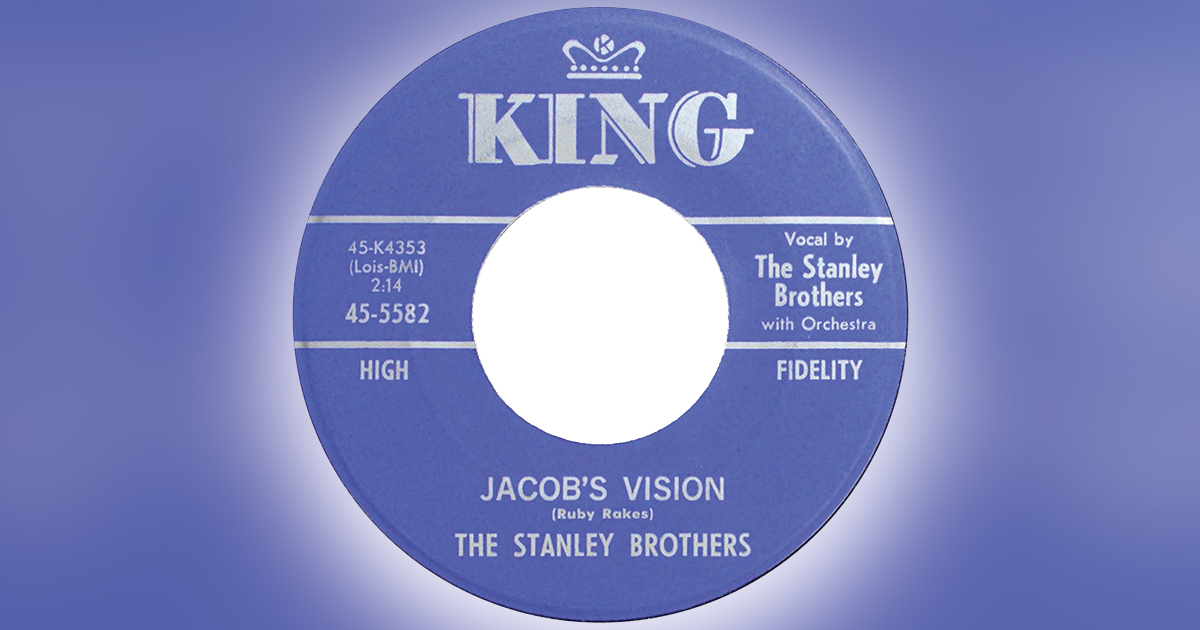
Q: This query is about a shape note song called “Jacob’s Vision,” that was recorded by the Stanley Brothers. We sang this one in a little church in Etowah, Tennessee, when I was a kid, back in the early ‘60s. It was also included in the Original Sacred Harp hymnal, Denson Revision, 1971. The way it was led, and sung in four-part harmony with no musical accompaniment, was in a brisk 4/4 tempo. The chorus was arranged in a round with all four voices coming in at different times.
The Stanley Brothers version is similar, but fundamentally different. First, they credit Ruby Rakes as the composer, who we all know was their half-sister and Carter’s pen name. Where did the Stanley Brothers find this one? How did they hear it in a slow 3/4 tempo? Whose lyrics are they using? This has been an ongoing mystery to me. Please shed whatever light you may offer.
Incidentally, it would make a fine arrangement for a band to sing the verses from the Sacred Harp version, and then use the Stanley Brothers’ chorus in waltz time. – Daniel Gore, via email
A: The Stanley Brothers recorded “Jacob’s Vision” for King Records on September 15, 1959, for an album that was released the following year called For the Good People, King KLP 698. They appear to be the first group – ever – to have recorded the hymn. For whatever reason, the Stanley Brothers rarely performed it in public. In fact, the only known live performance was in 1966 when the group appeared on Pete Seeger’s Rainbow Quest television program. In introducing the tune, Carter Stanley said that “in the past twenty years that we’ve worked in this country music, folk music, bluegrass music, or whatever you like, we’ve always made a practice of singin’ a hymn. So, we’d like to gang around and try one for you now. This is a camp meetin’ tune, I believe, that we learned a good many years ago.”
Nearly a decade later, in a conversation with Smithsonian Institution folklorist Ralph Rinzler, Ralph Stanley related that “‘Jacob’s Vision’ [is a song that] I learned from Enoch Rose; he was a Free Will Baptist preacher from Caney Ridge, Virginia.” In his 2009 autobiography, I’m a Man of Constant Sorrow, Ralph added that “Enoch and his wife, Mattie Rose, sang a lot together and recorded some albums, and they also taught children at school on the ridge. Enoch never tried to soften the message in his songs; he wrote it like he felt it from the Bible.”
Enoch Myron Rose (January 28, 1901 – October 19, 1985) was a longstanding pillar of the Dickenson County, Virginia, community that also included Carter and Ralph Stanley. Jim Scott Mullens, a descendant of legendary southwest Virginia singers the Mullins Family, wrote that “the singing ministry of the Reverend Enoch Rose and his wife Maddie will go down in history as true pioneers of Dickenson County’s gospel heritage.” Although Rose is remembered today for his many years of preaching, he earned his living as a teacher in the Dickenson County school system. Along the way, he also served, briefly, as a postmaster and a county/town treasurer.
Although Ralph Stanley cited Enoch Rose as his source for learning the song, it did not originate with him. The earliest known printing of the song’s text dates from 1838 when it appeared in a British publication called A Selection of Hymns, for the use of the Female Revivalist Methodists. A New Edition with Additional Hymns. From the 1840s until the 1870s, the hymn appeared in over a dozen songbooks and hymnals which were fairly evenly split between British and American publishers.
In discussing the era leading up to the time when “Jacob’s Ladder” (as it was known in older editions) first appeared, author William Lynwood Montell noted in his 1991 book Singing the Glory Down that “it had been common practice in England and America to sing only the Psalms during worship services. Psalters and hymnals containing the Psalms were brought to this country from England and generally contained no music. Only six to twelve different tunes were used, and these were sung quite slowly.” In describing these interchangeable tunes, Ron Short (in “We Believed in the Family and the Old Regular Baptist Church,” Southern Exposure, 1976) observed that “the melodies are closely ‘modal’ and are hard to follow using the standard scale of music. Without drastic changes they cannot be translated for musical accompaniment. Although there are now abundant songbooks, they contain only words, no music. The songs maintain the ‘long meter’ tradition with great emphasis on feeling rather than rhythm. To some, the sound is melancholy and mournful; for others, it is a glimpse into the very soul of man.” It was, no doubt, from this tradition (as opposed The Sacred Harp) that the Stanley Brothers adapted their version of “Jacob’s Vision.”
Although the Stanley Brothers used this hymn sparingly, Ralph Stanley made abundant use of it during his solo career. In 1989, he collaborated with Raymond Fairchild to record a cassette-only release that contained the song with its older title, “Jacob’s Ladder.” In 1995, Ralph teamed up with Joe Isaacs and family for a collection called Gospel Gathering. Included as the closing track on the disc, “Jacob’s Vision” featured prominent vocals by Sonya Isaacs. One of the most unique and compelling recordings was made in 2010 when cellist Dave Eggar reached out to Ralph to supply vocals on “Jacob’s Vision” for his Kingston Morning album. The track consisted of Stanley’s vocals and Eggar’s cello. In 2013, Victoria Emily Jones posted to her The Jesus Question blog that “the combination of classical instrumentation with a bluegrass vocal style is quite beautiful and unique. The cello gives the song an elegant, ethereal quality, while Dr. Ralph Stanley contributes to its simultaneously raw, homely feel. Each of the two performers brings his own style of soul and improvisation to the piece.”
More Salty Dog
The March 2023 query concerning the origins of the song “Salty Dog Blues” elicited several well-informed responses:
“The Morris Brothers may have brought it into the bluegrass era with their 1938 record, but ‘Salty Dog Blues’ was previously recorded by the Allen Brothers (1927, 1930, 1934), Sam & Kirk McGee (1927), and the Booker Orchestra (1927), according to Meade, Spottswood, Meade’s Country Music Sources. Versions can be found on YouTube; it is clearly the same song, but with somewhat different lyrics. Dick Spottswood may have more to say about the likely African American provenance of the song and the meaning of ‘salty dog.’” – Best, Fred Bartenstein.
“Charlie Jackson’s 1924 record is the original; the Allen and McGee Brothers versions derive from it. Jelly Roll Morton played it for Alan Lomax at the Library of Congress in May 1938. The Morris Brothers altered the song to the version we know on their 1939 and 1945 records, and Benny Sims and Earl Scruggs likely learned it from them. In conversation, Doyle Lawson confirmed that the 1950 Flatt and Scruggs record is by Benny Sims (lead vocal/fiddle), Earl Scruggs (baritone vocal/banjo), Curly Seckler (tenor vocal, guitar) and Jody Rainwater (string bass). There are two takes of Charlie Jackson’s record online with different verses, none of which match Benny Sims!” – Dick Spottswood.
“Zeke [Morris] told me they visited this joint over near Waynesville, North Carolina, where they had slot machines. I believe he said it was called the ‘Salty Dog.’ That’s where they got the idea for the song, he said.” – Wayne Erbsen.
As to the meaning of the phrase “Salty Dog,” as queried by Fred Bartenstein, there are several explanations. In an issue of Old Time Music magazine, Charles Wolfe asked Lee Allen, of the Allen Brothers, what the term meant to him. “This word ‘salty dog’ was a thing among the drinking people. The term ‘salty dog’ was somebody that was just a little low-down, not too much. They just wanted to have a good time, maybe at the expense of someone else, but all the same they didn’t do any harm that I know of. They were drinking people and that’s about all they had on their mind.”
In Wayne Erbsen’s 1980 article on the Morris Brothers, Wiley Morris said that “back when we were kids down in Old Fort [North Carolina] we would see a girl we liked and say ‘I’d like to be her salty dog.’ There also used to be a drink you could get up in Michigan. All you had to do was say, ‘Let me have a Salty Dog,’ and they’d pour you one.”
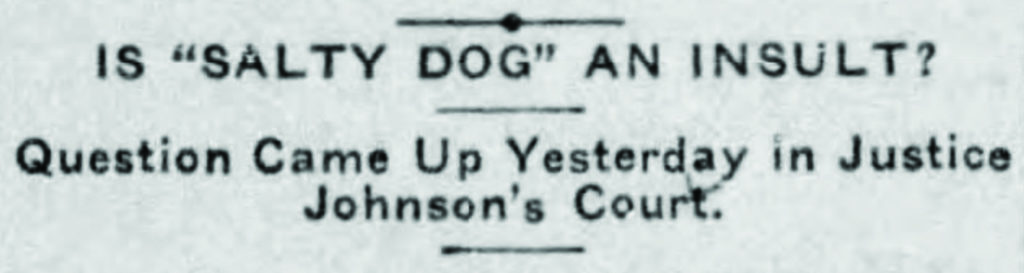
The earliest uses of the term “Salty Dog” date from the 1880s, when referring to men of the sea. Initially, they were called “Salty Sea Dogs” and over time just “Salty Dogs.” A 1903 newspaper headline asked the question “Is ‘Salty Dog’ an insult?” In 1908, a newspaper advertisement from Enid, Oklahoma, billed The Salty Dog billiard parlor as “The Proper Place for Proper Amusement for Proper People.” The same timeframe found the term being used as the name of a ship that sailed the Arkansas River as well as “The Best 5 Cent Cigar in Muskogee County [Oklahoma].”
Clearly, the term has had a lot of uses. Today, the on-line Urban Dictionary offers three definitions for “Salty Dog,” the first of which seems a most appropriate match to the lyrics found in the song “Salty Dog Blues”:
1. Appalachian slang for favorite person, i.e. best friend or lover. Derived from the practice of rubbing salt on hunting dogs to keep off ticks. Since salt was commonly in limited supply, one would only do this to their favorite dog, and it became slang for favorite person.
2. A drink made with mixed rum and gin.
3. One who spends time on the ocean a lot, such as a sailor. Similar to sea dog.
More Lee Moore
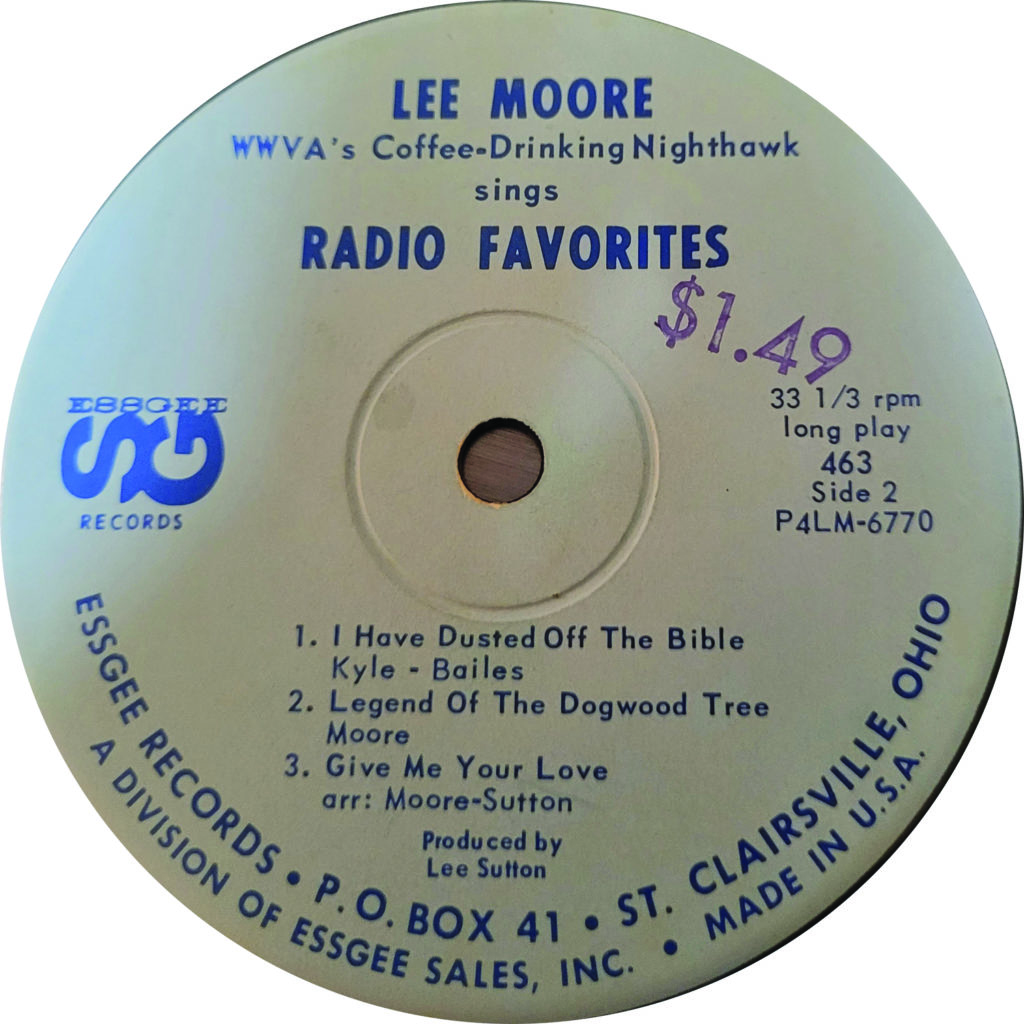
“Needless to say, I love the way you delve into the history of people and places in our music, and then share it with your readers. Your report on Lee Moore in the April 2023 Bluegrass Unlimited prompts me to add this.
“Lee Moore recorded with the Country Gentlemen, classic configuration in 1961 or 62. I don’t know the exact date. We (the Gents) were members of the WWVA Wheeling Jamboree in those years. The producer Lee Sutton asked us to stay another day in Wheeling and record 6 songs with Lee Moore. John Duffey played Dobro and mandolin. Eddie Adcock played banjo backup but took no solos. Charlie Waller played guitar including some solos. I played bass. None of us sang, so the only voice that appears is Lee Moore’s. They were released on an extended play 7-inch disc which played at 33 1/3 rpm. They were sold on the radio. Lee played them on his radio program frequently, talking as if he were the one playing the Dobro. The Country Gentlemen are not credited on the label. I’ve searched YouTube to see if anyone had uploaded these recordings. They’re not there.” – Tom Gray
More Bill Emerson Archives
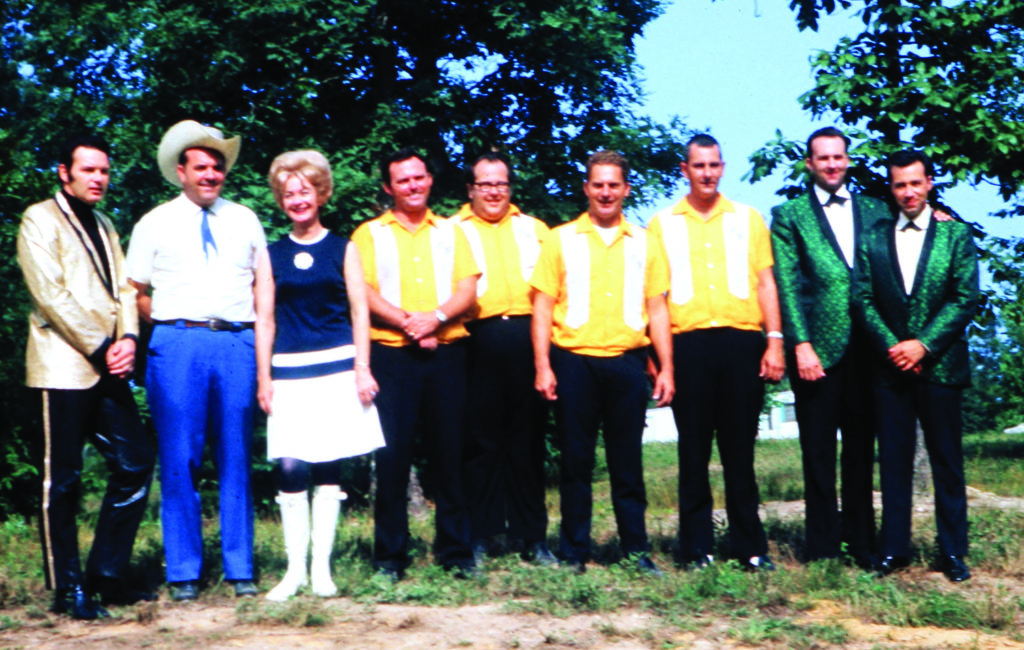
According to the date stamp on this slide, it was taken in July 1968. Mike Emerson recalled the location as being the Take It Easy Ranch in Callaway, Maryland.
The photo caught an interesting mix of musicians and entertainers who were about to go thru a number of changes. From left to right are David Houston, Martin Joseph “Rocky” Willis, Jr., Patsy Stoneman, Charlie Waller, Ed Ferris, Eddie Adcock, John Duffey, Bill Emerson, and Cliff Waldron.
Take it Easy Ranch was located about sixty miles southeast of Washington, D. C., in one of the southern-most portions of Maryland. The park opened in the summer of 1968, and the entertainers presented here likely offered some of the venue’s first concerts.
As was common of a number of country music parks in the 1950s and ‘60s, Take it Easy Ranch offered a mix of mainstream country music and bluegrass. Thus, it was not all that surprising to find country singer David Houston on the bill. Starting in the middle 1960s, he had several Top Five country hits including 1967’s “Almost Persuaded,” which netted two Grammy awards for Houston. The same year witnessed a popular duet with Tammy Wynette called “My Elusive Dreams.”
Serving as master of ceremonies for the day was Rocky Willis (November 14, 1924 – August 12, 2009), an Alabama native who served in the Navy during World War II and the Korean War. One of his later assignments was at the Patuxent River Naval Air Station in Maryland. After his discharge, he settled in nearby Lexington Park, Maryland, and began a career in broadcasting that lasted from 1962 until 1978. It was while working as an on-air radio personality that he emceed shows at Take it Easy Ranch.
Patsy Stoneman, a member of legendary Stoneman Family, fronted her own band throughout the middle 1960s. Her group, at times, included Bill Emerson on banjo. This photo was made shortly after family patriarch Pop Stoneman passed away, June 14, 1968. A short time later, Patsy moved to Nashville to take Pop’s place in the Stoneman Family band.
This version of the Country Gentlemen (Waller, Duffey, and Adcock) had been together since the early 1960s (Ed Ferris joined in early 1965). Less than a year later, both Duffey and Ferris departed the group and were replaced by Jimmy Gaudreau and Bill Yates. Adcock left two years later, to be replaced by Bill Emerson.
As was mentioned in the March “Notes & Queries,” Bill Emerson and Cliff Waldron began their partnership in July 1968. This was undoubtedly one of their first public appearances.
Over Jordan
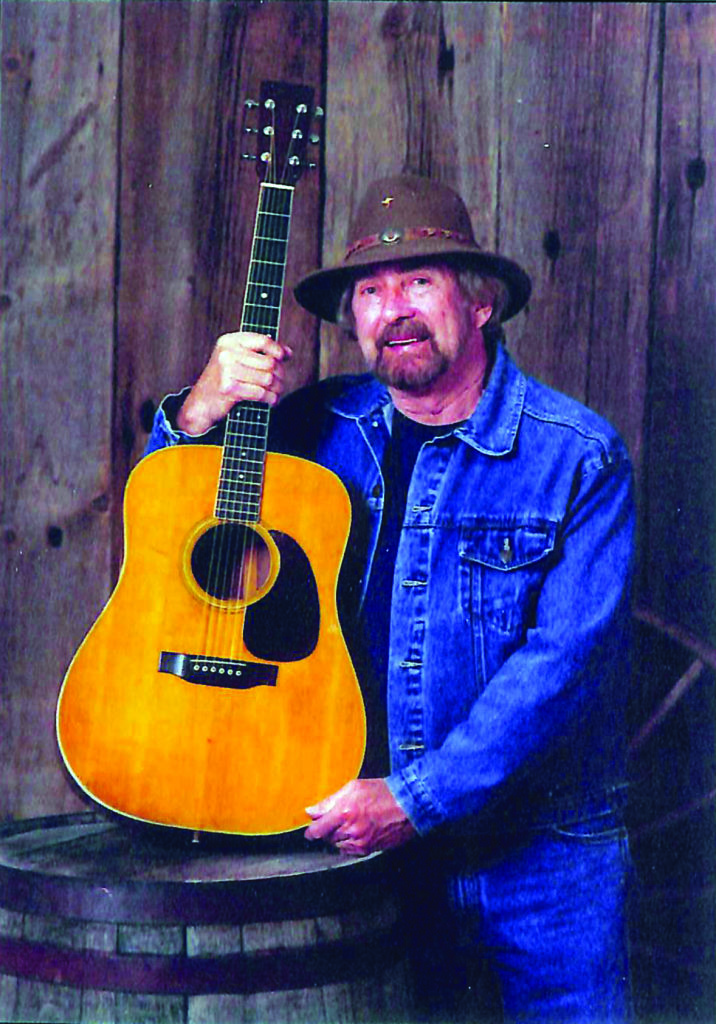
William Lewis “Bill” Castle (January 5, 1934 – February 27, 2023) was a Kentucky-born songwriter whose works were recorded by many of the top names in bluegrass including Doyle Lawson, IIIrd Tyme Out, the Lonesome River Band, James King, the Lost & Found, Larry Sparks, the Bluegrass Cardinals, 5 For the Gospel, and many others. While he once claimed to have written some two thousand songs, most of which were tucked away in boxes, one hundred sixty or so of the best were published through his Yonder Hills Publishing Company, a firm he started in 1982, and were registered with BMI.
Bill’s interest in songwriting began in the middle 1950s when he was stationed in Okinawa. It was there a fellow serviceman showed him how to write and meter songs. Together, they formed a group and performed for area enlisted men. Once back in the States, Bill joined a group called the Country Boys and appeared on several Kentucky radio stations.
Throughout the 1970s and ‘80s, Bill fronted his own Bill Castle Band with which he recorded two albums; one bluegrass and the other gospel.
Although Bill had been writing songs for over thirty years, it wasn’t until 1990 that he shared his work with others. It was then that the Ohio-based Hart Brothers group recorded the song “The Church at Hickory Grove.” The following year, the song was picked up and covered by Doyle Lawson on his Only God album. The stamp of approval from Lawson soon opened the floodgates and Bill’s songs began appearing on a number of high-profile albums.
In addition to his new-found prestige as a songwriter to the stars, another early career highlight for Bill was the use of his song “Christmas in the Mountains” in a stage production called A Sanders Family Christmas. The show was written as a sequel to the popular gospel stage show Smoke on the Mountain and appeared at a number of regional playhouses across the country, as well as a three-week run at the Ryman Auditorium.
In a 2003 Bluegrass Unlimited article called “Bill Castle: A Bluegrass Songwriter,” Bill told writer Loretta Sawyer that “the Lord gives you the gift, the talent to write, but you have to work at it, too.” Among the more recent readings of Bill’s gifts was Larry Sparks’ rendering of “Annie’s Boy,” a poignant story of a mother’s only son who did not survive the perils of war.
Steven M. Skold (aka Uncle Steve Crockett) (May 20, 1949 – February 23, 2023) was a talented, high-energy clawhammer banjo player who made his home in upstate New York. For thirty years, he fronted a bluegrass-friendly old-time group called the Log Cabin Boys. He and the group appeared at Bluegrass Unlimited’s festival in Indian Springs, Maryland, at Bill Monroe’s Bean Blossom festival, and at WSM’s Early Bird Bluegrass Concerts that were hosted by Bill Monroe.
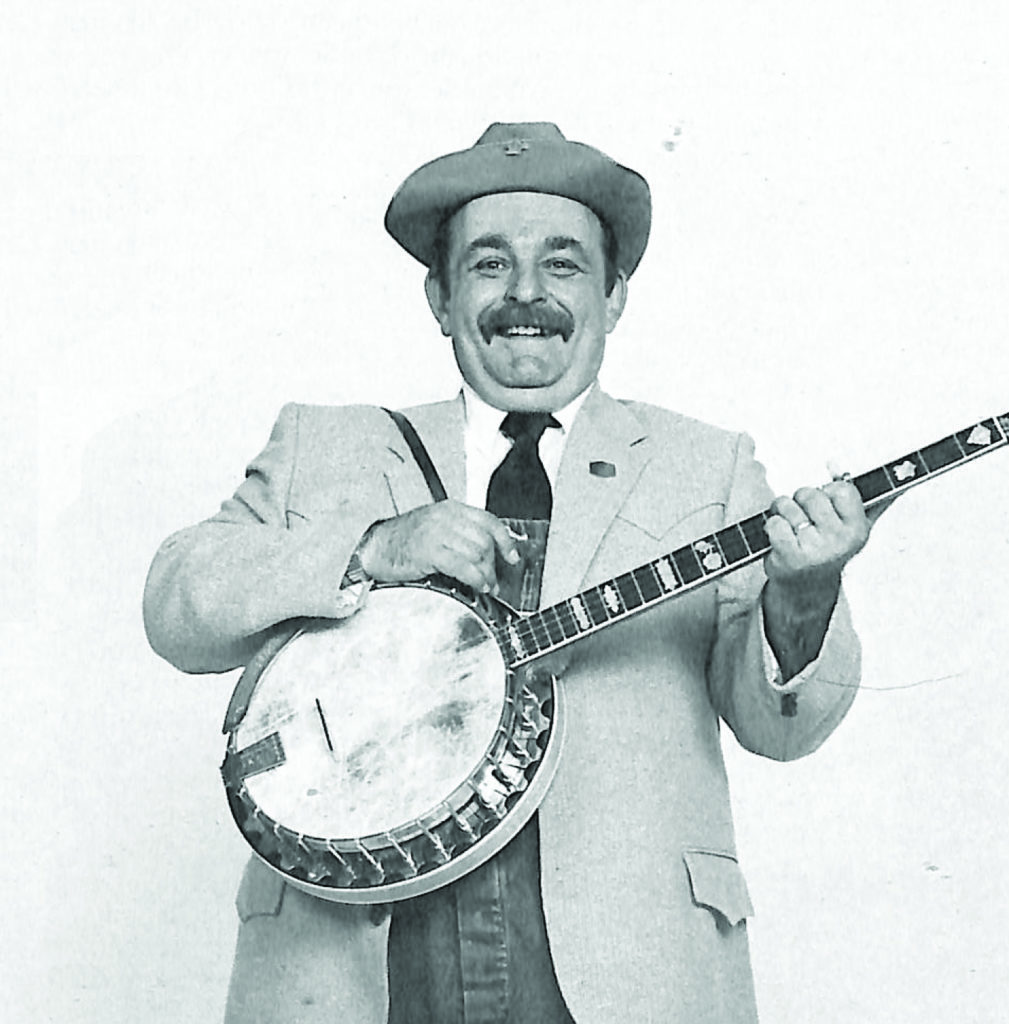
A native of New Jersey, Skold came by his love of music naturally. His mother, a child of Italian immigrants, loved to play the autoharp and to sing and write gospel songs. As with many bluegrass performers from years gone by, the radio did much to shape Skold’s taste in music. He was an avid listener to the WWVA Jamboree from Wheeling, West Virginia, and, when weather conditions were right, the Grand Ole Opry. Radio performances of banjo selections by Sonny Osborne and Earl Scruggs ignited his passion for all-things-banjo, but it was a later radio broadcast by Grandpa Jones that set Skold on a clawhammer banjo trajectory.
For the next several years, Skold played the banjo non-stop. For the most part, he was self-taught but he occasionally picked up pointers from other pickers at concerts. He honed his performance chops by playing anywhere he could, in bars, church suppers, school shows, and even on street corners. Throughout the 1960s and ‘70s, Steve and his brother Andy, who played guitar, formed several groups that played locally. Perhaps their Skold surname sounded too Swedish and the pair adopted the old-time-friendly-sounding-name of Crockett. It was in August of 1978 that the duo launched their longest lasting group, the Crockett Brothers and the Log Cabin Boys. Eventually this morphed into Uncle Steve Crockett and the Log Cabin Boys.
In 1986, The Post-Star newspaper of Glen Falls, New York, described Uncle Steve as “the embodiment of the old-time country lifestyle his music reflects, as he lives in the hills, working his own land. Steve weaves a razor-sharp wit and tall tales into his act for an unforgettable, down-home experience.” Despite the lofty praise, Uncle Steve remained largely unknown to the bluegrass world at-large. But he was by no means idle. For a number of years, a Catskill, New York, promotion company kept the Log Cabin Boys busy with performances at rodeos, conventions, trade shows, and county fairs. Instead of playing for the already-converted at bluegrass festivals, Uncle Steve took the mantle of old-time and bluegrass music to potentially new recruits.
Although Skold’s career spanned more than thirty years, he and the Log Cabin Boys were vastly under-recorded. In all, they had a total of two album releases: Traditional Country Favorites and Showtime. Bluegrass Unlimited reviewer Frank Godbey called the former album “energetically enthusiastic” and added that “the group is obviously of the belief that old-time music should be lived and loved, played and enjoyed and not treated as museum material suitable only for musicological research and academic pondering.” Of the latter, Richard D. Smith called it a “rompin’, stompin’ outing” that “put the accent on entertainment.” Both albums are long out-of-print but several YouTube clips from the 1980s offer fine examples of Uncle Steve Crockett’s clawhammer banjo mastery.