
Notes & Queries – March 2024
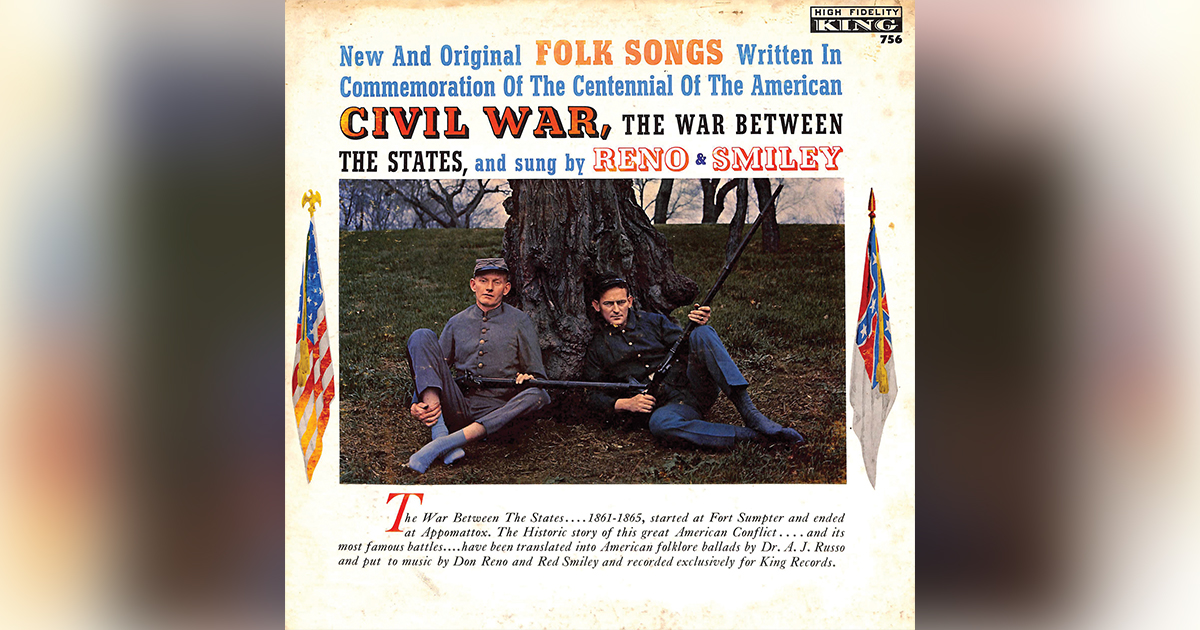
Q: What ever happened to the person who wrote all of the songs on Reno & Smiley’s Civil War album? – Jerry Steinberg, Salem, Virginia
A: The songwriter in question was Dr. Albert J. Russo, a doctor who practiced medicine in the Salem/Roanoke, Virginia, area for 39 years. His proximity to Reno & Smiley’s headquarters in Roanoke no doubt led to the pairing of his songs with the group.
The album has what must be one of the longest titles in history: New and Original Folk Songs Written in Commemoration of the Centennial of the American Civil War, the War Between the States. The album was recorded over a two-day period, on June 5 and 6, 1961. It was released on the King label at a time when there was much interest in the 100th anniversary of the War.
All 12 of the songs on the album were credited to Don Reno and Dr. Albert J. Russo. The selections started out as poetry by Dr. Russo and music was added later by Don Reno. On a number of the songs, Reno recycled the melodies from past Reno & Smiley songs. The tune for the song “Emotions” is one that comes to mind. A circa 1961 songbook by Reno & Smiley announced the album’s release: “NEW ALBUM. THE CIVIL WAR battles and stories as sung to Folk Music — by DON RENO-RED SMILEY and the Tennessee Cut-Ups. (Get this very exciting album today. All original songs never before recorded. Write us at once if you can not get it in your town.)”
There was little in Dr. Russo’s background to suggest that he would one day be a collaborator with Don Reno. He was born in Wilkes-Barre, Pennsylvania, on June 19, 1908, to Italian immigrants Alberto and Philomena Russo. He graduated cum laude from Notre Dame and later received a degree in medicine, graduating magna cum laude, from the Medical College of Virginia. By the start of World War II, he had set up shop in Salem, Virginia.
At Notre Dame and at the Medical College of Virginia, Russo served as editor of his schools’ yearbooks. In 1933, he issued a book of his original poetry called Smiling Through and Other Poems. However, it was a locally produced 45 rpm single that launched Russo on his extensive writings on the Civil War. Salem, Virginia-based Carl Basham and the Virginia Rebels recorded two of Russo’s songs for release on Salem’s Dominion Records: “I Sat Quiet By My Still” / “Rebel Raider.” Both Basham and Reno encouraged Russo to assemble more works on the Civil War. Much of it appeared a short time later on the Reno & Smiley album as well as in a 1964 book called Lee’s Command, a Poetic History of the War Between the States, With a Southern Exposure.
Throughout the Civil War’s centennial years, 1961-1965, Russo was a member of the Roanoke-based Civil War Centennial Commission. He gave lectures on the subject and was a guest on regional radio and television programs.
Following Russo’s retirement from medicine, he relocated to the Philippines, where he died in 1993 at age 85.
Red Belcher and the Kentucky Ridgerunners
Long-time Bluegrass Unlimited contributor Frank Godbey recently re-discovered a vintage promotional photo of Red Belcher and the Kentucky Ridgerunners, which featured the Lilly Brothers and fiddler Tex Logan. He noted, “It just popped up when I was looking for something else.” With the photo came the query, “Anybody know a date?”
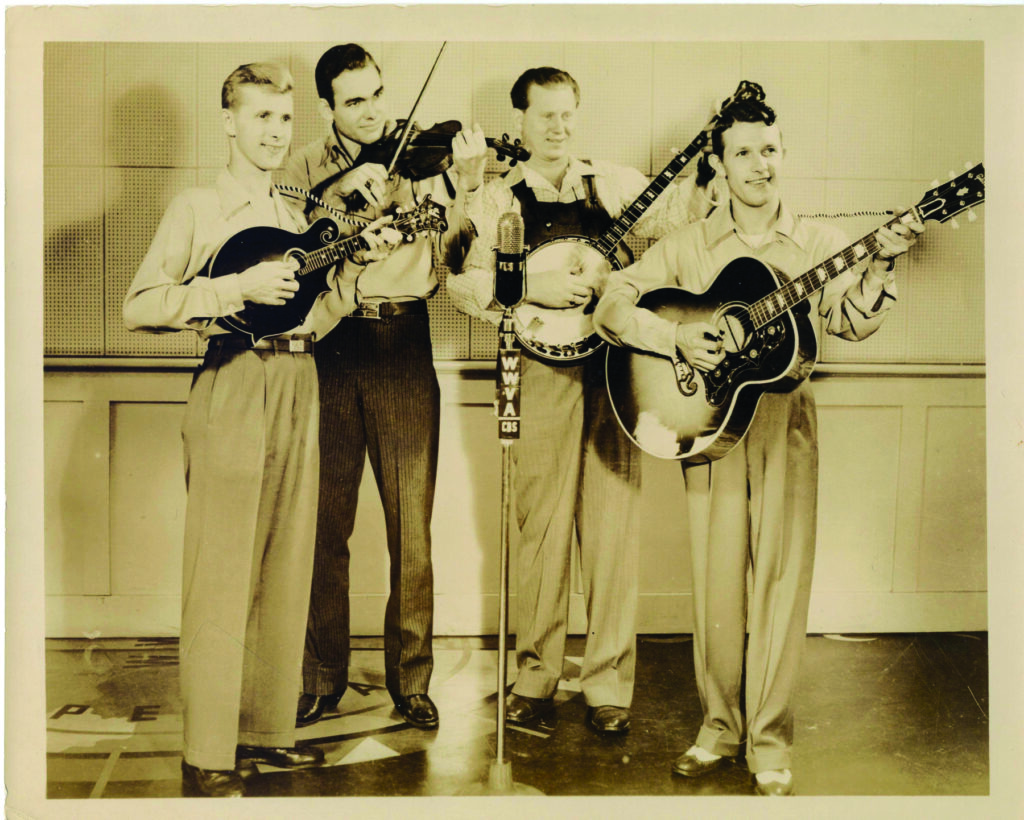
Although the Lilly Brothers most likely joined Belcher’s outfit in August of 1948, it wasn’t until early- to mid-October that Tex Logan joined up, thus completing the foursome featured in the photo. An October 30, 1948, item in Billboard magazine announced that the “latest addition to Red Belcher’s Kentucky Ridge Runners at WWVA, is Tex Logan, fiddler. The Ritchey Brothers have been replaced on that station by the Lilly Brothers.”
The Lilly Brothers stayed with Belcher for about a year and a half. Logan’s stay, however, was considerably shorter. He was featured in advertising for Belcher’s show dates until January 13, 1949, when the group was slated to appear in person in Athens, Ohio. Logan departed the group and journeyed to Boston to work as a research assistant at the Massachusetts Institute of Technology (MIT).
So, it was a very narrow window of opportunity – from mid-October 1948 to mid-January 1949 – when the grouping of Red Belcher, the Lilly Brothers, and Tex Logan would have been together for photos. It seems logical that the photos would have been taken earlier, rather than later. Belcher, known as a “pitch man” with a gift for advertising and promotion, likely had the photos made to promote the new grouping and to sell over the radio and at personal appearances.
While the Lilly Brothers and Tex Logan are familiar names to fans of deep-dive bluegrass, Red Belcher is not so well known. Finley Duncan “Red” Belcher (August 8, 1914 – August 16, 1952) was an old-time banjoist from Monroe County, Kentucky.
Belcher got his start in radio around 1935 or 1936 at station WDZ in Tuscola, Illinois. Like many other performers of his time, he hopped around from station to station. Included among his many stops were stays a WMBD (Peoria, Illinois, 1939), WJJD (Chicago, Illinois, 1942), KWTO (Springfield, Missouri, 1943), WSVA (Harrisonburg, Virginia, 1944), and WWVA (Wheeling, West Virginia, 1946).
In Wheeling, Belcher had a tendency to feature brother duets as part of his act. There was Budge and Fudge Mayse, Galen and Melvin Ritchey (the Ritchey Brothers), Mel and Stan Hankinson (the Kentucky Twins), and, of course, the Lilly Brothers.
One reason for Belcher’s anonymity today is his lack of commercial recordings. He had a total of three 78 rpm discs released (six songs/tunes). Of those, two were instrumentals that featured his clawhammer banjo work: “Dewdrops” and “Coleman’s March.” One was a rollicking tune that featured Tex Logan on fiddle and vocals called “Old Grey Goose” while a fourth was a vocal that featured the lead singing of Mitchell “B” Lilly called “Kentucky is Only a Dream.” All of these appeared on the Pennsylvania-based Page label and were most likely recorded in December of 1948. Two more songs (without the Lilly Brothers or Tex Logan) appeared in 1950 on West Virginia’s Cozy label: “I Ain’t Gonna Let Old Satan Turn Me Down” (even though the lyrics of the song are “turn me ’round”) and “I’m Moving On,” the latter a cover of a recent hit for country singer Hank Snow.
Red Belcher died in the summer of 1952 at the age of 38. While returning from a show date in Elkton, Virginia, his car failed to navigate a turn on a twisty mountain road and the ensuing single car crash took his life.
Jack Lynch and Jalyn Records
Recently, we fielded a telephone call from a nephew of Jack Lynch, founder and owner of Dayton, Ohio-based Jalyn Records. The reason for Jack’s nephew’s call . . . he wanted to know what ever happened to Jalyn Records.
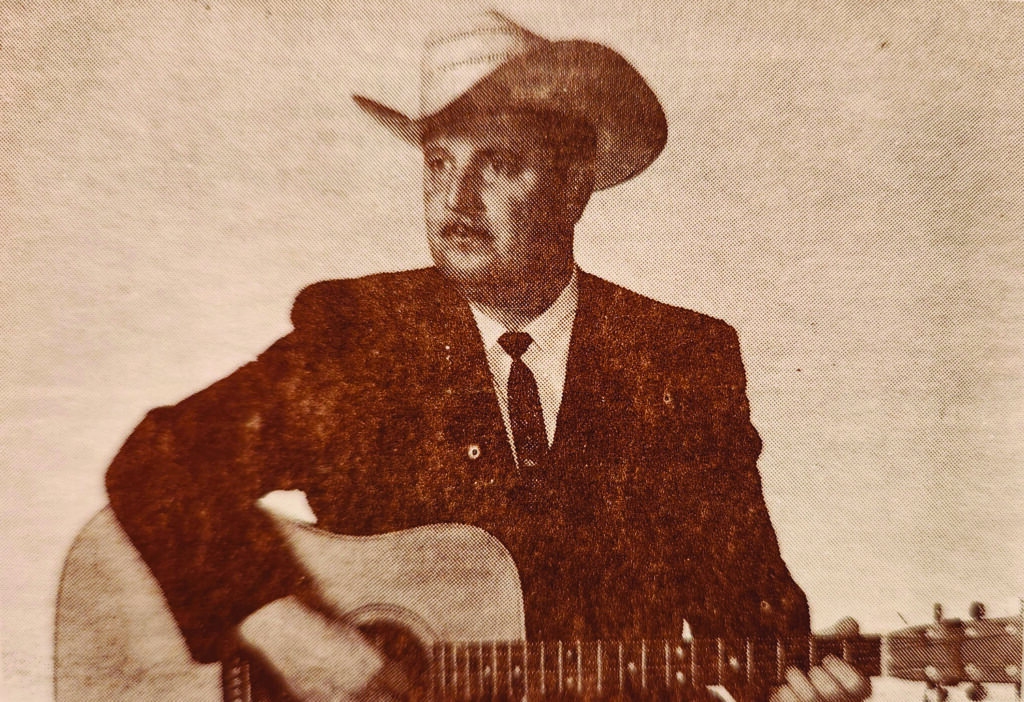
The label was started in 1963 and flourished until the late 1970s. John D. “Jack” Lynch (September 13, 1930 – February 26, 2011) was a Kentucky native with a passion for bluegrass music. Over slightly more than a decade’s worth of activity, his label released nearly 100 singles and EPs (extended-play 45s) and approximately 50 albums. Many of the artists who appeared on the label were Ohioans who were lumped into one of two categories: hard-core bluegrass or bluegrass/traditional country gospel. A few highlights over the years were two albums each by Ralph Stanley, by the new duo of Don Reno and Bill Harrell, and by Lee Allen. Lone album releases included a fiddle outing by Curly Ray Cline and a debut release by Keith Whitley and Ricky Skaggs called A Tribute to the Stanley Brothers.
In his book Traveling the Highway Home, author John Wright wrote that “dramatic success stories are always gratifying to hear and read. And stories of spectacular failure are fascinating in their own grim way as well. It’s the middle-of-the-road sort of story, involving neither success nor failure, that seldom gets told.” Such was his opening to a chapter of his book that was devoted to Jack Lynch.
Lynch began dabbling with music in his youth. In 1953, he relocated to Dayton, Ohio, where he secured a job with National Cash Register Company. He continued to keep a hand in music.
It wasn’t until a stint in the Army that took him to Okinawa in the late 1950s that Lynch took up his most enduring instrument, the bass fiddle. The Army bands that performed on base were constantly without a bass. Lynch took up the instrument to fill the void.
Once back in the States, Lynch used his bass-playing talents to sub with several top-tier groups including the Osborne Brothers and the Stanley Brothers. By 1963, he was also doing disc jockey work on radio station WPFB in Middletown, Ohio. Occasionally, groups – including the Stanley Brothers, Charlie Moore and Bill Napier, and the Osborne Brothers – would stop by for on-air visits.
In the waning days of the 1960s folk boom “Jack Lynch’s string band” provided music for an area hootenanny. By November 1964, he had teamed up with Roy Lee Centers and Centers’s brother-in-law, Fred Spencer. Curiously, they billed themselves as Jack Lynch and the Lee Brothers. This was later changed to Jack Lynch and the Miami Valley Boys. They had two 45 rpm discs released on Jalyn.
Bluegrass Unlimited reviewer Dick Spottswood wrote that the group was “stamped firmly from the Stanley Brothers mold.” Several of the songs recorded came from the Stanley catalog, such as “Will You Miss Me” and “Little Birdie,” the latter complete with old-time banjo. Another song, “All the Love I Had Is Gone,” wound up on a Ralph Stanley record a few years later. Lynch paid homage to his friend and idol with “In Memory of Carter Stanley.” An entire album, that appeared only a short time later, was greeted as a “well-done effort.” Vocals by Lynch were tagged as sounding “much like Carter Stanley.”
By 1978, Lynch’s activities with Jalyn Records had pretty much dried up. With no ties holding him to the Dayton area, he pulled up stakes and moved to Nashville. There, he organized a new group called the Nashville Travelers. In 1983, he opened the Nashville Music Club and booked bands into the venue. In 1987, he promoted his first bluegrass festival and made plans to film the proceedings for a future theatrical release.
Lynch completed two more recording projects in the late 1990s: Jack Lynch Sings Bluegrass and Old-Time Fiddle and Banjo Instrumentals. These appear to have been his last trips to a recording studio.
For all of his efforts, Lynch never did seem to make a go of things. The sub-heading of John Wright’s chapter on Lynch was “We just didn’t have the money.” Lynch died in 2011. Joe Isaacs sang at his funeral and helped to cover some of the costs of his burial.
Over Jordan
Thomas Edward “Tom” Barr (November 26, 1941 – January 10, 2024) was a long-time fixture of the music scene in and around Galax, Virginia. He was a musician, a luthier, and was the owner of Barr’s Fiddle Shop. In Blue Ridge Music Trails, Fred Fussell wrote that the store had a “solid reputation for supplying the very best instruments available for playing mountain music.”
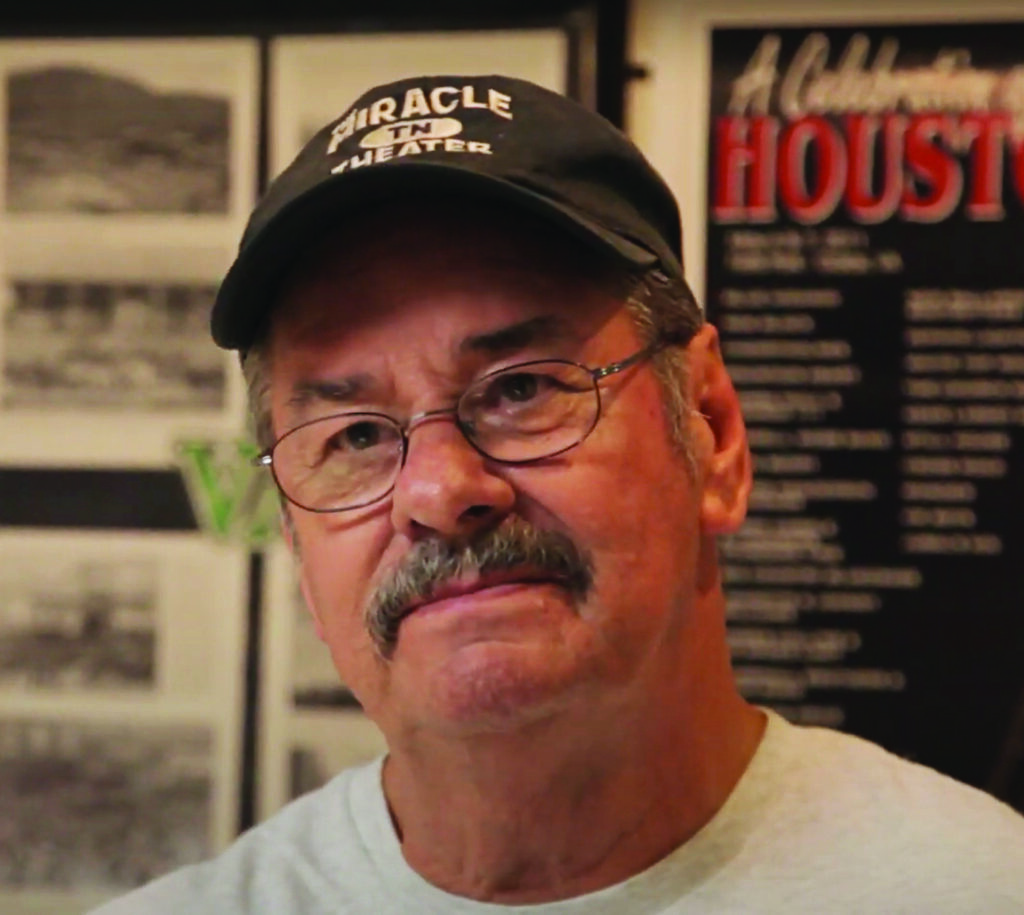
Barr grew up in an atmosphere of what he called mountain music. By his own estimation, he started playing bluegrass music in the early 1960s. He often performed on a Saturday afternoon jamboree that aired over radio station WBOB in Galax, and sometimes made guest appearances on Mt. Airy, North Carolina, station WPAQ. Some of the groups he played with were the New River Ramblers and Albert Hash’s White Top Mountain Band.
Barr noted that Albert Hash “started out just about everybody in this part of the country that makes musical instruments.” Barr’s own talents included instrument repair and the making of guitars, fiddles, banjos, and dulcimers.
In addition to being profiled in a number of books and articles about music of the Galax area, Barr’s Fiddle Shop was written up as a success story in the 2001 book The ebay Phenomenon. The book told how “Barr first began acquiring, reconditioning, and selling fiddles and other traditional instruments in the 1950s” and, selling thru ebay, later developed a world-wide customer base for the shop’s vintage and hand-crafted instruments.
Audie Lane Blaylock (August 18, 1962 – January 10, 2024) was a lifelong devotee of bluegrass music who, for the last 20 years, was the leader of his own group, Redline. Earlier groupings found him working with Jimmy Martin’s Sunny Mountain Boys, the Lynn Morris Band, Red Allen, and Rhonda Vincent and the Rage. Columnist Jon Weisberger once described Blaylock as “a compelling performer with a soulful tenor voice and an unsurpassed rhythmic drive.”
Although born in El Paso, Texas, Blaylock spent his formative years in Michigan. His parents were natives of a musically-rich area that is located near the convergence of Virginia, Tennessee and Kentucky. Father Fred played mandolin while mother Ruth played guitar and sang. Family jam sessions at home and trips to weekend bluegrass festivals were commonplace during Audie’s childhood.

Audie’s own musical journey began around age 8 or 9 when he started learning to play the guitar. As was typical of many high schoolers, Blaylock joined a rock band. This, however, soon gave way to the formation of a bluegrass band called Deadwood in 1981. Blaylock stayed with the group until October 1983 when a notice in Bluegrass Unlimited reported that the young picker, barely 21, joined Jimmy Martin and the Sunny Mountain Boys.
Blaylock stayed with the King of Bluegrass, off and on for nine years and credits Martin for schooling him in the finer points of being a professional musician. Unfortunately, Martin did not record during this time. Among Blaylock’s first work in the studio was a 1984 release by legendary guitarist/mandolin picker Bill Napier, who was then living in the Detroit area. Blaylock played guitar and sang tenor on Napier’s Hillbilly Fever LP.
Although Blaylock never recorded in the studio with Martin, he did appear on several VHS tapes that Martin released. One – titled 25 Year Reunion – was recorded in July 1987 at Frontier Ranch near Columbus, Ohio, and featured Martin with J. D. Crowe and Paul Williams. Another was a festival appearance on July 9, 1988, and was called Jimmy Martin’s Wedding. The on-stage ceremony and subsequent music were videotaped for posterity.
Jimmy Martin had a penchant for keeping his summers booked with festival dates and taking off during the winter months. Thus, the fall of 1988 found Blaylock performing with the newly-formed Lynn Morris Band. On another break the following year, Blaylock helped former Sunny Mountain Boy Chris Warner with the recording of a CD called Chris Warner and Friends. The project set the stage for a series of in-person performances with Warner and others from the project including Dudley Connell, Rickie Simpkins and Earl Yeager.
Blaylock played his last dates with Jimmy Martin in 1990. At the start of 1991, he teamed up with another bluegrass legend, Red Allen. Others who joined at the same time were Chris Warner and Earl Yeager. Blaylock stayed with Allen until that singer’s passing in 1993. The middle and late 1990s found Blaylock back with Lynn Morris for another stint and then with songwriter Harley Allen, who was touring to support his recent major label country release.
One of Blaylock’s most high-profile gigs was a four-year stay with Rhonda Vincent and the Rage. He signed on in early 2000 and stayed thru the early part of 2004. He appeared on Rhonda’s 1991 release The Storm Still Rages. The exposure from performing with Vincent & the Rage, who in 2001 was voted by IBMA members as Entertainer(s) of the Year, made the timing right for the release of Blaylock’s first solo recording, Trains Are the Only Way to Fly. Vincent helped out with harmony vocals on the disc.
After performing for nearly 25 years as a side musician in other groups, Blaylock struck out on his own in the early part of 2004. He christened his new group Redline. For the next 20 years, he and the band released a total of 11 recordings, most of which appeared on the Rural Rhythm and 615 Hideaway labels. First out of the chute was the self-titled Audie Blaylock and Redline. One of the highlights was a 2011 release called I’m Going Back to Kentucky. With a star-studded line-up of guests, the project celebrated the 100th anniversary of Bill Monroe’s birth.
The only gap in Redline’s history was a 2006-2008 detour that found Blaylock touring as a featured part of Michael Cleveland’s Flamekeeper. The group was IBMA’s nod for Instrumental Group of the Year.