Notes & Queries – June 2025
Q – I heard a song on the radio about an old truck driver telling a story about losing his family due to his addiction to shooting pinball. I was able to locate the song later online; it’s called “Pinball Machine” and the artist is Lonnie Irving. It’s not really a bluegrass record but it has a nice banjo break on it. Do you know who the banjoist is? James Redemeyer, Ukiah, CA
A – Lonnie Irving’s “Pinball Machine” was covered briefly in the May 2003 edition of “Notes & Queries.” Since then, new information on the song and its writer has come to light, making it a good time to revisit and expand on Irving’s short-lived career.
The Life and Legacy of Lonnie Irving: A One-Hit Wonder with “Pinball Machine”
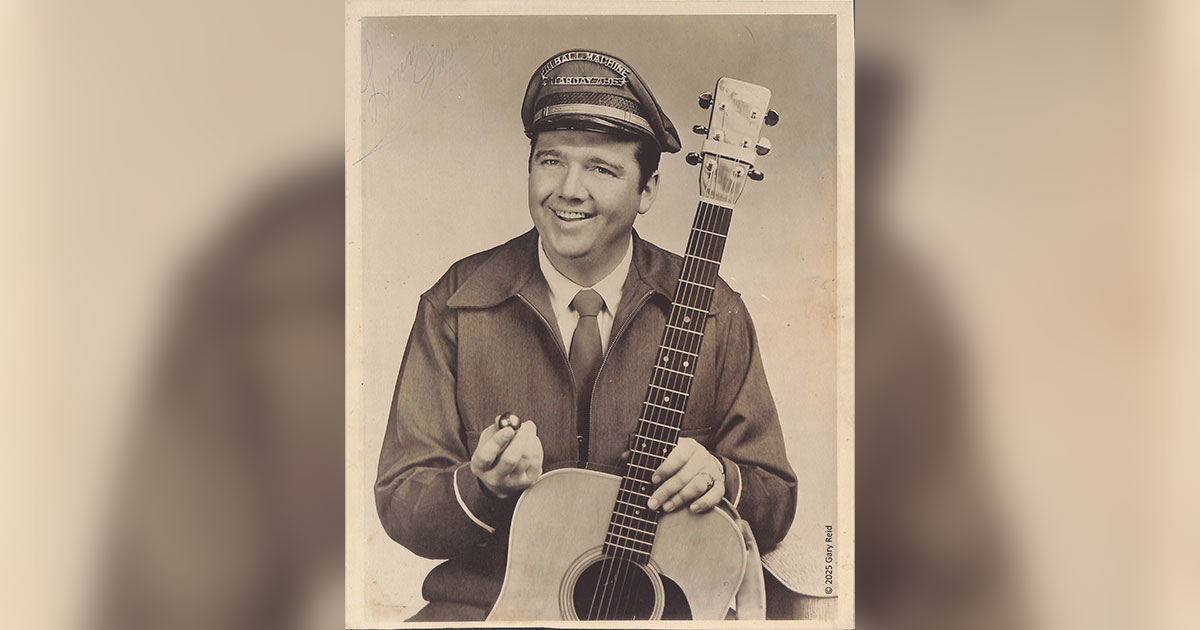
Lonnie Leon Irving, a truck driver turned country music artist, made a splash in 1960 with his one-hit wonder, “Pinball Machine.” Born on June 11, 1932, in Stoneville, North Carolina, Irving grew up in the Leaksville area as the second oldest of six boys in the family of Holmes and Lenia Irving. His journey from a small-town upbringing to national recognition spoke volumes of his talent and determination.
Early Life and Musical Beginnings
From an early age, Lonnie Irving displayed a passion for music. He began playing the guitar and singing during his school days, often entertaining his classmates in the school auditorium. His love for music extended to performing at country square dances and making appearances on radio and television. Writing songs, playing the guitar, and singing were not just hobbies for Irving—they were his lifelong passions.
After attending Wentworth High School in North Carolina, Irving joined the Air Force, where he underwent training in San Antonio, Texas. On October 4, 1953, he married Shirley Moorefield of Leaksville, North Carolina, and the couple had two children, Anthony Ferlon and Connie Teresa. Despite his responsibilities as a family man, Irving continued to nurture his musical aspirations.
Transition to Truck Driving and Songwriting
In 1955, Irving completed training at the North Carolina Truck Drivers Training School and began working as a long-distance truck driver for Hennis Truck Lines in Winston-Salem, North Carolina. His experiences on the road deeply influenced his songwriting. Observing the lives and struggles of truck drivers, Irving found inspiration for his most famous song, “Pinball Machine.” Irving wrote about his song in the debut issue of his fan club journal, saying “I had always wanted to be a Country Music Artist more than anything in the world. I tried and tried and got nowhere so I put the idea aside and went to driving a truck on long hauls. After I saw how many truck drivers there were and their activities, I began to believe if a song was written about a truck driver it would go over so I began to try again. I worked on ‘Pinball Machine’ for about two years getting the ideas up and down the road.”
The Breakthrough with “Pinball Machine”
In November 1959, Irving recorded “Pinball Machine” with the help of Jim Eanes and his band, the Shenandoah Valley Boys. The recording featured notable musicians such as Allen Shelton on banjo, Roy Russell on fiddle, Arnold Terry on rhythm guitar, Frank Burroughs on electric guitar, and Stafford Carum on bass. Jim Eanes watched the proceedings from the studio control room. Irving released the first batch of records himself and then set about promoting the disc. He noted that “I got 300 records then I went out to see our good buddy Wayne Raney at WCKY Cincinnati, Ohio, and to Nashville, Tennessee, [where I] met Grant Turner and Ralph Emery at WSM and gave them the record and asked them to play it for me. They got a very good reaction on the air. Then on January 7, 1960, Don Pierce leased the master for Starday. It’s hard for me to say which was the most exciting for me, being able to get on Starday Records or the guest shot on the Grand Ole Opry that I got thru Tommy Hill (a producer at Starday) and being introduced by Ernest Tubb.”
“Pinball Machine” tells the tragic story of a truck driver whose obsession with playing pinball leads to the death of his wife and children. The song’s poignant narrative, combined with its bluegrass sound and Irving’s nasal recitation, resonated with audiences. As Billboard noted in its February 22, 1960, review, the song “has the real backwoods, bluegrass sound in three-quarter time. There’s a banjo and fiddle heard prominently behind Irving’s nasal recitation and vocal of [a] sad, sad tale. Irving has a slight yodelish quality in the strongly folk-oriented effort.”
The song debuted on the Billboard country music charts on March 18, 1960, and remained on the charts for 15 weeks, peaking at #13 on April 4, 1960. Its success was unprecedented for a debut single, with Cash Box remarking, “Can anyone remember when an artist hit the first time out?” The song’s popularity extended beyond the United States, reaching audiences in Canada and Europe.
Starday Records and Subsequent Releases
Following the success of “Pinball Machine,” Irving released a follow-up single, “Goose Ball Brown” b/w “An Old Fashion Love,” on Starday Records. While it did not achieve the same level of success as his debut, it showcased Irving’s ability to blend humor and heartfelt emotion in his music. Cash Box described “Goose Ball Brown” as having “enough strength…to do a repeat chart performance,” highlighting its “cute novelty opening” and “definite hillbilly styling.”
Despite his growing popularity, Irving’s career was tragically cut short. In October 1959, he was diagnosed with leukemia, which forced him to give up truck driving and limited his ability to tour and promote his music. On December 1, 1960, Irving passed away, leaving behind a brief but impactful legacy in country music.
Legacy and Impact
Trucking songs in bluegrass and country music were few and far between in the 1940s and ‘50s. Bill Monroe scored a release in 1951 with “Lonesome Truck Driver Blues” and Hawkshaw Hawkins and Cowboy Copas both had trucker-themed releases. The mid-1960s saw complete albums of trucker songs released by the duo of Charlie Moore and Bill Napier and by the team of Don Reno and Red Smiley. Writing in Richmond, Virginia-based Throttle magazine in 1992, Mike Joyner opined that “trucking is one of the last professions to have its own musical subgenre. It’s hard to say just what the first trucking anthem was, but . . . in 1960 came Lonnie Irving’s ‘Pinball Machine.’ It was as mournful and otherworldly a ballad as ever was cut. Irving . . . sounds as if he’s singing from the other side of the grave already. The song’s lonely regrets of familial separation and the addictions of the road which can lead to a driver’s demise struck a chord in the country world.” Irving’s ability to translate the everyday struggles of truck drivers into a compelling narrative resonated with listeners, making “Pinball Machine” a timeless classic.
Over Jordan
Raymond Edward Huffmaster, Jr. (October 26, 1943 – April 7, 2025) was a Mississippi native who was known for his exceptional guitar skills and deep love for bluegrass. His life was intertwined with music, camaraderie, and the vibrant culture of festivals and jam sessions.
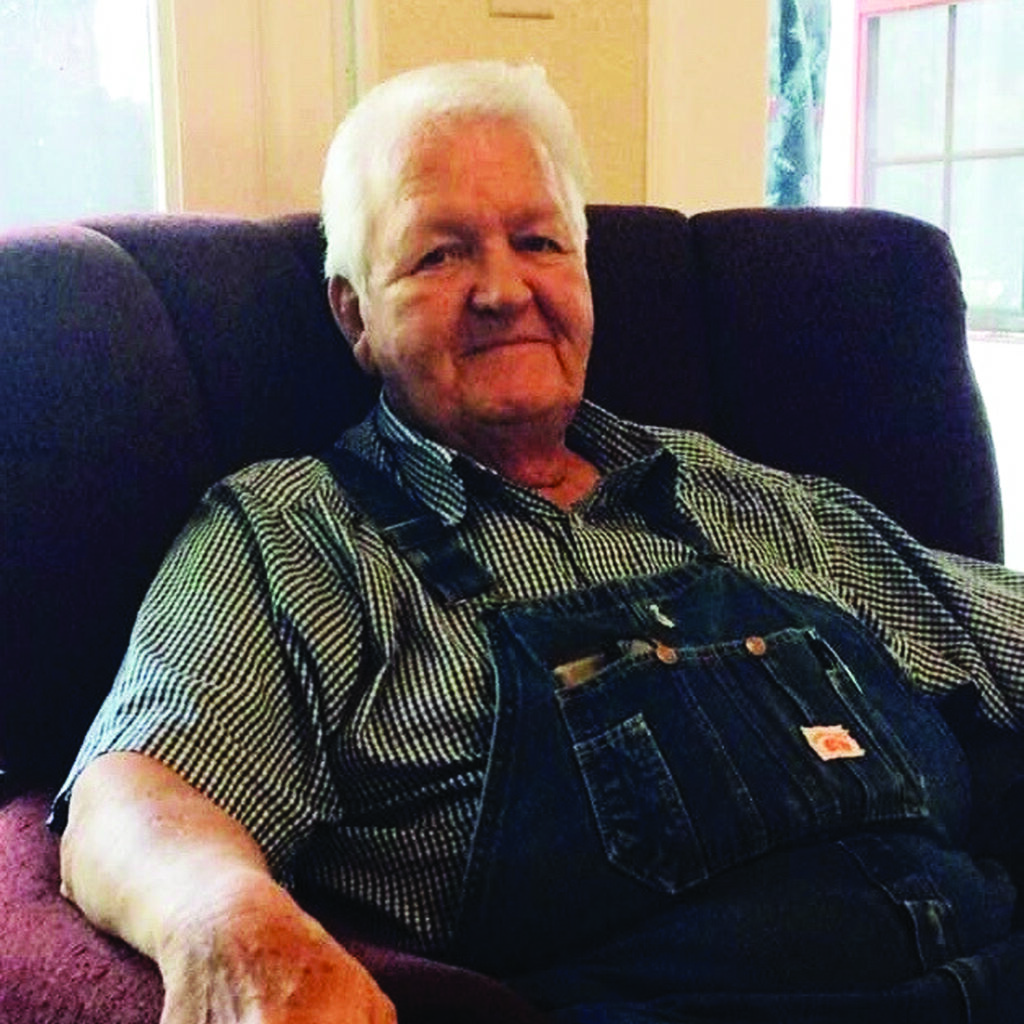
Raymond Huffmaster, courtesy of the Monroe Mandolin Camp.
Huffmaster’s journey into bluegrass began in 1964 when he first saw Bill Monroe perform, an experience that profoundly influenced his musical path. In 1969, at the age of 26, he attended Bill Monroe’s Bean Blossom Festival for the first time; the venue would become central to his life and career. In June 1979, Huffmaster actually managed the festival and a short time later joined as a member of Monroe’s Blue Grass Boys band, playing bass. His friendship with Monroe extended beyond performing, as evidenced by Monroe recording Huffmaster’s gospel song, “What a Wonderful Life,” on January 14, 1988.
Huffmaster’s association with the Osborne Brothers was equally significant. He played guitar for the band, drove their bus, managed merchandise sales, and served as their road manager. He held the duo in high esteem, noting once that “I think they are the most professional act out there and I know they sound closer to their recordings than anyone in the business.” Huffmaster introduced guitarist Terry Eldredge to the Osbornes, further cementing his role as a connector within the bluegrass community.
Huffmaster was seldom-recorded but he did appear on two releases by the Osborne Brothers: Hillbilly Fever and Singing, Shouting Praises. He also appeared on a solo album by Lester Flatt sideman Pete Corum called The House of the Rising Sun.
Beyond his professional contributions, Huffmaster was a fixture on the bluegrass festival scene, particularly at Bean Blossom. He was renowned for his participation in late-night jam sessions, where musicians gathered around campfires to play until dawn. These sessions were described as “magic, near-mythic jams,” and Huffmaster’s presence was synonymous with the spirit of Bean Blossom. He emphasized the importance of jam session etiquette, urging participants to respect the flow of the music and only join when invited. His advice reflected his deep respect for the art of collaboration and the sanctity of musical moments.
Huffmaster’s influence extended beyond his performances. He inspired musicians like Mike Compton, who credited Huffmaster with shaping his appreciation for Monroe-style mandolin. Huffmaster also played a role in the local music scene in Mississippi, leading a bluegrass band and owning the Tin Barn, a honky-tonk near Meridian. It was here that he connected with local musicians and preserved traditional tunes like “Carroll County Blues.”
Life on the road was challenging for Huffmaster, as he candidly shared: “Life on the road is very hard, very tiring, and sometimes very lonesome.” Despite the hardships, he cherished the friendships he made and the joy of sharing music with others. His gratitude for the bluegrass community was evident in his reflections, where he thanked fans for their support, gifts, and friendship.
Daniel Tracy Schwarz (November 13, 1938 – March 29, 2025) enjoyed a life of music that spanned a lifetime. His talents were put to good use in influential old-time groups such as the New Lost City Ramblers and the Strange Creek Singers, and in family collaborations with Eloise Schwarz, Ginny Hawker, and son Peter. He was among the last surviving participants of the 1960s folk boom.
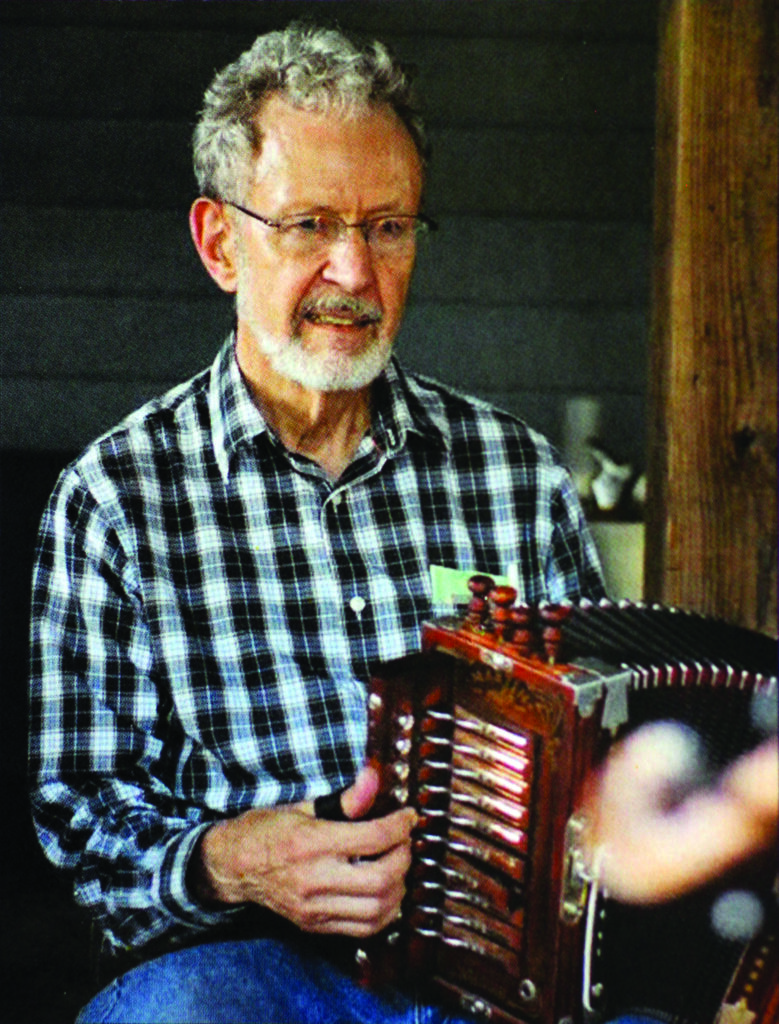
Schwarz grew up in New Jersey. His summers were spent in Vermont, where he was introduced to the rural lifestyle and the milking process, which he considered a major building block of his life. His mother, a trained classical pianist, recognized his fascination with music by the time he was six and enrolled him in piano lessons, providing him with a solid musical foundation. Although he started on guitar, Schwarz developed an interest in the fiddle, inspired by his grandfather’s instrument.
Schwarz ventured into public performance of old-time music in the early 1960s when he met Mike Seeger during informal hootenannies at a park in Washington, D.C. Seeger, a member of the New Lost City Ramblers, invited Schwarz to join the band after Tom Paley left in 1962. Schwarz recalled, “I got a letter from Mike asking if I’d like to join the New Lost City Ramblers when I got out [of the Army] in four months.” He enthusiastically accepted, marking the beginning of his influential career in old-time music.
The New Lost City Ramblers, originally formed by Mike Seeger, John Cohen, and Tom Paley, were pivotal in the old-time music revival. They preserved traditional Southern and Appalachian music, playing at major folk festivals across the country and overseas. Schwarz’s addition to the band brought a new energy, and they traveled extensively, planting seeds of old-time music wherever they performed. Schwarz noted in a 2017 Bluegrass Unlimited article by Craig Harris, “We were atop of the traditional music world, playing at every major folk festival in the country and overseas.”
A highlight of Tracy’s time with the New Lost City Ramblers came in March 1966 when the group traveled through Europe as part of an American Folk & Country Music tour. Also performing as part of the package were the Stanley Brothers, Cousin Emmy, Roscoe Holcomb, and a Cajun group headed by Cyp Landreneau. The Stanley Brothers’ bass player, Chick Stripling, was unable to complete the tour and Tracy was drafted to take his place. Tracy noted that “Carter thanked me personally for playing on pitch and on time – I had made the grade!” A behind-the-scenes moment came when Carter Stanley invited Tracy to sing an old song made popular by the Blue Sky Boys, “The Sunny Side of Life.” Tracy was somewhat taken aback. “Could he mean for me to tenor him, the great Carter Stanley, sing with him? I threw caution to the winds and joined in with my best tenor harmony and even got a compliment from him (‘good note’).” Tracy was the last surviving member of the tour and of the Ramblers as well.
In the mid-1970s, as the New Lost City Ramblers’ schedule slowed down, Schwarz and Seeger started the Strange Creek Singers with Hazel Dickens, Alice Gerrard, and Lamar Grier. The group emerged from jam sessions and parties around the D.C. area. Again, speaking to Craig Harris, Schwarz explained, “After a while, we noticed that the same five or six of us were playing together the most. It took us a while to decide to record an album.” Their music was well-received, with one reviewer stating, “It turned out to be some of the most exciting old-time country music I’ve heard in some time.”
Schwarz also collaborated with his wives, Eloise Schwarz and Ginny Hawker, in duet performances. His work with Eloise resulted in several albums, including Home Among the Hills, Down Home, and Our Kind of Music. A reviewer praised the diversity of their music, saying, “The Schwarz’s music . . . range[s] through a number of old-time styles, and a variety of instrumental arrangements.” Another review highlighted their authenticity, stating, “They have become virtually indistinguishable from the very musicians who influenced them.”
In 1988, Schwarz met Ginny Hawker at Ashokan music camp, and they married two years later, relocating to West Virginia. Their first album, Good Songs for Hard Times, was released in 2000, followed by Draw Closer in 2004. A reviewer described their work as “a captivating compilation of heartfelt duets,” noting Ginny’s resonant lead vocals and Tracy’s vivacious compositions.
Throughout his career, Schwarz demonstrated a deep commitment to old-time music, both as a performer and educator. He created instructional albums, such as Learn to Fiddle Country Style and Traditional Cajun Fiddling, to help aspiring musicians. Schwarz’s influence extended beyond his performances, as he played a crucial role in the old-time music revival and inspired countless musicians. His legacy is marked by his dedication to preserving and promoting traditional music. His journey from a young boy fascinated by music to an influential figure in the old-time music scene is a true marker of his passion and talent.
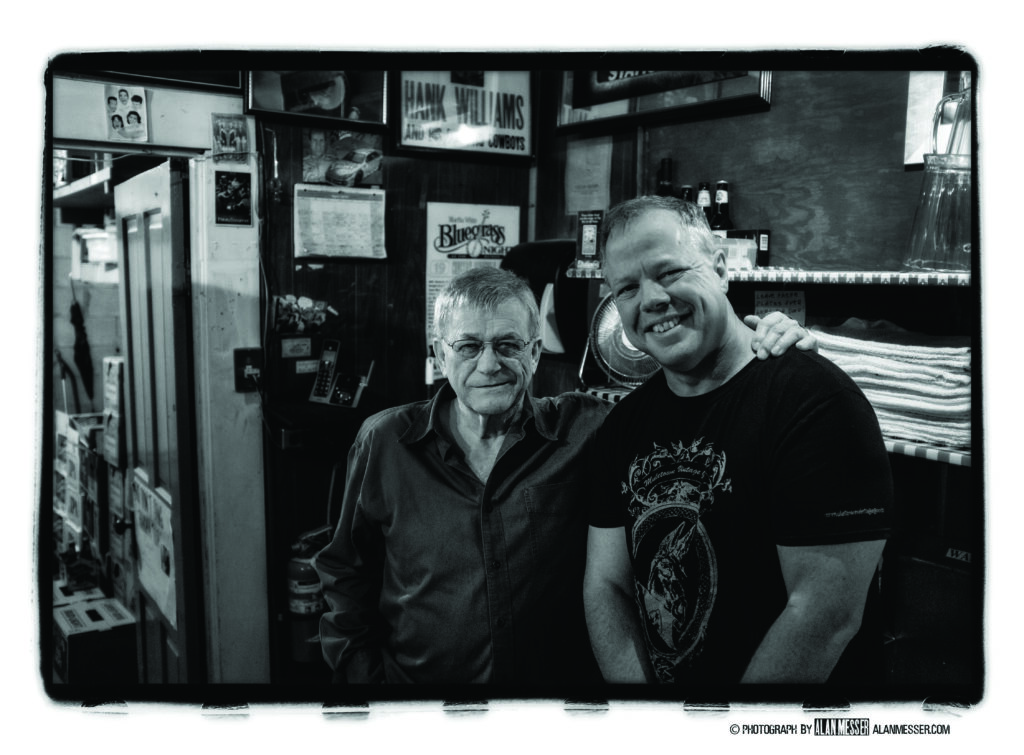
Edgar Kurt Storey (April 21, 1960 – March 27, 2025) was a celebrated audio engineer from Nashville whose contributions to bluegrass and country music left an indelible mark on the industry. Known for his technical brilliance and warm personality, Kurt worked with some of the most iconic names in music, including Bill Monroe, Victor Wooten, Mark O’Connor, Bela Fleck, the Del McCoury Band, Chris Thile, and Riders in the Sky. His work spanned decades, and he was instrumental in recording and mixing albums that have become cornerstones of Americana music, such as Mark O’Connor’s The Fiddle Concerto and Bela Fleck’s Double Time.
Kurt’s entry into the world of audio engineering began at Hillsboro High School in Nashville, where he was part of a groundbreaking vocational program that taught students the technical aspects of recording music. The program, which included a fully equipped recording studio valued at $75,000, was designed to prepare students for careers as sound engineers. Under the guidance of Vic Gabany, a sound engineer for the Grand Ole Opry, Kurt learned how to blend sounds, repair equipment, and manage the business side of studio operations. The school’s studio featured state-of-the-art equipment, including a 16-track recording machine, microphones, amplifiers, and signal processing tools, providing students with hands-on experience that rivaled professional facilities.
Kurt excelled in the program, spending every available moment in the studio to hone his craft. His dedication paid off, as he quickly transitioned into Nashville’s recording industry after graduation. Reflecting on his time at Hillsboro, Kurt once said, “The course has meant a whole lot. I was here every minute I could be. I learned to get the best sounds I could. When I got out in the field, I knew what people were talking about.” This early training laid the foundation for a career that would see him working with legends and shaping the sound of countless recordings.
In addition to his studio work, Kurt was the longtime sound engineer at The Station Inn, the trendy Nashville nightspot that has been a cornerstone of the bluegrass and Americana music scene. For decades, he was the steady hand behind the soundboard, ensuring that every performance resonated with clarity and emotion. His expertise helped create unforgettable live experiences, earning him the admiration of artists and audiences alike. Kurt’s contributions to The Station Inn extended beyond his technical skills; he was considered family by the venue’s staff and musicians, and his kindness and humor made him a beloved figure in the community.
Kurt was also a talented musician, playing bass and fiddle with the same passion and precision he brought to his engineering work. His ability to connect with people, whether through music or conversation, made him a rare and cherished presence in the industry.
Kurt passed away after a battle with pancreatic cancer. Tributes poured in from friends, colleagues, and artists, all of whom remembered him as a kind, generous soul and a master of his craft. His legacy lives on in the music he helped create and the lives he touched, both on and off the stage.