Notes & Queries – June 2024
Q: Chubby Collier played some awesome hardcore fiddle on several Charlie Bailey songs that I like extremely well. I believe he was from far southwest Virginia. I wonder if he recorded on more songs; I can’t think of any. Can you come up with anything about him? I’d love to learn as much as I can about him. He’s way over looked. Thanks. Jerry Steinberg, Salem, Virginia
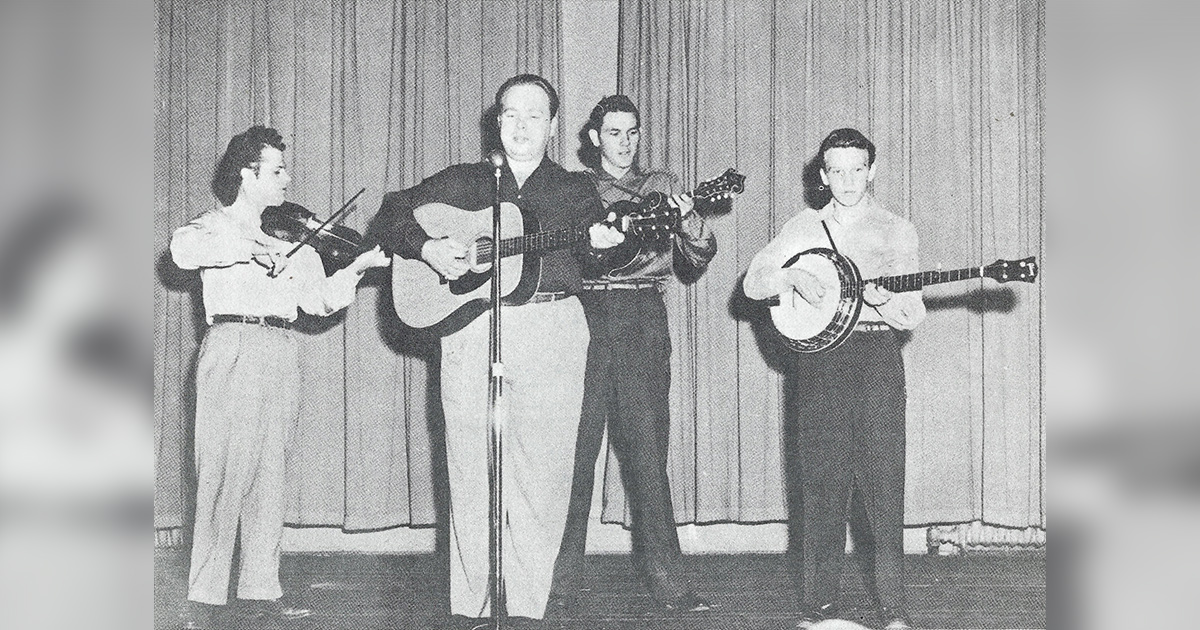
A: Ralph Bramlett “Chubby” Collier (December 12, 1928 – November 12, 1998) was known primarily as a fiddler but was adept on mandolin and banjo as well. He was a native of Lee County, Virginia, which is located in the extreme southwestern corner of the state, near its convergence with Tennessee and Kentucky.
Among Collier’s first professional work was a 1947 stint with Curly King and the Tennessee Hilltoppers, who were featured with a program on WCYB in Bristol, Virginia. While in Bristol, he resided at Lou Smith’s boarding house. The home was located a short distance from the radio station and was home to other performers including Curly and Lucky Seckler, Carter and Ralph Stanley, and Ralph Mayo.
In 1949, Collier relocated to Roanoke, Virginia, to play with Smokey Graves and the Blue Star Boys. The group was featured with regular broadcasts over radio station WDBJ. Others in the group included Paul Jefferson (“wizard of the 5-string banjo”), Chuck Johnson on mandolin and bass fiddle, Herman Yarbrough on guitar, and comedians Roscoe Swerps and Jody.
Collier returned to Curly King’s group in the latter part of 1950. Added at the same time was steel player Sonny Burnett. Other band members included Shorty Morris, Wrestles the Bull-Fiddle, and comedian Smokey Davis.
Collier’s next move was in 1951 to the Bailey Brothers. The timeline gets a little confusing here. Collier took Tater Tate’s place in the band. Tate reported working with the Bailey Brothers in Raleigh, North Carolina, over WPTF and then went with them to Roanoke, Virginia. Shortly after the move to Roanoke, Tate was drafted. Collier recorded two songs with the Bailey Brothers which were intended for release on their own Canary label; the songs “Bleeding Heart” and “Saint Louis Blues” were never issued (although they were re-recorded and released later with a different group of musicians). What is confusing is the fact that the songs featuring Collins were recorded in Raleigh at WPTF. Did the group, while working in Roanoke, travel back to Raleigh to make the recordings?
Mac Wiseman relocated to Baltimore in October 1952. He assembled a new band that included Collier on fiddle, Jim Williams on mandolin, and Wayne Brown on banjo. Work in Baltimore included “playing daily shows at Johnny’s Used Cars in Baltimore, Maryland; recording shows for the U.S. Armed Forces Radio Network and doing local television shows with such stars as Pee Wee King and the late Hawkshaw Hawkins.”
Collier accompanied Wiseman to Richmond in 1953 to appear on the Old Dominion Barn Dance. Later that summer, the group – with Collier on mandolin, Allen Shelton on banjo, Tommy Jackson on fiddle and Ernie Newton on bass – cut a session of seven songs for Dot Records: “Love Letters in the Sand,” “I Haven’t Got the Right to Love You,” “Keep on the Sunny Side,” “Reveille in Heaven,” “Dreams of Mother and Home,” “The Waltz You Saved for Me,” and “Paradise Valley.” On one selection, “I Haven’t Got the Right to Love You,” Collier played twin fiddle with Tommy Jackson.
It was while working with Wiseman that Collier married Dena F. Straley, a Wisconsin native who was living in Richmond at the time. The couple wed on April 26, 1954. It’s doubtful that they had much of a honeymoon as Collier played a show with Wiseman in Galax, Virginia, the very next day. Collier stayed with Wiseman through at least August 1954. In addition to playing fiddle, Collier also performed comedy.
In 1956, Collier was reunited with Charlie Bailey, who was working then as a solo over WWVA in Wheeling, West Virginia. Bailey recalled that “the Osbornes worked for some time, then they wanted to branch out on their own. When they left, I brought Chubby Collier in on fiddle, and Jimmy Elrod on banjo, and Ray Myers, the armless wonder . . . he was tourin’ with us then. He was a great attraction . . . a great entertainer.” The All Music Guide reported that “with this lineup, he [Bailey] recorded a few songs at WWVA.” Titles have yet to be verified. In January and March of 1956, Bailey recorded two sessions for Event Records in Maine. Of the 10 songs that were recorded, only a few were ever issued: “Darling Nellie Across the Sea,” “Memory of Your Smile” and “You Are the Rainbow of My Dreams.” The unreleased titles include “I Don’t Mean to Cry When You’re Gone,” “Long Journey Home,” “The White Dove,” “Home Sweet Home,” “Little Darlin’ Pal of Mine,” “Lost Train Blues” and “Why Do You Weep Willow.”
Shortly after the stint with Charlie Bailey, Collier relocated to Wisconsin, presumably for his wife to be closer to her family. Although far removed from the bluegrass heartlands, Collier found plenty of places to play his fiddle in America’s Dairyland. For instance, on April 21, 1956, the Club Cheyene, billed as Wisconsin’s Largest Hillbilly Center, hosted Chubby Collier and other musicians. Advertising for the program noted that the fiddler was “Back By Popular Demand.” He was described as being “from WRVA’s Old Dominion Barn Dance, Richmond, Virginia . . . formerly of the Louisiana Hayride and Grand Ole Opry! Dancing Every Sat. Nite!” Other band members included Rye Whiskey Dick on guitar, Ronnie Teofan on banjo, Little Harold as M.C. and guitar, and Bob Shields on steel.
Collier played in various groups in Wisconsin throughout the late 1950s and early 1960s. It wasn’t until 1985 that he resurfaced again. A query to Bluegrass Unlimited about Collier’s whereabouts prompted the following reply: “Fiddler Ralph ‘Chubby’ Collier, who played with Mac Wiseman, the Bailey Brothers and Archie Campbell to name a few, lives in Pennington Gap, Virginia. Now a born-again Christian, he currently plays lead guitar and fiddle with local gospel groups.” One such gospel group that Collier played with was Lois and the Virginians, with Lois Maxey, Ralph Miner, Arvil Rogers and Bill Thomas.
The World of Folk Music
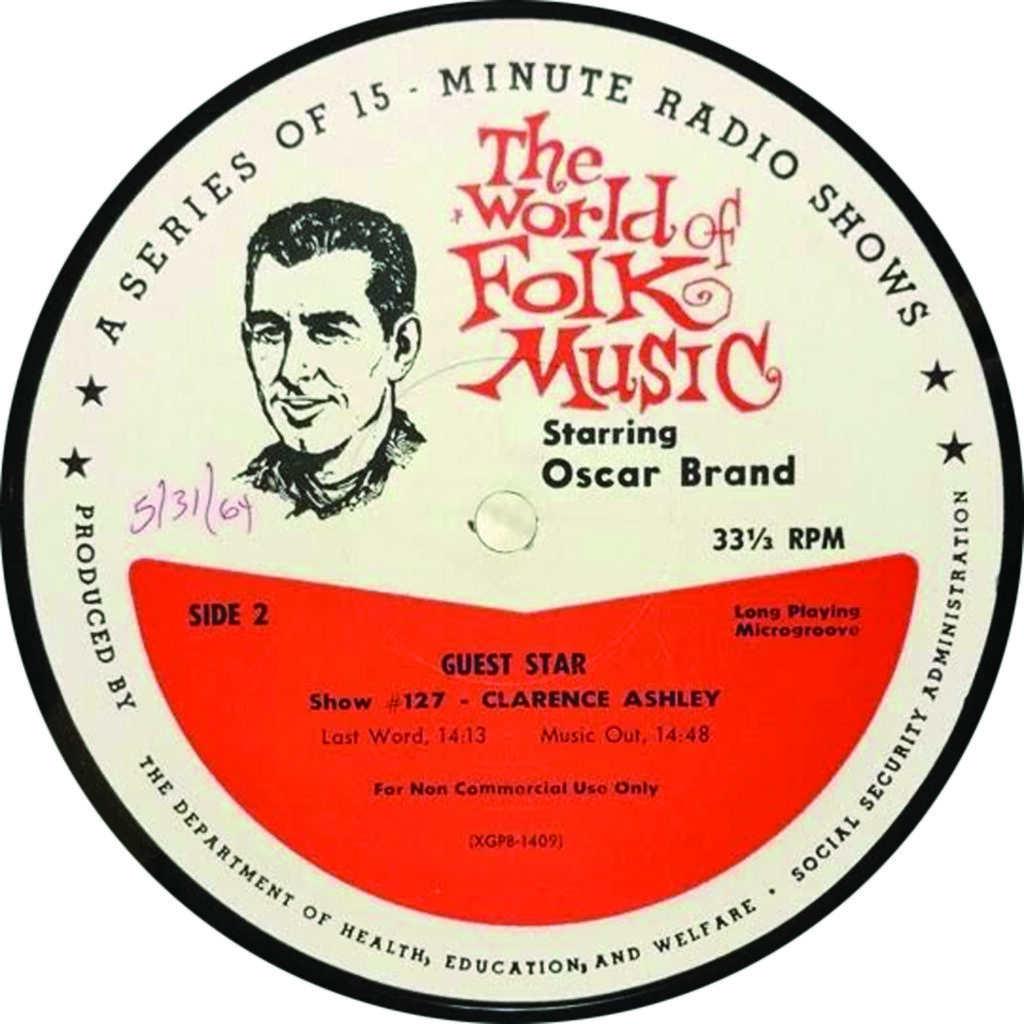
Throughout the early and middle 1960s, a prime outlet for the exposure of bluegrass, old-time and folk music was a weekly radio program called The World of Folk Music. The show was sponsored by the Social Security Administration in an effort to inform the public about the benefits of Social Security.
The programs were fifteen minutes in length and featured two songs by the program’s host (initially Burl Ives and then Oscar Brand), two songs by a guest artist, and a healthy dose of Social Security storytelling by representatives of the agency.
Early on, the programs were produced in thirteen-week blocks (one fourth of a year), the first of which was hosted by Burl Ives. Guest artists featured standard folk fare of the day: Theodore Bikel, The Limeliters, Josh White, Leon Bibb, the Tarriers, Miriam Makeba, Josh White, Jr., Shoshana Damari, Cynthia Gooding, Susan Reed, The Noteworthies, Casey Anderson and Oscar Brand. An item in the September 11, 1961, edition of Broadcasting magazine reported that “the show will be distributed through more than 600 Social Security offices around the country . . . [and that] production of another 13 programs will be started soon.”
Starting with the second batch of programs, Oscar Brand took over as the show’s host and remained at the helm until the show’s cancellation in 1966. Although Brand acted as the show’s master of ceremonies, Fred Hertz of Gotham Recording Company in New York City wrote and directed each of the programs.
Hertz joined the Gotham team in 1957 as the Director of Programming and Production. He was promoted to Vice President at the firm in 1959. The move came shortly after the unveiling of Gotham’s new “$100,000 dream studio” ($1,000,000.00 in 2024 dollars).
The first traditional artist to appear on The World of Folk Music was Kentuckian Jean Ritchie (program #15). She was followed up by Clarence Ashley (#30) who was characterized as “one of the real old-timers.” The first bluegrass act to appear was the Greenbriar Boys (#32). Flatt & Scruggs debuted with program #55. Fred Hertz described Doc Watson as a “bluegrass guitar player” when he was featured on program #92.
The World of Folk Music celebrated its 100th episode in May 1963. By that time, the number of stations airing the weekly program had jumped to 1,700. That number is significant when, at the time, there were some 500 other charities/public service programs that were also vying for air time. Billboard magazine noted that the show “has had a substantial impact in the current blossoming condition of folk music.”
Buoyed by the success of the World of Folk Music program, Hertz launched a folk music tour in July of 1963. It was billed as The American Hootenanny Festival. As enthusiasm for the tour grew, so, too, did interest in recording the performers. The result was an album called All the Folk There Is. The liner notes stated that “This talented company has performed as a unit in auditoriums, summer theaters, night clubs (and, for their own amusement, on the bus that takes them from town to town). Only the Greenbriar Boys were with the group that began the tour at a Massachusetts Amusement Park in July. By early Fall, the artists you hear on this record had become the ‘regulars’ of the American Hootenanny Festival. It was then that Twentieth Century-Fox Records set up its equipment in a Norwalk, Connecticut, auditorium, to capture the atmosphere and the artistry of a real American ‘Hoot.’” The Greenbriar Boys were featured with two songs: “Salty Dog Blues” and “Goodbye Old Pal.”
A second round of 100 programs included guest appearances by the Dillards (#103), Bill Monroe (#109 and #166), the Charles River Valley Boys (#119), Flatt & Scruggs (#124), Clarence Ashley (#127 – which might have been a re-working of program #30), the Greenbriar Boys (#136), Hylo Brown (#141), the Phipps Family (#162), and the McGee Brothers and Arthur Smith (#188).
By 1965/1966, the folk boom had pretty much run its course and the World of Folk Music came to an end with program #239 by folk singer Leon Bibb.
Featured performers in this last batch included the Galax String Band (whose members are not readily known, #202), blind Virginia ballad singer Horton Barker (#204), Ozark singer/songwriter Jimmy Driftwood (#206), the Stanley Brothers (#209) and Jean Ritchie (#210).
Given that the recordings were for use on radio, most of the discs were likely discarded after they were aired. However, occasionally, a few programs show up for sale on eBay. And one collector in Japan has made it his mission to collect all 239 discs. A few of the programs (Clarence Ashley and the Stanley Brothers) show up on YouTube and are definitely worth a listen.
Over Jordan
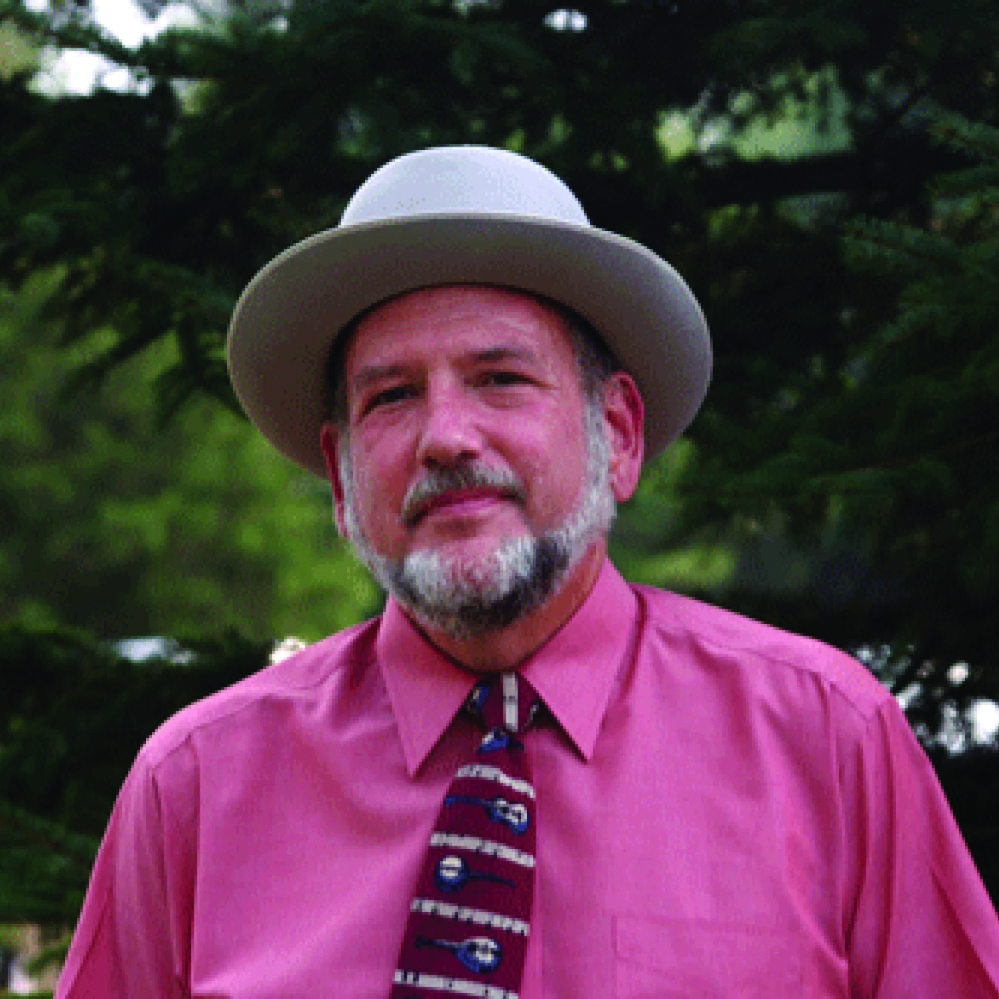
Nicholas Easton “Nick” Barr (November 11, 1948 – April 9, 2024) wore many hats in bluegrass including multi-instrumentalist, author of liner notes and articles, concert and festival master of ceremonies, radio show host, jam session facilitator, and occasional concert promoter.
A native of West Hartford, Connecticut, he received a Bachelor’s Degree in Civil Engineering from New York University and a Master’s Degree in Computer Science from SUNY Albany. By day, he worked as a Civil Engineer for the State of New York.
As a subscriber to Bluegrass Unlimited from the magazine’s inception, he engaged the publication early on with letters to the editor. One such note, from July 1967, begged the question of why the Personal Appearance Column listed no dates for Jimmy Martin! His first in-depth contribution came in January 1973 when he supplied a Charlie Moore discography. Some 25 years later, he added six more credits to his resume with pieces titled “Take Me to Your Liter” (February 1995), “Tribute to a National Treasure – Bill Monroe” (November 1995), “Lost Generation” (January 1998), “Tom Riggs – From Renfro Valley to Pizza Hut” (January 1999), “Classic Music at a Classical Venue” (February 2000), and “Greatest Story Ever Retold” (November 2008).
The early 1970s found Barr contributing to a collective that was working under the auspices of the Ralph Stanley Fan Club to prepare a Stanley Brothers discography. During the same period, he authored a set of liner notes for an album on the County label by the Foot Hill Boys.
The year 1974 was a banner year for Barr’s involvement with bluegrass. He promoted a rare East Coast performance by Vern and Ray, performed in two different bands (Sweet Dixie and Bluegrass Bandits), and held a bluegrass open house that he hoped would turn into a regular event.
The balance of Barr’s obsession with bluegrass was broken into three parts: playing in various bands and as a guest/fill-in musician (he played guitar, banjo, mandolin, fiddle and bass), hosting bluegrass radio programs and performing as master of ceremonies at concerts and festivals.
Barr’s first radio gig was in 1976 when he hosted a bluegrass show on WGNA in Albany, New York; it was a mainstream country station that was managed by veteran musician/songwriter Buddy Starcher. Barr aired at the station for over 10 years. A later stint included a stay at WMYY (where Barr was a reporter to the Bluegrass Unlimited National Bluegrass Survey). The early 2000s found Barr at WAMC, where he continued as a reporting station and was, for two years in a row, voted Country Radio Personality of the Year.
Barr’s work behind the microphone led to work as a master of ceremonies. Among his first work in that capacity was a June 1982 Saratoga Arts Center Night of Bluegrass concert that featured Bill Monroe, Doc and Merle Watson, and the Seldom Scene. He later spent 10 years as an MC at Winterhawk. Other noteworthy MC gigs included the Bluegrass Unlimited festival in Indian Springs, Maryland, and a Kiwanis festival in Kissimmee, Florida.
Eugene H. “Gene” Elders (February 7, 1951 – March 20, 2024) was a multi-instrumentalist who was known for his decades-long run as the fiddle player in country singer George Strait’s Ace in the Hole Band. Prior to joining Strait’s group, Elders spent 10 years in Roanoke, Virginia, as a bluegrass musician and session player. His work can be heard on recordings by the Lost & Found, Larry Sparks, the Knoxville Grass and Jim Eanes, to name a few.
Elders was a native of Chicago. He came by his love of performing naturally. His father was a talented voice actor who appeared on Chicago radio for forty years. Gene began his musical journey at age 6 when his mother signed him up for violin lessons. As a late teen, he had a brief flirtation with drums and rock ’n roll. He later graduated from the American Conservatory of Music in Chicago and also attended Roosevelt University.
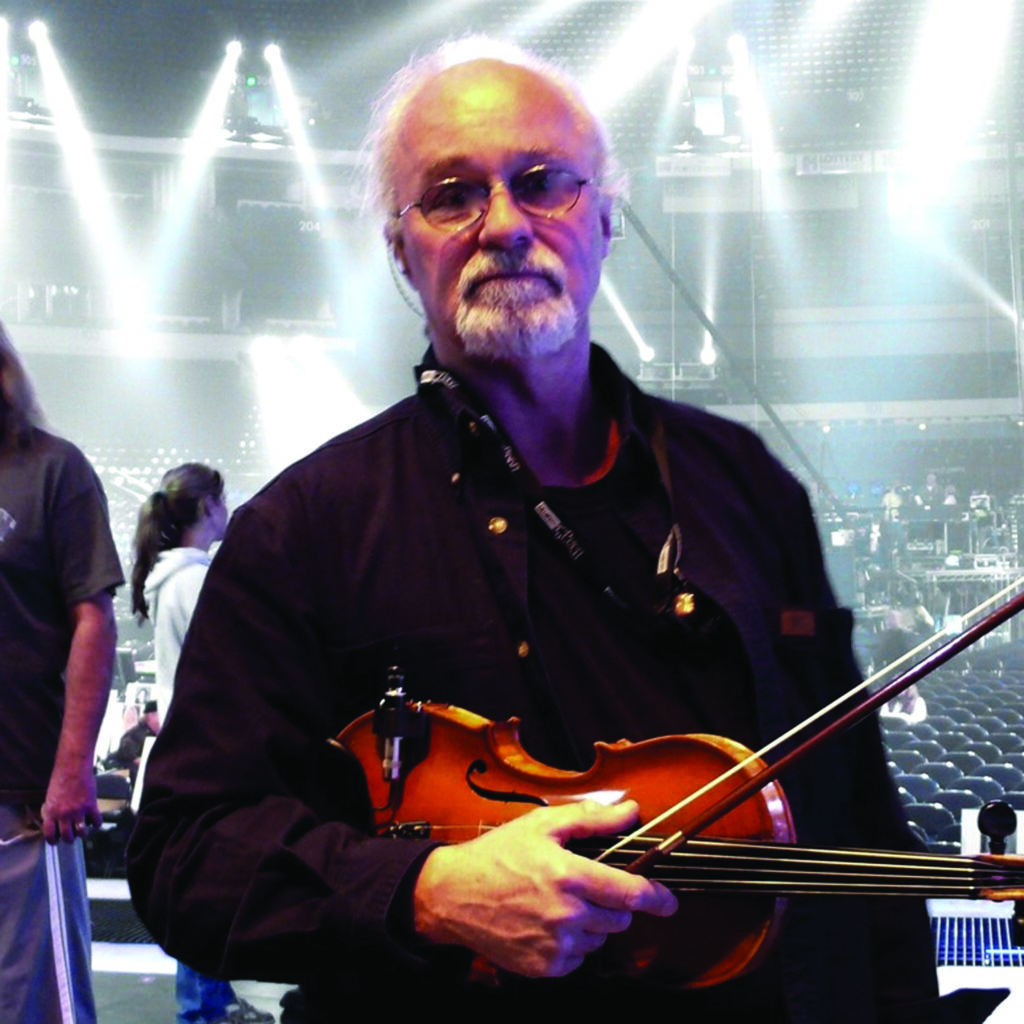
Although he initially disliked bluegrass, a friend, Jimmy Crawford, opened his eyes to the magic of the genre. In 1974, Elders moved to Roanoke and, with Crawford, co-founded the Roanoke River Boys. That group was short-lived as Elders departed to tour with the country-rock ensemble Goose Creek Symphony. After a year of life on the road, Elders returned to Roanoke where he formed and played in two different bluegrass groups: Southland Grass (a “hot-licks” group) and Woodsmoke.
Among Elders’s first studio work was an album by Jim Eanes called Where the Cool Waters Flow. The Lost & Found’s Second Time Around followed soon afterwards. Bluegrass Unlimited noted that “Gene Elders’s fiddle on three numbers and Dempsey Young’s mandolin throughout are particularly brilliant.” A session with New York-based Northern Lights added further to his reputation as an inventive session player. “Gene Elders generates leads and fills that are, as usual, delightful. He puts a unique mark on every session he does and ought to be heard more often.” Perhaps the most effusive praise for Elders’s work came with a review for the Knoxville Grass album Painted Lady: “Guest musician Gene Elders dominates the instrumental work. As I’ve commented elsewhere, he’s one of the great unheralded fiddlers, capable of gutsy blues or lilting swing. He makes every album he sits in on worth listening to.”
In March and April 1983, Elders ran advertisements in Bluegrass Unlimited. Hoping to increase his work as a session musician, the ad spot bade people to “Hear Gene with: Larry Sparks, Jim Eanes, The Lost and Found, McPeak Brothers, Claire Lynch and Knoxville Grass.” Later that year, Roanoke-based Blue Ridge Public Television produced a documentary called Southern Mountain Fiddles. The program, with commentary by Ralph Rinzler and Dave Freeman, placed Elders in the company of other well-known fiddlers including Kenny Baker, U.S. Senator Robert Byrd, Steve Thomas and Jeff Midkiff.
After a decade of making music in southwestern Virginia, Elders picked up stakes and moved to Texas. A classic example of being in the right place at the right time, it was in Texas that Elders came to the attention of George Strait; the fiddler logged 40 years with the Ace in the Hole Band. While still working with Strait, Elders also performed 11 years with singer/songwriter Lyle Lovett.