Notes & Queries – July 2025
A Look Back at Early Urban Bluegrass (Or, The Short But Lively Career of the Lonesome River Boys)
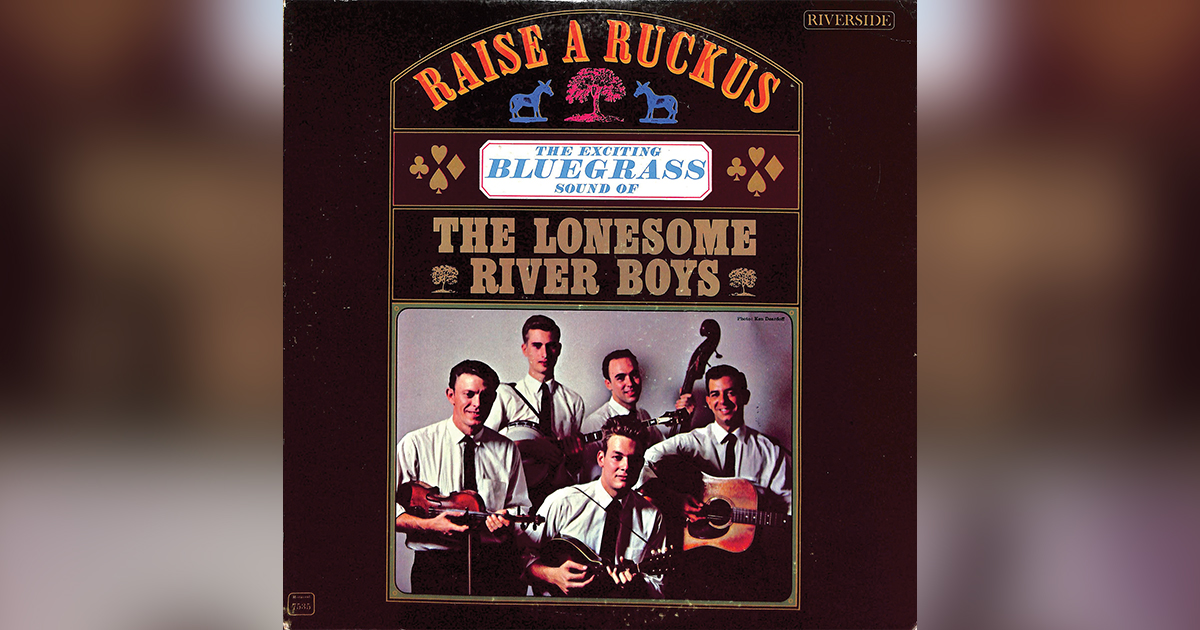
The Lonesome River Boys (not to be confused with the more modern Lonesome River Band) was a bluegrass group from the Northern Virginia/Washington DC area that was popular in the early and middle 1960s. Although largely unknown today, they were at the forefront of a wave of non-rural, city-born musicians who took up the mantle of bluegrass and did so quite well. The quintet was composed of Jack Tottle (mandolin and lead vocals), John Kaparakis (guitar and tenor vocals), Rick Churchill (banjo and baritone vocals), Jim “Buck” Buchanan (fiddle), and Dick Stowe (bass and bass vocals); an earlier incarnation of the band included West Virginia fiddler Don Miller. The collective unit blended traditional bluegrass with folk influences, creating a unique sound that resonated with capitol bluegrass audiences and beyond.
Formation and Early Years
The Lonesome River Boys officially began performing regularly in 1960, though their roots trace back to 1958 when the members first played together informally. Their early years were marked by interruptions, including Tottle’s 26-month Army service and the college commitments of Kaparakis and Stowe. Despite these challenges, the group reunited in 1962 with a renewed focus on music. That summer, they achieved semi-final wins in the Band, Fiddle, and Miscellaneous categories at the National Championship Country Music Contest in Warrenton, Virginia.
Recording and Recognition
Later in 1962, the Lonesome River Boys recorded their debut album, Raise a Ruckus, for New York-based Riverside Records. Released in November, the album showcased their versatility, featuring both original compositions and bluegrass renditions of folk standards. Tracks like “Raise a Ruckus,” “Grandfather’s Clock,” and “Whoa Mule” highlighted their instrumental prowess and vocal harmonies. The album was well-received, earning a spot as the 27th best-selling record in the regional BMOC Magazine in May 1963. Critics praised the band’s ability to blend traditional bluegrass with contemporary techniques, such as substituting instrumental riffs for traditional refrains, a hallmark of their style.
The album’s significance stretched beyond its musical content. Recorded at Plaza Sound Studios, a midtown facility that was located above Radio City Music Hall in New York City, it was one of the first bluegrass albums produced in an urban setting, reflecting the genre’s growing appeal outside its rural Southern roots. In 1976, the album’s title track was included in an anthology album called Hills and Home – Thirty Years of Bluegrass. In his album notes, Neil Rosenberg reported that the Lonesome River Boys were “active in the Washington, D.C., area in the early 1960s,” contributing to the movement of bluegrass into city nightclubs and upscale venues.
Contributions to the Folk Revival
The Lonesome River Boys played a pivotal role in the urban folk revival, which expanded Bluegrass’s audience to include educated, urban listeners. They performed at Washington’s Showboat Lounge, a jazz and folk club that was partially owned by legendary guitarist Charlie Byrd. Their appearances at the Showboat marked a milestone, as they were likely the first bluegrass band to perform regularly in an upscale nightclub setting in the D.C. area. Tottle recalled, “We didn’t say we played bluegrass. We said we played folk music,” reflecting the strategic rebranding of bluegrass to appeal to folk audiences.
The band also performed at prestigious venues like Constitution Hall in Washington, D.C., and shared stages with bluegrass legends such as Bill Monroe, Don Reno, Red Smiley, and the Stanley Brothers. Their participation in events like Carlton Haney’s first indoor bluegrass festival program, held in Richmond, Virginia, in December 1962, foreshadowed the bluegrass festival phenomenon that would later dominate the genre.
Musical Style and Legacy
The Lonesome River Boys were known for their high-energy performances and innovative arrangements. While most members were city-born, their music retained the authenticity and drive of traditional bluegrass. Fiddler Jim “Buck” Buchanan, the only true “country boy” in the group, brought a raw, dance-oriented style to the band, complementing the polished techniques of his urban counterparts. Tracks like “Whoa Mule” and “Grandfather’s Clock” showcased their ability to balance tradition with innovation, earning them praise from publications like England’s Country-Western Express, which called their album “a must for Bluegrass fans.”
Their influence extended beyond their recordings. As Jack Tottle later reflected, the band’s success demonstrated that bluegrass could thrive in urban environments, providing hope to “cement-bound bluegrass aficionados.” Their performances at hootenannies, moonlight cruises, and college events further solidified their reputation as ambassadors of bluegrass.
Individual Contributions
Each member of the Lonesome River Boys brought unique talents and experiences to the band. Jack Tottle, the group’s lead singer and mandolin player, was deeply immersed in bluegrass from a young age. After his time with the Lonesome River Boys, Tottle went on to become a prominent figure in bluegrass, authoring the influential Bluegrass Mandolin instruction book, fronting the New England-based band Tasty Licks, and teaching bluegrass courses at East Tennessee State University.
John Kaparakis, the band’s guitarist and tenor singer, balanced his musical career with his work as a firefighter in Arlington, Virginia. His engineering background and dedication to the band’s success exemplified the dual lives many bluegrass musicians led during this era.
Rick Churchill, the banjo player, was celebrated for his Scruggs-style guitar playing and frequent appearances at banjo contests. His technical skill and passion for bluegrass earned him admiration from peers and audiences alike.
Dick Stowe, the bass player, added variety to the band’s performances by occasionally playing the autoharp. A physics graduate, Stowe exemplified the intellectual curiosity that characterized many urban bluegrass musicians of the time.
Jim “Buck” Buchanan, the fiddler, brought an authentic country flavor to the group. Born in Mount Jackson, Virginia, Buchanan’s transition from old-time hoedown playing to bluegrass fiddling showcased his adaptability and talent.
Cultural Impact
The Lonesome River Boys’ contributions to bluegrass went beyond their music. Their ability to bridge the gap between rural and urban audiences helped expand the genre’s reach during a critical period in its history. As noted in a November 1963 concert advertisement, the band represented “the top Folk Music Groups from the Southland’s colleges and universities,” highlighting their role in bringing bluegrass to new audiences.
Their influence also extended to future generations of musicians. Tottle’s later work with bands like Tasty Licks and his teaching at ETSU ensured that the legacy of the Lonesome River Boys lived on. As Tim Stafford wrote in a 1989 Bluegrass Unlimited article, “Jack Tottle’s bluegrass career has spanned nearly four decades . . . contributing to the growth of bluegrass in a great variety of ways.”
The Lonesome River Boys were pioneers who helped shape the trajectory of urban bluegrass during the 1960s. Their innovative arrangements, performances in city spaces, and dedication to the craft of bluegrass music did much to bring the music to new audiences. As Neil Rosenberg wrote in 1976, their recording of Raise a Ruckus was “prime evidence of the recent surge of interest in Bluegrass,” showcasing the vitality and adaptability of the music.
Over Jordan
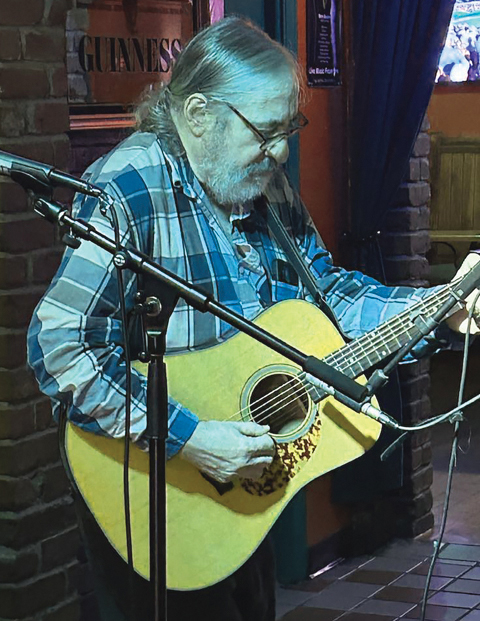
Anthony “Tony” DeLello (March 21, 1956 – April 19, 2025) was a pillar of the New York City bluegrass scene. He was more than just a musician; he was a mentor, a leader, and a friend whose influence resonated far beyond the strings of his guitar. Born and raised in Yonkers, New York, Tony’s life was steeped in music from the very beginning. With musicians and music lovers on both sides of his family, it was his uncle James Kogamihalis who first ignited his passion for music, introducing him to a vast record collection that sparked a lifelong love of jazz and music collecting.
Tony’s path as a musician was marked by his exceptional skills as a guitarist and vocalist, but his true legacy lies in the community he built. For over 20 years, Tony led the Sunday Bluegrass Jam at Paddy Reilly’s Music Bar, transforming it into a haven for musicians of all levels. Whether you were a seasoned professional or a beginner unsure of your abilities, Tony welcomed you with open arms, quiet wisdom, and encouragement. His ability to nurture talent and foster a sense of belonging was unparalleled. One jam regular recalled expressing doubts about their skills, only for Tony to reassure them with simple yet profound words: “You’re playing the right chords, you’re on the beat, and your solos – well, they’re your own, as they should be. You are more than welcome at this jam.” That moment of kindness lit a path for someone who would go on to rarely miss another session.
Tony’s jam sessions became a meeting ground for an entire generation of bluegrass musicians in New York City. His influence was so profound that many credited him as the reason they played bluegrass at all. His generosity was felt by many and he was known to gently refuse thanks for his efforts. During a Christmas jam, he returned a card with a small tip, insisting that his contributions were freely given.
An accomplished country blues and jazz guitarist, Tony collaborated with notable artists such as Vassar Clements, saxophonist Doug White, Cumberland Gap, Blue Horizon, and bluegrass vocalist Jen Larson. His musical influences were as diverse as they were legendary, including Hank Williams, Merle Travis, Bill Monroe, Clarence White, David Grisman, Joe Maphis, Bob Wills, Eddy Lang, Django Reinhardt, and Doc Watson. Yet, Tony’s impact extended far beyond his technical prowess. He was a flame keeper of traditional American music, a mentor who nurtured the spark in others, and a community builder who created spaces for joy, growth, and fellowship.
Tony’s ability to touch lives was evident in the countless stories shared by those who knew him. Beneath his sometimes-crusty exterior was a deeply compassionate soul who recognized the potential in others and helped them flourish. As he told a close friend in his final days, “I touched many lives.” Indeed, he did.
Tony passed away peacefully, surrounded by music and companionship, just as he lived. His legacy will continue to echo through every shared tune and every welcoming circle. Tony’s many musical friends say “Thank you—for the music, the kindness, and the memories. You are forever a part of our song.”

Barry Lyle Poss (September 7, 1945 – May 13, 2025) was a pioneering figure in the world of bluegrass and roots music who left behind a legacy that transformed the genre and elevated its artists to new heights. From his humble beginnings as a banjo player and sociology graduate student to co-founding Sugar Hill Records, one of the most influential independent labels in bluegrass history, Poss’s journey was marked by passion, innovation, and an unwavering commitment to the music he loved.
Early Life and Old-Time Music Roots
Barry Poss’s love affair with traditional music began in the late 1960s when he and his wife, Sharon, moved to Durham, North Carolina. Immersing themselves in the vibrant old-time music scene, they attended fiddlers’ conventions and Friday night music parties at Tommy Thompson’s house, where Poss learned old-time banjo from Thompson himself. The couple traveled extensively to meet and learn from legendary musicians like Tommy Jarrell, Fred Cockerham, and Kyle Creed, absorbing the essence of Appalachian music.
Poss’s deep connection to old-time music was not just a hobby—it became an all-consuming passion. He played banjo with Ernest East and the Pine Ridge Boys, winning ribbons at fiddlers’ conventions, and later joined the Fuzzy Mountain String Band and the New Ruby Tonic Entertainers. These experiences laid the foundation for his understanding of traditional music and its cultural significance, which would later inform his work as a record producer.
County Records and the Transition to Music Production
In the mid-1970s, Poss took a pivotal step toward his future career by answering an ad in the County Sales newsletter for a graphic artist position at County Records, in Floyd, Virginia. Despite having no experience in graphic arts, Poss’s enthusiasm for traditional music impressed County Records founder Dave Freeman, who hired him. Poss quickly became involved in reissuing old 78 rpm records and producing new albums, working closely with traditional performers to capture their best work.
Poss’s approach to production was shaped by his sensitivity to the needs of traditional musicians. He understood the importance of creating a comfortable recording environment, often opting for settings like John Ashby’s family cabin rather than a formal studio. His work on albums like Tommy Jarrell’s Sail Away Ladies demonstrated his ability to blend authenticity with innovation, incorporating spoken introductions and thematic elements to enhance the listening experience.
Founding Sugar Hill Records
By the late 1970s, Poss and Freeman realized the need for a new label that could bridge the gap between traditional and contemporary bluegrass music. In 1978, they founded Sugar Hill Records in Durham, North Carolina, naming the label after a fiddle tune. Poss, who soon afterward bought out Freeman’s interest in the new start-up, envisioned Sugar Hill as a platform for artists who were rooted in traditional music but also exploring modern sounds. His model was Sun Records, a label known for its strong identity and eclectic roster.
Sugar Hill’s first release, Boone Creek’s self-titled album, set the tone for the label’s future. Featuring Ricky Skaggs and Jerry Douglas, the record showcased the blend of tradition and innovation that would become Sugar Hill’s hallmark. Another early success was Ricky Skaggs’s Sweet Temptation album, which brought national attention to Ricky and to Sugar Hill; it also led to the joint Sugar Hill-Epic release Don’t Cheat in Our Hometown and country music stardom for Ricky. Over the years, the label signed some of the most iconic names in bluegrass and roots music, including Sam Bush, Guy Clark, Jerry Douglas, Chris Hillman, Hot Rize, Robert Earl Keen, Doyle Lawson, Del McCoury, Nashville Bluegrass Band, Nickel Creek, Osborne Brothers, Peter Rowan, Seldom Scene, and Doc Watson. Poss’s ability to identify talent and nurture artists helped Sugar Hill build a reputation for quality and authenticity.
Much of that quality and authenticity stemmed from Poss’s trust in the abilities of the artists that he signed to Sugar Hill. He was very hands-off on the musical side of things. He trusted the artists to produce quality recordings and gave them a great degree of artistic freedom. Frontline artists such as Jerry Douglas and Tim O’Brien have both spoken about this.
Success and Impact
Under Poss’s leadership, Sugar Hill Records became a beacon for bluegrass and roots music, earning at least eight Grammy Awards and widespread acclaim. The label’s catalog included groundbreaking albums like Skaggs and Rice’s duet record, which blended traditional bluegrass with contemporary sensibilities, and Quicksilver’s gospel album Rock My Soul, praised for its exceptional vocal arrangements. Acclaim for Sugar Hill projects emanated from a host of publications that normally didn’t give lip service to bluegrass; Poss and the label were on the cutting edge for bluegrass getting recognition in mainstream publications like Billboard, Rolling Stone, Playboy, and People, to name but a few.
Poss’s hands-on approach to production and marketing set Sugar Hill apart from larger labels. He focused on slow growth and top-quality projects, ensuring that each release reflected the label’s identity. Fans trusted Sugar Hill’s brand, often buying albums based on the label’s reputation rather than the artist’s name. This trust was a testament to Poss’s vision and dedication.
As a leader in the roots music community, Poss was among a dedicated handful of bluegrass businessmen and entertainers who banded together in 1985 to form the International Bluegrass Music Association. He went on to serve several terms as a board member representing Record Labels, Publishers, and Merchandisers. In the early 2000s, Poss served as a Trustee on the board of the evolving International Bluegrass Music Museum.
Sale to Welk Music Group
In 1998, after two decades of success, Poss sold Sugar Hill Records to California-based Welk Music Group. The decision was driven by a desire to expand the label’s reach and alleviate administrative burdens on his small staff. Poss retained artistic and business control, ensuring that Sugar Hill’s identity remained intact.
The partnership with Welk Music Group allowed Sugar Hill to benefit from Vanguard Records’ (also a Welk property) infrastructure while maintaining its focus on niche music. Poss also had the opportunity to advise Vanguard on its new generation of artists, further solidifying his influence in the industry.
Legacy and Retrospective
In 2006, Poss curated Sugar Hill Records: A Retrospective, a four-disc boxed set celebrating the label’s first 25 years. Featuring 81 songs by artists like Ricky Skaggs, Doc Watson, Dolly Parton, and Nickel Creek, the collection highlighted the breadth and depth of Sugar Hill’s catalog. Poss described the retrospective as a labor of love, reflecting on the remarkable journey that began with a simple vision and grew into a cultural phenomenon. His notes for the project, which were co-authored with Nashville journalist Jay Orr, received an IBMA award for Liner Notes of the Year.
Poss’s impact on bluegrass and roots music cannot be overstated. He championed artists who might have been overlooked by major labels, giving them a platform to share their music with the world. His dedication to quality and authenticity helped redefine the genre, earning Sugar Hill recognition as one of the “21 independent labels that changed the world.”
Conclusion
Poss was awarded an IBMA Distinguished Achievement Award in 1998. Barry Poss’s life was a testament to the power of passion and vision. From his early days as a banjo player to his role as a pioneering record producer, Poss remained true to his love for traditional music and his belief in its ability to evolve and inspire. His work with County Records and Sugar Hill Records transformed the bluegrass landscape, creating a legacy that will endure for generations.
As we remember Barry Poss, we celebrate not only his contributions to music but also his unwavering commitment to the artists and traditions he cherished. His story is a reminder that great things can be achieved when we follow our passions and stay true to our values. Rest in peace, Barry Poss—you will be missed, but your music will live on.