Notes & Queries – July 2023
Old Dominion Barn Dance
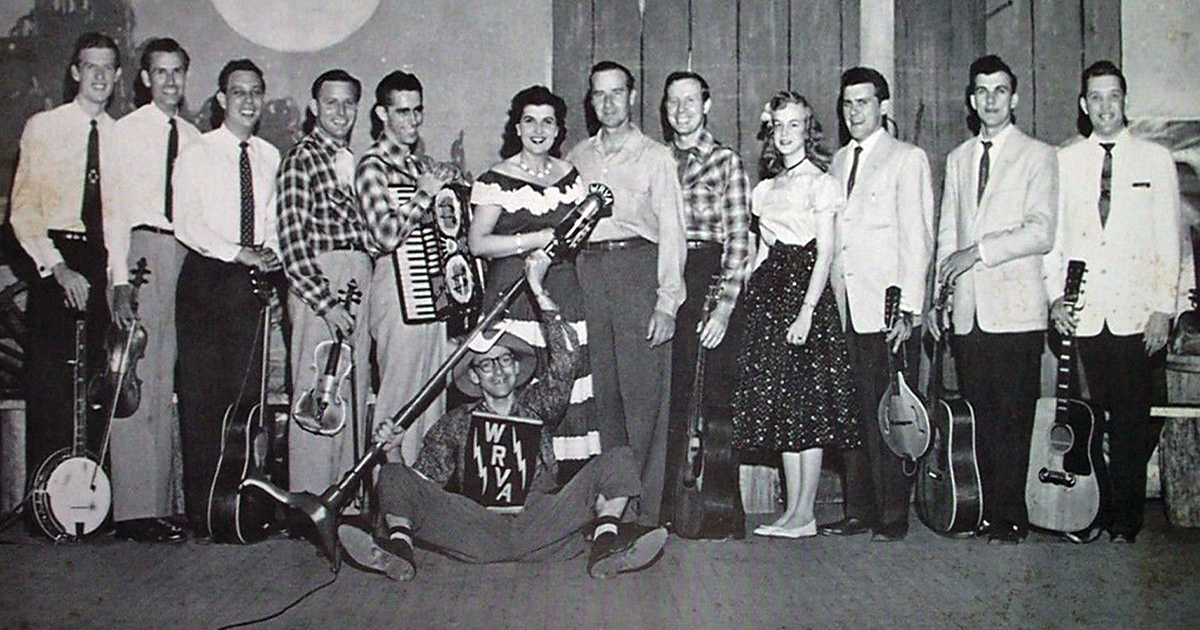
Multi-instrumentalist Matt Levine recently shared this photo of the Old Dominion Barn Dance that he won on eBay. He noted, “I actually got it pretty cheap. I usually don’t get photos on eBay, but I couldn’t pass that up.” From the looks of the various people in the shot, program attendees and radio listeners that night were treated to a wonderful cross-section of music.
Moving from left to right, there are four groups and/or soloists. First is Curley Howard and the Farm Hands (Allen Shelton on banjo, Roy Russell on fiddle, Curley Howard on guitar; bass player/comedian Joe “Flapjack” Phillips sits at front/center). Second is the show’s host Sunshine Sue and her band, the Rangers (Irving Gurganus on fiddle, Charles Elbert “Buster” Puffenbarger on accordion, Sunshine Sue and her husband/bass player John Workman, and Zag Pennell on guitar). Featured third is soloist Janis Martin (later billed as “the female Elvis”). Last is the trio of Carl Butler and the Webster Brothers (Audie Webster on mandolin, Earl Webster on guitar, and Carl Butler on guitar).
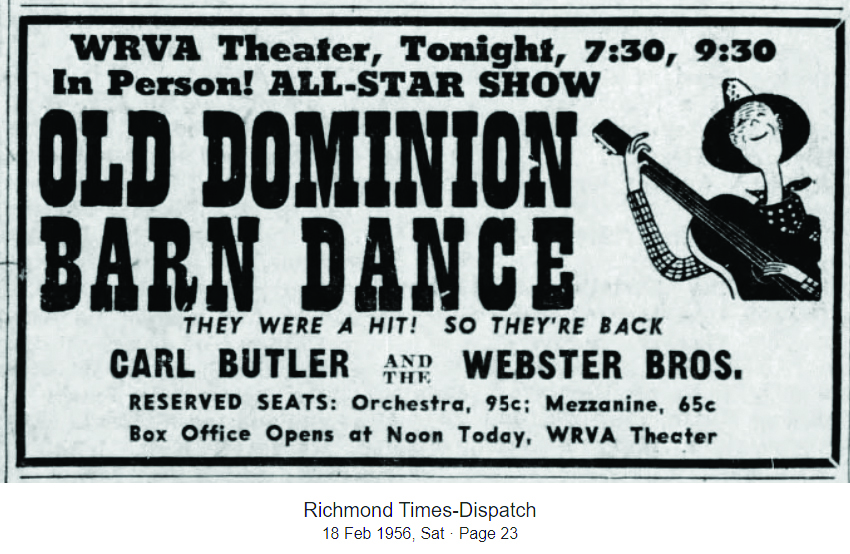
There is no date on the photo, but based on the groupings of some of the musicians and program advertising, it is believed to be from a February 18, 1956, performance.
The Farm Hands
Curley Howard (born Howard Clifton Sisk on February 1, 1930 – October 1, 2001) was a North Carolina guitarist/singer who honed his chops working with notables Clyde Moody, Jim Eanes, and Hack Johnson. A change in leadership in October 1955 resulted in Johnson’s Tennesseans morphing into Curley Howard and the Farm Hands. The new group took over Johnson’s timeslot at WPTF in Raleigh as well as his Old Dominion Barn Dance membership. He later recorded with Jim Eanes and Reno & Smiley. Promoter Carlton Haney noted that “Curley Howard could play the best chop rhythm.”
Allen Shelton (July 2, 1936 – November 21, 2009) rates as one of the finest banjo players from the early days of bluegrass. A native of Reidsville, North Carolina, his first professional work was with Jim Eanes. He then moved to Mac Wiseman and eventually Hack Johnson. With the latter, he recorded a minor hit, “Home Sweet Home.” After the Farm Hands (at which time he was only nineteen) he went back to Eanes and made some memorable recordings for Starday. Shelton’s most memorable work was with Jim & Jesse in the early 1960s.
Roy Clinton Russell (November 18, 1926 – November 15, 1964) was a native of Marion, Virginia. He learned to play the fiddle as a youth and by the late 1940s landed spots with Cousin Zeke Leonard in Marion and with Curly King and the Tennessee Hilltoppers over WCYB in Bristol, Virginia. The early 1950s found him in Danville, Virginia, with Glenn Thompson on WDVA and later with Jim Eanes on WBTM. From there it was off to Hack Johnson/Tennesseans and then the Farm Hands. Russell’s best recorded work was for Jim Eanes in the late 1950s.
Joseph Riley “Flapjack” Phillips (March 7, 1919 – June 2, 2006) was a native of Philadelphia (Loudon County), Tennessee. His main instrument was the bass fiddle. He generally went by the name Joe Phillips and when doing comedy, he took on the persona of Flapjack. He was most active in the 1950s, appearing with Hack Johnson and later with the Farm Hands. His most high-profile gig was in the late 1950s with Hylo Brown and the Timberliners. Phillips appeared on Hylo’s classic 1958 self-titled album for Capitol, Hylo Brown.
Sunshine Sue & Her Rangers
Mary Arlene Higdon “Sunshine Sue” Workman (November 12, 1912 – June 13, 1979) was the driving force behind the Old Dominion Barn Dance, which she ran from 1946 until its closure in 1957. As showrunner, she served as the program’s master of ceremonies (which earned her the distinction of being “the first woman radio show emcee in the country”), performed, hired talent, and tended to the business side of things. One career highlight was a two-week run of the show on Broadway in the fall of 1954.
John Edward “Big Sugarfoot” Workman (November 27, 1906 – March 15, 1986) was Sunshine Sue’s husband, musical partner, and co-overseer of the Barn Dance. As was Sue, he was an Iowa native. The two married shortly after her graduation from high school and set out on a career as country music radio entertainers. On stage, Workman played bass fiddle as part of the Rangers. Off stage, he oversaw the couple’s 196-acre Melody Farm which was located near Ashland, Virginia.
Charles Elbert “Buster” Puffenbarger (June 17, 1929 – February 16 2002) was an accordion player on the Old Dominion Barn Dance for most of the run of the show. He was a native of Gerrardstown, Berkeley County, West Virginia, but spent his formative years in nearby Harrisonburg, Virginia. As a youth, he (and his sisters) learned to sing in church. In 1947, at age eighteen, he and the girls auditioned and were hired for the Barn Dance. The girls eventually dropped out but Puffenbarger stayed until the show’s close.
Irving Daniel Gurganus (August 9, 1922 – September 8, 2005) was a native of Williamston, North Carolina. As self-taught musicians, Gurganus and his brothers played for barn dances in the Williamston area. Among his earliest professional work was with the Westernaires, a Richmond, Virginia-based outfit that was active from 1947 to 1950. He served as a fiddle player for the Old Dominion Barn Dance during the middle 1950s and later participated in a 1975 reunion show. He also enjoyed serving as a choir director for several area churches.
Daniel LeRoy “Zag” Pennell (April 24, 1923 – April 29, 2007) was a Missouri native who was known as the “Ozark Mountain Boy.” He got his start performing in 1939 over radio station KDRO in Sedalia, Missouri. He fronted a group known as the Ozark Ramblers. A series of stops took him to KFNK in Shenandoah, Iowa; WCHS in Charleston, West Virginia; WSVA in Harrisonburg, Virginia; to Knoxville, Tennessee; and eventually Richmond, Virginia, and the Old Dominion Barn Dance. He stole the show in New York: “Danged if Broadway ain’t got a new matinee idol.”
Janis Martin
Janis Darlene Martin (March 27, 1940 – September 3, 2007) was a breakout teen star who got her start on the Old Dominion Barn Dance. Born in Sutherlin, Virginia, near Danville, she was signed to RCA Records in March 1956, just shy of her 16th birthday. The same label had signed Elvis Presley two months earlier. Martin’s debut release, “Will You Willyum,” sold over 750,000 copies. Several early marriages and the birth of a son cut short a promising career and by 1960 she was out of the spotlight.
Carl Butler and the Webster Brothers
James Austin “Audie” Webster (March 17, 1935 – September 3, 1982) and William Earl Webster (March 4, 1933 – April 24, 2018) were known professionally as the Webster Brothers. The boys were Tennessee natives who were born in communities southwest of Knoxville; Audie was born in Sweetwater while Earl was born ten miles away in Philadelphia. The duo sported a mandolin/guitar format and sang in a style that was reminiscent of the Louvin Brothers. In fact, a number of Webster Brothers fans feel that they “out-Louvin’d” the Louvin Brothers when they recorded a cover of an early Louvin release called “Seven Year Blues.” The Websters’ early career was spent in Knoxville where they appeared on several radio stations. In 1954, they signed with Columbia Records and cut several sessions. It was during this same period that they met and became friends with Carl Butler, a rising solo singer who also worked out of Knoxville. Likewise signed to Columbia, Butler and the Websters recorded a number of songs together, including an influential version of “Angel Band.”
Carl Roberts Butler (June 2, 1924 – September 4, 1992) was a Knoxville-based singer whose career dates back to age 12 and the years shortly before World War II. After the War, he found work with several groups that were toying with the then-emerging bluegrass styles, the Sauceman Brothers and the Bailey Brothers. Butler signed with Capitol in 1950 and produced several sessions. His pairing with the Webster Brothers was a highlight of the early- to mid-’50s phase of career. It wasn’t until the 1960s, in conjunction with his wife, Pearl, that he achieved chart success with songs such as the #1 hit “Don’t Let Me Cross Over.”
Over Jordan
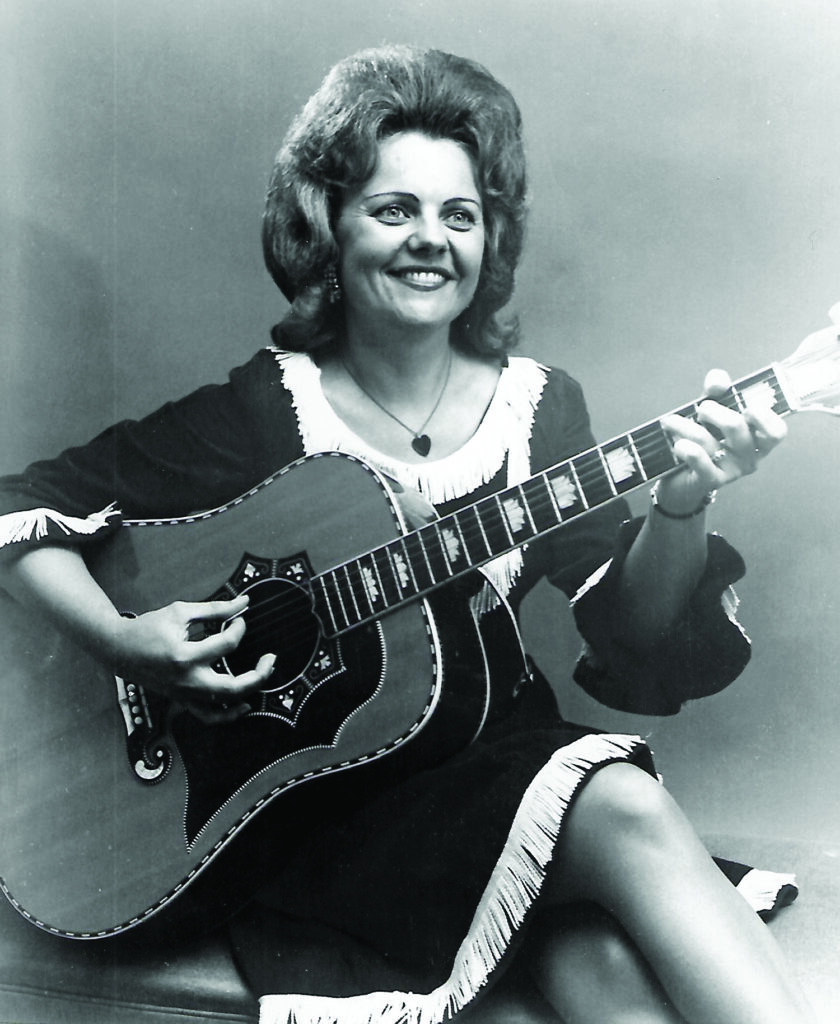
Gloria Belle (born Gloria Bernadette Flickinger, June 9, 1939 – May 5, 2023) was a pioneering female bluegrass performer whose professional career dated back to the late 1950s. She is best known for her work with Jimmy Martin from the late 1960s through the middle 1970s but she also logged time with bluegrass and old-time luminaries such as the Bailey Brothers and Charlie Monroe. At times, she also fronted her own group and had several well-received solo recordings.
Although born in Silver Run, Maryland, a tiny community in Carroll County not far from the Pennsylvania border, Gloria spent her formative years in nearby Hanover, Pennsylvania. She made her public performance debut at age three by singing on a gospel radio program with her parents. As she entered her teen years, she was already proficient on guitar, piano, banjo and mandolin. She actually received pointers concerning her three-finger banjo roll from Don Reno.
Gloria Belle counted other female singers such as Wilma Lee Cooper, Rose Maddox, and Molly O’Day as idols. But it was the music of the Bailey Brothers that inspired her to want to become a professional musician. Her first work in a band situation came in 1958 when she signed on with a local group called Gary Epley and the Cheerful Valley Gang. It was only a short time later that Gloria wound up in Knoxville, Tennessee, as a singing partner for Danny Bailey. The group’s sponsor, legendary grocery store magnate / music promoter Cas Walker, found the name Flickinger too hard to pronounce and rechristened her Gloria Belle. She remained in Knoxville for five years.
Throughout the middle and late 1960s, Gloria performed with a number of different entertainers including Raymond Fairchild, the McCormick Brothers, and Betty Amos. For a brief period of time, she served as the band leader for the Green Mountain Travelers.
Gloria started with Jimmy Martin on a part-time basis starting in 1968. She went full-time in March 1969. During her tenure with Martin, she played bass, guitar, and mandolin, and offered high baritone vocals. A good example of her work with Martin is the 1969 recording of “Milwaukee, Here I Come.”
In 1972, Gloria took a break from touring with Martin to perform with an all-female group known as the Nashville Kitty Kats. In 1973, she spent the summer touring with Charlie Monroe. While back with Martin in 1976, she began work on her second solo album, Good Hearted Woman. Martin and members of his Sunny Mountain Boys appeared on part of the project. Gloria’s last work with Martin was in 1978, when she helped out on a series of recordings that were released on the Gusto label.
The early 1980s found Gloria back in Knoxville, sponsored by Cas Walker while working with Danny Bailey. She also found work with the husband-and-wife duo Bonnie Lou and Buster. A highlight from this era was the opportunity to perform at the 1982 World’s Fair (which was held in Knoxville that year) with the Bailey Brothers.
A third album, The Love of the Mountains, was recorded for the Webco label in 1986. Backing musicians for the recording included the Johnson Mountain Boys.
Working as a professional musician, at the expense of marriage and a family, was a conscious career choice. But, by 1989, after having enjoyed over thirty years in the business, she tied the knot with Tennessee native / musician Mike Long. They soon worked together in Gloria’s latest band configuration, Gloria Belle and Tennessee Sunshine.
For her lifetime commitment to bluegrass, Gloria Belle received a 1999 IBMA Distinguished Achievement Award. The following year, she participated in a various artists collection that paid homage to the women of bluegrass called Follow Me Back to the Fold. It received the IBMA’s 2001 nod for Recorded Event of the Year.
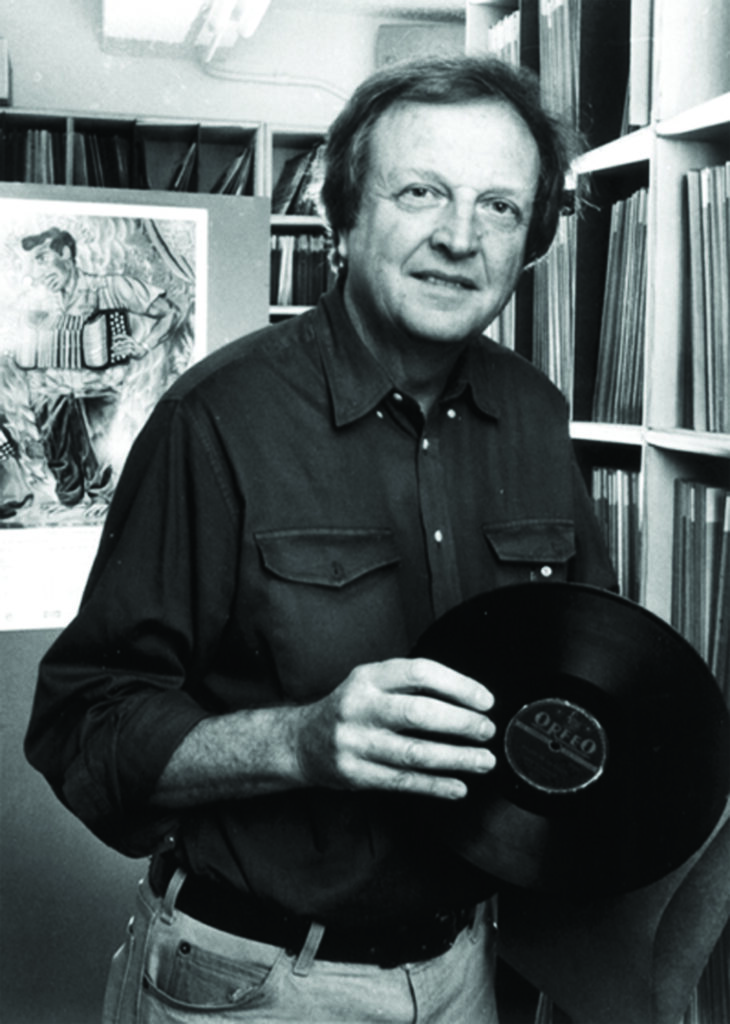
Count Christian Alexander Maria “Chris” Strachwitz (July 1, 1931 – May 5, 2023) was a record label owner, producer, song publisher, musicologist, and music distributor who, while making his mark with blues, Tejano, folk, jazz, gospel and Zydeco, was very much a friend of bluegrass. Albums that he produced for release on his Arhoolie and Old-Timey labels were routinely reviewed in the pages of Bluegrass Unlimited.
Strachwitz was born nearly a decade before the start of World War II in a section of Germany that later became a part of Poland. After the war, Armed Forces Radio gave him some of his first tastes of American hillbilly and jazz music. The post-war redistricting of portions of Europe necessitated the Strachwitz family’s move to the United States.
An obsession for locating and recording previously undiscovered talent, at first for his own listening enjoyment, led to the 1960 creation of Arhoolie Records. The name is reported to be a term for field holler.
While bluegrass was but a small part of the total Arhoolie catalog, it was important and essential nonetheless. The label touted the very first album release by Del McCoury in the late 1960s (Del McCoury Sings Bluegrass), the only release by the Strange Creek Singers (Mike Seeger, Alice Gerrard, Tracy Schwarz, Hazel Dickens, and Lamar Grier), reissues of early recordings by the Maddox Brothers and Rose and later a release of a new solo outing by Rose Maddox, as well as recordings by the Louisiana Honeydrippers (with Jim Smoak), the duo of Vern and Ray as well as the Vern Williams Band, banjo legend Snuffy Jenkins, and up-and-coming Galax banjo whiz Stevie Barr.
Albums released on Arhoolie’s sister label, Old Timey, included the Arkansas duo the Armstrong Twins, Cliff Carlisle, and several anthologies of western swing and steel guitar classics.
While Arhoolie and Old Timey albums and CDs were musically and culturally significant, not all of them sold in large numbers. A godsend over the years were a number of songs (published by Strachwitz’s Tradition Music – a concern that amassed over 2,000 copyrights) that were covered by other popular artists. Among them were Country Joe McDonald’s “I-Feel-Like-I’m-Fixin’-to-Die Rag” which appeared on the Woodstock festival and soundtrack and country star Alan Jackson’s 1993 cover/hit “Mercury Blues.”
Another of Strachwitz’s notable contributions to the music was his ability to get it to the masses. For years, he operated a storefront and mail order concern called Down Home Music. The firm also distributed music – not just on his own Arhoolie and Old Timey labels – by a host of independent labels to brick-and-mortar retail outlets.
Strachwitz was a driving force behind the 1966 American Folk and Country Music Festival tour that presented the Stanley Brothers, the New Lost City Ramblers, Roscoe Holcomb, Cousin Emmy, and Cyp Landreneau’s Cajun Group for three weeks’ worth of concerts throughout Europe.
For a lifetime of work in music, Strachwitz received a 2016 Grammy Trustee Award. The same year witnessed the sale of Arhoolie to Smithsonian Folkways Recordings, which is housed at the Smithsonian Institution. He is also a recipient of a lifetime achievement award from the Blues Symposium and is an inductee to the Blues Hall of Fame.
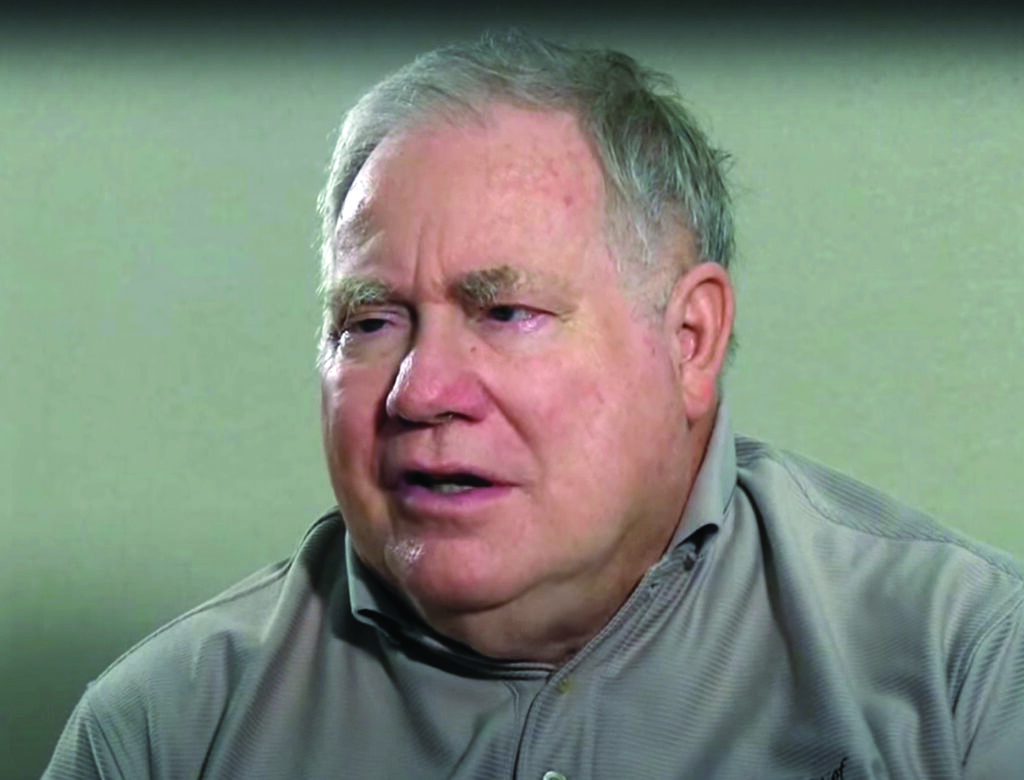
Ivan Mathews Tribe (May 1, 1940 – April 4, 2023) was a long-time fan of bluegrass and old-time music who, over a fifty-year period, was one of the most active chroniclers of the music’s history. Starting in 1973, he contributed no less than eighty-eight articles to the pages of Bluegrass Unlimited. With an affinity for musicians from the Mountain State, he wrote eleven articles for Goldenseal, a quarterly magazine devoted to West Virginia traditional life. Other publications making use of Ivan’s writing include the British magazine Old Time Music, Pickin’, Precious Memories, The Devil’s Box, the JEMF Quarterly, and The Journal. He also authored over seventy sets of liner notes, including those for a 2-CD set of 1940s/’50s recordings by Molly O’Day. Lastly, and by no means least, Ivan authored (or co-authored) fourteen books, many of which dealt with country and bluegrass music. Among the highlights were Mountaineer Jamboree: Country Music in West Virginia, The Stonemans: An Appalachian Family and the Music that Shaped Their Lives, West Virginia’s Traditional Country Music, and, most recently, The Jamboree in Wheeling.
Ivan’s journey into country music began around 1950 when, at age ten, he started listening to the Grand Ole Opry. Other semi-local on-air personalities, such as West Virginia-based Cherokee Sue, steered his tastes to regional country music talent. A subscription to Country Song Roundup magazine kept him up-to-date on current country music goings-on.
While Ivan heard the music of Bill Monroe on the Opry, it was a live performance by Flatt & Scruggs that hooked him on bluegrass. That group had recently launched a weekly program on Huntington, West Virginia, station WSAZ-TV and used their newfound proximity to the area to host in person concerts.
Following Ivan’s graduation from high school in 1958, much of his energy was devoted to higher education. He earned a degree in history and government from Ohio University, and later received a masters degree in history from that same institution. His college years afforded opportunities to see tradition-based artists such as Doc Watson and the New Lost City Ramblers. He also began building a record collection, thanks in part to the new mailer order service County Sales.
During the middle and late 1960s, Ivan taught at several southeastern Ohio county high schools (Vinton and Meigs). It was in the fall of 1969 that he and his wife, Deanna (they married in 1966), began attending bluegrass concerts in earnest and started getting acquainted with the artists. Over a series of four successive weekends, the couple saw such heavy hitters as Bill Monroe, Ralph Stanley, the Goins Brothers, the Country Gentlemen, Jimmie Skinner, and Jimmy Martin. The following summer, they hit the festival circuit and attended now-legendary events such as Bean Blossom, Renfro Valley, Camp Springs, Berryville, and Gettysburg.
In addition to all of his work as a writer, Ivan also took to the airwaves to spread the gospel of bluegrass and old-time music. In January of 1983, he and Deanna became co-hosts of a program called Hornpipe and Fugue. It aired over radio station WOUB-FM, which was situated on the campus of Ohio University in Athens, Ohio. The show remained on the air until shortly before Ivan’s passing.